433Paleozoic
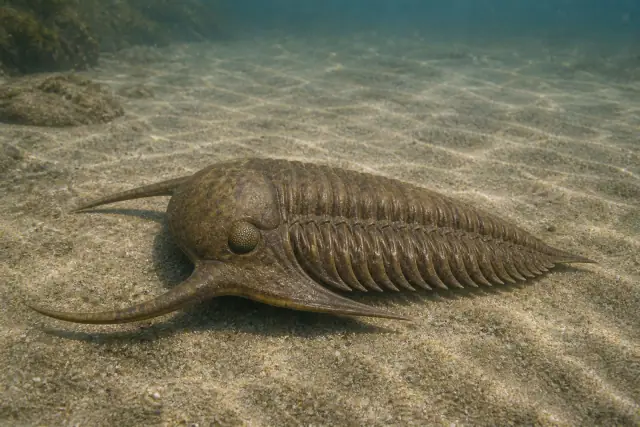
Olenellus thompsoni
Olenellus thompsoni
A broad head, long genal spines and many trunk segments marked an early trilobite radiation.
LIFE ARCHIVE
Browse extinct life from traces nearly 1.9 billion years old to historically recorded extinctions.
Olenellus thompsoni
A broad head, long genal spines and many trunk segments marked an early trilobite radiation.
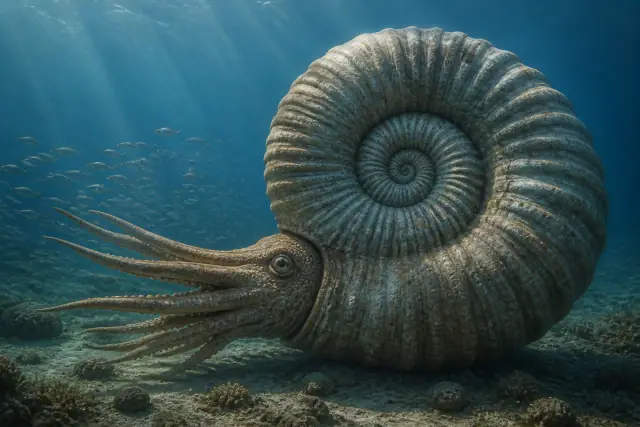
Parapuzosia seppenradensis
A coiled shell nearly two meters wide belonged to the largest known ammonite.
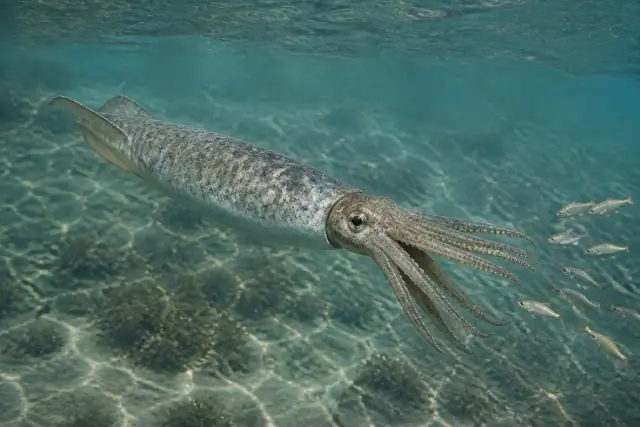
Belemnotheutis antiquus
Rare soft tissues restore the ink sac, fins and ten hooked arms around an internal shell.
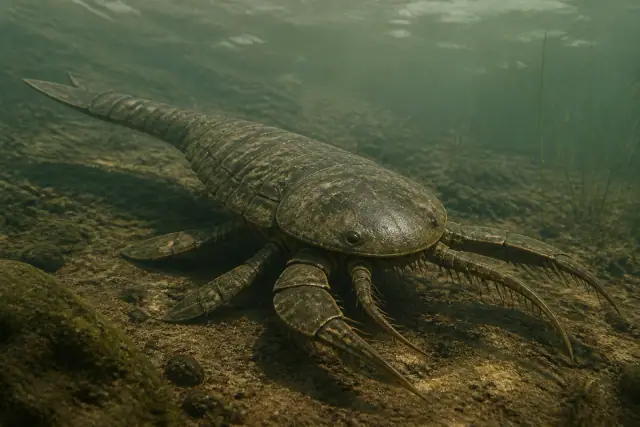
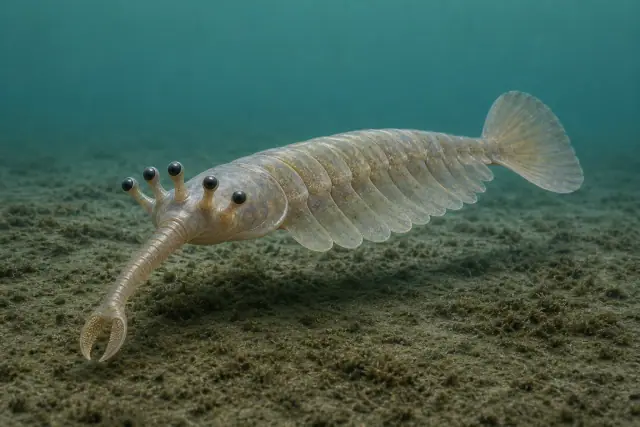
Hibbertopterus scouleri
A giant sea scorpion that raked soft sediment for food; a Scottish trackway suggests an animal about 1.6 m long.
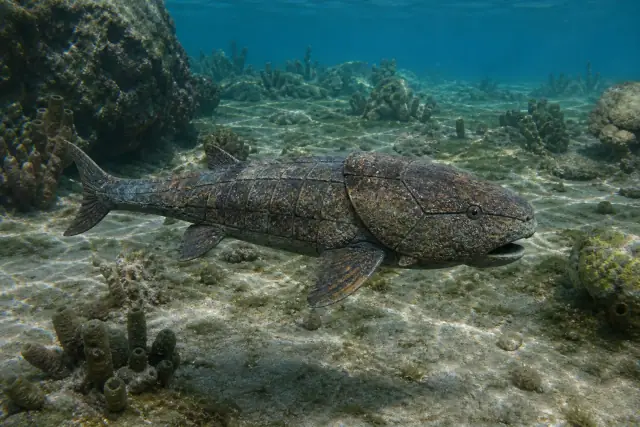
Entelognathus primordialis
Placoderm armor enclosed jaw-margin bones resembling those of later bony fish.
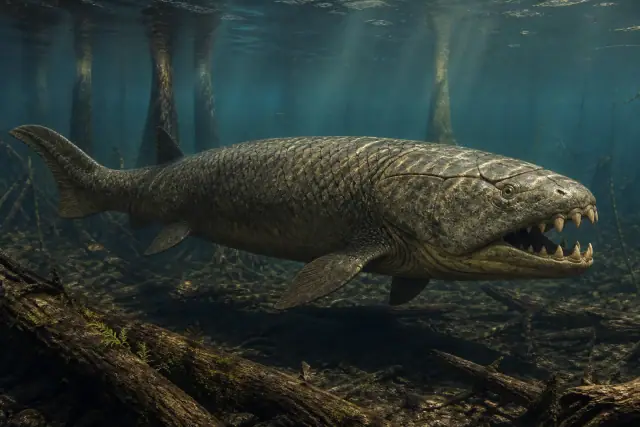
Rhizodus hibberti
Huge conical teeth armed a multi-meter freshwater lobe-finned predator.
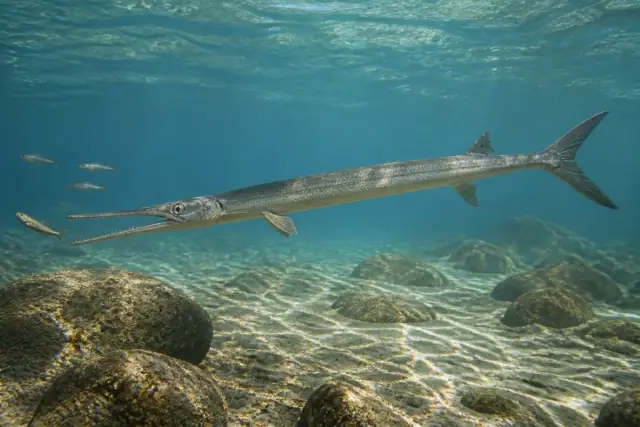
Saurichthys curionii
A needle-like snout and slender body converged on modern barracudas.
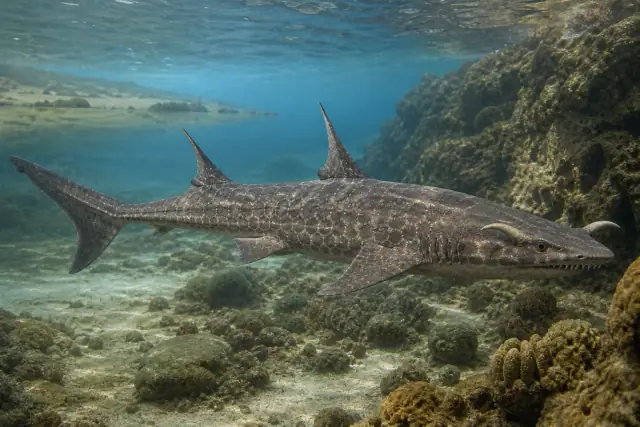
Hybodus reticulatus
Dorsal fin spines and two tooth shapes handled fish and hard-shelled prey.
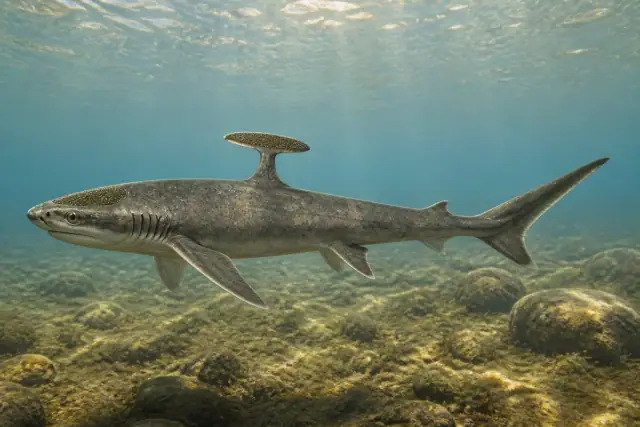
Stethacanthus altonensis
Males carried a denticle-covered anvil-shaped structure on the back.
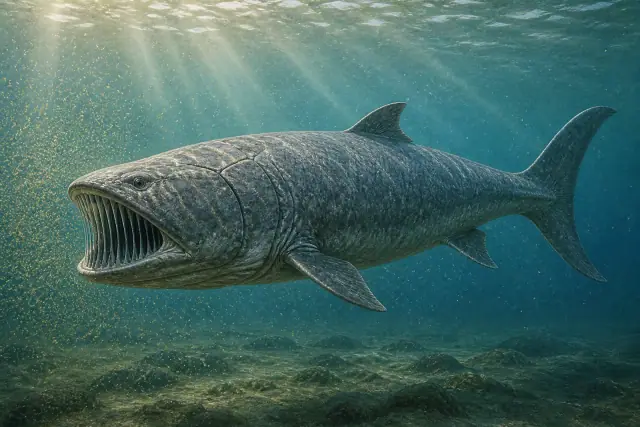
Bonnerichthys gladius
A giant bony fish filtered plankton near the ocean surface.
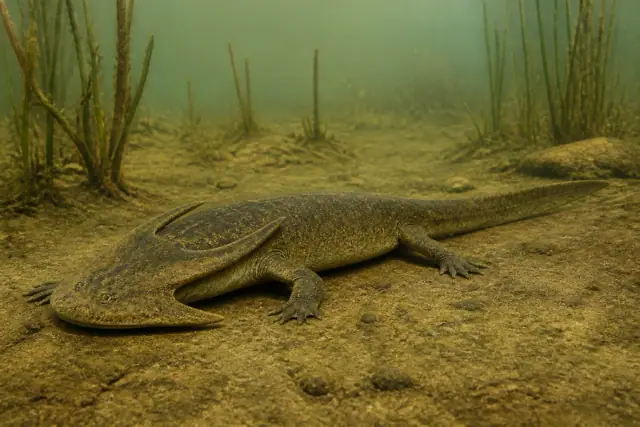
Diploceraspis burkei
Paired backward horns widened the skull of this small diplocaulid.
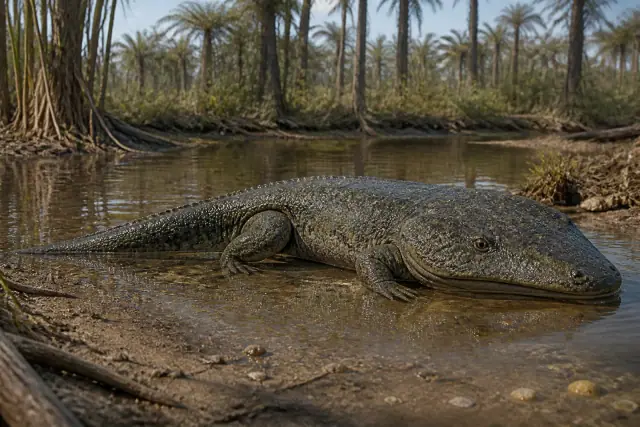
Cyclotosaurus robustus
Closed otic notches and a broad flat skull marked a giant aquatic ambush predator.
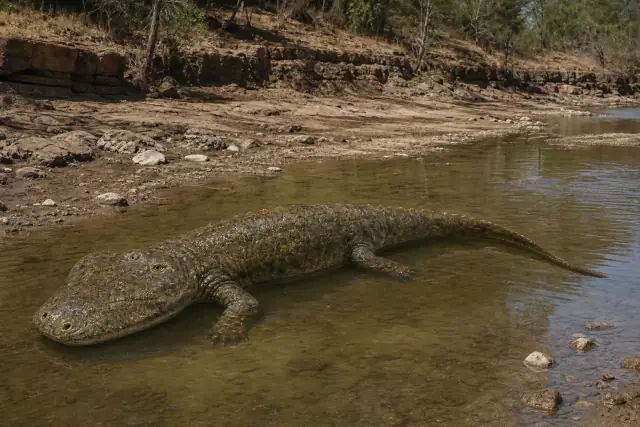
Koskinonodon perfectum
A broad half-meter skull carried grooves that sensed water movement.
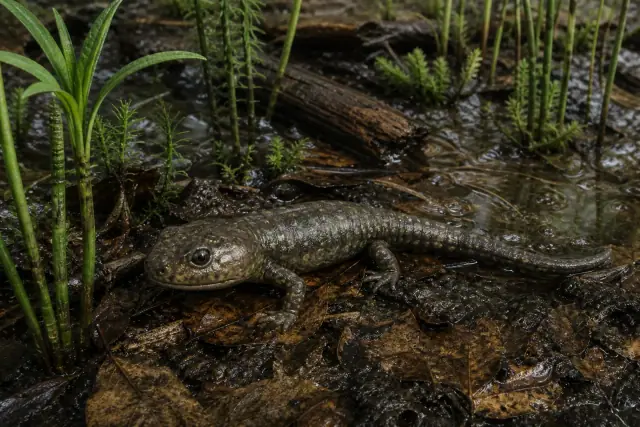
Amphibamus grandiceps
A small light body combined traits near the ancestry of modern amphibians.
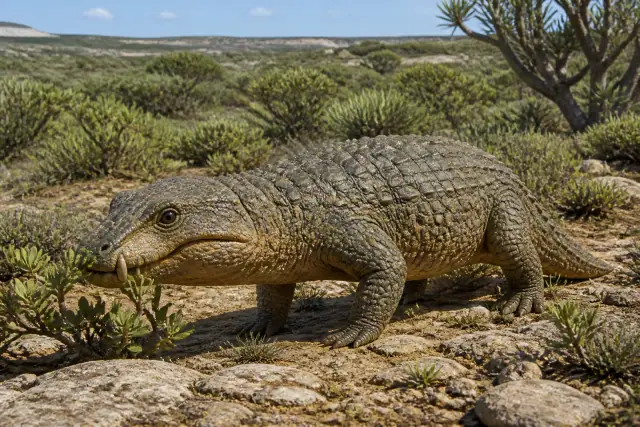
Simosuchus clarki
A short square snout, leaf-shaped teeth and armor belonged to a likely plant-eating crocodyliform.
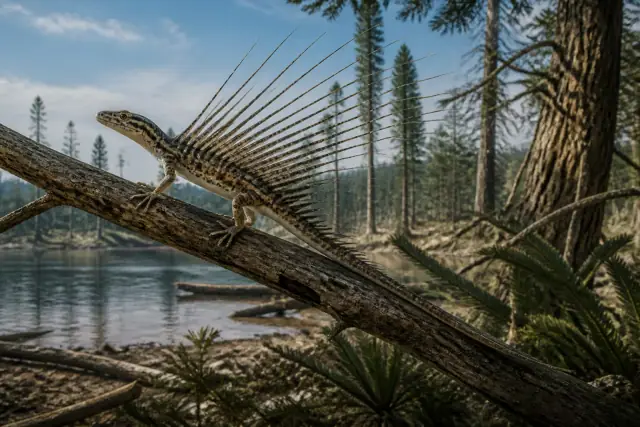
Longisquama insignis
A row of exaggerated dorsal appendages has been called scales, feathers or gliding surfaces.
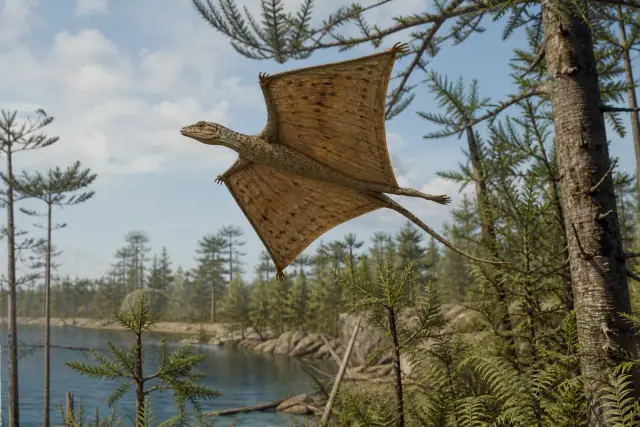
Sharovipteryx mirabilis
Its main flight membrane stretched between extraordinarily long hind legs.
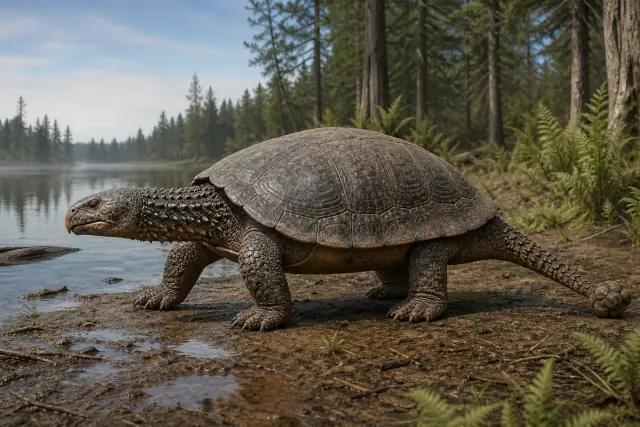
Proganochelys quenstedtii
A complete shell coexisted with neck spikes and an inability to retract the head.
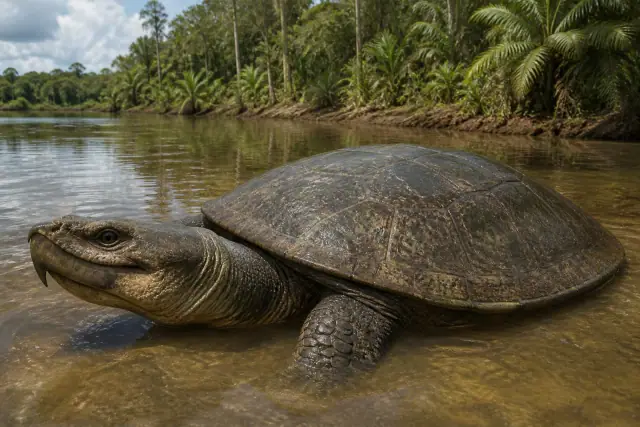
Carbonemys cofrinii
A shell nearly two meters long came from hot wetlands soon after the dinosaur extinction.
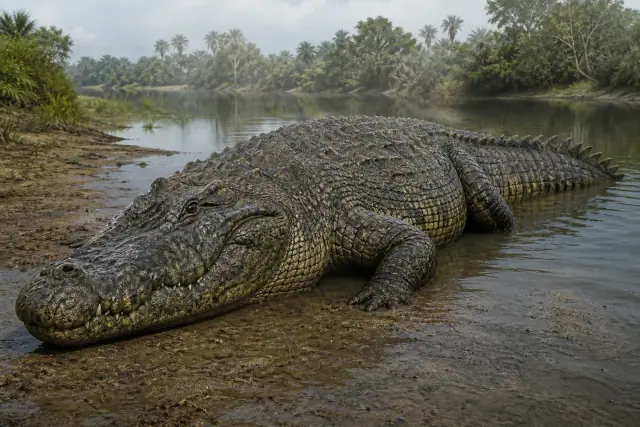
Purussaurus brasiliensis
A skull over a meter long belonged to a dominant Miocene caiman.
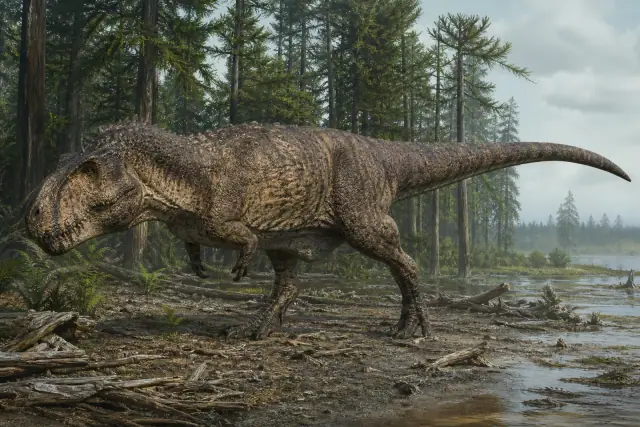
Thanatotheristes degrootorum
A deep snout with facial ridges marked an early northern tyrannosaurid.
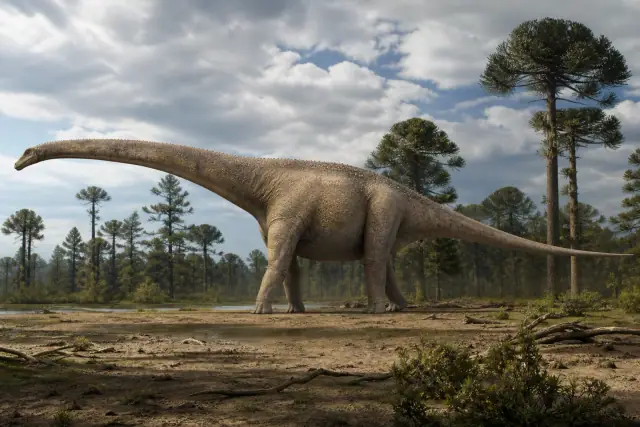
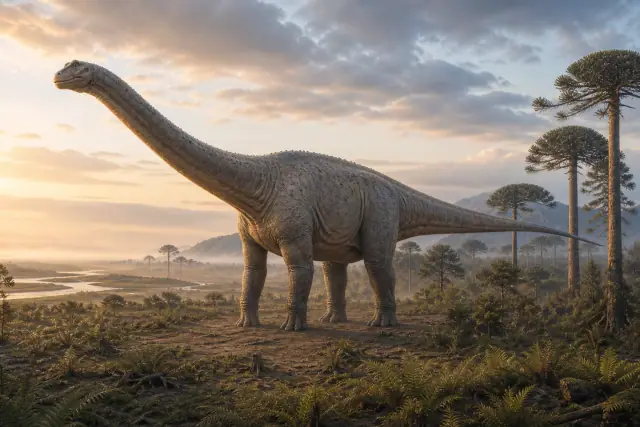
Dreadnoughtus schrani
A relatively complete skeleton makes this giant titanosaur unusually measurable.
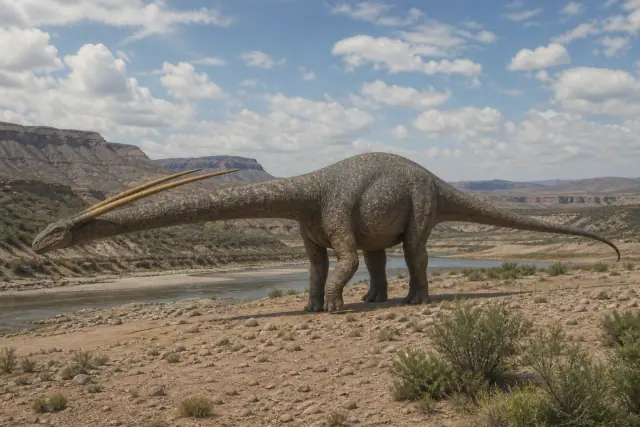
Bajadasaurus pronuspinax
Paired neck-vertebra spines curve forward; a described pair measures 58 cm.
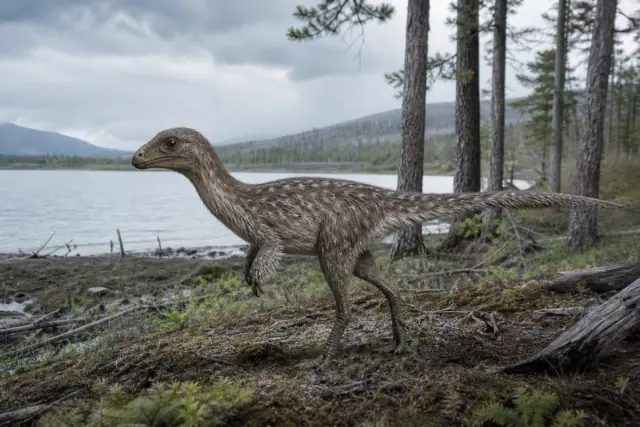
Kulindadromeus zabaikalicus
Scales, simple filaments and branching feather-like structures covered one small herbivore.
Explore the atlas by continent, country and state. Follow fossil localities into regional guides, compare animals across time and return to the evidence in each species profile.
FIELD GUIDES
Giants, strange body plans and lives within human memory. Follow a question into the atlas, then explore the animals behind it.