04Paleozoic
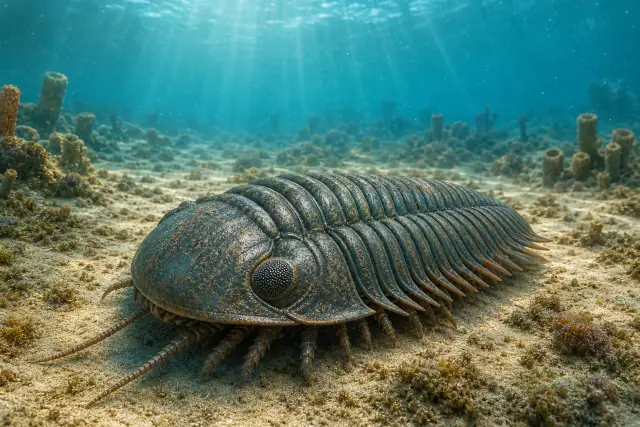
Trilobites
Trilobita
They occupied seafloors for nearly 300 million years, and their compound eyes preserve secrets of early vision.
 EXTINCT ATLASEXTINCT LIFE ARCHIVE
Category
Early animals, arthropods, molluscs, corals and other invertebrate life.
01 / ANSWER FIRST
Invertebrates dominate much of the fossil record and reveal early animal body plans, reefs, oceans and repeated mass-extinction recoveries.
02 / TIME & EVOLUTION
Ediacaran communities precede the Cambrian radiation; later trilobites, molluscs, corals and echinoderms track more than half a billion years of change.
03 / TURNOVER & EXTINCTION
Ocean chemistry, oxygen, sea level and mass extinctions repeatedly reorganised marine communities.
04 / KEY THEMES
Ediacaran and Cambrian fossils test how major body plans emerged.
Biomineralisation changed predation, habitats and preservation.
Invertebrate ranges and abundance make global turnovers measurable.
05 / EVIDENCE
Mineral shells fossilise readily, while exceptional deposits preserve soft tissues that expose anatomy otherwise missing from the record.
06 / FAQ
Invertebrates dominate much of the fossil record and reveal early animal body plans, reefs, oceans and repeated mass-extinction recoveries.
Mineral shells fossilise readily, while exceptional deposits preserve soft tissues that expose anatomy otherwise missing from the record.
Ocean chemistry, oxygen, sea level and mass extinctions repeatedly reorganised marine communities.
07 / SOURCES
Trilobita
They occupied seafloors for nearly 300 million years, and their compound eyes preserve secrets of early vision.
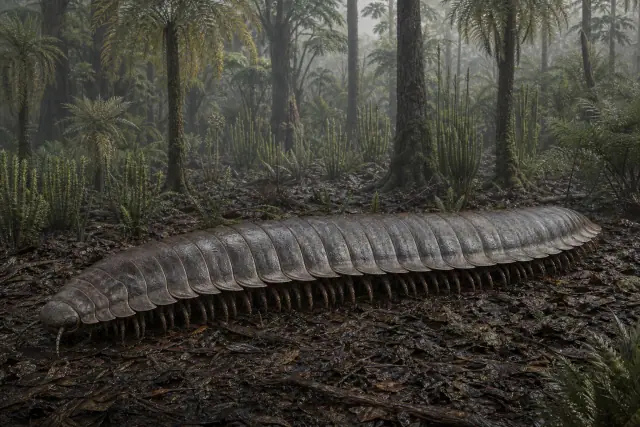
Arthropleura armata
This many-segmented arthropod grew longer than a person in coal-swamp forests.
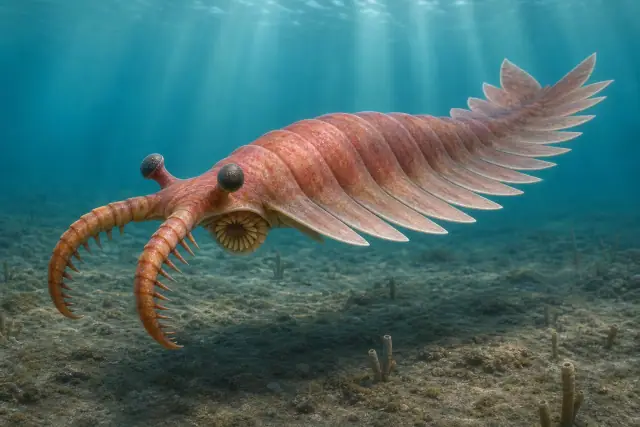
Anomalocaris canadensis
A meter-long swimmer with grasping frontal appendages was a giant of Cambrian seas.
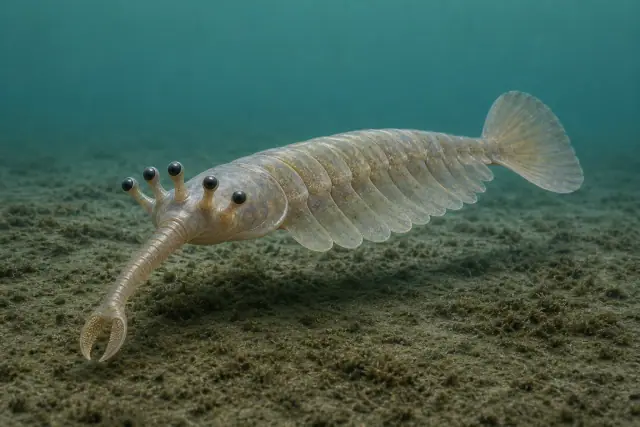
Opabinia regalis
Five eyes and a grasping proboscis made this small swimmer one of the Cambrian’s strangest forms.
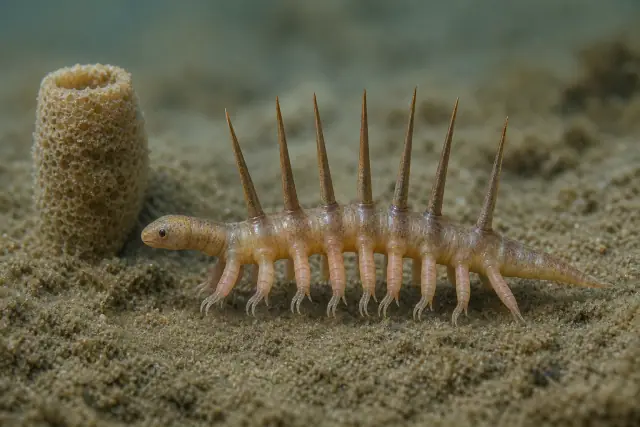
Hallucigenia sparsa
Paired spines guarded a soft-bodied walker once reconstructed upside down.
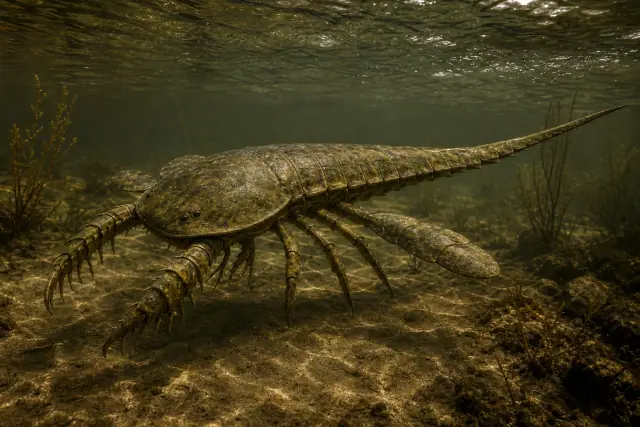
Jaekelopterus rhenaniae
This giant sea scorpion may have exceeded two meters in length.
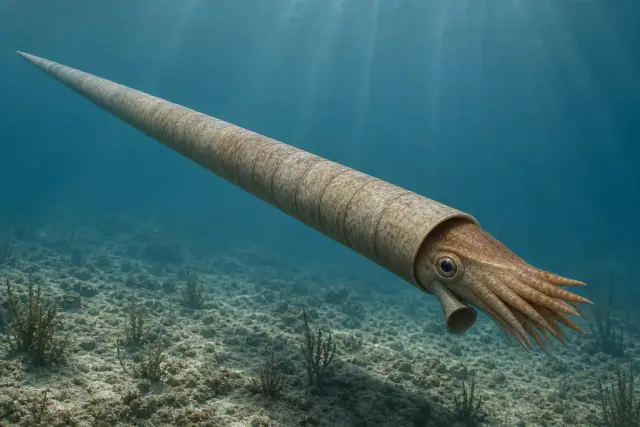
Cameroceras trentonense
A long straight shell housed one of the largest predators of Ordovician seas.
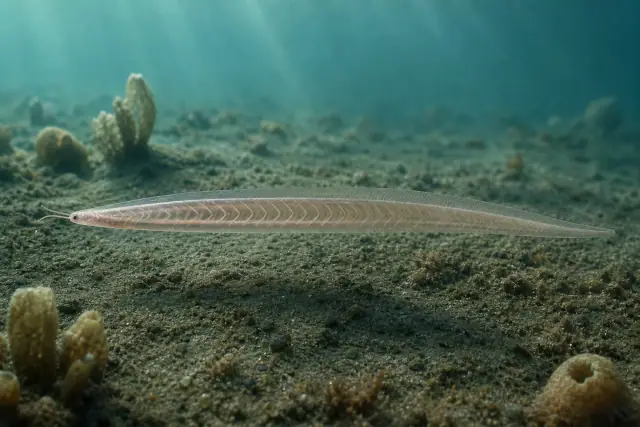
Pikaia gracilens
A slender body preserves repeated muscle blocks and internal traces important for interpreting early chordates.
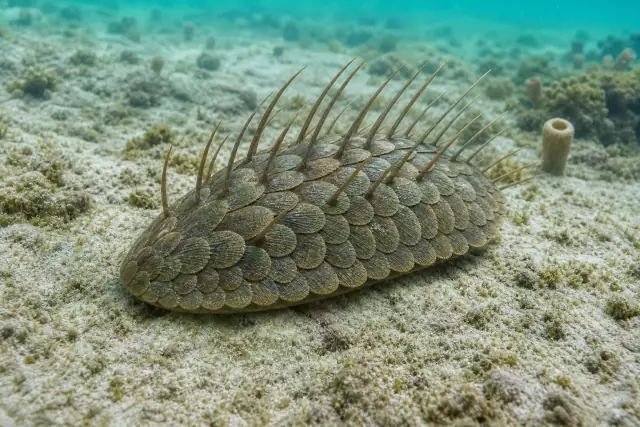
Wiwaxia corrugata
Rows of scales and long spines armored this small seafloor grazer.
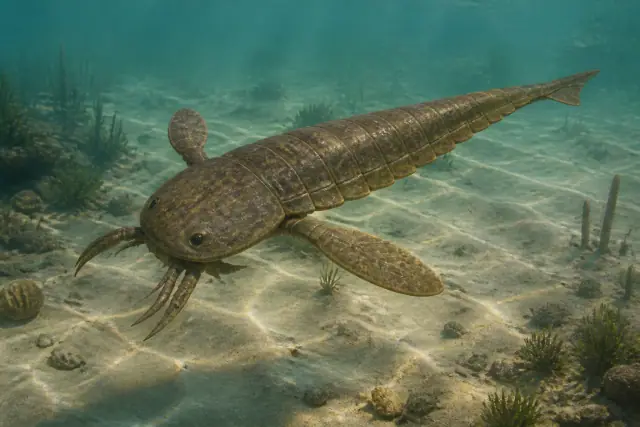
Eurypterus remipes
Paddle-shaped hind limbs carried this sea scorpion through shallow coastal water.
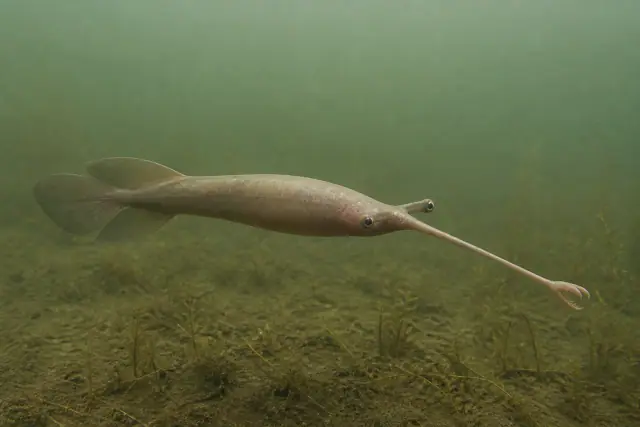
Tullimonstrum gregarium
Eyes sat at the ends of a crossbar and a long proboscis ended in a toothed grasping organ.
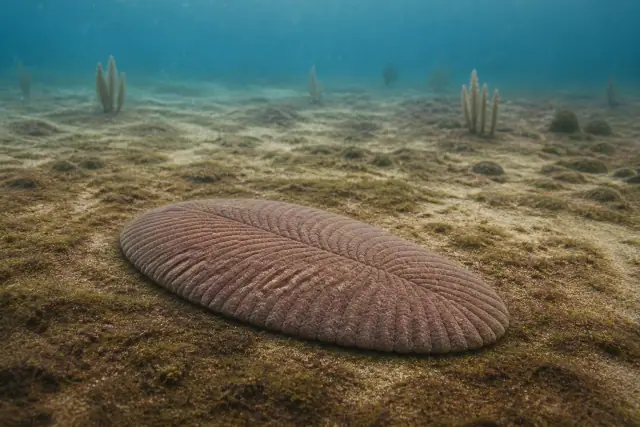
Dickinsonia costata
Its flat oval body moved across microbial mats like a rhythmically quilted cushion, leaving feeding traces behind.
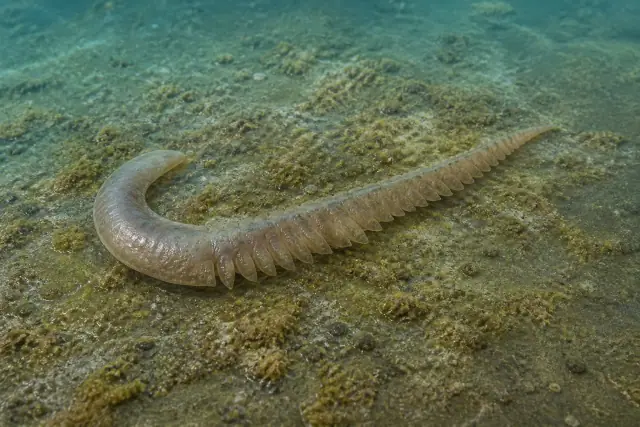
Spriggina floundersi
A horseshoe-shaped front led a body of offset leaflike units, giving it the appearance of a flattened soft worm.
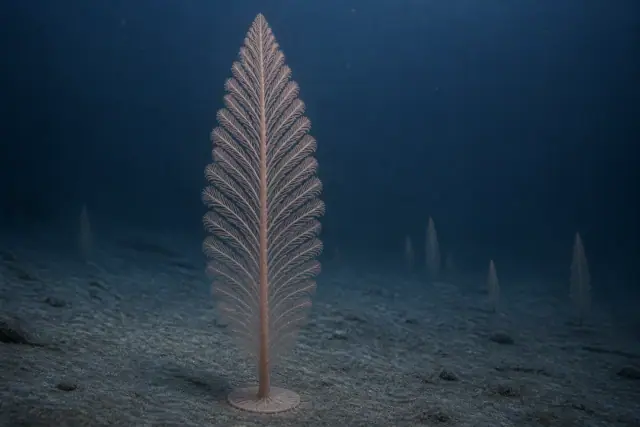
Charnia masoni
A featherlike body of repeating branches was anchored by a disc in deep water, yet it had neither chlorophyll nor a mouth.
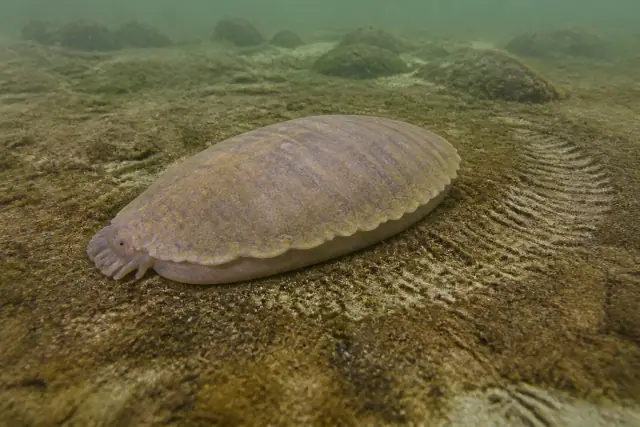
Kimberella quadrata
Its low oval body crawled across microbial mats while a front feeding structure left fan-shaped sets of scratches.
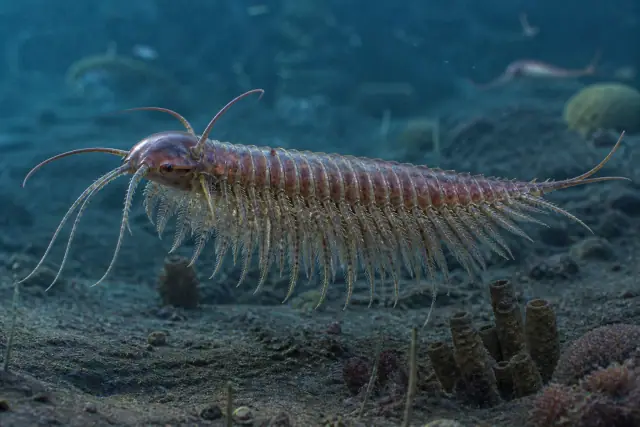
Marrella splendens
Two pairs of curved head spines, long antennae and dozens of fine legs made this two-centimeter arthropod exquisitely elaborate.
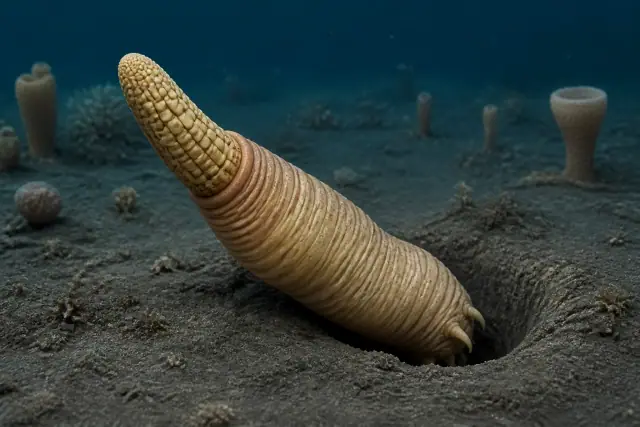
Ottoia prolifica
Its stout body hid in a U-shaped burrow while a spiny, hook-studded throat could turn inside out to seize food.
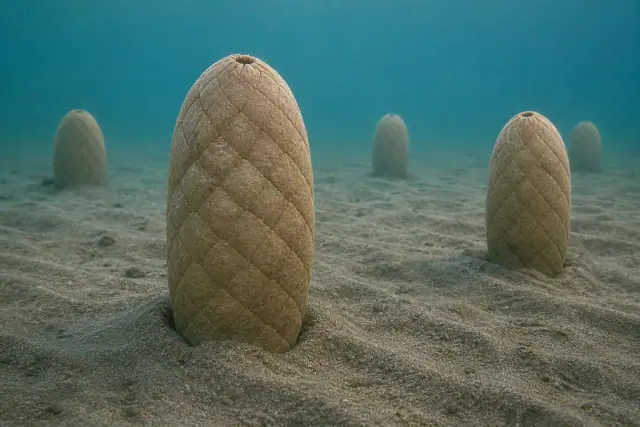
Ernietta plateauensis
Rows of quilted sacks lived half-buried in sand, forming one of the Ediacaran seafloor's strangest communities.
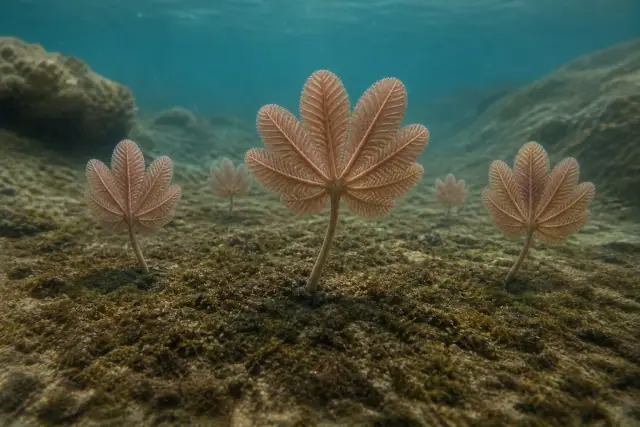
Rangea schneiderhoehni
Six branching vanes surrounded a central axis, making the organism resemble a soft pine cone standing on the seabed.
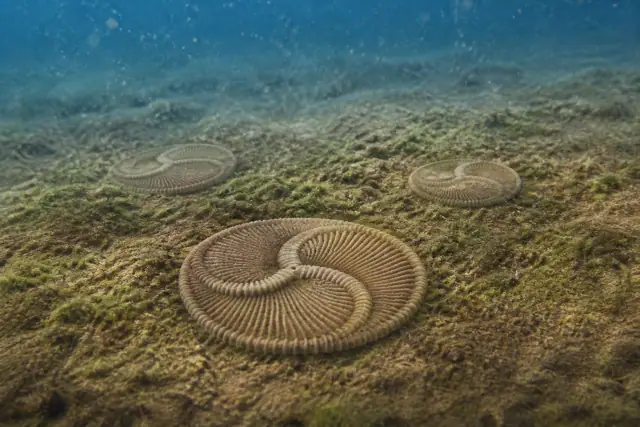
Tribrachidium heraldicum
Three curving spiral arms created a body symmetry almost absent among living animals.
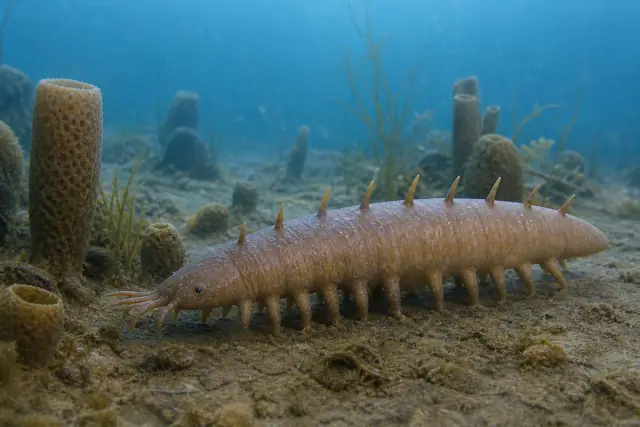
Aysheaia pedunculata
Ten pairs of stubby legs beneath a soft body place it near the early history of velvet worms and arthropods.
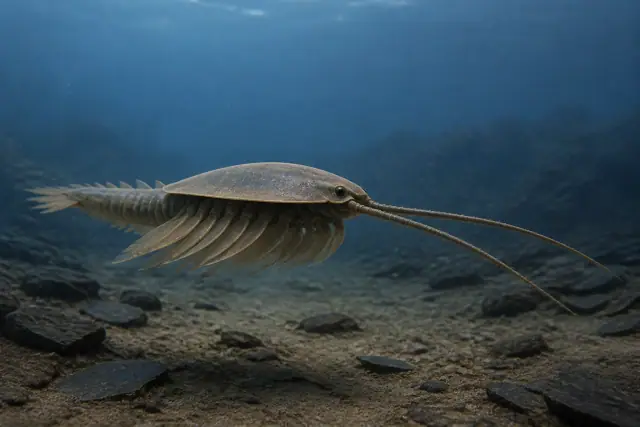
Leanchoilia superlata
A pair of great appendages ended in three long whips that could sense, seize and move food.
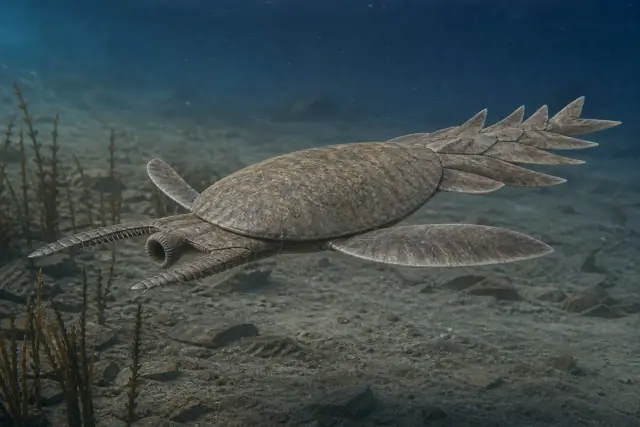
Hurdia victoria
A huge domed carapace covered its head, giving this radiodont the outline of a tiny finned submarine.
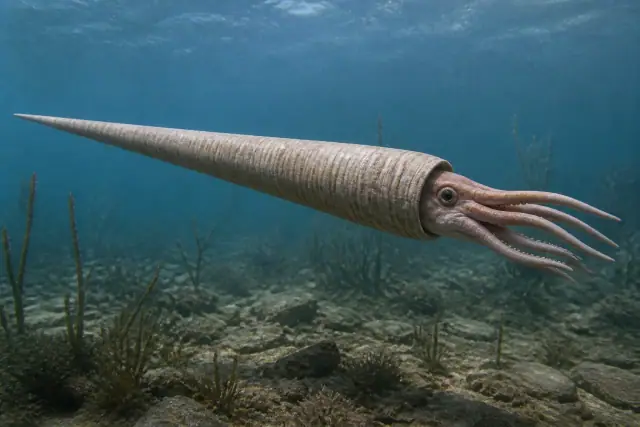
Endoceras giganteum
A straight conical shell several meters long made it one of the most conspicuous large cephalopods of Ordovician seas.
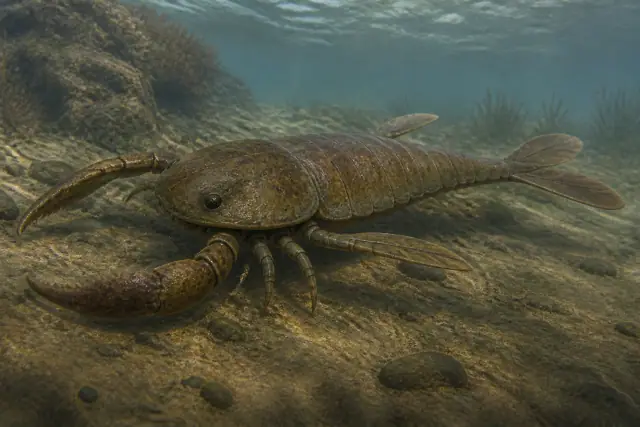
Pterygotus anglicus
Flattened swimming paddles and great toothed claws made it a formidable hunter in Silurian water.
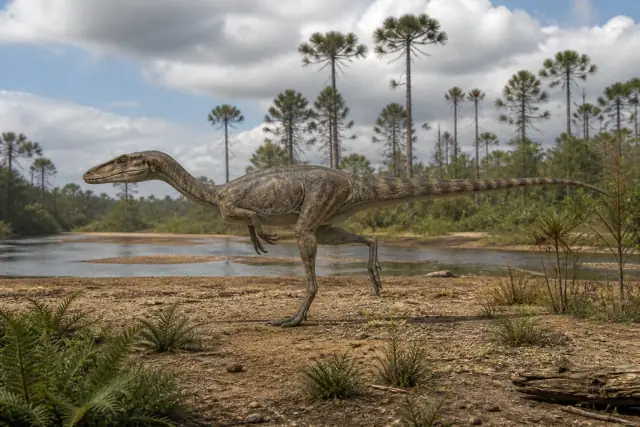
Staurikosaurus pricei
This lightly built two-meter hunter represents an early branch from the first dinosaur diversification.
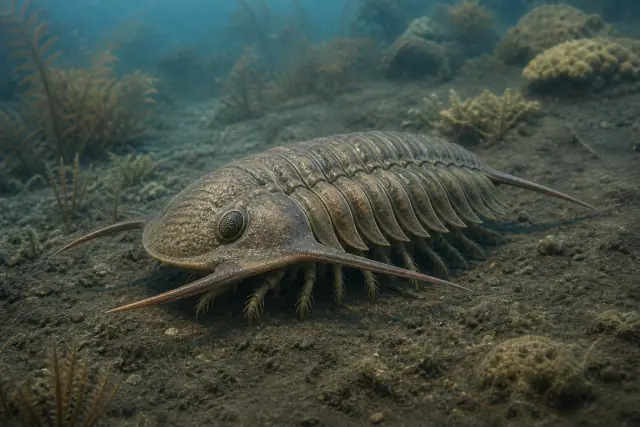
Olenoides serratus
Its antennae, gills and clawed legs reveal far more than a mineralized trilobite shell.
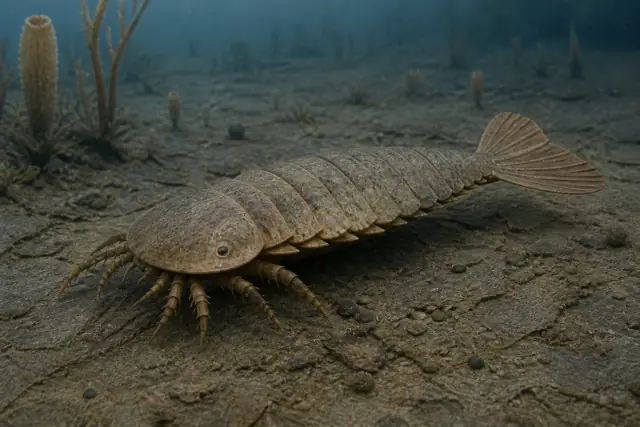
Sidneyia inexpectans
Robust leg bases formed crushing jaws for small trilobites and other shelled prey.
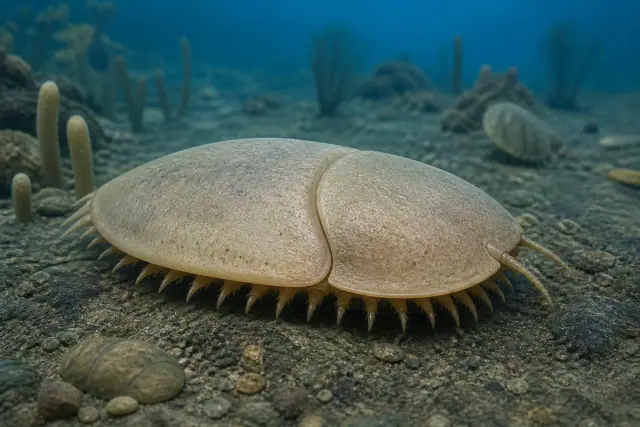
Naraoia compacta
Two large shields covered a soft body equipped with fully segmented trilobite-like limbs.
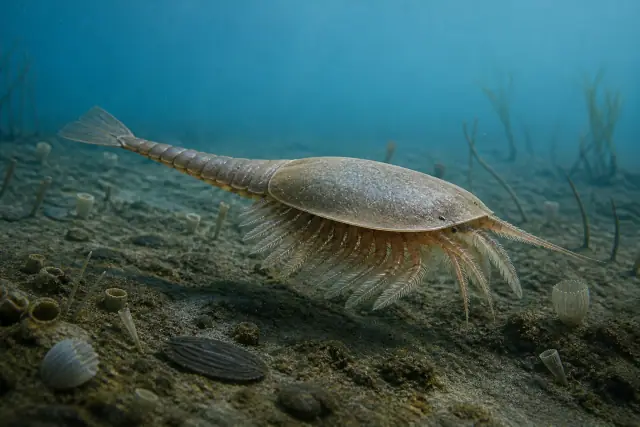
Waptia fieldensis
A bivalved carapace, compound eyes and mandibles reveal an early mandibulate; some fossils preserve embryos under the carapace.
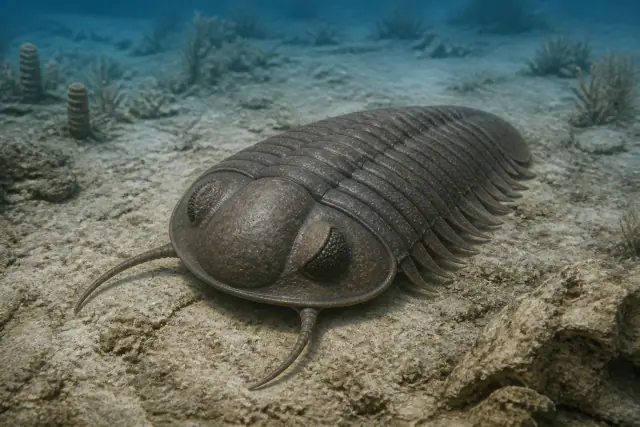
Isotelus rex
At nearly seventy centimeters, it is among the largest complete trilobites ever found.
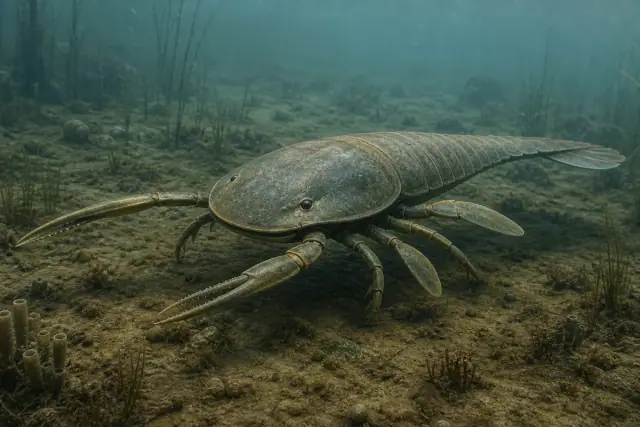
Acutiramus cummingsi
Its long pincers carried slanting blades suited to holding or slicing soft prey.
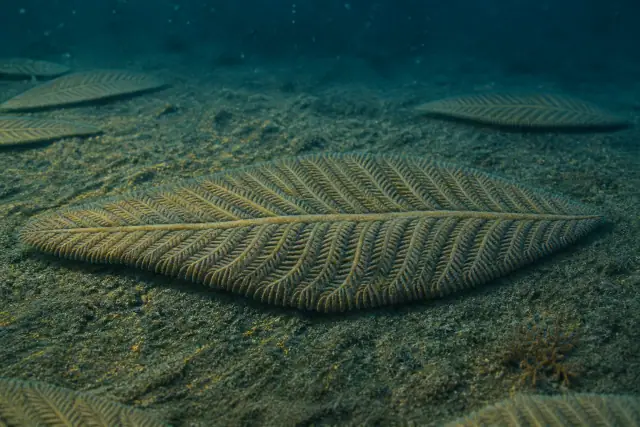
Fractofusus misrai
Its quilted branches lay flat rather than rising from a stem.
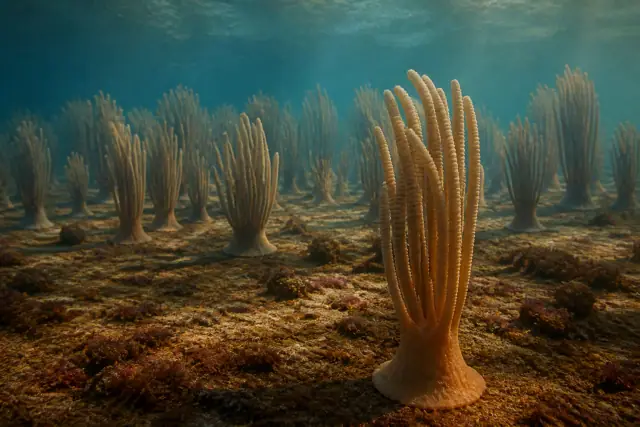
Funisia dorothea
Dense stands of narrow tubes formed one of the earliest large colonial scenes.
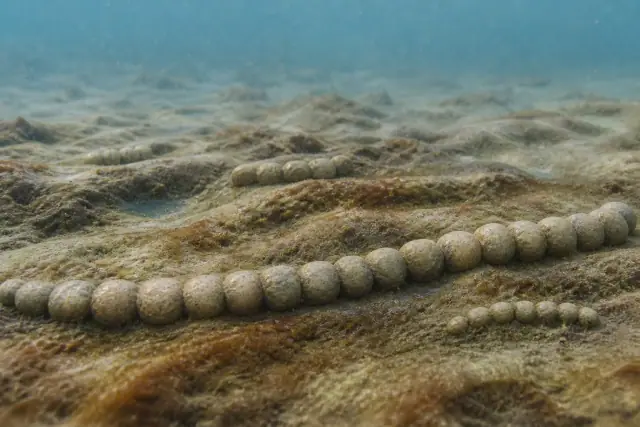
Horodyskia moniliformis
Bead-like discs arranged in strings may record an early macroscopic colony.
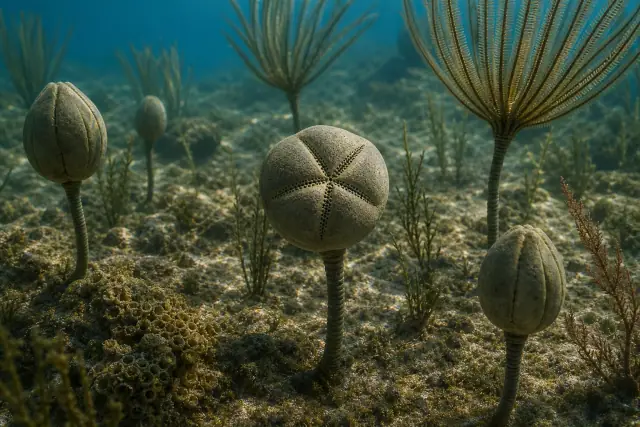
Pentremites godoni
A flower-bud body carried five feeding and respiratory grooves.
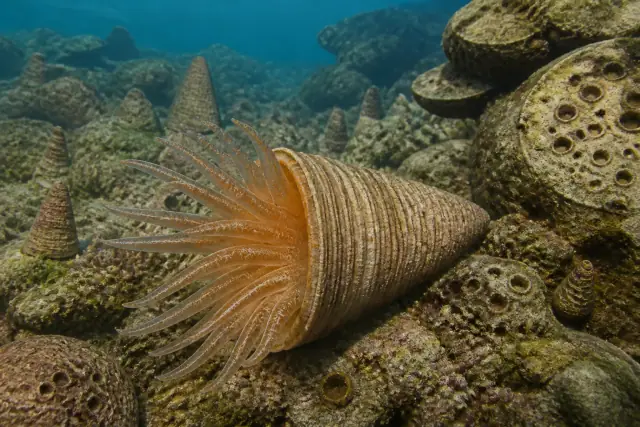
Heliophyllum halli
Radiating septa inside a horn-shaped skeleton resemble a stone sun.
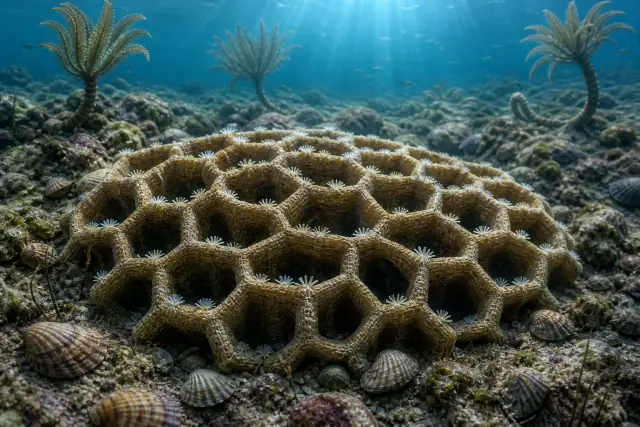
Halysites catenularius
Linked tubes formed honeycomb chains across Paleozoic reefs.
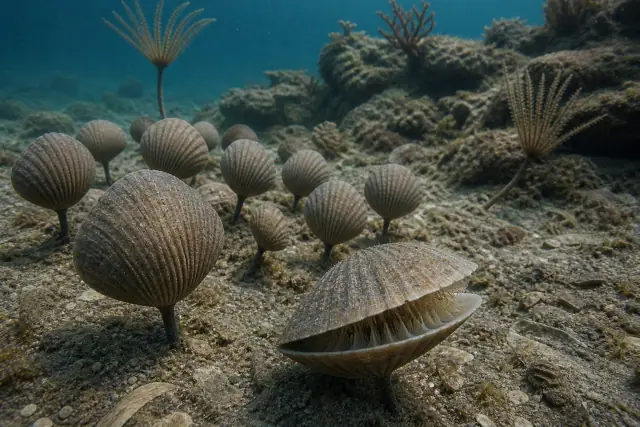
Atrypa reticularis
Fine radial ribs covered rounded shells that once crowded ancient seabeds.
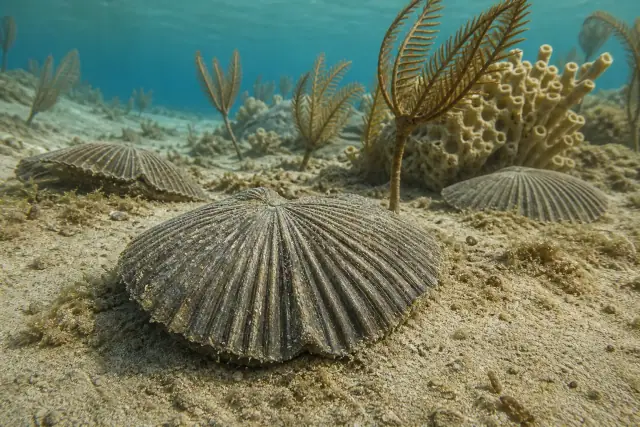
Paraspirifer bownockeri
A broad hinge line formed stone wings that stabilized the shell on soft mud.
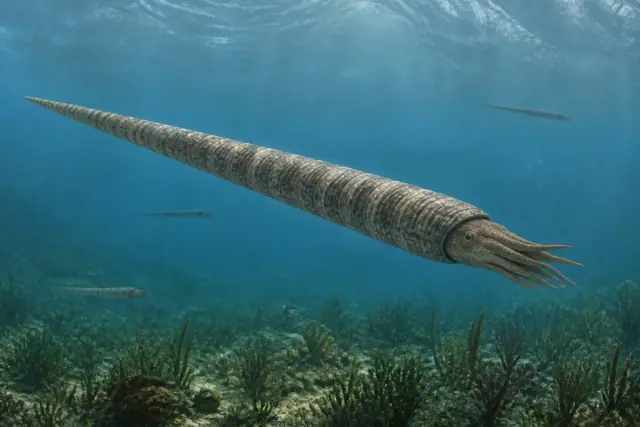
Baculites compressus
Its adult shell stretched into a near-straight rod while retaining ammonite sutures.
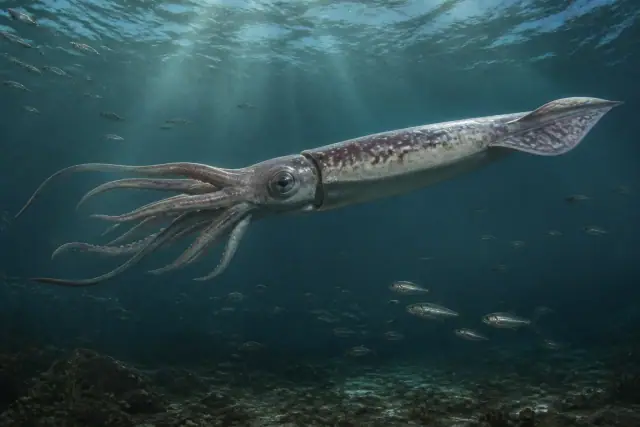
Tusoteuthis longa
A huge internal shell identifies a large coleoidean, though total length remains uncertain.
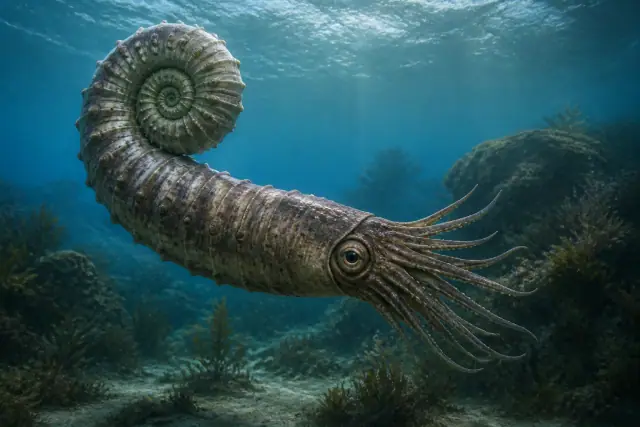
Scaphites nodosus
The juvenile shell coiled tightly before the adult chamber uncoiled and hooked back.
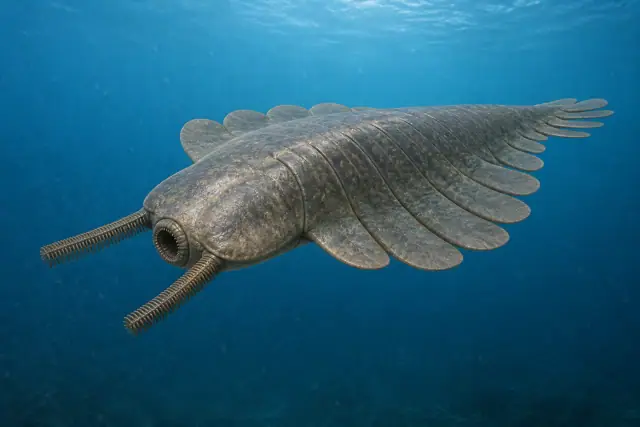
Aegirocassis benmoulai
A two-meter filter-feeding radiodont was an early analogue of giant plankton feeders.
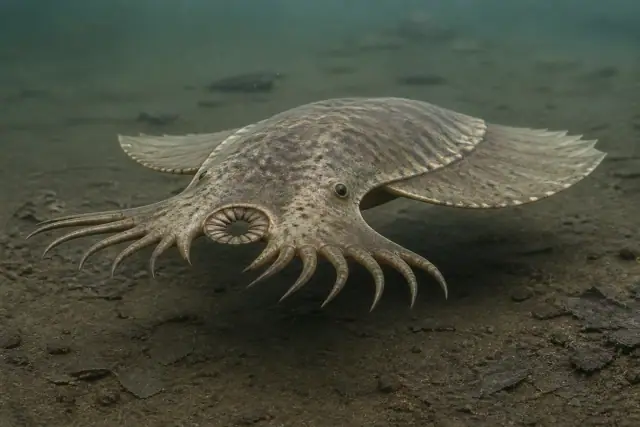
Cambroraster falcatus
A horseshoe-shaped carapace and rake-like appendages made a mobile sediment sifter.
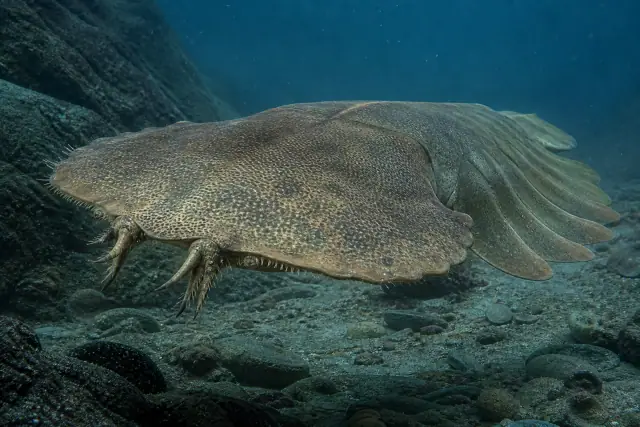
Titanokorys gainesi
An enormous head shield covered most of this bottom-feeding radiodont.
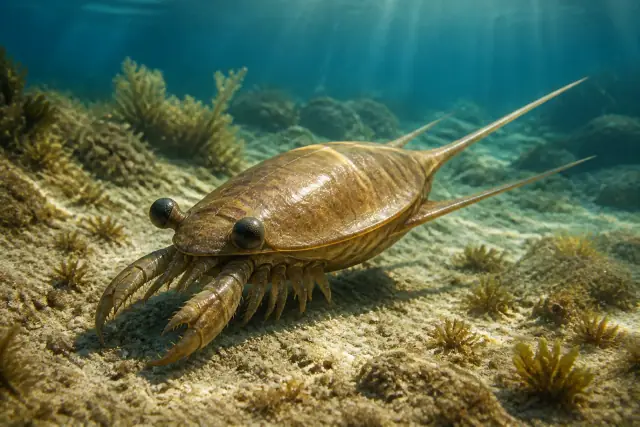
Isoxys curvirostratus
Isoxys curvirostratus was a small arthropod with a spined carapace, stalked eyes and grasping frontal appendages.
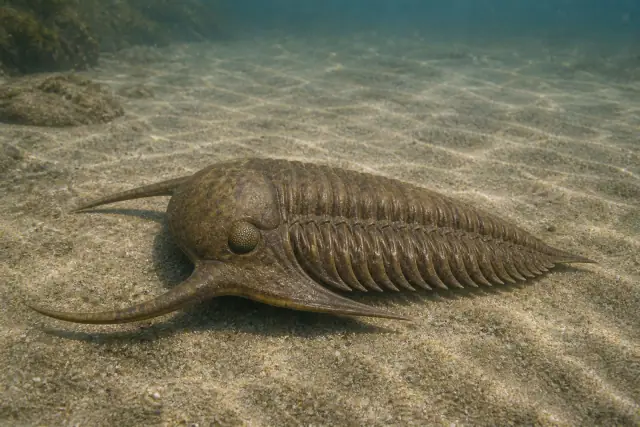
Olenellus thompsoni
A broad head, long genal spines and many trunk segments marked an early trilobite radiation.
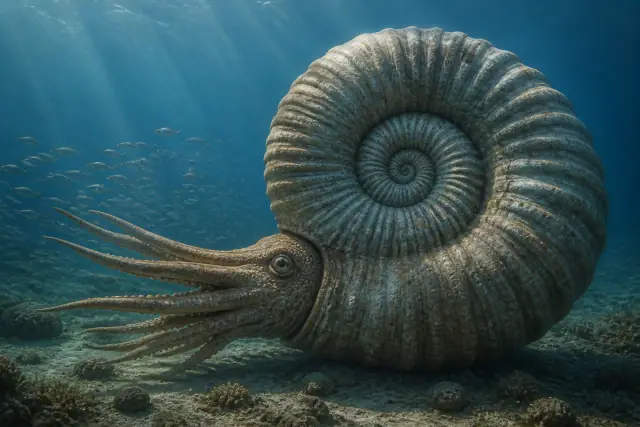
Parapuzosia seppenradensis
A coiled shell nearly two meters wide belonged to the largest known ammonite.
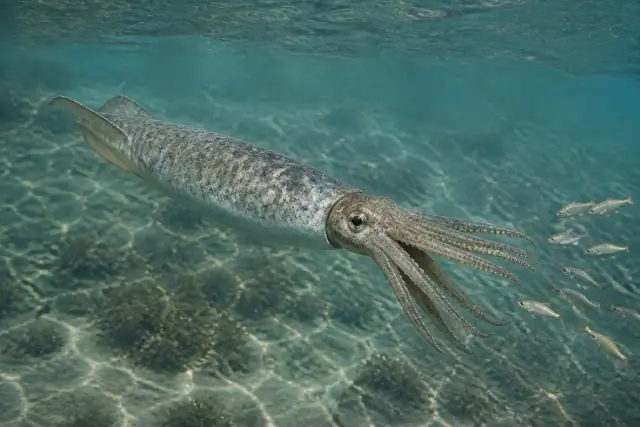
Belemnotheutis antiquus
Rare soft tissues restore the ink sac, fins and ten hooked arms around an internal shell.
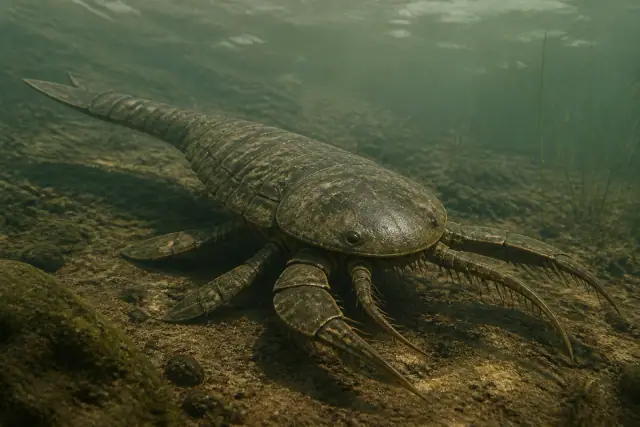
Hibbertopterus scouleri
A giant sea scorpion that raked soft sediment for food; a Scottish trackway suggests an animal about 1.6 m long.
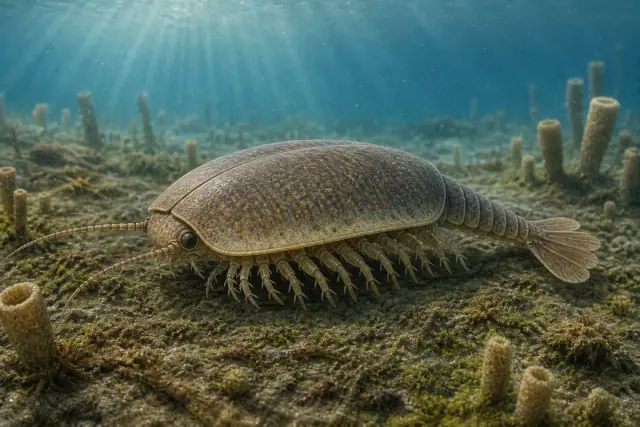
Canadaspis perfecta
Two broad valves enclosed a segmented body while antennae, limbs and a tail fan projected outside.
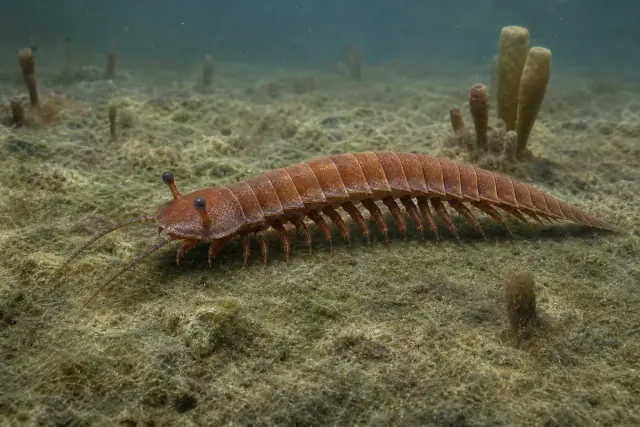
Fuxianhuia protensa
Its nervous, circulatory and limb anatomy makes it central to studies of early arthropod organization.
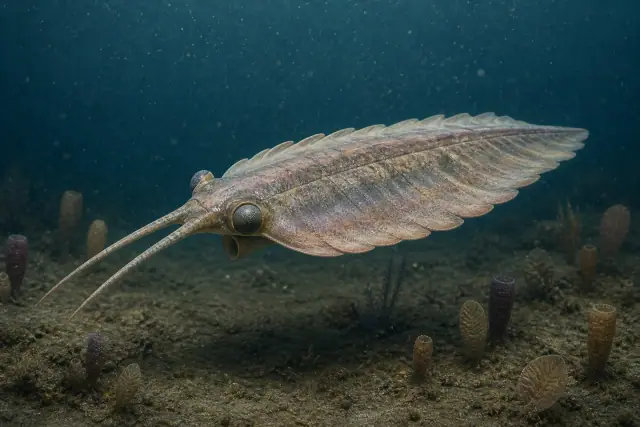
Nectocaris pteryx
Paired fins, a funnel and tentacle-like appendages form one of the Cambrian's most puzzling swimmers.
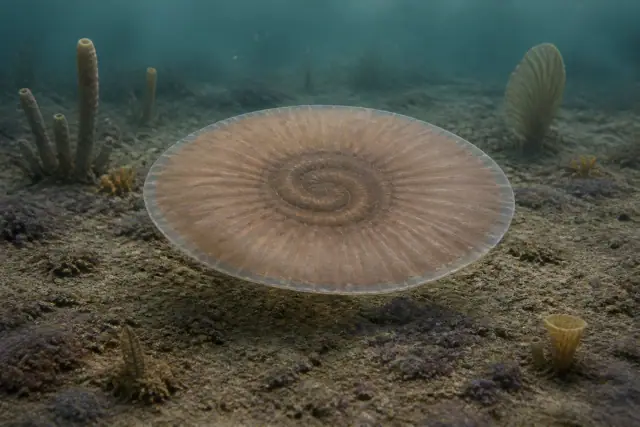
Eldonia ludwigi
A coiled gut lay inside a soft circular disc that may have drifted or lived near the bottom.
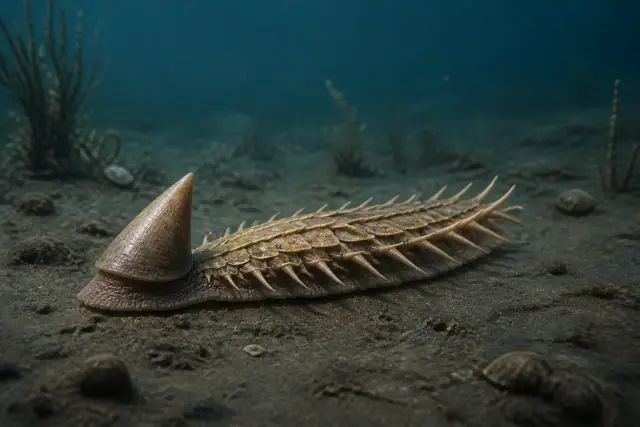
Orthrozanclus reburrus
Scales, long spines and a small front shell combined several Cambrian body plans.
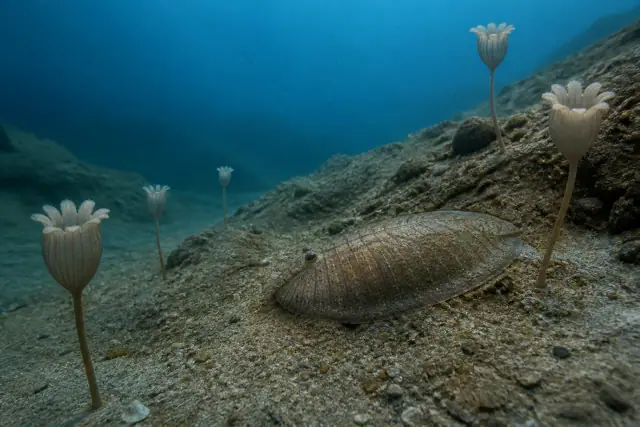
Dinomischus isolatus
A cup-shaped body attached by a long stalk and opened through a petal-ringed top.
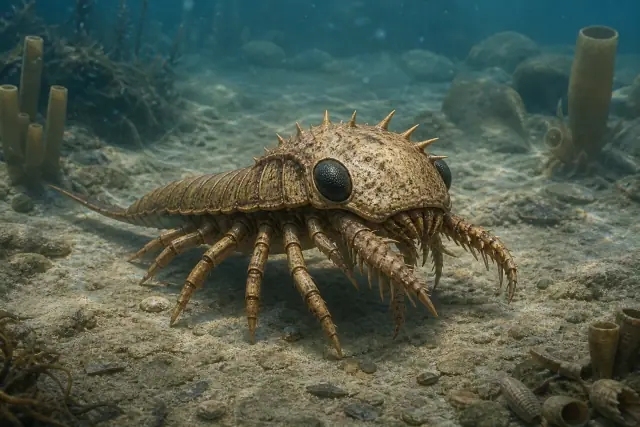
Habelia optata
A spiny head shield and specialized appendages belonged near the chelicerate stem.
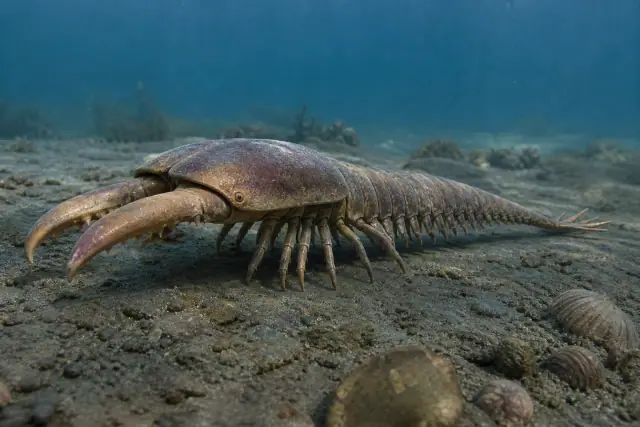
Tokummia katalepsis
Large pincer-like mandibles projected beneath a bivalved shell on an early mandibulate.
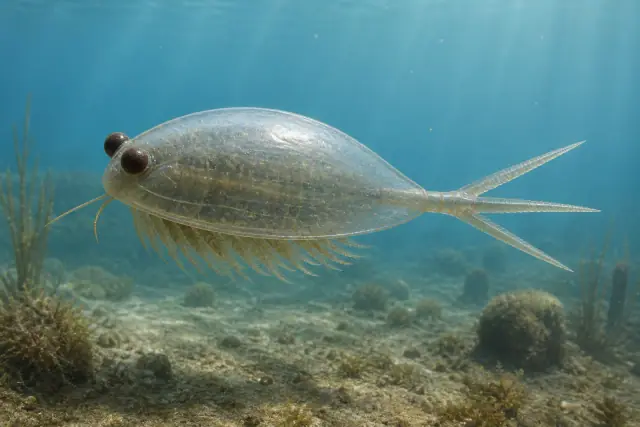
Odaraia alata
A broad bivalved shell enclosed most of the body and a three-pronged tail steered it.
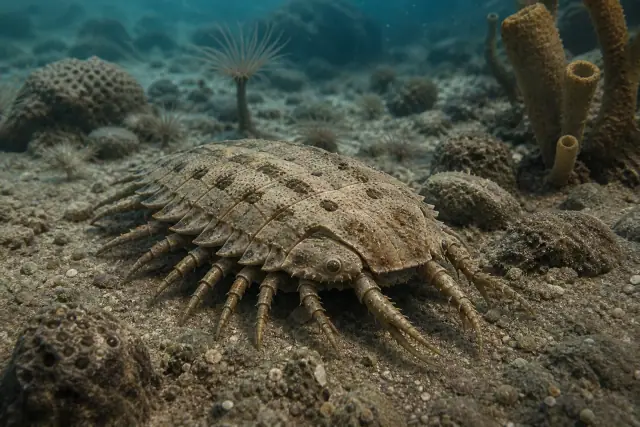
Mollisonia symmetrica
A tiny armored body and pincer-like front appendages suggest an early chelicerate relative.
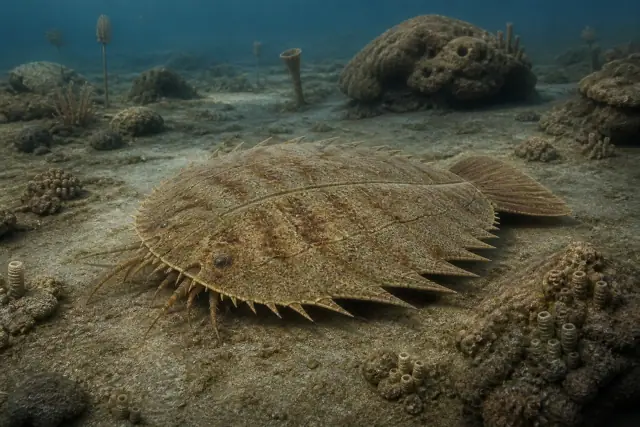
Helmetia expansa
A broad flat shield with marginal spines and a leaf-like tail formed an unusual outline.
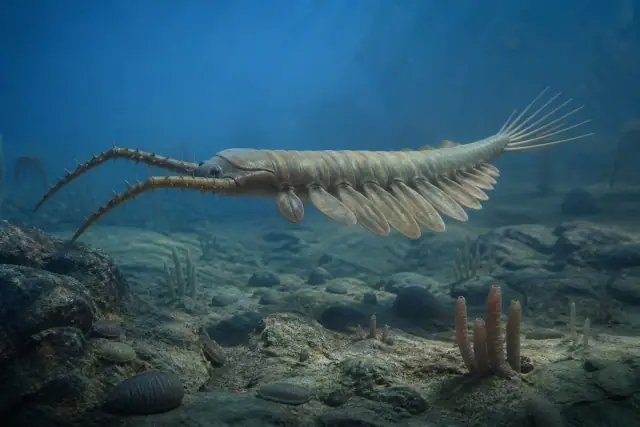
Kerygmachela kierkegaardi
Long frontal appendages, side flaps and tail spines record a stem-panarthropod body.
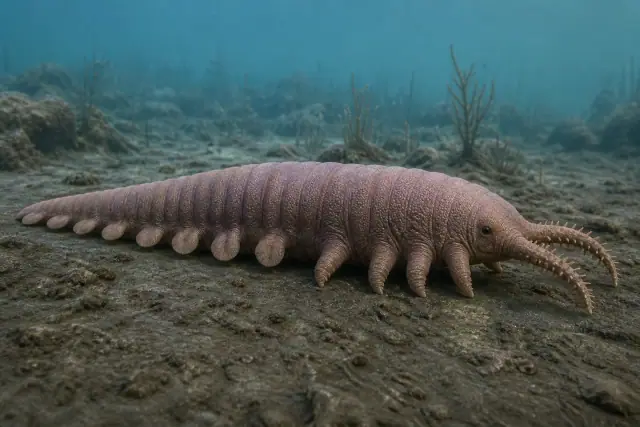
Pambdelurion whittingtoni
Large frontal appendages, rows of swimming flaps and an annulated soft body link lobopodians with true arthropods.