04Paleozoic
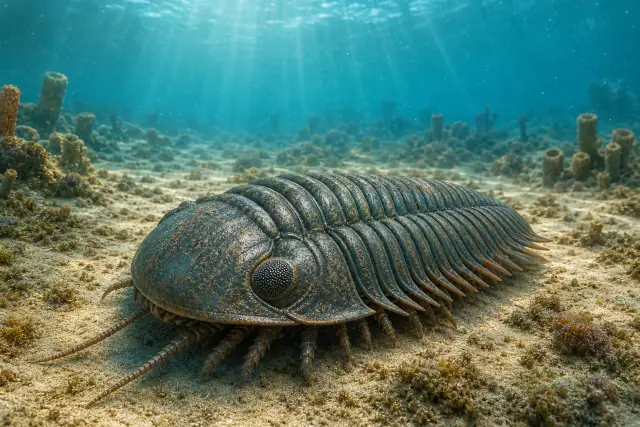
Trilobites
Trilobita
They occupied seafloors for nearly 300 million years, and their compound eyes preserve secrets of early vision.
 EXTINCT ATLASEXTINCT LIFE ARCHIVE
Era
From the Cambrian marine radiation to the end-Permian mass extinction.
01 / ANSWER FIRST
The Paleozoic saw animal body plans diversify in the oceans, plants and vertebrates colonise land, forests transform climate and the largest known mass extinction close the era.
02 / TIME & EVOLUTION
Six periods run from the Cambrian radiation through Ordovician seas, Silurian–Devonian land colonisation, Carboniferous forests and Permian continental interiors.
03 / TURNOVER & EXTINCTION
Five major crises affected Paleozoic ecosystems, culminating in the end-Permian extinction about 252 million years ago.
04 / KEY THEMES
Rapid diversification produced many durable animal body plans.
Plants, arthropods and vertebrates built terrestrial ecosystems.
Warming, anoxia and volcanism transformed the biosphere.
05 / EVIDENCE
Marine shells, reef limestones, fish skeletons, trackways, coal forests and volcanic ash beds create a highly varied record.
06 / FAQ
The Paleozoic saw animal body plans diversify in the oceans, plants and vertebrates colonise land, forests transform climate and the largest known mass extinction close the era.
Marine shells, reef limestones, fish skeletons, trackways, coal forests and volcanic ash beds create a highly varied record.
Five major crises affected Paleozoic ecosystems, culminating in the end-Permian extinction about 252 million years ago.
07 / SOURCES
Trilobita
They occupied seafloors for nearly 300 million years, and their compound eyes preserve secrets of early vision.
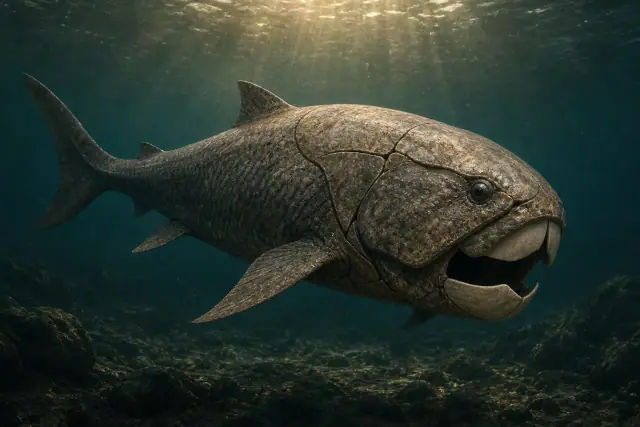
Dunkleosteus terrelli
Sharpened jaw plates replaced teeth in this heavily armored apex fish.
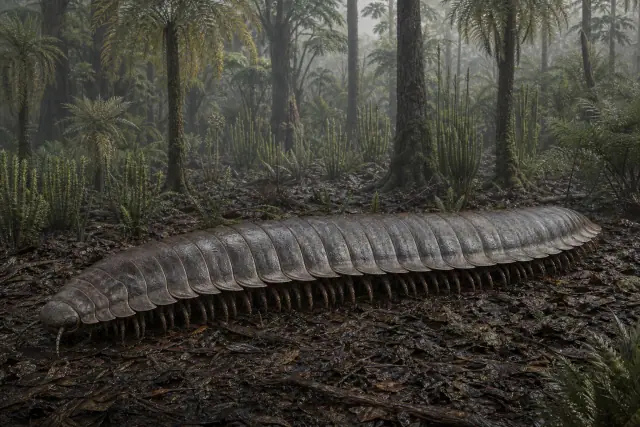
Arthropleura armata
This many-segmented arthropod grew longer than a person in coal-swamp forests.
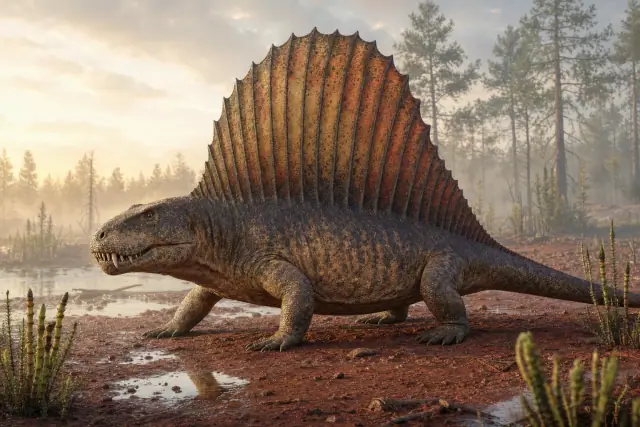
Dimetrodon grandis
This sail-backed predator was closer to mammals than to dinosaurs.
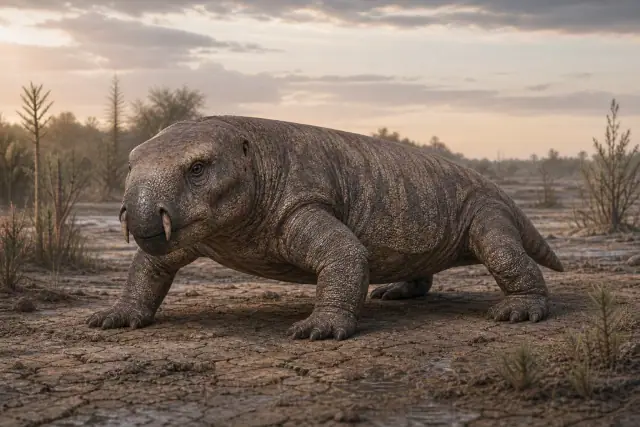
Lystrosaurus murrayi
A beaked, tusked survivor became extraordinarily common after Earth’s greatest mass extinction.
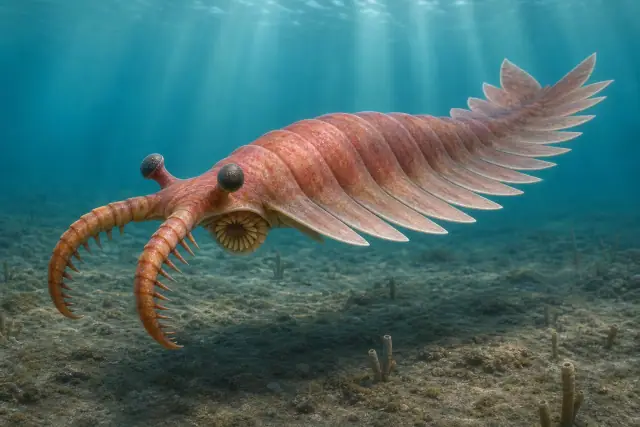
Anomalocaris canadensis
A meter-long swimmer with grasping frontal appendages was a giant of Cambrian seas.
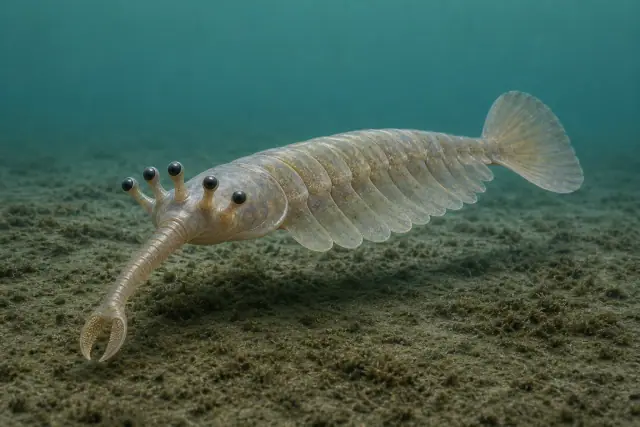
Opabinia regalis
Five eyes and a grasping proboscis made this small swimmer one of the Cambrian’s strangest forms.
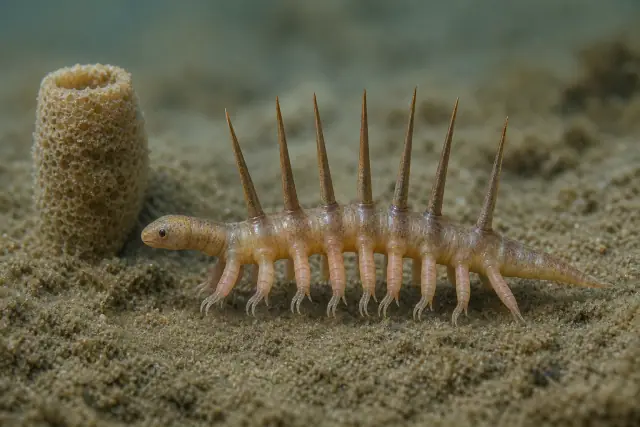
Hallucigenia sparsa
Paired spines guarded a soft-bodied walker once reconstructed upside down.
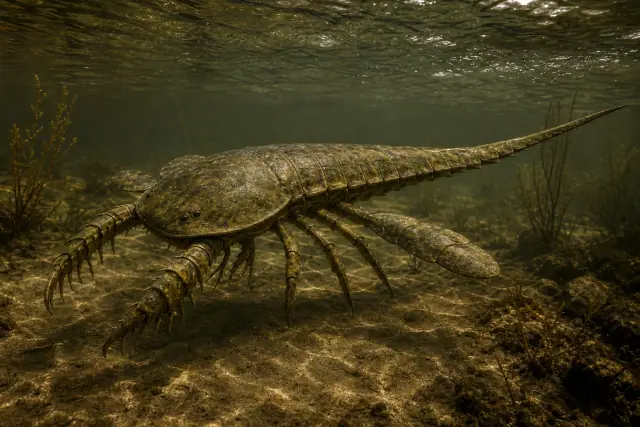
Jaekelopterus rhenaniae
This giant sea scorpion may have exceeded two meters in length.
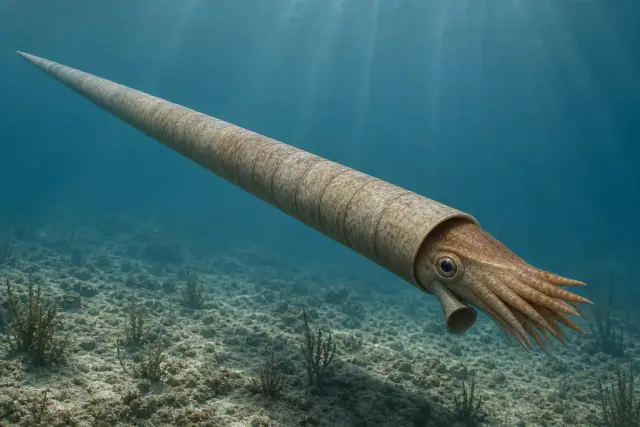
Cameroceras trentonense
A long straight shell housed one of the largest predators of Ordovician seas.
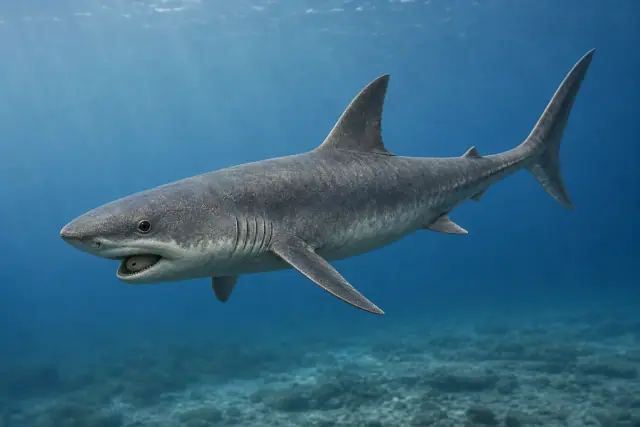
Helicoprion davisii
Its spiral tooth whorl worked like a permanent slicing blade inside the lower jaw.
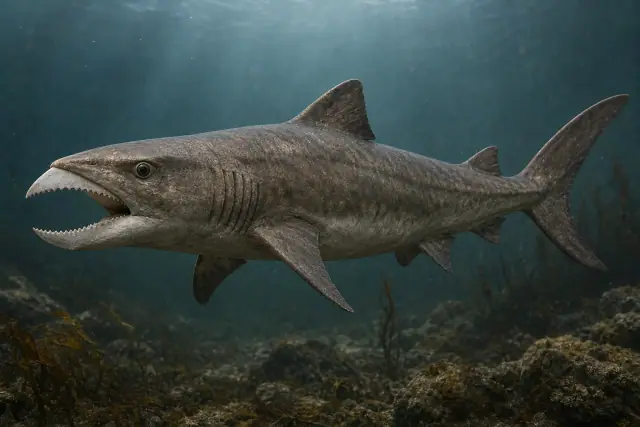
Edestus heinrichi
Opposing tooth blades projected from its jaws like curved shears.
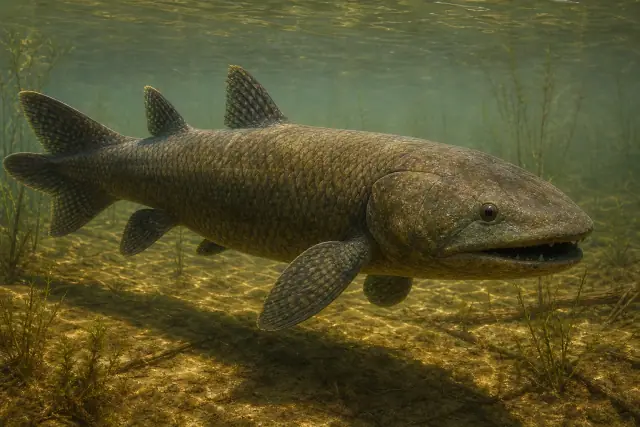
Eusthenopteron foordi
Bones inside its fleshy fins foreshadowed the limb pattern of land vertebrates.
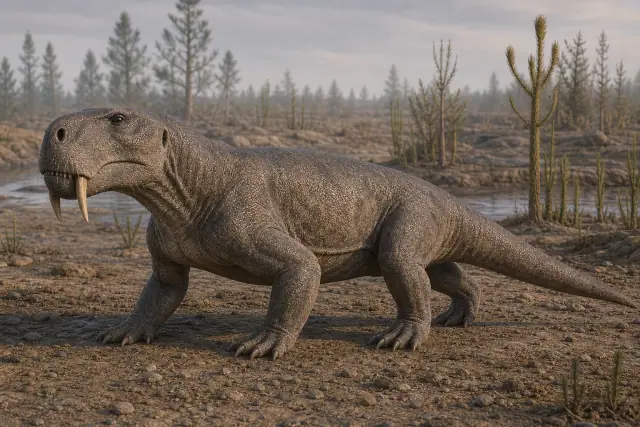
Inostrancevia alexandri
Long saber canines armed one of the largest predators of the latest Permian.
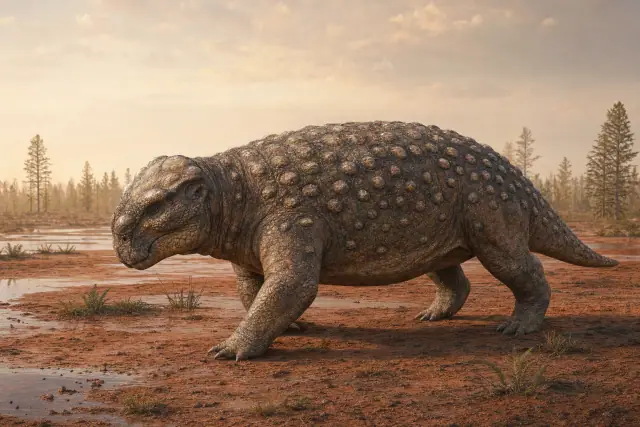
Scutosaurus karpinskii
A barrel-bodied herbivore carried bony armor beneath its skin.
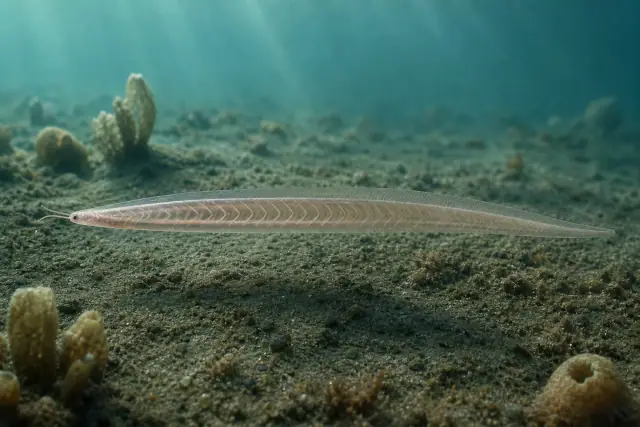
Pikaia gracilens
A slender body preserves repeated muscle blocks and internal traces important for interpreting early chordates.
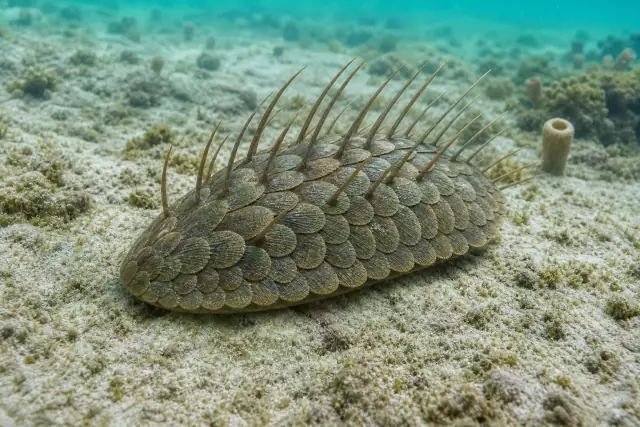
Wiwaxia corrugata
Rows of scales and long spines armored this small seafloor grazer.
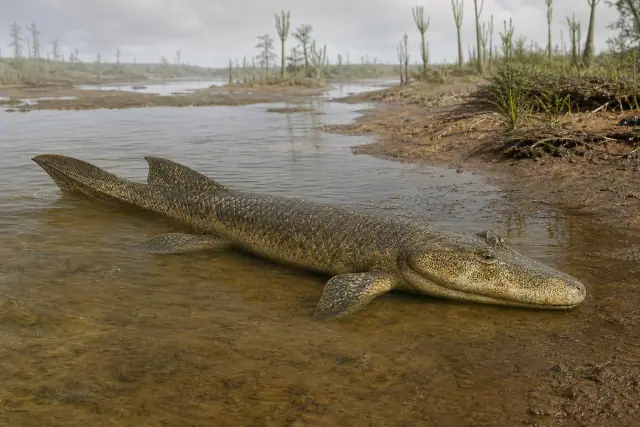
Tiktaalik roseae
A flat-headed fish with a mobile neck and wrist-like fin bones approached the anatomy of early tetrapods.
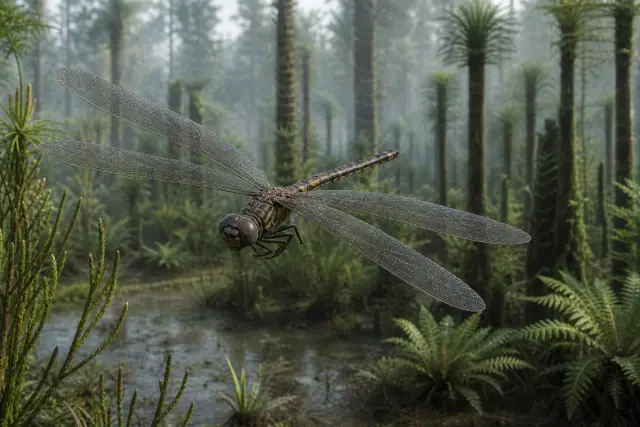
Meganeura monyi
This griffinfly’s wings spanned roughly seventy centimeters above Carboniferous forests.
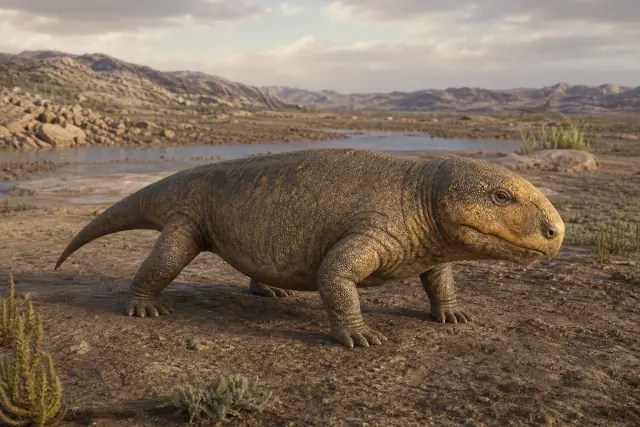
Moschops capensis
A thick skull roof capped this heavy plant-eating mammal relative.
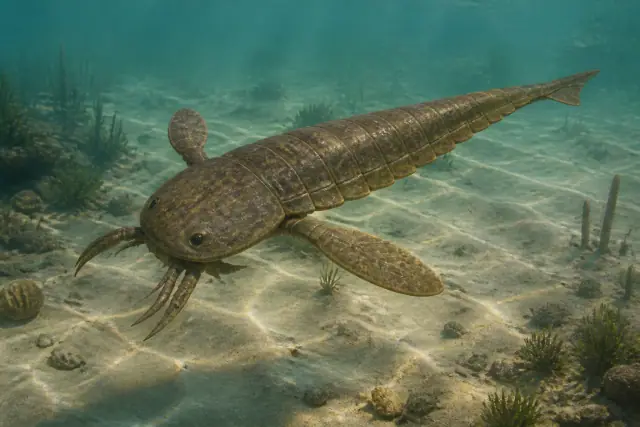
Eurypterus remipes
Paddle-shaped hind limbs carried this sea scorpion through shallow coastal water.
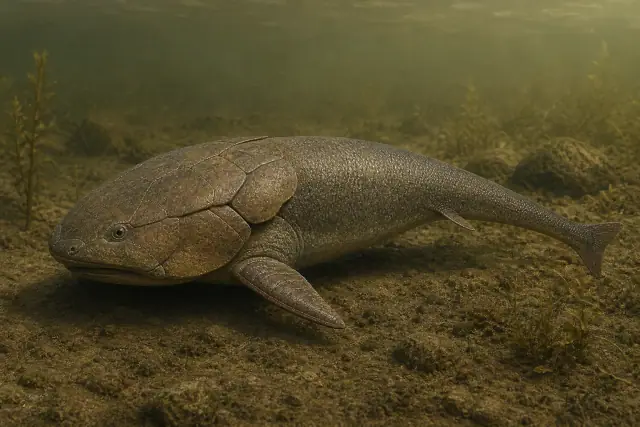
Bothriolepis canadensis
Bony armor enclosed its head and chest while jointed pectoral appendages steadied it on the bottom.
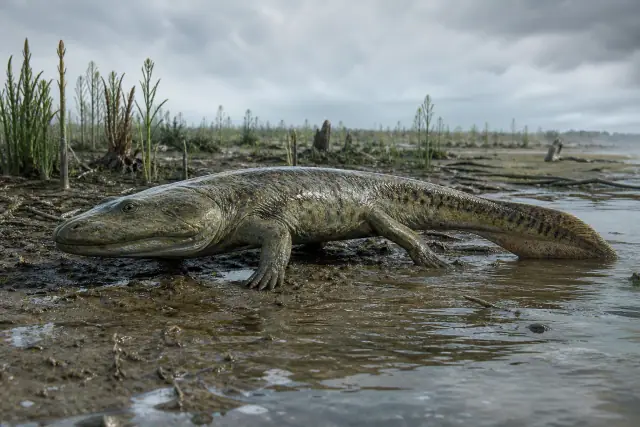
Ichthyostega stensioei
Weight-bearing limbs accompanied a fish-like tail in an animal still deeply tied to water.
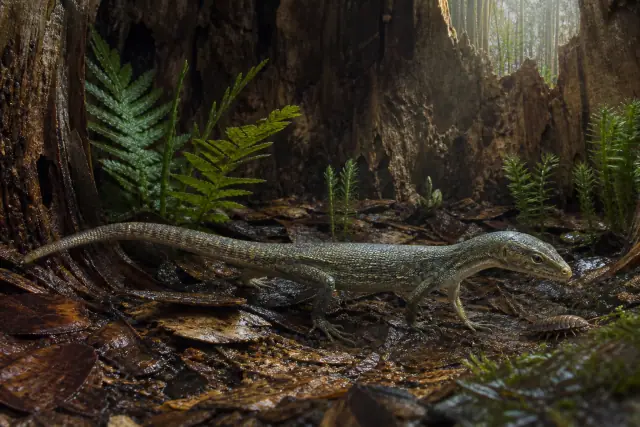
Hylonomus lyelli
This tiny insect hunter belonged to an early generation of vertebrates freed from laying eggs in water.
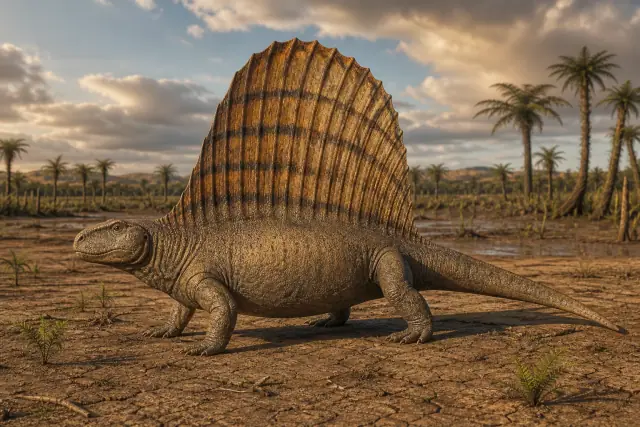
Edaphosaurus pogonias
Crossbars projected from the spines of its tall sail above a broad plant-processing body.
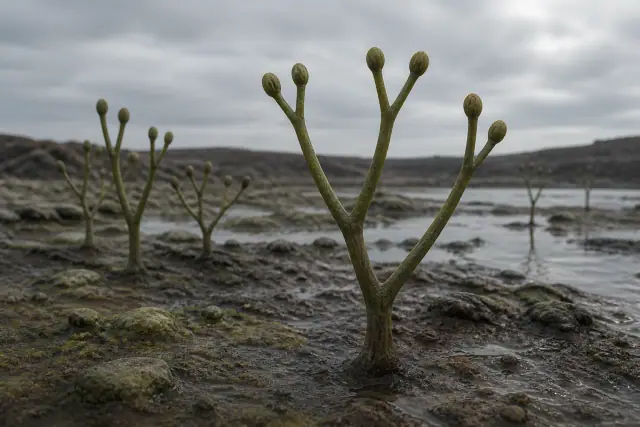
Cooksonia pertoni
Leafless stems only centimeters tall held spore capsules at their tips, marking an early step inland.
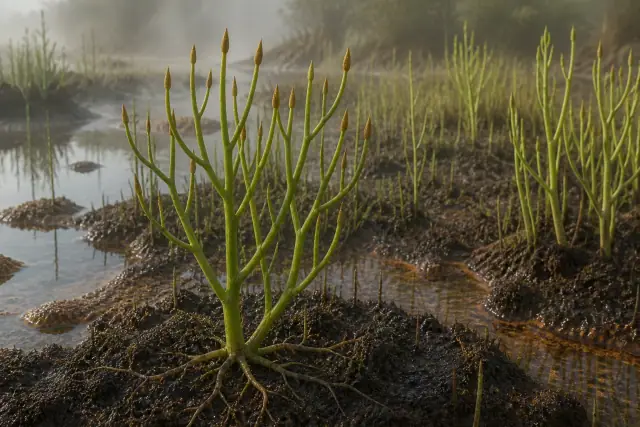
Rhynia gwynne-vaughanii
Naked upright axes rose from creeping rhizomes, preserved cell by cell by silica-rich hot springs.
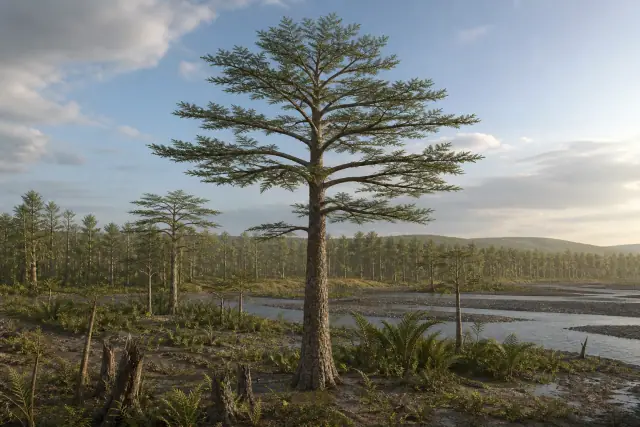
Archaeopteris halliana
It grew true wood and a tree crown but still reproduced by spores, helping create Earth's first broad forests.
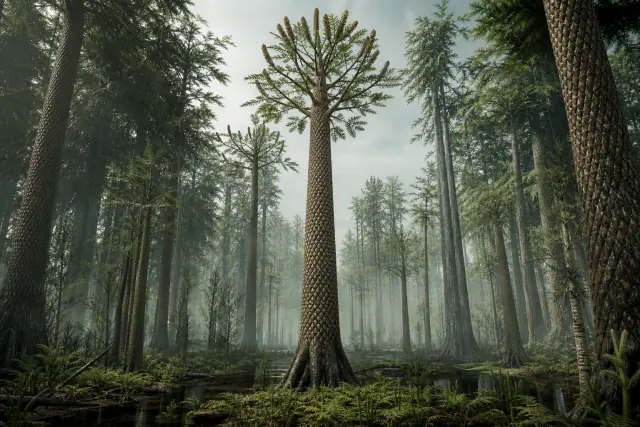
Lepidodendron aculeatum
A straight trunk patterned with diamond leaf scars forked only high above the Carboniferous mire.
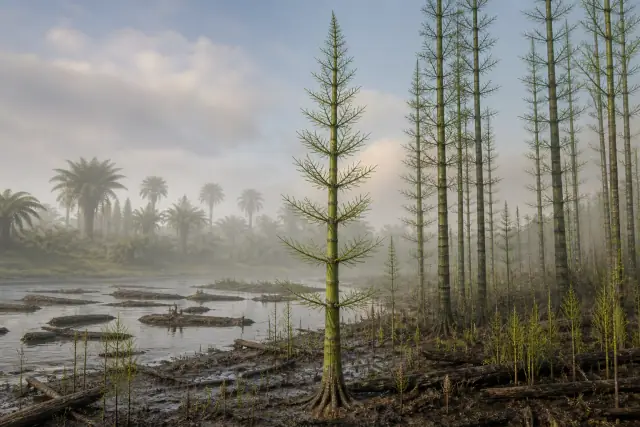
Calamites suckowii
Casts of jointed stems record large horsetail relatives; Calamites suckowii does not automatically name a plant with all organs known.
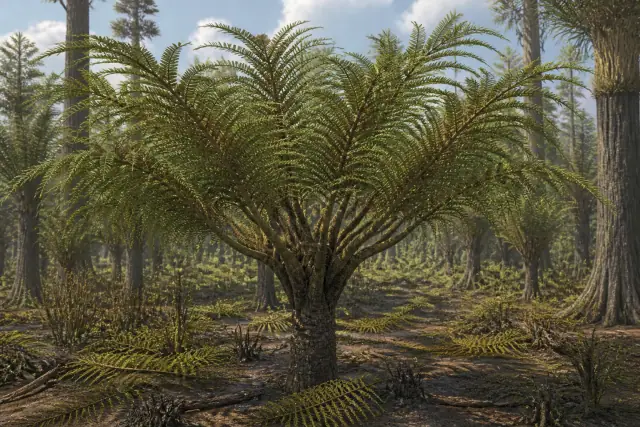
Medullosa noei
Woody stems carried immense fernlike fronds, yet seeds grew among the foliage of this vanished seed fern.
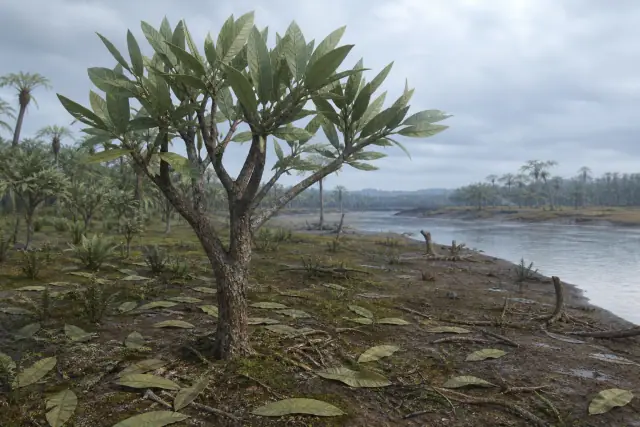
Glossopteris browniana
Tongue-shaped leaves across the southern continents became important evidence that Gondwana was once united.
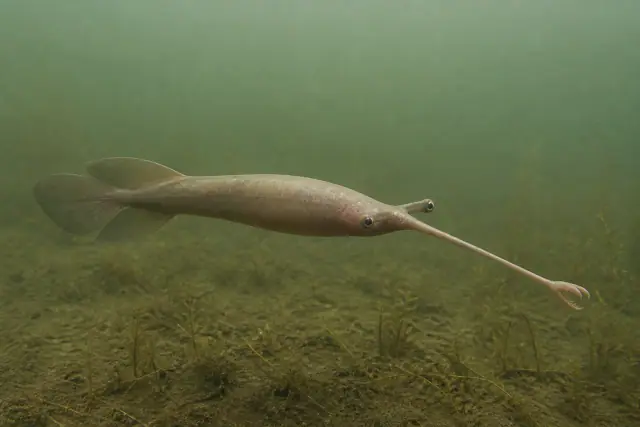
Tullimonstrum gregarium
Eyes sat at the ends of a crossbar and a long proboscis ended in a toothed grasping organ.
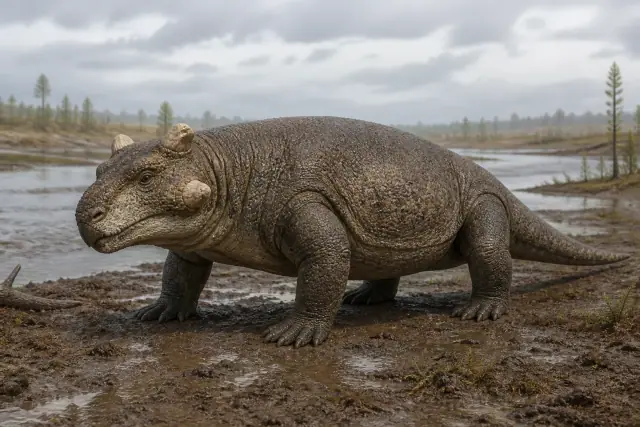
Estemmenosuchus uralensis
Paired bony bosses formed a rough crown on the skull of this large, probably plant-eating therapsid.
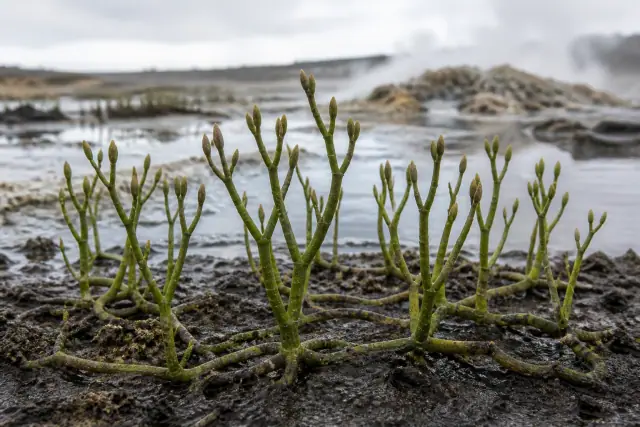
Aglaophyton major
Leafless axes rose in stands from creeping stems; conducting cells were present, but true vascular tissue was not.
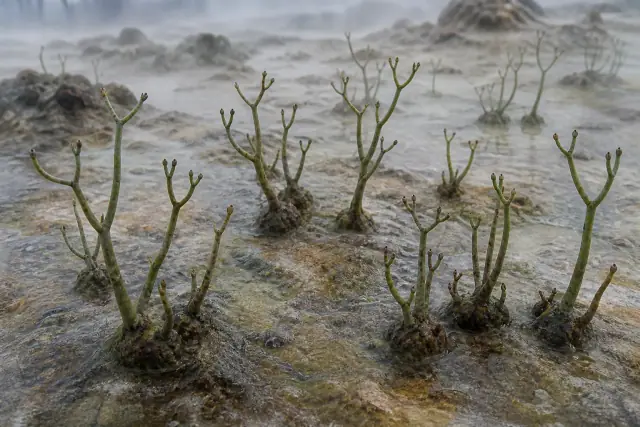
Horneophyton lignieri
Short axes carried forked sporangia above corm-like bases that could resprout on a repeatedly flooded hot-spring surface.
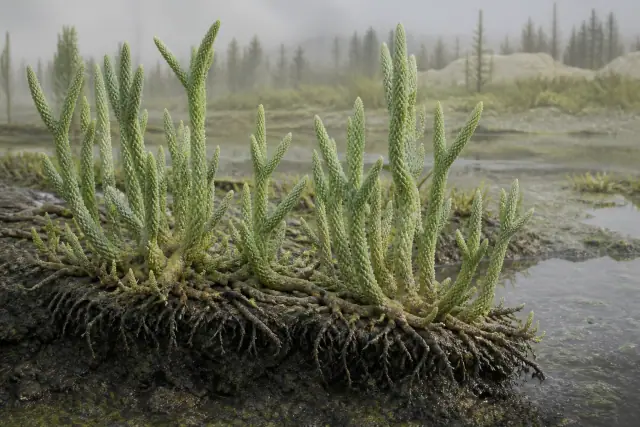
Asteroxylon mackiei
Veinless leaf-like flaps covered its axes, while star-shaped xylem supplied shoots that rose nearly half a meter.
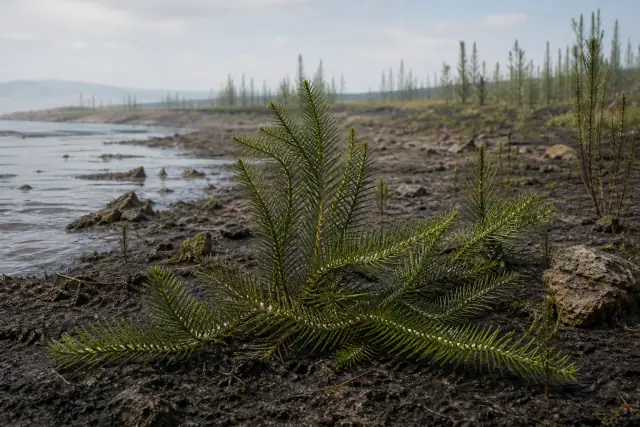
Baragwanathia longifolia
Branches more than a meter long carried dense narrow microphylls, far more elaborate than most naked-stemmed plants of its age.
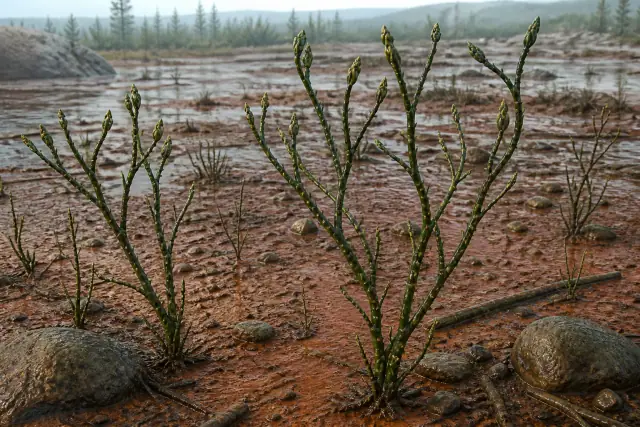
Psilophyton dawsonii
Naked axes forked repeatedly, their fertile tips curling inward and carrying paired elongated sporangia.
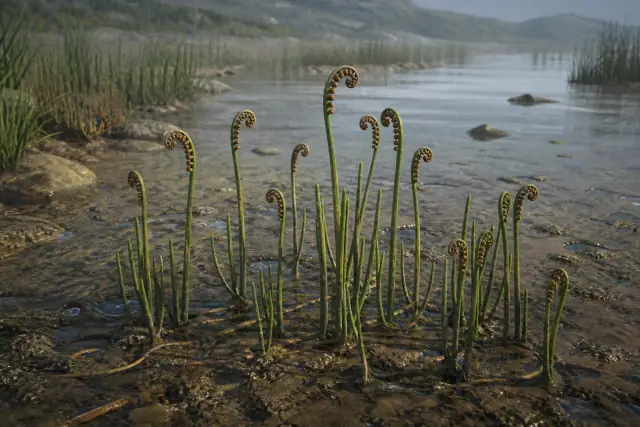
Zosterophyllum myretonianum
Two rows of kidney-shaped sporangia lined curved branch tips like the teeth of an unfinished botanical zipper.
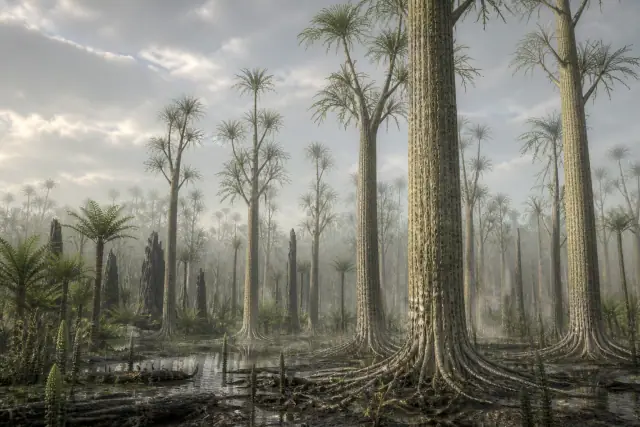
Sigillaria brardii
Vertical rows of leaf scars stamped the tall trunk, beneath a crown of sparse branches and grasslike microphylls.
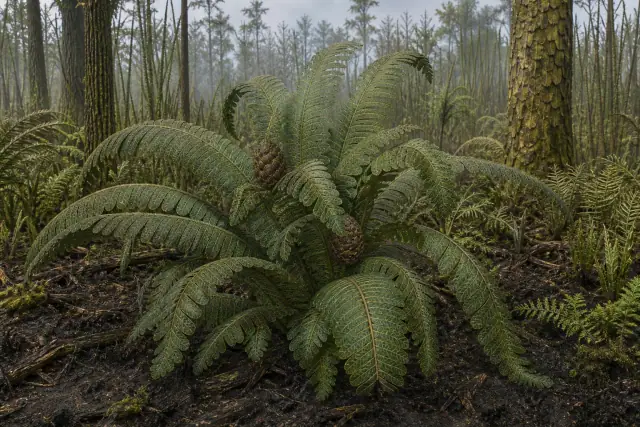
Neuropteris ovata
Rounded pinnules carried fanlike veins and looked fernlike, yet immense seeds grew among the fronds.
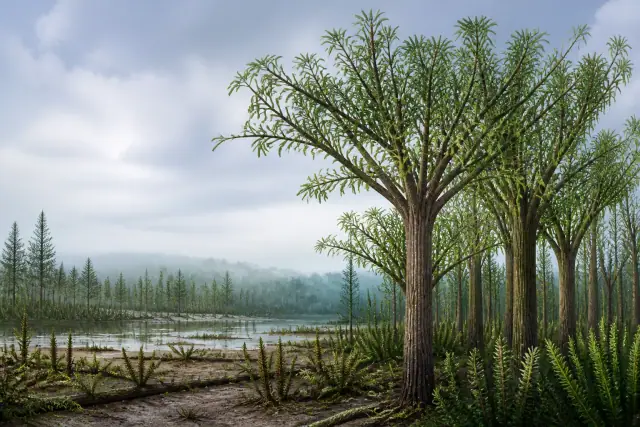
Cordaites principalis
Clusters of long strap-shaped leaves crowned woody trees from an extinct gymnosperm lineage near early conifers.
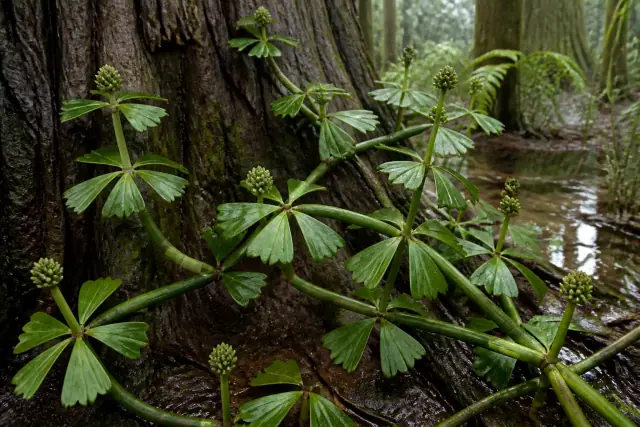
Sphenophyllum emarginatum
Six wedge-shaped leaves encircled each node of a slender stem that trailed across the ground or climbed larger trees.
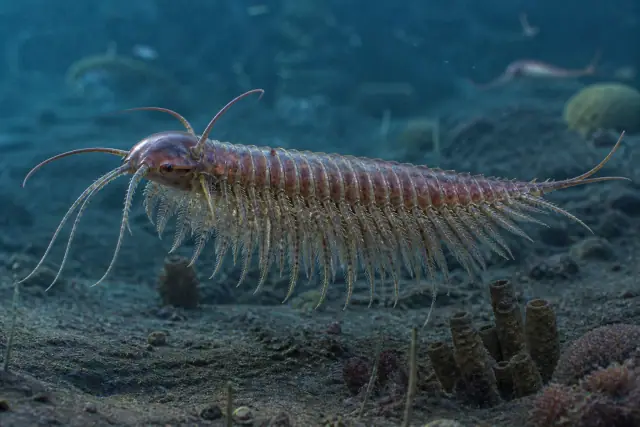
Marrella splendens
Two pairs of curved head spines, long antennae and dozens of fine legs made this two-centimeter arthropod exquisitely elaborate.
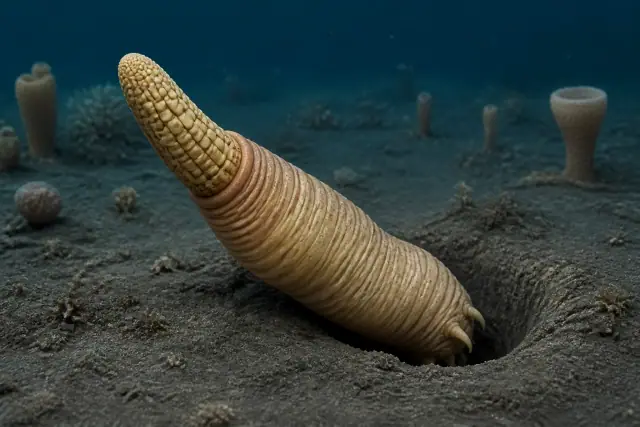
Ottoia prolifica
Its stout body hid in a U-shaped burrow while a spiny, hook-studded throat could turn inside out to seize food.
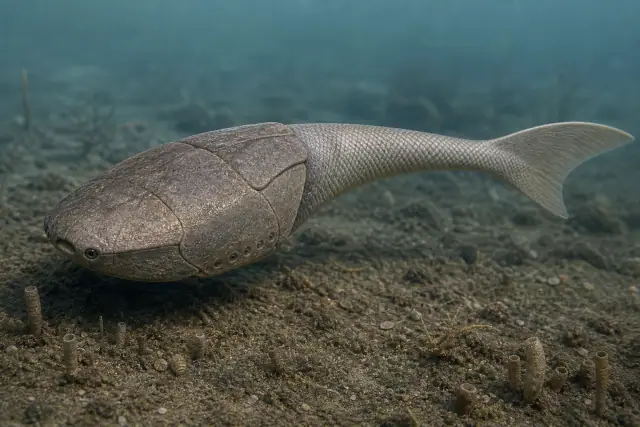
Sacabambaspis janvieri
An armored jawless fish with a broad head shield and an elongated tail; fossil distortion leaves parts of the tail outline uncertain.
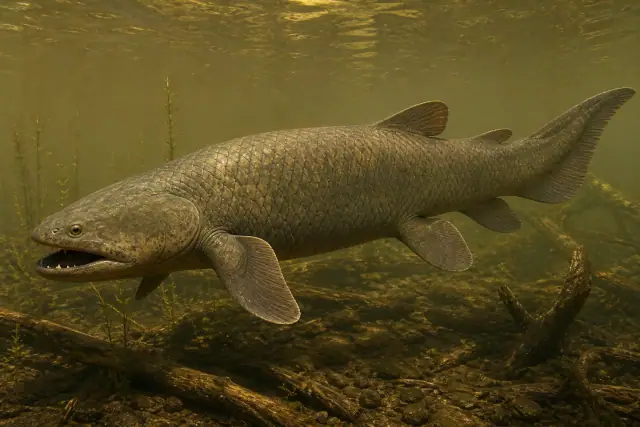
Hyneria lindae
This giant lobe-finned predator used fanglike teeth to ambush prey, while its fin skeleton followed a tetrapod-like pattern.
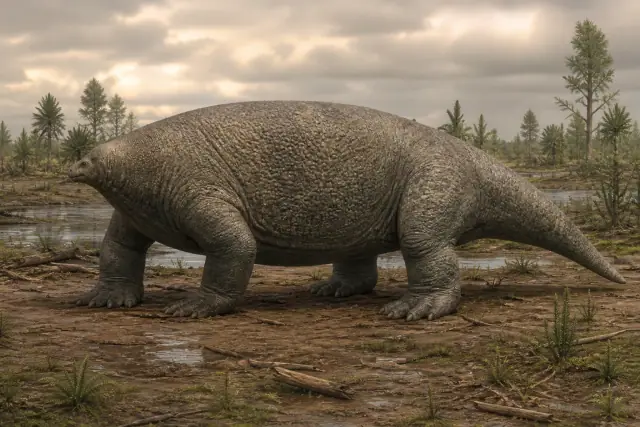
Cotylorhynchus romeri
A tiny head joined a barrel-shaped giant body whose broad ribs enclosed a vast plant-fermenting digestive system.
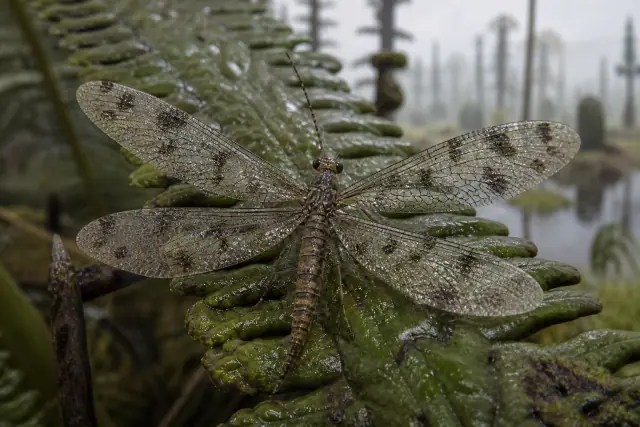
Delitzschala bitterfeldensis
A patterned wing only about two centimeters across pushes the secure record of insect flight into the Early Carboniferous.
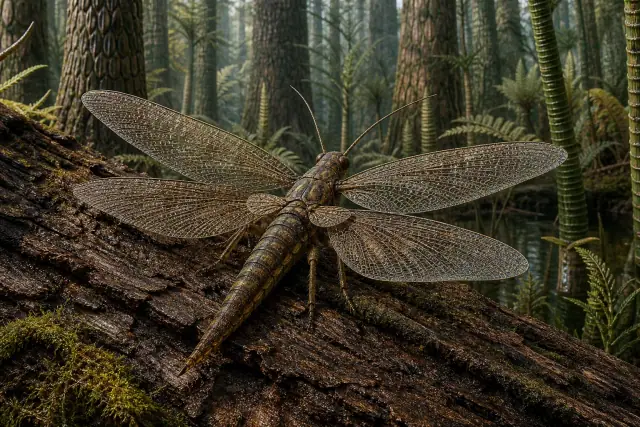
Stenodictya lobata
Beyond four wings packed with netlike veins, the thorax carried a pair of small immobile winglets.
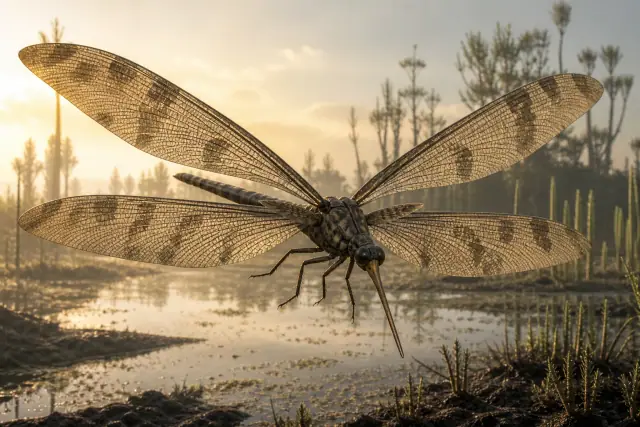
Mazothairos enormis
Scaling from the surviving giant wing suggests a four-winged span near half a meter, among the largest palaeodictyopterans known.
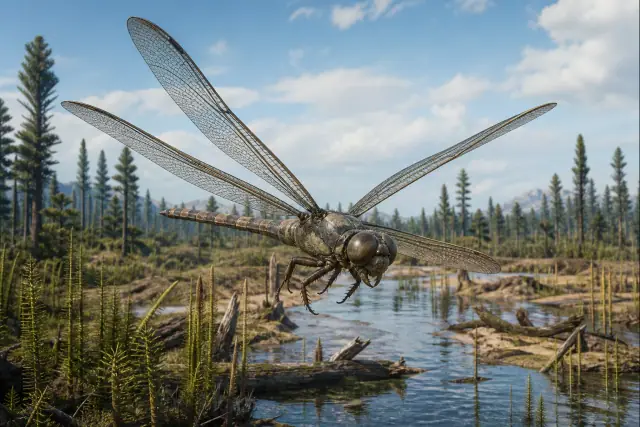
Meganeuropsis permiana
The largest estimates reach a 71-centimeter wingspan, placing it among the biggest flying insects in Earth history.
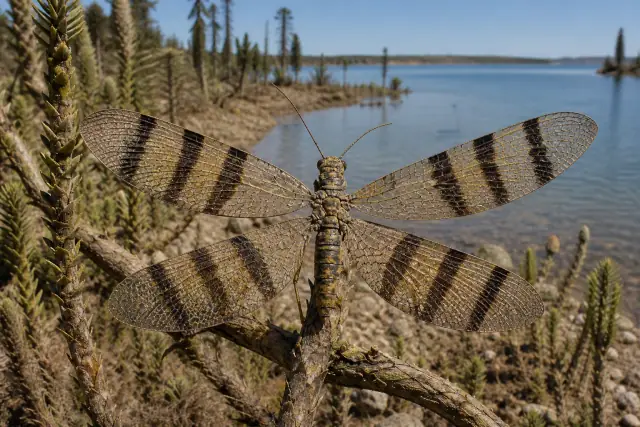
Dunbaria fasciipennis
Banded dark patterns remain on its fossil wings, returning color pattern to a Permian insect rather than a blank outline.
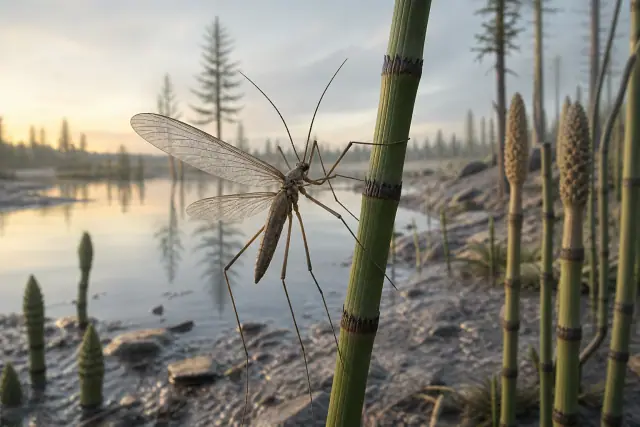
Permotipula patricia
A wing resembling that of a crane fly was once treated as an early dipteran clue, but its true affinity remains disputed.
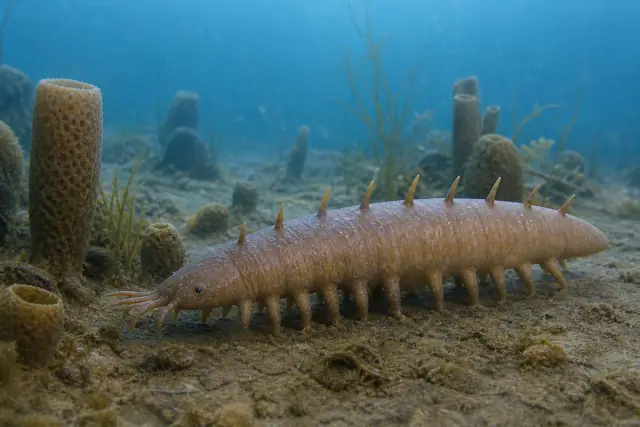
Aysheaia pedunculata
Ten pairs of stubby legs beneath a soft body place it near the early history of velvet worms and arthropods.
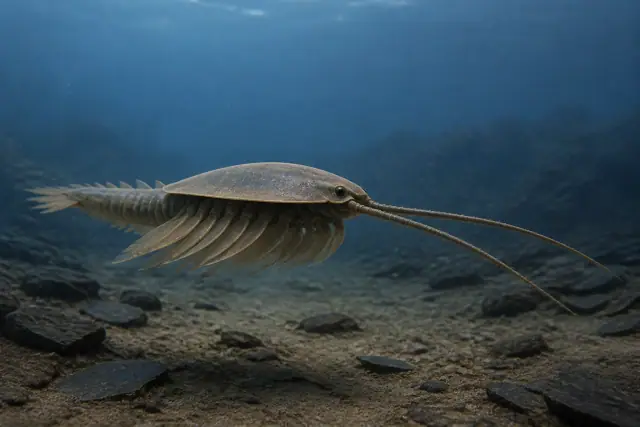
Leanchoilia superlata
A pair of great appendages ended in three long whips that could sense, seize and move food.
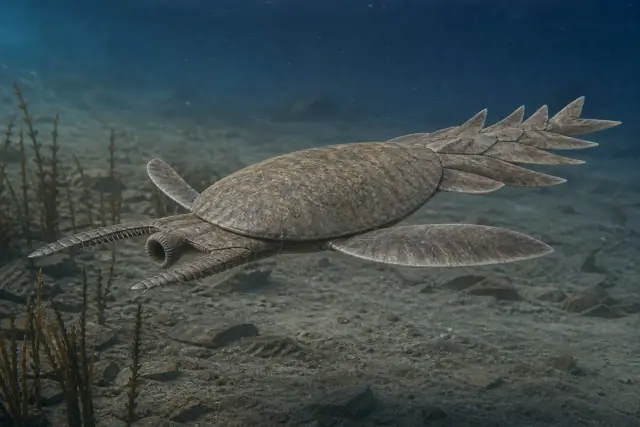
Hurdia victoria
A huge domed carapace covered its head, giving this radiodont the outline of a tiny finned submarine.
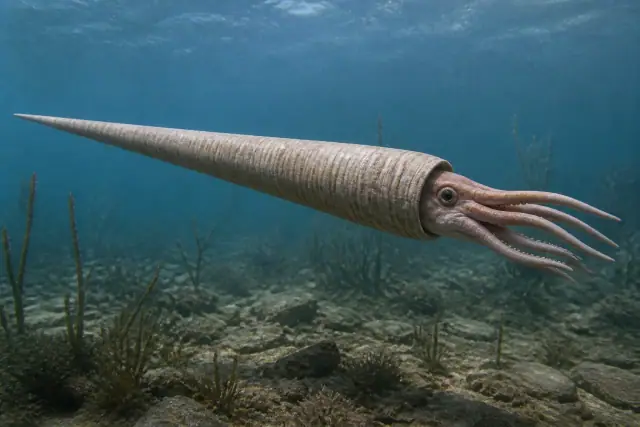
Endoceras giganteum
A straight conical shell several meters long made it one of the most conspicuous large cephalopods of Ordovician seas.
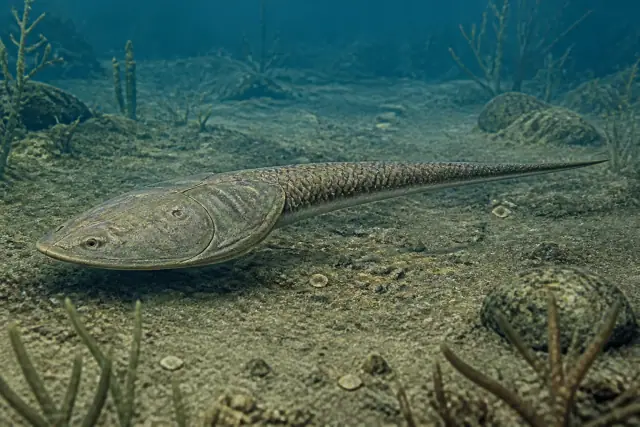
Arandaspis prionotolepis
It lacked jaws and paired fins, but its head and gill region were enclosed within strong armor.
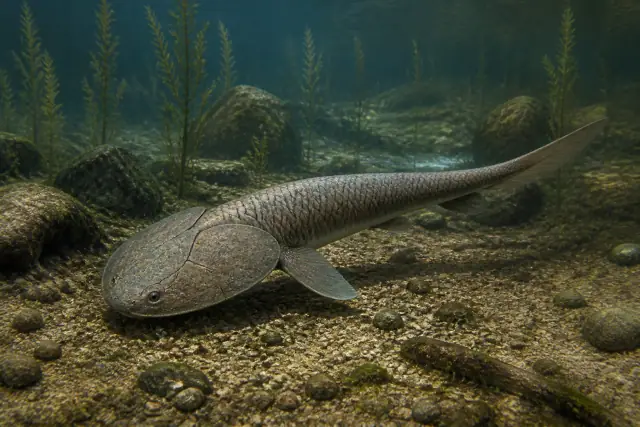
Cephalaspis lyelli
Sensory fields beneath a broad crescent-shaped head shield helped it search through turbid bottom water.
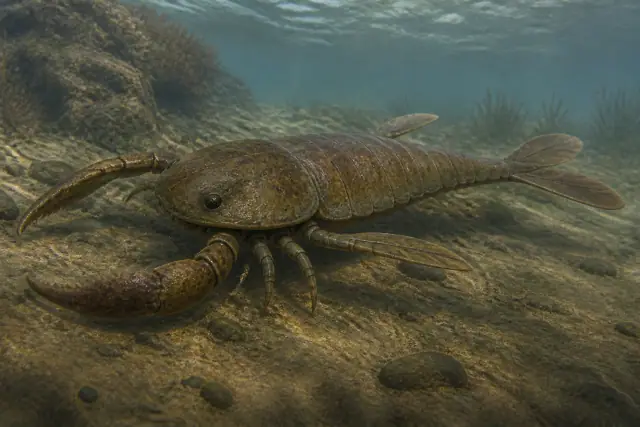
Pterygotus anglicus
Flattened swimming paddles and great toothed claws made it a formidable hunter in Silurian water.
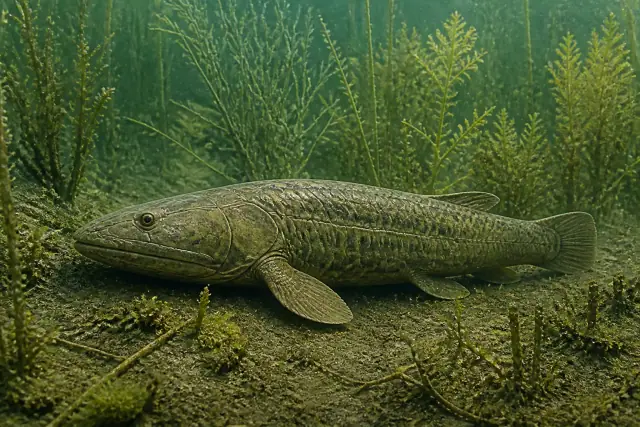
Panderichthys rhombolepis
A flat head with upward-facing eyes and limb-like bones inside its fins brought it close to the earliest tetrapods.
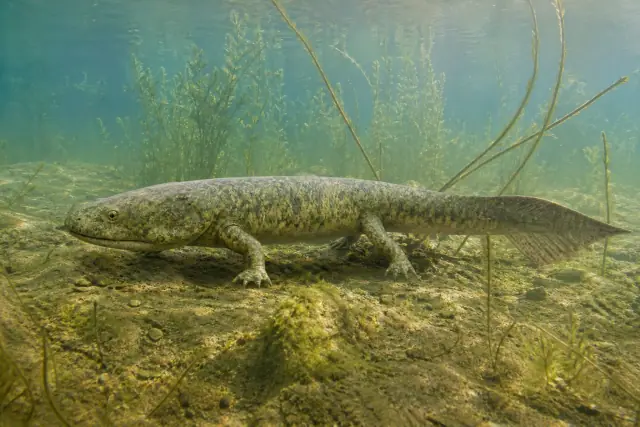
Acanthostega gunnari
Each forelimb carried eight digits, yet the animal was still mainly aquatic—digits evolved before true land walking.
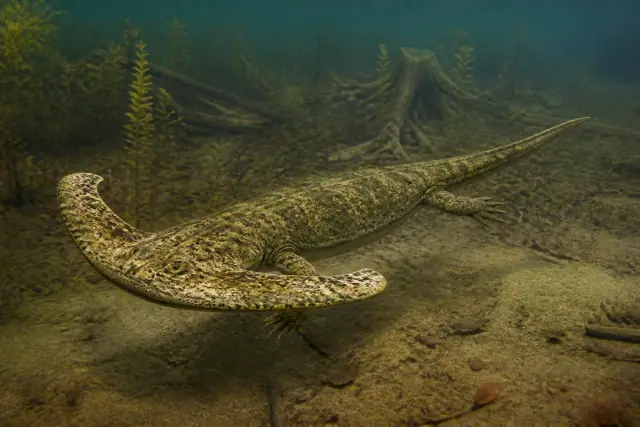
Diplocaulus magnicornis
Its skull spread sideways into a boomerang, perhaps producing lift in current or making it hard to swallow.
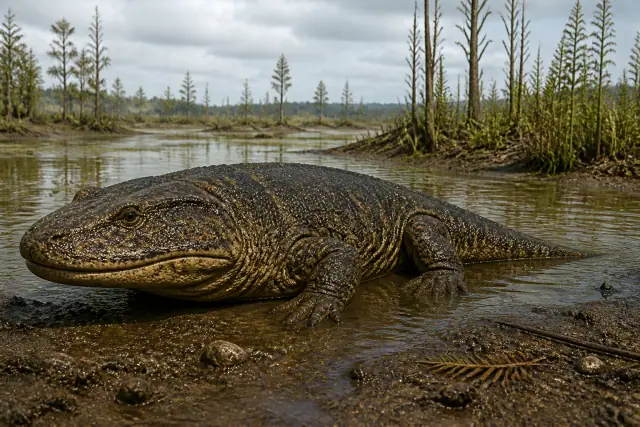
Eryops megacephalus
A broad, heavily sculpted skull and strong limbs carried its massive body through shallow water and onto banks.
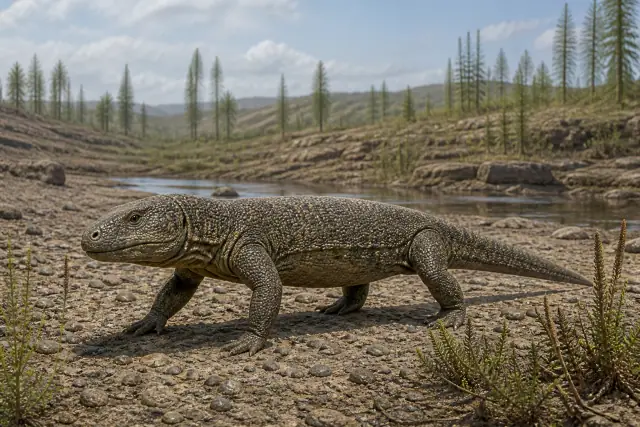
Seymouria baylorensis
Its adult skeleton looked reptile-like, yet it belonged just outside the fully land-breeding amniotes.
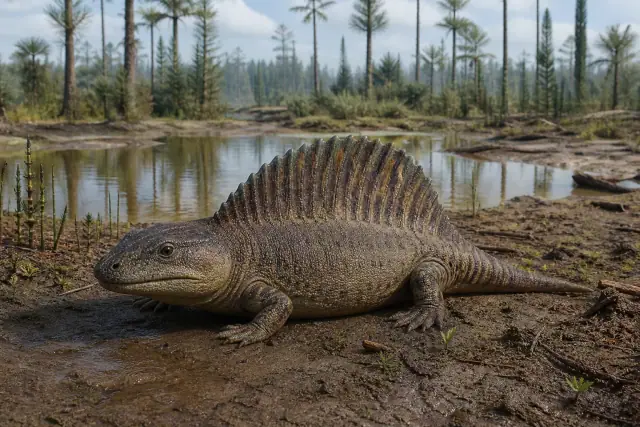
Platyhystrix rugosus
A high bony sail towered above the squat body and may have served display, recognition or heat exchange.
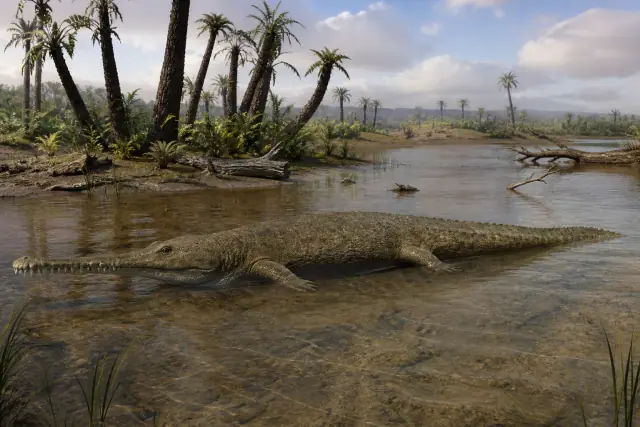
Prionosuchus plummeri
A giant Brazilian amphibian with a crocodile-like snout; its famous 9-metre length is a reconstruction from fragmentary fossils.
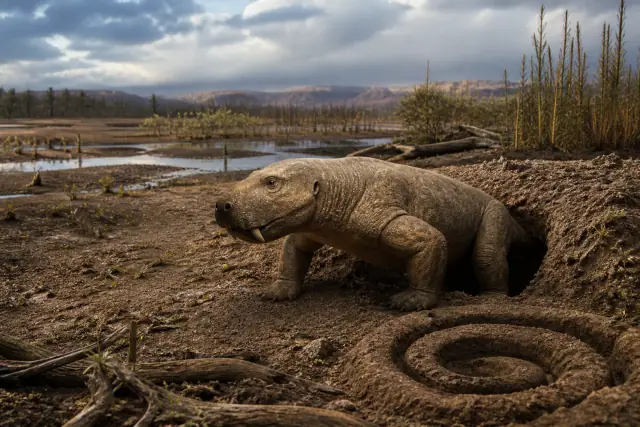
Diictodon feliceps
A beak, short tusks and powerful forelimbs made this one of the most common burrowing herbivores of the Late Permian.
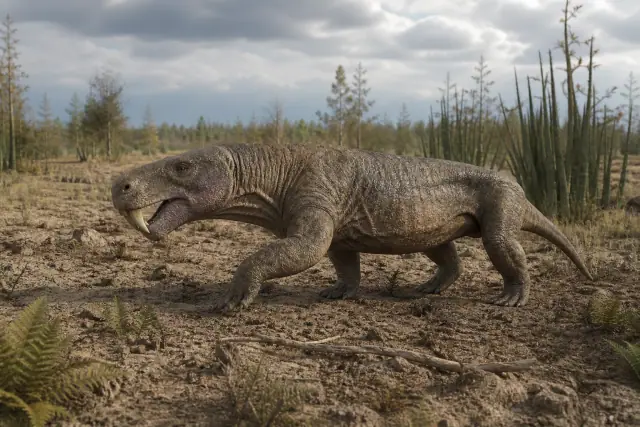
Gorgonops torvus
Long upper canines and a wide gape made it an early experiment in saber-toothed predation.
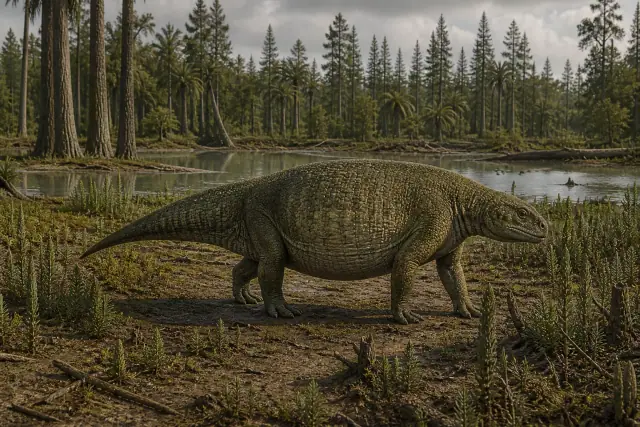
Eunotosaurus africanus
Nine pairs of broad, flattened ribs record an early stage in the evolution of the turtle shell.
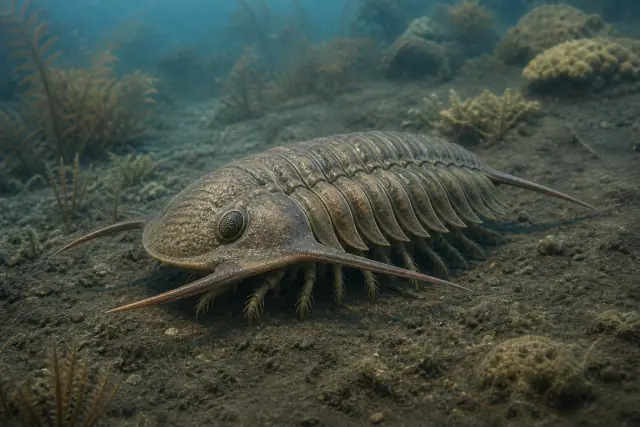
Olenoides serratus
Its antennae, gills and clawed legs reveal far more than a mineralized trilobite shell.
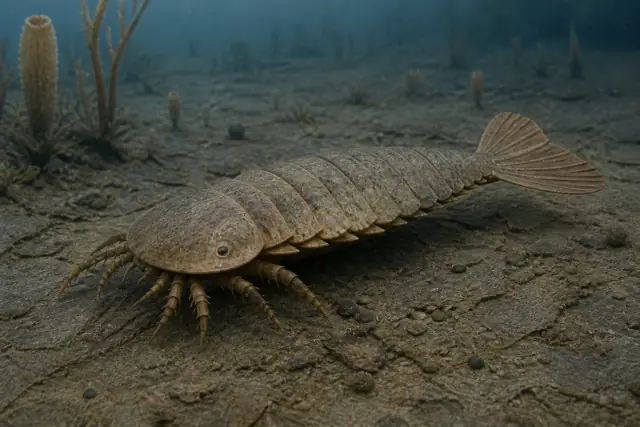
Sidneyia inexpectans
Robust leg bases formed crushing jaws for small trilobites and other shelled prey.
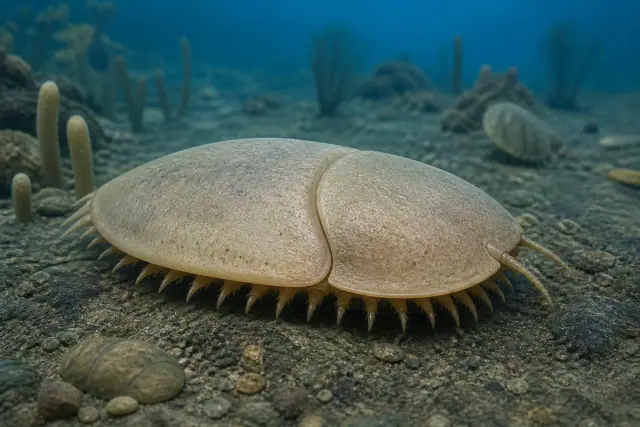
Naraoia compacta
Two large shields covered a soft body equipped with fully segmented trilobite-like limbs.
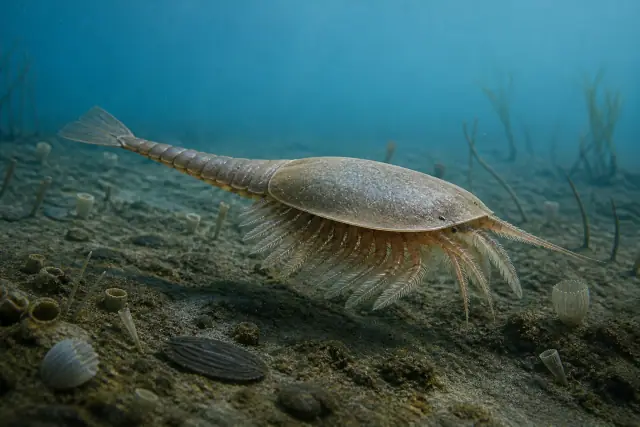
Waptia fieldensis
A bivalved carapace, compound eyes and mandibles reveal an early mandibulate; some fossils preserve embryos under the carapace.
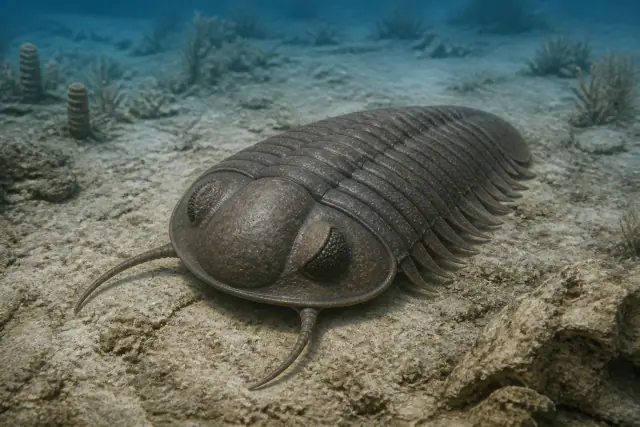
Isotelus rex
At nearly seventy centimeters, it is among the largest complete trilobites ever found.
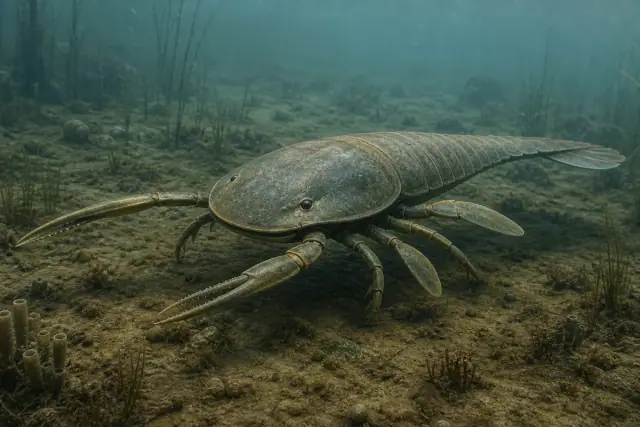
Acutiramus cummingsi
Its long pincers carried slanting blades suited to holding or slicing soft prey.
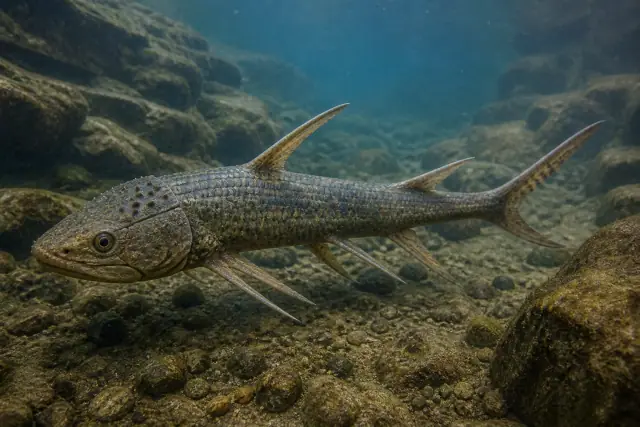
Climatius reticulatus
Rows of paired ventral spines formed a defensive fence beneath this small early jawed fish.
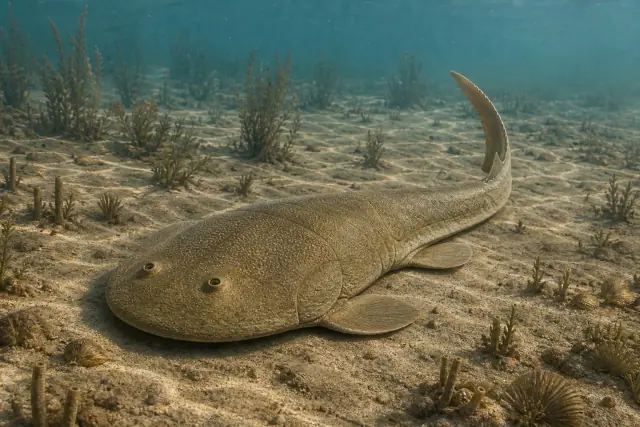
Drepanaspis gemuendenensis
Its body was a flattened shield with upward-facing eyes and a mouth beneath the front edge.
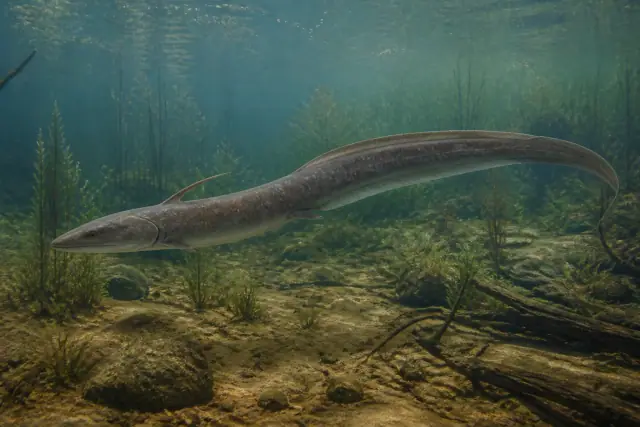
Orthacanthus senckenbergianus
An eel-like body, continuous fin and spine behind the head made it unlike any modern shark.
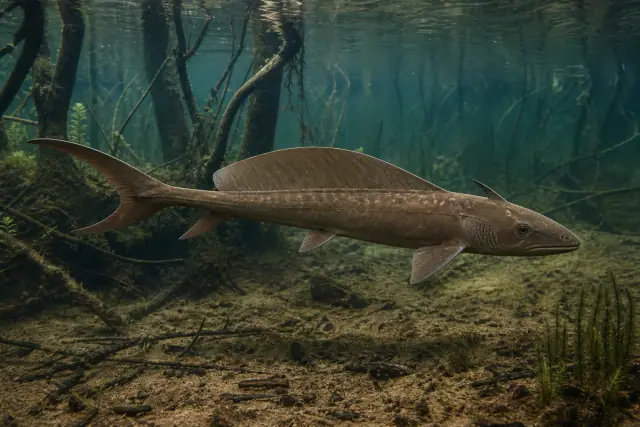
Xenacanthus decheni
A single head spine, forked teeth and continuous dorsal fin defined this freshwater shark.
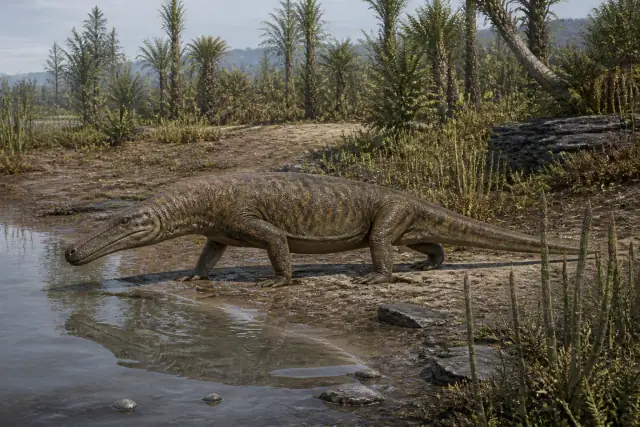
Ophiacodon mirus
Its long skull and deep tail suggest a waterside animal that was still a capable walker.
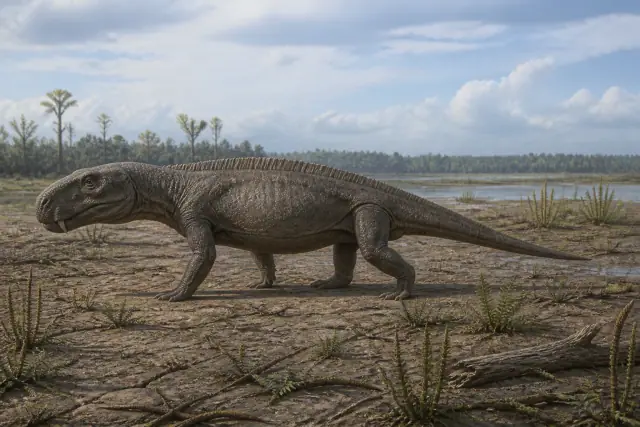
Sphenacodon ferox
Low vertebral ridges accompanied a deep skull and strongly differentiated teeth.
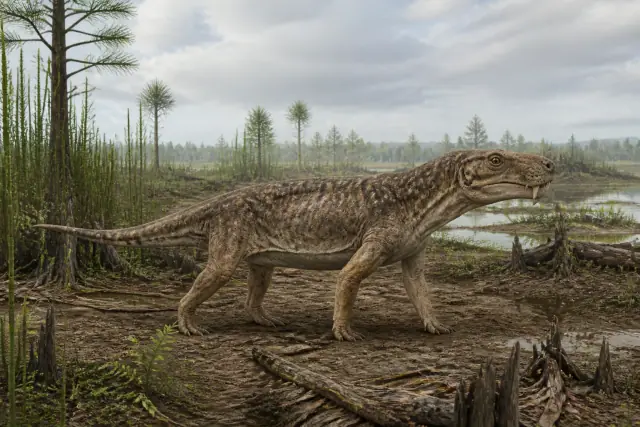
Biarmosuchus tener
A light build, long limbs and small skull bosses combine primitive and therapsid features.
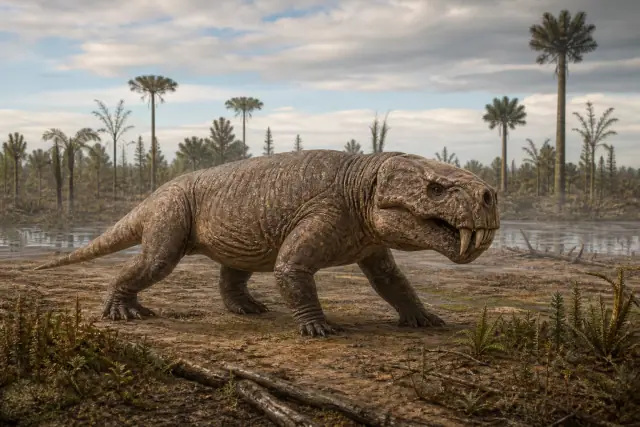
Anteosaurus magnificus
A huge skull combined thickened impact surfaces with long canines in a formidable predator.
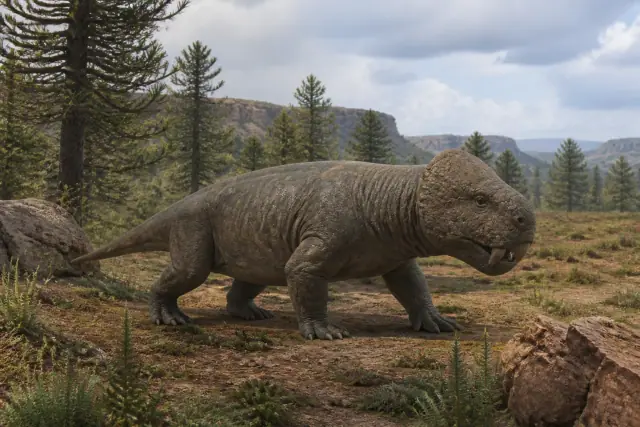
Tapinocephalus atherstonei
A domed, massively thick skull crowned the barrel body of this giant herbivore.
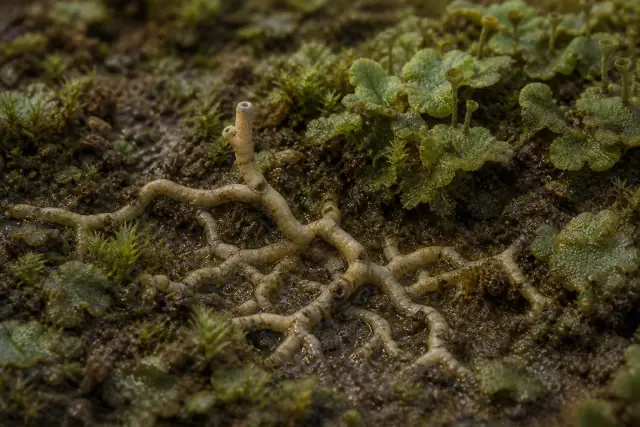
Tortotubus protuberans
Branching microscopic hyphae show fungi helping to build the earliest soils.
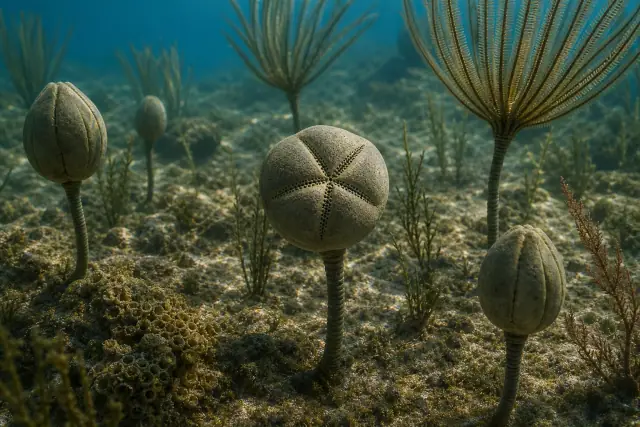
Pentremites godoni
A flower-bud body carried five feeding and respiratory grooves.
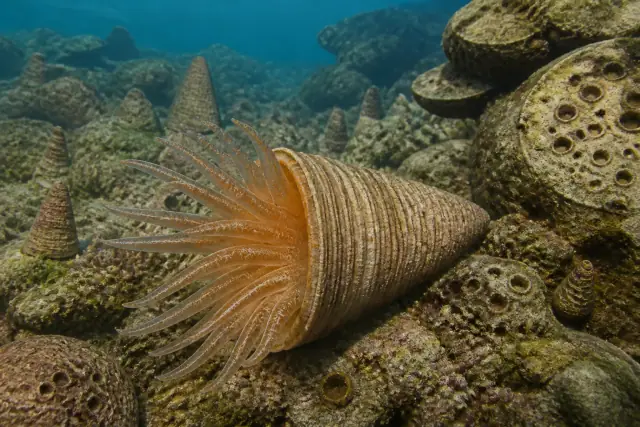
Heliophyllum halli
Radiating septa inside a horn-shaped skeleton resemble a stone sun.
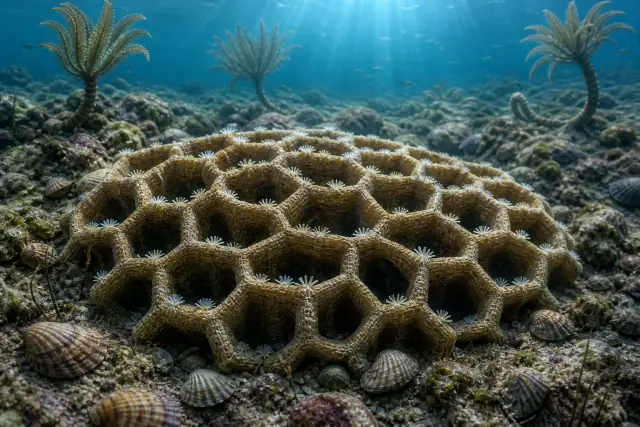
Halysites catenularius
Linked tubes formed honeycomb chains across Paleozoic reefs.
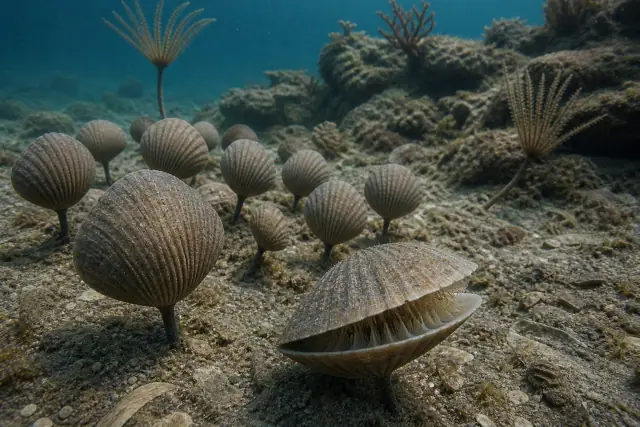
Atrypa reticularis
Fine radial ribs covered rounded shells that once crowded ancient seabeds.
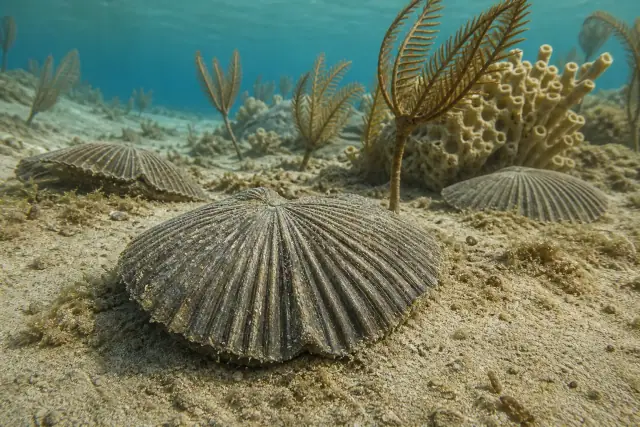
Paraspirifer bownockeri
A broad hinge line formed stone wings that stabilized the shell on soft mud.
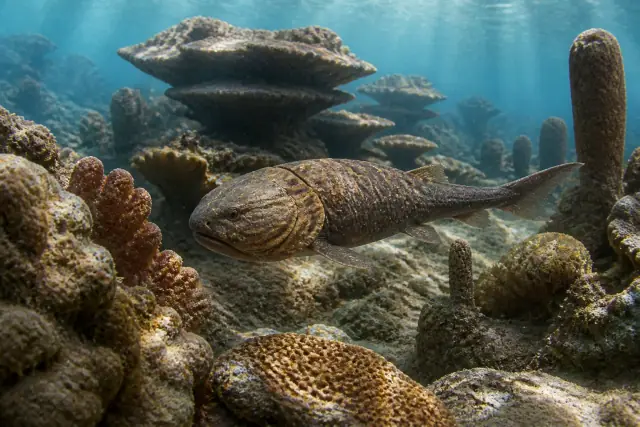
Materpiscis attenboroughi
An embryo with an umbilical connection records some of the earliest live birth.
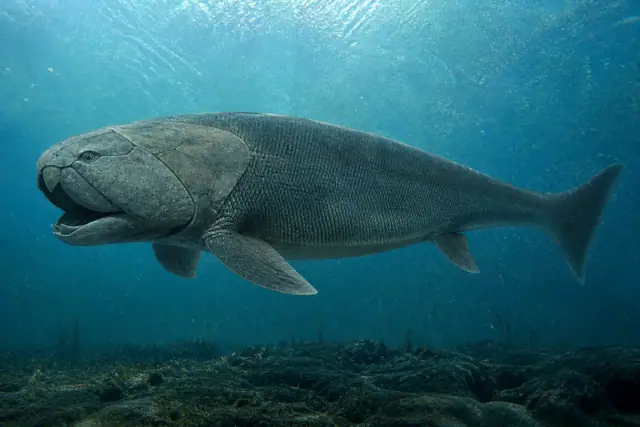
Titanichthys agassizi
This giant placoderm lacked sharp jaw blades and may have filtered plankton.
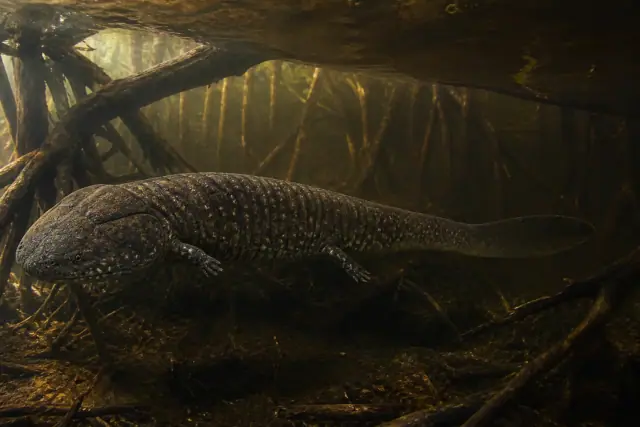
Crassigyrinus scoticus
Tiny limbs and strong jaws show an early tetrapod returning almost completely to water.
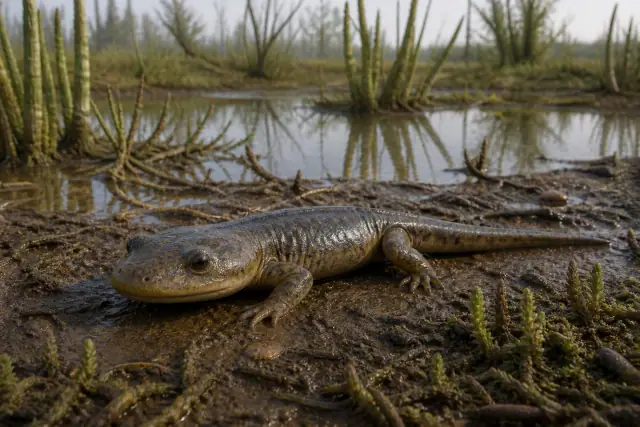
Gerobatrachus hottoni
A frog-like head and salamander-like tail combine traits near the origin of living amphibians.
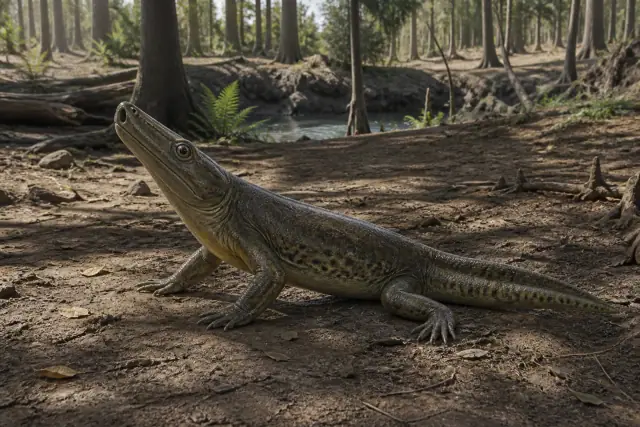
Fedexia striegeli
An elongated nostril region may reflect life in drier upland settings.
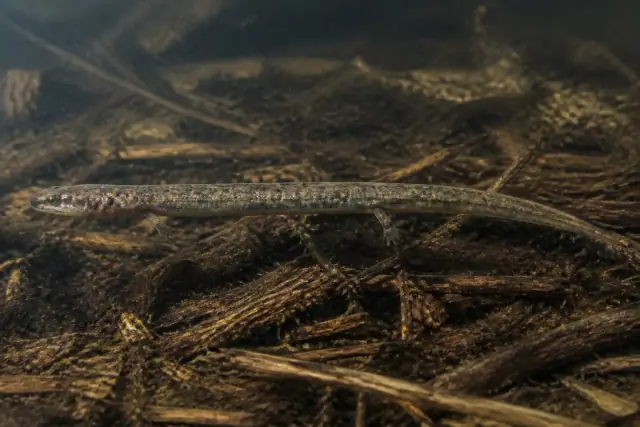
Microbrachis pelikani
More than forty trunk vertebrae formed a long body with extremely small limbs.
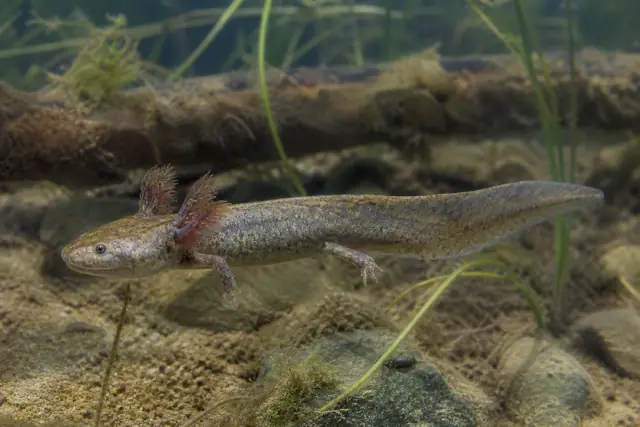
Branchiosaurus salamandroides
Adults retained external gills, extending a juvenile condition through life.
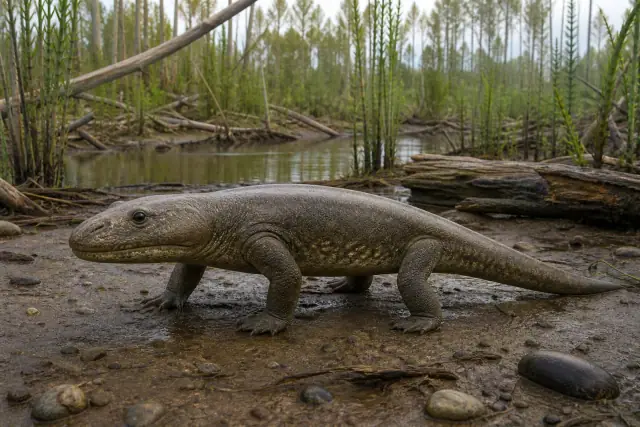
Pederpes finneyae
Forward-facing toes show an early tetrapod using a more effective terrestrial gait.
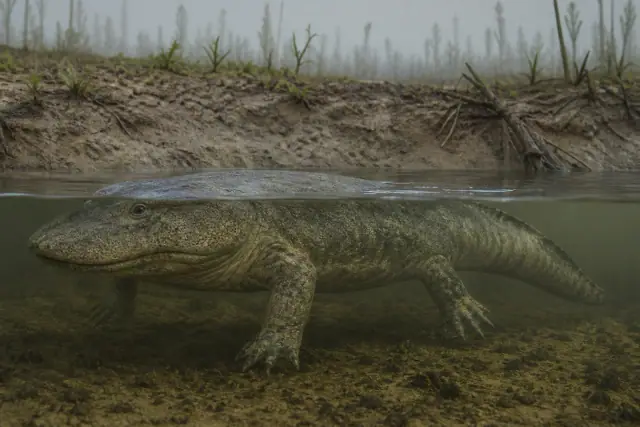
Whatcheeria deltae
A reinforced skull and fang-like teeth belonged to a powerful river predator.
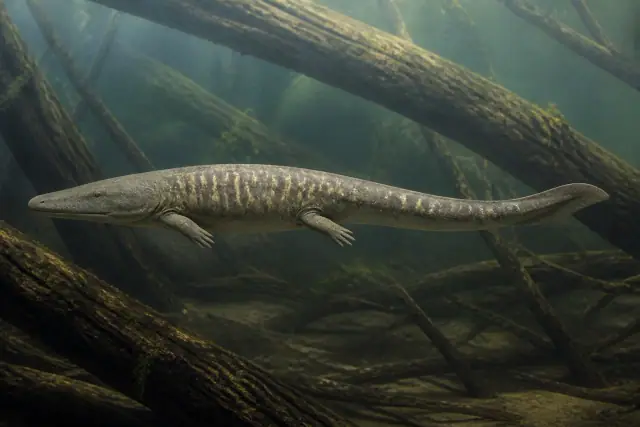
Greererpeton burkemorani
A long trunk and deep tail propelled it through murky water.
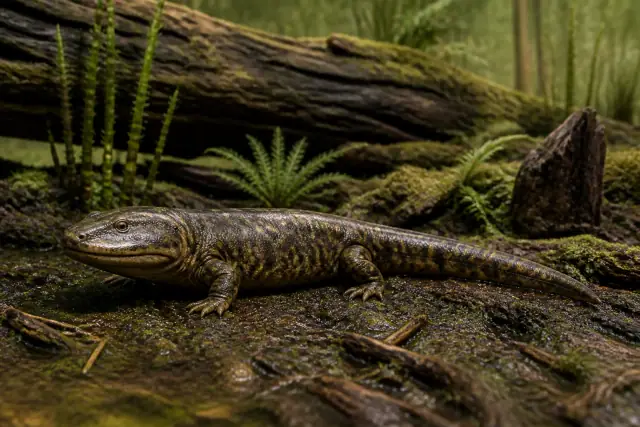
Balanerpeton woodi
The ear region and sturdy limbs suggest more terrestrial activity than in many contemporaries.
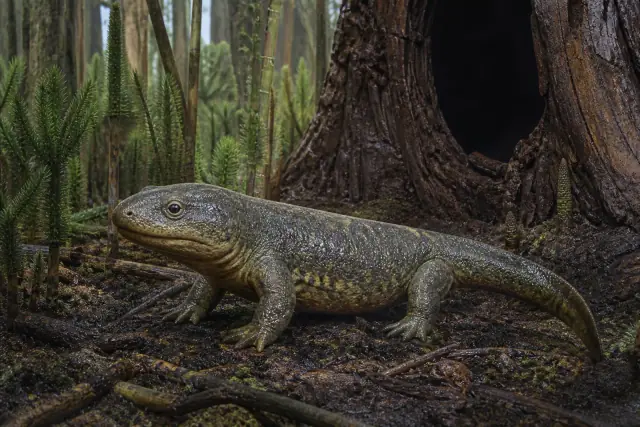
Dendrerpeton acadianum
Many individuals were entombed inside hollow tree stumps.
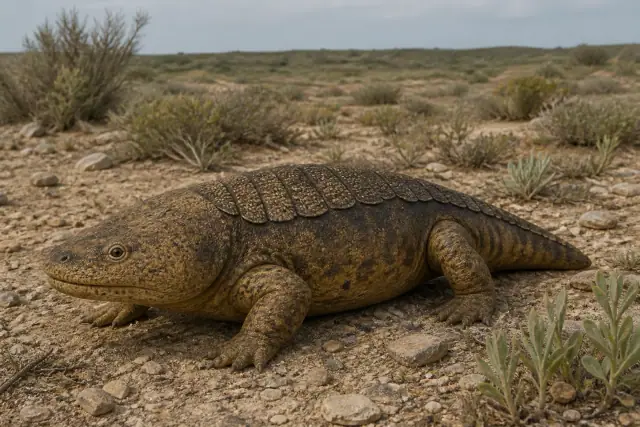
Cacops aspidephorus
A row of bony back plates reinforced this stocky terrestrial amphibian.
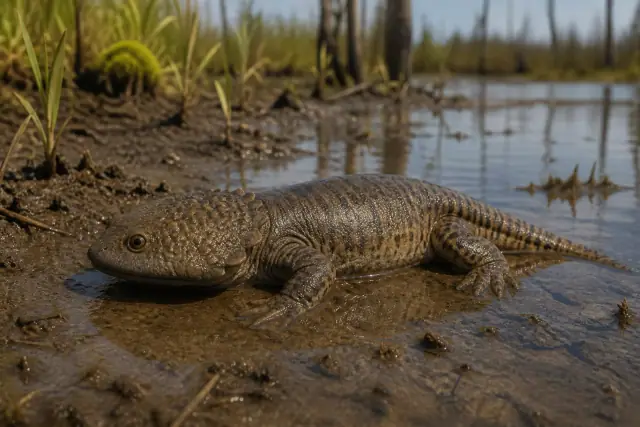
Zatrachys serratus
Its expanded skull margin bears bony projections; their function is unproven.
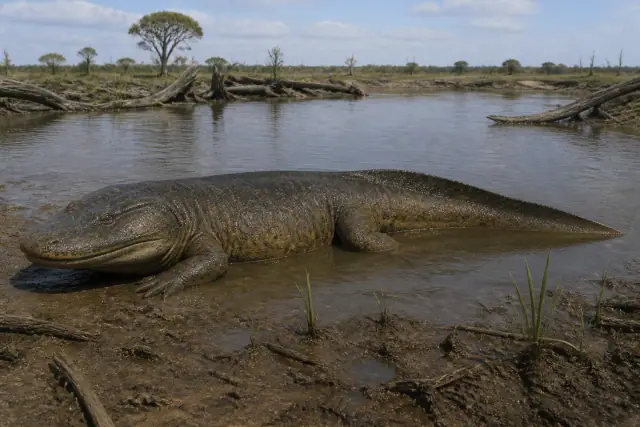
Rhinesuchus whaitsi
This broad-headed aquatic predator was common in southern Late Permian waters.
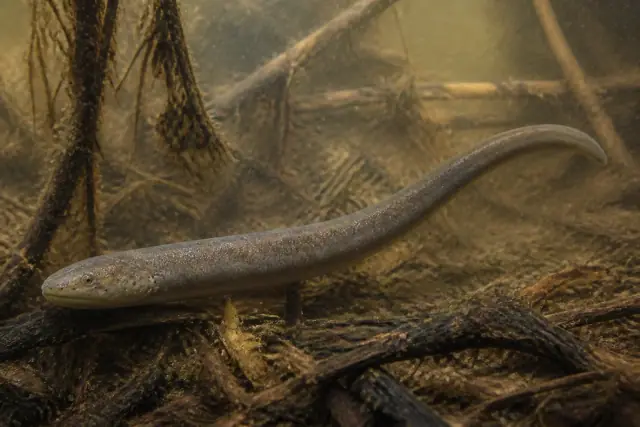
Adelospondylus watsoni
The limbs vanished entirely while the skull and spine retained tetrapod construction.
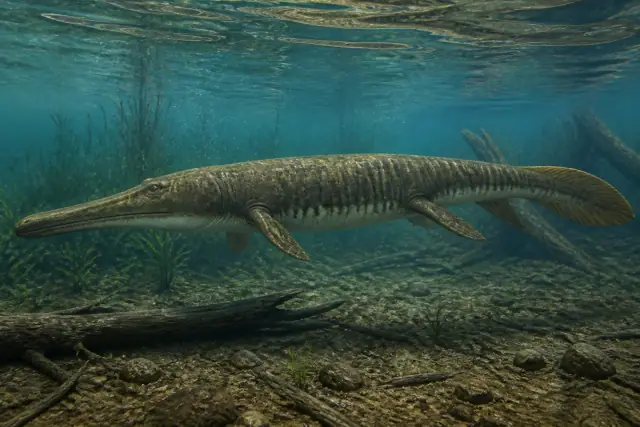
Archegosaurus decheni
A long snout, lateral-line grooves and weak limbs show permanent aquatic dependence.
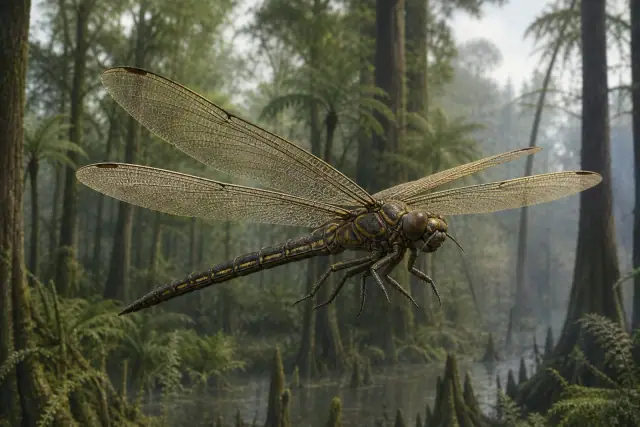
Erasipteron larischi
Broad net-veined wings carried an early aerial predator through oxygen-rich forests.
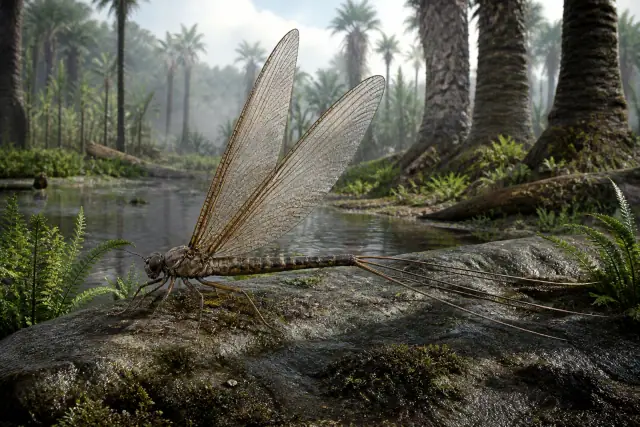
Bojophlebia prokopi
Huge triangular wings and long tail filaments belonged to a giant mayfly relative.
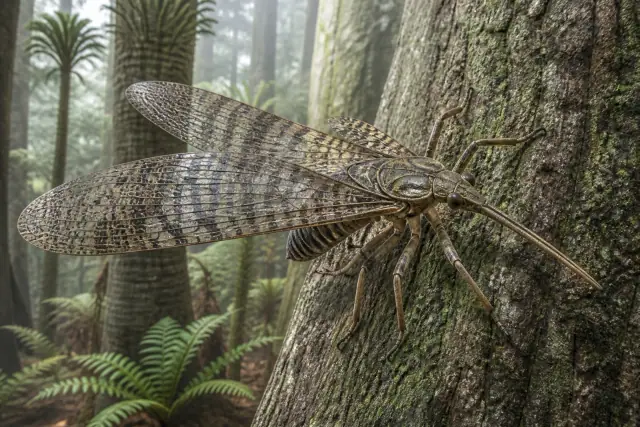
Homoioptera woodwardi
Thoracic winglets accompanied four large wings in an extinct flight architecture.
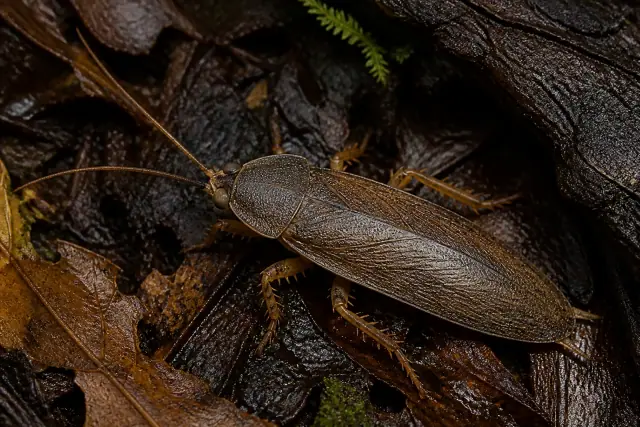
Archimylacris eggintoni
A shield-like pronotum and flat wings mark an early cockroach-mantis relative.
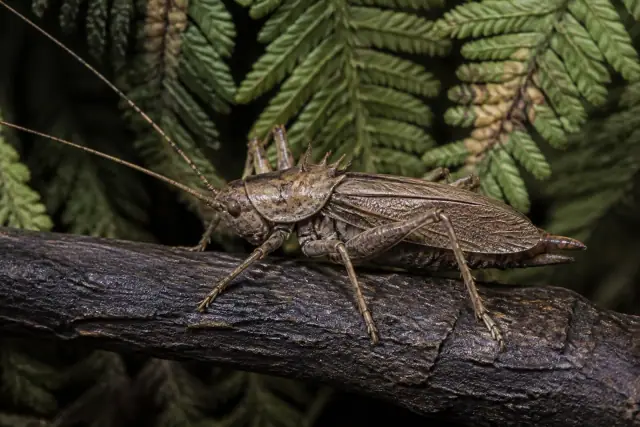
Gerarus danae
An enlarged prothorax carried a row of prominent spines.
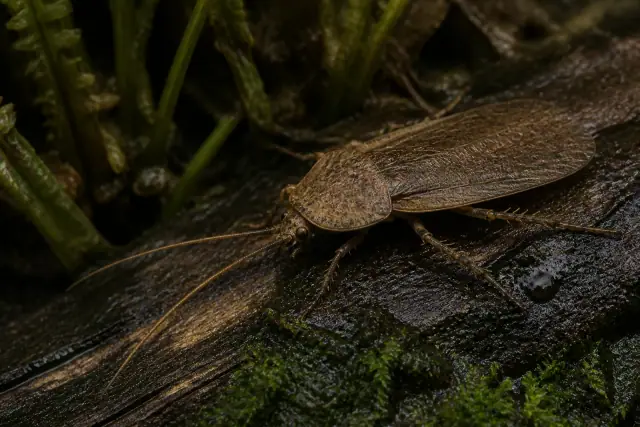
Qilianiblatta namurensis
Its wing venation pushes the cockroach-like pattern deep into the Carboniferous.
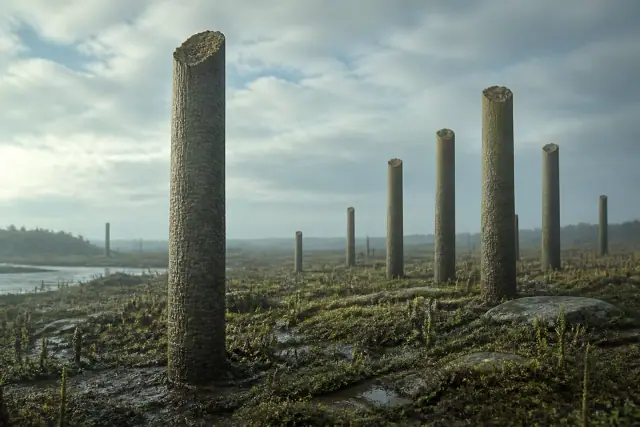
Prototaxites dawsonii
Meter-high columns towered over landscapes of otherwise low vegetation.
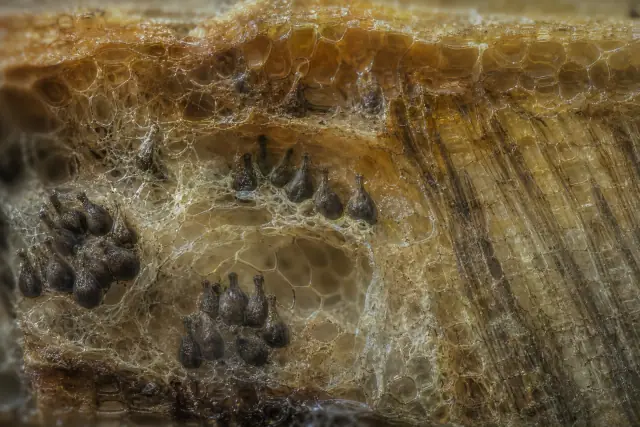
Paleopyrenomycites devonicus
Tiny flask-shaped fruiting bodies inside plant tissue are among the oldest ascomycete evidence.
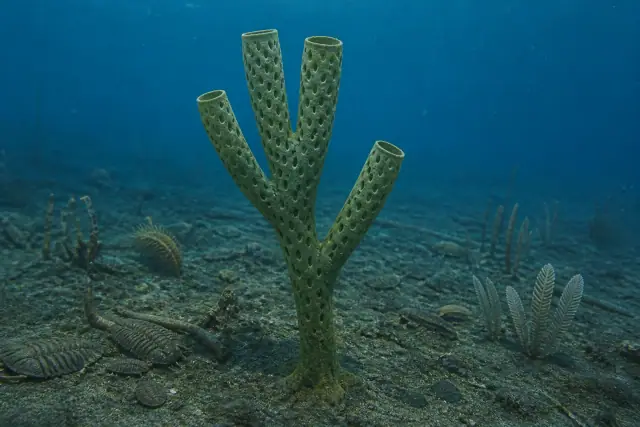
Margaretia dorus
A perforated tube once treated as an animal is now linked to a branching alga.
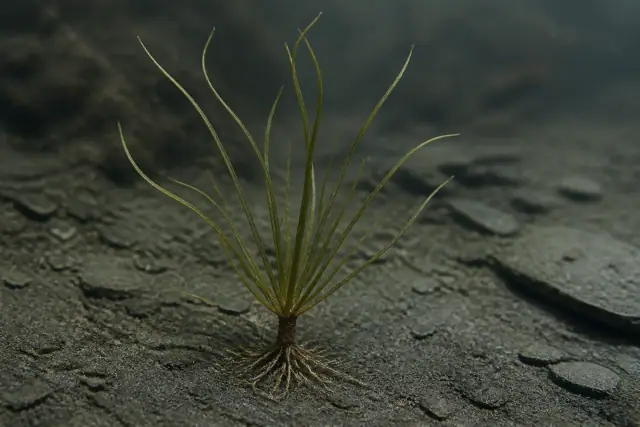
Yuknessia simplex
Simple narrow blades radiated from a common attachment.
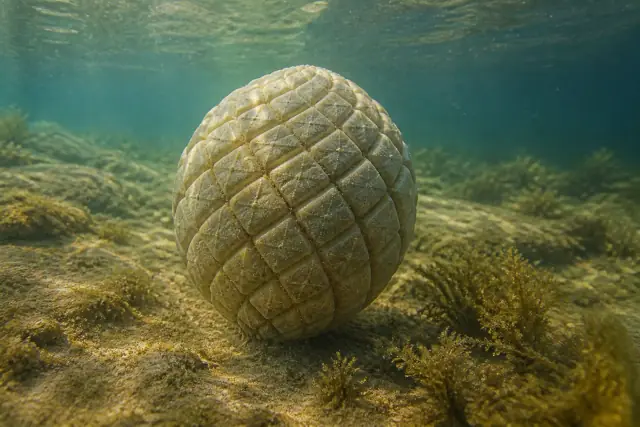
Receptaculites oweni
Spiraled diamond plates formed a calcified pinecone-like body.
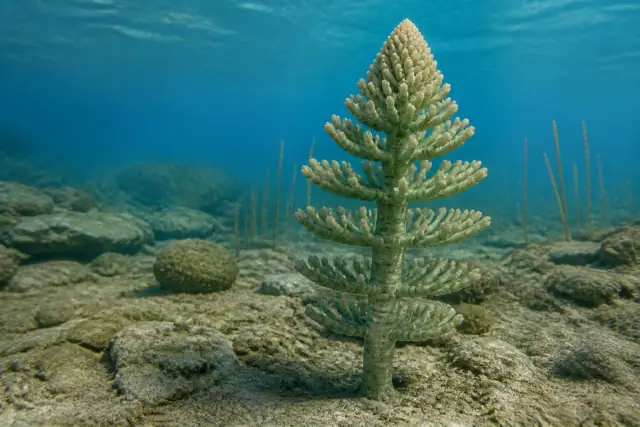
Cyclocrinites dactioloides
Whorled calcified branches surrounded a central axis like an underwater bottlebrush.
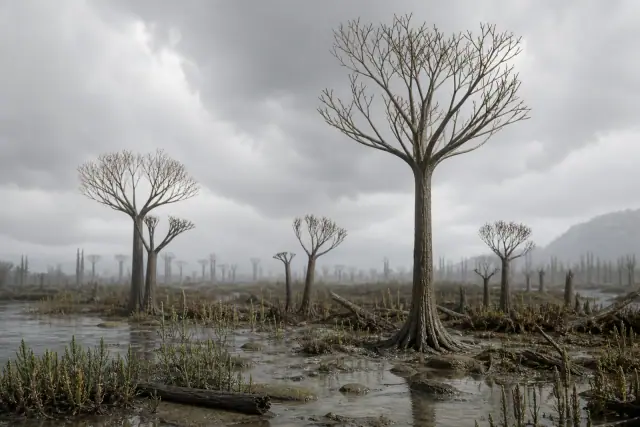
Wattieza casasii
Eight-meter leafless crowns formed one of the earliest known forests.
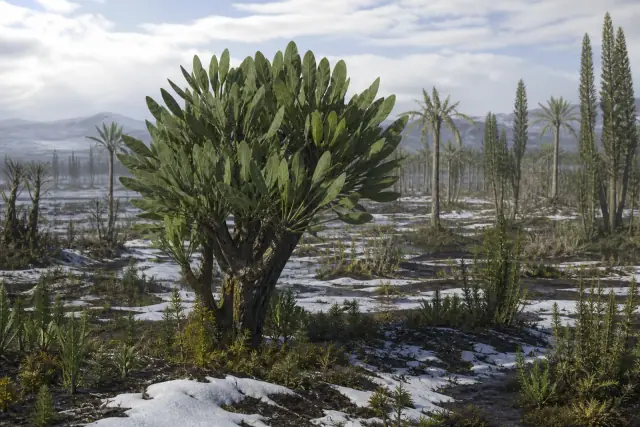
Gangamopteris obovata
Broad tongue-shaped leaves lacked the strong midrib of later glossopterids.
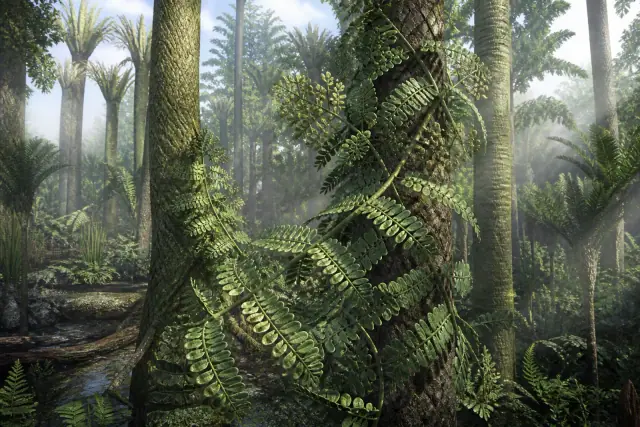
Alethopteris serlii
Firm fern-like pinnules belonged to a seed plant rather than a true fern.
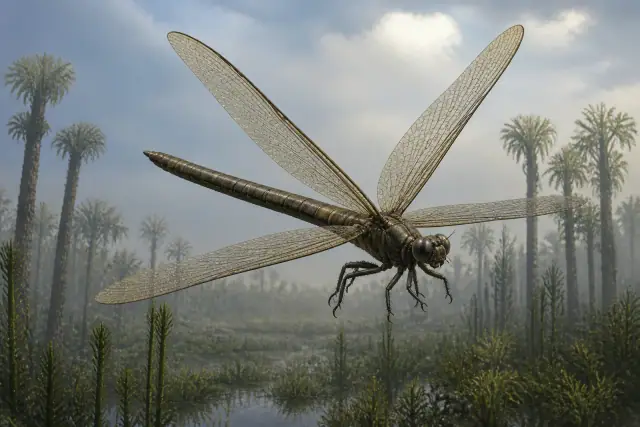
Megatypus schucherti
A wingspan near half a meter made it a major aerial predator.
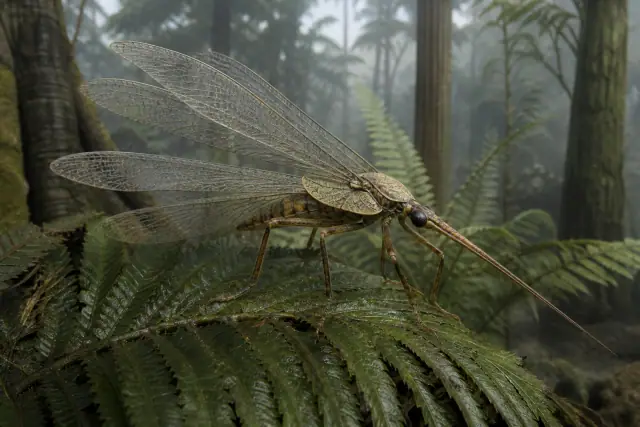
Lithomantis carbonarius
Leaf-like thoracic lobes accompanied four functional wings.
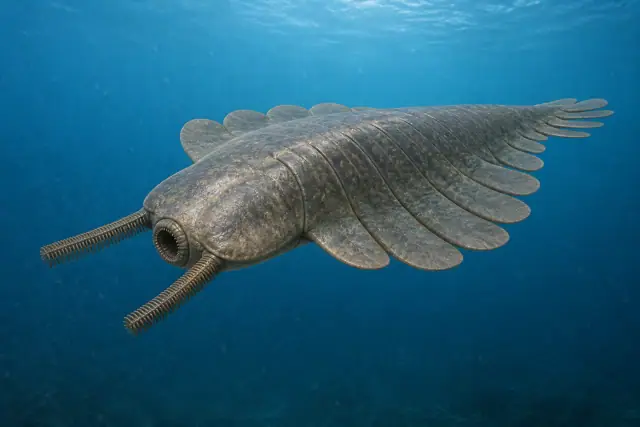
Aegirocassis benmoulai
A two-meter filter-feeding radiodont was an early analogue of giant plankton feeders.
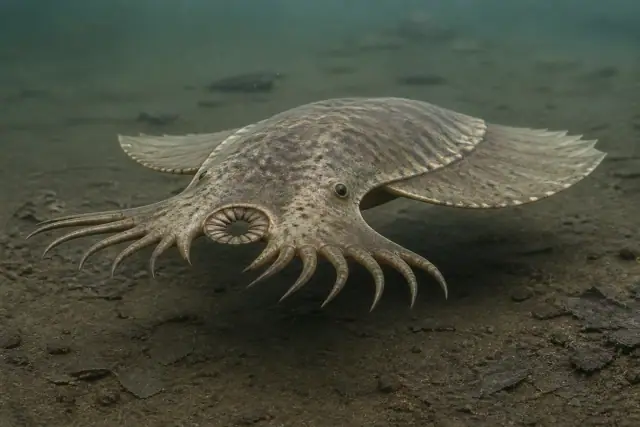
Cambroraster falcatus
A horseshoe-shaped carapace and rake-like appendages made a mobile sediment sifter.
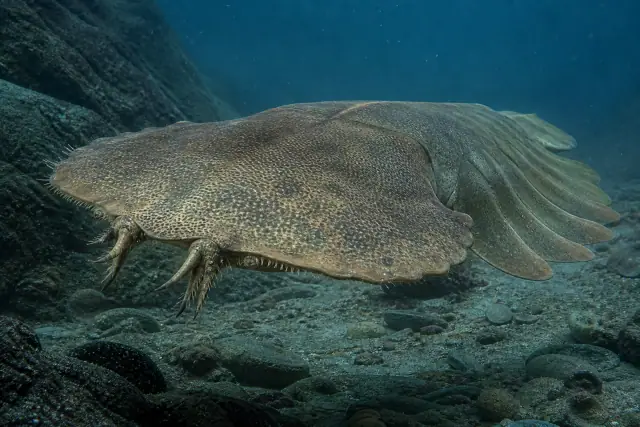
Titanokorys gainesi
An enormous head shield covered most of this bottom-feeding radiodont.
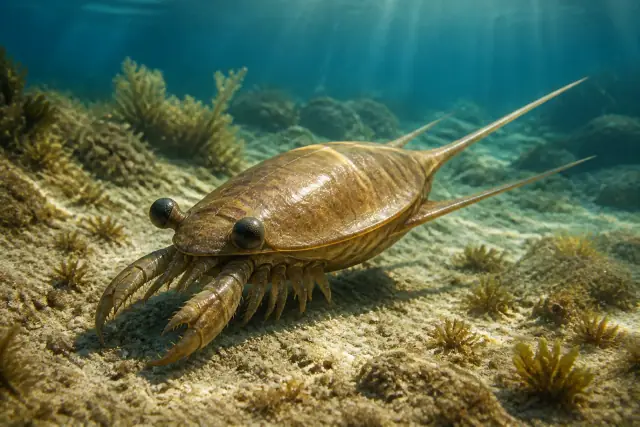
Isoxys curvirostratus
Isoxys curvirostratus was a small arthropod with a spined carapace, stalked eyes and grasping frontal appendages.
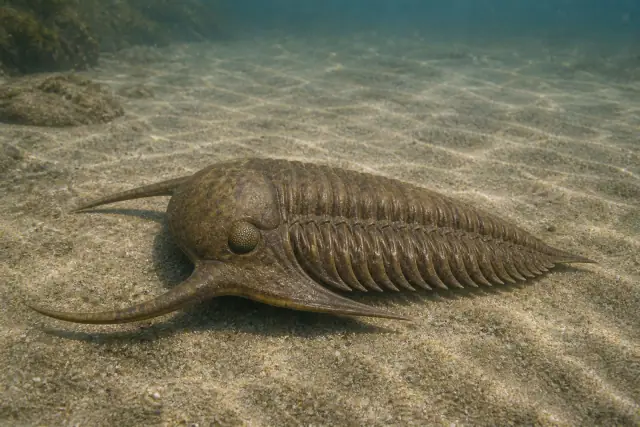
Olenellus thompsoni
A broad head, long genal spines and many trunk segments marked an early trilobite radiation.
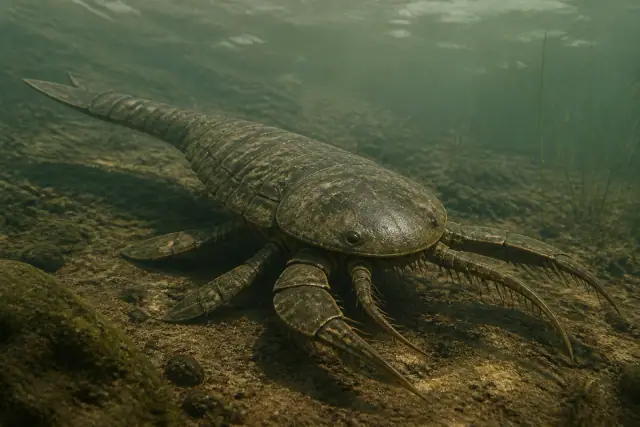
Hibbertopterus scouleri
A giant sea scorpion that raked soft sediment for food; a Scottish trackway suggests an animal about 1.6 m long.
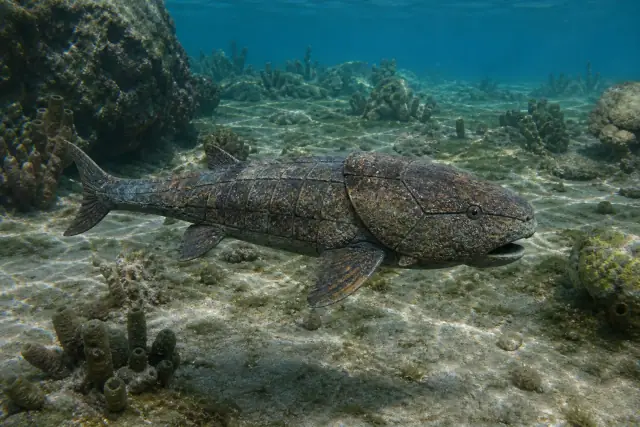
Entelognathus primordialis
Placoderm armor enclosed jaw-margin bones resembling those of later bony fish.
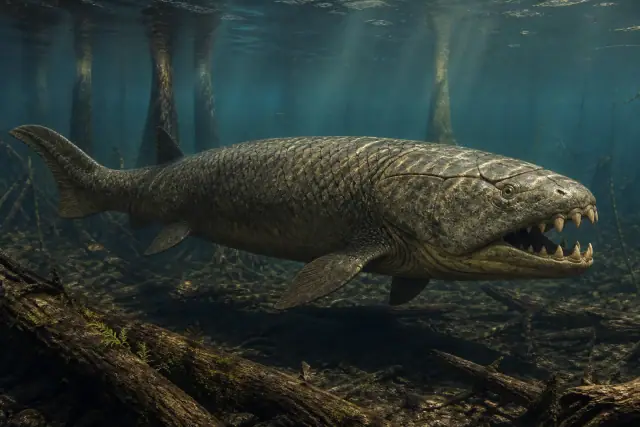
Rhizodus hibberti
Huge conical teeth armed a multi-meter freshwater lobe-finned predator.
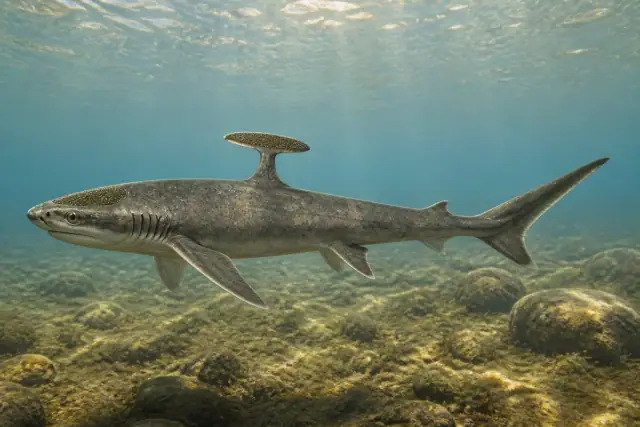
Stethacanthus altonensis
Males carried a denticle-covered anvil-shaped structure on the back.
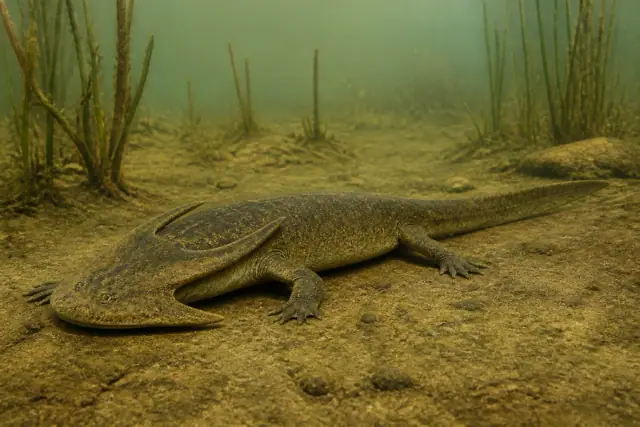
Diploceraspis burkei
Paired backward horns widened the skull of this small diplocaulid.
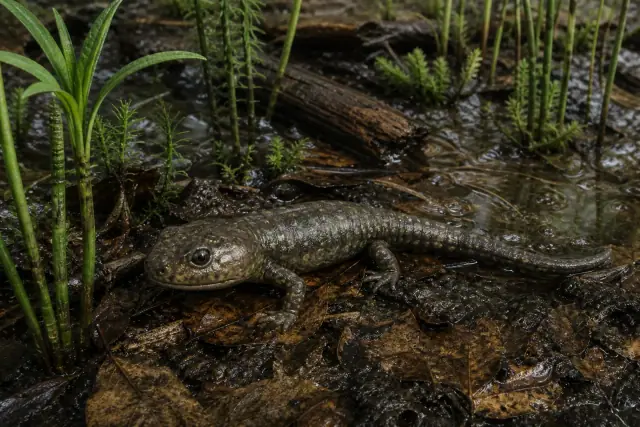
Amphibamus grandiceps
A small light body combined traits near the ancestry of modern amphibians.
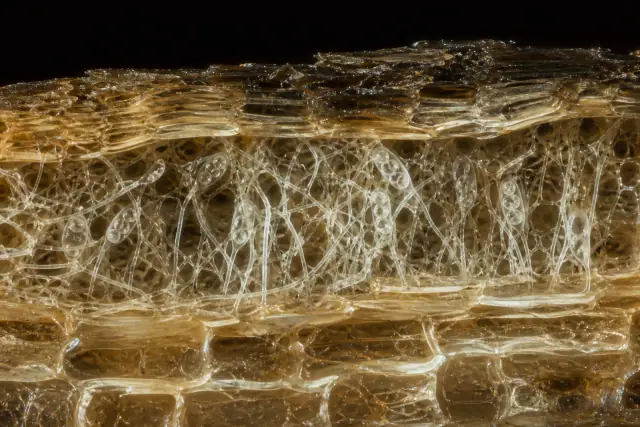
Protoascon missouriensis
Tiny sac-like structures in coal balls resemble an early ascomycete.
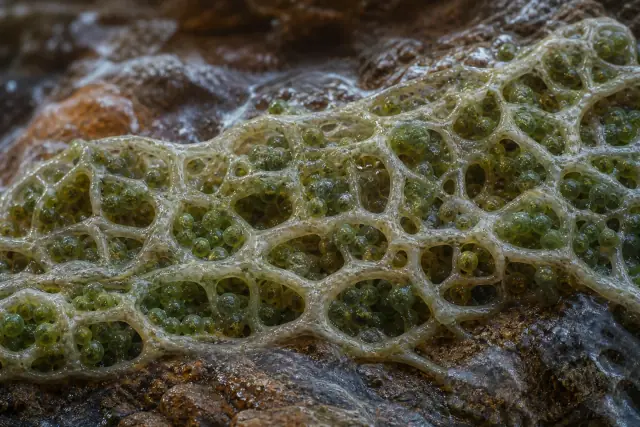
Winfrenatia reticulata
Fungal filaments surrounded cyanobacterium-like cells in an early lichen-style partnership.
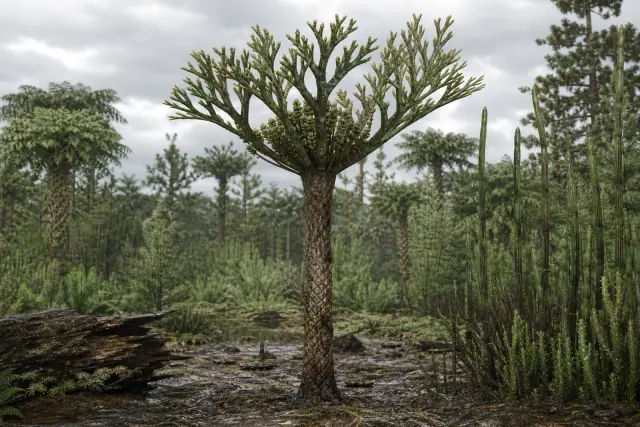
Noeggerathia foliosa
A palm-like crown belonged not to a fern but to an extinct heterosporous seed-plant relative.
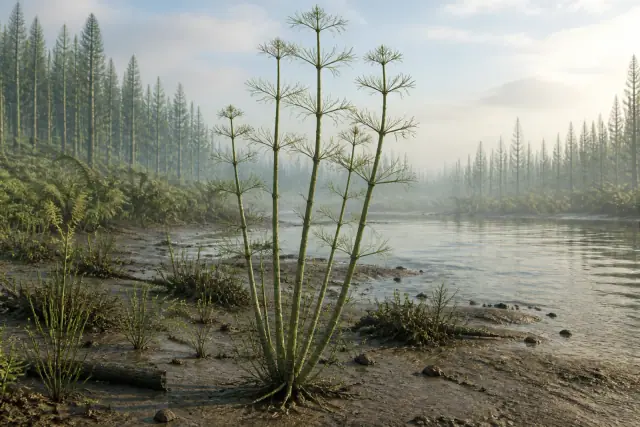
Archaeocalamites radiatus
Hollow jointed stems let an early horsetail relative grow as a tall shrub or small tree.
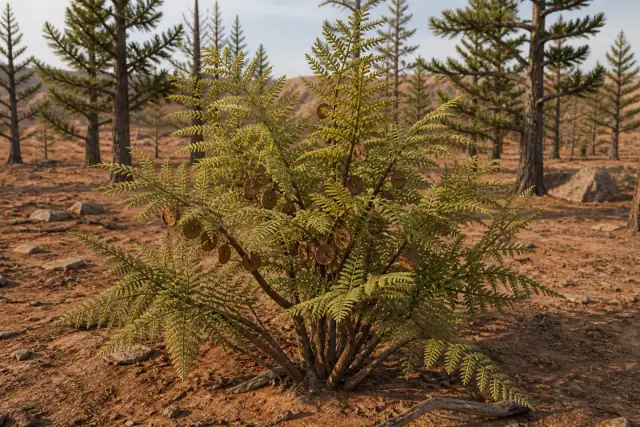
Peltaspermum martinsii
Shield-shaped reproductive discs record an innovation among drought-tolerant seed ferns.
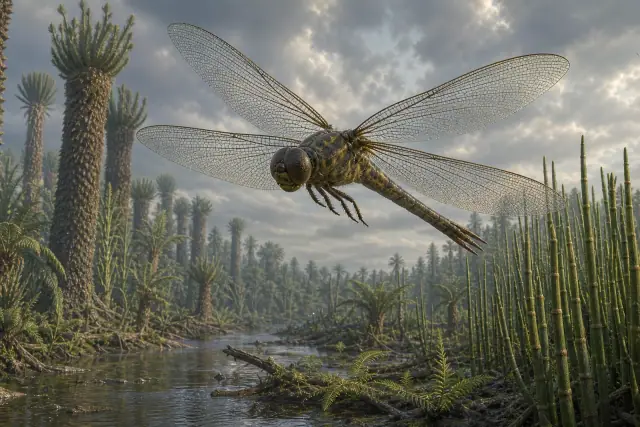
Meganeurula selysii
Smaller than Meganeura but still broad-winged, this griffinfly hunted above coal forests.
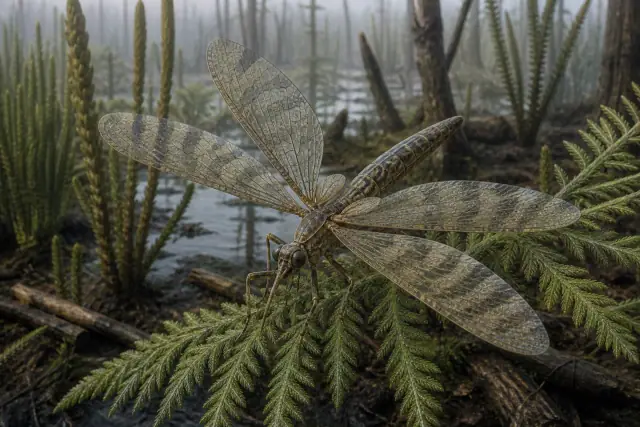
Boltonocosta elongata
A long piercing mouthpart and four patterned wings belonged to the vanished palaeodictyopterans.
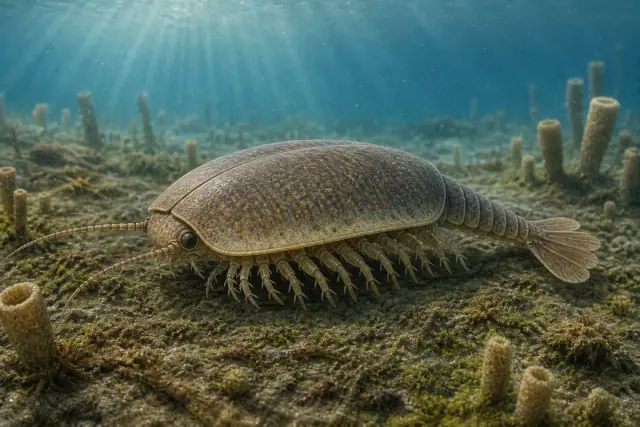
Canadaspis perfecta
Two broad valves enclosed a segmented body while antennae, limbs and a tail fan projected outside.
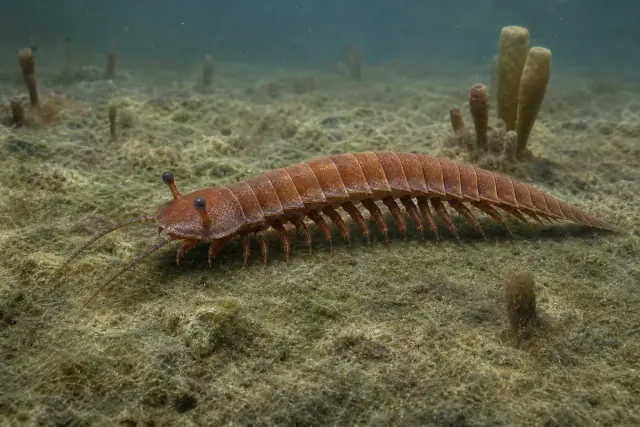
Fuxianhuia protensa
Its nervous, circulatory and limb anatomy makes it central to studies of early arthropod organization.
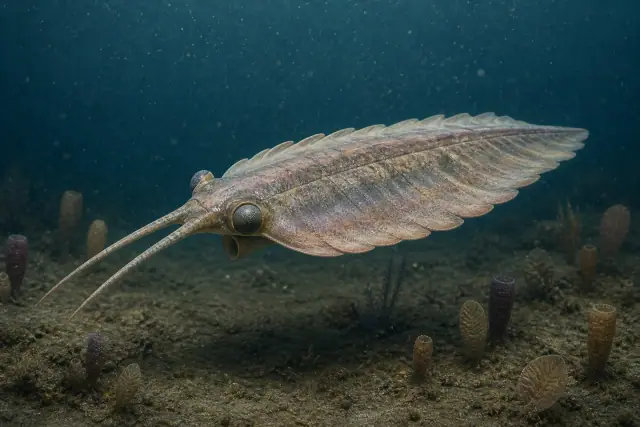
Nectocaris pteryx
Paired fins, a funnel and tentacle-like appendages form one of the Cambrian's most puzzling swimmers.
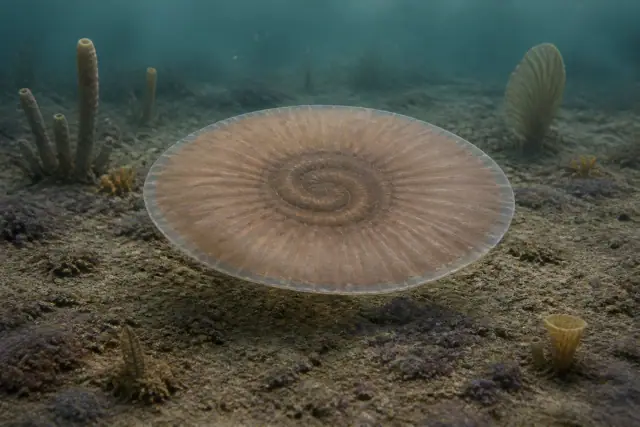
Eldonia ludwigi
A coiled gut lay inside a soft circular disc that may have drifted or lived near the bottom.
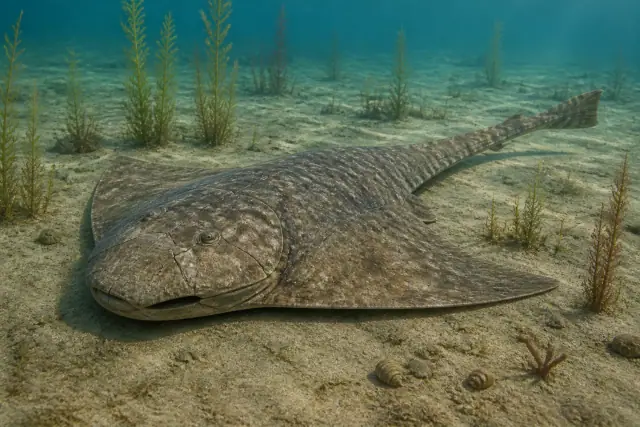
Gemuendina stuertzi
A broad flat placoderm independently converged on the body shape of a ray.
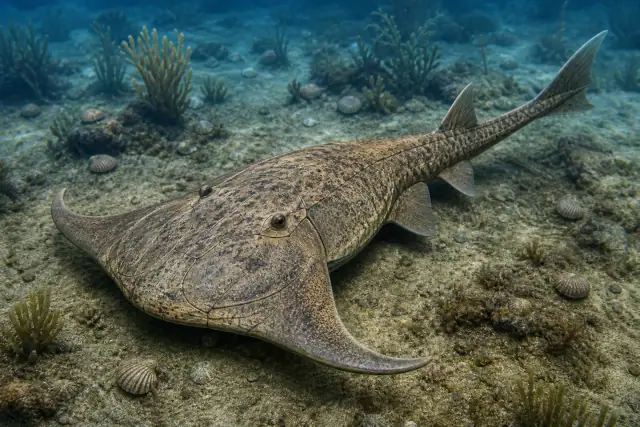
Lunaspis broilii
Crescent-shaped lateral horns widened the head armor of a small bottom-dwelling placoderm.
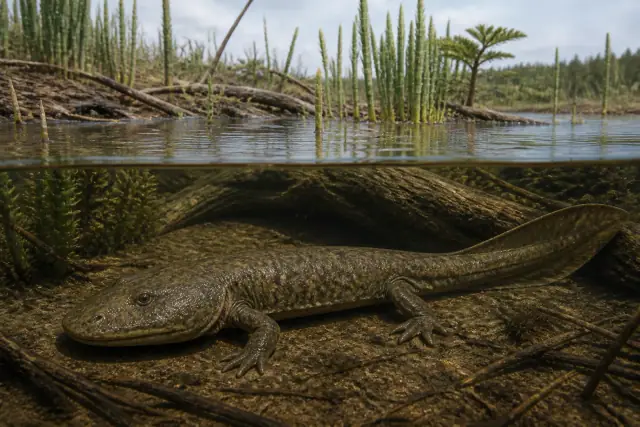
Trimerorhachis insignis
External gills and a long body show a temnospondyl that remained aquatic throughout life.
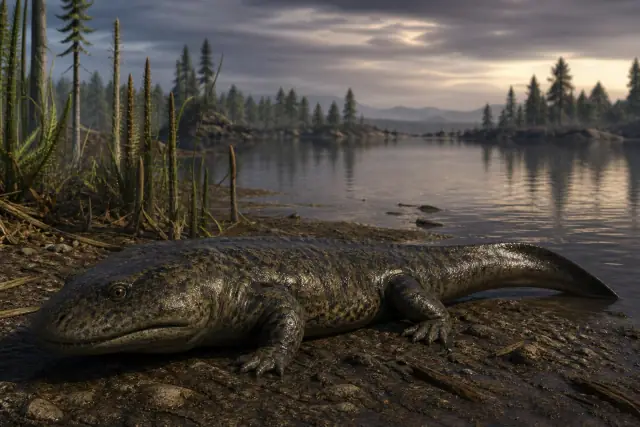
Sclerocephalus haeuseri
A broad head, strong trunk and compressed tail belonged to a large freshwater predator.
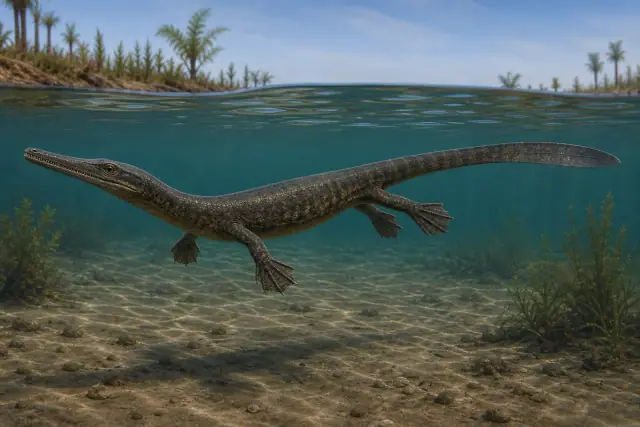
Mesosaurus tenuidens
Needle teeth and a flattened tail mark one of the earliest amniotes to return to water.
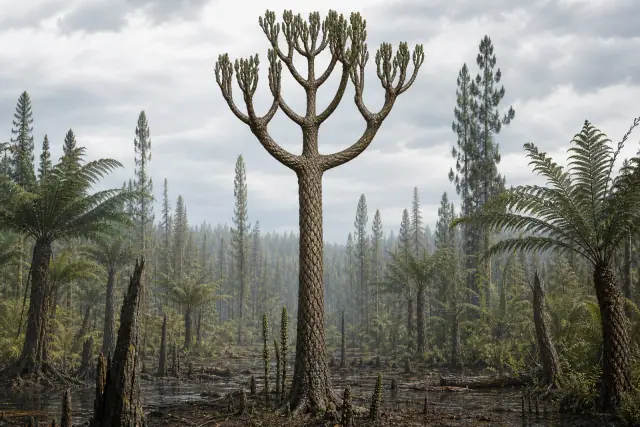
Lepidophloios laricinus
Diamond leaf cushions and a repeatedly forked crown marked a tall tree-sized lycopsid.
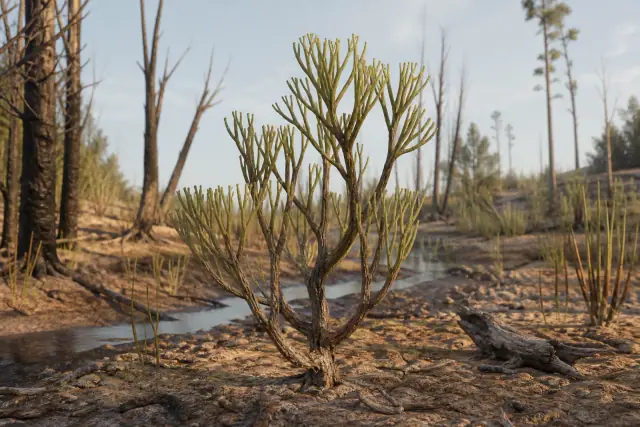
Dicranophyllum gallicum
Narrow leaves repeatedly forked at their tips on an extinct seed-plant relative.
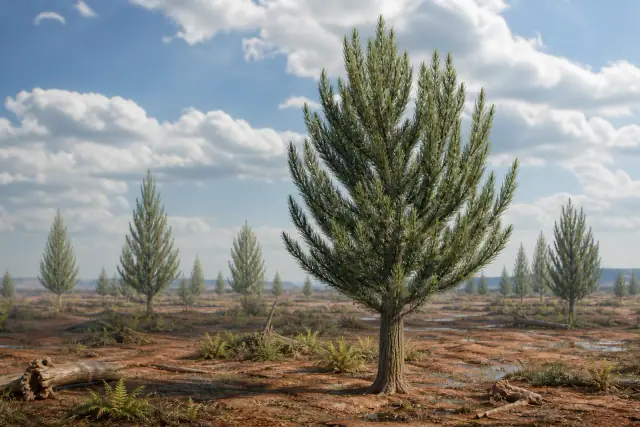
Walchia piniformis
Needle-like leaves crowded the shoots of an early conifer-like tree.
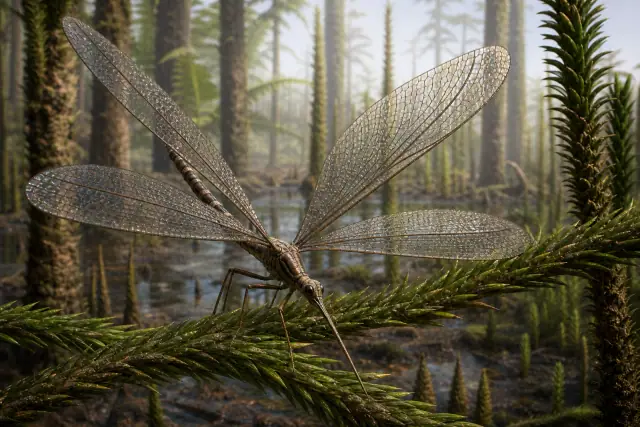
Lithoneura lameerei
Four broad net-veined wings belonged to the completely vanished palaeodictyopterans.
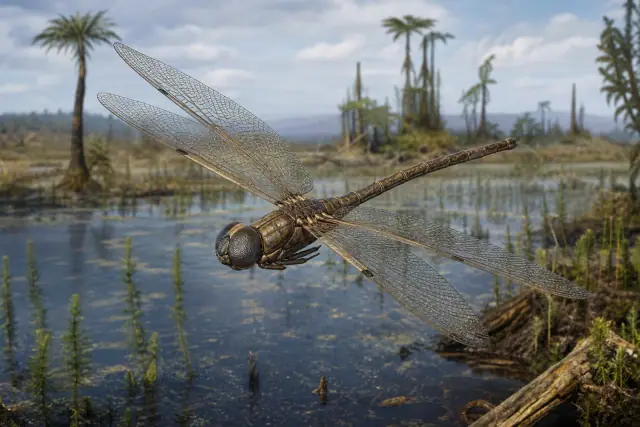
Eugeropteron lunatum
A basal odonatopteran retained a more primitive wing base than modern dragonflies.
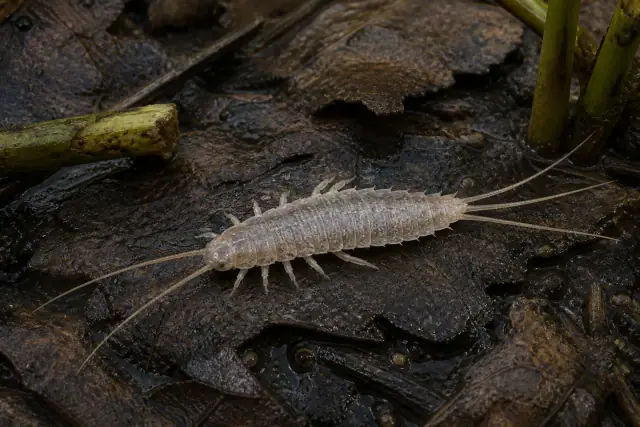
Carbotriplura kukalovae
A wingless body ended in three tail filaments and combined traits of early silverfish-like insects.
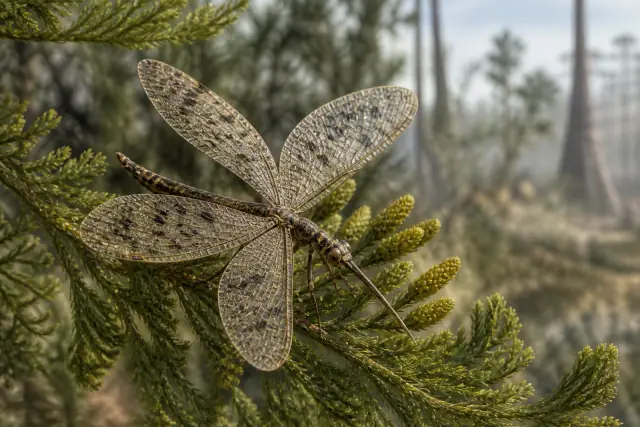
Tchirkovaea guttata
Spotted wings and fine venation record Permian palaeodictyopteran diversity.
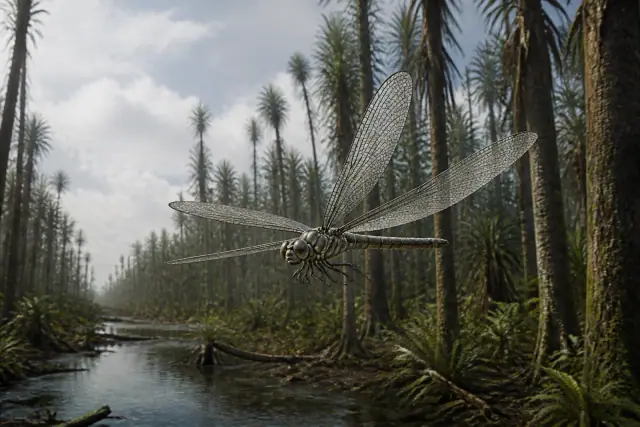
Brodioptera stricklani
Long transparent net-veined wings record an early radiation of large flying insects.
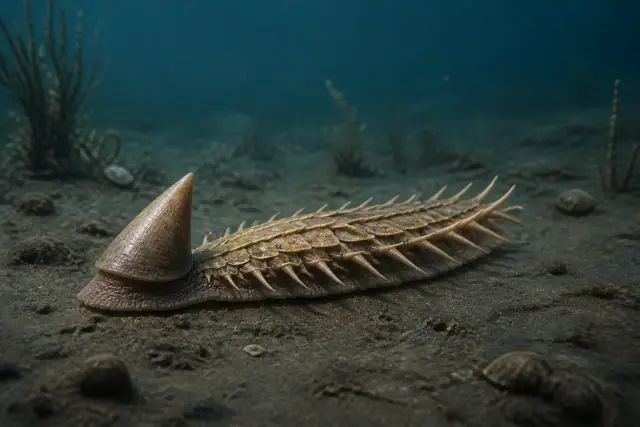
Orthrozanclus reburrus
Scales, long spines and a small front shell combined several Cambrian body plans.
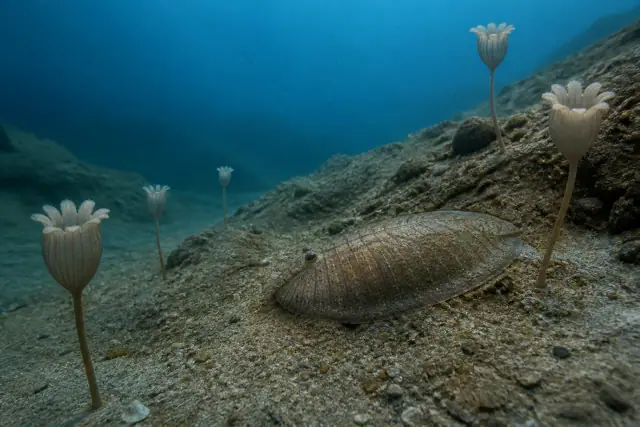
Dinomischus isolatus
A cup-shaped body attached by a long stalk and opened through a petal-ringed top.
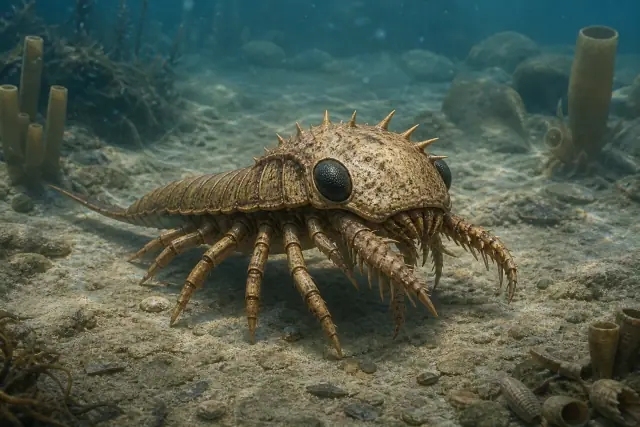
Habelia optata
A spiny head shield and specialized appendages belonged near the chelicerate stem.
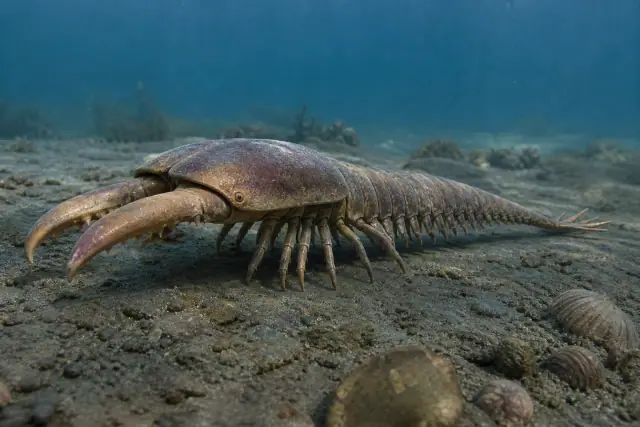
Tokummia katalepsis
Large pincer-like mandibles projected beneath a bivalved shell on an early mandibulate.
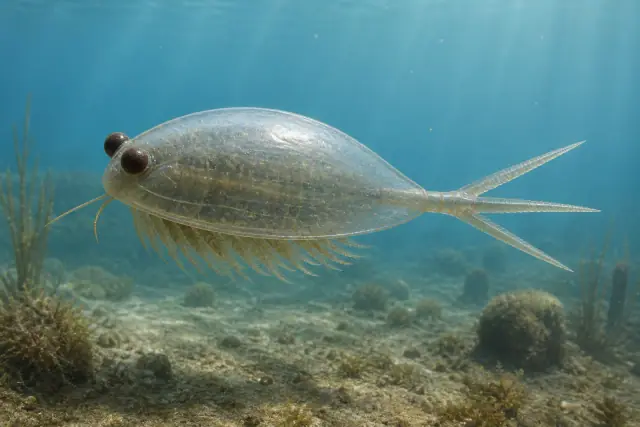
Odaraia alata
A broad bivalved shell enclosed most of the body and a three-pronged tail steered it.
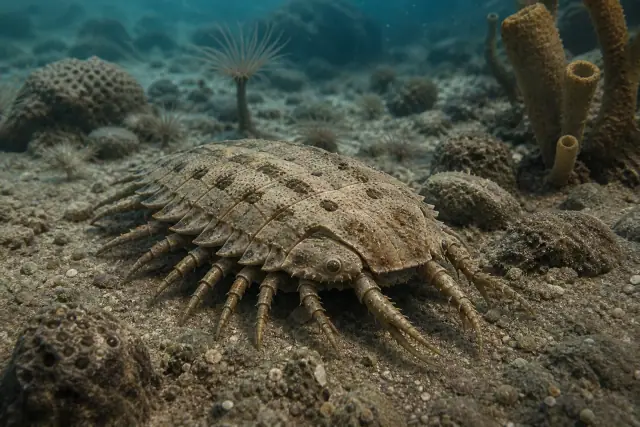
Mollisonia symmetrica
A tiny armored body and pincer-like front appendages suggest an early chelicerate relative.
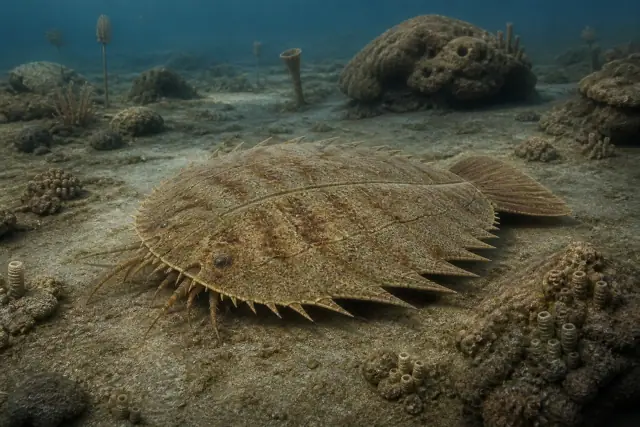
Helmetia expansa
A broad flat shield with marginal spines and a leaf-like tail formed an unusual outline.
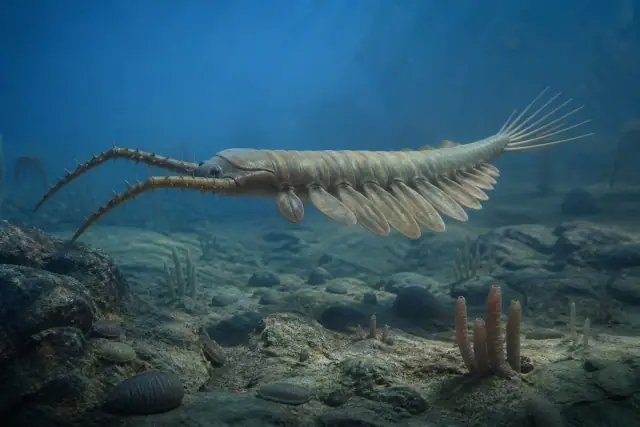
Kerygmachela kierkegaardi
Long frontal appendages, side flaps and tail spines record a stem-panarthropod body.
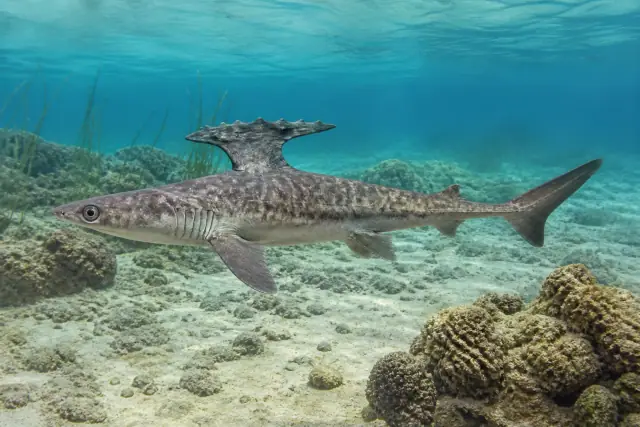
Akmonistion zangerli
Males carried a striking anvil-shaped brush-and-spine complex on the back.
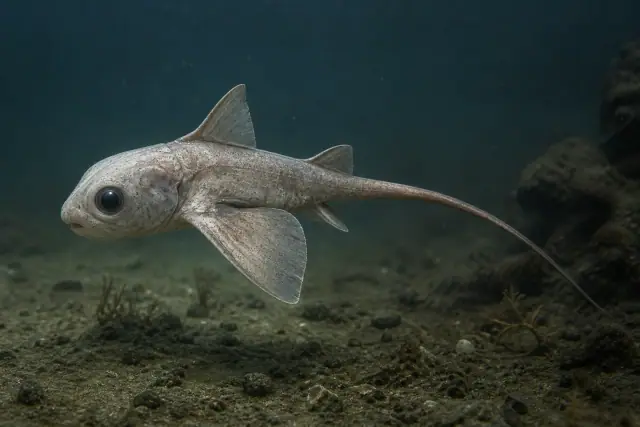
Echinochimaera meltoni
A short snout, large eyes and pectoral structures belonged to an early chimaera relative.
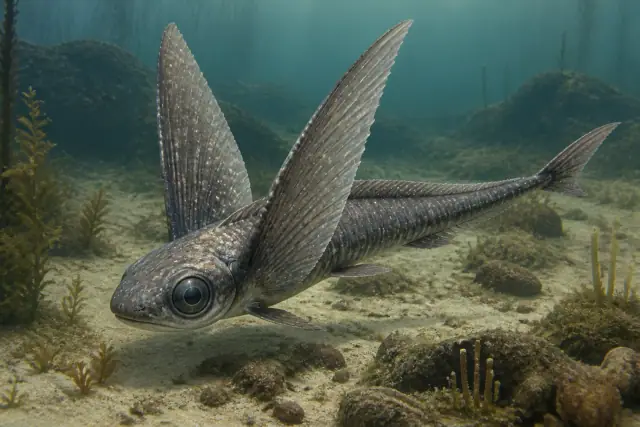
Iniopteryx rushlaui
Iniopteryx rushlaui was a small cartilaginous fish with broad pectoral fins attached high on its body; the fins suggest underwater strokes, not flight.
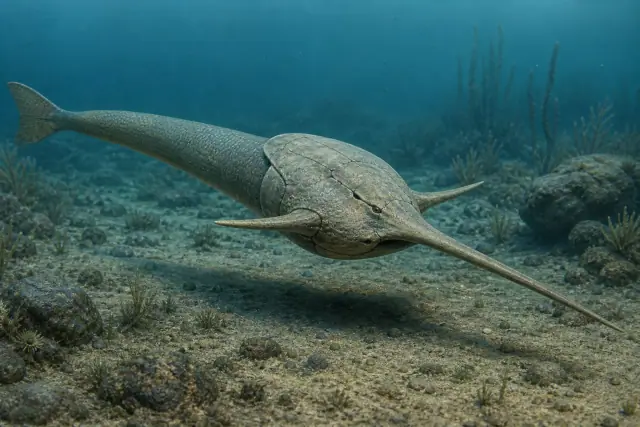
Doryaspis nathorsti
A spear-like rostrum and lateral horns projected from this jawless armored fish.
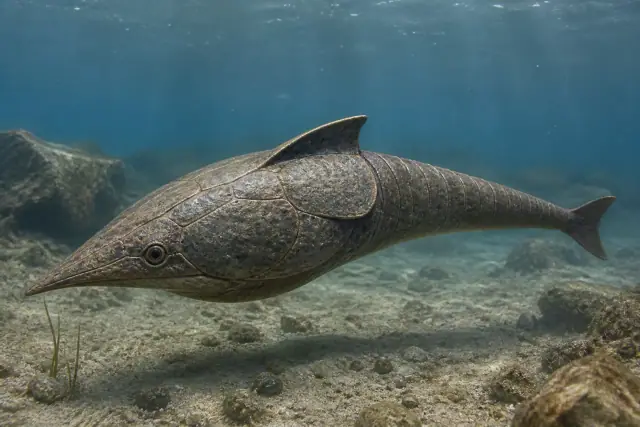
Boreaspis ceratops
A streamlined shield extended into a pointed snout and carried a stabilizing dorsal rise.
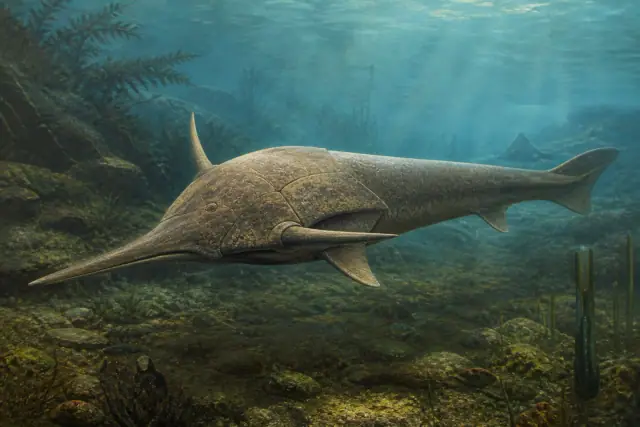
Pituriaspis doylei
A long rostrum, side horns and paired openings belonged to an endemic jawless armored lineage.
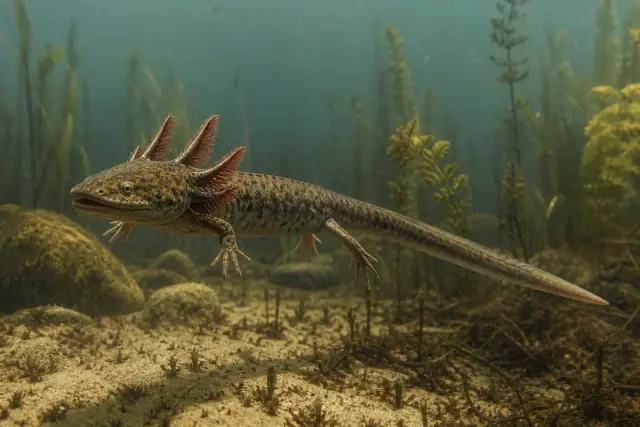
Melanerpeton pusillum
A tiny body and retained gill structures marked a branchiosaurid amphibian.
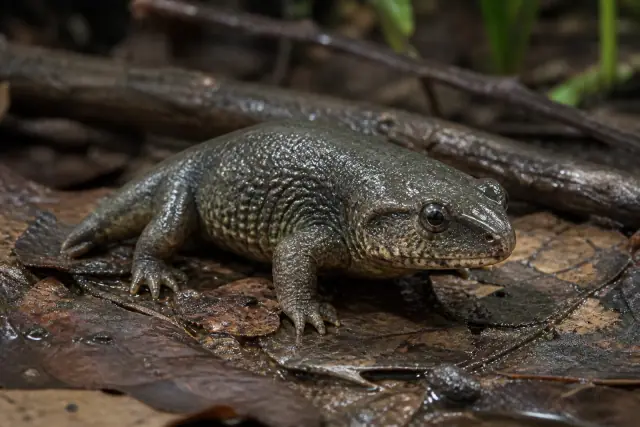
Doleserpeton annectens
A short trunk, mobile neck and ear region approach the body plan of modern amphibian ancestors.
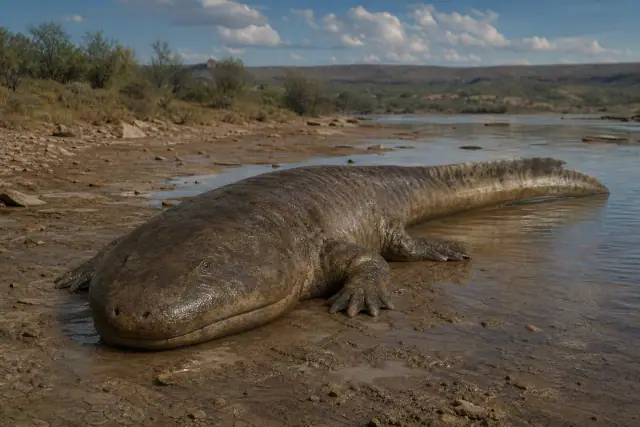
Uranocentrodon senekalensis
A broad flat head, strong trunk and compressed tail belonged to a large aquatic predator.
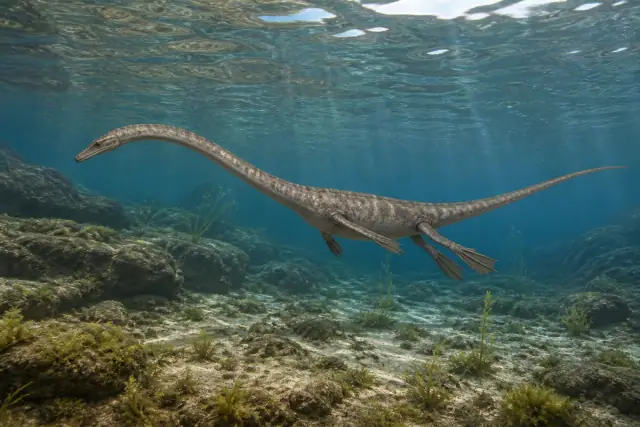
Claudiosaurus germaini
A long neck, tail and webbed feet show an early diapsid frequently entering water.
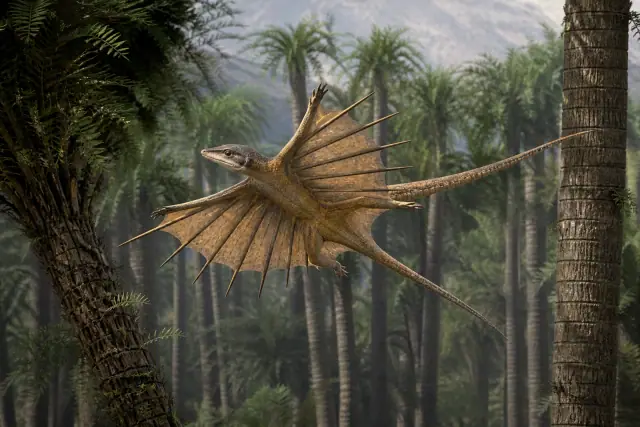
Coelurosauravus jaekeli
Long independent bony rods supported one of the earliest vertebrate gliding membranes.
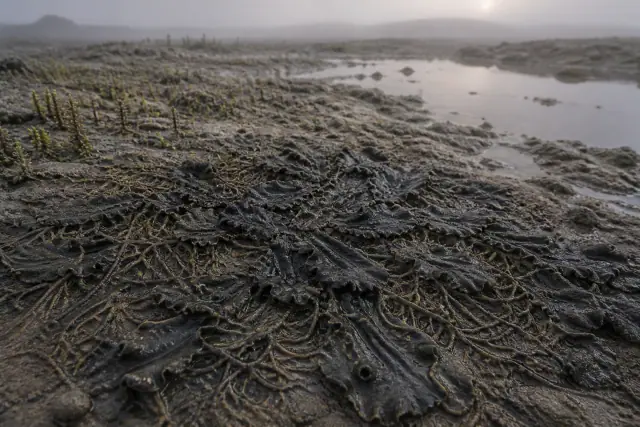
Nematothallus
Carbonized cell sheets and tangled tubes came from an enigmatic early terrestrial organism.
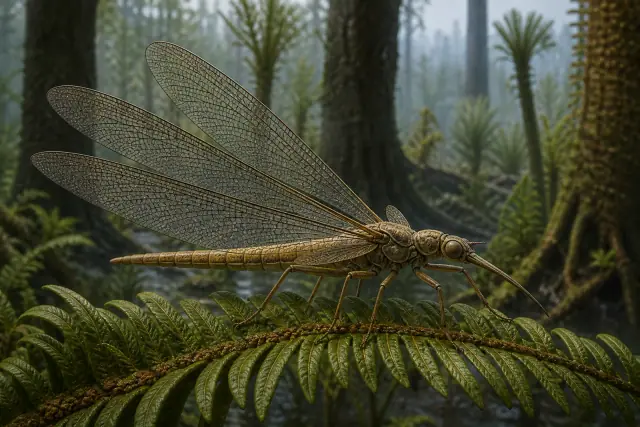
Palaeodictyoptera
Two pairs of net-veined wings could not fold, and some species carried thoracic winglets and piercing mouthparts.
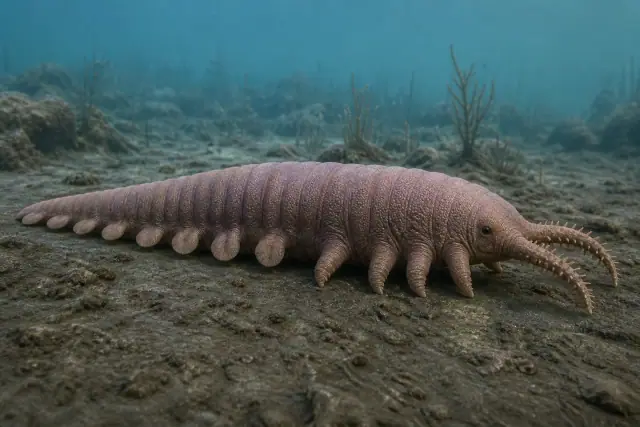
Pambdelurion whittingtoni
Large frontal appendages, rows of swimming flaps and an annulated soft body link lobopodians with true arthropods.
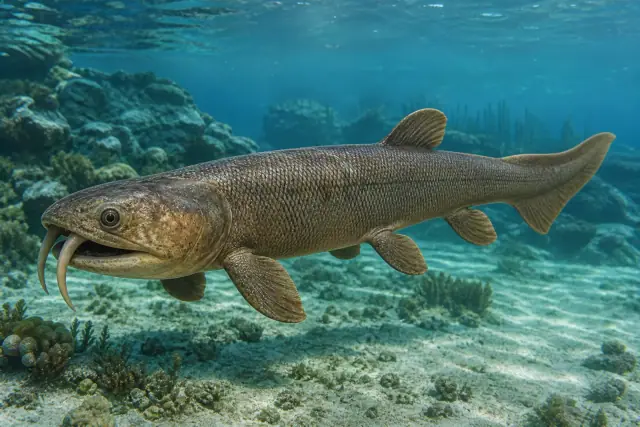
Onychodus jandemarrai
A pair of curved lower-jaw tusks and a kinetic skull helped this lobe-finned fish restrain prey.
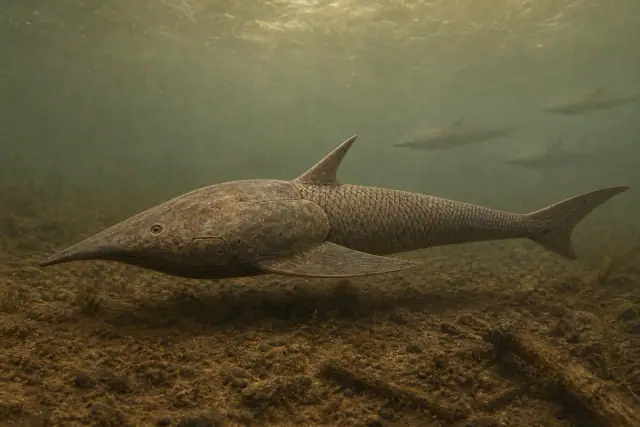
Pteraspis rostrata
A streamlined head shield extended into a rostrum, while a dorsal spine and lateral horns stabilized the jawless fish.
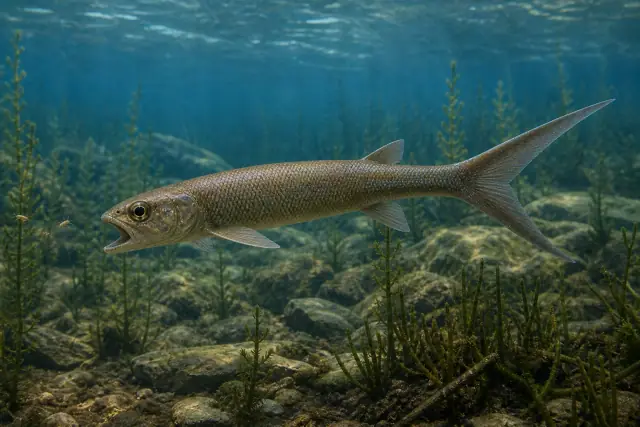
Cheirolepis trailli
Tiny rhomboid scales, a deeply forked tail and broad gape marked an early ray-finned fish radiation.
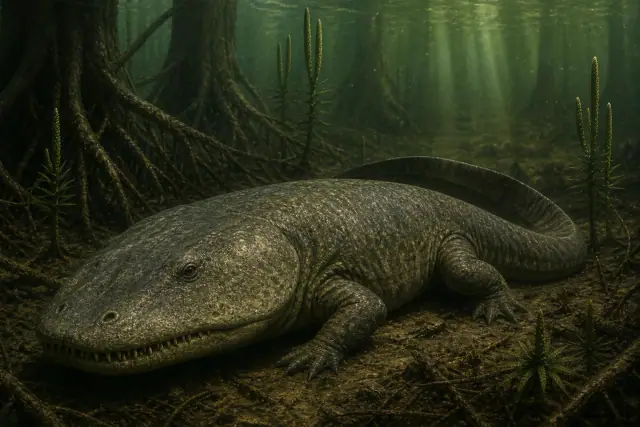
Capetus palustris
A broad flat skull and dense pointed teeth belonged to a large aquatic temnospondyl.