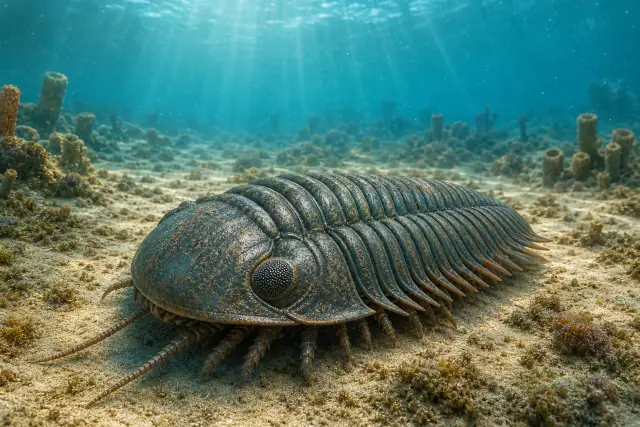
04Paleozoic
Trilobites
Trilobita
They occupied seafloors for nearly 300 million years, and their compound eyes preserve secrets of early vision.
 EXTINCT ATLASEXTINCT LIFE ARCHIVEBack to archive
Period · 358.86–298.9 million years ago
Browse giant arthropods, early amniotes and fossil plants from Carboniferous wetlands and forests.
Coal-forming wetlands preserve tree-sized clubmosses and diverse animals, but represent only part of this world. Terrestrial vertebrates and flying insects diversified. The Carboniferous includes the Mississippian and Pennsylvanian subdivisions, names especially common in North American geology.
Trilobita
They occupied seafloors for nearly 300 million years, and their compound eyes preserve secrets of early vision.
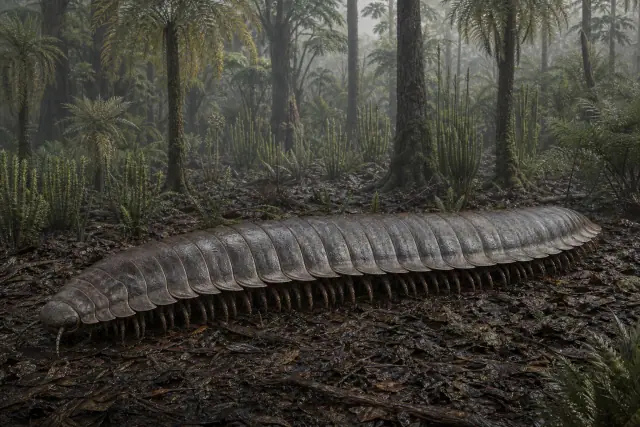
Arthropleura armata
This many-segmented arthropod grew longer than a person in coal-swamp forests.
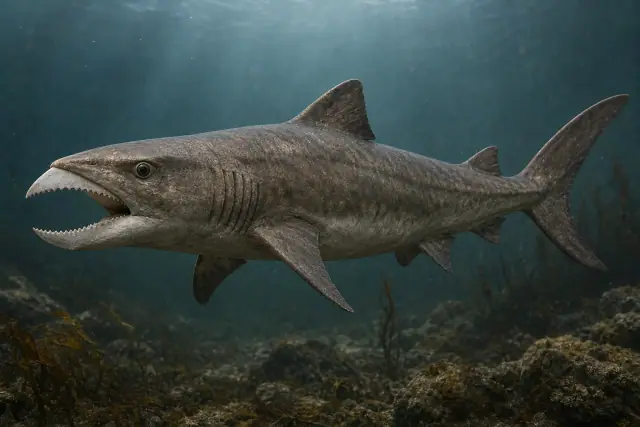
Edestus heinrichi
Opposing tooth blades projected from its jaws like curved shears.
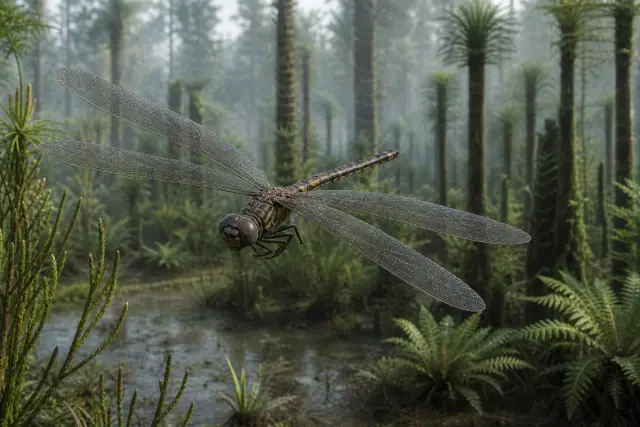
Meganeura monyi
This griffinfly’s wings spanned roughly seventy centimeters above Carboniferous forests.
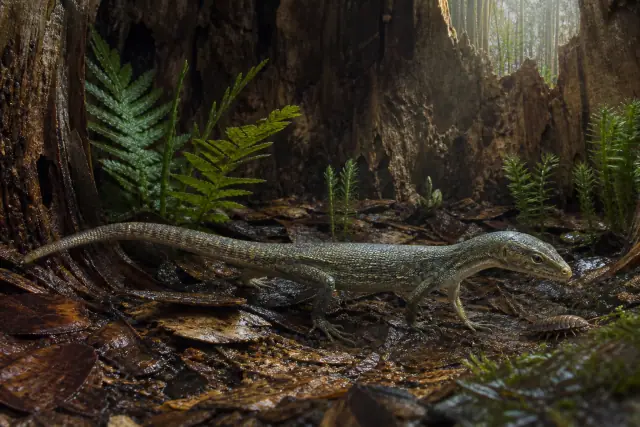
Hylonomus lyelli
This tiny insect hunter belonged to an early generation of vertebrates freed from laying eggs in water.
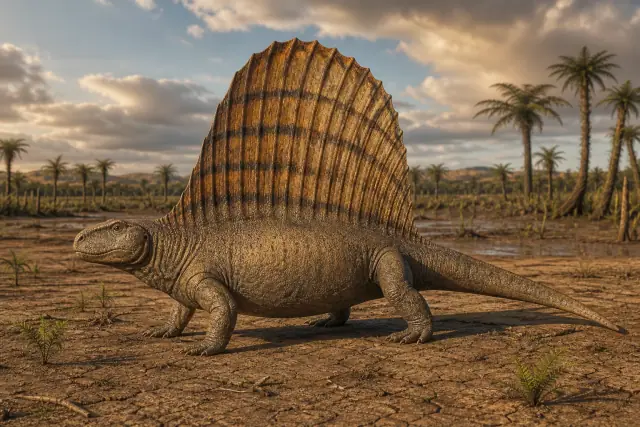
Edaphosaurus pogonias
Crossbars projected from the spines of its tall sail above a broad plant-processing body.
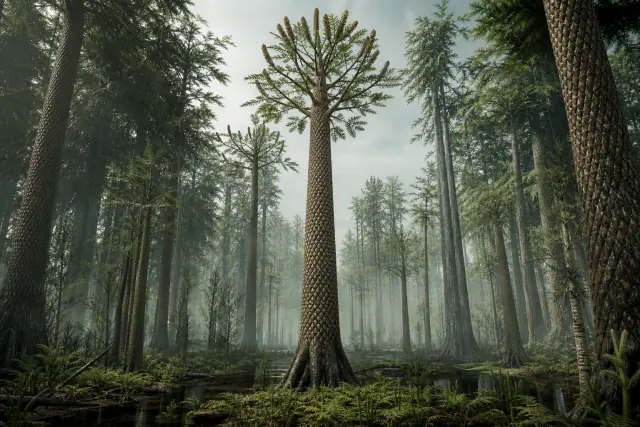
Lepidodendron aculeatum
A straight trunk patterned with diamond leaf scars forked only high above the Carboniferous mire.
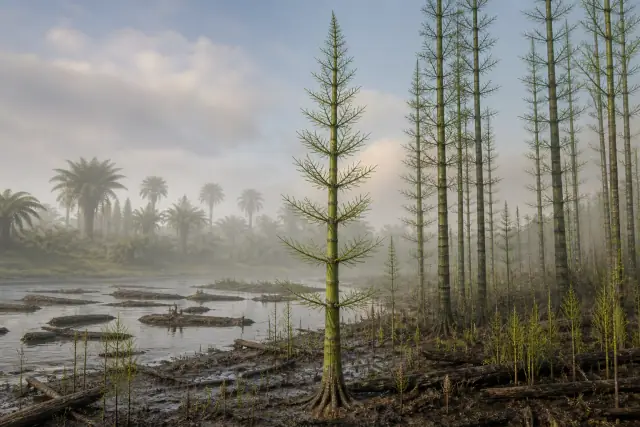
Calamites suckowii
Casts of jointed stems record large horsetail relatives; Calamites suckowii does not automatically name a plant with all organs known.
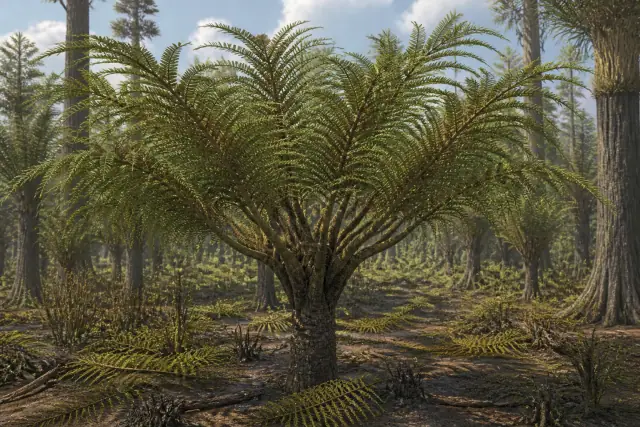
Medullosa noei
Woody stems carried immense fernlike fronds, yet seeds grew among the foliage of this vanished seed fern.
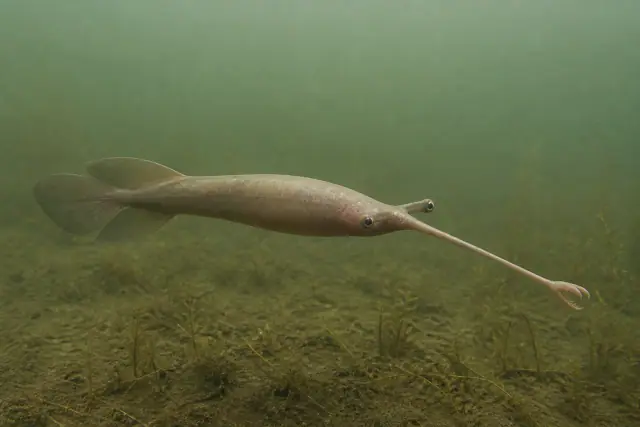
Tullimonstrum gregarium
Eyes sat at the ends of a crossbar and a long proboscis ended in a toothed grasping organ.
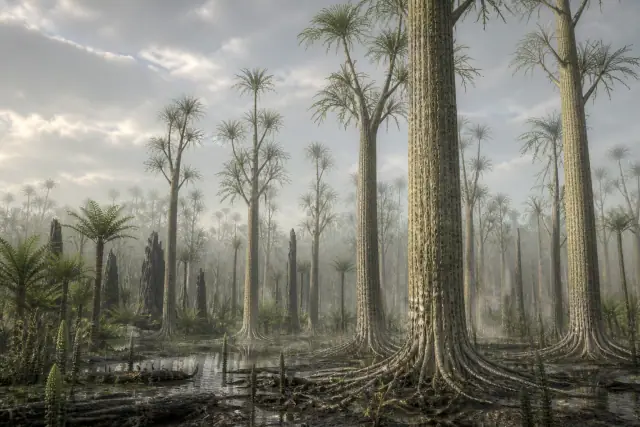
Sigillaria brardii
Vertical rows of leaf scars stamped the tall trunk, beneath a crown of sparse branches and grasslike microphylls.
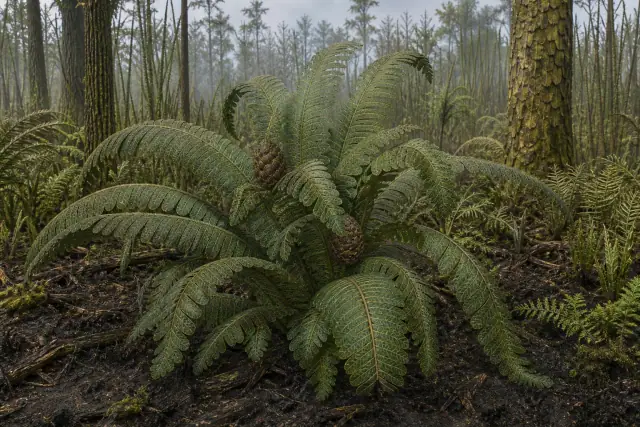
Neuropteris ovata
Rounded pinnules carried fanlike veins and looked fernlike, yet immense seeds grew among the fronds.
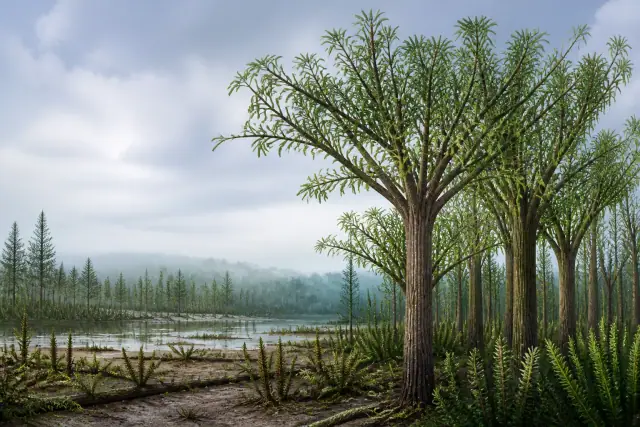
Cordaites principalis
Clusters of long strap-shaped leaves crowned woody trees from an extinct gymnosperm lineage near early conifers.
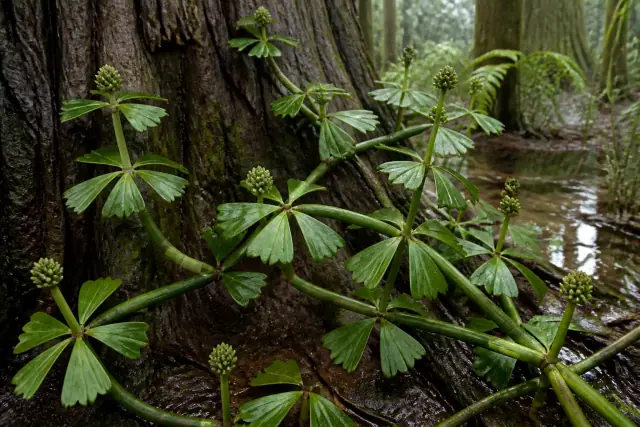
Sphenophyllum emarginatum
Six wedge-shaped leaves encircled each node of a slender stem that trailed across the ground or climbed larger trees.
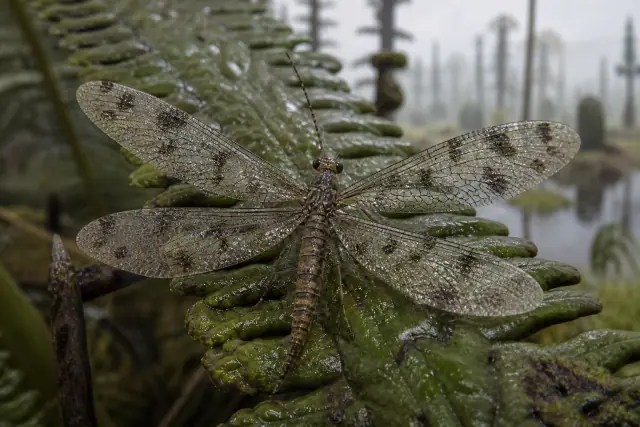
Delitzschala bitterfeldensis
A patterned wing only about two centimeters across pushes the secure record of insect flight into the Early Carboniferous.
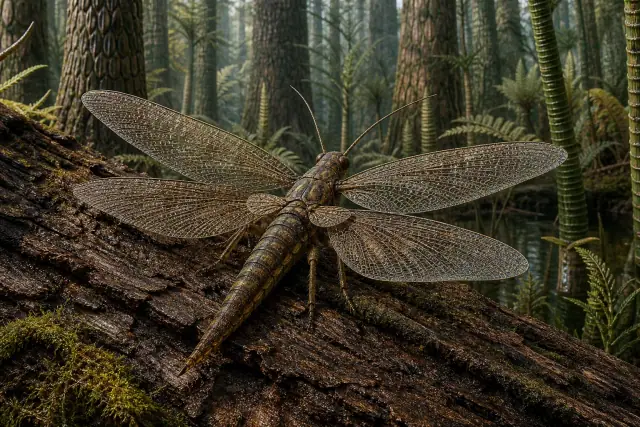
Stenodictya lobata
Beyond four wings packed with netlike veins, the thorax carried a pair of small immobile winglets.
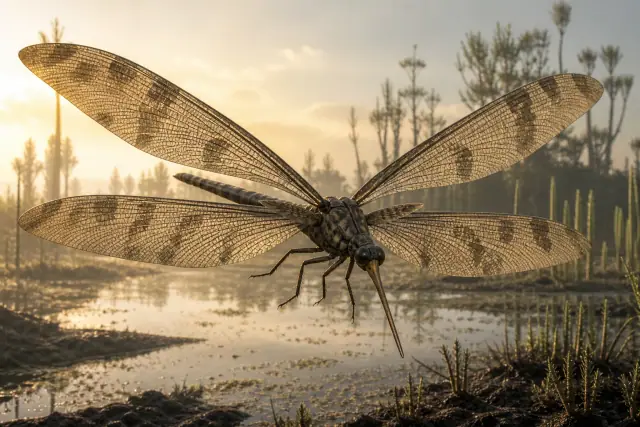
Mazothairos enormis
Scaling from the surviving giant wing suggests a four-winged span near half a meter, among the largest palaeodictyopterans known.
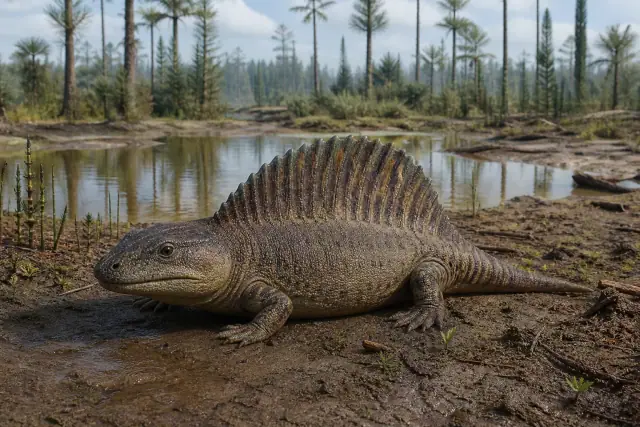
Platyhystrix rugosus
A high bony sail towered above the squat body and may have served display, recognition or heat exchange.
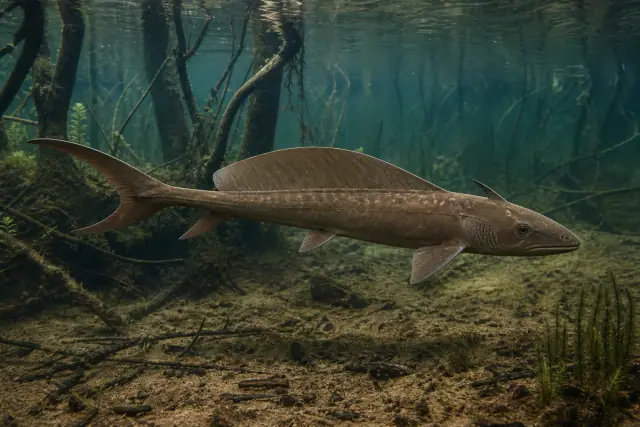
Xenacanthus decheni
A single head spine, forked teeth and continuous dorsal fin defined this freshwater shark.
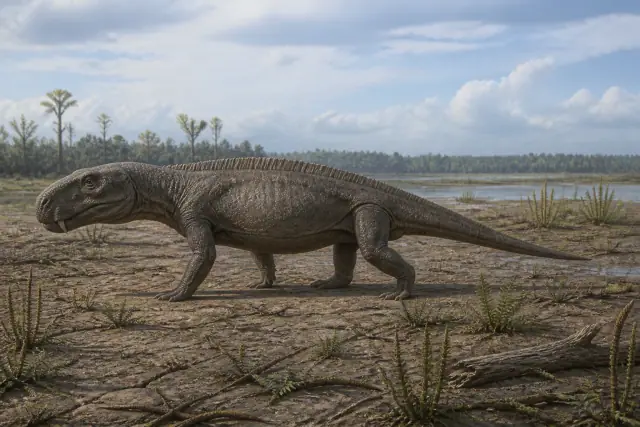
Sphenacodon ferox
Low vertebral ridges accompanied a deep skull and strongly differentiated teeth.
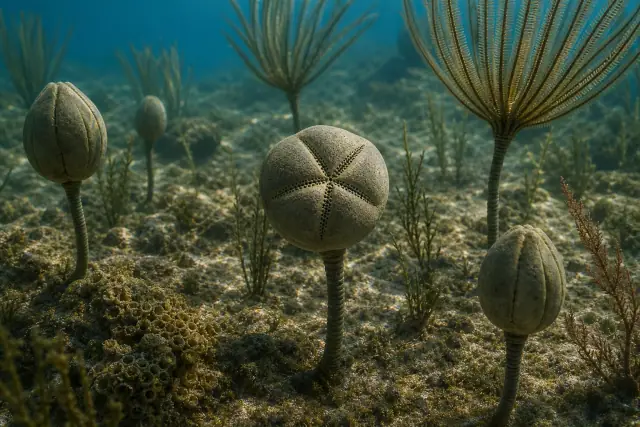
Pentremites godoni
A flower-bud body carried five feeding and respiratory grooves.
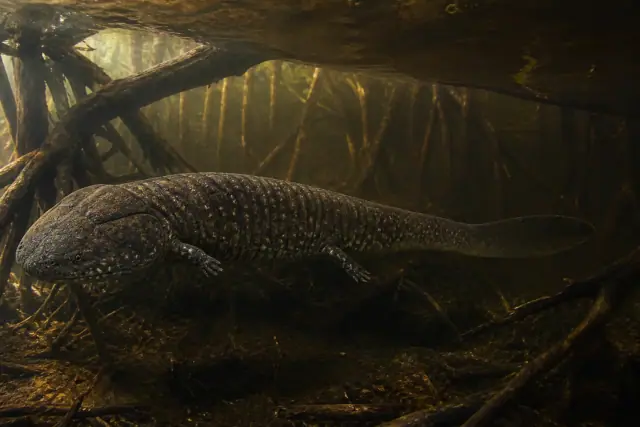
Crassigyrinus scoticus
Tiny limbs and strong jaws show an early tetrapod returning almost completely to water.
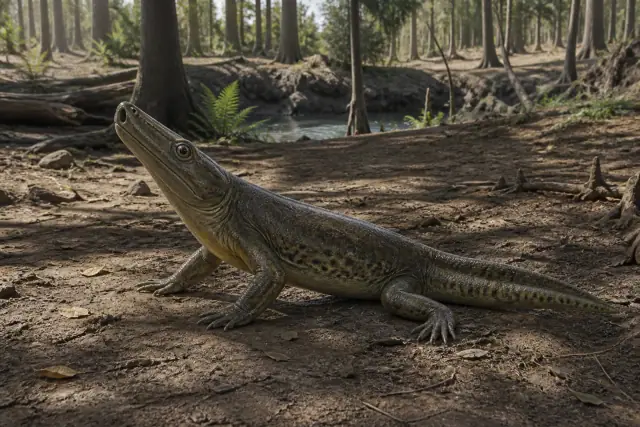
Fedexia striegeli
An elongated nostril region may reflect life in drier upland settings.
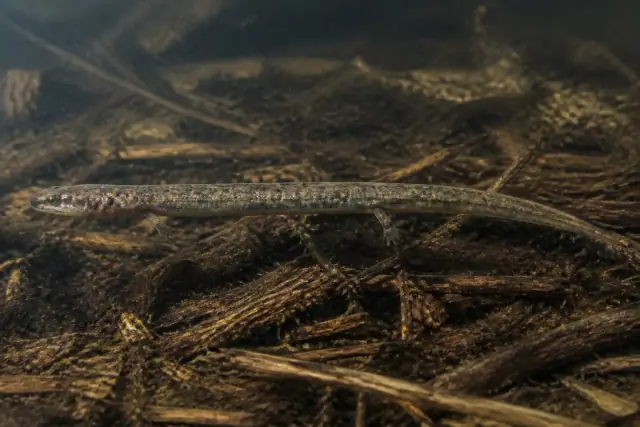
Microbrachis pelikani
More than forty trunk vertebrae formed a long body with extremely small limbs.