04Paleozoic
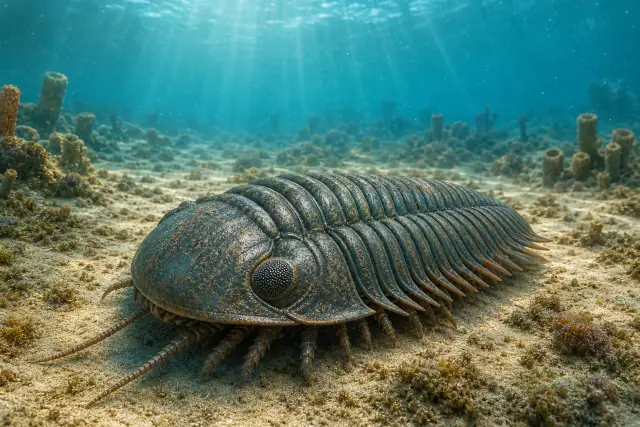
Trilobites
Trilobita
They occupied seafloors for nearly 300 million years, and their compound eyes preserve secrets of early vision.
 EXTINCT ATLASEXTINCT LIFE ARCHIVEBack to archive
Period · 298.9–251.902 million years ago
Explore Permian animals, mammal relatives and plants before the largest mass extinction in the fossil record.
Pangaea connected vast land areas with contrasting inland and coastal habitats. Synapsids such as Dimetrodon belonged to the mammalian side of the amniote family tree, not to dinosaurs. The end-Permian crisis devastated marine and terrestrial communities; survivors entered the Triassic.
Trilobita
They occupied seafloors for nearly 300 million years, and their compound eyes preserve secrets of early vision.
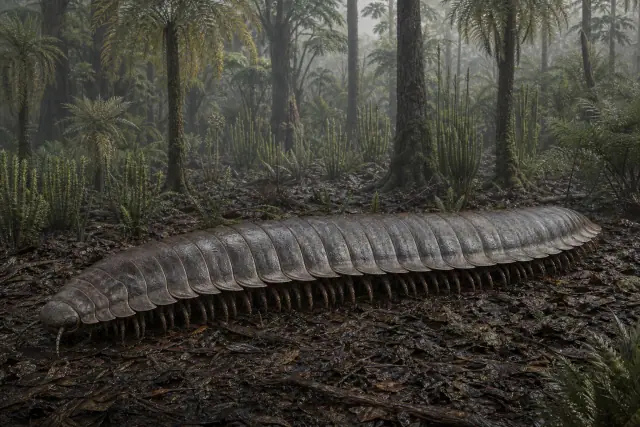
Arthropleura armata
This many-segmented arthropod grew longer than a person in coal-swamp forests.
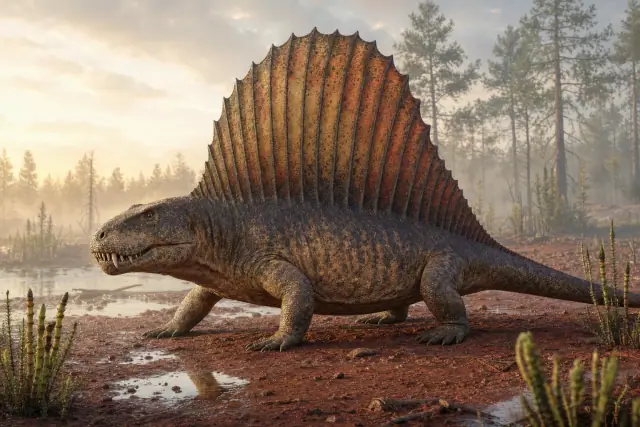
Dimetrodon grandis
This sail-backed predator was closer to mammals than to dinosaurs.
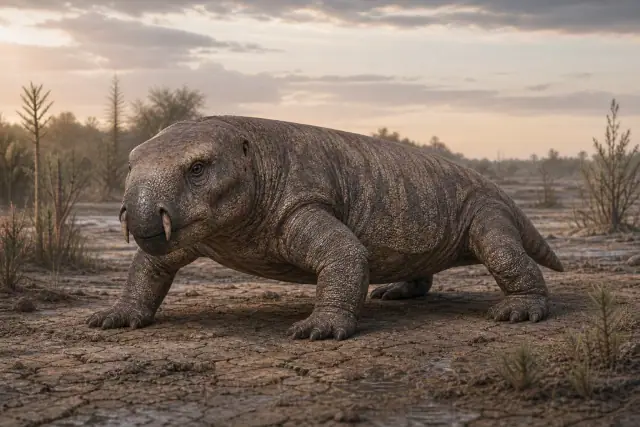
Lystrosaurus murrayi
A beaked, tusked survivor became extraordinarily common after Earth’s greatest mass extinction.
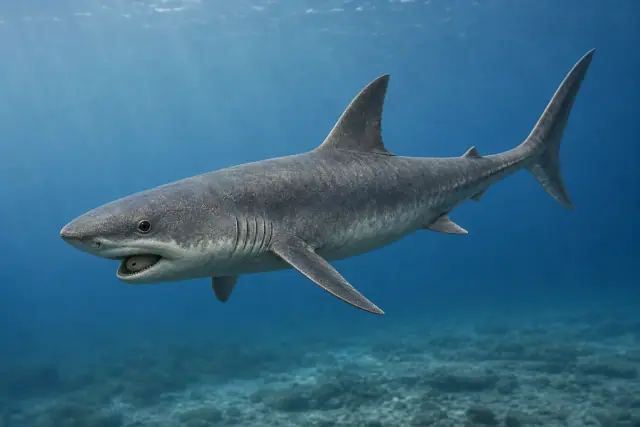
Helicoprion davisii
Its spiral tooth whorl worked like a permanent slicing blade inside the lower jaw.
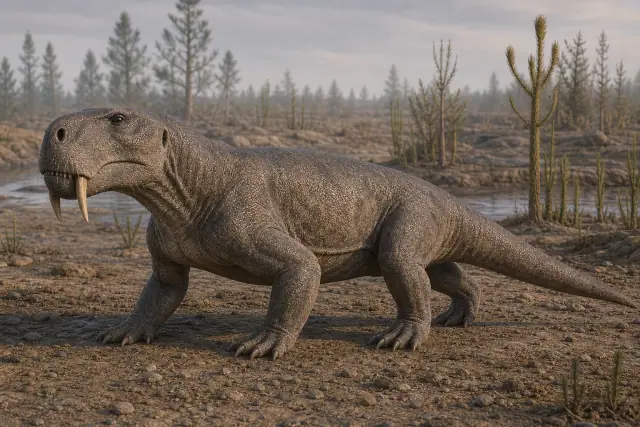
Inostrancevia alexandri
Long saber canines armed one of the largest predators of the latest Permian.
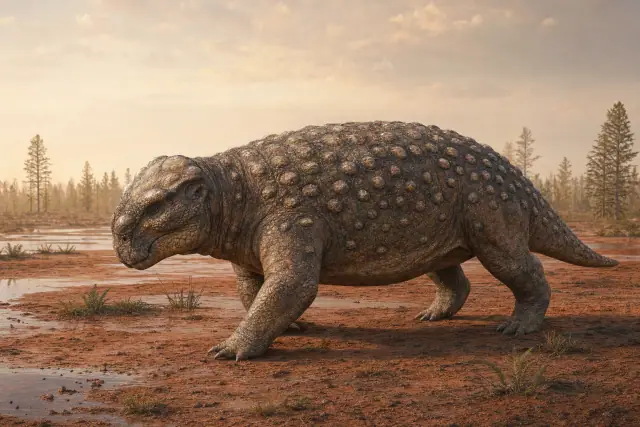
Scutosaurus karpinskii
A barrel-bodied herbivore carried bony armor beneath its skin.
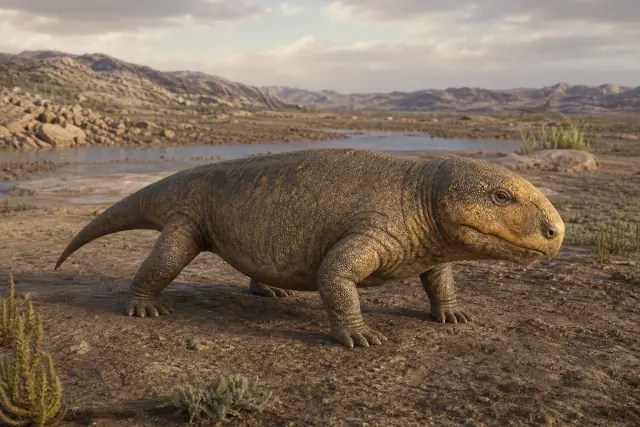
Moschops capensis
A thick skull roof capped this heavy plant-eating mammal relative.
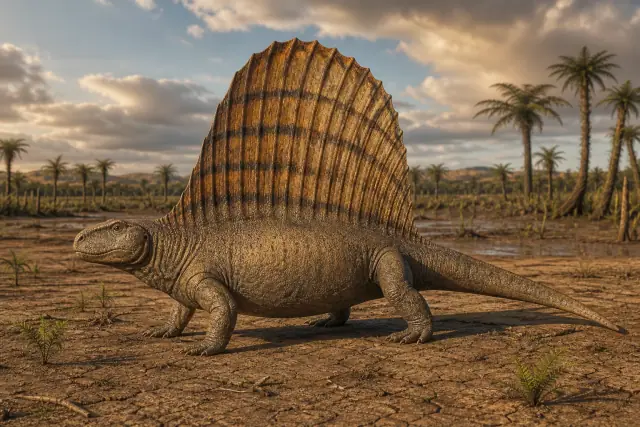
Edaphosaurus pogonias
Crossbars projected from the spines of its tall sail above a broad plant-processing body.
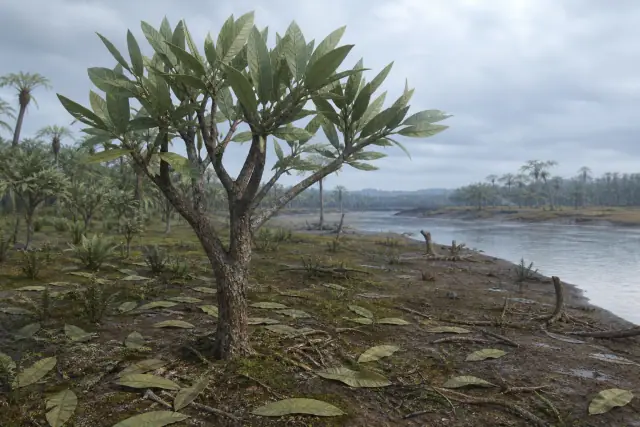
Glossopteris browniana
Tongue-shaped leaves across the southern continents became important evidence that Gondwana was once united.
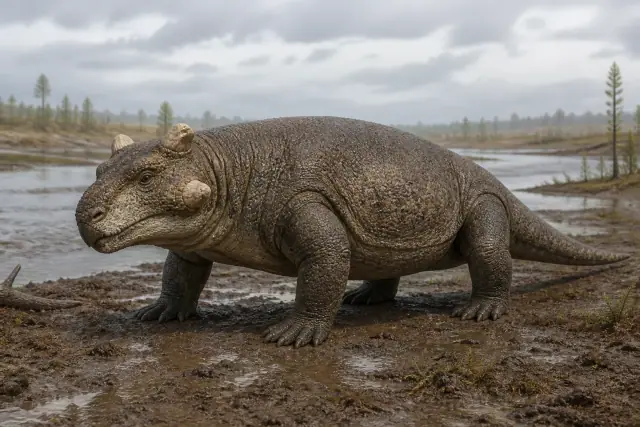
Estemmenosuchus uralensis
Paired bony bosses formed a rough crown on the skull of this large, probably plant-eating therapsid.
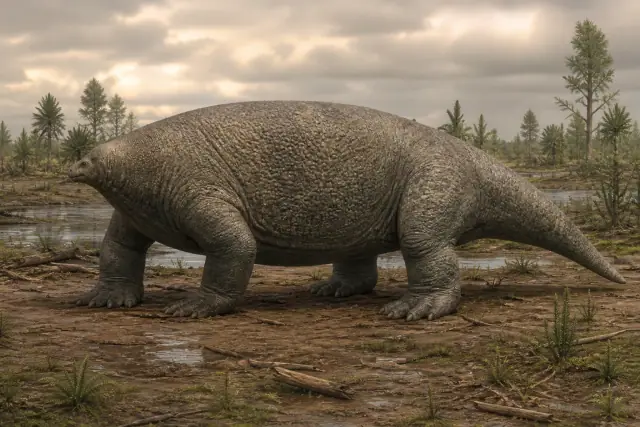
Cotylorhynchus romeri
A tiny head joined a barrel-shaped giant body whose broad ribs enclosed a vast plant-fermenting digestive system.
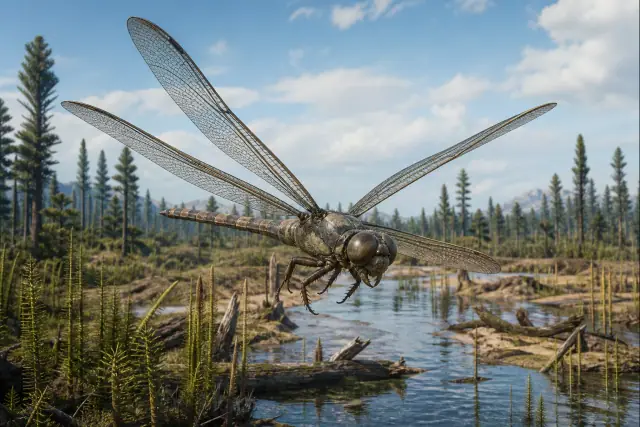
Meganeuropsis permiana
The largest estimates reach a 71-centimeter wingspan, placing it among the biggest flying insects in Earth history.
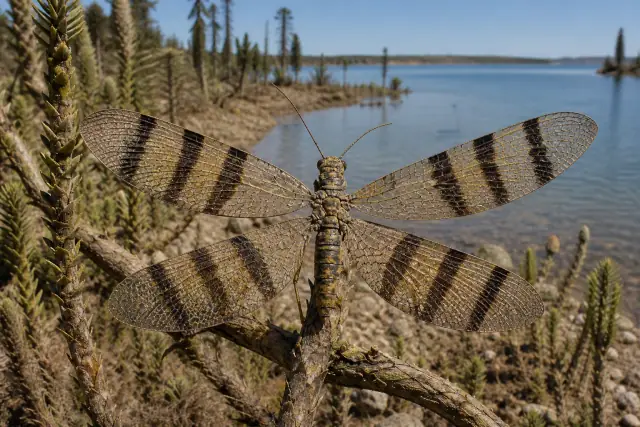
Dunbaria fasciipennis
Banded dark patterns remain on its fossil wings, returning color pattern to a Permian insect rather than a blank outline.
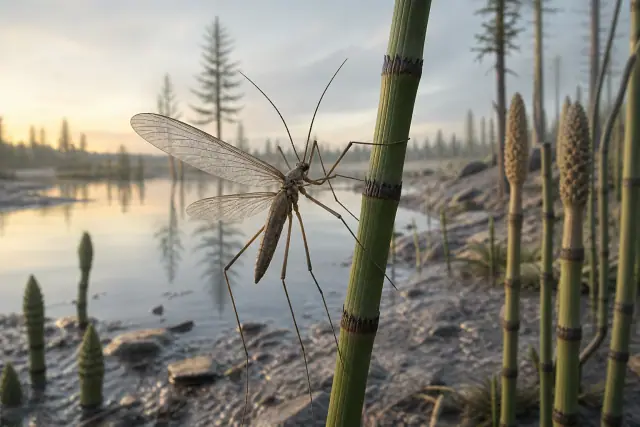
Permotipula patricia
A wing resembling that of a crane fly was once treated as an early dipteran clue, but its true affinity remains disputed.
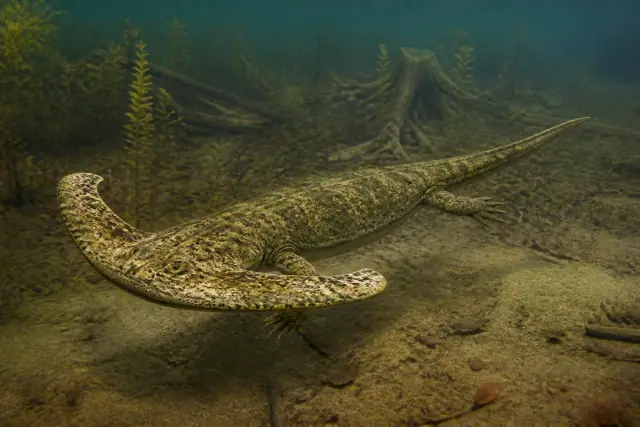
Diplocaulus magnicornis
Its skull spread sideways into a boomerang, perhaps producing lift in current or making it hard to swallow.
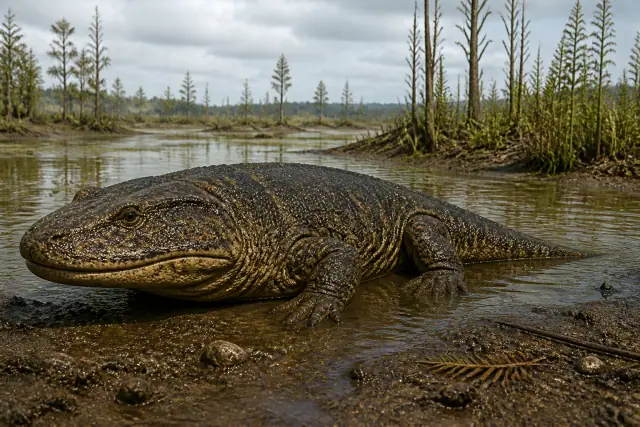
Eryops megacephalus
A broad, heavily sculpted skull and strong limbs carried its massive body through shallow water and onto banks.
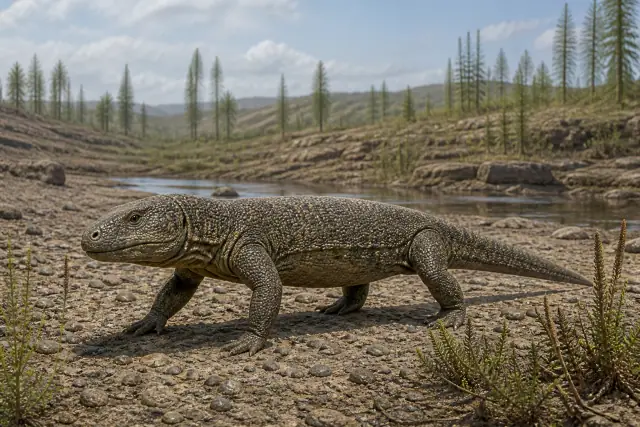
Seymouria baylorensis
Its adult skeleton looked reptile-like, yet it belonged just outside the fully land-breeding amniotes.
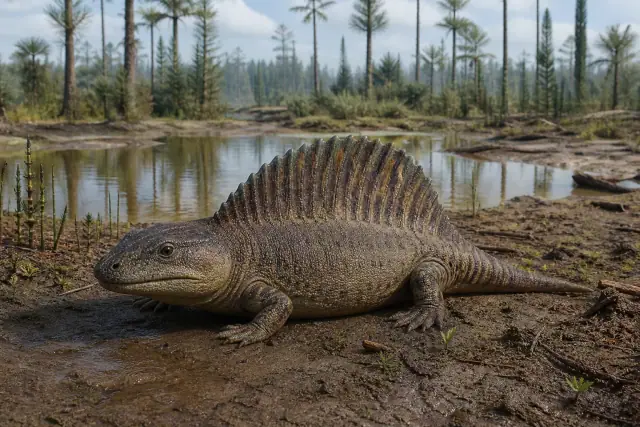
Platyhystrix rugosus
A high bony sail towered above the squat body and may have served display, recognition or heat exchange.
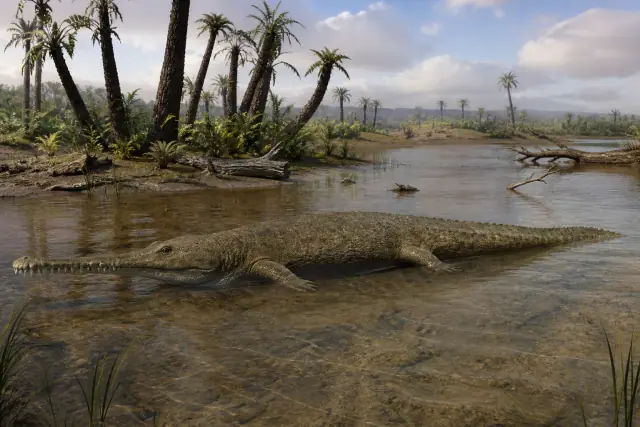
Prionosuchus plummeri
A giant Brazilian amphibian with a crocodile-like snout; its famous 9-metre length is a reconstruction from fragmentary fossils.
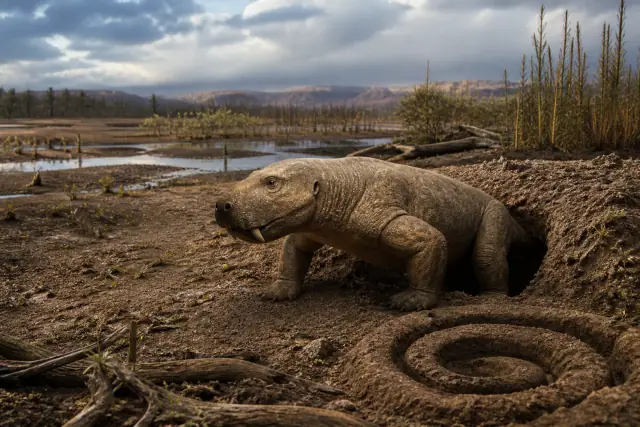
Diictodon feliceps
A beak, short tusks and powerful forelimbs made this one of the most common burrowing herbivores of the Late Permian.
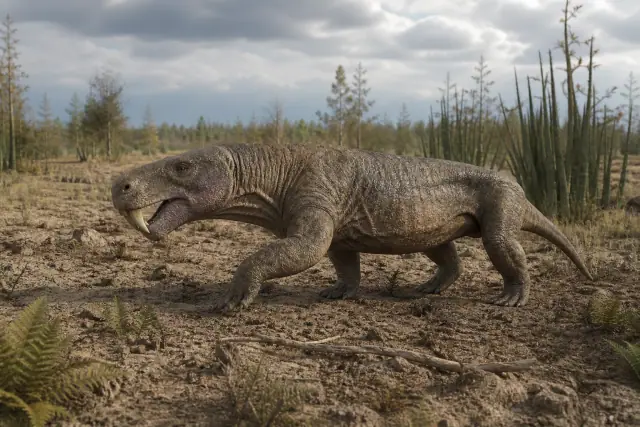
Gorgonops torvus
Long upper canines and a wide gape made it an early experiment in saber-toothed predation.
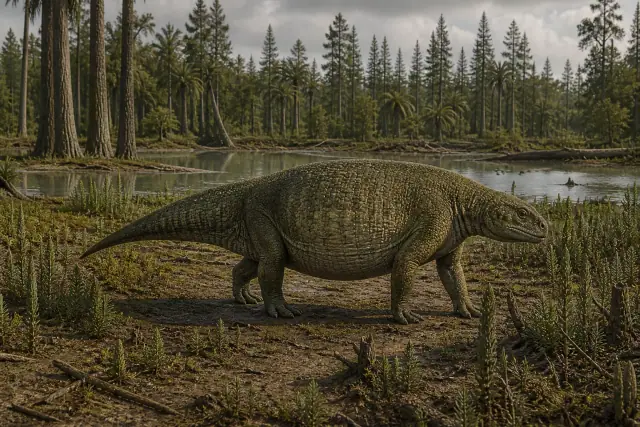
Eunotosaurus africanus
Nine pairs of broad, flattened ribs record an early stage in the evolution of the turtle shell.
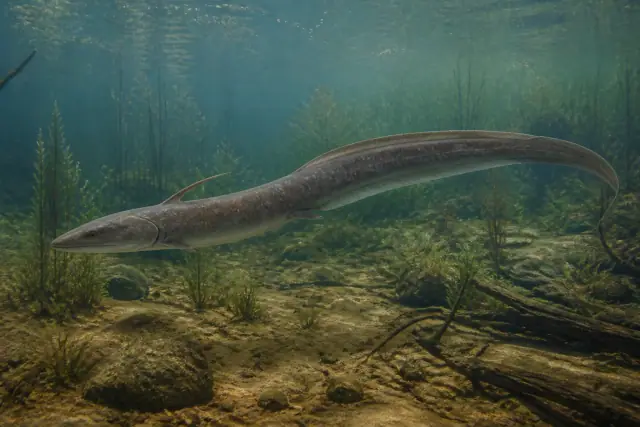
Orthacanthus senckenbergianus
An eel-like body, continuous fin and spine behind the head made it unlike any modern shark.