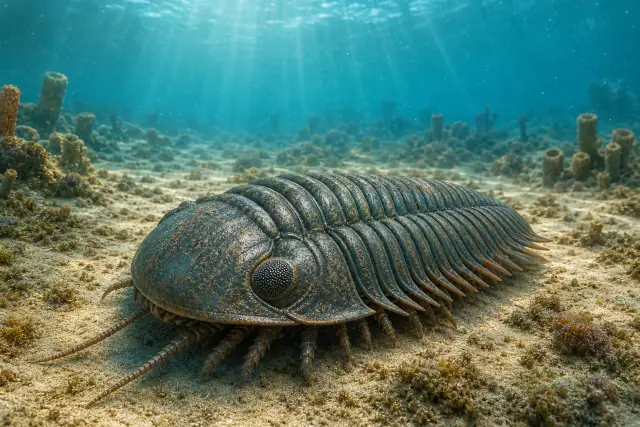
04Paleozoic
Trilobites
Trilobita
They occupied seafloors for nearly 300 million years, and their compound eyes preserve secrets of early vision.
 EXTINCT ATLASEXTINCT LIFE ARCHIVEBack to archive
Period · 419.62–358.86 million years ago
Meet armoured fishes, early tetrapods and the plants that transformed Devonian landscapes.
The ‘Age of Fishes’ included many distinct lineages. Forests expanded, and some vertebrates combined aquatic and weight-bearing adaptations. Late Devonian extinction pulses affected ecosystems unevenly. Each fossil’s setting matters when interpreting transitions between water and land.
Trilobita
They occupied seafloors for nearly 300 million years, and their compound eyes preserve secrets of early vision.
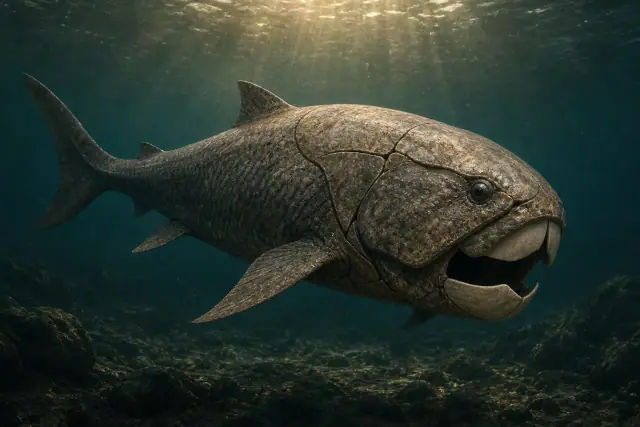
Dunkleosteus terrelli
Sharpened jaw plates replaced teeth in this heavily armored apex fish.
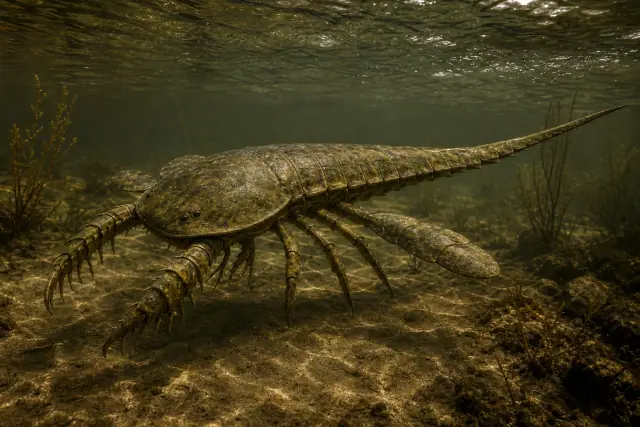
Jaekelopterus rhenaniae
This giant sea scorpion may have exceeded two meters in length.
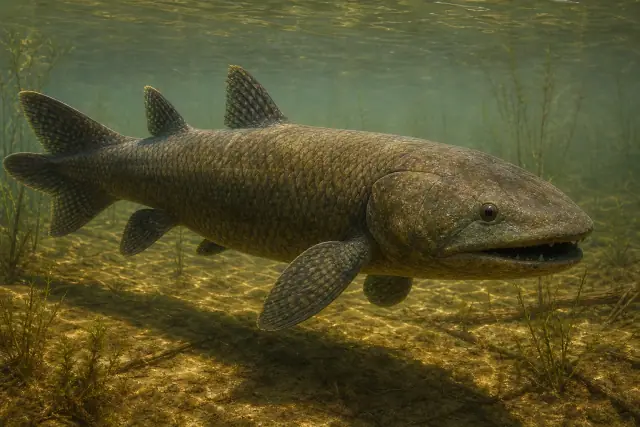
Eusthenopteron foordi
Bones inside its fleshy fins foreshadowed the limb pattern of land vertebrates.
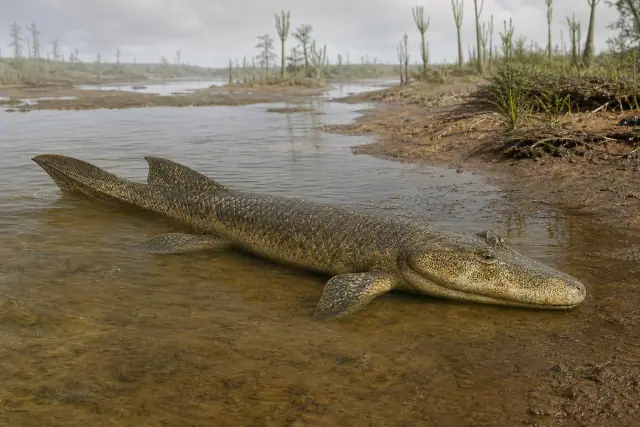
Tiktaalik roseae
A flat-headed fish with a mobile neck and wrist-like fin bones approached the anatomy of early tetrapods.
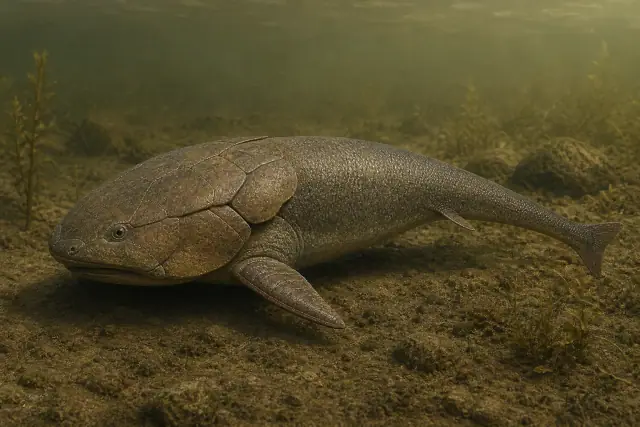
Bothriolepis canadensis
Bony armor enclosed its head and chest while jointed pectoral appendages steadied it on the bottom.
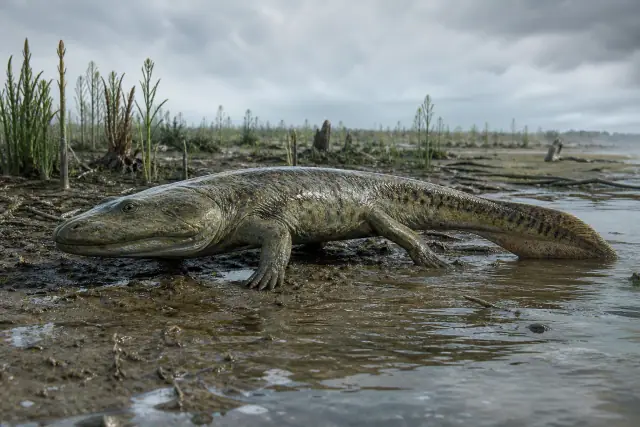
Ichthyostega stensioei
Weight-bearing limbs accompanied a fish-like tail in an animal still deeply tied to water.
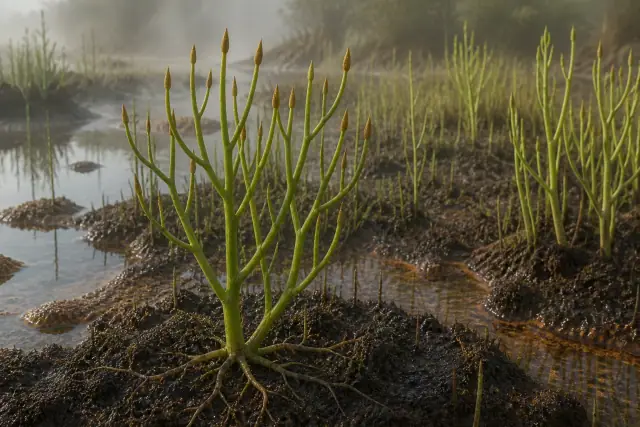
Rhynia gwynne-vaughanii
Naked upright axes rose from creeping rhizomes, preserved cell by cell by silica-rich hot springs.
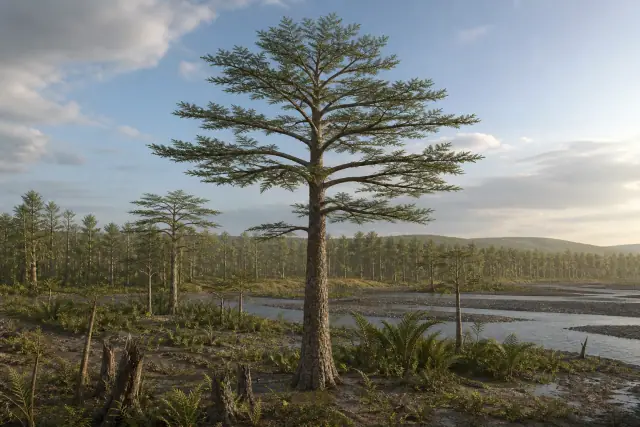
Archaeopteris halliana
It grew true wood and a tree crown but still reproduced by spores, helping create Earth's first broad forests.
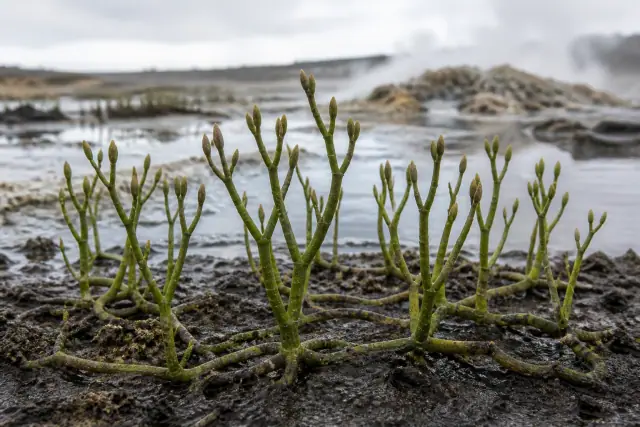
Aglaophyton major
Leafless axes rose in stands from creeping stems; conducting cells were present, but true vascular tissue was not.
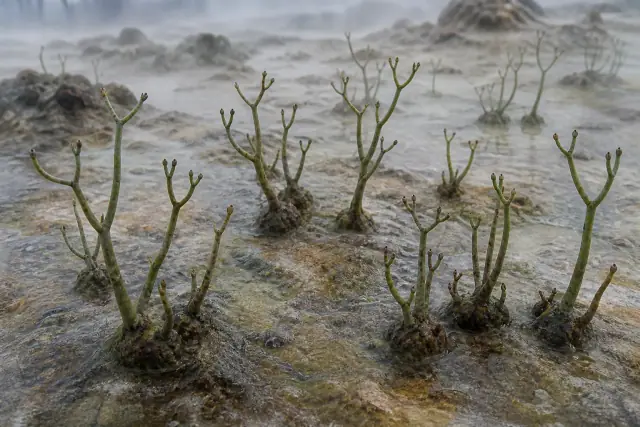
Horneophyton lignieri
Short axes carried forked sporangia above corm-like bases that could resprout on a repeatedly flooded hot-spring surface.
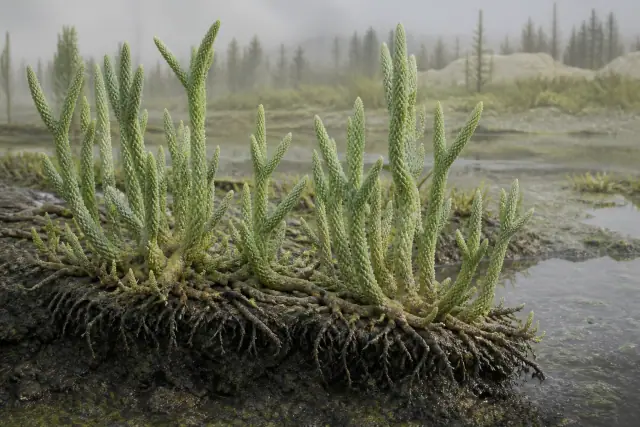
Asteroxylon mackiei
Veinless leaf-like flaps covered its axes, while star-shaped xylem supplied shoots that rose nearly half a meter.
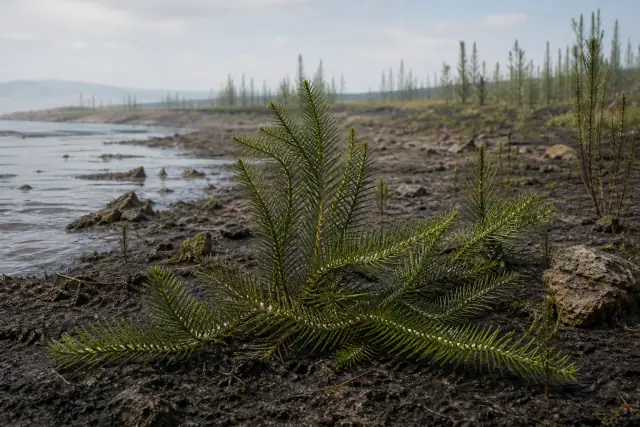
Baragwanathia longifolia
Branches more than a meter long carried dense narrow microphylls, far more elaborate than most naked-stemmed plants of its age.
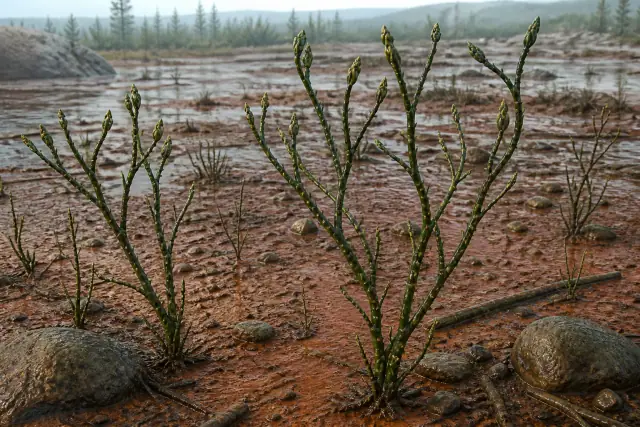
Psilophyton dawsonii
Naked axes forked repeatedly, their fertile tips curling inward and carrying paired elongated sporangia.
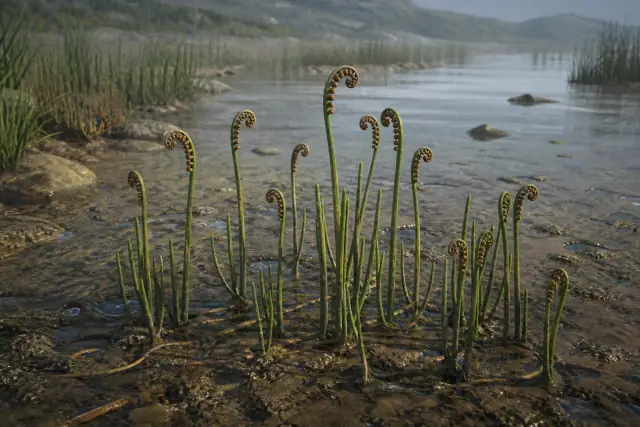
Zosterophyllum myretonianum
Two rows of kidney-shaped sporangia lined curved branch tips like the teeth of an unfinished botanical zipper.
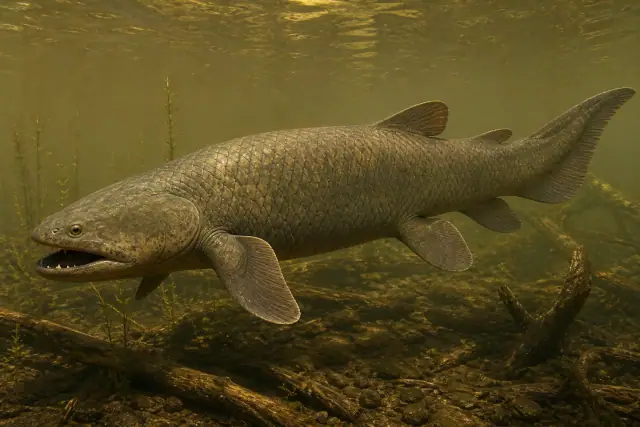
Hyneria lindae
This giant lobe-finned predator used fanglike teeth to ambush prey, while its fin skeleton followed a tetrapod-like pattern.
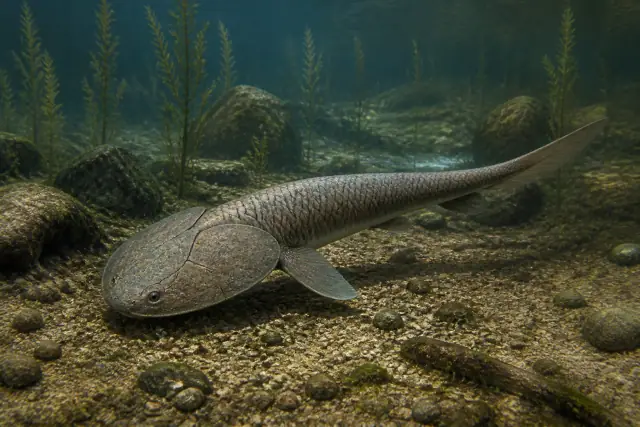
Cephalaspis lyelli
Sensory fields beneath a broad crescent-shaped head shield helped it search through turbid bottom water.
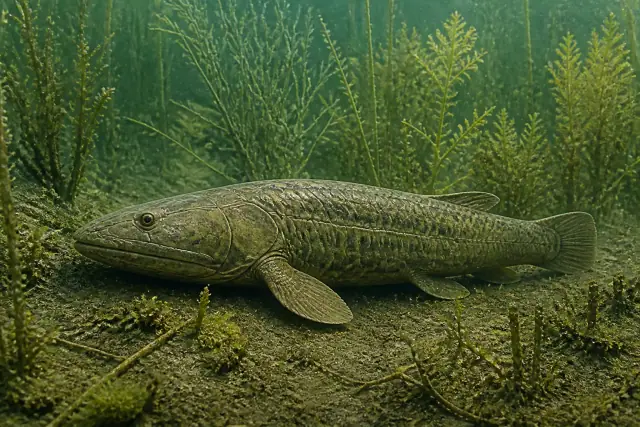
Panderichthys rhombolepis
A flat head with upward-facing eyes and limb-like bones inside its fins brought it close to the earliest tetrapods.
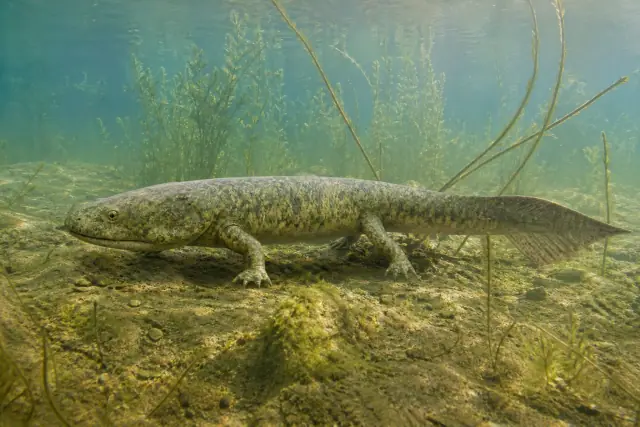
Acanthostega gunnari
Each forelimb carried eight digits, yet the animal was still mainly aquatic—digits evolved before true land walking.
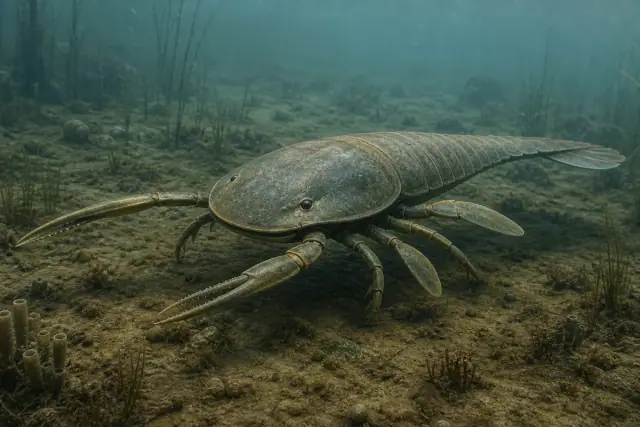
Acutiramus cummingsi
Its long pincers carried slanting blades suited to holding or slicing soft prey.
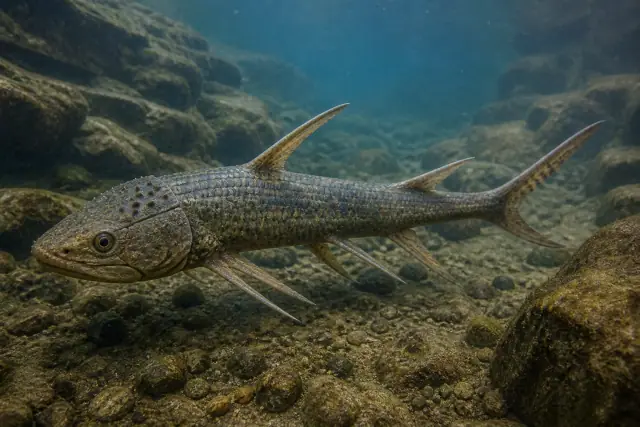
Climatius reticulatus
Rows of paired ventral spines formed a defensive fence beneath this small early jawed fish.
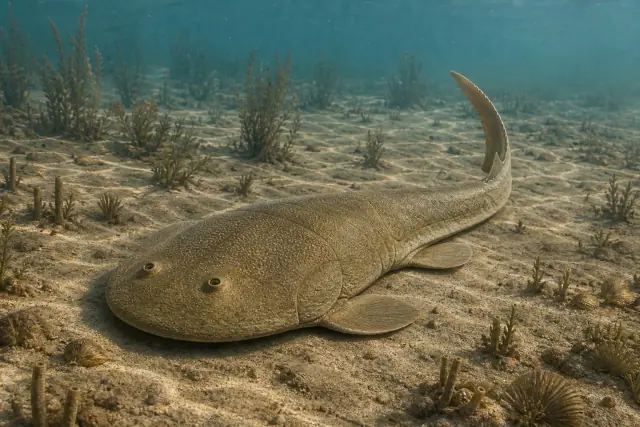
Drepanaspis gemuendenensis
Its body was a flattened shield with upward-facing eyes and a mouth beneath the front edge.
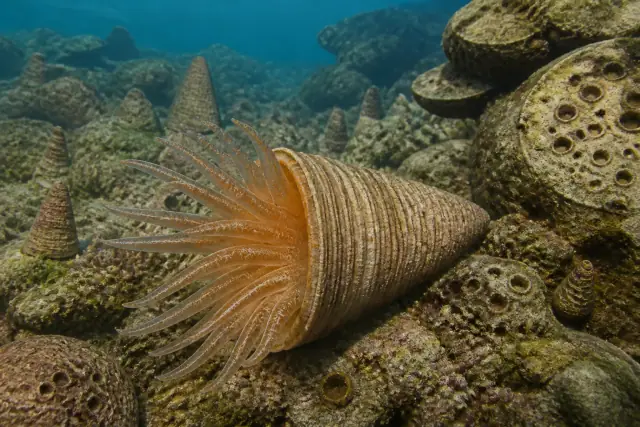
Heliophyllum halli
Radiating septa inside a horn-shaped skeleton resemble a stone sun.
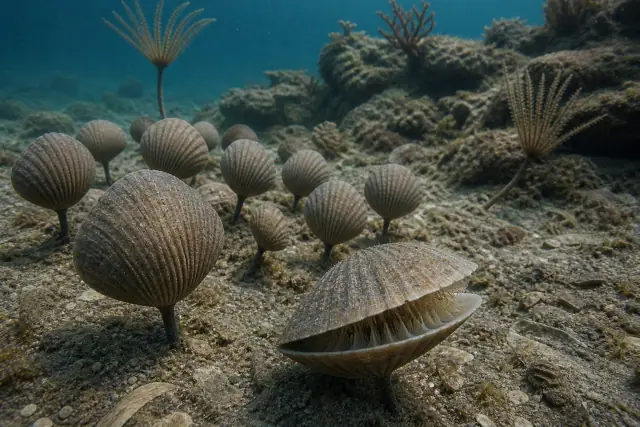
Atrypa reticularis
Fine radial ribs covered rounded shells that once crowded ancient seabeds.