Extraordinary adaptations
25 Weird Prehistoric Animals & Their Unusual Anatomy
Five eyes, spiral teeth, enormous claws and unexpected wings. Look beyond the familiar dinosaur silhouette to discover some of prehistory’s most unusual body plans.
Explore the animals 25 ↘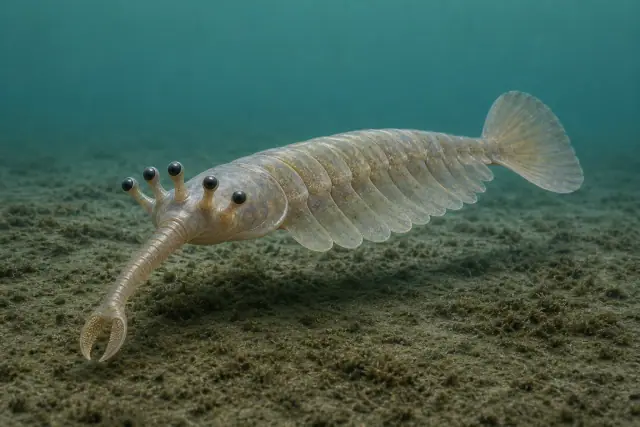
Explore the unusual anatomy: eyes, teeth and skulls
These animals come from different times and lineages and did not necessarily coexist. Follow an anatomical feature to its fossils, then distinguish the structure itself from hypotheses about its function.
Five eyes and a flexible proboscis
Opabinia illustrates Cambrian anatomical diversity. Its eye count is fossil evidence; how the proboscis handled food involves a functional interpretation.
Opabinia ↗Spiral teeth and scissor teeth
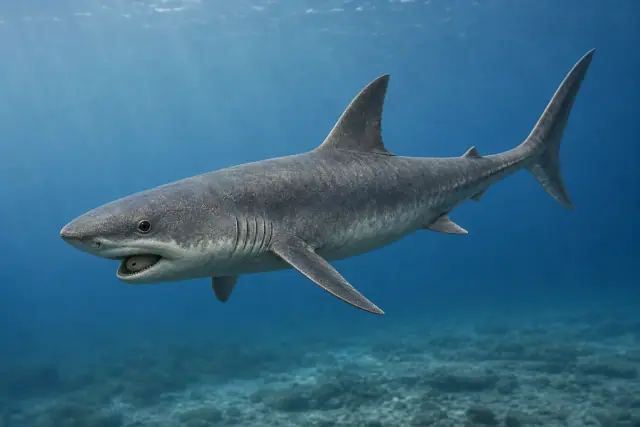
Helicoprion retained a curled tooth row; Edestus shed older teeth from the front of its blades. Both are unusual, but they did not replace teeth in the same way.
Helicoprion ↗ · Edestus ↗A boomerang-shaped skull
Diplocaulus has a broad skull documented by fossils. Hydrodynamic lift and resistance to swallowing are proposed functions with different supporting evidence.
Diplocaulus ↗How this list was selected
An editorial tour of distinctive anatomical adaptations in existing records. ‘Weird’ describes how unfamiliar these structures look to us, not evolutionary failure or a measured ranking. Functions of some structures remain debated; read each record’s evidence before treating a reconstruction as certain.
In this guide 25
Explore the animals
25 atlas recordsAbout 508 million years ago
Opabinia
Opabinia regalis
Five eyes and a grasping proboscis made this small swimmer one of the Cambrian’s strangest forms.
Laurentian shallows · Present-day Canada
About 508 million years ago
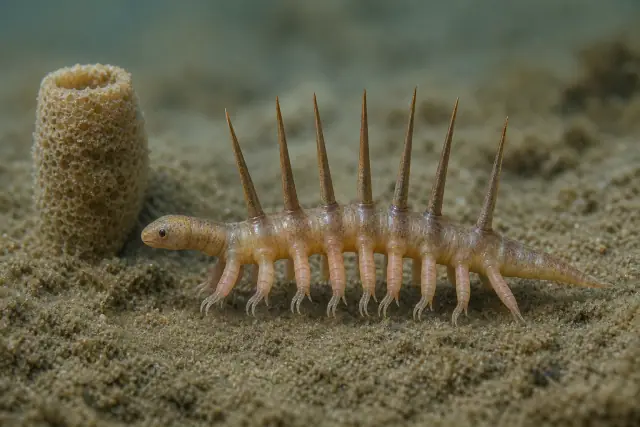
Hallucigenia
Hallucigenia sparsa
Paired spines guarded a soft-bodied walker once reconstructed upside down.
Laurentian and South China shallows
About 521–508 million years ago
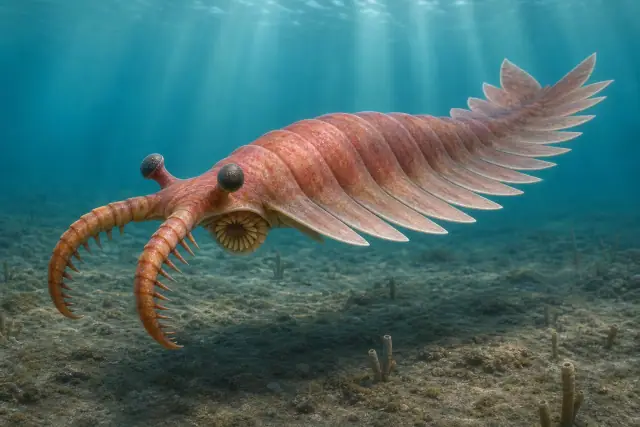
Anomalocaris
Anomalocaris canadensis
A meter-long swimmer with grasping frontal appendages was a giant of Cambrian seas.
Laurentian shallows · Present-day Canada
About 508 million years ago
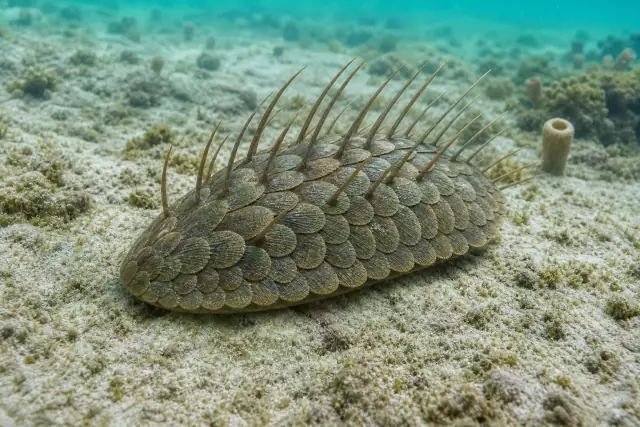
Wiwaxia
Wiwaxia corrugata
Rows of scales and long spines armored this small seafloor grazer.
Laurentian shallows · Present-day Canada
About 508 million years ago
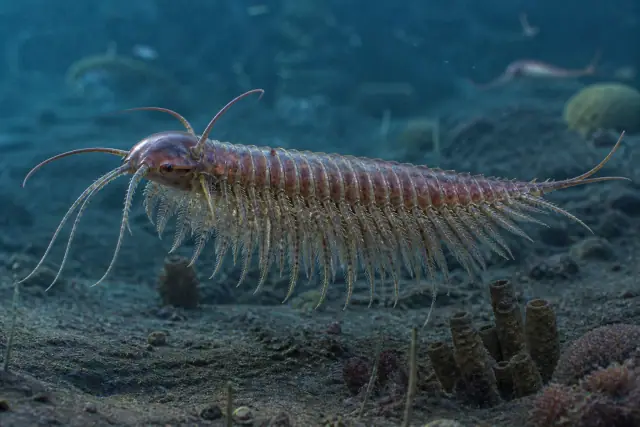
Marrella
Marrella splendens
Two pairs of curved head spines, long antennae and dozens of fine legs made this two-centimeter arthropod exquisitely elaborate.
Offshore slope of Laurentia · Burgess Shale, Canada
About 506 million years ago
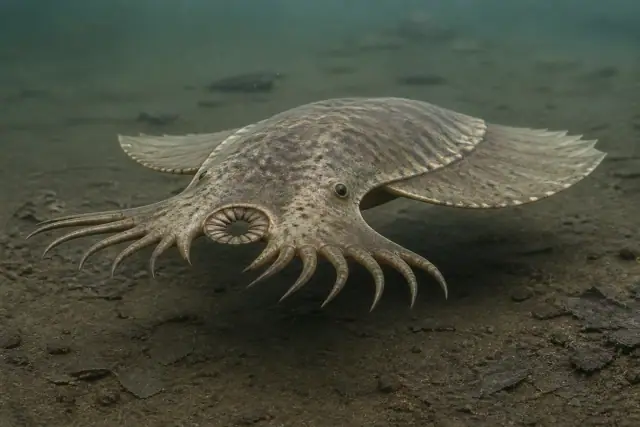
Cambroraster
Cambroraster falcatus
A horseshoe-shaped carapace and rake-like appendages made a mobile sediment sifter.
Muddy seafloor · Canada
About 506 million years ago
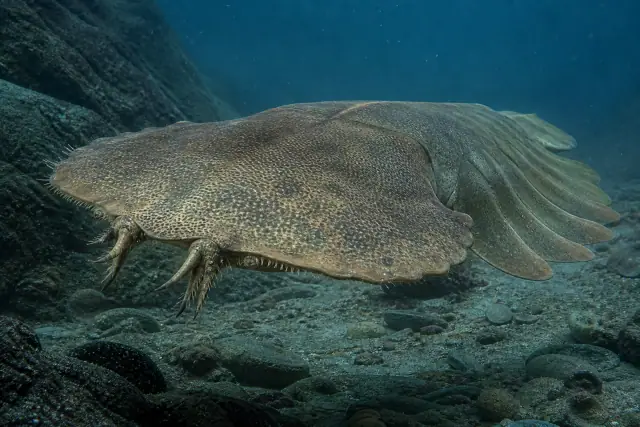
Titanokorys
Titanokorys gainesi
An enormous head shield covered most of this bottom-feeding radiodont.
Continental-slope seafloor · Canada
About 508 million years ago
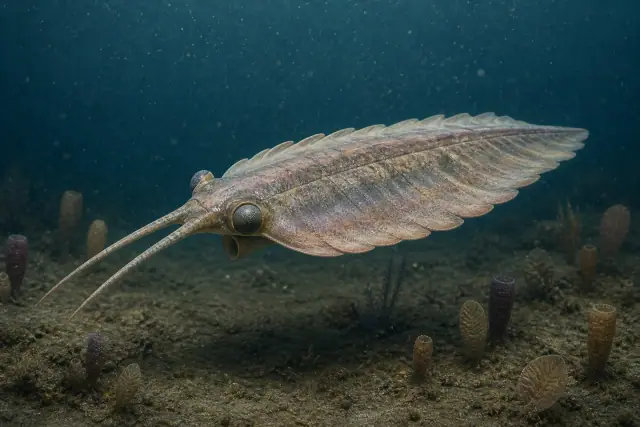
Nectocaris
Nectocaris pteryx
Paired fins, a funnel and tentacle-like appendages form one of the Cambrian's most puzzling swimmers.
Open marine water column · Canada
About 290–250 million years ago
Helicoprion
Helicoprion davisii
Its spiral tooth whorl worked like a permanent slicing blade inside the lower jaw.
Coasts of Pangaea · North America, Russia and Australia
About 382–358 million years ago
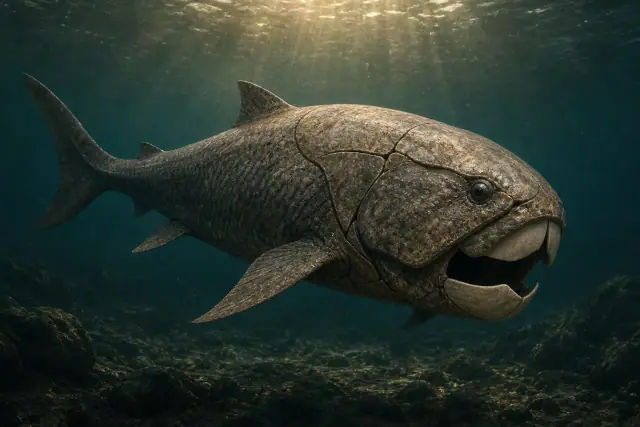
Dunkleosteus
Dunkleosteus terrelli
Sharpened jaw plates replaced teeth in this heavily armored apex fish.
Seas of North America · Europe · North Africa
About 345–290 million years ago
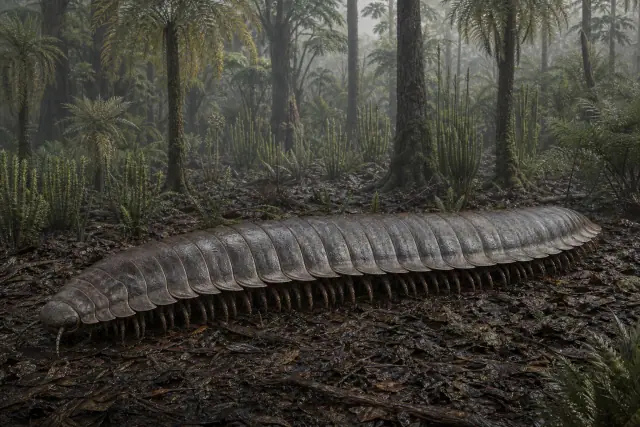
Arthropleura
Arthropleura armata
This many-segmented arthropod grew longer than a person in coal-swamp forests.
Tropical forests of Europe · North America
About 295–272 million years ago
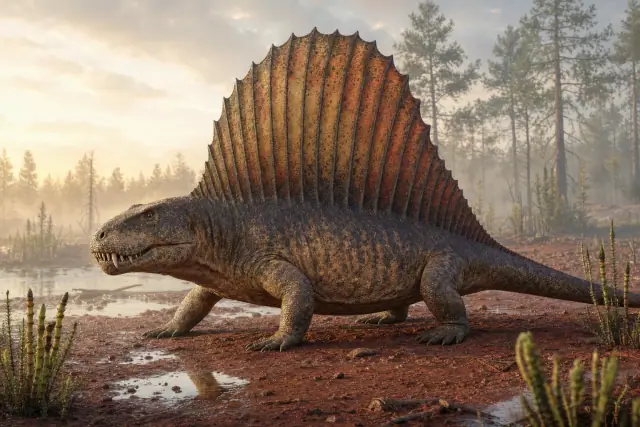
Dimetrodon
Dimetrodon grandis
This sail-backed predator was closer to mammals than to dinosaurs.
North America
About 298–272 million years ago
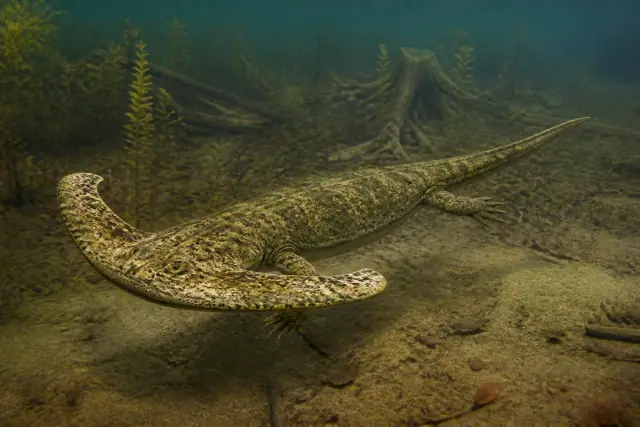
Diplocaulus
Diplocaulus magnicornis
Its skull spread sideways into a boomerang, perhaps producing lift in current or making it hard to swallow.
Seasonal rivers and ponds · North America
About 242 million years ago
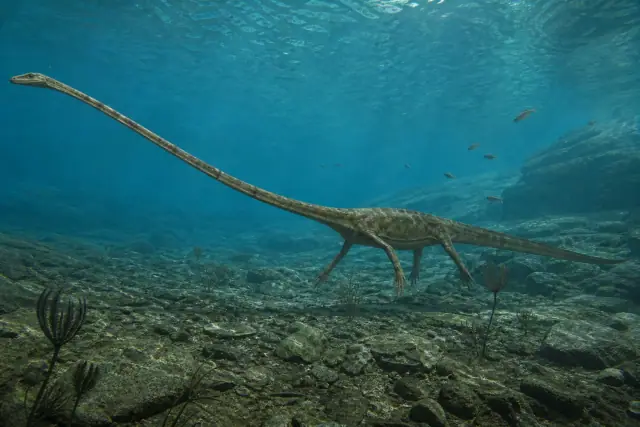
Tanystropheus
Tanystropheus hydroides
Thirteen extremely elongated vertebrae formed a neck as long as half the body, while the skull snapped at fish and cephalopods.
Tethyan lagoons and nearshore waters · Present-day Switzerland and Italy
About 235 million years ago
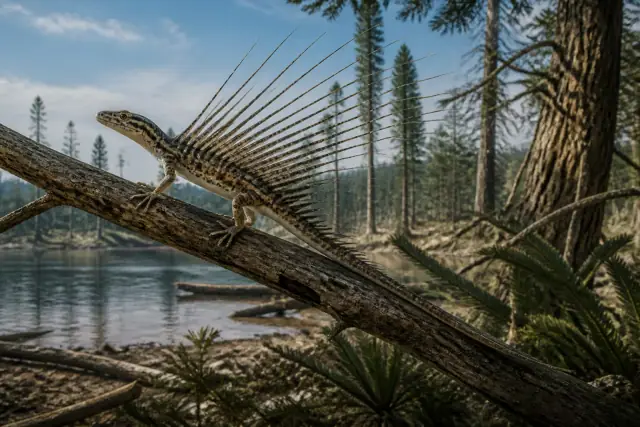
Longisquama
Longisquama insignis
A row of exaggerated dorsal appendages has been called scales, feathers or gliding surfaces.
Lakeshore woodland · Kyrgyzstan
About 230 million years ago
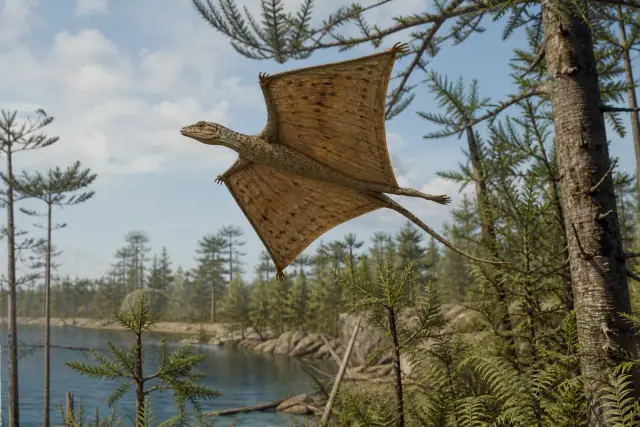
Sharovipteryx
Sharovipteryx mirabilis
Its main flight membrane stretched between extraordinarily long hind legs.
Lakeshore woodland · Kyrgyzstan
About 164 million years ago
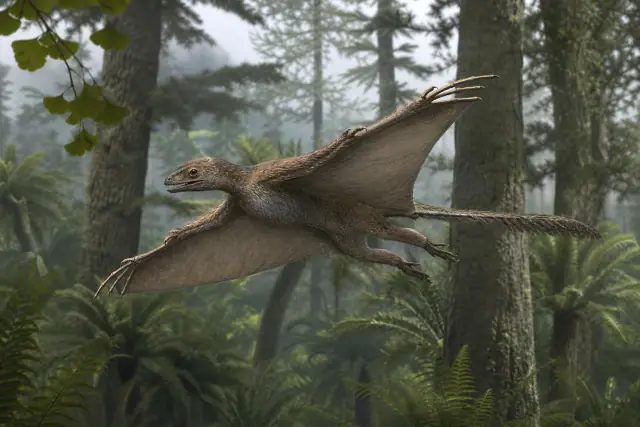
Yi qi
Yi qi
Yi qi was a small Jurassic theropod with feathers and preserved traces of a wing membrane. A rod-like element extending from the wrist made its wing unlike a modern bird's.
Northeastern China
About 125–120 million years ago
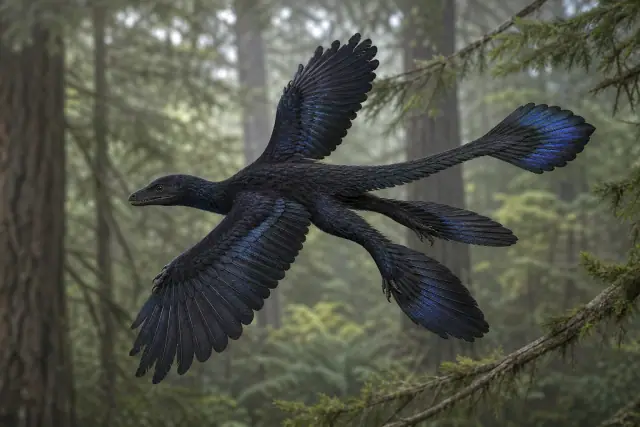
Microraptor
Microraptor gui
Microraptor was a small feathered theropod from Early Cretaceous China. Long feathers on both forelimbs and hind limbs created several aerodynamic surfaces.
Northeastern China
About 70–66 million years ago
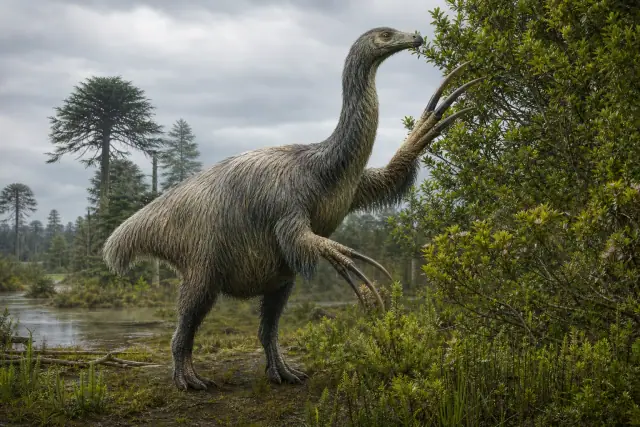
Therizinosaurus
Therizinosaurus cheloniformis
Meter-long hand claws belonged to a tall, feathered, pot-bellied herbivore.
Mongolian Plateau
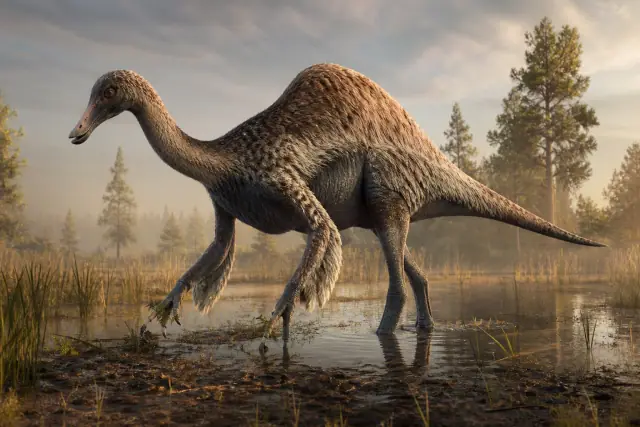
About 71–69 million years ago
Deinocheirus
Deinocheirus mirificus
Huge arms, a broad bill, a tall back and wide feet formed one of the strangest dinosaur silhouettes.
Mongolian Plateau
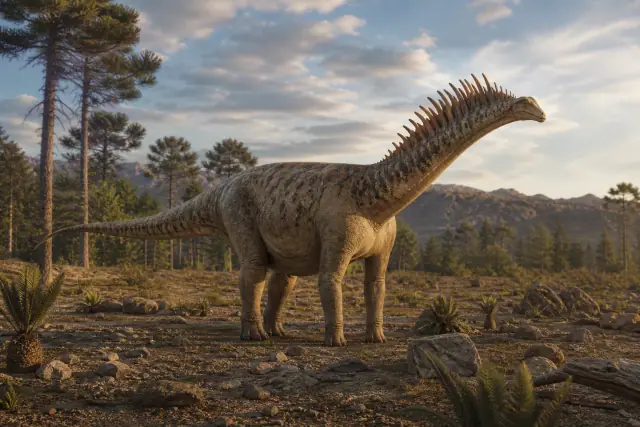
About 129–122 million years ago
Amargasaurus
Amargasaurus cazaui
Two rows of elongated neck spines made its profile unique, though their soft-tissue covering remains debated.
South America · Present-day Argentina
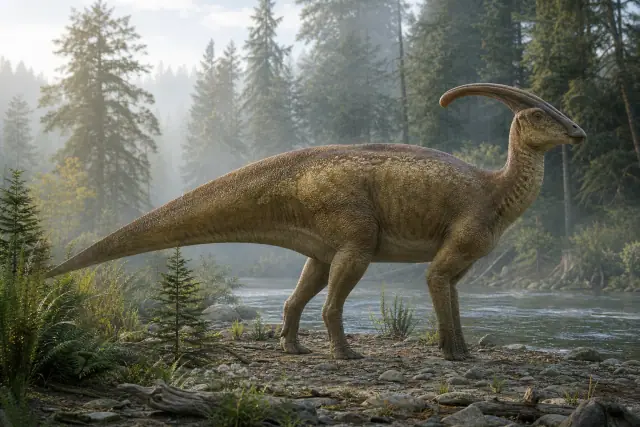
About 76–73 million years ago
Parasaurolophus
Parasaurolophus walkeri
Its long hollow crest may have carried low calls across forests and floodplains.
North America
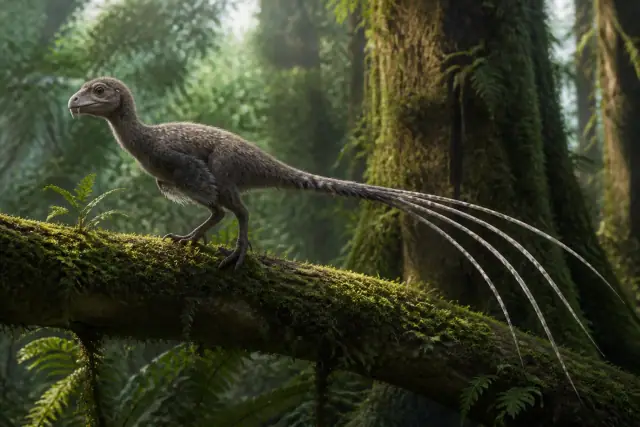
About 164–159 million years ago
Epidexipteryx
Epidexipteryx hui
Four long tail feathers displayed rather than powering flight.
Forested lakeshores · Inner Mongolia, China
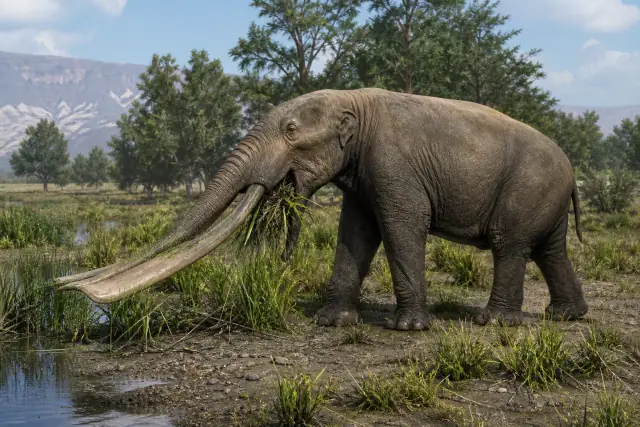
About 15–11 million years ago
Platybelodon
Platybelodon grangeri
A widened jaw and flattened lower tusks formed a shovel-like cutting edge for tough vegetation.
River valleys, grassland and woodland · Asia
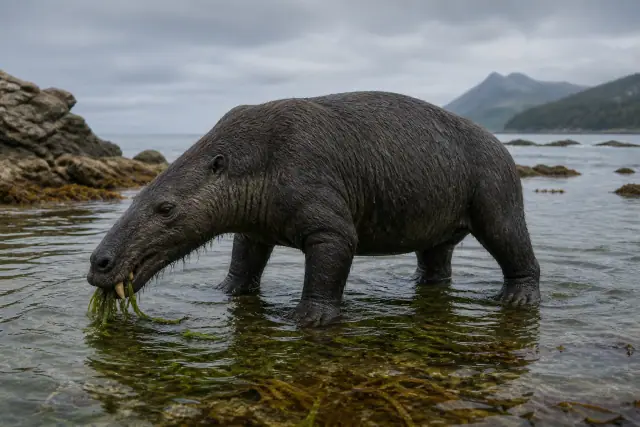
About 28–7 million years ago
Desmostylus
Desmostylus hesperus
Bundles of enamel-wrapped tooth columns and broad limbs helped it crop aquatic plants in tidal flats and shallow water.
Shallow North Pacific coasts · Japan, Russia and western North America