19Paleozoic
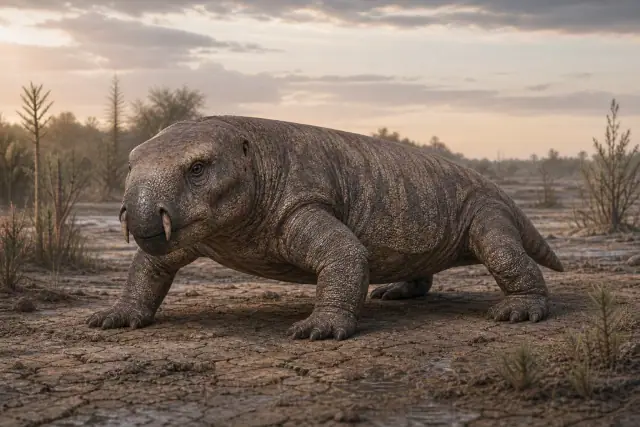
Lystrosaurus
Lystrosaurus murrayi
A beaked, tusked survivor became extraordinarily common after Earth’s greatest mass extinction.
 EXTINCT ATLASEXTINCT LIFE ARCHIVEBack to archive
Period · 251.902–201.4 million years ago
Discover early dinosaurs alongside marine reptiles, amphibians and mammal relatives in the recovering Triassic world.
The Triassic began after the end-Permian extinction. Early dinosaurs shared land with many other reptile groups; marine reptiles followed separate evolutionary paths. Another major extinction near the period’s end changed the communities inherited by the Jurassic.
Lystrosaurus murrayi
A beaked, tusked survivor became extraordinarily common after Earth’s greatest mass extinction.
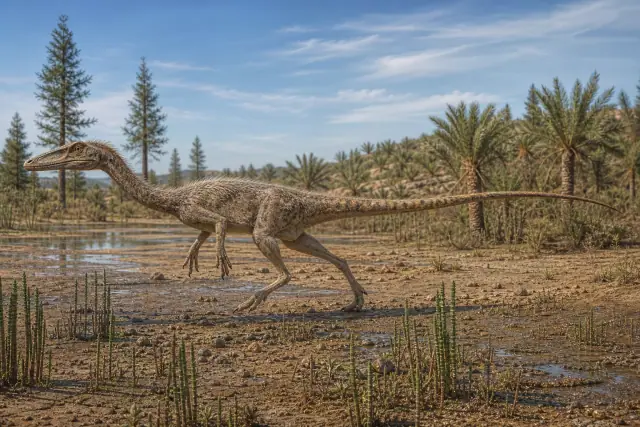
Coelophysis bauri
Coelophysis was a slender, two-legged theropod from the Late Triassic. Many skeletons occur together at Ghost Ranch in New Mexico.
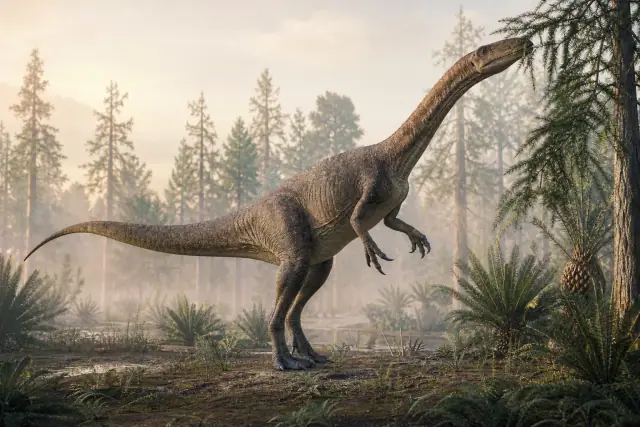
Plateosaurus trossingensis
Plateosaurus was a Late Triassic sauropodomorph from central Europe. It combined a long neck with grasping hands and strongly developed hind limbs.
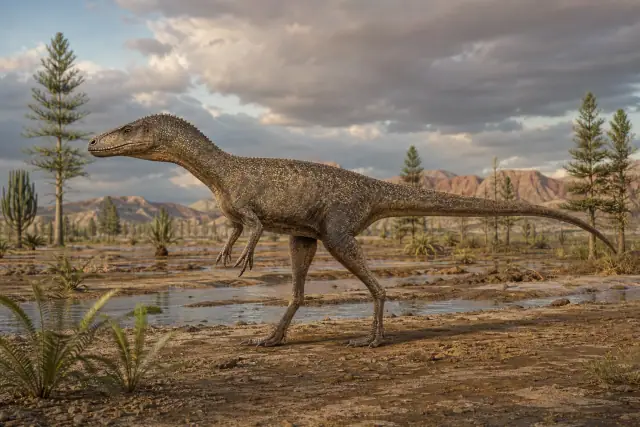
Herrerasaurus ischigualastensis
One of the earliest large dinosaurs was a lightly built two-legged predator.
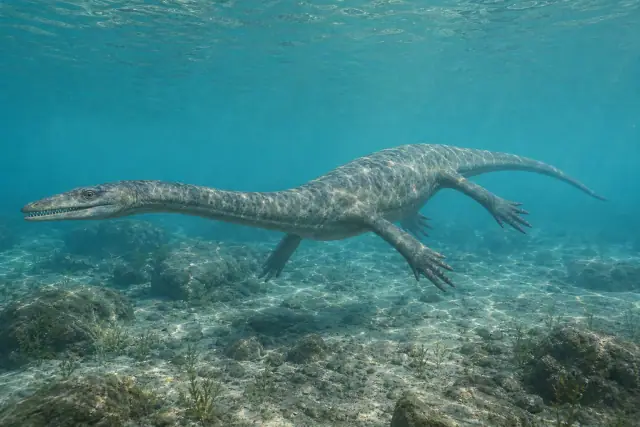
Nothosaurus mirabilis
A long-necked coastal reptile paddled through shallow Triassic seas.
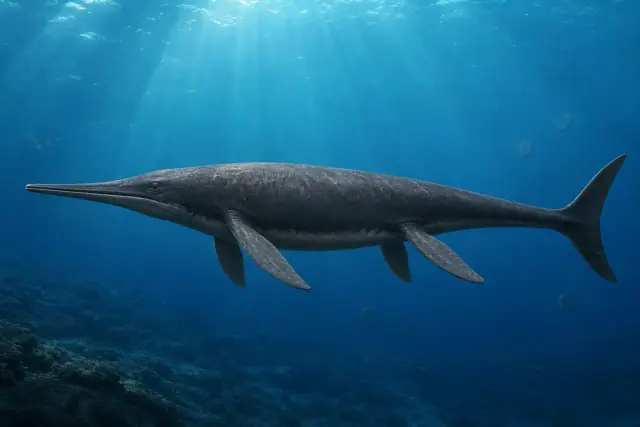
Shonisaurus popularis
This roughly fifteen-meter ichthyosaur had a long narrow snout and four flippers.
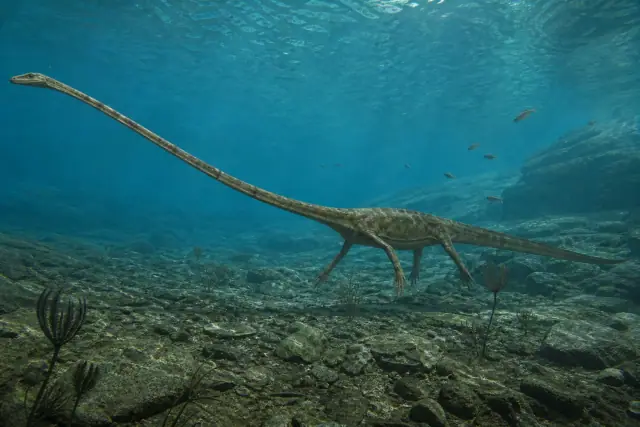
Tanystropheus hydroides
Thirteen extremely elongated vertebrae formed a neck as long as half the body, while the skull snapped at fish and cephalopods.
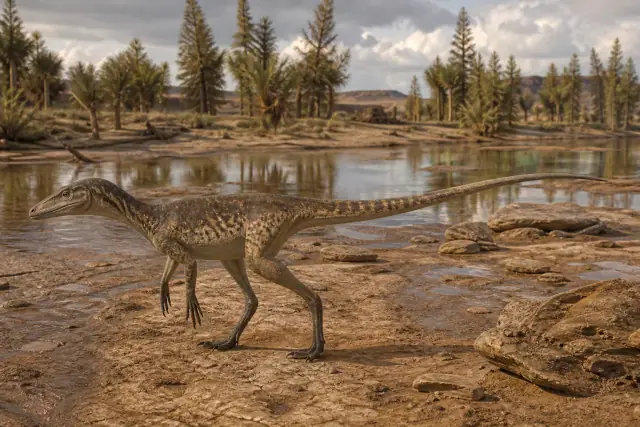
Eoraptor lunensis
A lightly built one-meter animal ran on two legs with both sharp and leaf-shaped teeth in its jaws.
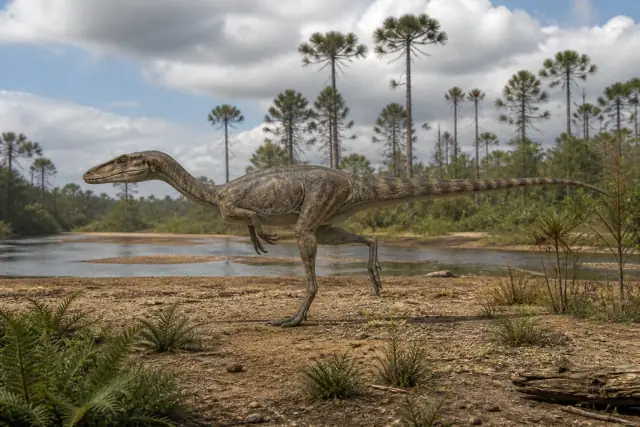
Staurikosaurus pricei
This lightly built two-meter hunter represents an early branch from the first dinosaur diversification.
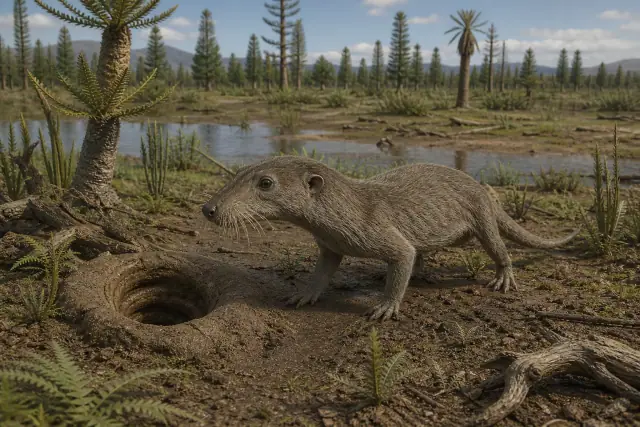
Thrinaxodon liorhinus
A small Early Triassic cynodont with differentiated teeth, known from skeletons curled inside fossil burrows in South Africa.
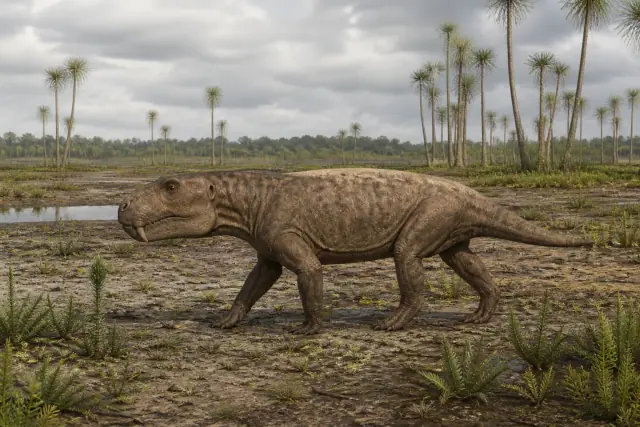
Cynognathus crateronotus
A dog-like snout, slicing cheek teeth and upright hind limbs made it a major cynodont predator.
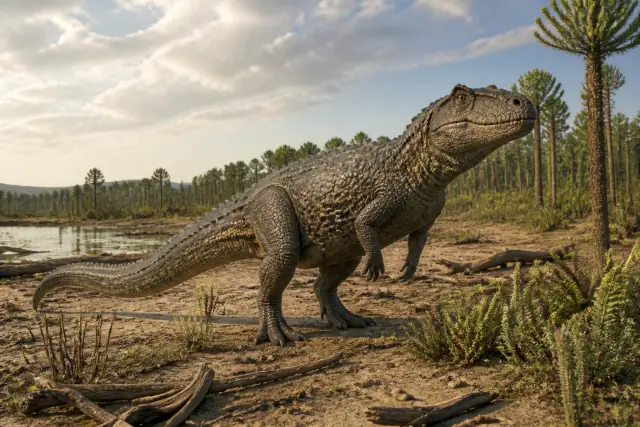
Postosuchus kirkpatricki
A deep skull, serrated teeth and powerful hind limbs placed it atop food webs before dinosaur dominance.
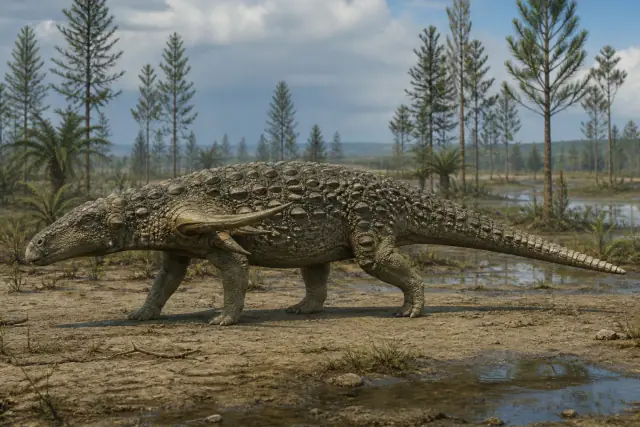
Desmatosuchus spurensis
Two huge backward-curving shoulder spikes reinforced rows of protective armor.
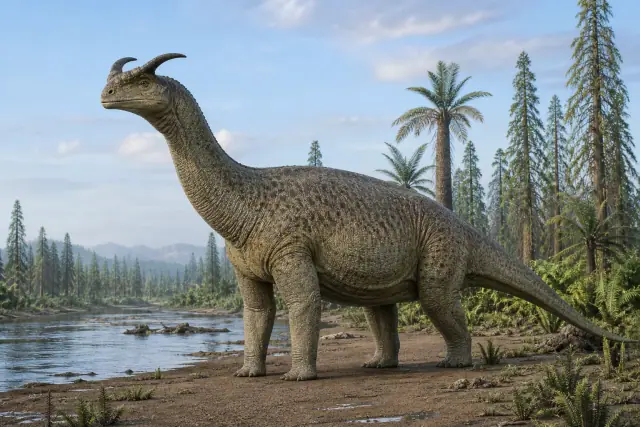
Shringasaurus indicus
Paired forward-curving brow horns occur only in some individuals, suggesting maturity or sexual display.
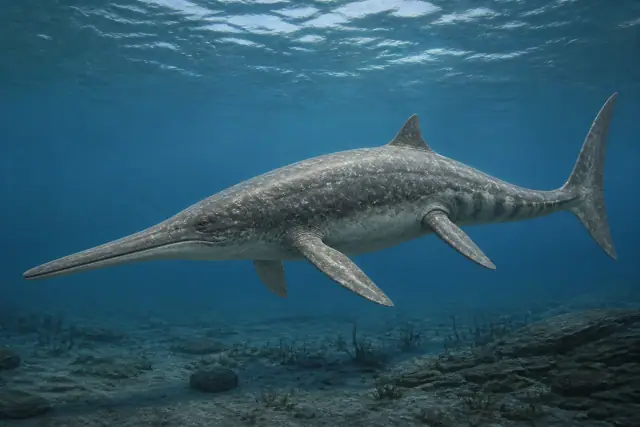
Cymbospondylus youngorum
Only a few million years after the great extinction, ichthyosaurs had already reached whale-like scale.
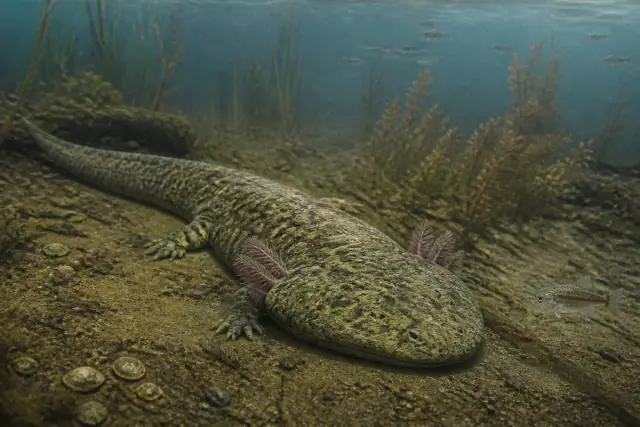
Gerrothorax pulcherrimus
A shovel-flat skull may have opened by lifting the upper jaw.
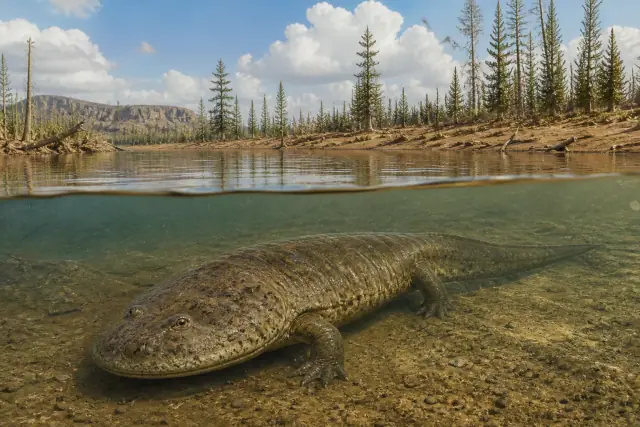
Metoposaurus diagnosticus
A broad flat head occupied nearly the full width of its front body.
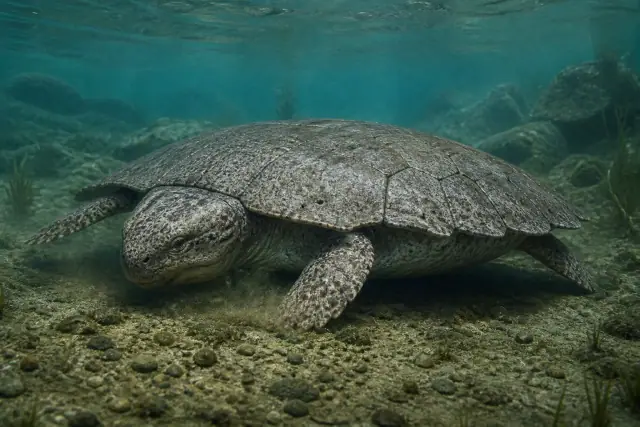
Henodus chelyops
A turtle-like shell protected a placodont with a broad filtering or scraping mouth.
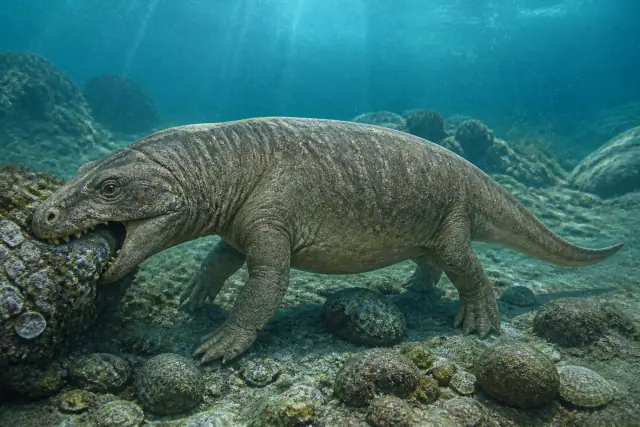
Placodus gigas
Chisel incisors and crushing palatal teeth formed a shell-opening toolkit.
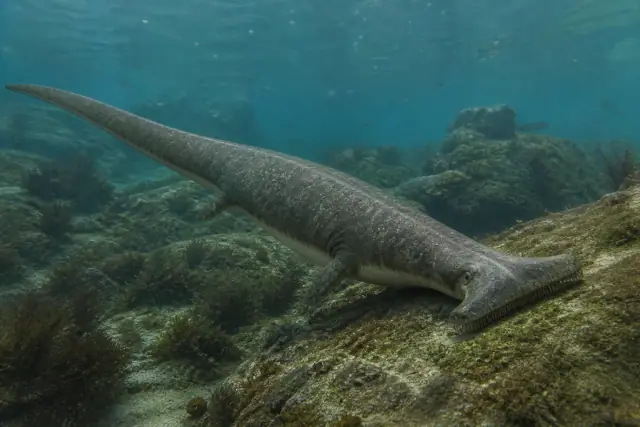
Atopodentatus unicus
A hammer-shaped snout scraped algae before needle teeth filtered the fragments.
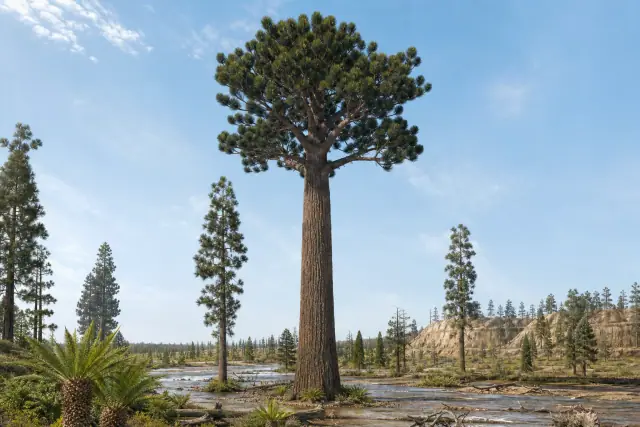
Araucarioxylon arizonicum
Silica replaced fallen trunks to create today's multicolored petrified forest.
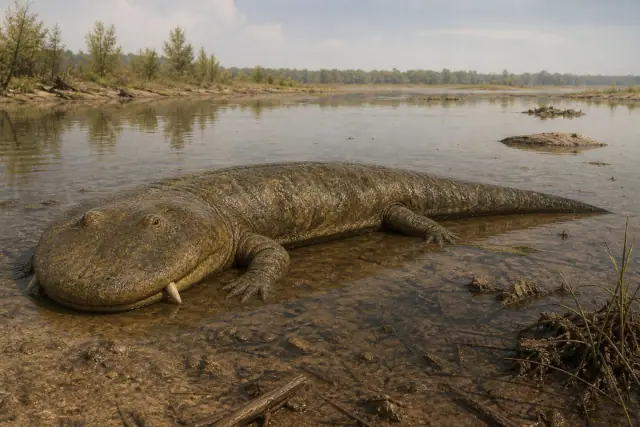
Mastodonsaurus giganteus
Two lower-jaw tusks passed through openings in the palate when the mouth closed.
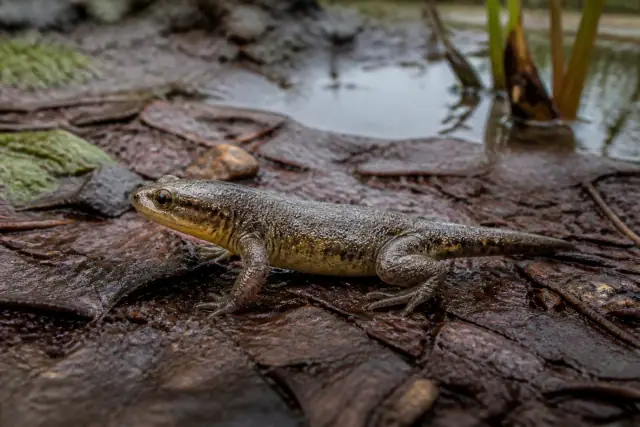
Triadobatrachus massinoti
It had a broad head and shortened trunk but lacked the full jumping machinery of modern frogs.
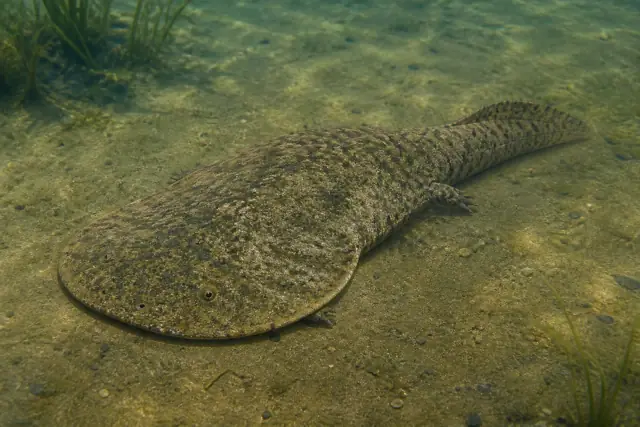
Plagiosuchus pustuliferus
Its semicircular skull was extraordinarily broad and flat.