07Mesozoic
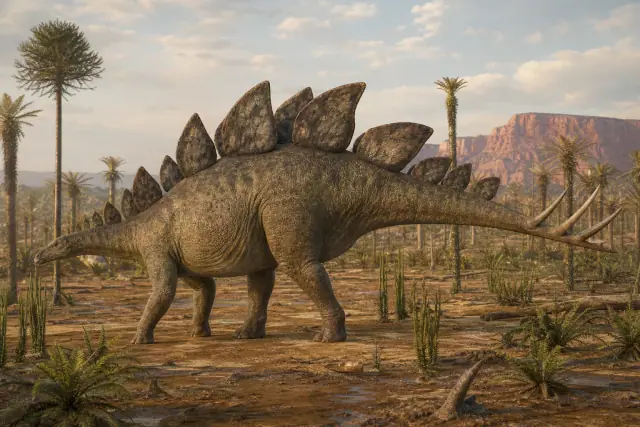
Stegosaurus
Stegosaurus stenops
Tall back plates and a four-spiked tail made this low-browsing herbivore unmistakable.
Western North America
Local fossil evidence ↗ EXTINCT ATLASEXTINCT LIFE ARCHIVEBack to archive
Countries and states
Explore Utah dinosaur fossils from the Morrison Formation and the younger Cedar Mountain Formation. Meet Allosaurus, Stegosaurus, Diplodocus and Utahraptor through their local evidence, keeping their different ages separate.
Utah's dinosaur record spans several formations and environments. The Late Jurassic Morrison Formation preserves large sauropods, plated herbivores and predatory theropods. The Early Cretaceous Cedar Mountain Formation adds a younger chapter that includes Utahraptor. These four atlas profiles are starting points, not a complete census of Utah dinosaurs. The modern state boundary groups discovery sites for navigation; it neither marks an ancient ecosystem boundary nor proves that every listed animal lived together.
Dinosaur National Monument extends into Utah and Colorado, but the Carnegie Quarry is near Jensen, Utah. Its bone-bearing rock belongs to the Morrison Formation. The fossil assemblage includes Allosaurus, Stegosaurus and Diplodocus. A quarry accumulation records burial and preservation as well as living animals; it is not a photograph of an undisturbed community.
National Park Service · Morrison Formation at Dinosaur National Monument ↗
The Utah Geological Survey describes the preparation of a large block containing Utahraptor remains from the Cedar Mountain Formation. Multiple animals in a deposit create opportunities to study growth and burial, but do not by themselves prove coordinated pack hunting. The fossil block belongs to a different formation and age from the Jurassic quarry material.
Utah's geological survey separates a long sequence of dinosaur-bearing units. A list based on the state name can therefore span major evolutionary and environmental changes. Use the species profiles for anatomy, the cited locality records for occurrence, and the geological account for time. These three questions require different evidence.
Stegosaurus stenops
Tall back plates and a four-spiked tail made this low-browsing herbivore unmistakable.
Western North America
Local fossil evidence ↗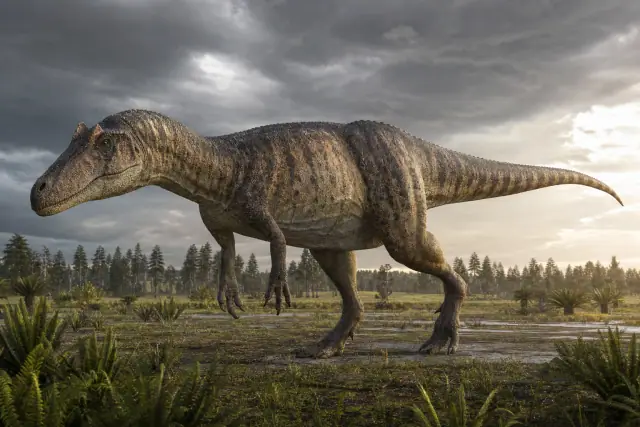
Allosaurus fragilis
A lightweight skull and serrated teeth equipped this large predator for repeated slashing bites.
Western North America
Local fossil evidence ↗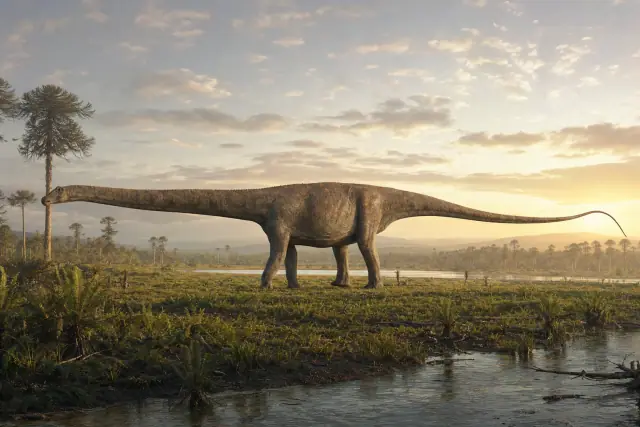
Diplodocus carnegii
A whip-like tail balanced an extremely long neck on this lightly built giant.
Western North America
Local fossil evidence ↗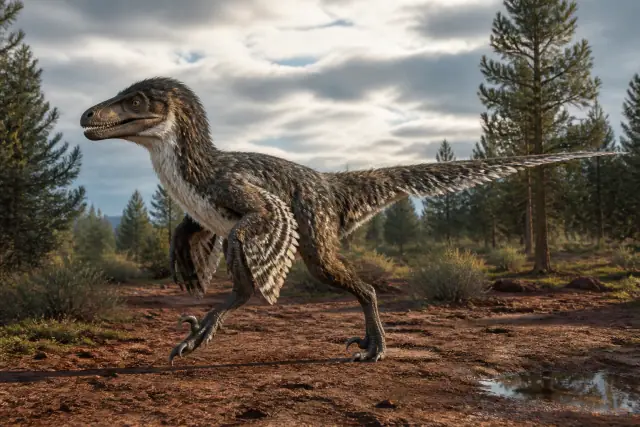
Utahraptor ostrommaysorum
This huge, robust dromaeosaur used strength and a curved second-toe claw to control prey.
Western North America · Present-day Utah
Local fossil evidence ↗No. Utahraptor comes from the Early Cretaceous Cedar Mountain Formation, whereas the Morrison examples discussed here are Late Jurassic. A state-level list combines fossil discoveries across time. Always check the formation and age before reconstructing a shared community.