224Mesozoic
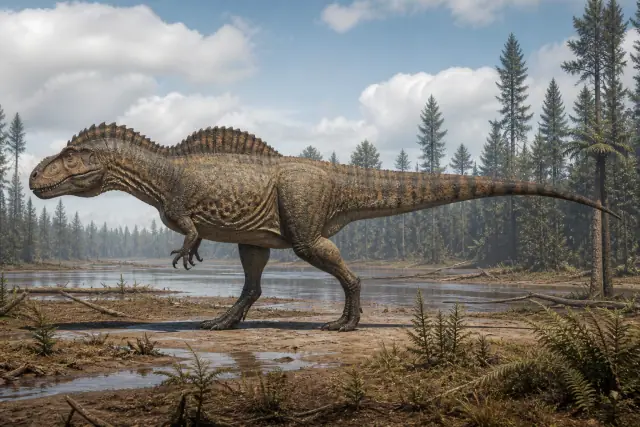
Acrocanthosaurus
Acrocanthosaurus atokensis
Tall neural spines along the neck and back supported a muscular ridge rather than a paper-thin sail.
River plains and open woodland · North America
Local fossil evidence ↗ EXTINCT ATLASEXTINCT LIFE ARCHIVEBack to archive
Countries and states
Explore Texas dinosaur evidence through Acrocanthosaurus body fossils and the distinction between named skeletons and possible dinosaur trackmakers.
Acrocanthosaurus specimen SMU 74646 provides a published body-fossil record from the Early Cretaceous of Texas. Dinosaur Valley’s tracks offer a different kind of evidence: identifying a probable trackmaker is not the same as identifying a skeleton. This guide currently links one matching atlas profile, not every dinosaur named from Texas. The park’s guide introduces additional local dinosaurs beyond the current atlas selection.
The published Texas specimen SMU 74646 anchors this guide's Acrocanthosaurus entry. A specimen number lets a reader follow the identification back to described material, which is stronger evidence for local presence than a suggested trackmaker alone.
The Paluxy River trackways record feet moving across soft sediment. Texas Parks & Wildlife distinguishes the track types and discusses likely makers. A footprint can document a dinosaur's passage without identifying its species with certainty.
Texas also yielded Quetzalcoatlus from Big Bend. It belongs to the flying reptile group Pterosauria, so it is linked for comparison rather than counted among this page's non-avian dinosaur records.
Acrocanthosaurus atokensis
Tall neural spines along the neck and back supported a muscular ridge rather than a paper-thin sail.
River plains and open woodland · North America
Local fossil evidence ↗Not usually. Tracks record movement and foot shape, while several animals may produce similar traces. The Texas membership here is supported by published Acrocanthosaurus skeletal material, not only a suggested trackmaker.