409Precambrian
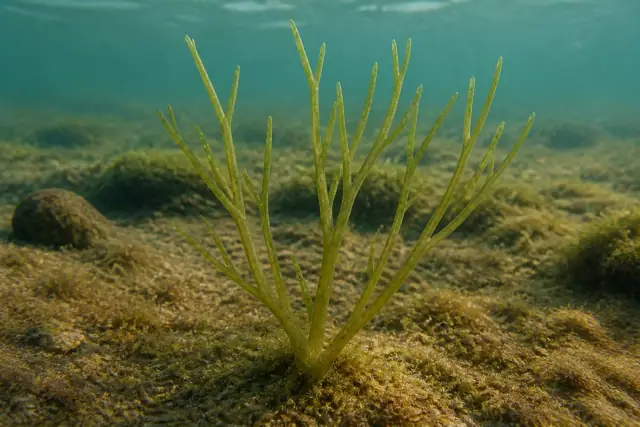
Proterocladus
Proterocladus antiquus
Repeatedly branching cell filaments push green-plant history toward one billion years.
LIFE ARCHIVE
Browse extinct life from traces nearly 1.9 billion years old to historically recorded extinctions.
Proterocladus antiquus
Repeatedly branching cell filaments push green-plant history toward one billion years.
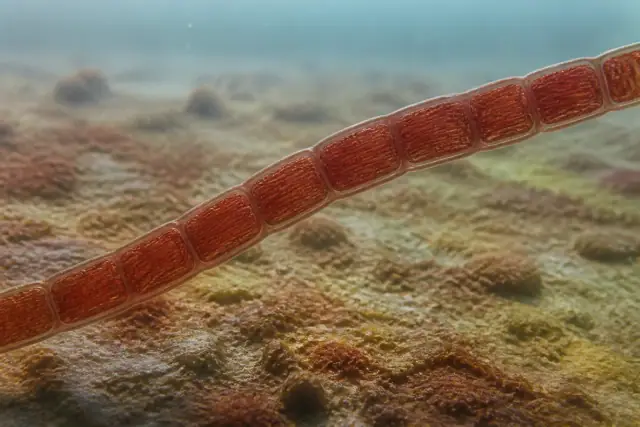
Rafatazmia chitrakootensis
Cell partitions and internal platelets were interpreted as very ancient red-algal evidence.
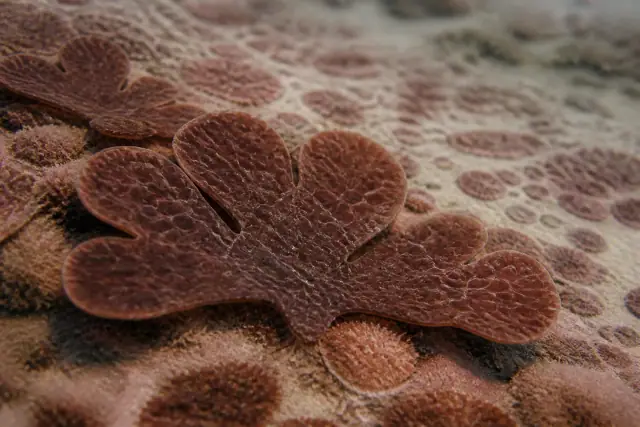
Ramathallus lobatus
A lobed multicellular thallus was proposed as an early red-algal body.
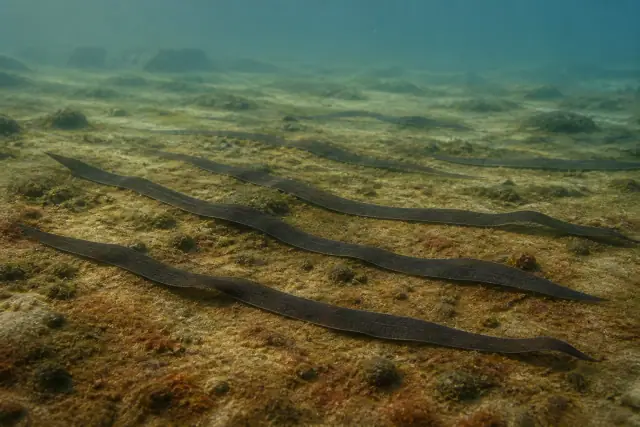
Vendotaenia antiqua
Long carbonaceous ribbons resemble soft algae but lack diagnostic organs.
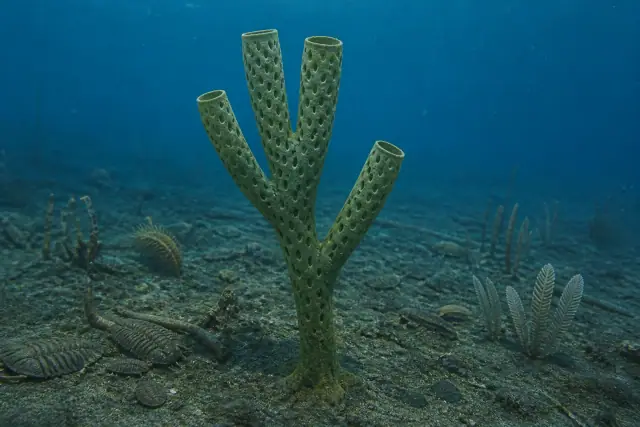
Margaretia dorus
A perforated tube once treated as an animal is now linked to a branching alga.
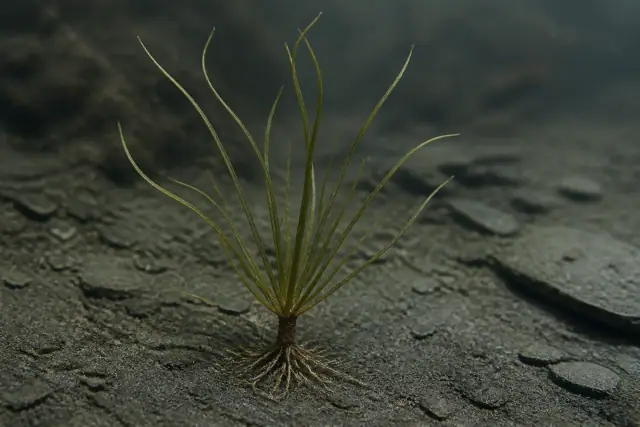
Yuknessia simplex
Simple narrow blades radiated from a common attachment.
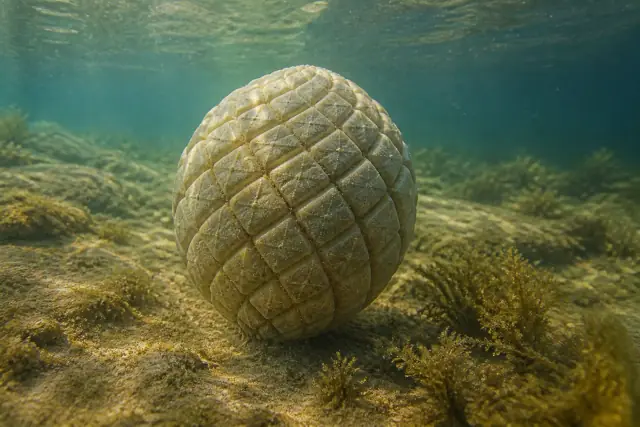
Receptaculites oweni
Spiraled diamond plates formed a calcified pinecone-like body.
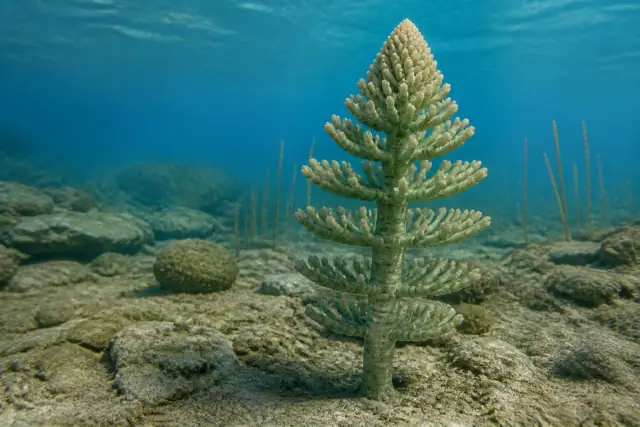
Cyclocrinites dactioloides
Whorled calcified branches surrounded a central axis like an underwater bottlebrush.
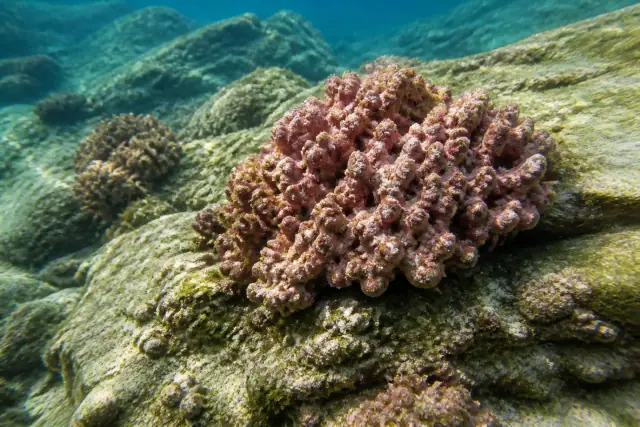
Solenopora jurassica
Pink calcified masses were long assigned to red algae, but their identity is being reassessed.
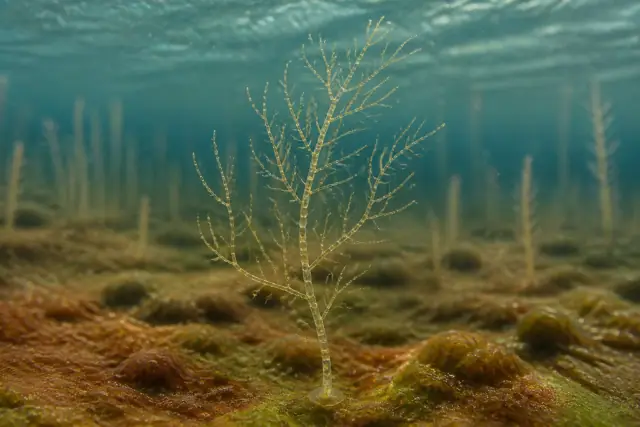
Doushantuophyton cometa
Branching cellular filaments show complex photosynthetic life before abundant animals.
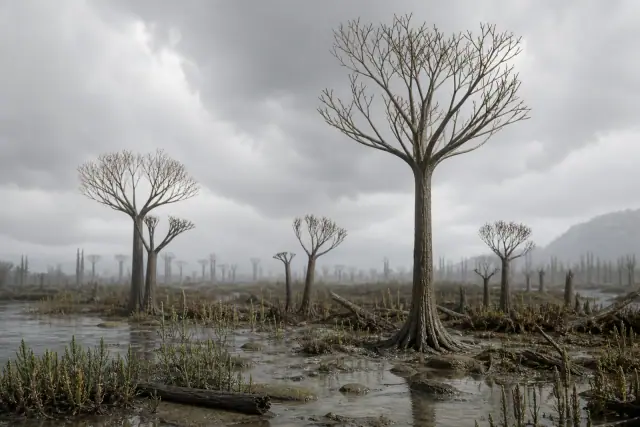
Wattieza casasii
Eight-meter leafless crowns formed one of the earliest known forests.
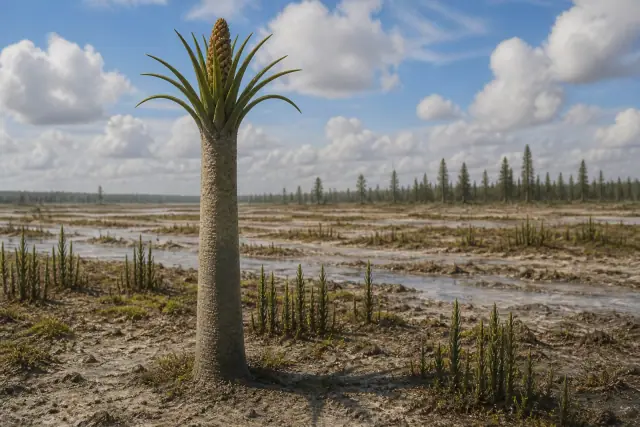
Pleuromeia sternbergii
Columnar lycophytes formed pioneer stands after the end-Permian catastrophe.
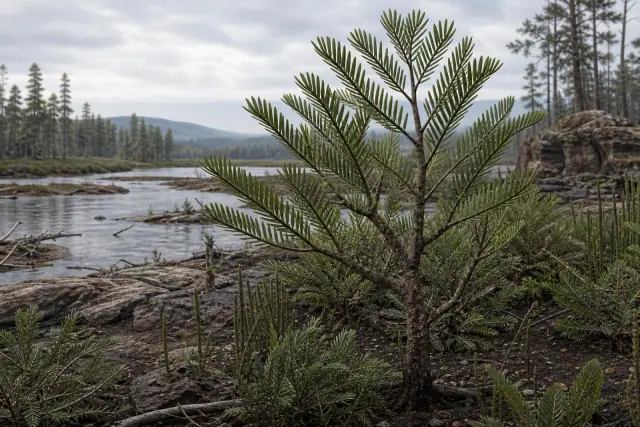
Dicroidium odontopteroides
Paired forked fronds became an emblem of Triassic southern vegetation.
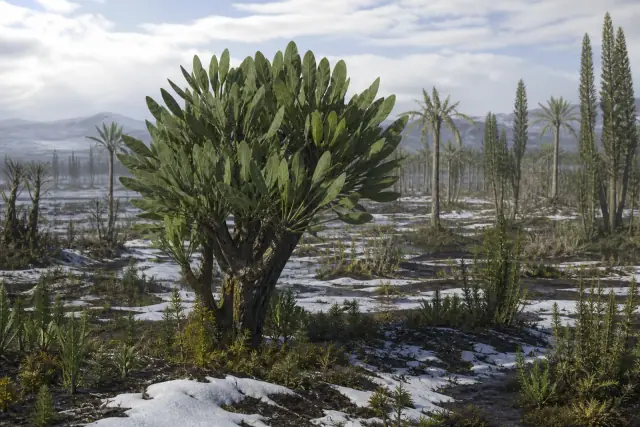
Gangamopteris obovata
Broad tongue-shaped leaves lacked the strong midrib of later glossopterids.
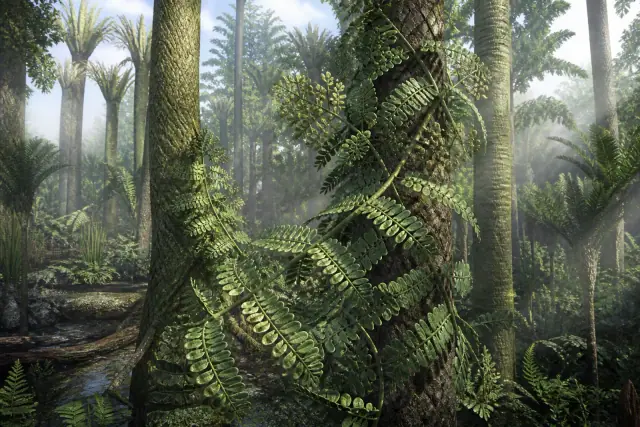
Alethopteris serlii
Firm fern-like pinnules belonged to a seed plant rather than a true fern.
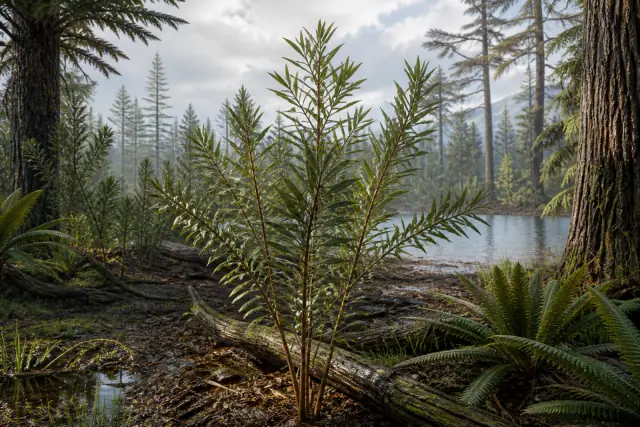
Podozamites lanceolatus
Orderly lance-shaped leaves lined stems of a widespread but enigmatic plant.
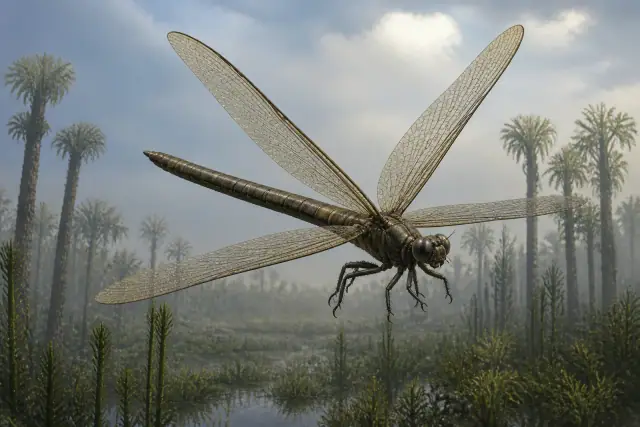
Megatypus schucherti
A wingspan near half a meter made it a major aerial predator.
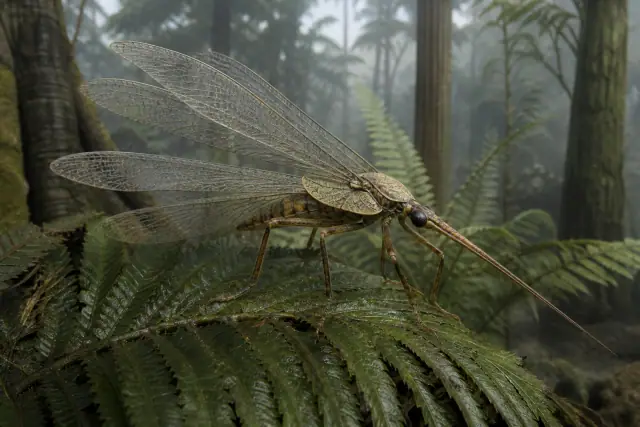
Lithomantis carbonarius
Leaf-like thoracic lobes accompanied four functional wings.
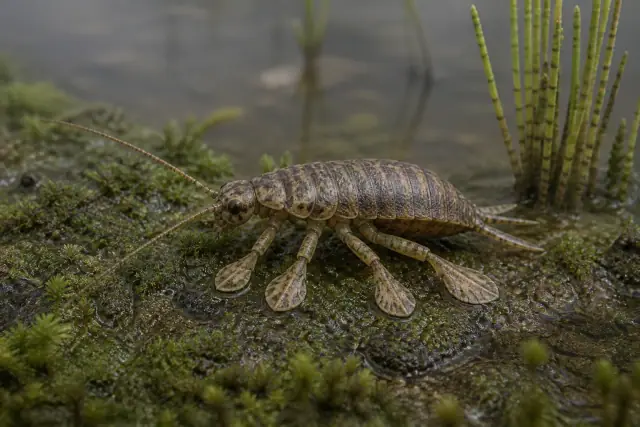
Strashila incredibilis
Once imagined as a parasite, it was later shown to have an aquatic juvenile stage.
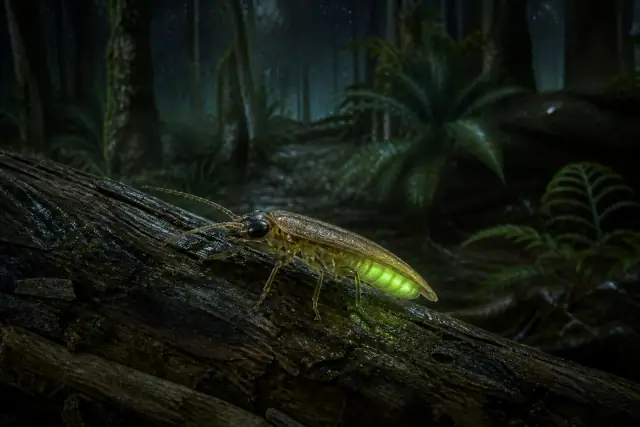
Cretophengodes azari
An abdominal light organ pushes beetle bioluminescence into the dinosaur age.
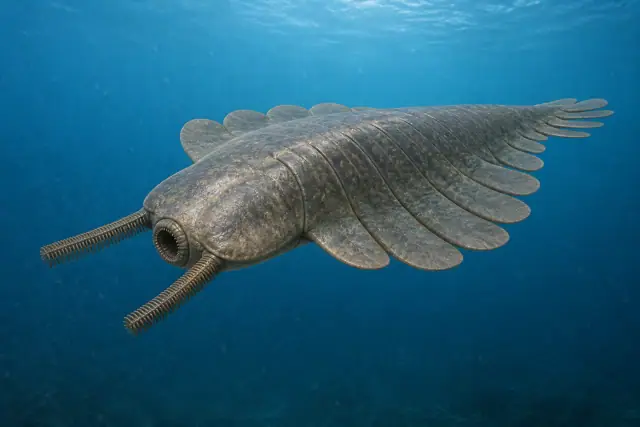
Aegirocassis benmoulai
A two-meter filter-feeding radiodont was an early analogue of giant plankton feeders.
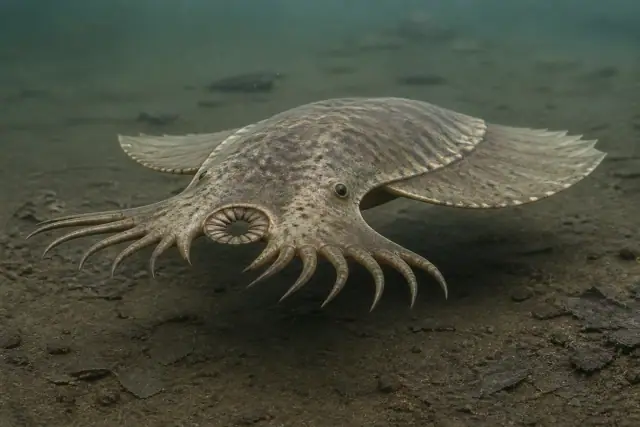
Cambroraster falcatus
A horseshoe-shaped carapace and rake-like appendages made a mobile sediment sifter.
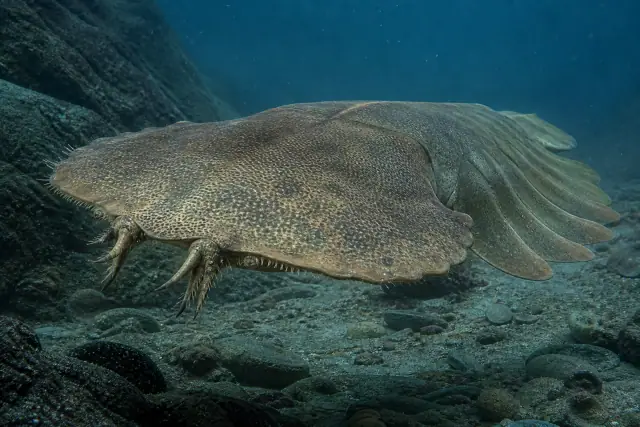
Titanokorys gainesi
An enormous head shield covered most of this bottom-feeding radiodont.
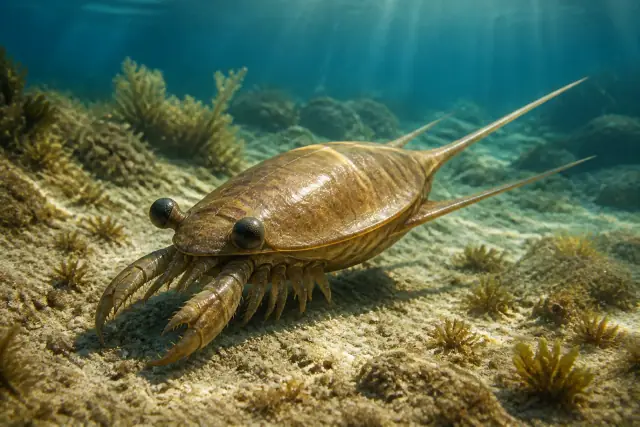
Isoxys curvirostratus
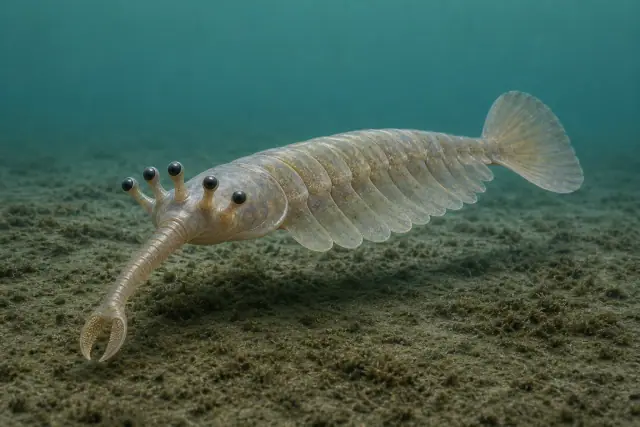
Isoxys curvirostratus was a small arthropod with a spined carapace, stalked eyes and grasping frontal appendages.
Explore the atlas by continent, country and state. Follow fossil localities into regional guides, compare animals across time and return to the evidence in each species profile.
FIELD GUIDES
Giants, strange body plans and lives within human memory. Follow a question into the atlas, then explore the animals behind it.