304Precambrian
Grypania
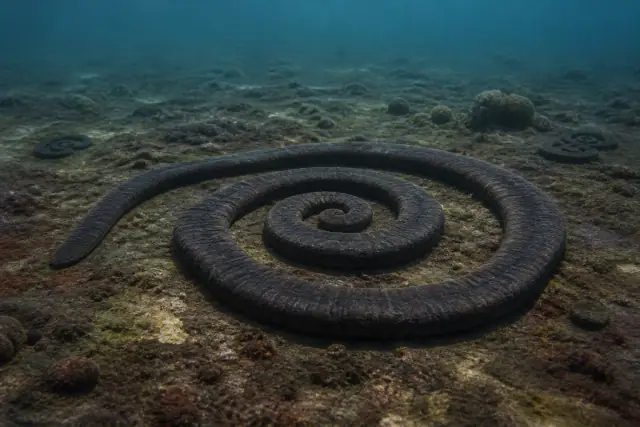
Grypania spiralis
Millimetre-wide ribbons form centimetre-scale coils in Proterozoic rocks.
 EXTINCT ATLASEXTINCT LIFE ARCHIVE
Category
Fungal and algal clues from before complex life and from early land ecosystems.
01 / ANSWER FIRST
Fossil fungi and algae illuminate oxygen production, early eukaryotes, decomposition and the partnerships that helped life establish on land.
02 / TIME & EVOLUTION
Possible early eukaryotic filaments occur deep in the Proterozoic; later fossils record red algae, green algae, fungi and early terrestrial symbioses.
03 / TURNOVER & EXTINCTION
Changing oxygen, nutrients, oceans and terrestrial ecosystems altered these groups, but their sparse record makes many assignments provisional.
04 / KEY THEMES
Large cells and complex walls test when cellular complexity emerged.
Photosynthetic lineages helped transform planetary chemistry.
Fungi decomposed material and formed partnerships with early plants.
05 / EVIDENCE
Microscopic filaments, spores, chemical signatures, cellular walls and amber inclusions require careful comparison because similar shapes can have non-biological origins.
06 / FAQ
Fossil fungi and algae illuminate oxygen production, early eukaryotes, decomposition and the partnerships that helped life establish on land.
Microscopic filaments, spores, chemical signatures, cellular walls and amber inclusions require careful comparison because similar shapes can have non-biological origins.
Changing oxygen, nutrients, oceans and terrestrial ecosystems altered these groups, but their sparse record makes many assignments provisional.
07 / SOURCES
Grypania spiralis
Millimetre-wide ribbons form centimetre-scale coils in Proterozoic rocks.
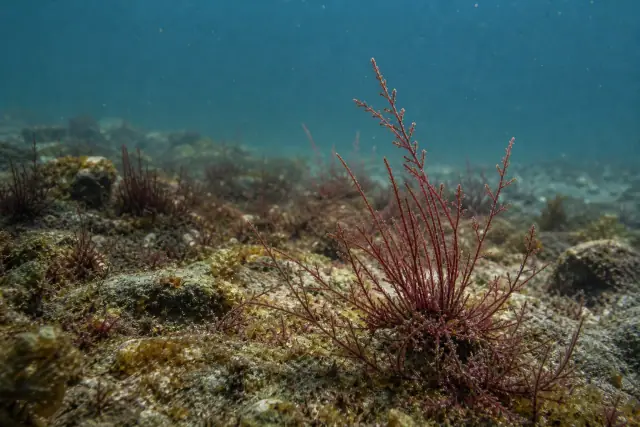
Bangiomorpha pubescens
Cell division and branching resemble living red algae and may record early sexual reproduction.
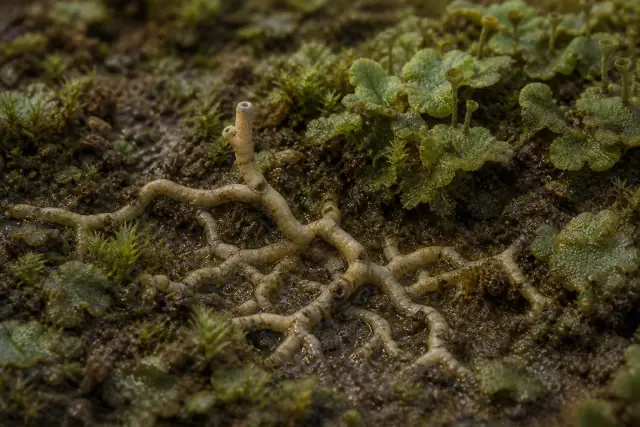
Tortotubus protuberans
Branching microscopic hyphae show fungi helping to build the earliest soils.
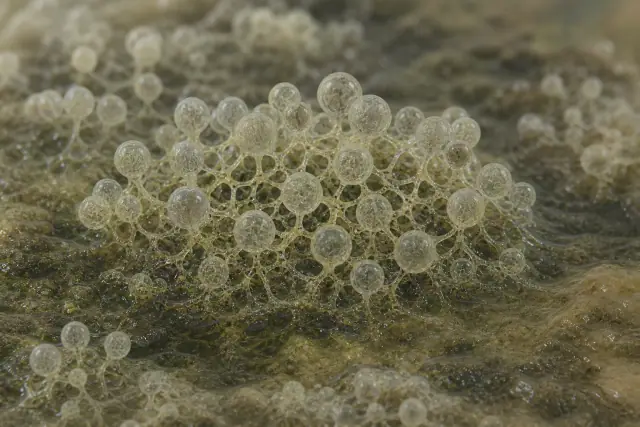
Ourasphaira giraldae
Branching spherical microfossils may push the fungal record toward one billion years.
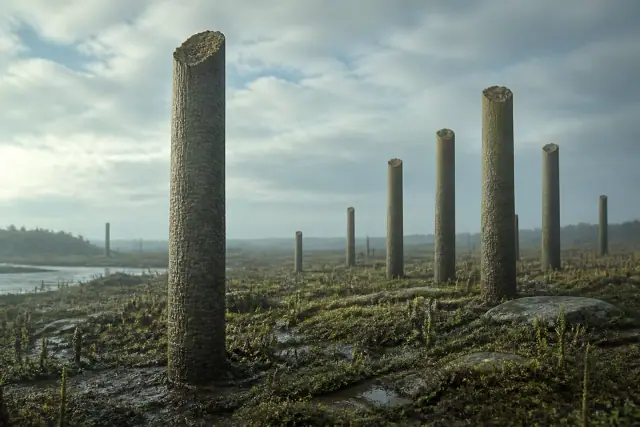
Prototaxites dawsonii
Meter-high columns towered over landscapes of otherwise low vegetation.
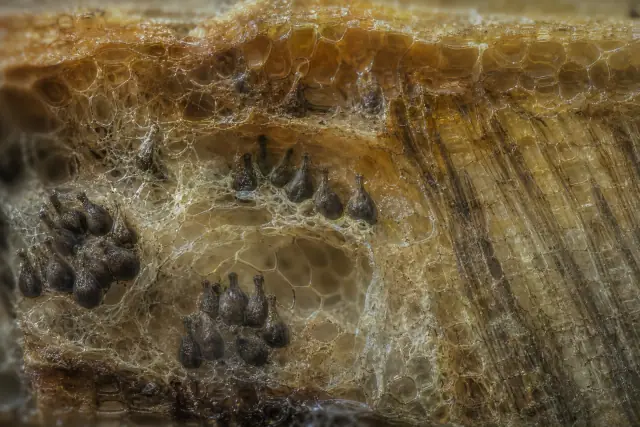
Paleopyrenomycites devonicus
Tiny flask-shaped fruiting bodies inside plant tissue are among the oldest ascomycete evidence.
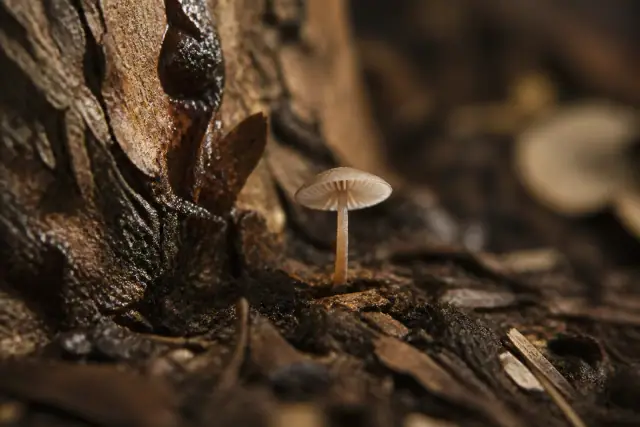
Palaeoagaracites antiquus
A millimeter-scale cap and gills show agaric mushrooms in the dinosaur era.
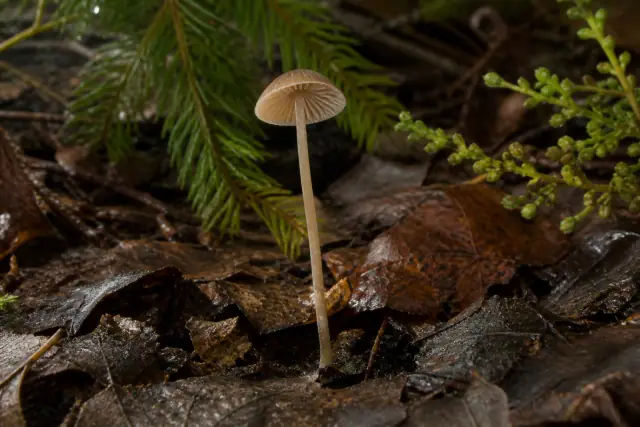
Archaeomarasmius leggettii
A slender stem and tiny cap already resembled marasmioid mushrooms.
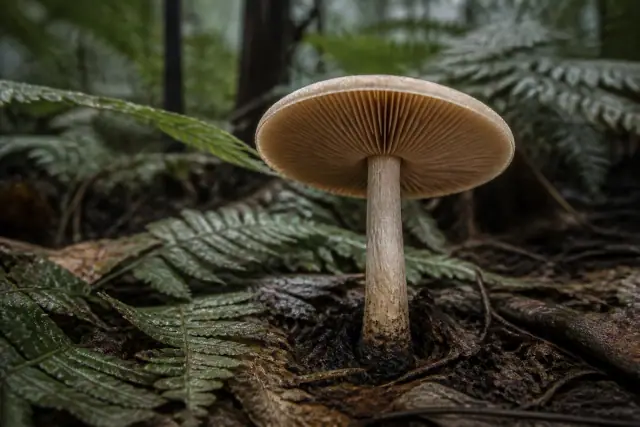
Gondwanagaricites magnificus
A mineralized cap brings early agaric evidence to the southern continents.
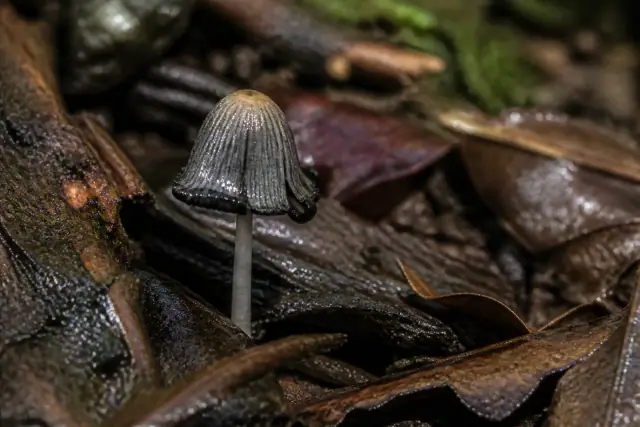
Coprinites dominicana
Its pleated bell cap may have deliquesced like a modern inkcap.
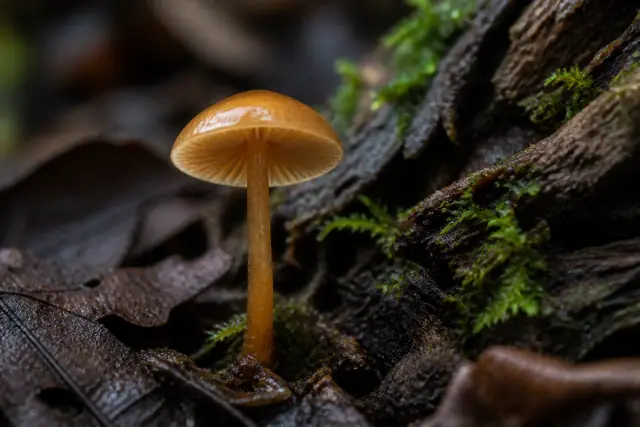
Aureofungus yaniguaensis
A golden-brown cap retained three-dimensional gills in amber.
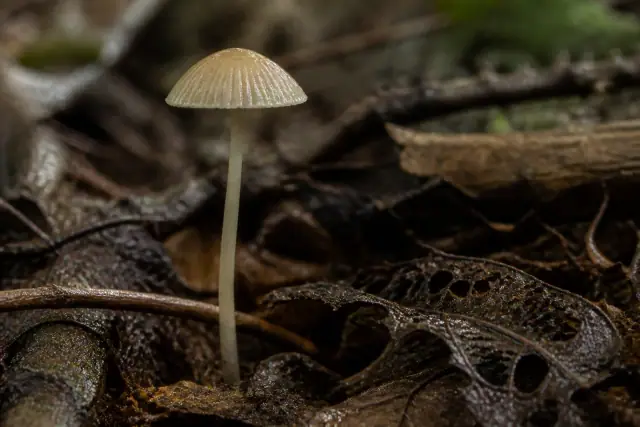
Protomycena electra
Radial striations remained visible across a minute translucent cap.
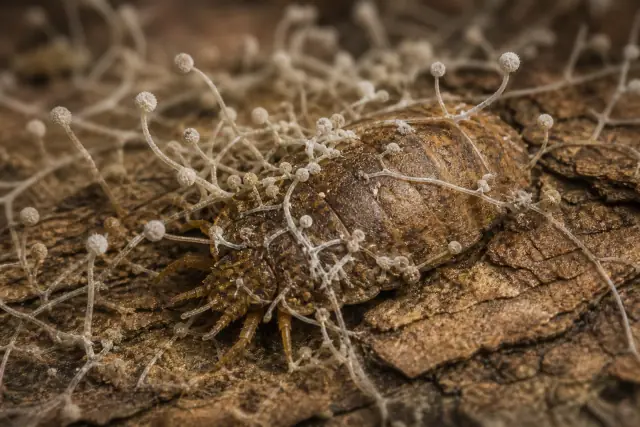
Gerontomyces lepidotus
Hyphae surrounding a scale insect preserve a tiny Cretaceous association.
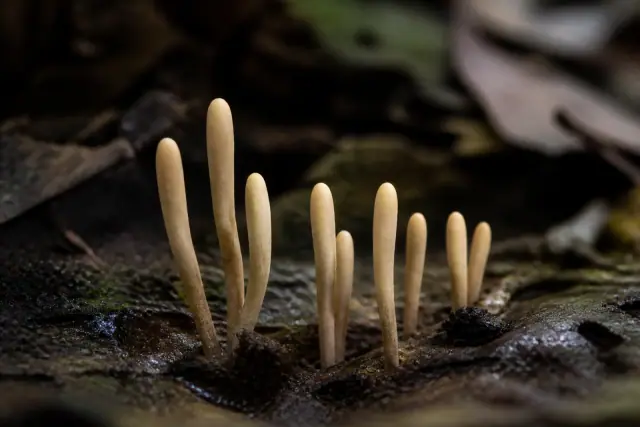
Palaeoclavaria burmitis
Simple club-shaped fruiting bodies show non-gilled fungi in Cretaceous forests.
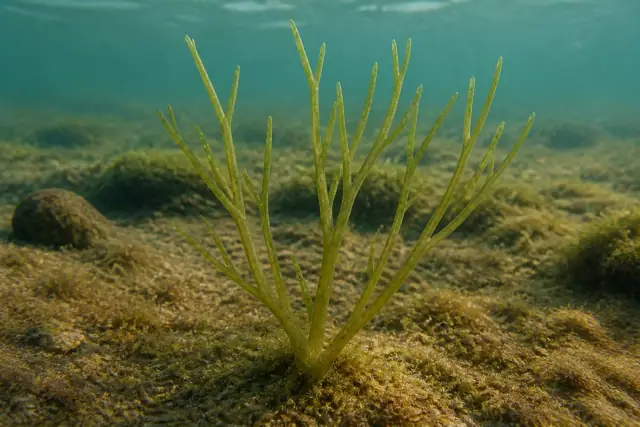
Proterocladus antiquus
Repeatedly branching cell filaments push green-plant history toward one billion years.
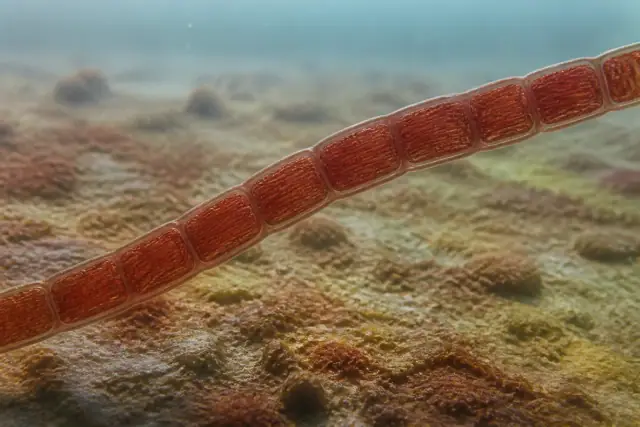
Rafatazmia chitrakootensis
Cell partitions and internal platelets were interpreted as very ancient red-algal evidence.
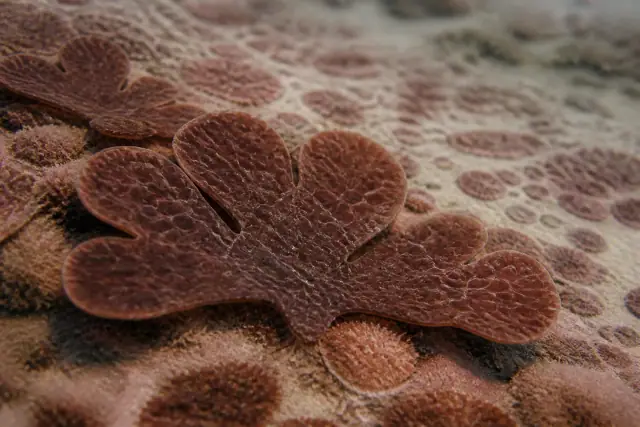
Ramathallus lobatus
A lobed multicellular thallus was proposed as an early red-algal body.
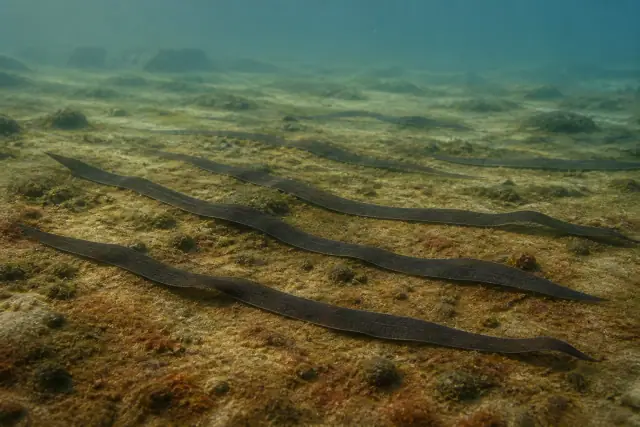
Vendotaenia antiqua
Long carbonaceous ribbons resemble soft algae but lack diagnostic organs.
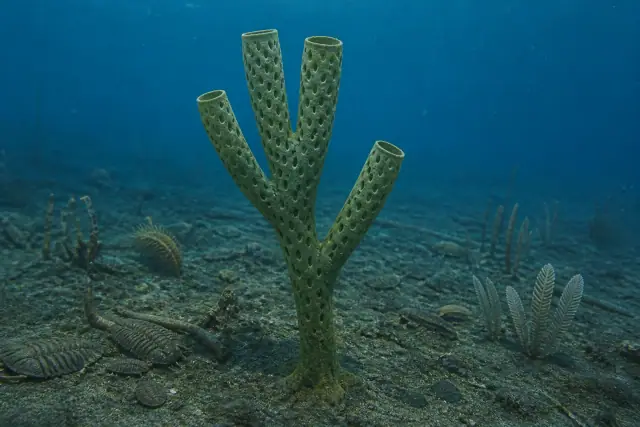
Margaretia dorus
A perforated tube once treated as an animal is now linked to a branching alga.
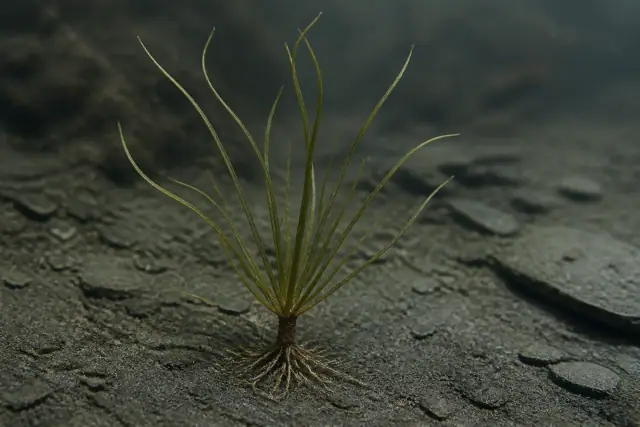
Yuknessia simplex
Simple narrow blades radiated from a common attachment.
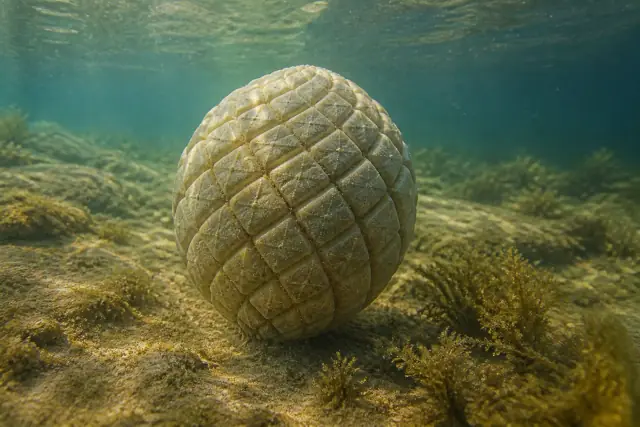
Receptaculites oweni
Spiraled diamond plates formed a calcified pinecone-like body.
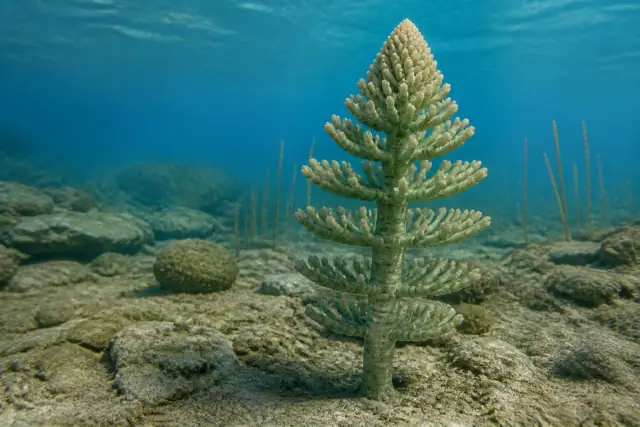
Cyclocrinites dactioloides
Whorled calcified branches surrounded a central axis like an underwater bottlebrush.
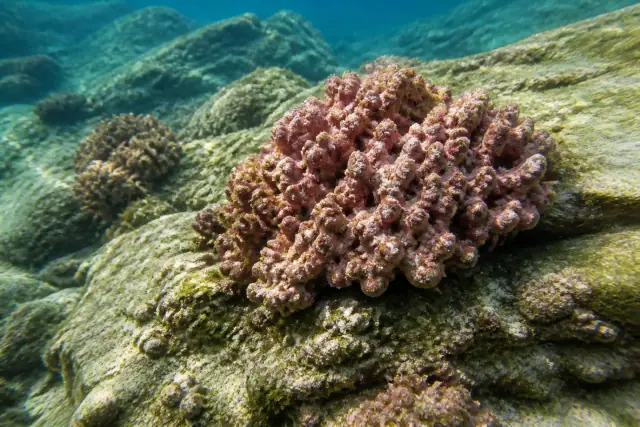
Solenopora jurassica
Pink calcified masses were long assigned to red algae, but their identity is being reassessed.
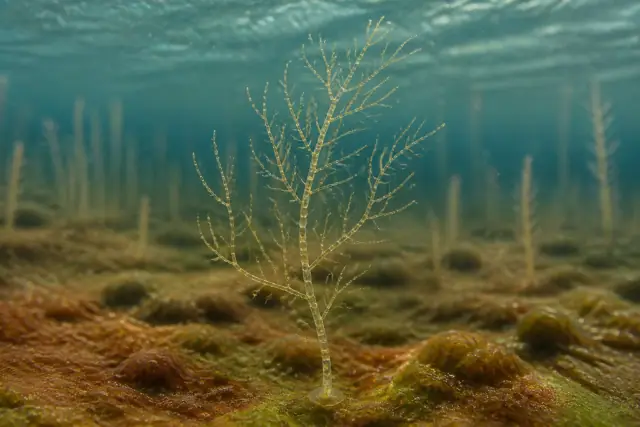
Doushantuophyton cometa
Branching cellular filaments show complex photosynthetic life before abundant animals.
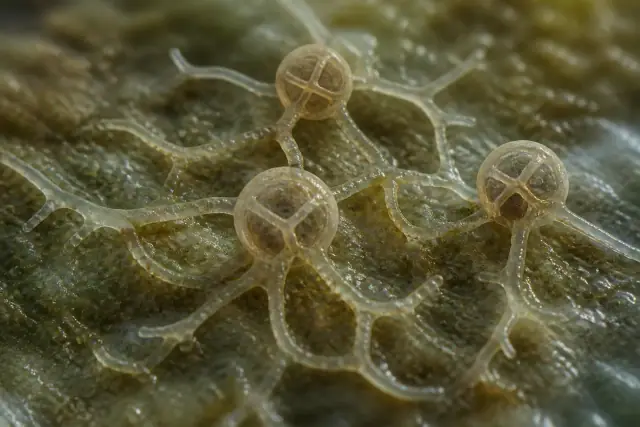
Tappania plana
Complex branching and septa make it a candidate early eukaryote or fungus.
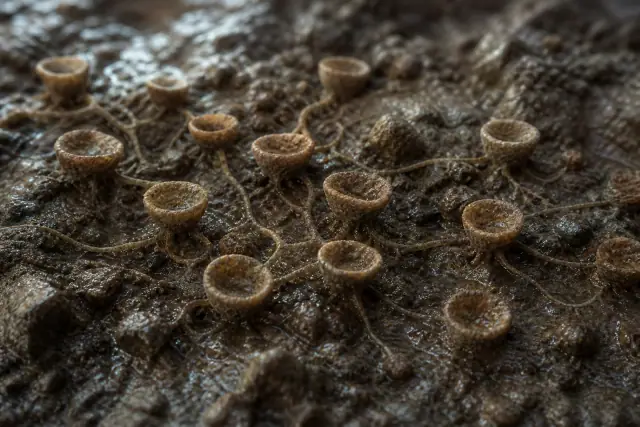
Diskagma buttonii
Cup-like bodies linked by filaments have been read as fungi or a microbial colony.
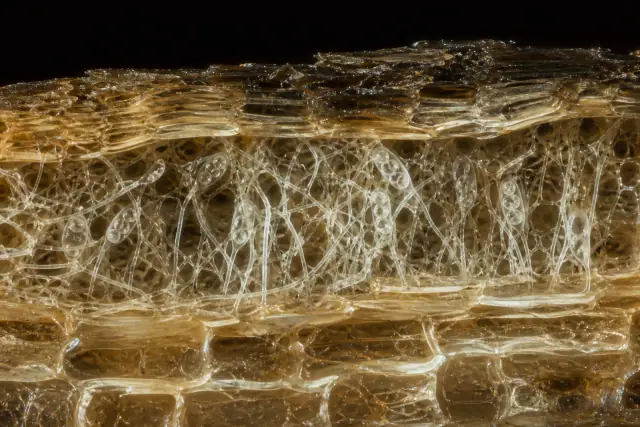
Protoascon missouriensis
Tiny sac-like structures in coal balls resemble an early ascomycete.
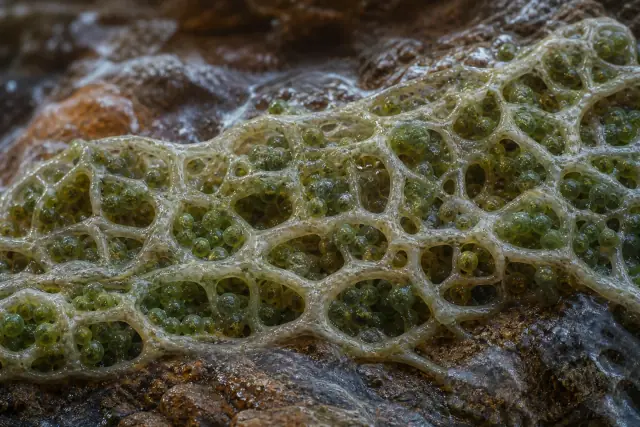
Winfrenatia reticulata
Fungal filaments surrounded cyanobacterium-like cells in an early lichen-style partnership.
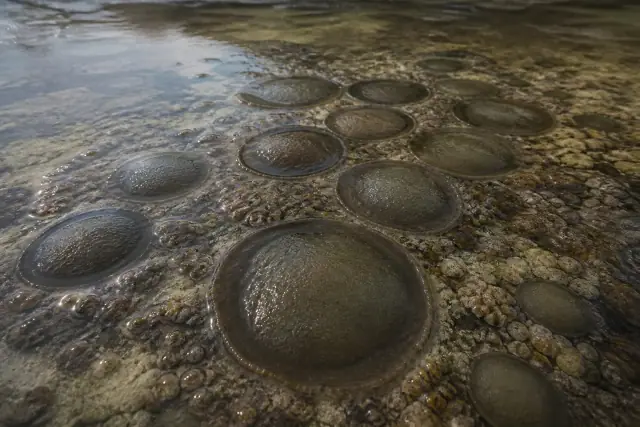
Chuaria circularis
Circular carbon films may represent a giant single-celled eukaryote traditionally called an alga.
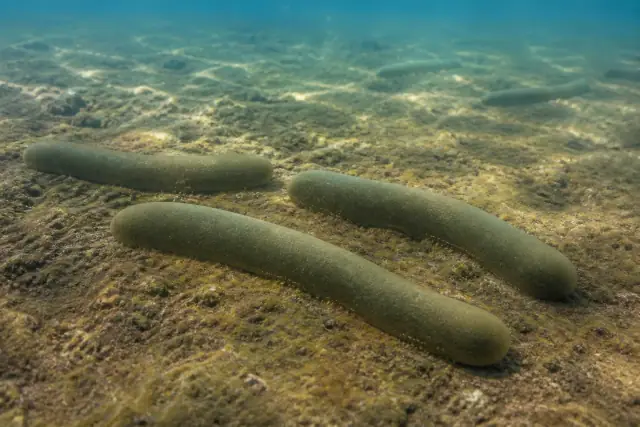
Tawuia dalensis
Sausage-shaped carbon films may be macroalgae or another early eukaryote.
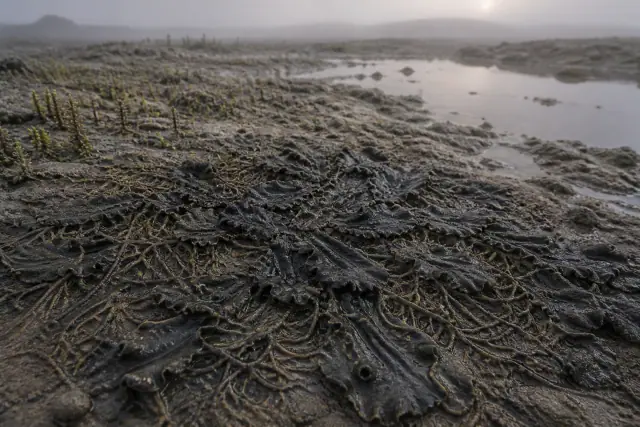
Nematothallus
Carbonized cell sheets and tangled tubes came from an enigmatic early terrestrial organism.