
Explore this animal in Size of Extinct Animals ↗
434 / Mesozoic
Parapuzosia
Parapuzosia seppenradensis
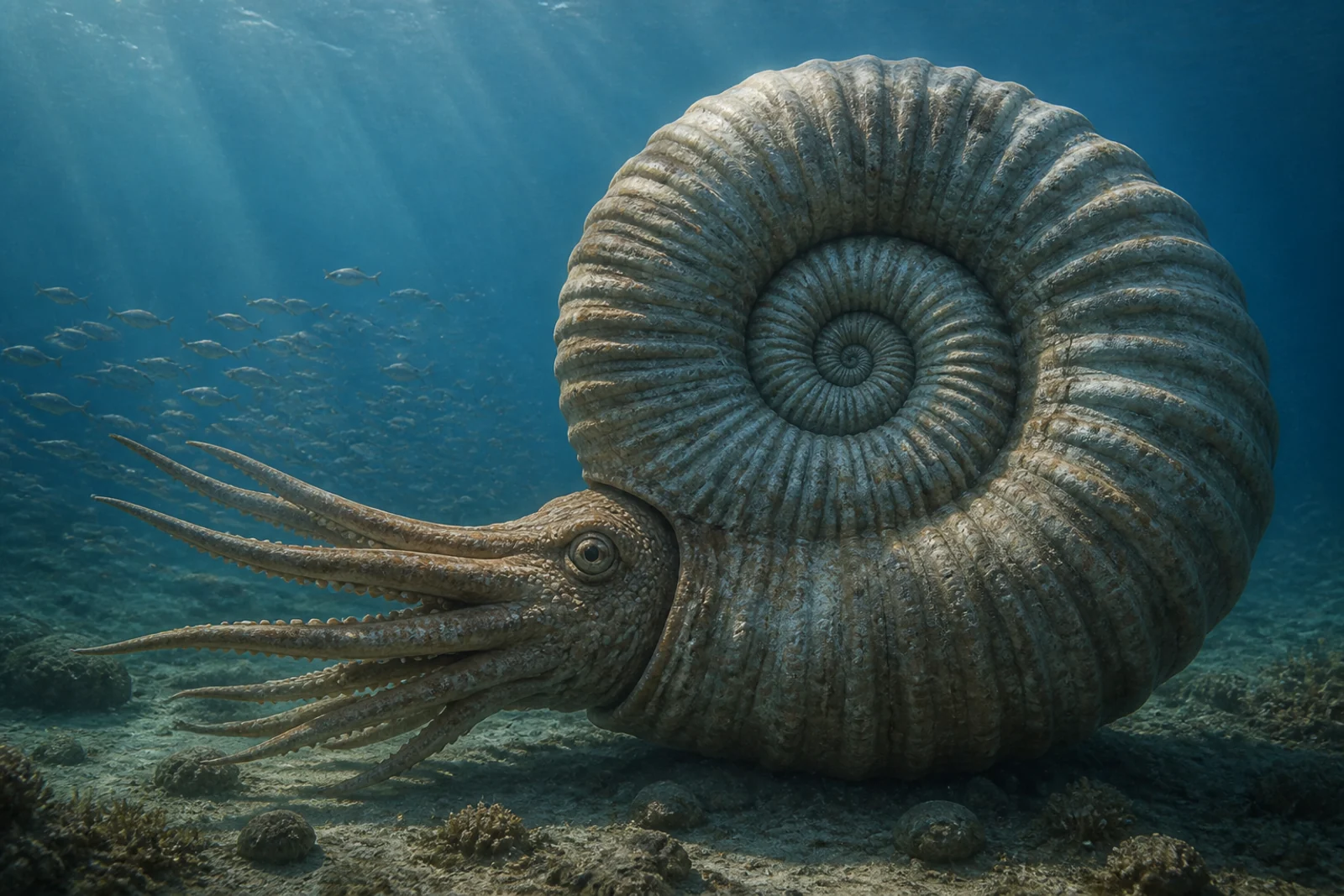
A coiled shell nearly two meters wide belonged to the largest known ammonite.
 View original image · 1600 × 1067
- Time range
- About 83 million years ago
- Final stage
- Late Cretaceous
- Geographic range
- Warm open sea · Europe
01 / DEFINITION & ECOLOGY
What was Parapuzosia?
Parapuzosia (Parapuzosia seppenradensis) was an extinct organism known from About 83 million years ago, with a range in Warm open sea · Europe.
Life and ecology
It drifted or cruised offshore and captured small animals with its arms.
02 / DISAPPEARANCE
Why did Parapuzosia disappear?
Late Cretaceous marine and cephalopod turnover is possible context; the fossil record does not establish why the species disappeared.
03 / EVIDENCE
How do scientists know about Parapuzosia?
Giant shells and growth lines constrain size; soft anatomy follows relatives.
04 / SOURCES & FURTHER READING
Check the source record
Use the scientific name to compare taxonomy, occurrence records and the fossil record. Database coverage and classifications may differ.
05 / REVISION HISTORY
How has this record changed?
- Rewrote an extinction cause that presented environmental or faunal turnover as established; it is now given as context the record does not prove.
- Verified authoritative entity sources and added three responsive reconstruction sizes.
- Initial bilingual species record published.
06 / CORRECTIONS & ADDITIONS