161Precambrian
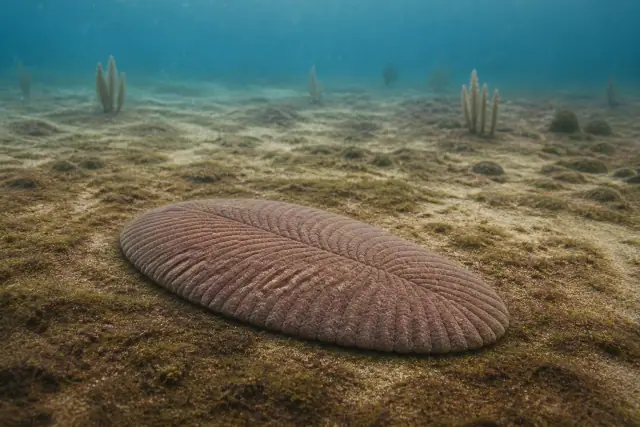
Dickinsonia
Dickinsonia costata
Its flat oval body moved across microbial mats like a rhythmically quilted cushion, leaving feeding traces behind.
 EXTINCT ATLASEXTINCT LIFE ARCHIVEBack to archive
Period · 635–538.8 million years ago
Meet Dickinsonia, Charnia and other organisms from the seafloors before the Cambrian explosion.
Impressions and traces reveal body shapes, movement and interactions with the seafloor. Some Ediacaran organisms are recognizable as animals, while the relationships of others remain debated. The Ediacaran is the final period of the Proterozoic, not a separate eon.
Dickinsonia costata
Its flat oval body moved across microbial mats like a rhythmically quilted cushion, leaving feeding traces behind.
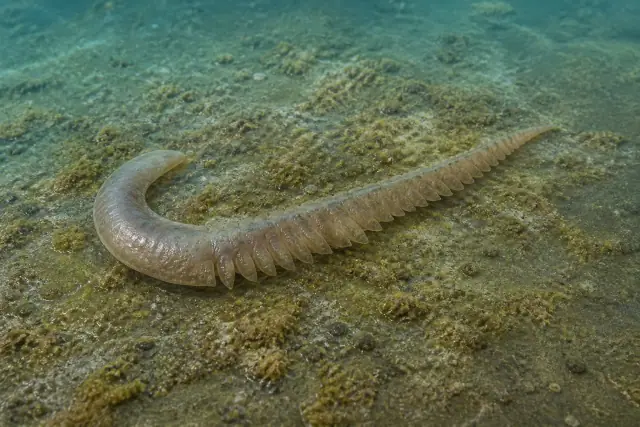
Spriggina floundersi
A horseshoe-shaped front led a body of offset leaflike units, giving it the appearance of a flattened soft worm.
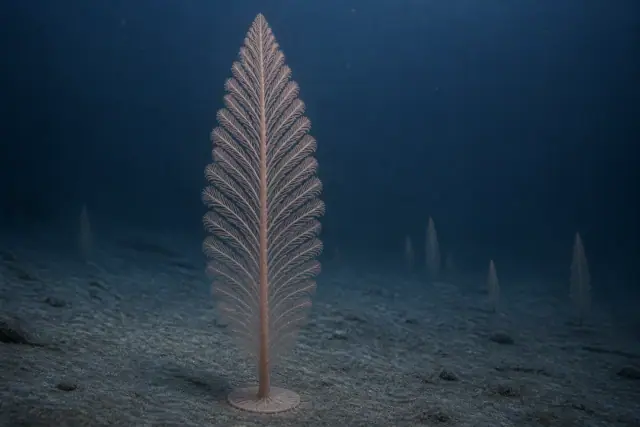
Charnia masoni
A featherlike body of repeating branches was anchored by a disc in deep water, yet it had neither chlorophyll nor a mouth.
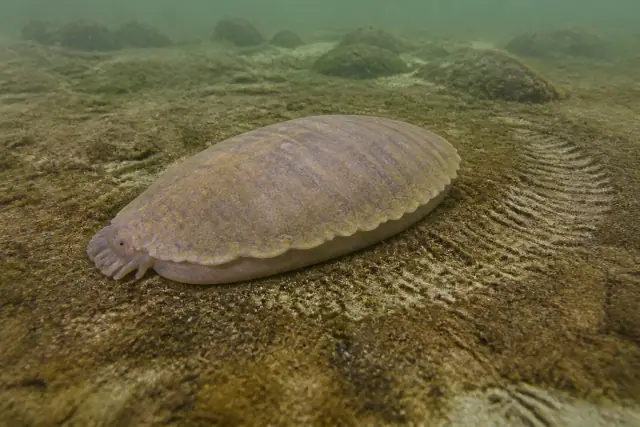
Kimberella quadrata
Its low oval body crawled across microbial mats while a front feeding structure left fan-shaped sets of scratches.
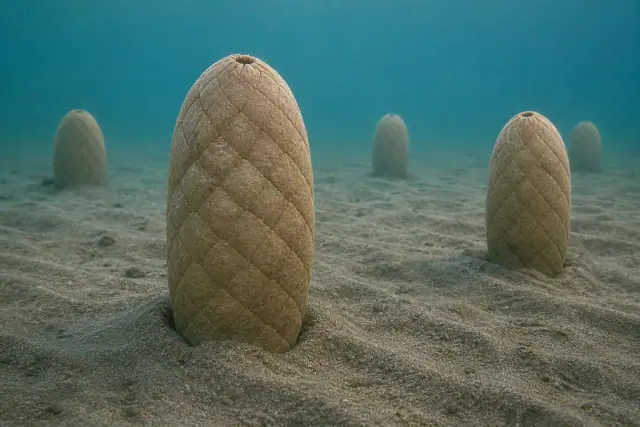
Ernietta plateauensis
Rows of quilted sacks lived half-buried in sand, forming one of the Ediacaran seafloor's strangest communities.
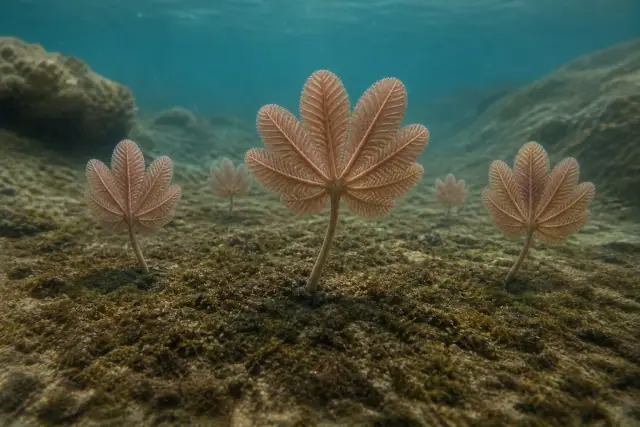
Rangea schneiderhoehni
Six branching vanes surrounded a central axis, making the organism resemble a soft pine cone standing on the seabed.
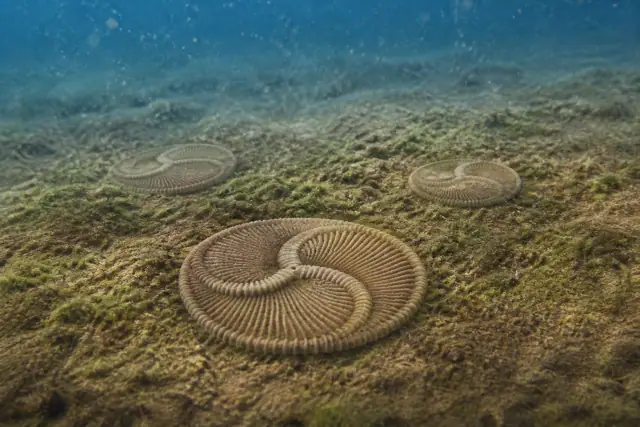
Tribrachidium heraldicum
Three curving spiral arms created a body symmetry almost absent among living animals.
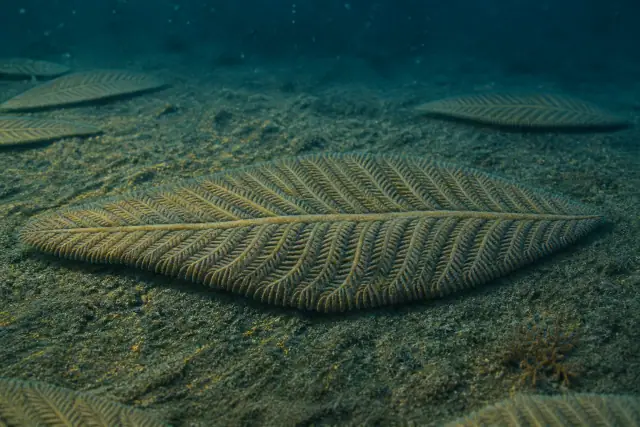
Fractofusus misrai
Its quilted branches lay flat rather than rising from a stem.
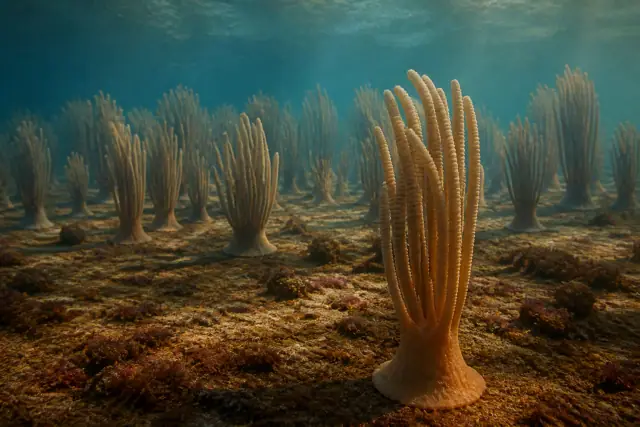
Funisia dorothea
Dense stands of narrow tubes formed one of the earliest large colonial scenes.
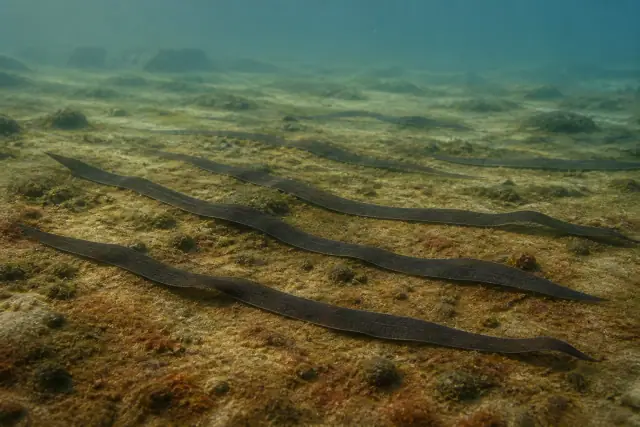
Vendotaenia antiqua
Long carbonaceous ribbons resemble soft algae but lack diagnostic organs.
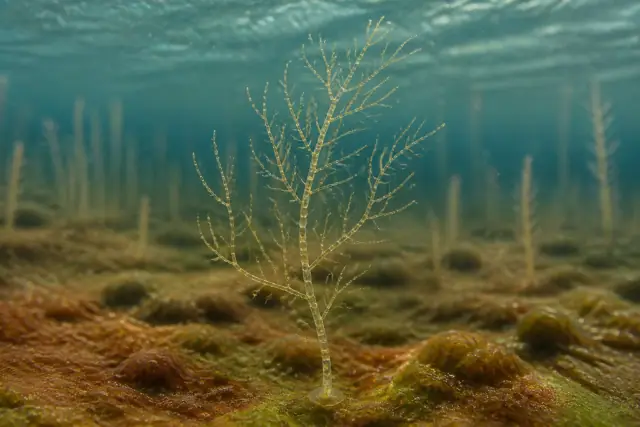
Doushantuophyton cometa
Branching cellular filaments show complex photosynthetic life before abundant animals.
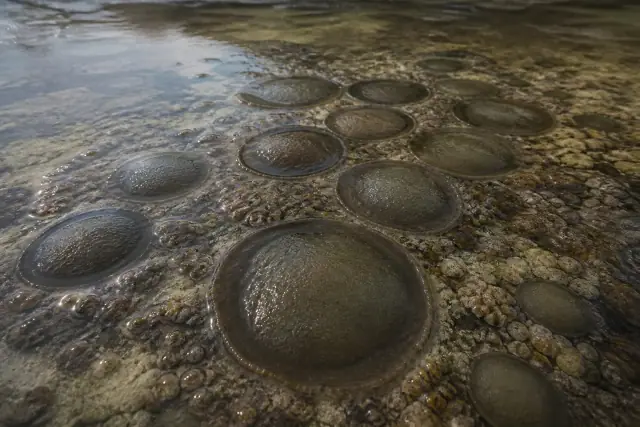
Chuaria circularis
Circular carbon films may represent a giant single-celled eukaryote traditionally called an alga.