121Paleozoic
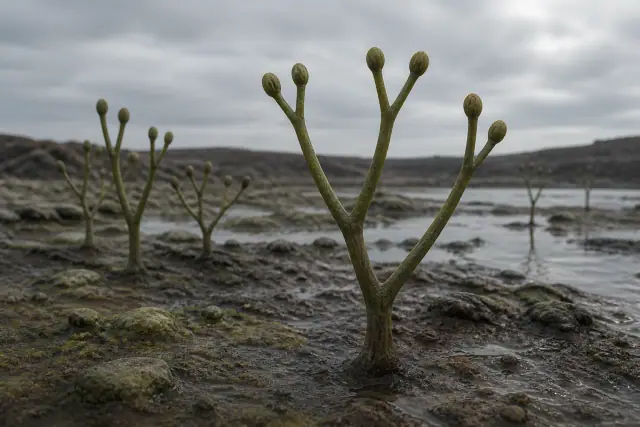
Cooksonia
Cooksonia pertoni
Leafless stems only centimeters tall held spore capsules at their tips, marking an early step inland.
 EXTINCT ATLASEXTINCT LIFE ARCHIVE
Category
From early land plants and coal forests to historically recorded island-plant extinctions.
01 / ANSWER FIRST
Extinct plants record the construction of soils, forests and food webs, from tiny early land plants to coal-swamp trees and recently lost island endemics.
02 / TIME & EVOLUTION
The record begins with simple Ordovician land-plant evidence, expands through Devonian vascular plants and forests, then follows seed plants, flowering plants and historically documented losses.
03 / TURNOVER & EXTINCTION
Plant turnovers track climate, continental movement, mass extinctions and, in recent centuries, habitat clearance and invasive species.
04 / KEY THEMES
Small spore-producing plants reveal how life first occupied exposed ground.
Lycopsids, horsetail relatives and seed ferns built vast Carboniferous wetlands.
Island floras show how restricted ranges amplify human and invasive-species pressure.
05 / EVIDENCE
Spores, cuticles, petrified wood, roots, leaves, pollen and rare whole plants preserve different parts of the story; no single fossil type supplies a complete reconstruction.
06 / FAQ
Extinct plants record the construction of soils, forests and food webs, from tiny early land plants to coal-swamp trees and recently lost island endemics.
Spores, cuticles, petrified wood, roots, leaves, pollen and rare whole plants preserve different parts of the story; no single fossil type supplies a complete reconstruction.
Plant turnovers track climate, continental movement, mass extinctions and, in recent centuries, habitat clearance and invasive species.
07 / SOURCES
Cooksonia pertoni
Leafless stems only centimeters tall held spore capsules at their tips, marking an early step inland.
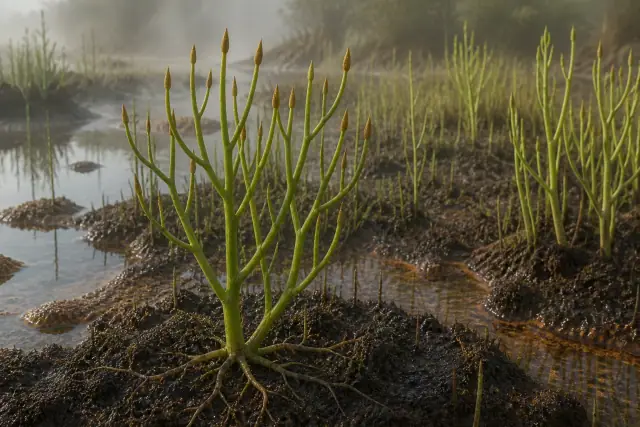
Rhynia gwynne-vaughanii
Naked upright axes rose from creeping rhizomes, preserved cell by cell by silica-rich hot springs.
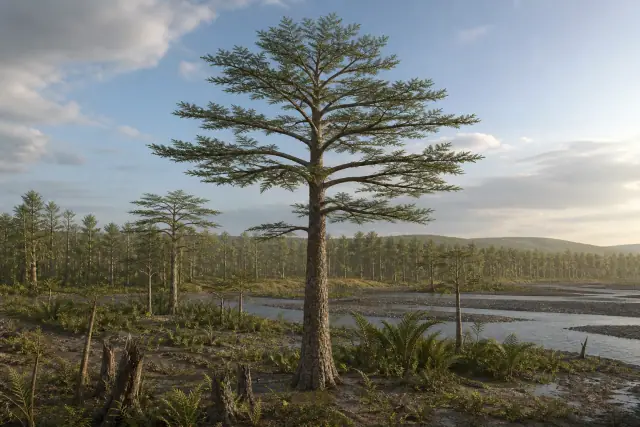
Archaeopteris halliana
It grew true wood and a tree crown but still reproduced by spores, helping create Earth's first broad forests.
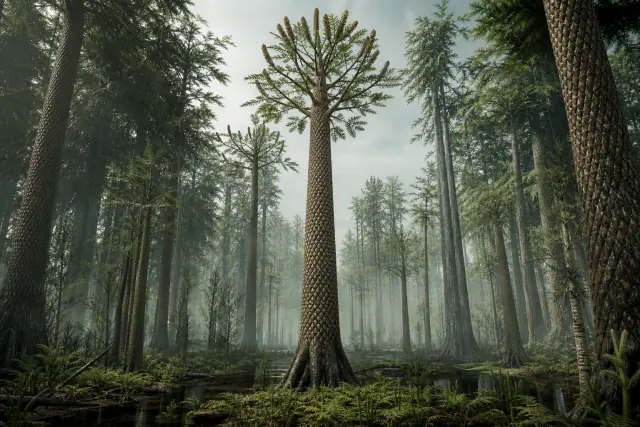
Lepidodendron aculeatum
A straight trunk patterned with diamond leaf scars forked only high above the Carboniferous mire.
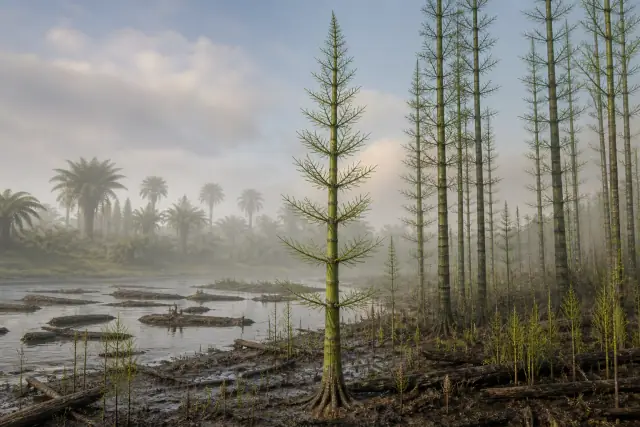
Calamites suckowii
Casts of jointed stems record large horsetail relatives; Calamites suckowii does not automatically name a plant with all organs known.
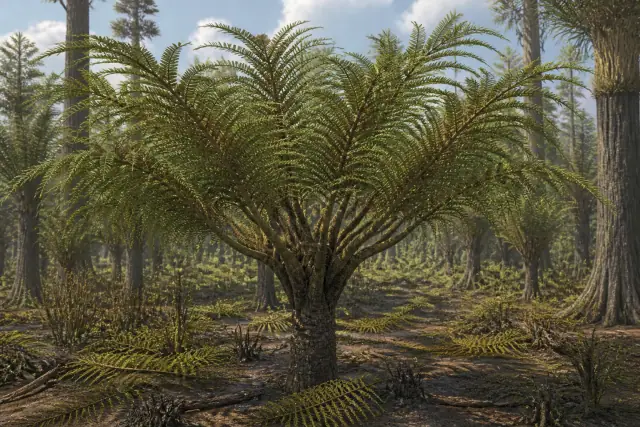
Medullosa noei
Woody stems carried immense fernlike fronds, yet seeds grew among the foliage of this vanished seed fern.
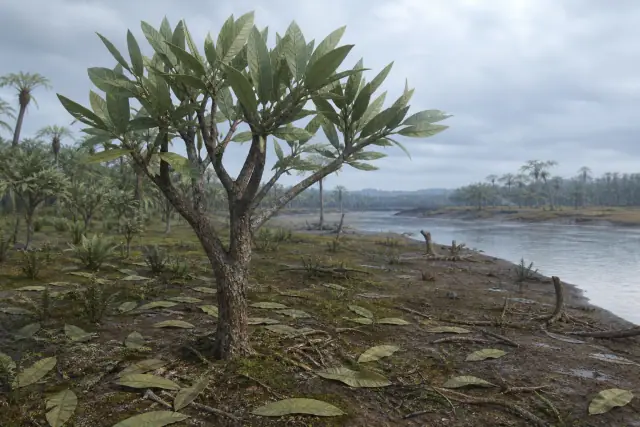
Glossopteris browniana
Tongue-shaped leaves across the southern continents became important evidence that Gondwana was once united.
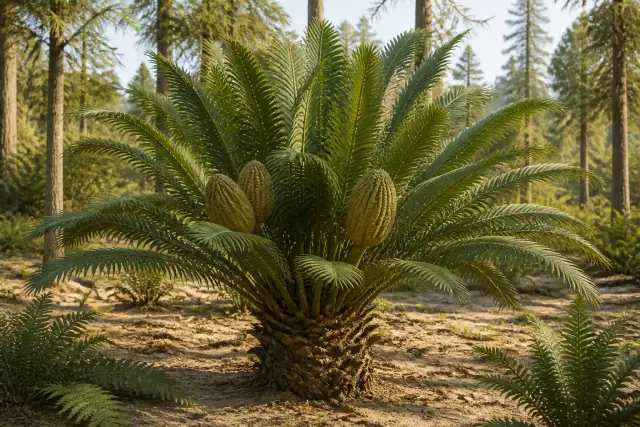
Williamsonia gigas
Flower-like reproductive organs nestled among cycad-like leaves, but this bennettitalean was not a flowering plant.
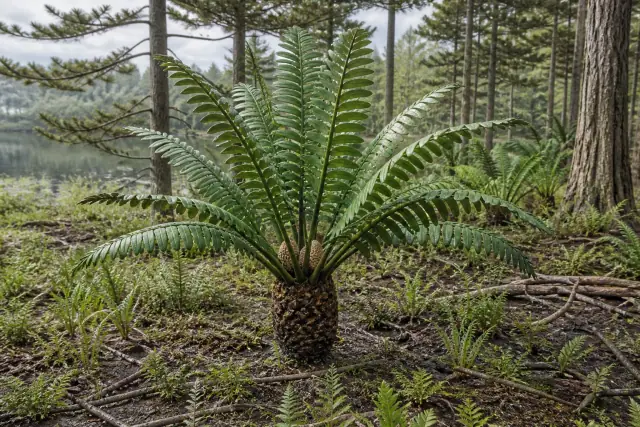
Nilssonia orientalis
Long leaves divided into broad segments formed part of the cycadophyte layer beneath Jurassic trees.
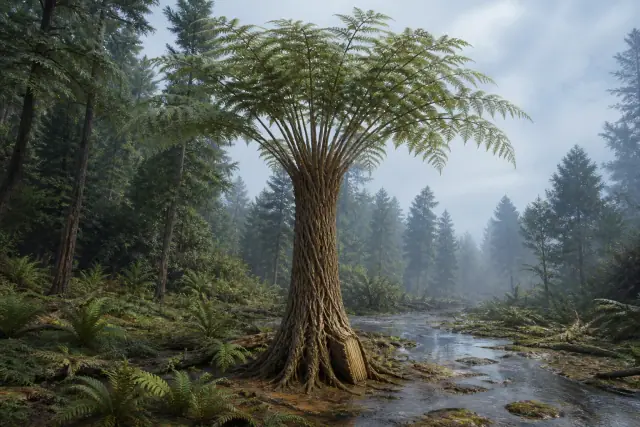
Tempskya rossica
What looked like one trunk was a false stem woven from many small axes and adventitious roots.
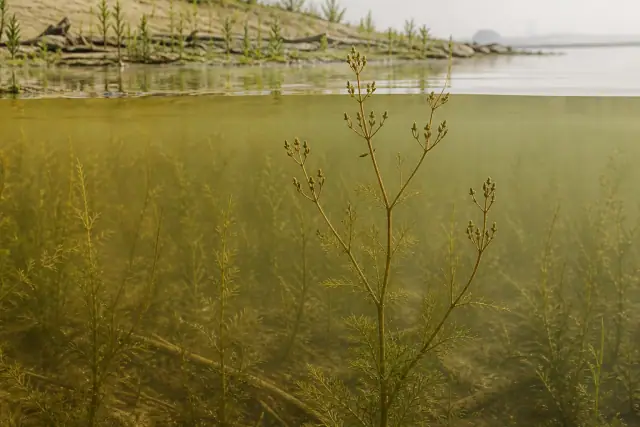
Archaefructus liaoningensis
Elongated aquatic stems bore petal-less reproductive structures important to debates about early flowering plants.
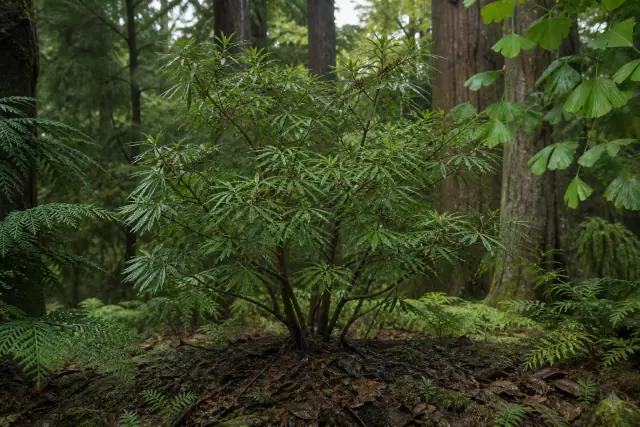
Caytonia nathorstii
Curved cupules containing ovules hung beneath compound leaves in this puzzling seed plant.
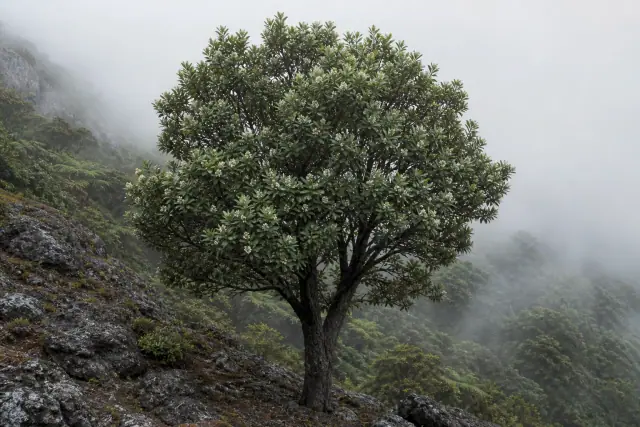
Nesiota elliptica
It was not a true olive; the last wild tree died in 1994 and its last cultivated descendant in 2003.
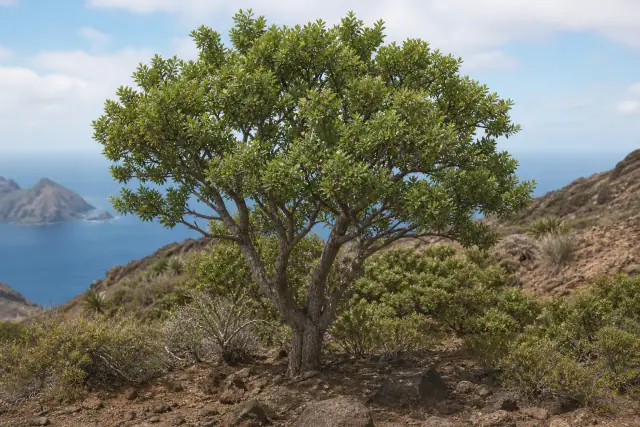
Santalum fernandezianum
Demand for fragrant wood reduced this island tree to a final individual recorded in 1908.
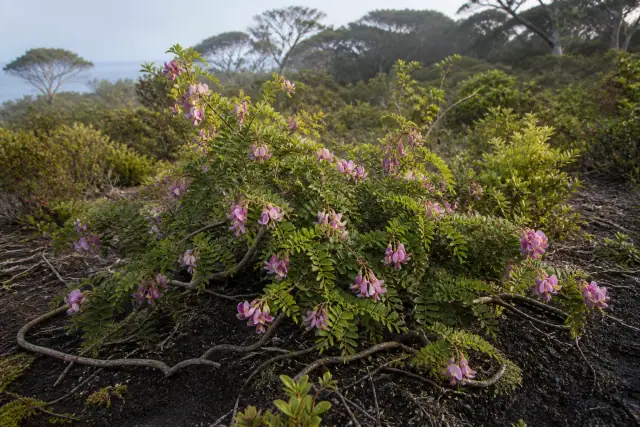
Streblorrhiza speciosa
Pink-purple pea flowers once carried this monotypic island plant into European glasshouses.
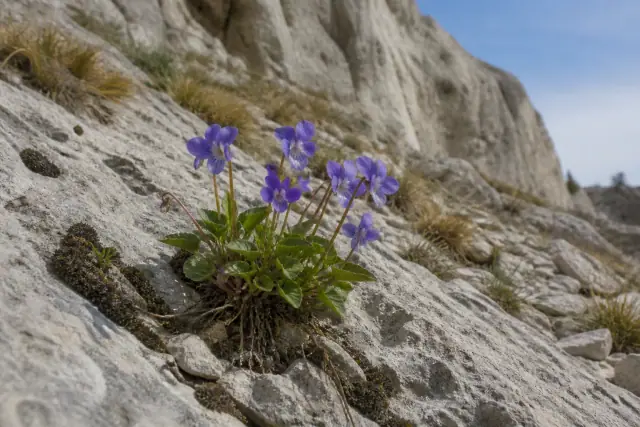
Viola cryana
This violet occupied one small patch of pale limestone before quarrying removed its habitat.
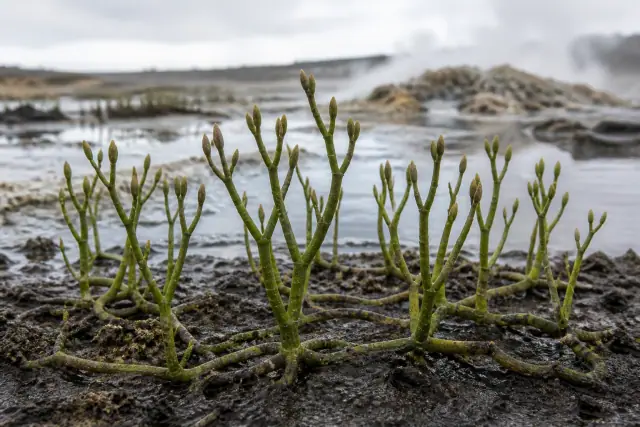
Aglaophyton major
Leafless axes rose in stands from creeping stems; conducting cells were present, but true vascular tissue was not.
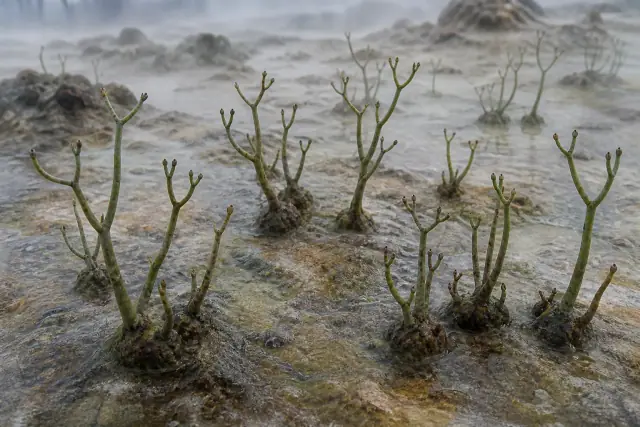
Horneophyton lignieri
Short axes carried forked sporangia above corm-like bases that could resprout on a repeatedly flooded hot-spring surface.
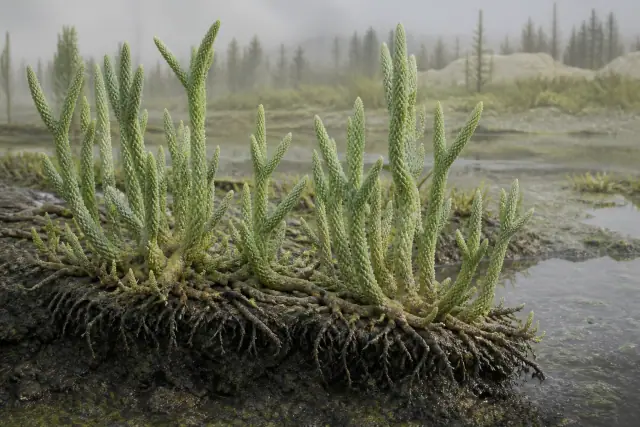
Asteroxylon mackiei
Veinless leaf-like flaps covered its axes, while star-shaped xylem supplied shoots that rose nearly half a meter.
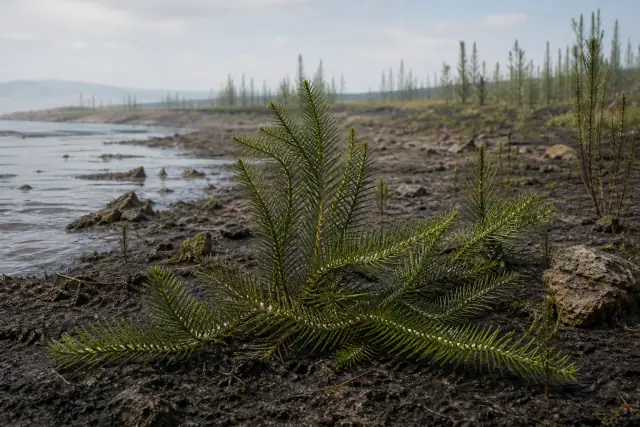
Baragwanathia longifolia
Branches more than a meter long carried dense narrow microphylls, far more elaborate than most naked-stemmed plants of its age.
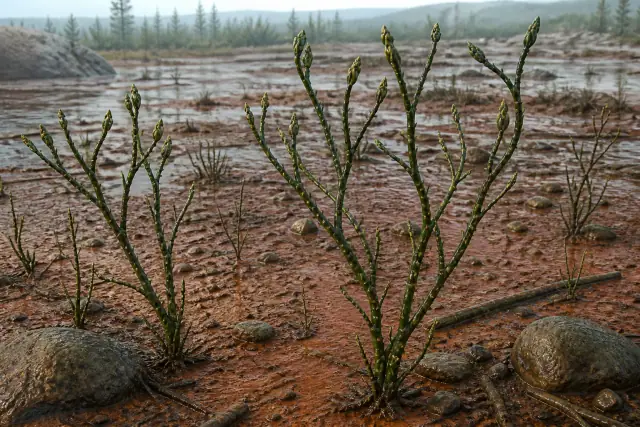
Psilophyton dawsonii
Naked axes forked repeatedly, their fertile tips curling inward and carrying paired elongated sporangia.
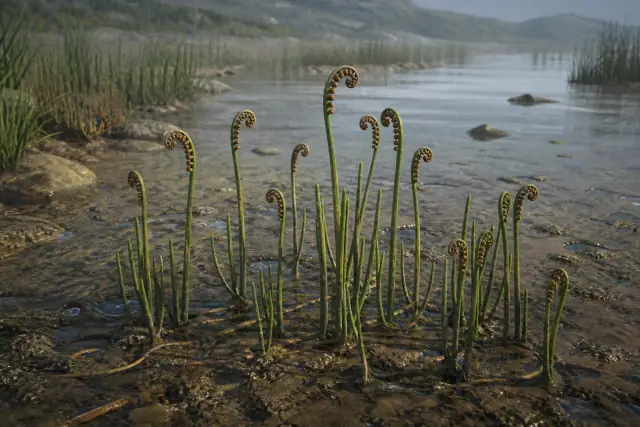
Zosterophyllum myretonianum
Two rows of kidney-shaped sporangia lined curved branch tips like the teeth of an unfinished botanical zipper.
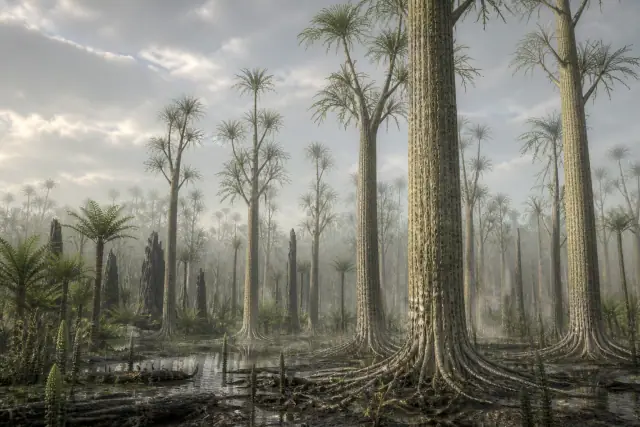
Sigillaria brardii
Vertical rows of leaf scars stamped the tall trunk, beneath a crown of sparse branches and grasslike microphylls.
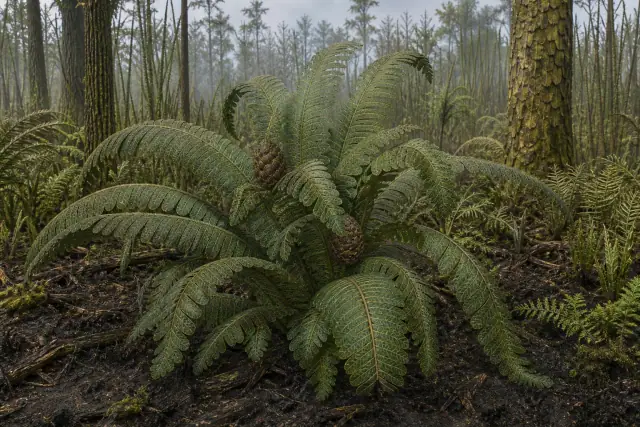
Neuropteris ovata
Rounded pinnules carried fanlike veins and looked fernlike, yet immense seeds grew among the fronds.
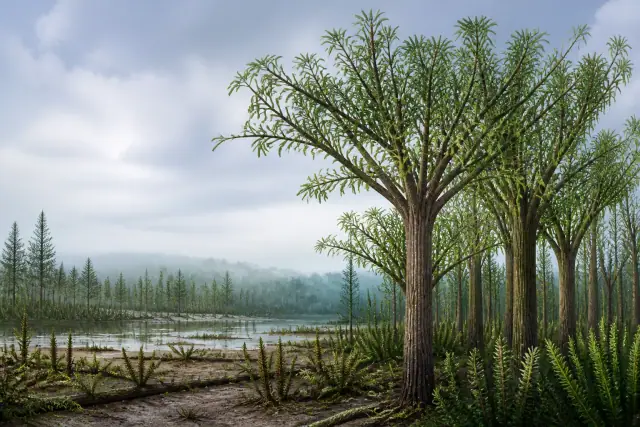
Cordaites principalis
Clusters of long strap-shaped leaves crowned woody trees from an extinct gymnosperm lineage near early conifers.
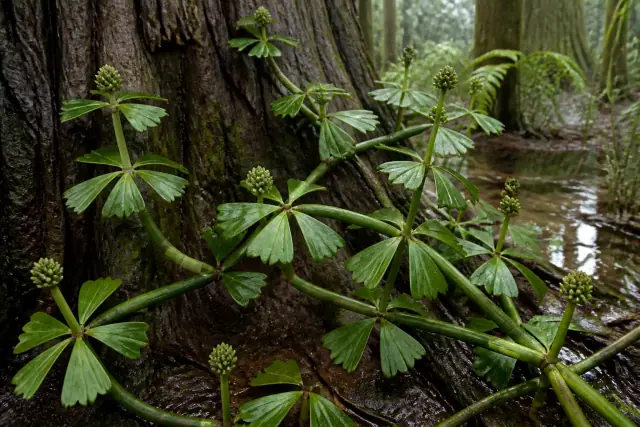
Sphenophyllum emarginatum
Six wedge-shaped leaves encircled each node of a slender stem that trailed across the ground or climbed larger trees.
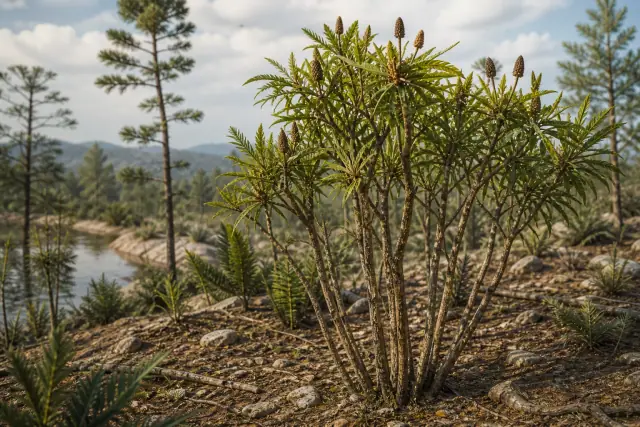
Pentoxylon sahnii
Several separate woody columns occupied one stem beneath clusters of long leaves and unusual male and female organs.
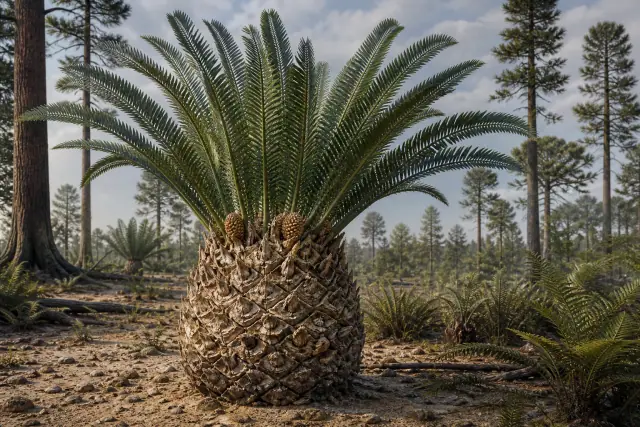
Cycadeoidea gigantea
A stout barrel-shaped trunk held a pinnate crown and many flower-like bisexual reproductive structures among old leaf bases.
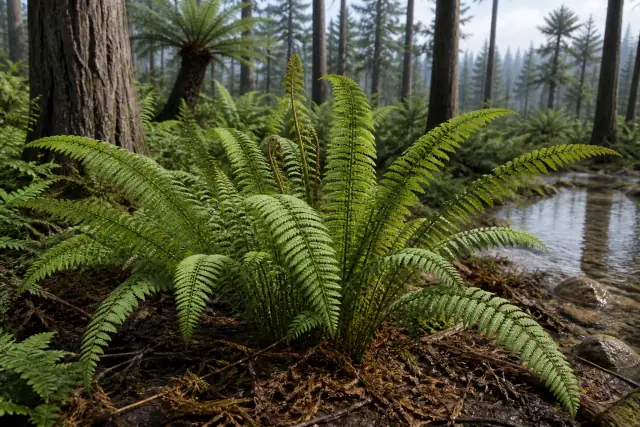
Cladophlebis denticulata
Finely pinnate fronds carpeted Jurassic understories, each toothed leaflet crossed by repeatedly branching veins.
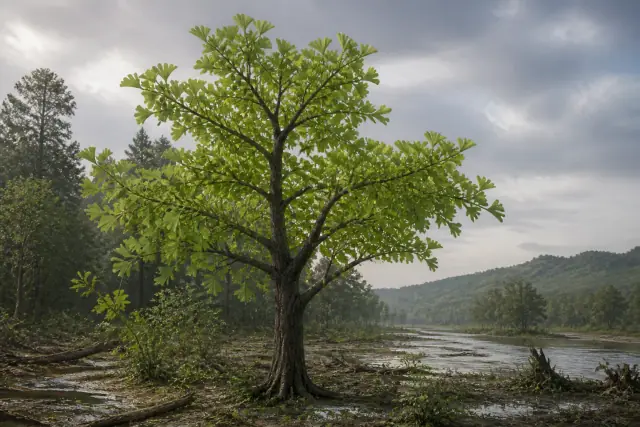
Ginkgo cranei
Fan-shaped leaves and paired ovules continued the ginkgo body plan in a species that did not survive to the present.
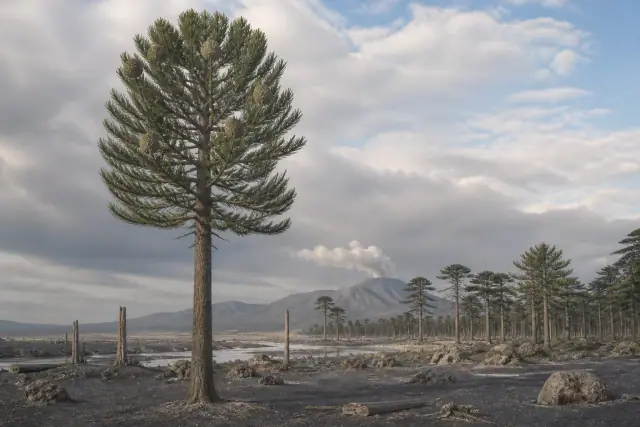
Araucaria mirabilis
Tall conifers bore nearly spherical cones whose internal scales and ovules were silicified by volcanic landscapes.
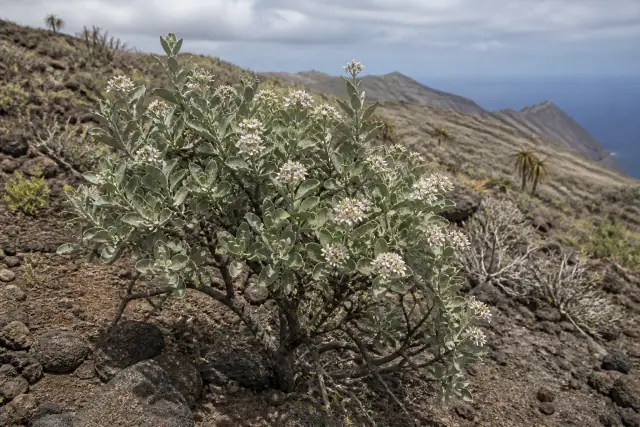
Trochetiopsis melanoxylon
Silvery hairy leaves and small pale flowers once covered dry slopes; the last reliable collection was made in 1771.
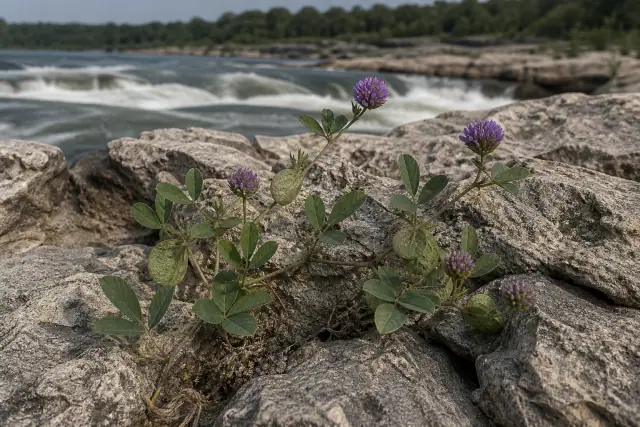
Orbexilum stipulatum
Purple pea flowers grew on one limestone river island, with the final herbarium collection made in 1881.
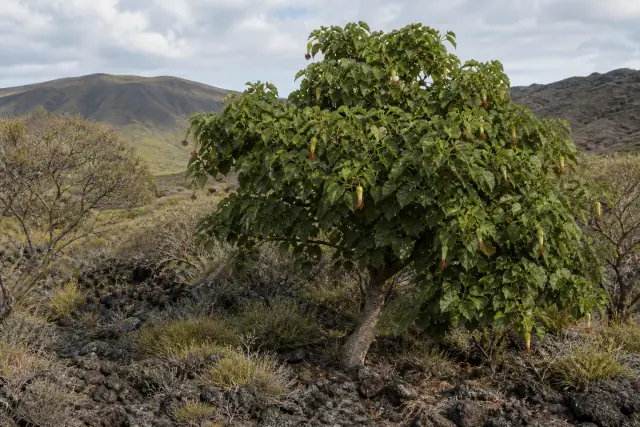
Hibiscadelphus wilderianus
The only scientifically recorded tree bore curved yellow-green tubular flowers probably adapted to Hawaiian honeycreepers.
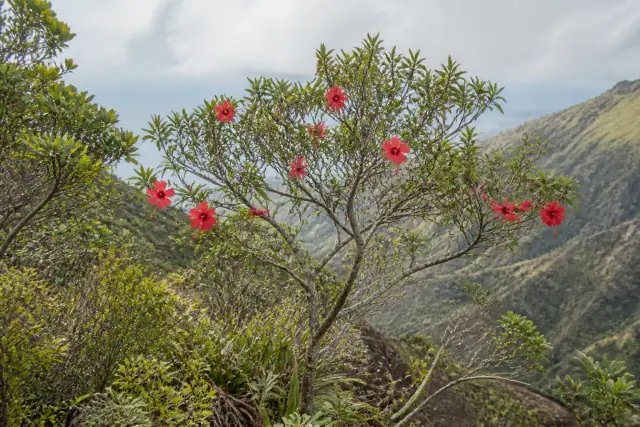
Kokia lanceolata
Narrow leaves and hibiscus-like red flowers were confined to southeastern Oʻahu and vanished within decades of discovery.
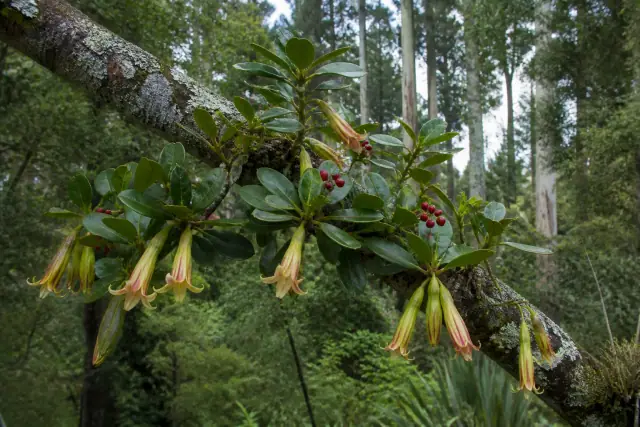
Trilepidea adamsii
Red-striped yellow-green tubular flowers opened among fleshy paired leaves; the last reliable sighting was in 1954.
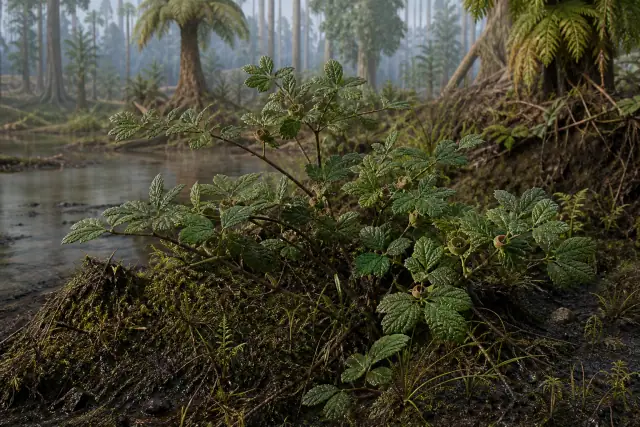
Sagenopteris rhoifolia
Four net-veined leaflets belonged to a seed fern rather than a true fern.
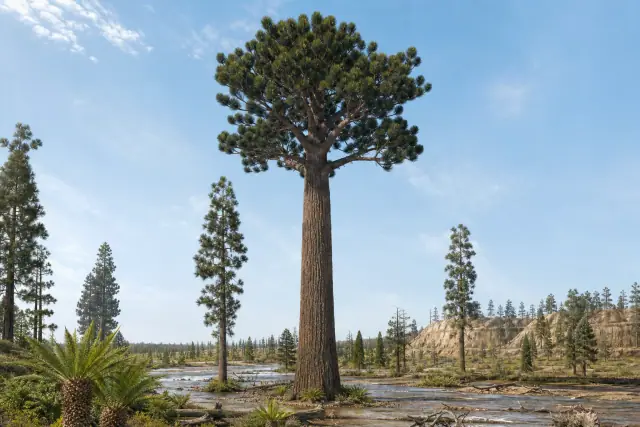
Araucarioxylon arizonicum
Silica replaced fallen trunks to create today's multicolored petrified forest.
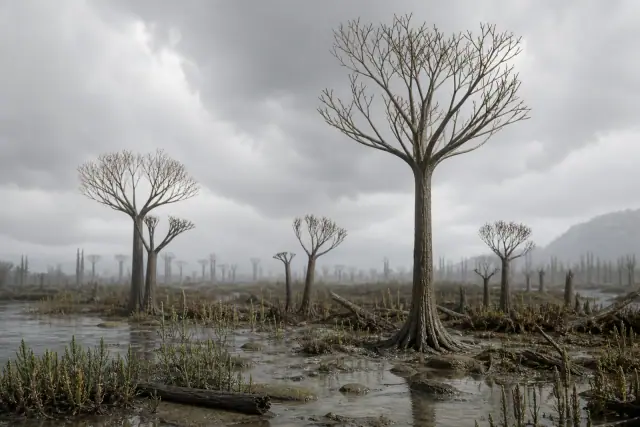
Wattieza casasii
Eight-meter leafless crowns formed one of the earliest known forests.
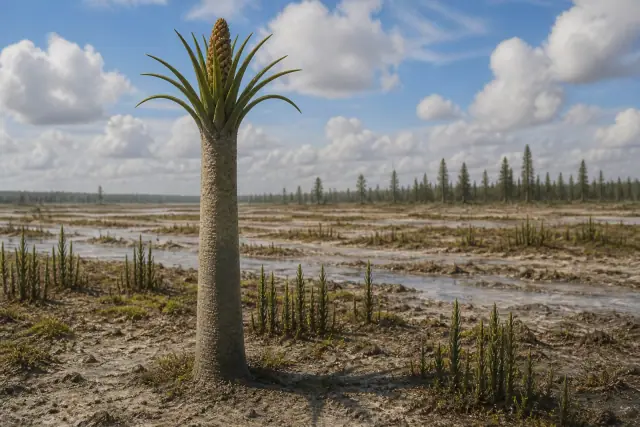
Pleuromeia sternbergii
Columnar lycophytes formed pioneer stands after the end-Permian catastrophe.
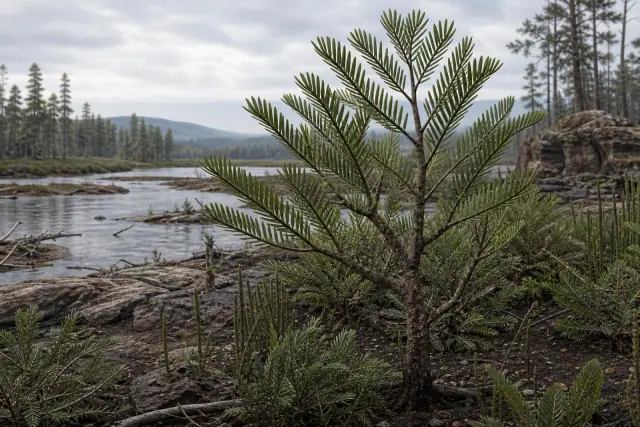
Dicroidium odontopteroides
Paired forked fronds became an emblem of Triassic southern vegetation.
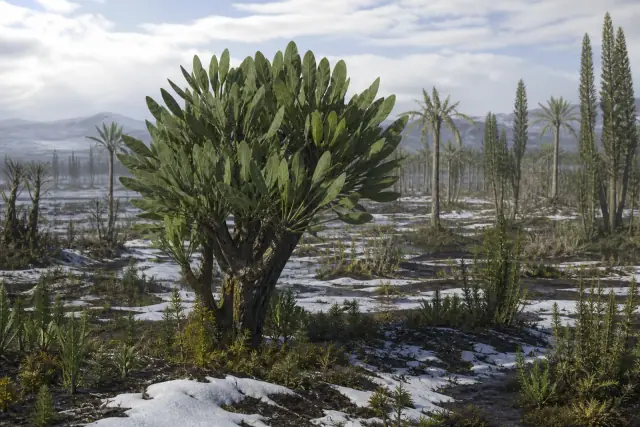
Gangamopteris obovata
Broad tongue-shaped leaves lacked the strong midrib of later glossopterids.
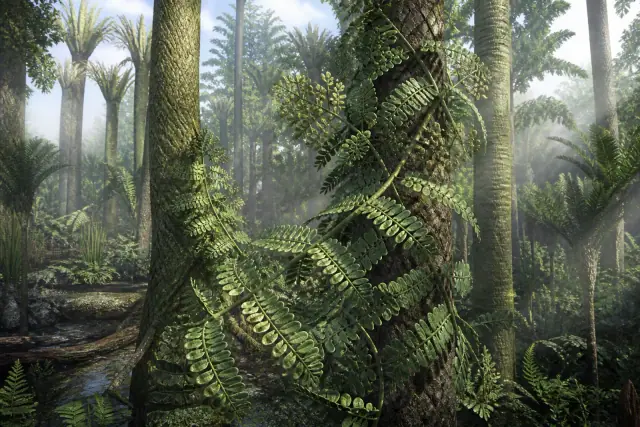
Alethopteris serlii
Firm fern-like pinnules belonged to a seed plant rather than a true fern.
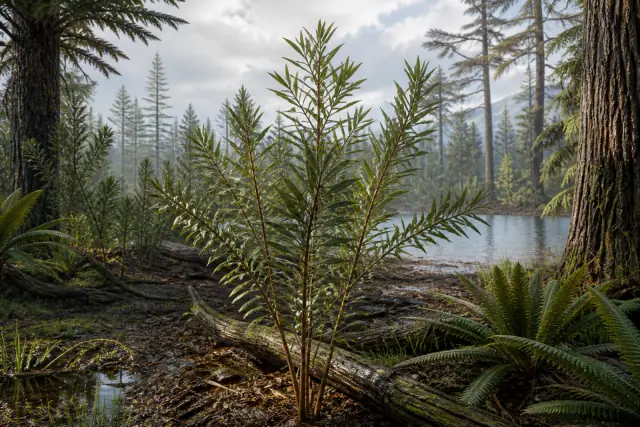
Podozamites lanceolatus
Orderly lance-shaped leaves lined stems of a widespread but enigmatic plant.
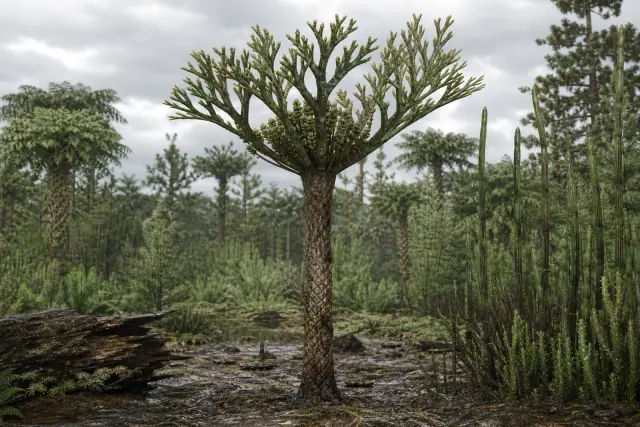
Noeggerathia foliosa
A palm-like crown belonged not to a fern but to an extinct heterosporous seed-plant relative.
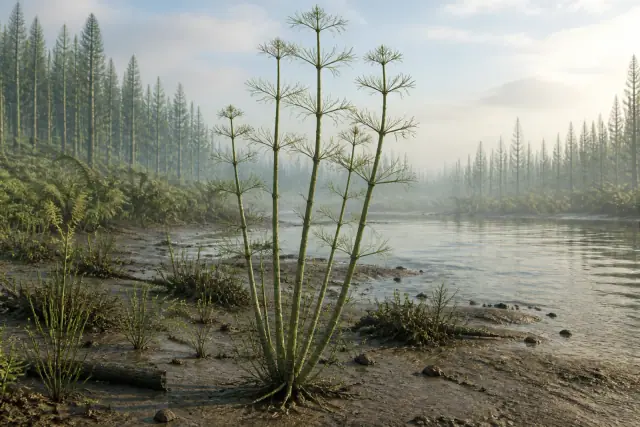
Archaeocalamites radiatus
Hollow jointed stems let an early horsetail relative grow as a tall shrub or small tree.
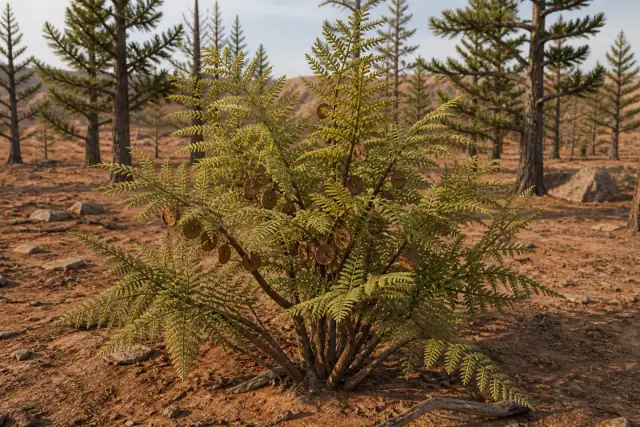
Peltaspermum martinsii
Shield-shaped reproductive discs record an innovation among drought-tolerant seed ferns.
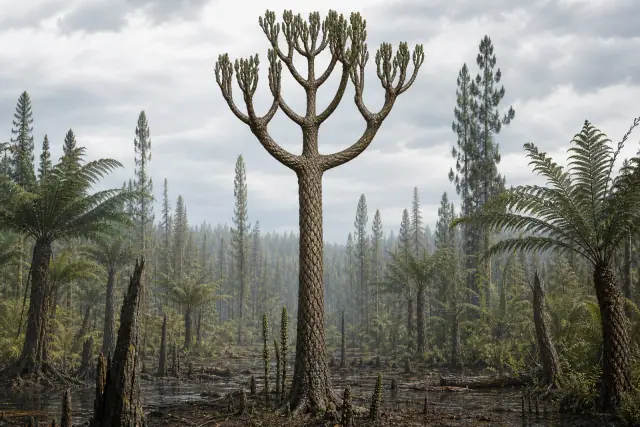
Lepidophloios laricinus
Diamond leaf cushions and a repeatedly forked crown marked a tall tree-sized lycopsid.
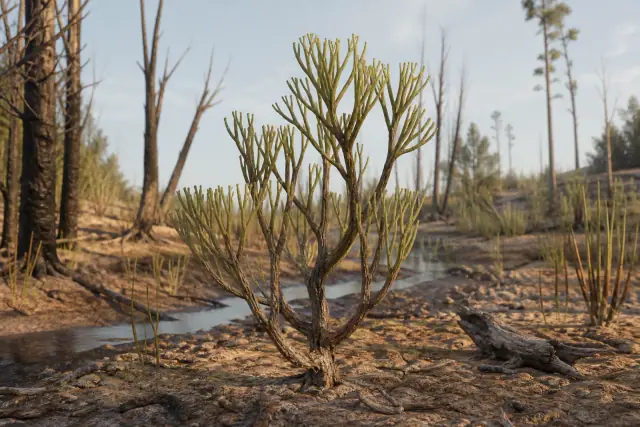
Dicranophyllum gallicum
Narrow leaves repeatedly forked at their tips on an extinct seed-plant relative.
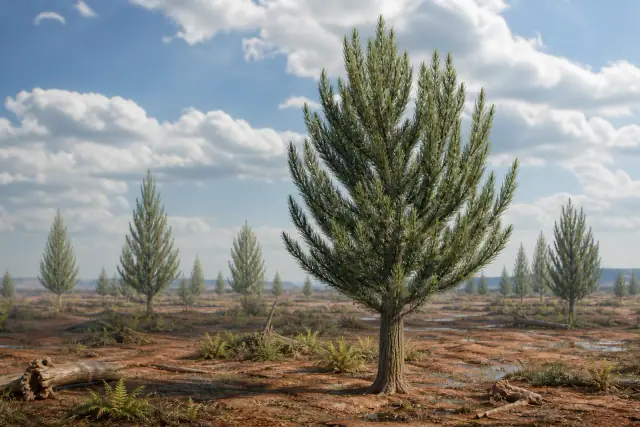
Walchia piniformis
Needle-like leaves crowded the shoots of an early conifer-like tree.
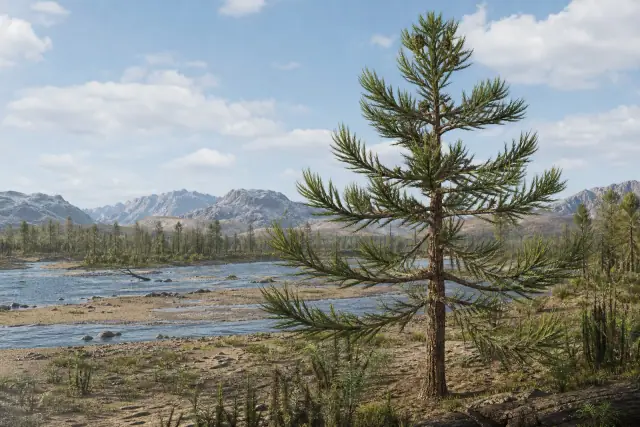
Voltzia heterophylla
Leaves of different lengths on one shoot record an early stage of modern conifer architecture.
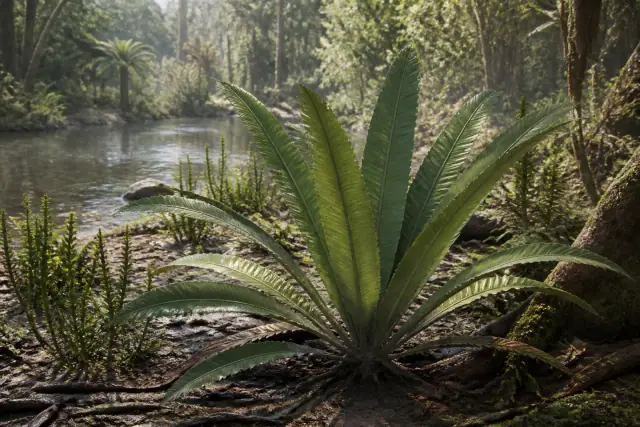
Taeniopteris multinervis
Entire strap-shaped leaves with dense side veins define a form genus rather than one secure lineage.
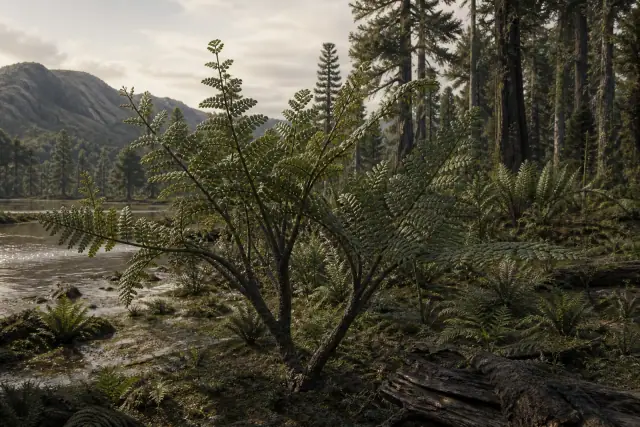
Pachypteris gradinarui
Thick leathery pinnules and lower-surface stomata helped this seed fern withstand seasonal dryness.
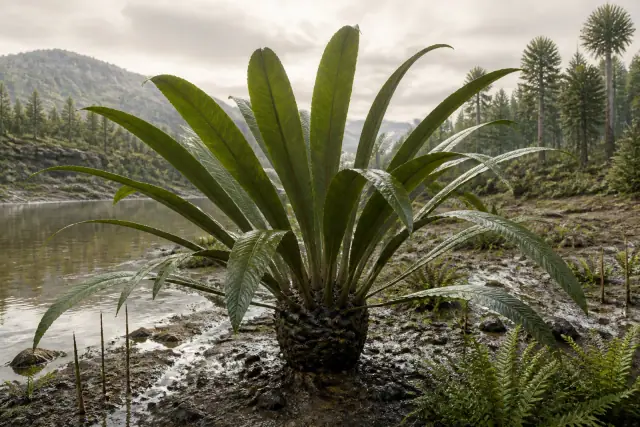
Bjuvia simplex
Huge, nearly undivided strap leaves opened from a stout cycad-like crown.
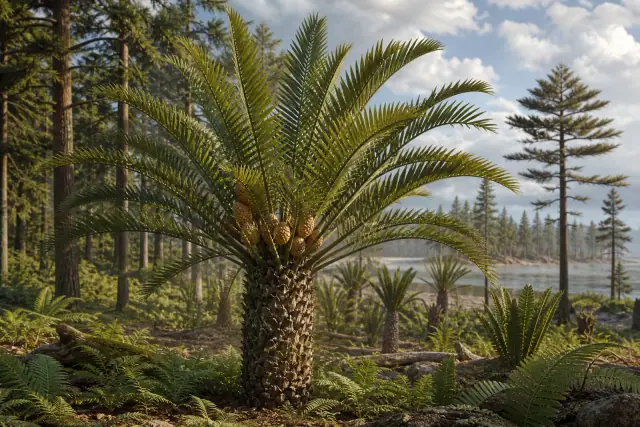
Bennettites
Tough pinnate leaves crowned cycad-like trunks around compact flower-like reproductive organs.