07Mesozoic
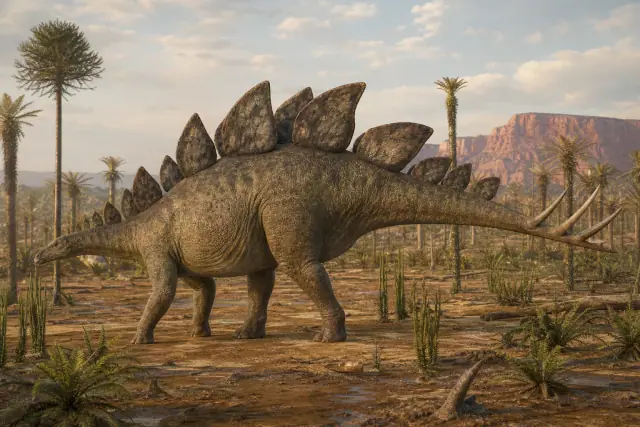
Stegosaurus
Stegosaurus stenops
Tall back plates and a four-spiked tail made this low-browsing herbivore unmistakable.
Western North America
Local fossil evidence ↗ EXTINCT ATLASEXTINCT LIFE ARCHIVEBack to archive
Countries and states
Follow Colorado dinosaur discoveries through Garden Park near Cañon City. Compare Stegosaurus, Allosaurus and Ceratosaurus, the Morrison Formation that preserves them, and the difference between a fossil locality and a museum display.
Garden Park, north of Cañon City, is a key locality in the history of Colorado dinosaur discoveries. Its Morrison Formation fossils document Late Jurassic life, including plated herbivores and large predatory dinosaurs. This guide selects three animals with both local evidence and existing atlas profiles. Colorado has a much wider fossil record, so a short catalogue should not be read as a complete state checklist. Discovery locality and rock formation provide the connection; the present location of a mounted skeleton does not.
The Denver museum's historical account connects Garden Park and nearby Colorado discoveries with the early description of Stegosaurus, Allosaurus and Ceratosaurus. A discovery history provides traceable names and places, rather than assigning a dinosaur to a state because it appears in a museum scene. The records below link each selected animal to a local source.
The museum recounts the 1992 Garden Park discovery of the Stegosaurus used in its Prehistoric Journey exhibition. That field history is the reason to include the animal here. Its plates and tail spikes also make it a useful starting point for comparing armoured dinosaurs, while keeping it distinct from much later club-tailed ankylosaurs.
Denver Museum of Nature & Science · Garden Park Stegosaurus ↗
Cañon City's fossil account describes Allosaurus from the Garden Park quarries. Its appearance in both this guide and the Utah guide is intentional: separate discoveries can support more than one modern state. That does not mean every Morrison dinosaur should automatically be assigned to every state where Morrison rocks occur.
Stegosaurus stenops
Tall back plates and a four-spiked tail made this low-browsing herbivore unmistakable.
Western North America
Local fossil evidence ↗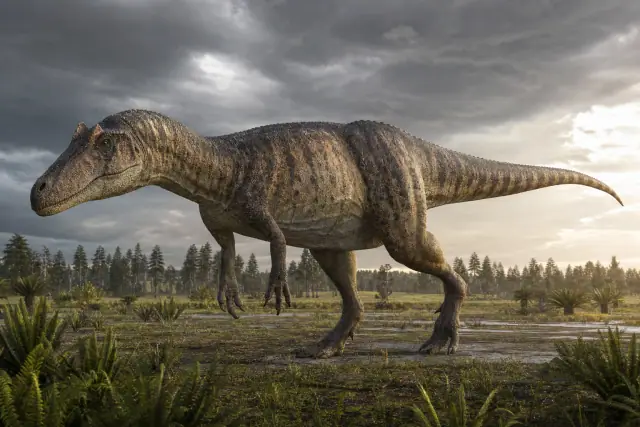
Allosaurus fragilis
A lightweight skull and serrated teeth equipped this large predator for repeated slashing bites.
Western North America
Local fossil evidence ↗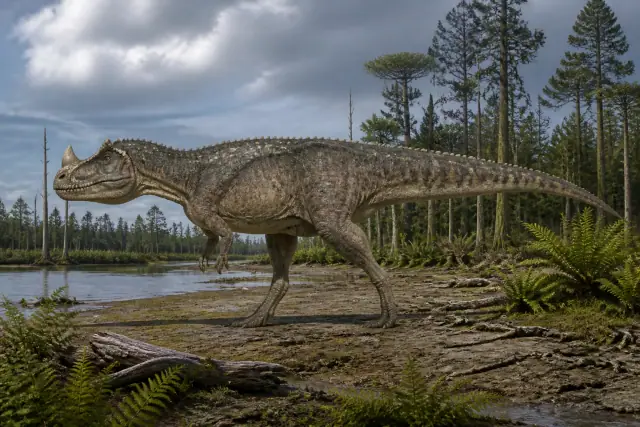
Ceratosaurus nasicornis
A nasal horn, brow ridges and small midline osteoderms made this predator unmistakable.
River plains · North America
Local fossil evidence ↗No. Museums can display original fossils, casts and reconstructions from many regions. A Colorado record needs a documented Colorado locality. Even Dinosaur National Monument spans two states: the famous Carnegie Quarry discussed in the Utah guide is on the Utah side, so its location should not be reassigned to Colorado.