15Paleozoic
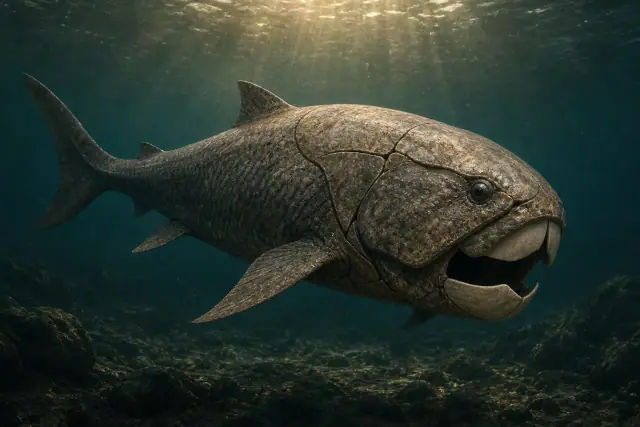
Dunkleosteus
Dunkleosteus terrelli
Sharpened jaw plates replaced teeth in this heavily armored apex fish.
 EXTINCT ATLASEXTINCT LIFE ARCHIVE
Category
From jawless armoured fishes to giant sharks and marine apex predators.
01 / ANSWER FIRST
Extinct fishes preserve the origins of jaws, paired fins, armour, open-ocean predation and the anatomical route toward limbs.
02 / TIME & EVOLUTION
Jawless vertebrates dominate early records, jawed fishes radiate in the Silurian and Devonian, and sharks plus bony fishes diversify through later seas and freshwaters.
03 / TURNOVER & EXTINCTION
Reef collapse, ocean anoxia, changing prey and human pressure each drove different fish losses.
04 / KEY THEMES
Placoderms and early jawed fishes record a major feeding innovation.
Lobe-finned fishes illuminate the origin of tetrapod limbs.
Large sharks and bony fishes reveal changing marine food webs.
05 / EVIDENCE
Teeth and scales are common, but articulated skeletons, braincases and rare embryos are needed to reconstruct whole animals and relationships.
06 / FAQ
Extinct fishes preserve the origins of jaws, paired fins, armour, open-ocean predation and the anatomical route toward limbs.
Teeth and scales are common, but articulated skeletons, braincases and rare embryos are needed to reconstruct whole animals and relationships.
Reef collapse, ocean anoxia, changing prey and human pressure each drove different fish losses.
07 / SOURCES
Dunkleosteus terrelli
Sharpened jaw plates replaced teeth in this heavily armored apex fish.
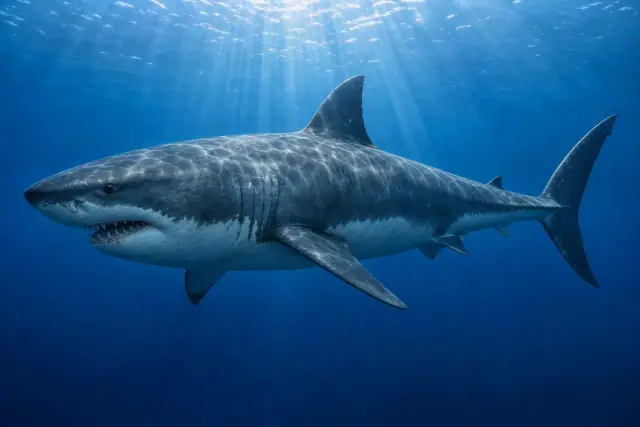
Otodus megalodon
Its hand-sized teeth belonged to a giant shark specialized in hunting marine mammals.
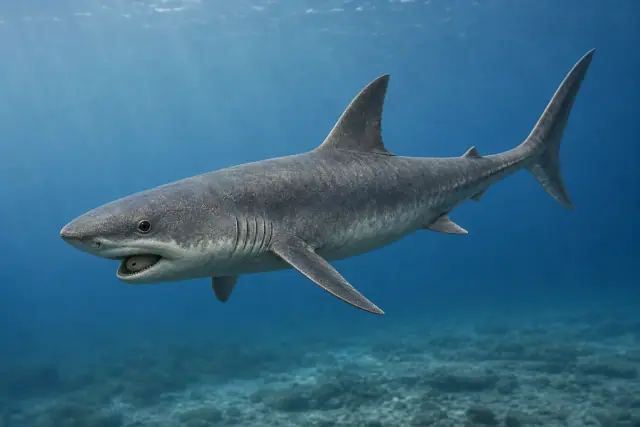
Helicoprion davisii
Its spiral tooth whorl worked like a permanent slicing blade inside the lower jaw.
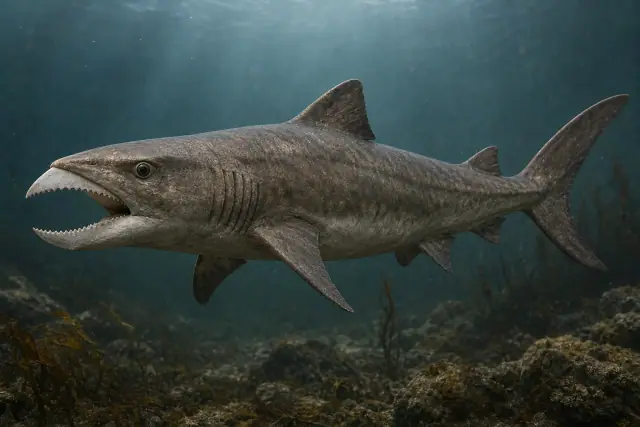
Edestus heinrichi
Opposing tooth blades projected from its jaws like curved shears.
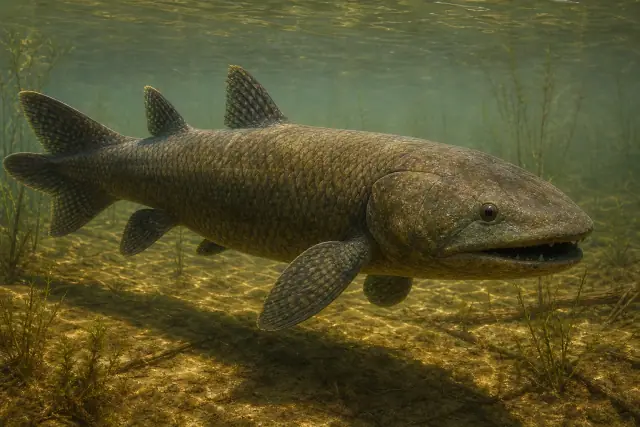
Eusthenopteron foordi
Bones inside its fleshy fins foreshadowed the limb pattern of land vertebrates.
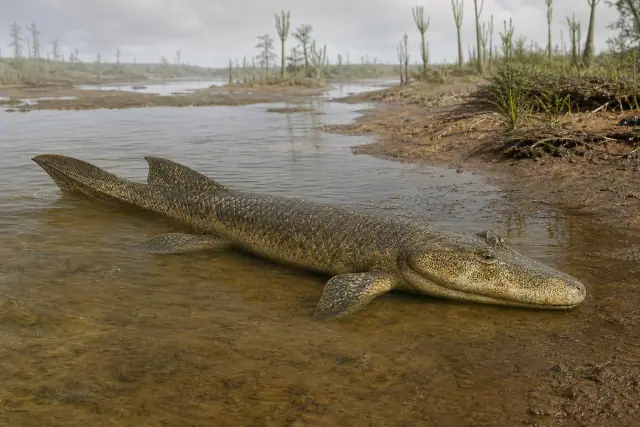
Tiktaalik roseae
A flat-headed fish with a mobile neck and wrist-like fin bones approached the anatomy of early tetrapods.
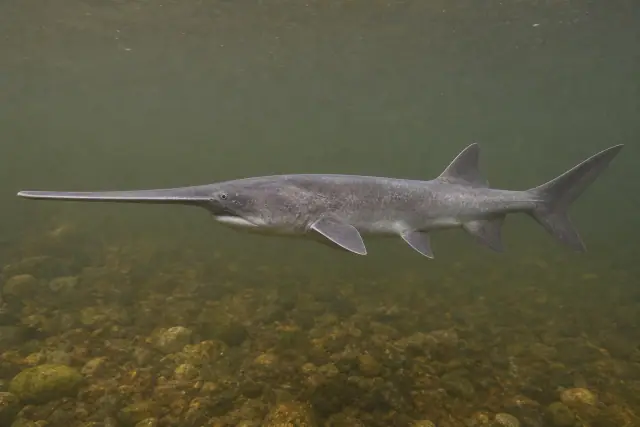
Psephurus gladius
One of the world’s largest freshwater fish migrated the length of the Yangtze.
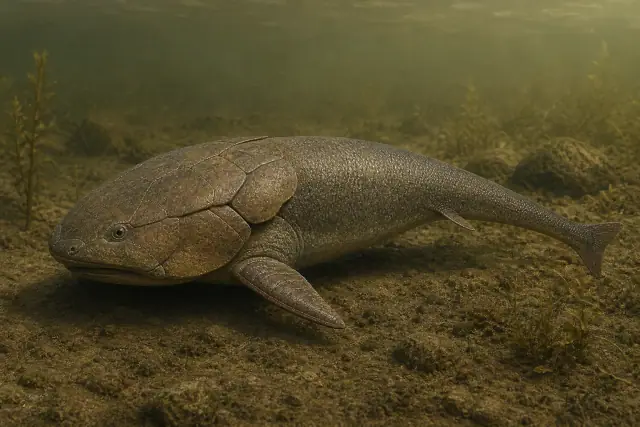
Bothriolepis canadensis
Bony armor enclosed its head and chest while jointed pectoral appendages steadied it on the bottom.
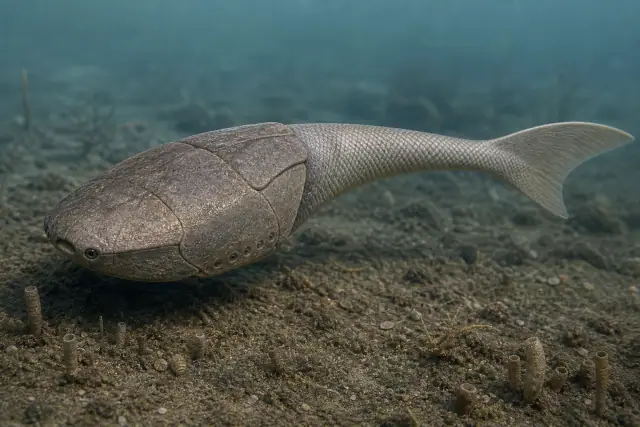
Sacabambaspis janvieri
An armored jawless fish with a broad head shield and an elongated tail; fossil distortion leaves parts of the tail outline uncertain.
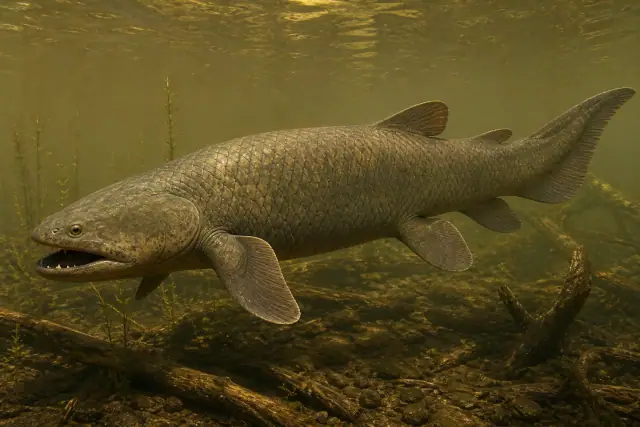
Hyneria lindae
This giant lobe-finned predator used fanglike teeth to ambush prey, while its fin skeleton followed a tetrapod-like pattern.
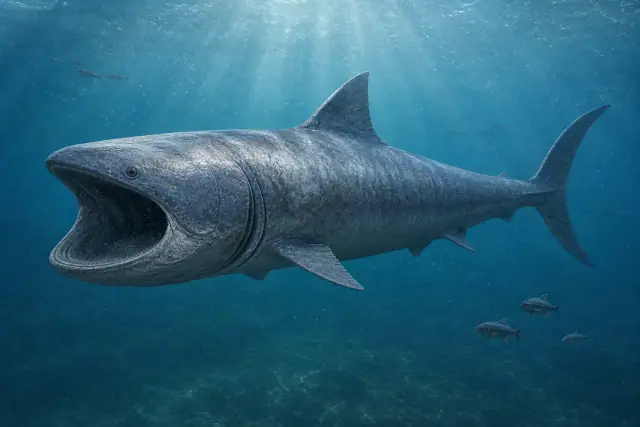
Leedsichthys problematicus
This giant bony fish opened a broad mouth and strained plankton through dense gill rakers, much like a whale shark.
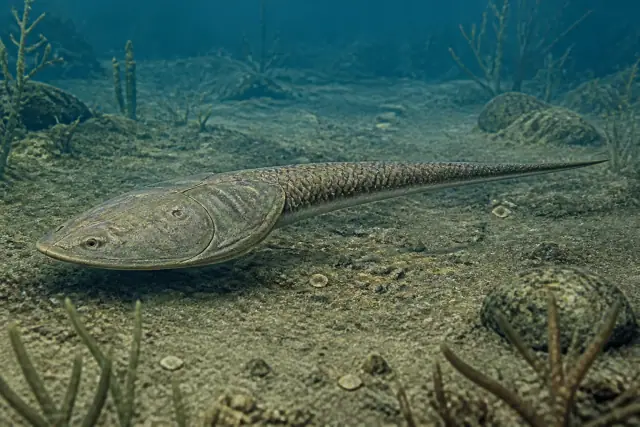
Arandaspis prionotolepis
It lacked jaws and paired fins, but its head and gill region were enclosed within strong armor.
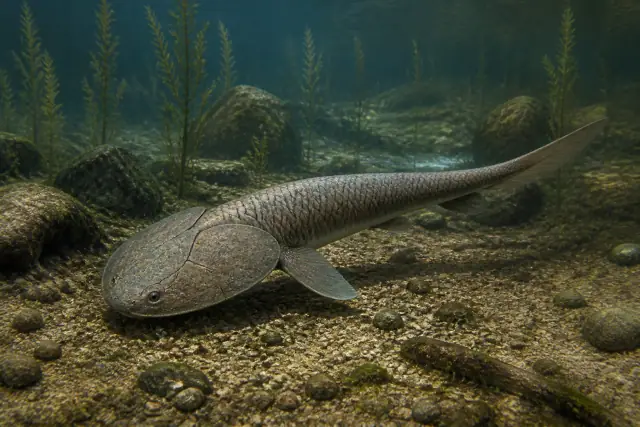
Cephalaspis lyelli
Sensory fields beneath a broad crescent-shaped head shield helped it search through turbid bottom water.
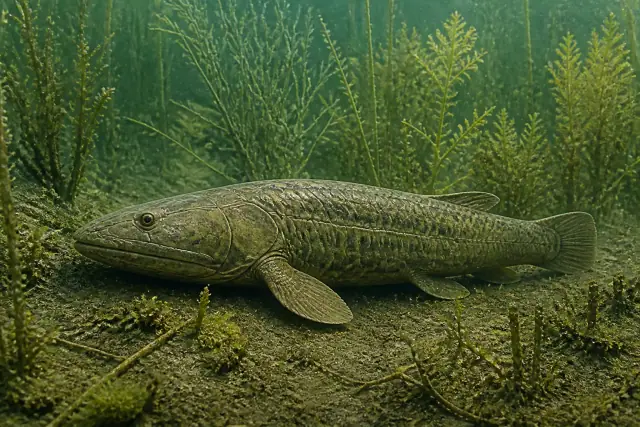
Panderichthys rhombolepis
A flat head with upward-facing eyes and limb-like bones inside its fins brought it close to the earliest tetrapods.
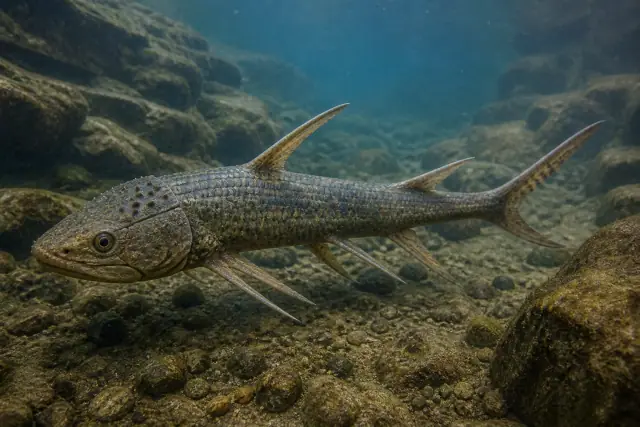
Climatius reticulatus
Rows of paired ventral spines formed a defensive fence beneath this small early jawed fish.
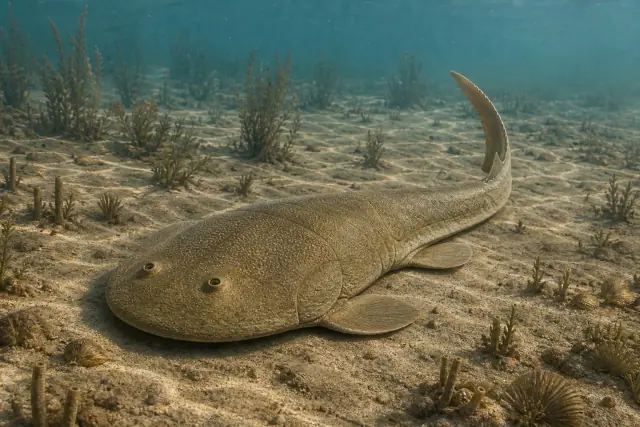
Drepanaspis gemuendenensis
Its body was a flattened shield with upward-facing eyes and a mouth beneath the front edge.
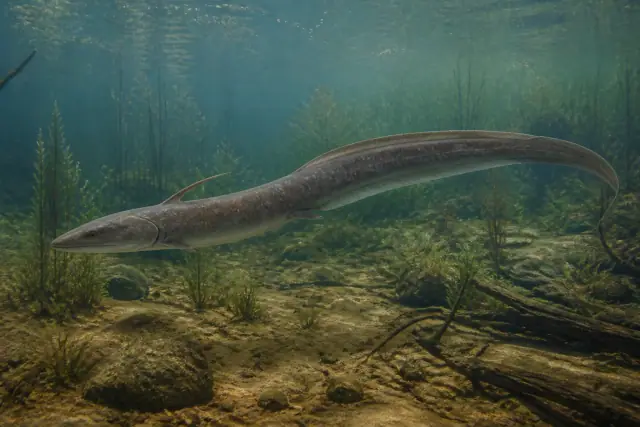
Orthacanthus senckenbergianus
An eel-like body, continuous fin and spine behind the head made it unlike any modern shark.
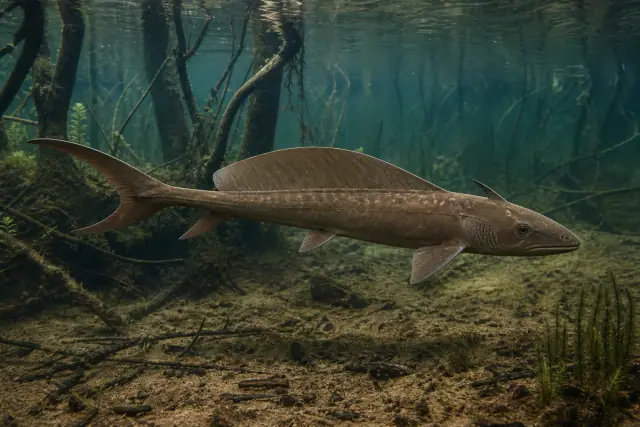
Xenacanthus decheni
A single head spine, forked teeth and continuous dorsal fin defined this freshwater shark.
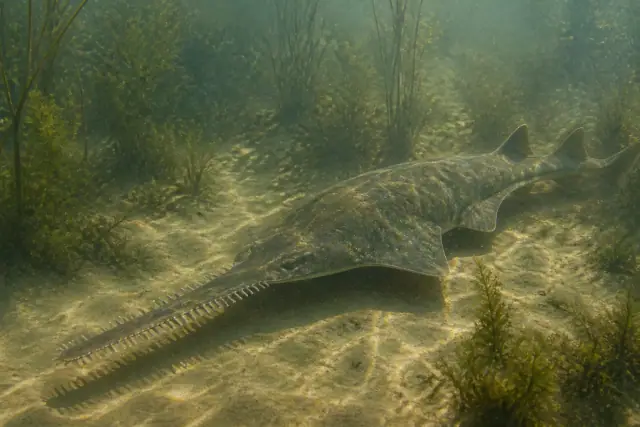
Onchopristis numidus
Barbed teeth armed a long rostrum used to sense and sweep through bottom prey.
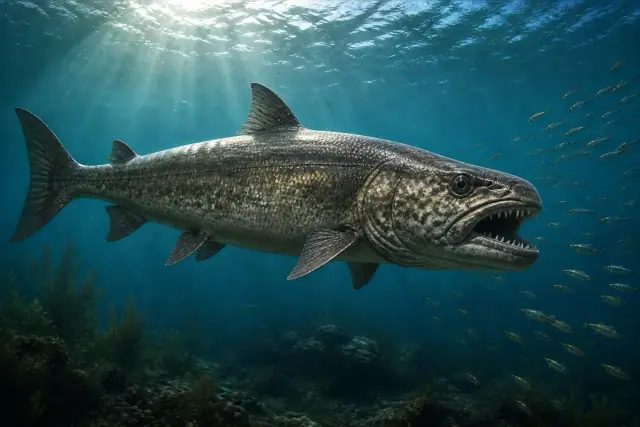
Xiphactinus audax
Its huge upturned mouth could swallow fish nearly half its own length.
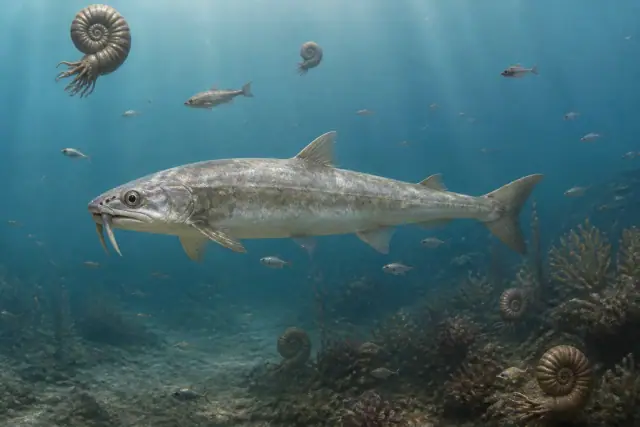
Enchodus petrosus
Oversized palatine fangs made a modest fish into a formidable midwater hunter.
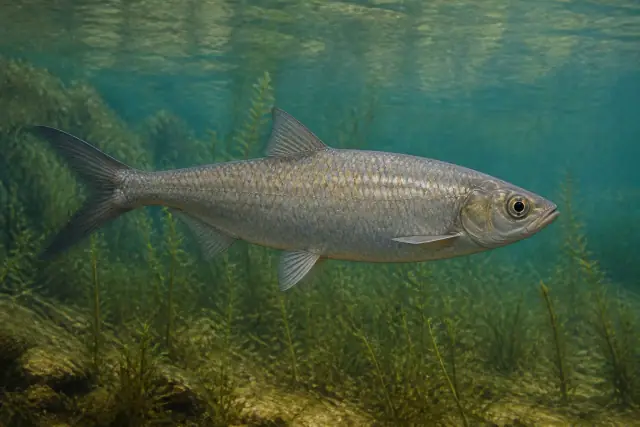
Diplomystus dentatus
Schools of herring-like fish were sealed into fine lake sediments.
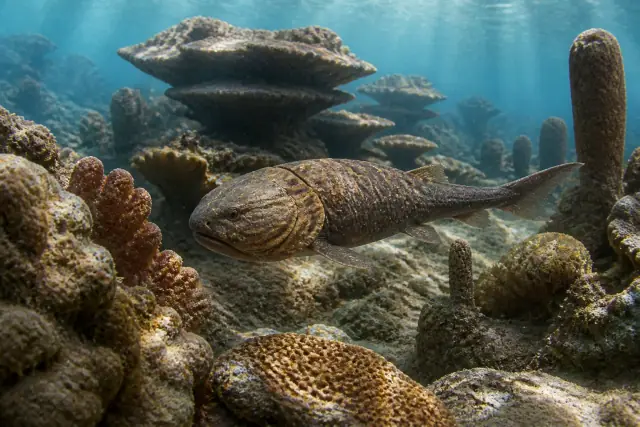
Materpiscis attenboroughi
An embryo with an umbilical connection records some of the earliest live birth.
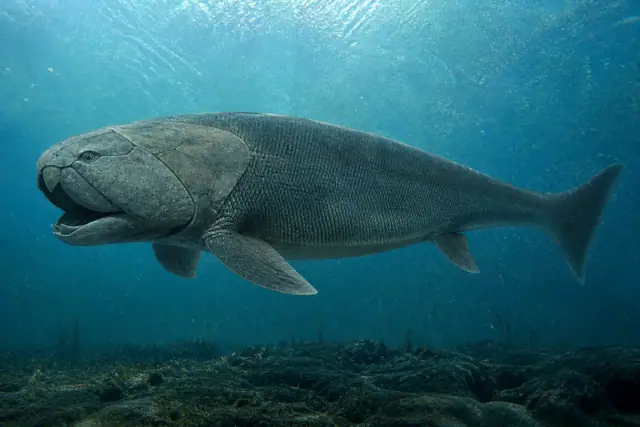
Titanichthys agassizi
This giant placoderm lacked sharp jaw blades and may have filtered plankton.
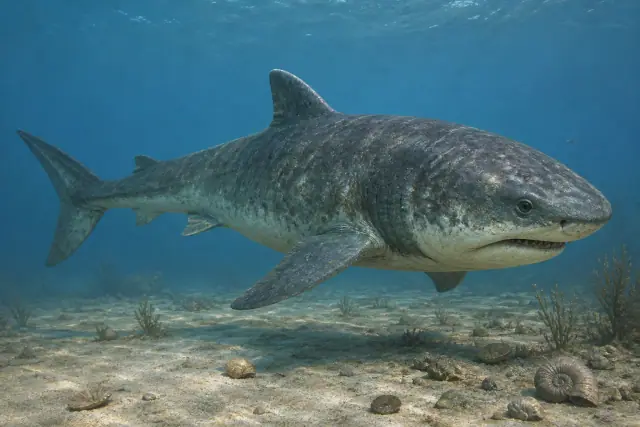
Ptychodus mortoni
Broad crushing teeth paved its mouth for ammonites and shellfish.
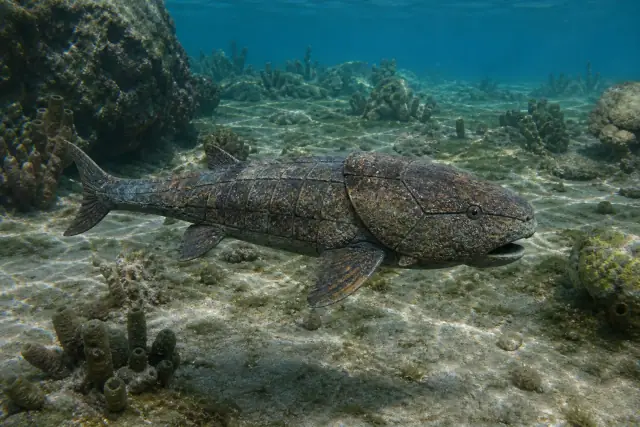
Entelognathus primordialis
Placoderm armor enclosed jaw-margin bones resembling those of later bony fish.
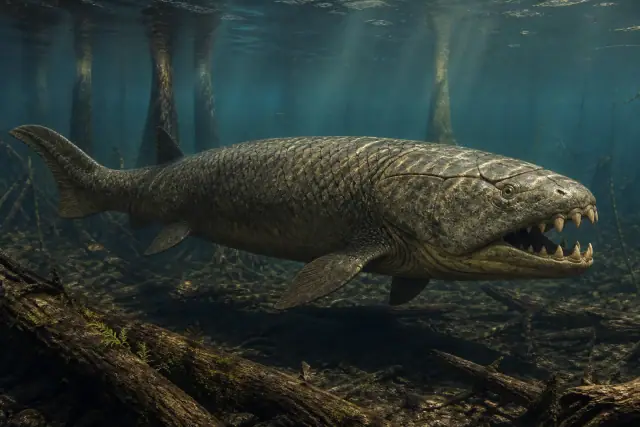
Rhizodus hibberti
Huge conical teeth armed a multi-meter freshwater lobe-finned predator.
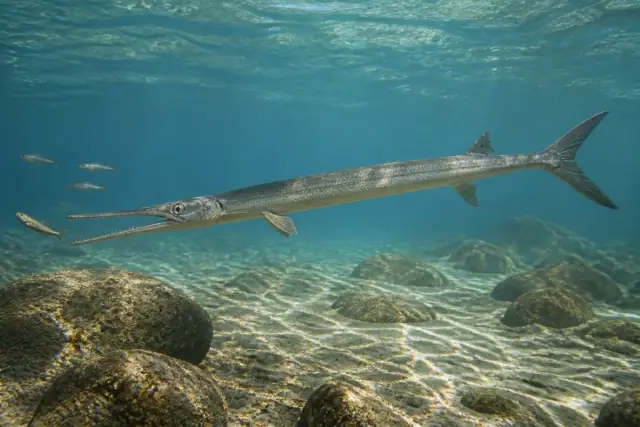
Saurichthys curionii
A needle-like snout and slender body converged on modern barracudas.
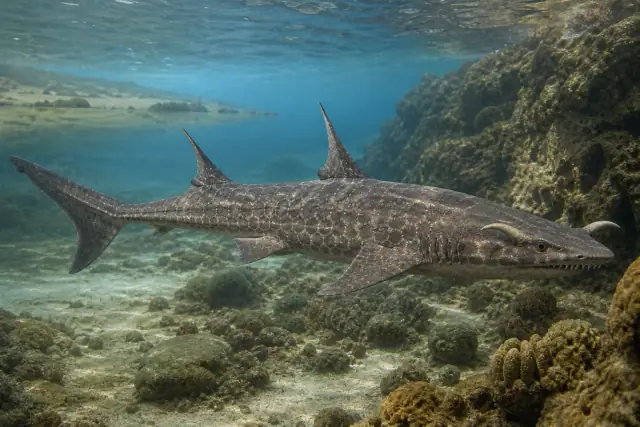
Hybodus reticulatus
Dorsal fin spines and two tooth shapes handled fish and hard-shelled prey.
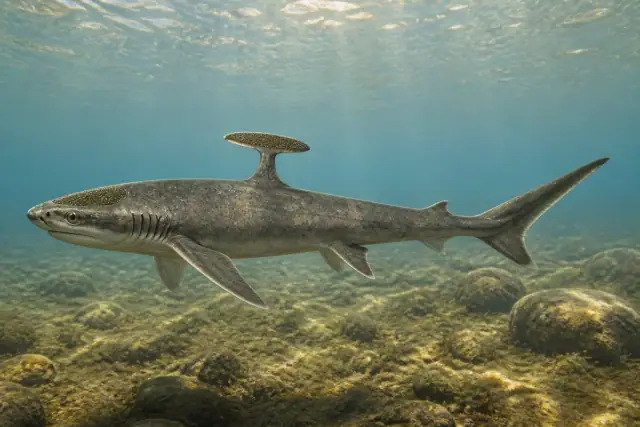
Stethacanthus altonensis
Males carried a denticle-covered anvil-shaped structure on the back.
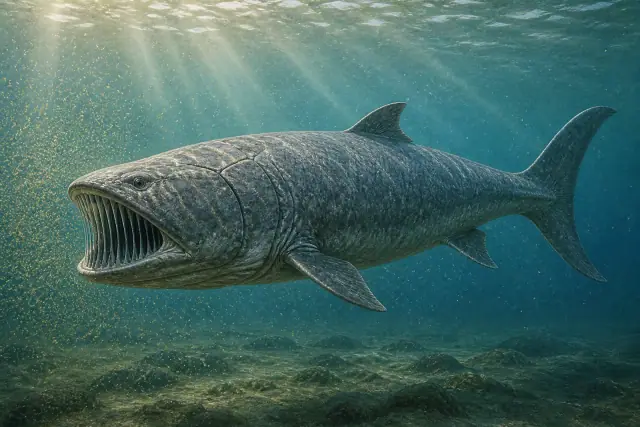
Bonnerichthys gladius
A giant bony fish filtered plankton near the ocean surface.
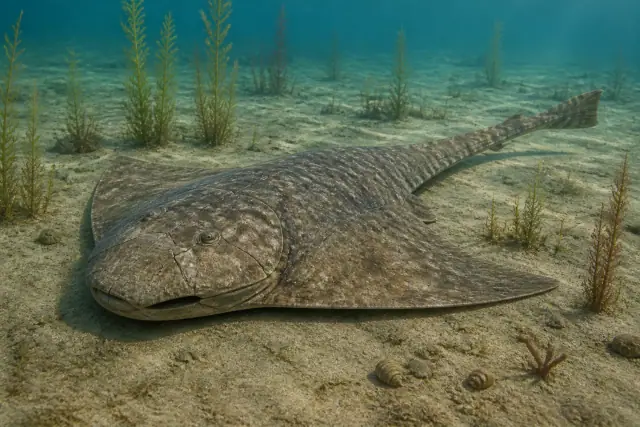
Gemuendina stuertzi
A broad flat placoderm independently converged on the body shape of a ray.
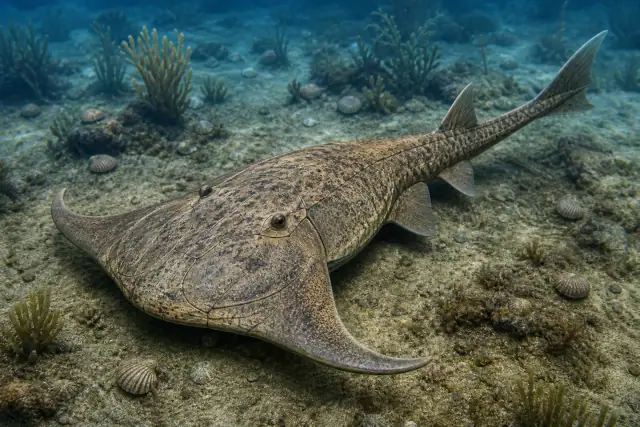
Lunaspis broilii
Crescent-shaped lateral horns widened the head armor of a small bottom-dwelling placoderm.
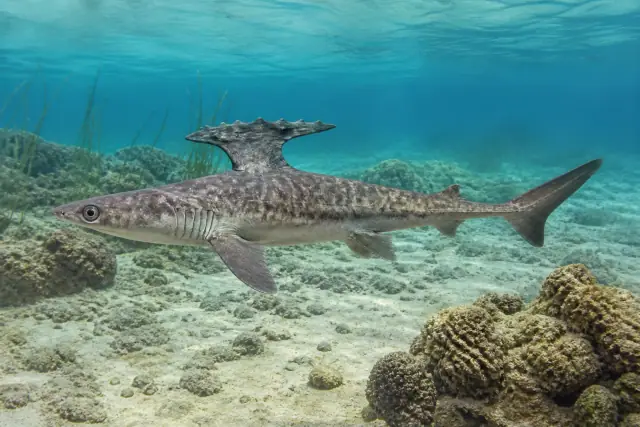
Akmonistion zangerli
Males carried a striking anvil-shaped brush-and-spine complex on the back.
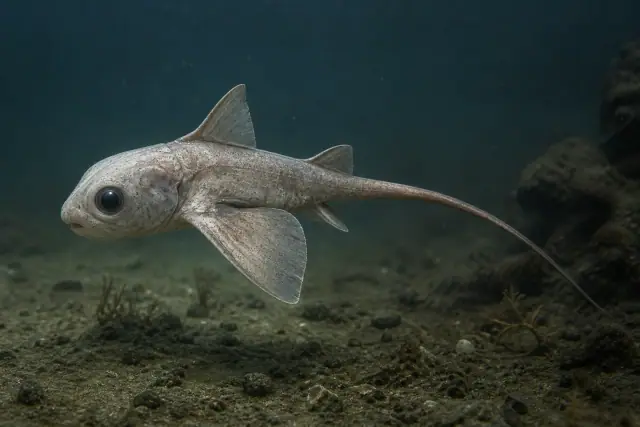
Echinochimaera meltoni
A short snout, large eyes and pectoral structures belonged to an early chimaera relative.
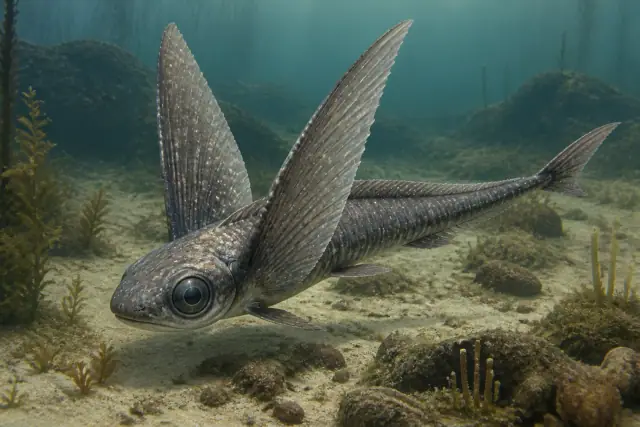
Iniopteryx rushlaui
Iniopteryx rushlaui was a small cartilaginous fish with broad pectoral fins attached high on its body; the fins suggest underwater strokes, not flight.
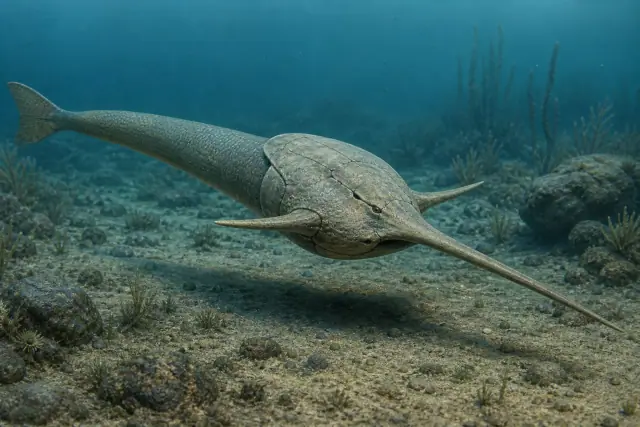
Doryaspis nathorsti
A spear-like rostrum and lateral horns projected from this jawless armored fish.
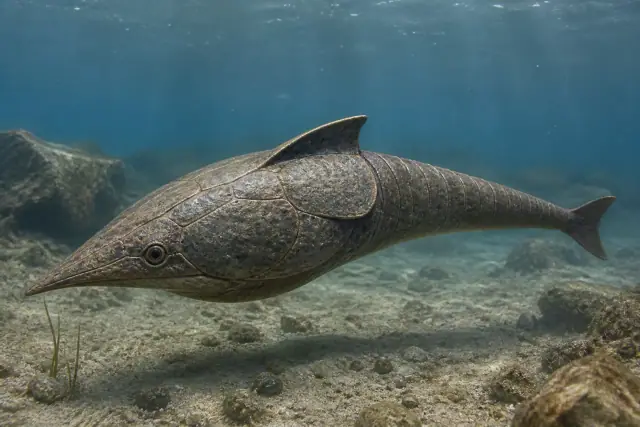
Boreaspis ceratops
A streamlined shield extended into a pointed snout and carried a stabilizing dorsal rise.
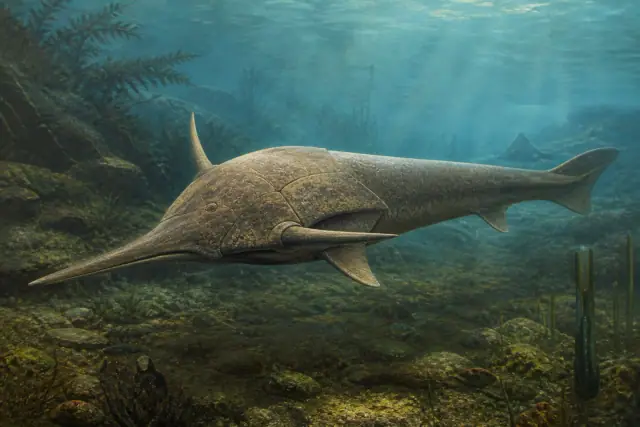
Pituriaspis doylei
A long rostrum, side horns and paired openings belonged to an endemic jawless armored lineage.
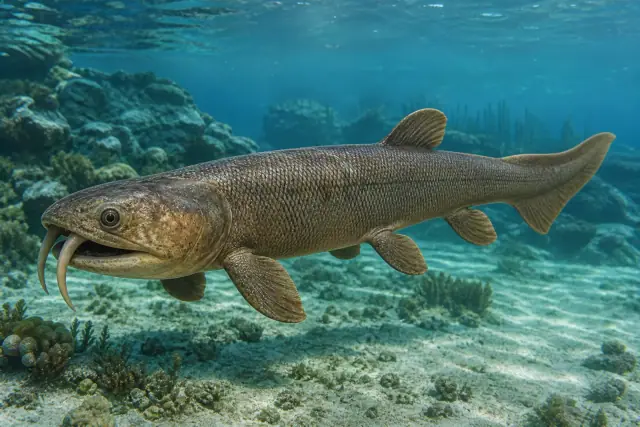
Onychodus jandemarrai
A pair of curved lower-jaw tusks and a kinetic skull helped this lobe-finned fish restrain prey.
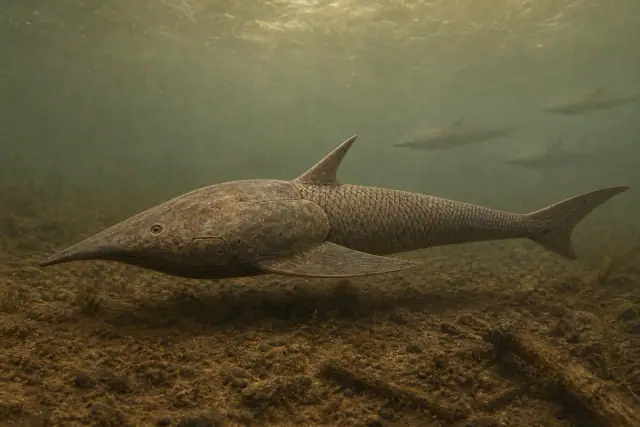
Pteraspis rostrata
A streamlined head shield extended into a rostrum, while a dorsal spine and lateral horns stabilized the jawless fish.
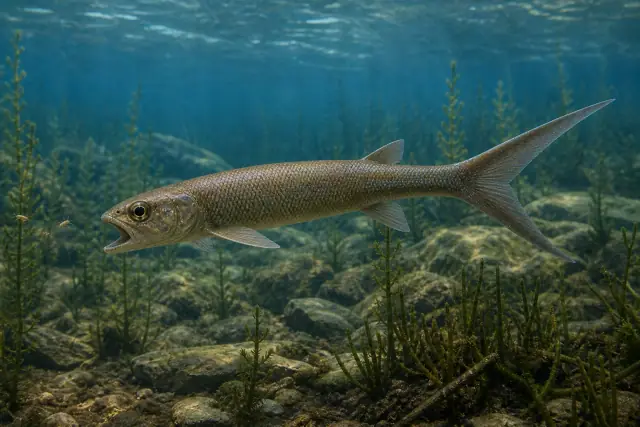
Cheirolepis trailli
Tiny rhomboid scales, a deeply forked tail and broad gape marked an early ray-finned fish radiation.