04Paleozoic
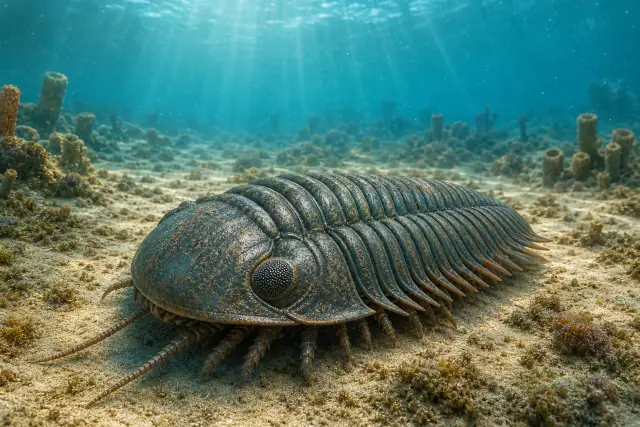
Trilobites
Trilobita
They occupied seafloors for nearly 300 million years, and their compound eyes preserve secrets of early vision.
 EXTINCT ATLASEXTINCT LIFE ARCHIVEBack to archive
CURATED COLLECTION
Explore extinct invertebrates, fishes and marine reptiles from seafloors, reefs and open oceans.
ANSWER FIRST
Oceans cover most of Earth, and marine sediments often bury remains efficiently, so early life and ecological turnover are frequently recognized first in marine rocks.
Trilobita
They occupied seafloors for nearly 300 million years, and their compound eyes preserve secrets of early vision.
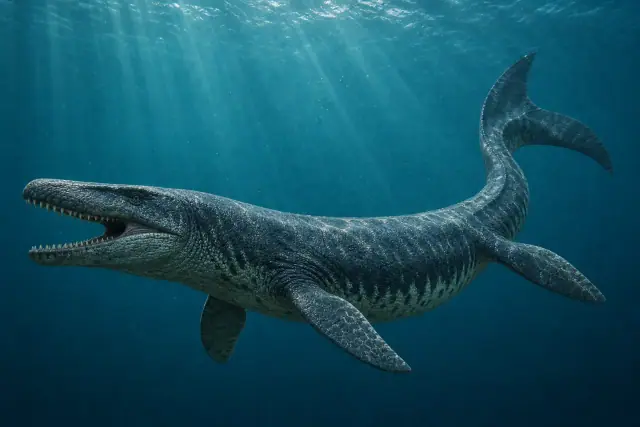
Mosasaurus hoffmannii
A giant marine lizard propelled by a deep tail fin patrolled Late Cretaceous seas.
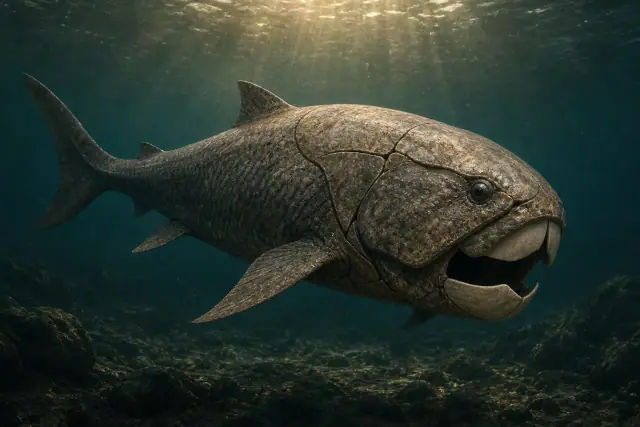
Dunkleosteus terrelli
Sharpened jaw plates replaced teeth in this heavily armored apex fish.
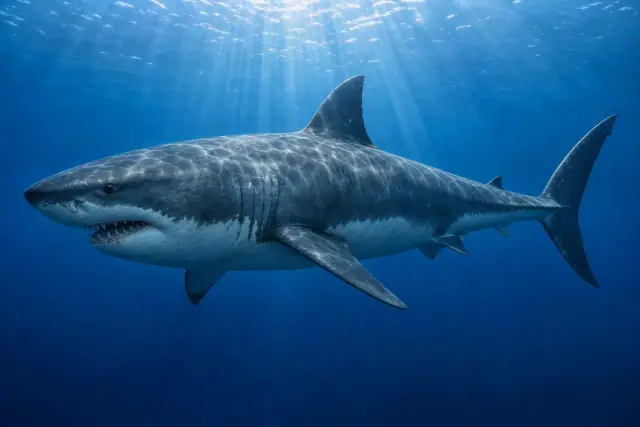
Otodus megalodon
Its hand-sized teeth belonged to a giant shark specialized in hunting marine mammals.
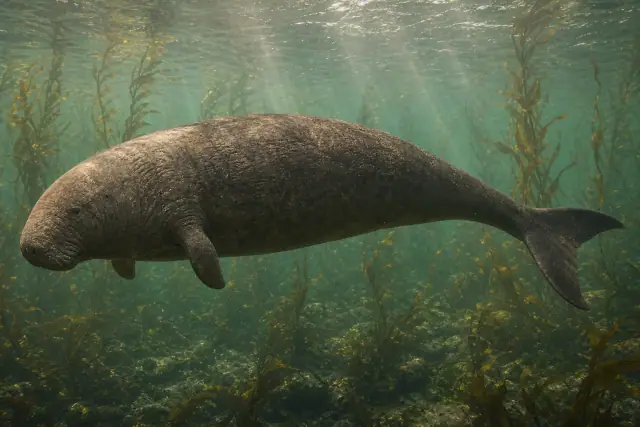
Hydrodamalis gigas
This enormous, slow sirenian grazed kelp in cold shallow water.
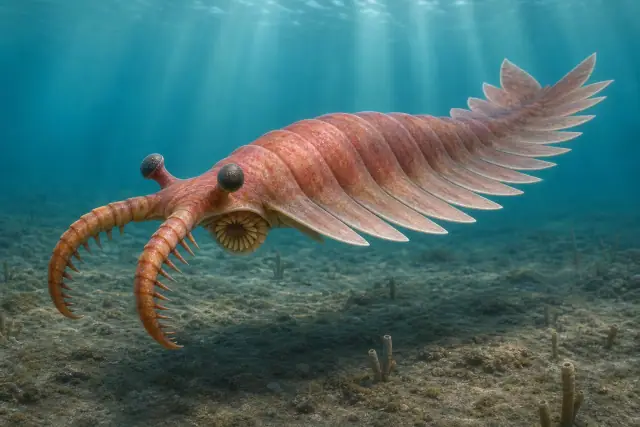
Anomalocaris canadensis
A meter-long swimmer with grasping frontal appendages was a giant of Cambrian seas.
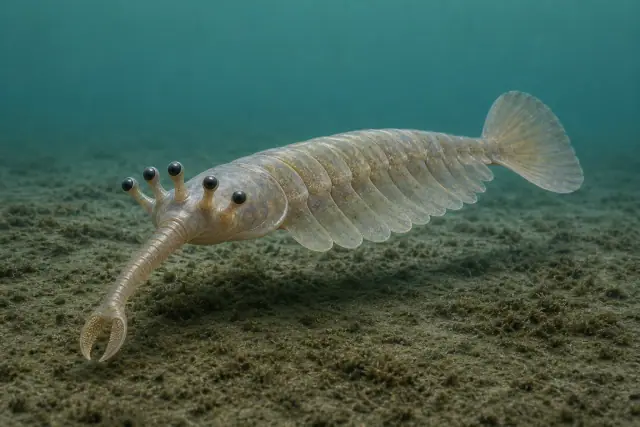
Opabinia regalis
Five eyes and a grasping proboscis made this small swimmer one of the Cambrian’s strangest forms.
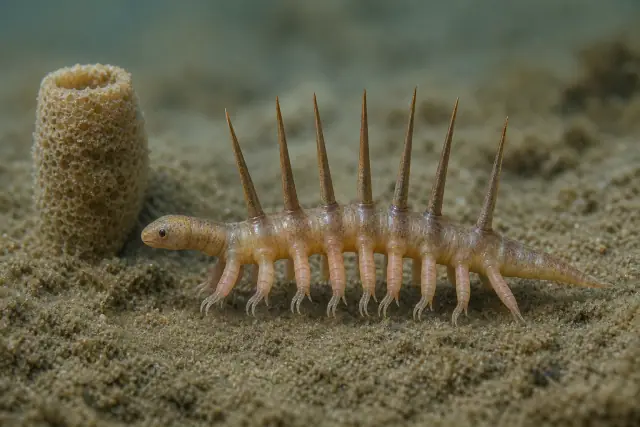
Hallucigenia sparsa
Paired spines guarded a soft-bodied walker once reconstructed upside down.
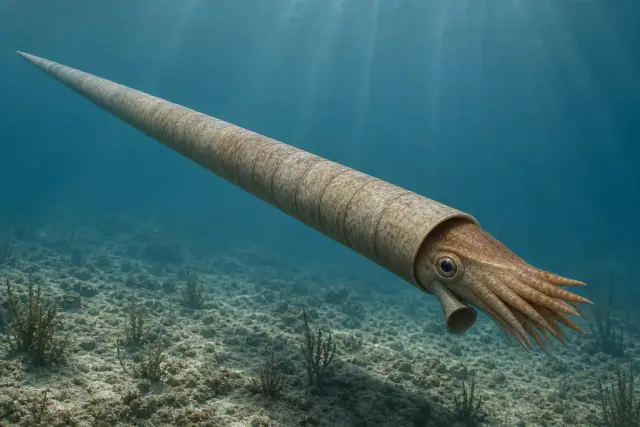
Cameroceras trentonense
A long straight shell housed one of the largest predators of Ordovician seas.
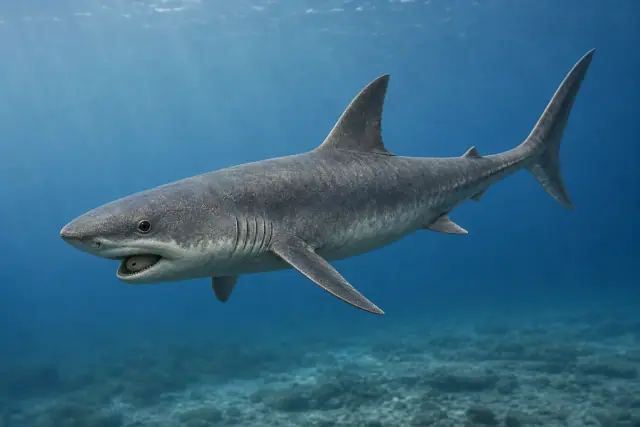
Helicoprion davisii
Its spiral tooth whorl worked like a permanent slicing blade inside the lower jaw.
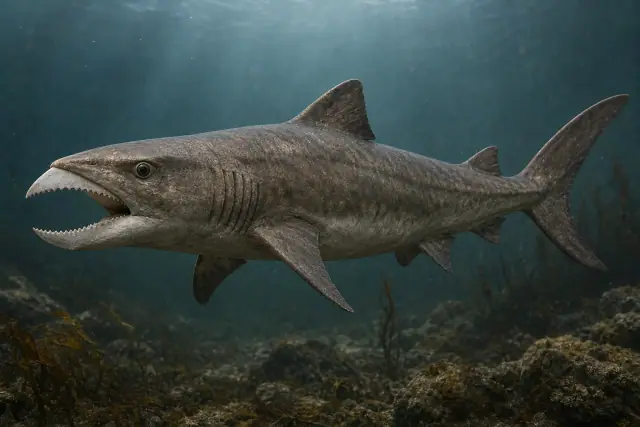
Edestus heinrichi
Opposing tooth blades projected from its jaws like curved shears.
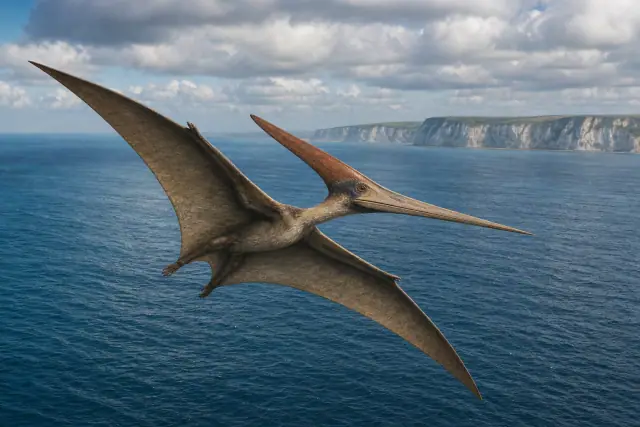
Pteranodon longiceps
Pteranodon was a toothless pterosaur above the Late Cretaceous seas of North America. It was a flying reptile, not a bird or a dinosaur.
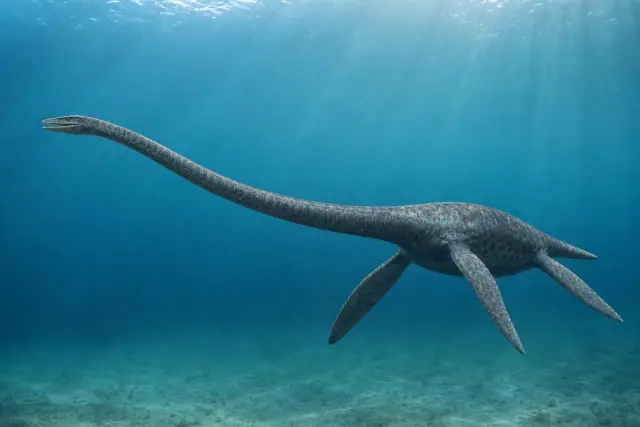
Elasmosaurus platyurus
Elasmosaurus platyurus was a long-necked marine reptile from Late Cretaceous Kansas. A 2013 reassessment counted 72 preserved neck vertebrae in its holotype.
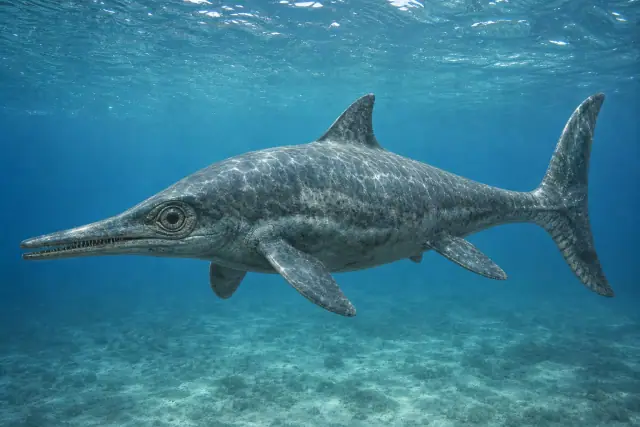
Ichthyosaurus communis
A streamlined reptile converged on the body plan of dolphins while retaining enormous eyes.
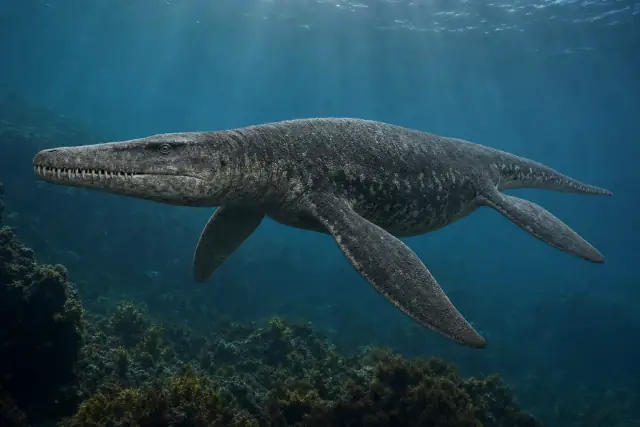
Liopleurodon ferox
Liopleurodon was a Jurassic pliosaur: a marine reptile with a large skull, short neck and four flippers. Its teeth and bones should be distinguished from television size reconstructions.
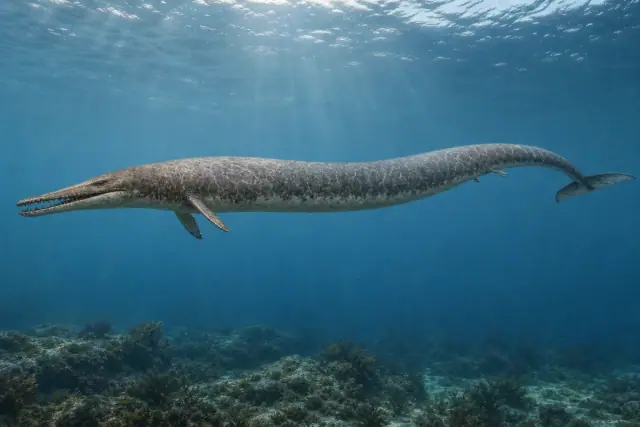
Basilosaurus isis
This long-bodied early whale still carried tiny external hind limbs.
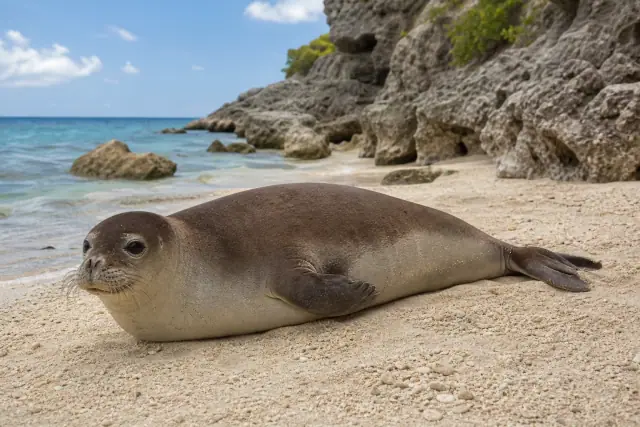
Neomonachus tropicalis
The only seal endemic to the Caribbean rested and bred on warm sandy shores.
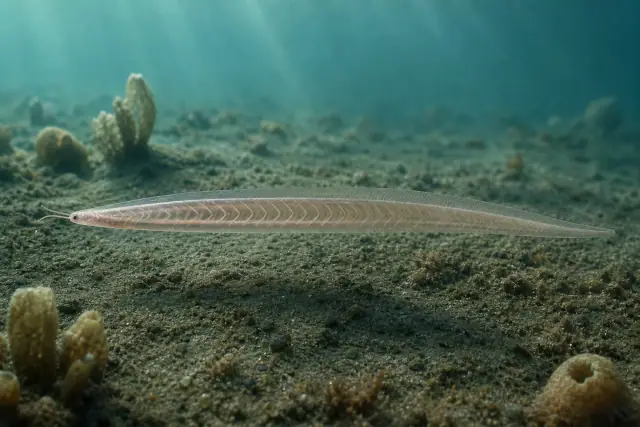
Pikaia gracilens
A slender body preserves repeated muscle blocks and internal traces important for interpreting early chordates.
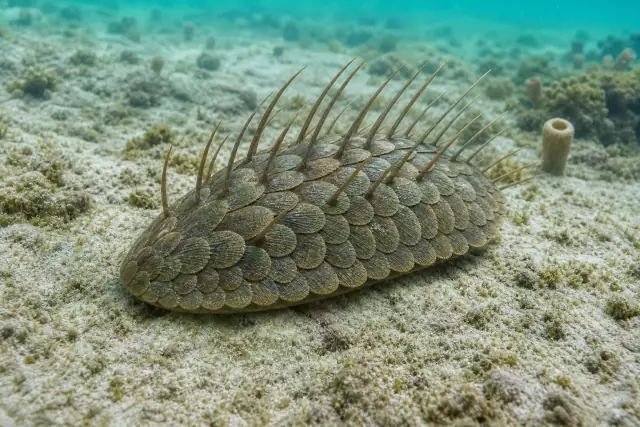
Wiwaxia corrugata
Rows of scales and long spines armored this small seafloor grazer.
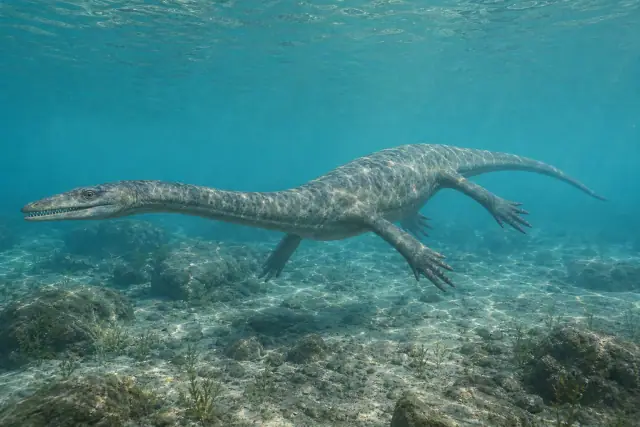
Nothosaurus mirabilis
A long-necked coastal reptile paddled through shallow Triassic seas.
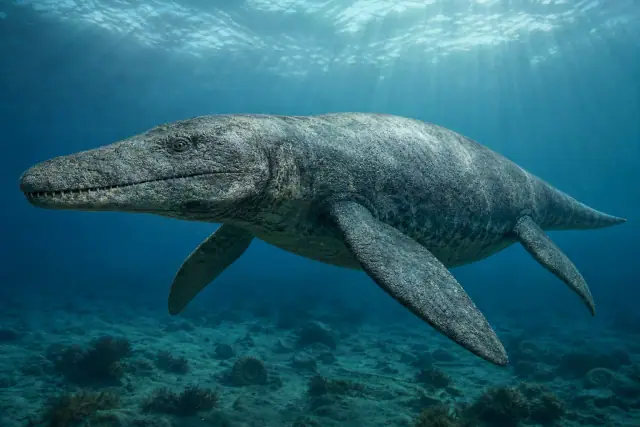
Kronosaurus queenslandicus
A massive pliosaur skull powered attacks on large marine prey.
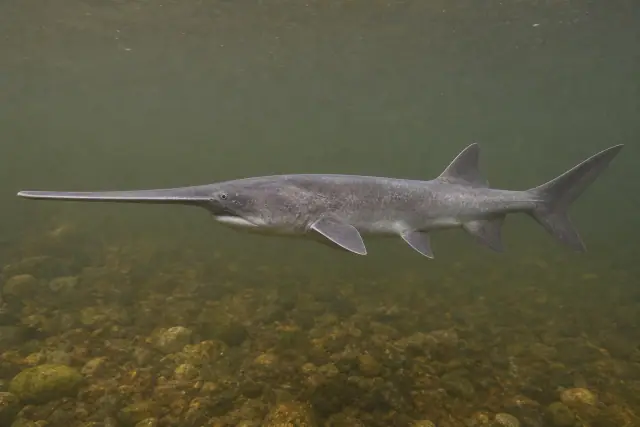
Psephurus gladius
One of the world’s largest freshwater fish migrated the length of the Yangtze.
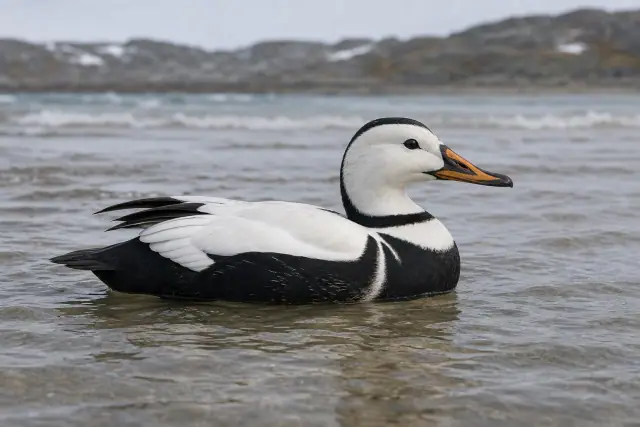
Camptorhynchus labradorius
This small sea duck had a specialized bill for feeding in shallow coastal water.
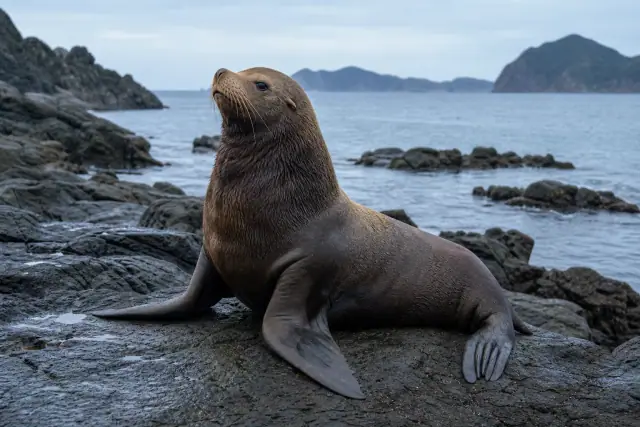
Zalophus japonicus
This large coastal sea lion bred on rocky islands across the Sea of Japan.
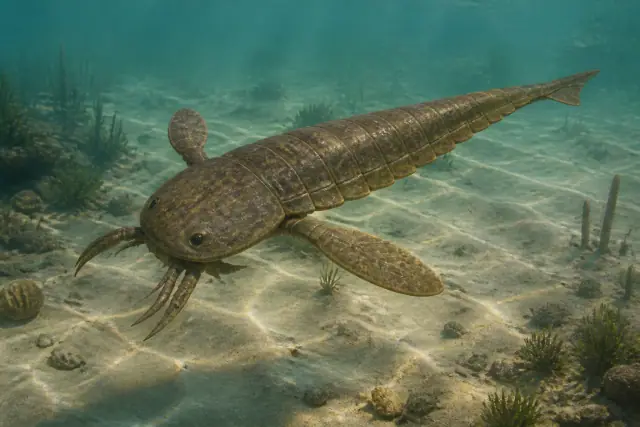
Eurypterus remipes
Paddle-shaped hind limbs carried this sea scorpion through shallow coastal water.
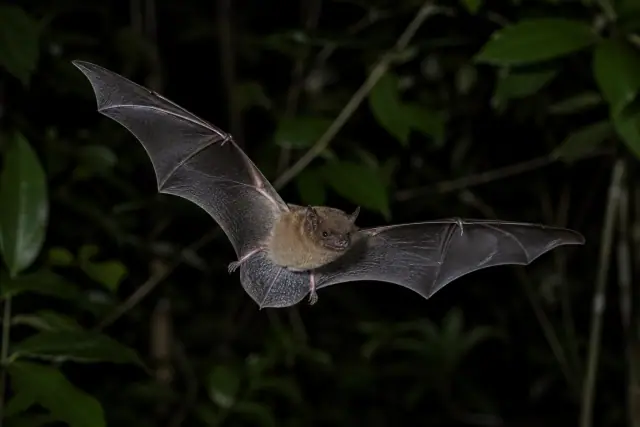
Pipistrellus murrayi
This palm-sized insect bat fell from island-wide abundance to a final acoustic signal in 2009.
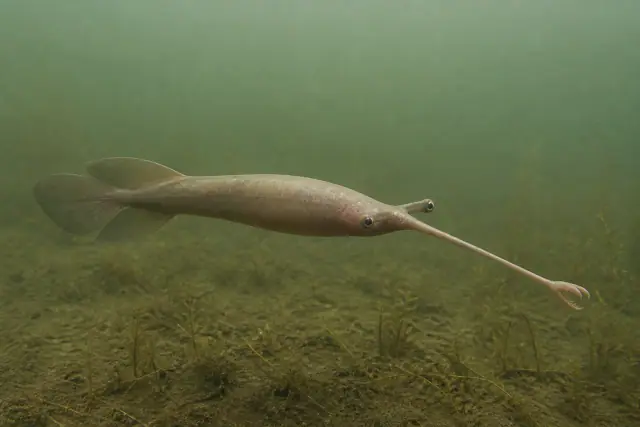
Tullimonstrum gregarium
Eyes sat at the ends of a crossbar and a long proboscis ended in a toothed grasping organ.
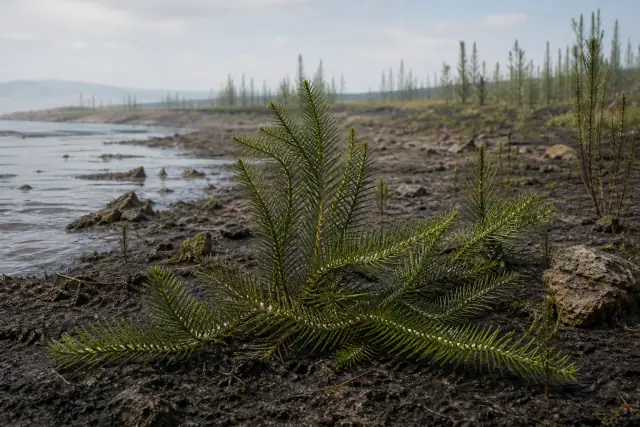
Baragwanathia longifolia
Branches more than a meter long carried dense narrow microphylls, far more elaborate than most naked-stemmed plants of its age.
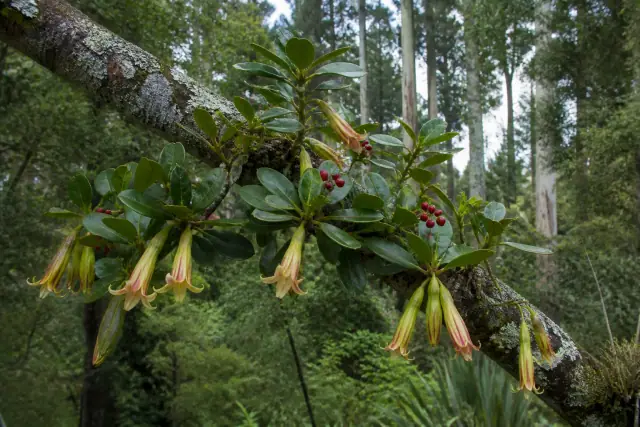
Trilepidea adamsii
Red-striped yellow-green tubular flowers opened among fleshy paired leaves; the last reliable sighting was in 1954.
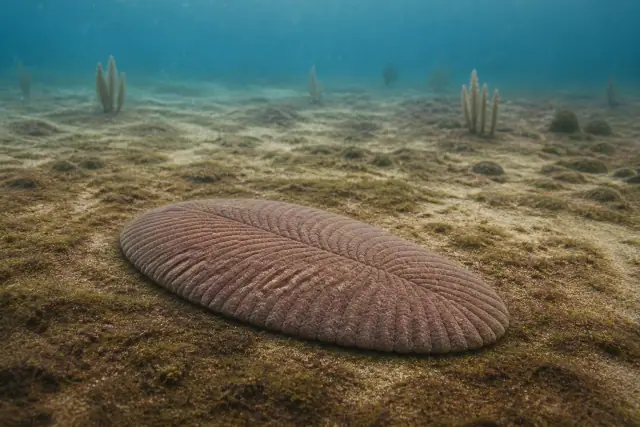
Dickinsonia costata
Its flat oval body moved across microbial mats like a rhythmically quilted cushion, leaving feeding traces behind.
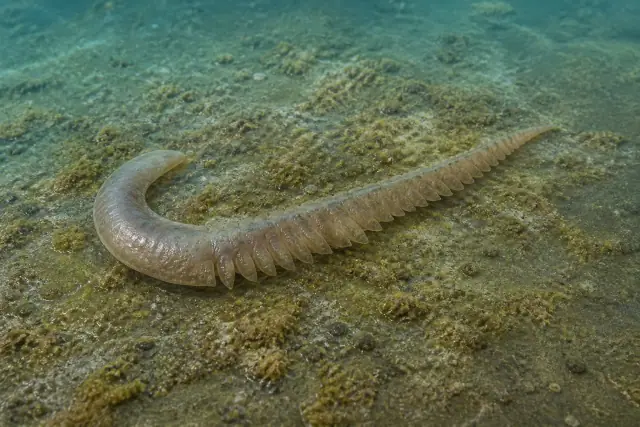
Spriggina floundersi
A horseshoe-shaped front led a body of offset leaflike units, giving it the appearance of a flattened soft worm.
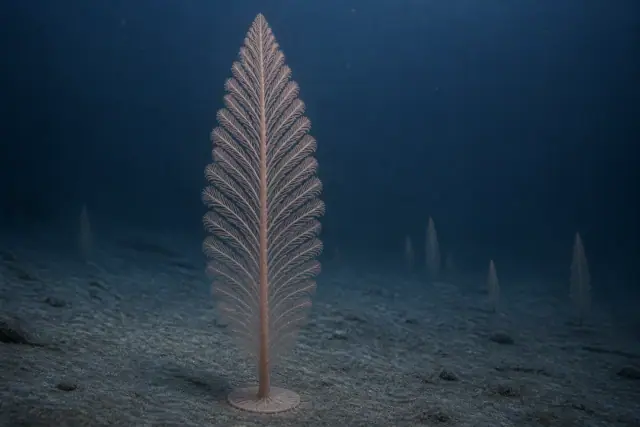
Charnia masoni
A featherlike body of repeating branches was anchored by a disc in deep water, yet it had neither chlorophyll nor a mouth.
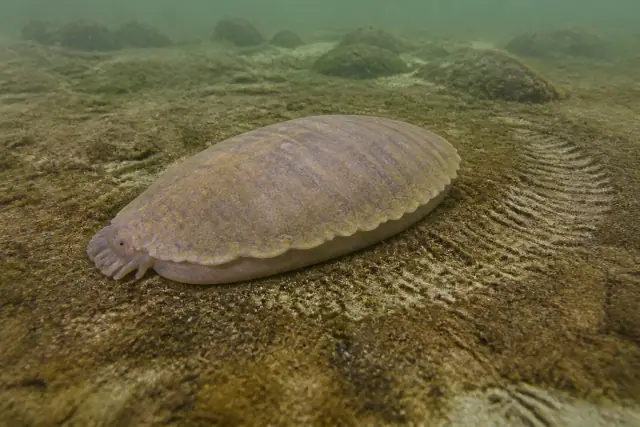
Kimberella quadrata
Its low oval body crawled across microbial mats while a front feeding structure left fan-shaped sets of scratches.
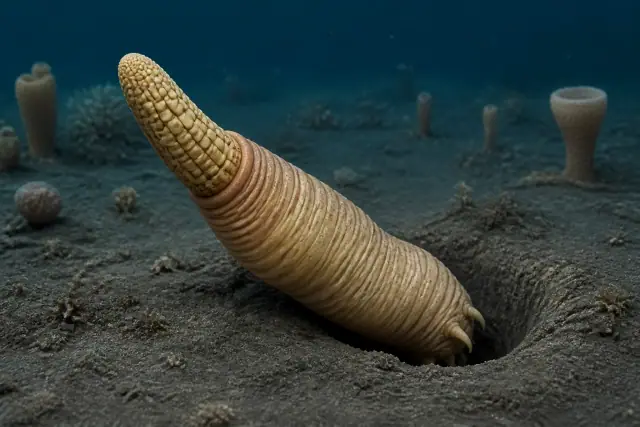
Ottoia prolifica
Its stout body hid in a U-shaped burrow while a spiny, hook-studded throat could turn inside out to seize food.
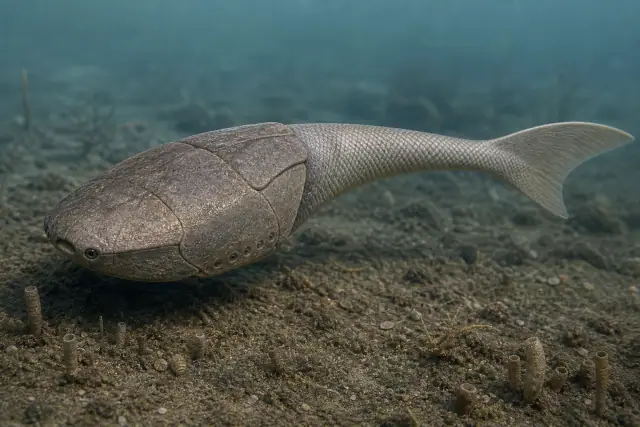
Sacabambaspis janvieri
An armored jawless fish with a broad head shield and an elongated tail; fossil distortion leaves parts of the tail outline uncertain.
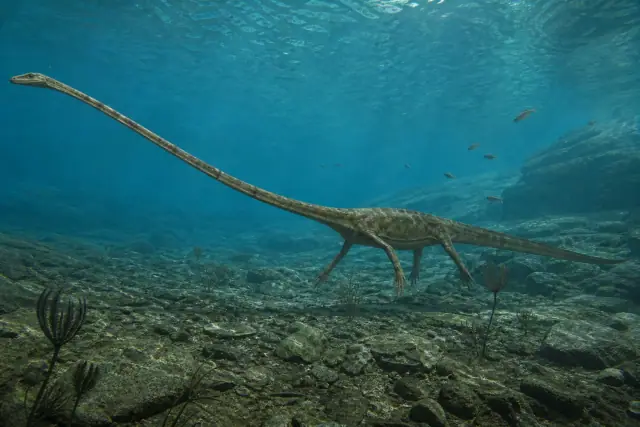
Tanystropheus hydroides
Thirteen extremely elongated vertebrae formed a neck as long as half the body, while the skull snapped at fish and cephalopods.
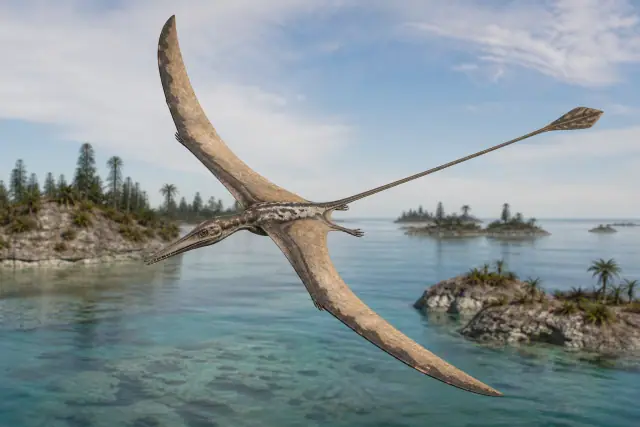
Rhamphorhynchus muensteri
Needle teeth lined long jaws while a diamond-shaped membrane at the stiff tail tip helped control flight above island seas.
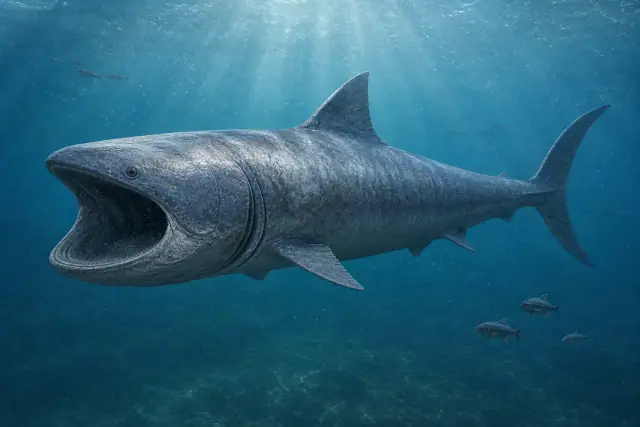
Leedsichthys problematicus
This giant bony fish opened a broad mouth and strained plankton through dense gill rakers, much like a whale shark.
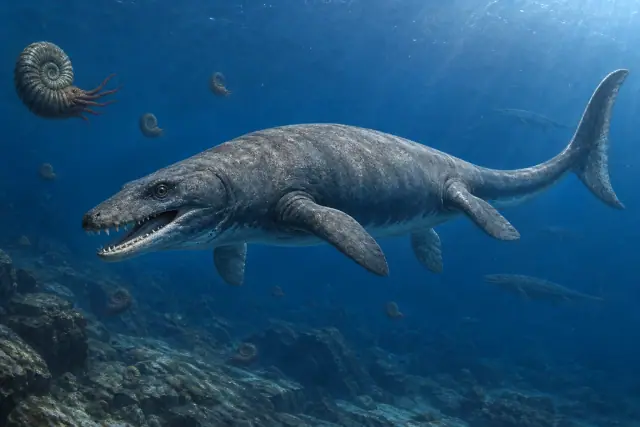
Dakosaurus maximus
A short deep skull carried serrated blades, while this marine crocodile's body had transformed into four flippers and a fishlike tail.
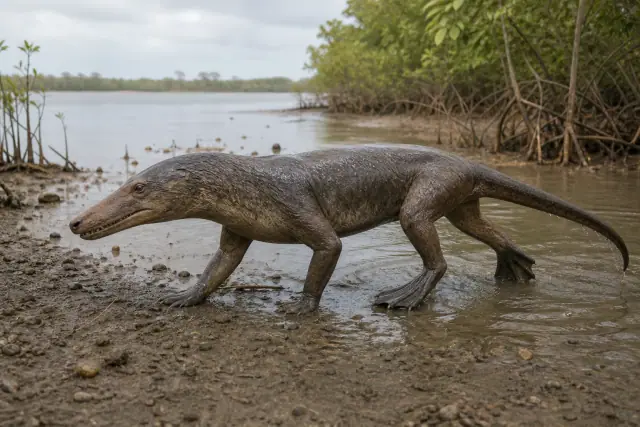
Ambulocetus natans
Strong limbs could still bear weight, yet long feet paddled through water and the ear region was adapting to underwater sound.
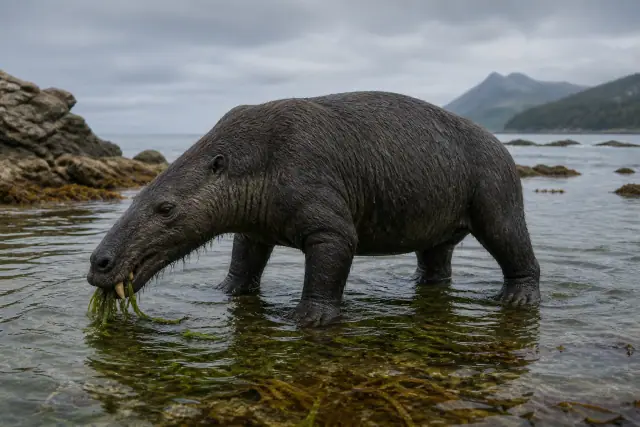
Desmostylus hesperus
Bundles of enamel-wrapped tooth columns and broad limbs helped it crop aquatic plants in tidal flats and shallow water.
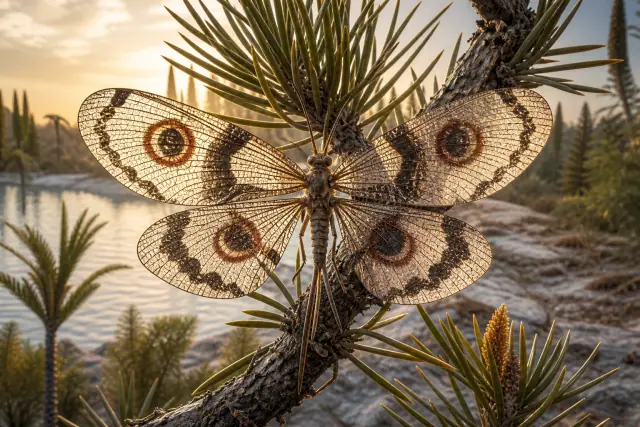
Kalligramma haeckeli
Huge eyespots, broad wings and an elongate mouthpart created a butterfly-like insect before butterflies flourished.
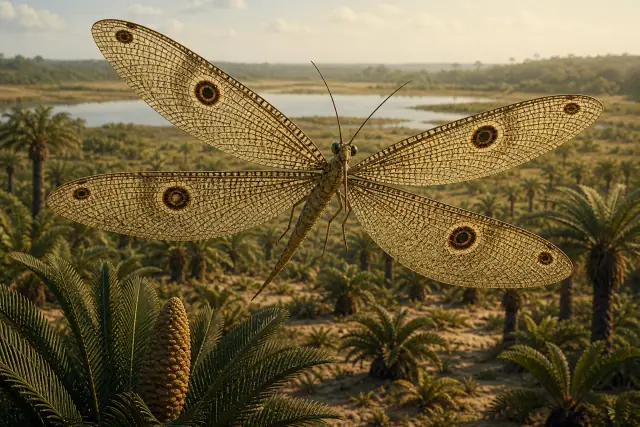
Makarkinia adamsi
Scaling from the surviving wing fragment suggests a wing as long as 16 centimeters, among the largest lacewings known.
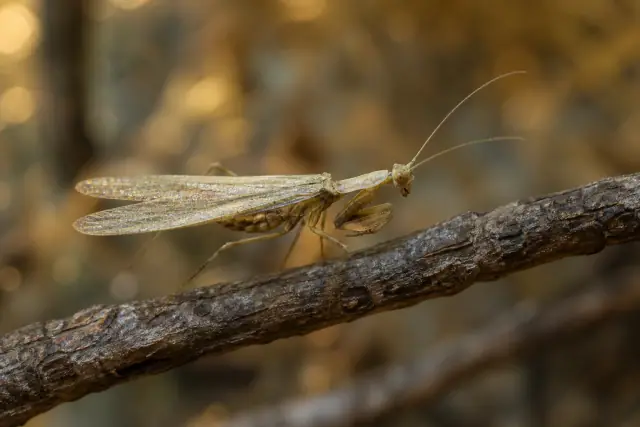
Santanmantis axelrodi
Only about a centimeter long, it already folded spine-lined grasping forelegs beneath its chest.
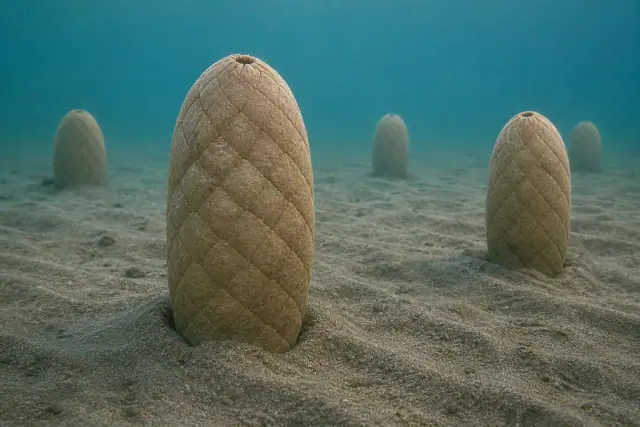
Ernietta plateauensis
Rows of quilted sacks lived half-buried in sand, forming one of the Ediacaran seafloor's strangest communities.
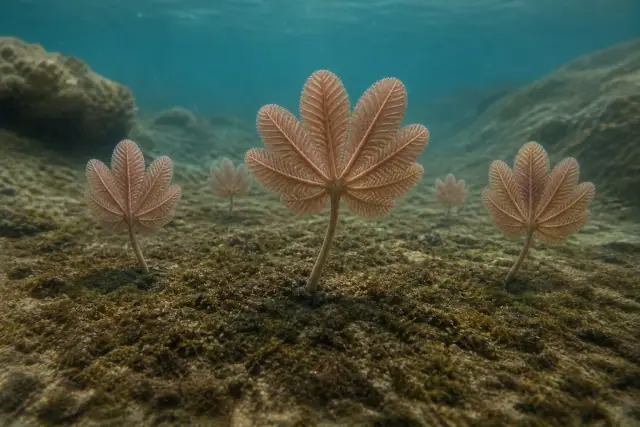
Rangea schneiderhoehni
Six branching vanes surrounded a central axis, making the organism resemble a soft pine cone standing on the seabed.
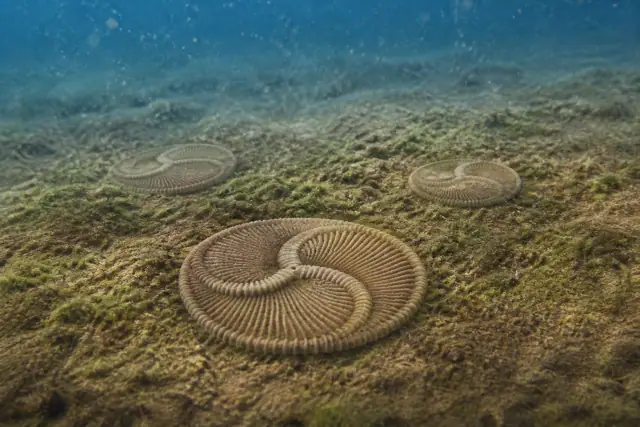
Tribrachidium heraldicum
Three curving spiral arms created a body symmetry almost absent among living animals.
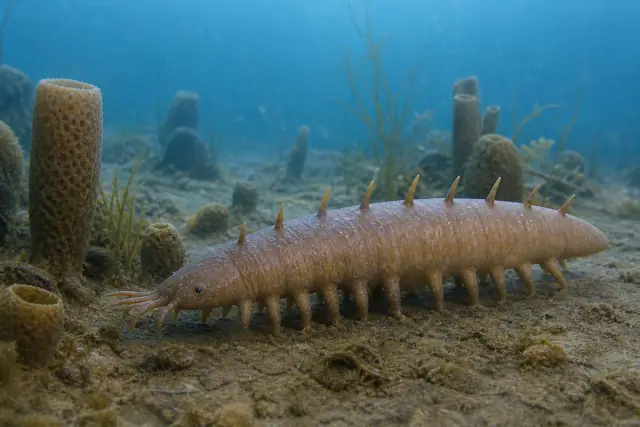
Aysheaia pedunculata
Ten pairs of stubby legs beneath a soft body place it near the early history of velvet worms and arthropods.
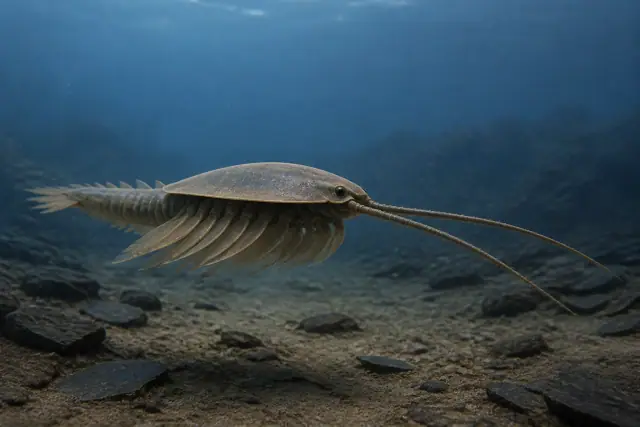
Leanchoilia superlata
A pair of great appendages ended in three long whips that could sense, seize and move food.
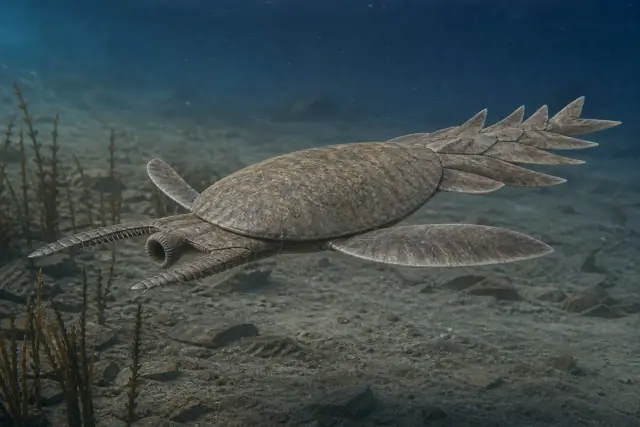
Hurdia victoria
A huge domed carapace covered its head, giving this radiodont the outline of a tiny finned submarine.
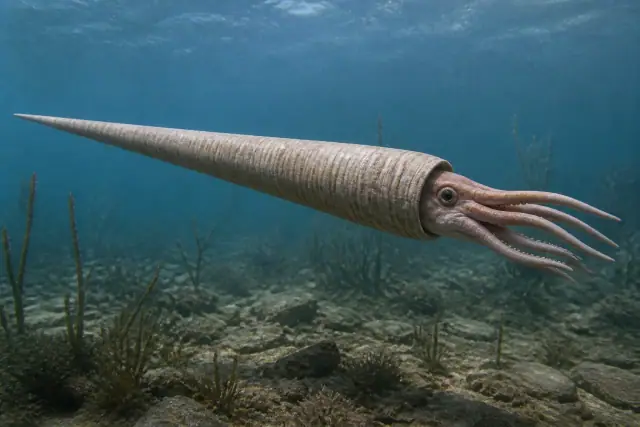
Endoceras giganteum
A straight conical shell several meters long made it one of the most conspicuous large cephalopods of Ordovician seas.
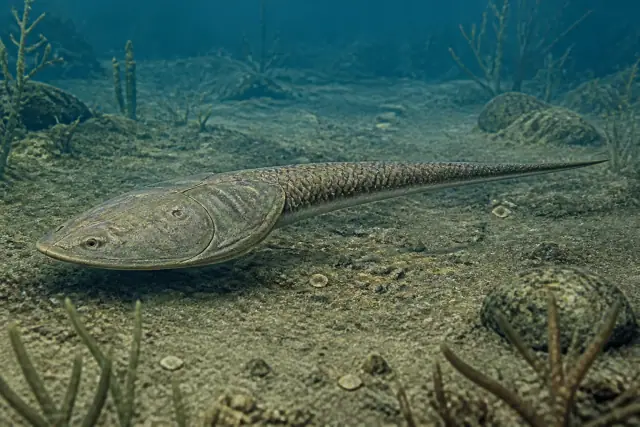
Arandaspis prionotolepis
It lacked jaws and paired fins, but its head and gill region were enclosed within strong armor.
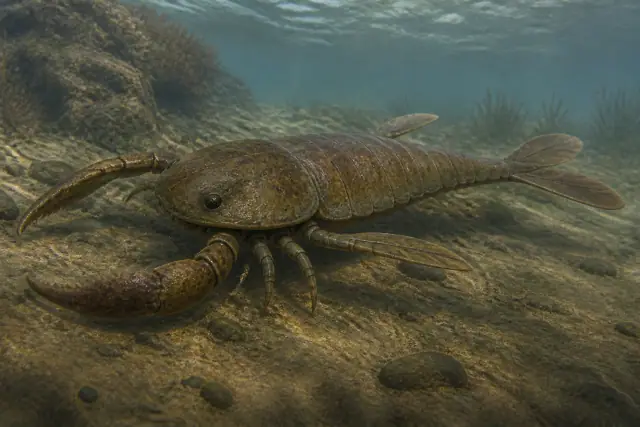
Pterygotus anglicus
Flattened swimming paddles and great toothed claws made it a formidable hunter in Silurian water.
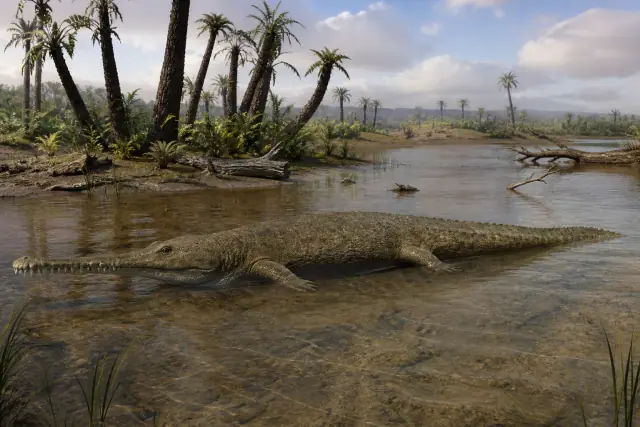
Prionosuchus plummeri
A giant Brazilian amphibian with a crocodile-like snout; its famous 9-metre length is a reconstruction from fragmentary fossils.
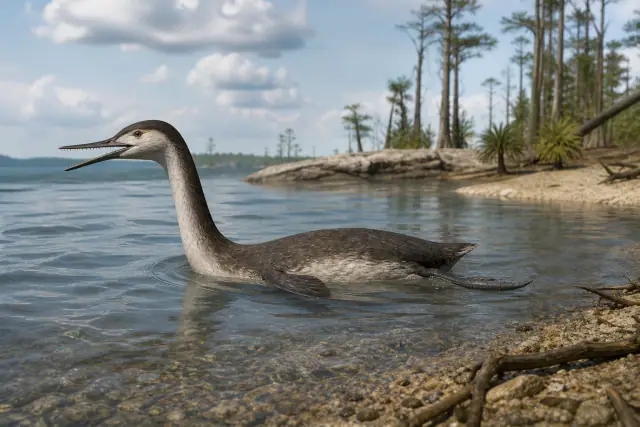
Hesperornis regalis
Its wings shrank to small bones while rear-set legs turned it into a superb Mesozoic pursuit diver.
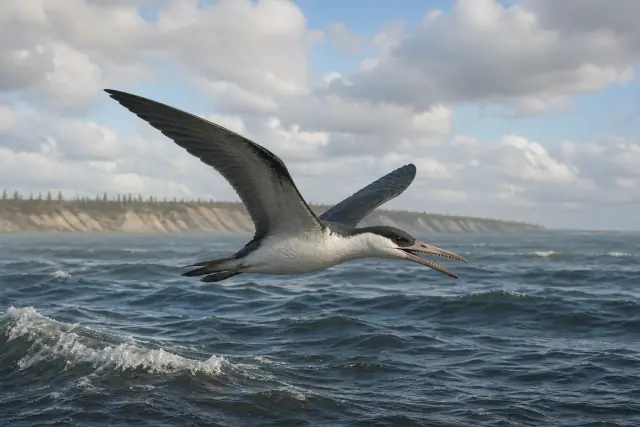
Ichthyornis dispar
Its body and flight resembled a tern, but a row of true teeth remained inside the long jaws.
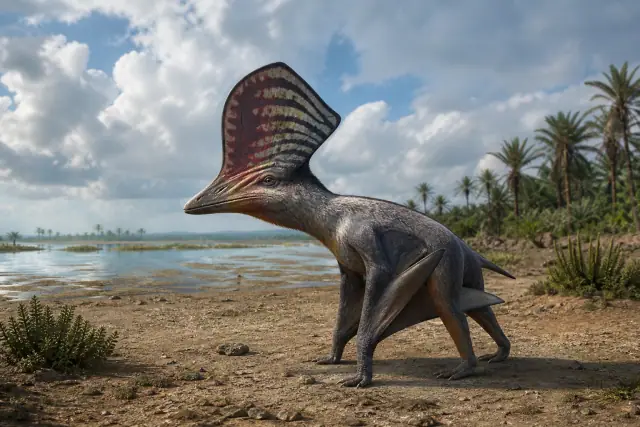
Tapejara wellnhoferi
An enormous crest rose above a short toothless beak, with soft tissue extending the bony sail still farther.
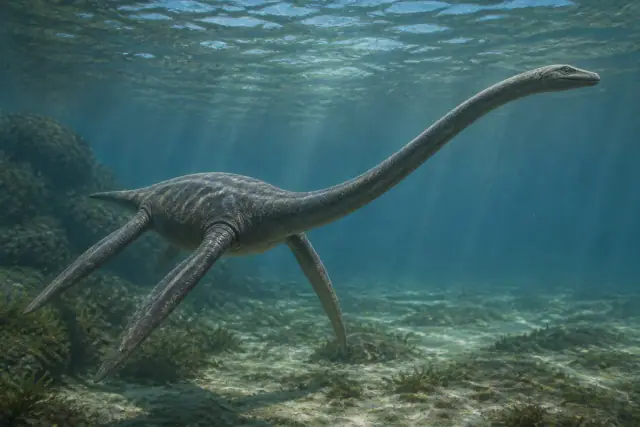
Plesiosaurus dolichodeirus
Four long flippers flew through water while a long flexible neck carried the small head toward prey.
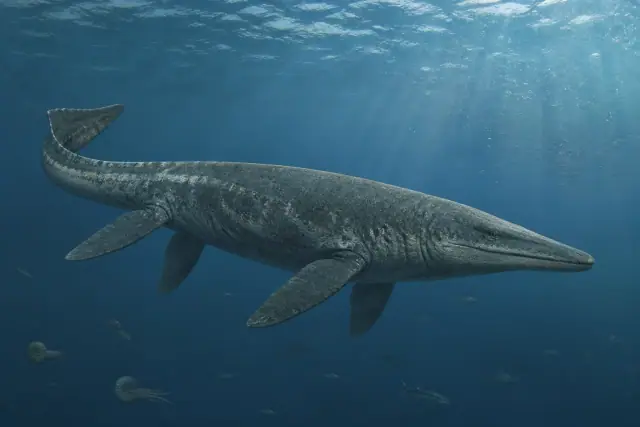
Tylosaurus proriger
A solid snout projected beyond the teeth as this giant mosasaur hunted fish, turtles and other reptiles.
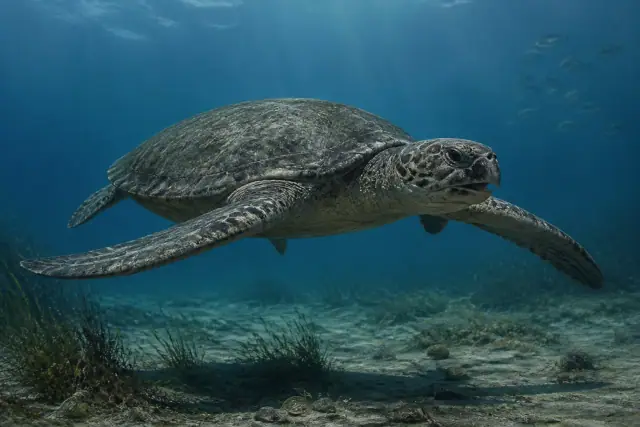
Archelon ischyros
Front flippers spanned several meters, and a leathery covering stretched over a reduced bony shell.
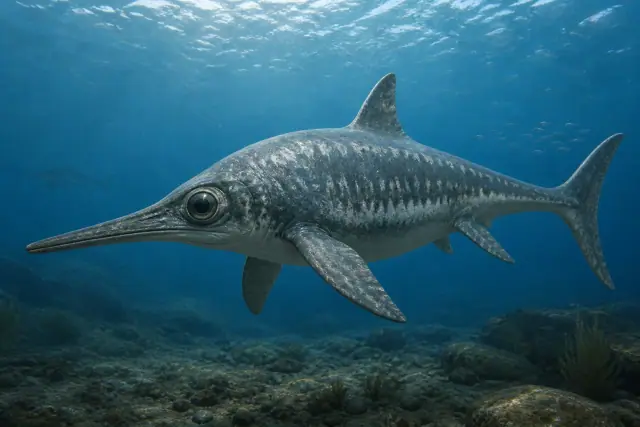
Ophthalmosaurus icenicus
Huge bony eye rings supported vision under pressure and may have helped track soft prey in dim water.
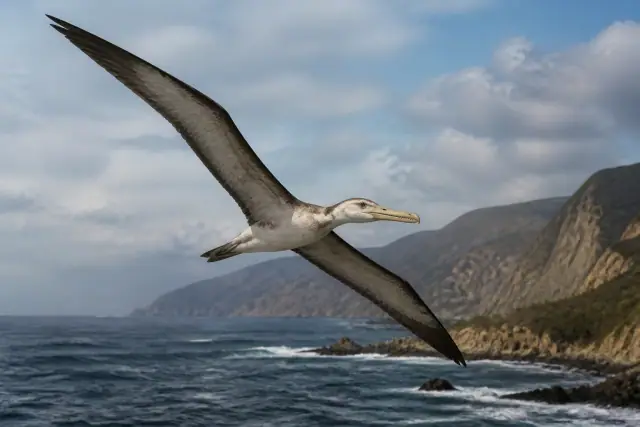
Pelagornis sandersi
Its estimated wingspan exceeded six meters, while bony pseudoteeth lined a beak adapted to slippery marine prey.
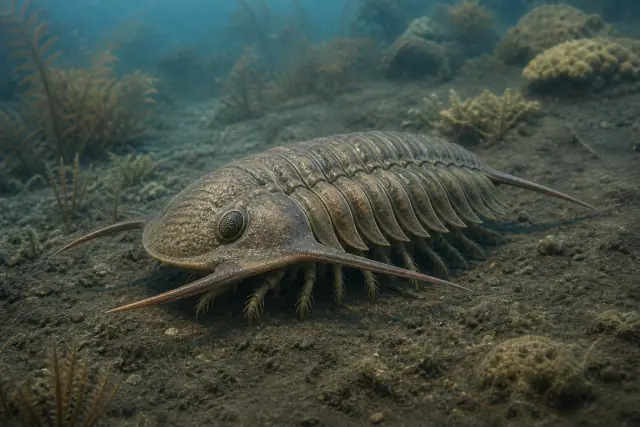
Olenoides serratus
Its antennae, gills and clawed legs reveal far more than a mineralized trilobite shell.
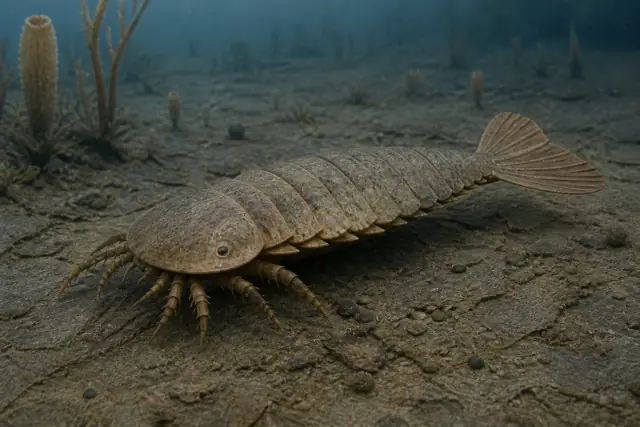
Sidneyia inexpectans
Robust leg bases formed crushing jaws for small trilobites and other shelled prey.
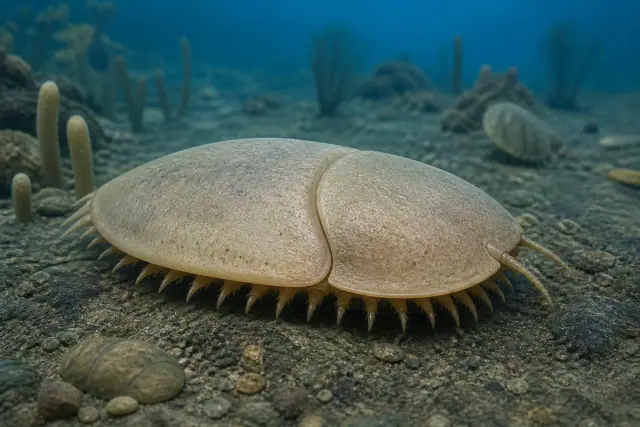
Naraoia compacta
Two large shields covered a soft body equipped with fully segmented trilobite-like limbs.
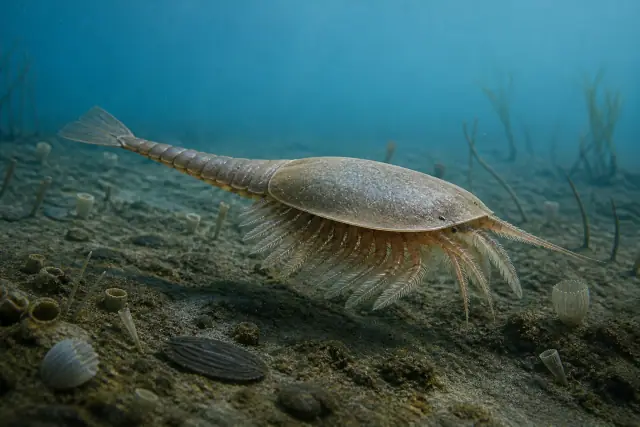
Waptia fieldensis
A bivalved carapace, compound eyes and mandibles reveal an early mandibulate; some fossils preserve embryos under the carapace.
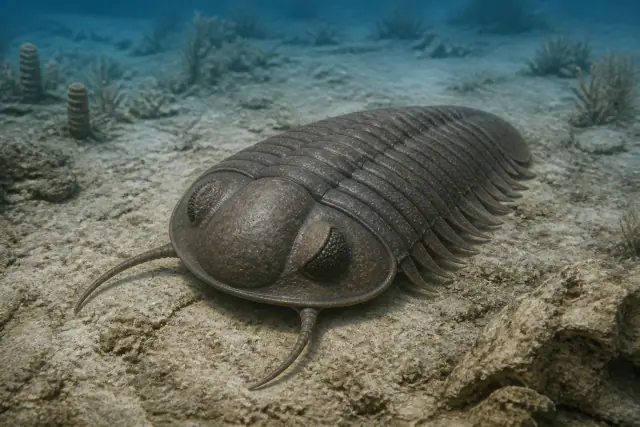
Isotelus rex
At nearly seventy centimeters, it is among the largest complete trilobites ever found.
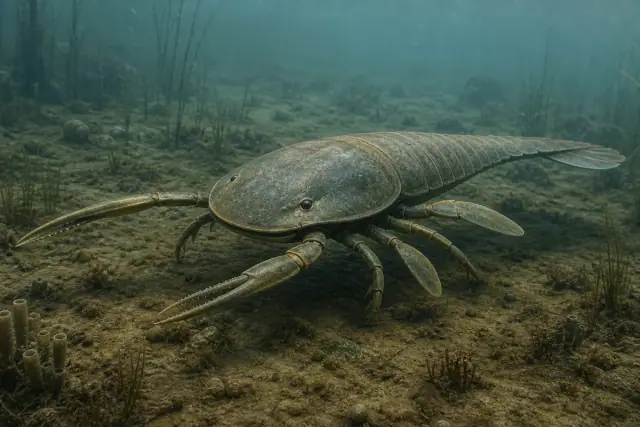
Acutiramus cummingsi
Its long pincers carried slanting blades suited to holding or slicing soft prey.
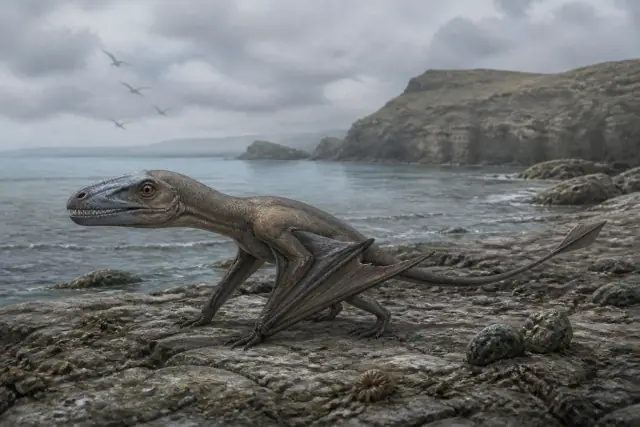
Dimorphodon macronyx
Two distinct tooth shapes gave this early pterosaur its name.
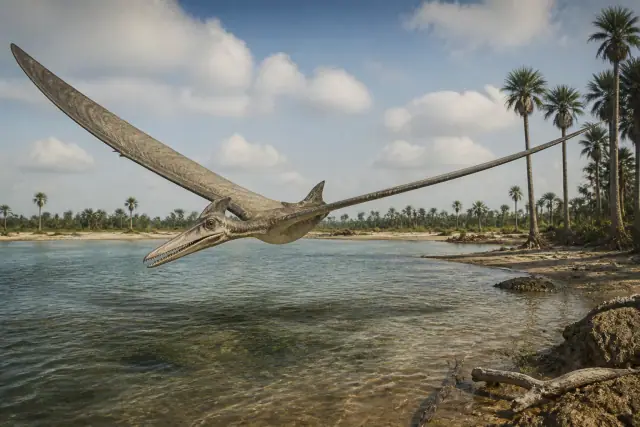
Anhanguera blittersdorffi
A toothed beak with matching crests helped seize slippery fish near the water surface.
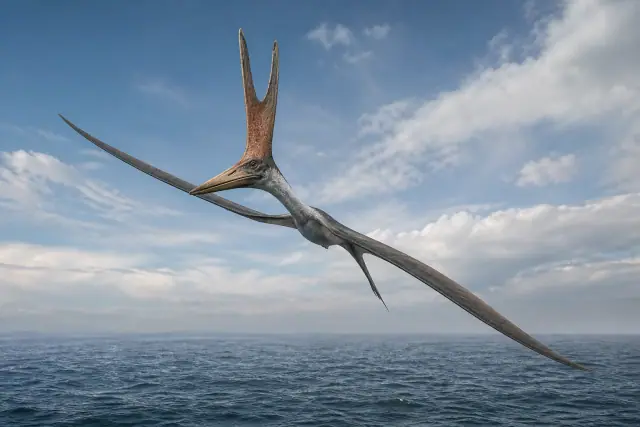
Nyctosaurus gracilis
An enormous branching crest crowned some adults, but there is no fossil evidence for a sail between its prongs.
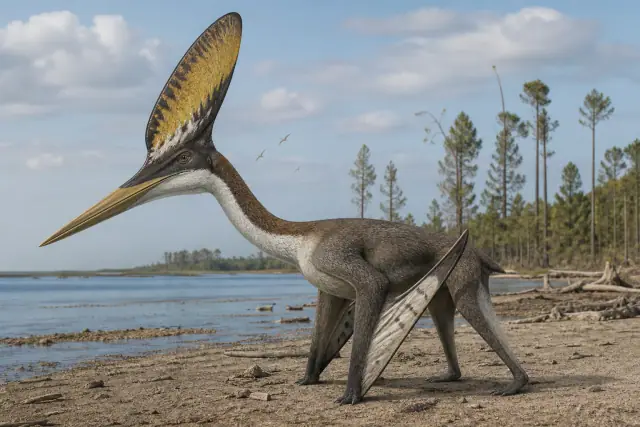
Thalassodromeus sethi
A vast sail-like skull crest dominated the profile of this large toothless pterosaur.
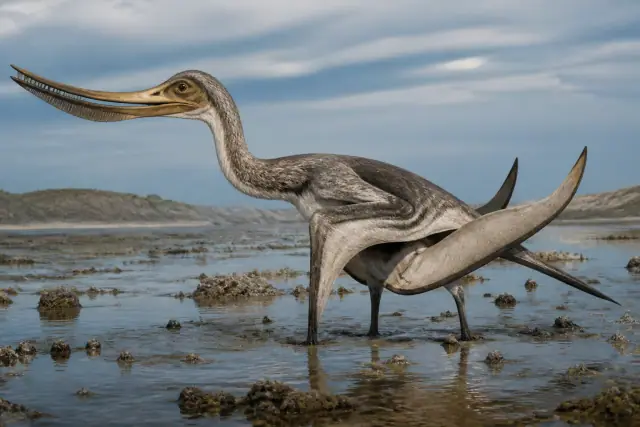
Pterodaustro guinazui
More than a thousand bristle-like lower teeth formed a filter basket.
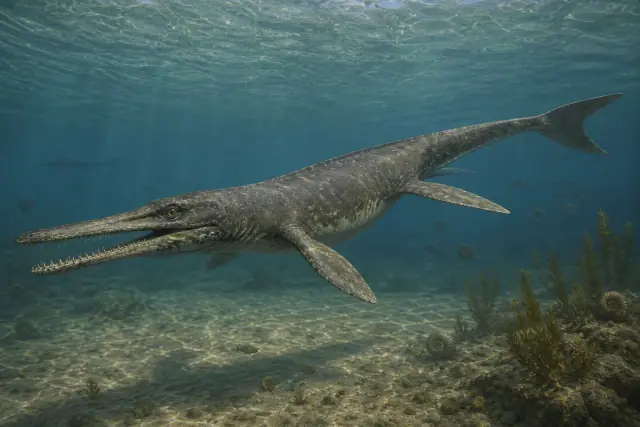
Metriorhynchus superciliosus
Flippers, a downturned tail fin and reduced armor transformed a crocodile relative into a pelagic swimmer.
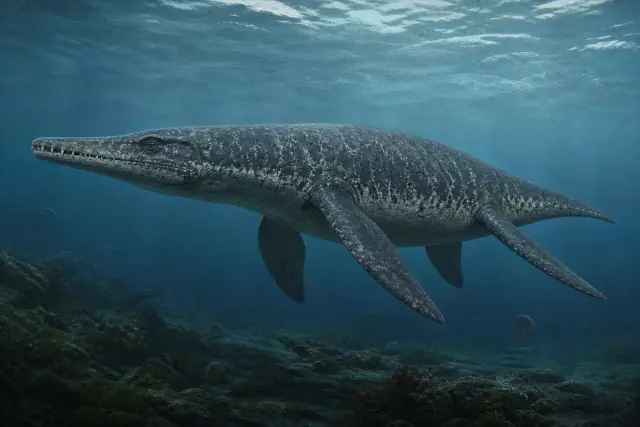
Pliosaurus funkei
A skull nearly two meters long and huge teeth formed an apex-predator bite apparatus.
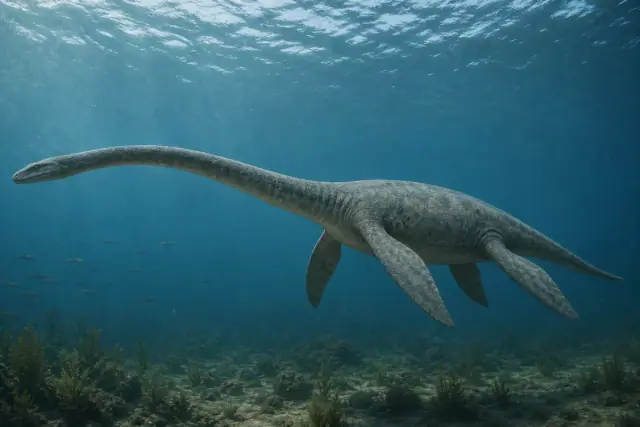
Styxosaurus snowii
More than sixty neck vertebrae formed an exceptionally long neck, while gastroliths filled the abdomen.
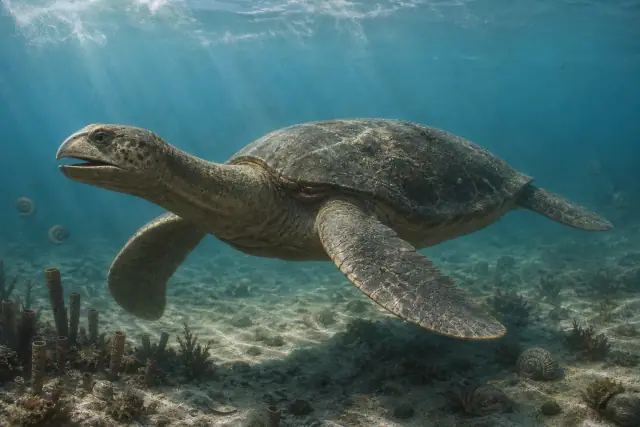
Protostega gigas
A reduced shell and giant front flippers made it one of the largest Cretaceous sea turtles.
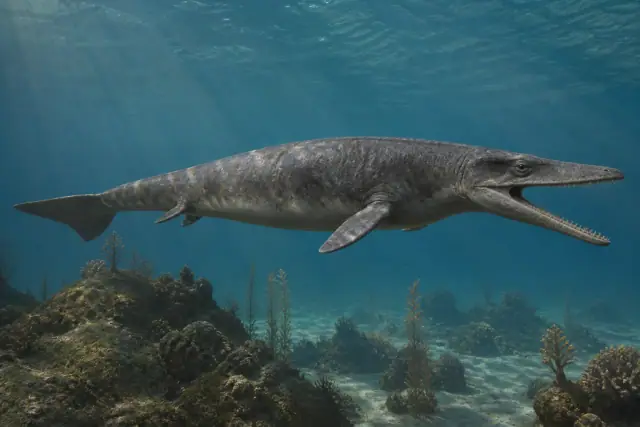
Dorudon atrox
A streamlined whale body still carried tiny external hind limbs with no walking function.
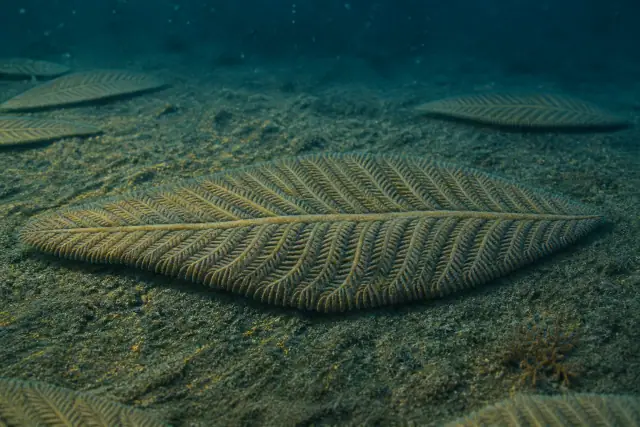
Fractofusus misrai
Its quilted branches lay flat rather than rising from a stem.
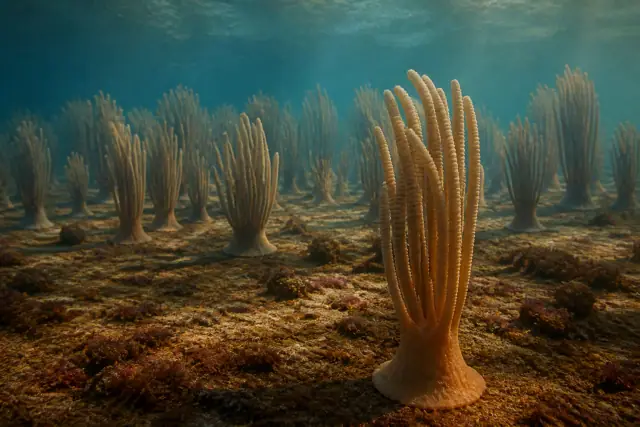
Funisia dorothea
Dense stands of narrow tubes formed one of the earliest large colonial scenes.
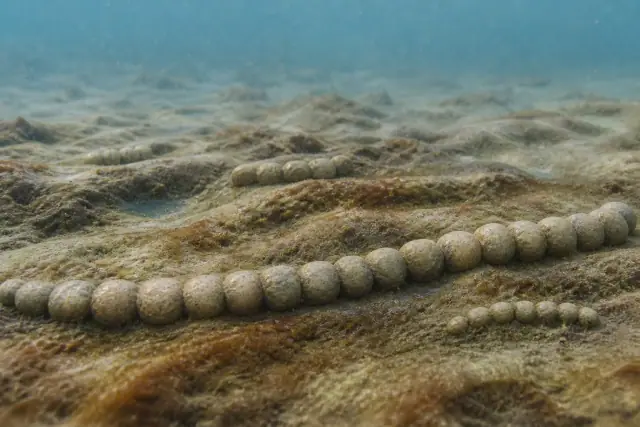
Horodyskia moniliformis
Bead-like discs arranged in strings may record an early macroscopic colony.
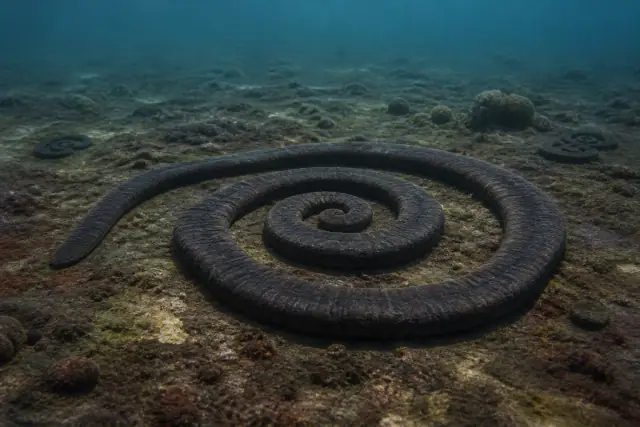
Grypania spiralis
Millimetre-wide ribbons form centimetre-scale coils in Proterozoic rocks.
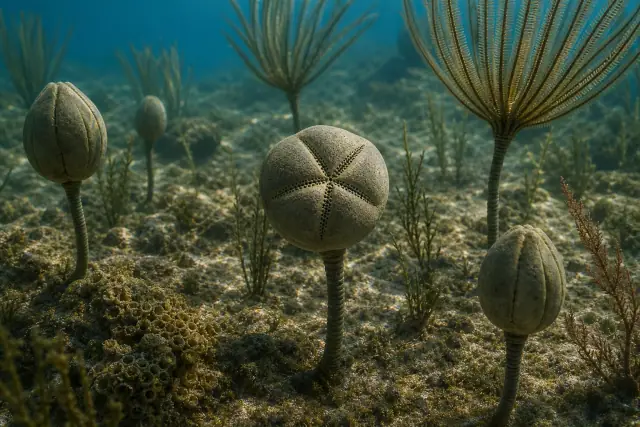
Pentremites godoni
A flower-bud body carried five feeding and respiratory grooves.
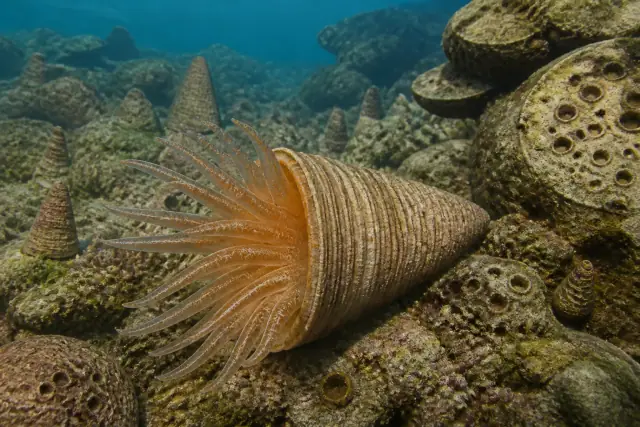
Heliophyllum halli
Radiating septa inside a horn-shaped skeleton resemble a stone sun.
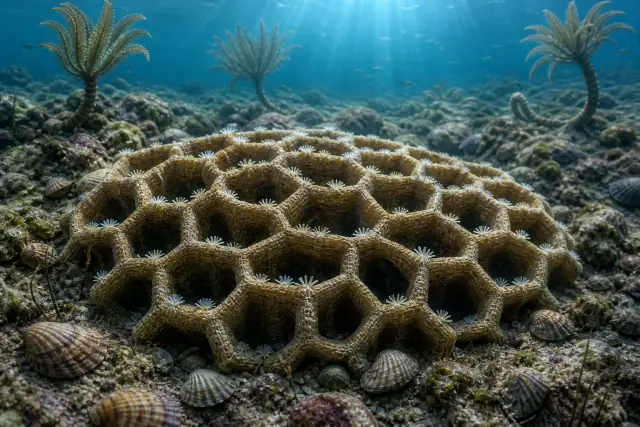
Halysites catenularius
Linked tubes formed honeycomb chains across Paleozoic reefs.
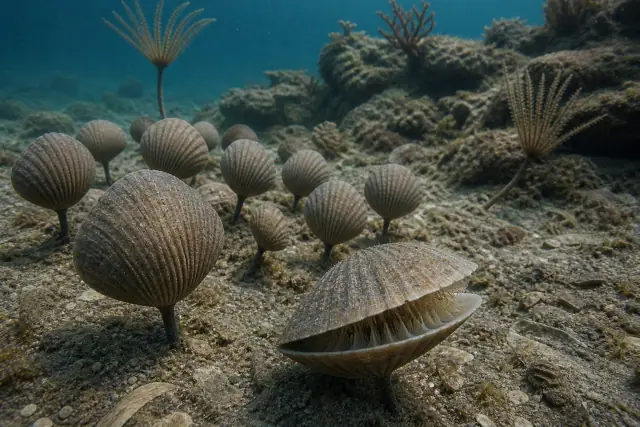
Atrypa reticularis
Fine radial ribs covered rounded shells that once crowded ancient seabeds.
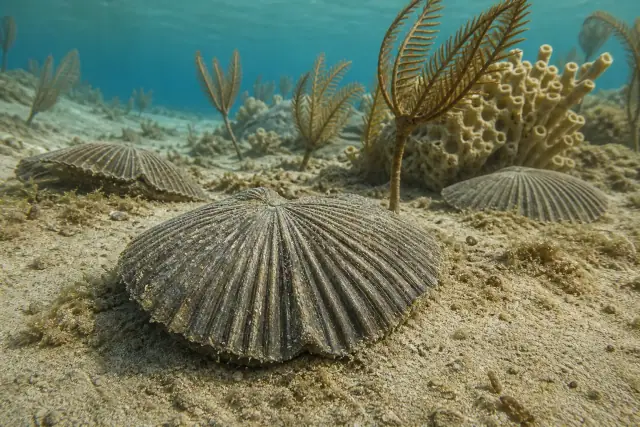
Paraspirifer bownockeri
A broad hinge line formed stone wings that stabilized the shell on soft mud.
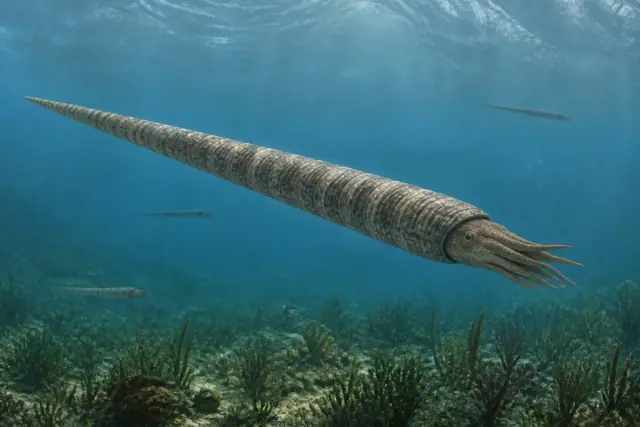
Baculites compressus
Its adult shell stretched into a near-straight rod while retaining ammonite sutures.
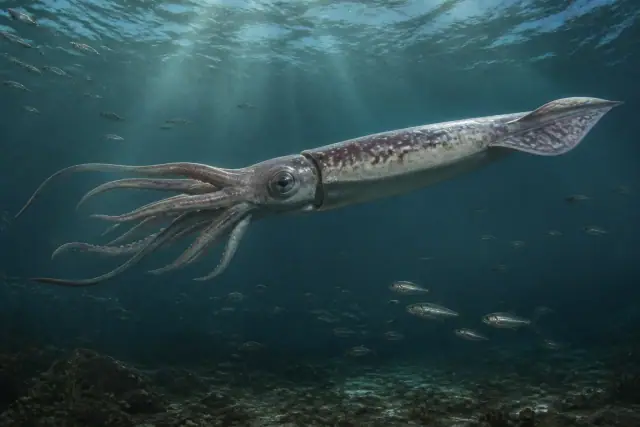
Tusoteuthis longa
A huge internal shell identifies a large coleoidean, though total length remains uncertain.
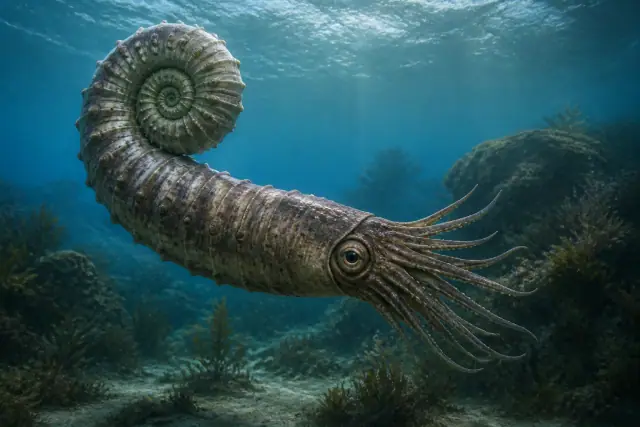
Scaphites nodosus
The juvenile shell coiled tightly before the adult chamber uncoiled and hooked back.
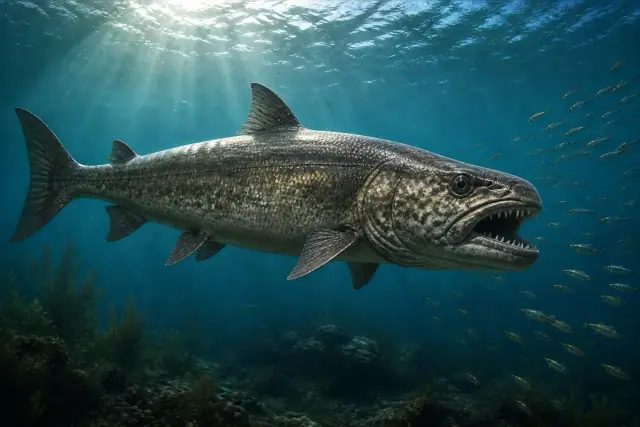
Xiphactinus audax
Its huge upturned mouth could swallow fish nearly half its own length.
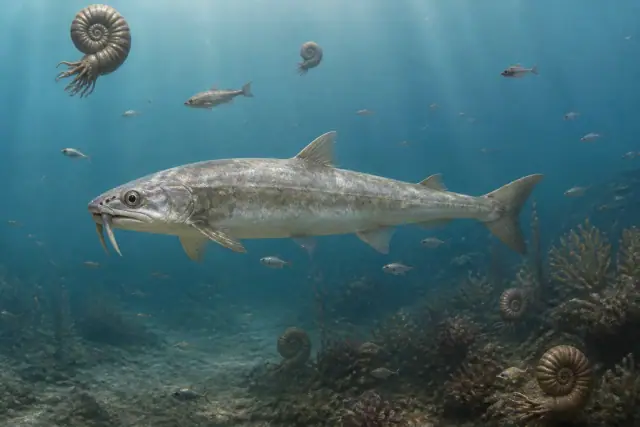
Enchodus petrosus
Oversized palatine fangs made a modest fish into a formidable midwater hunter.
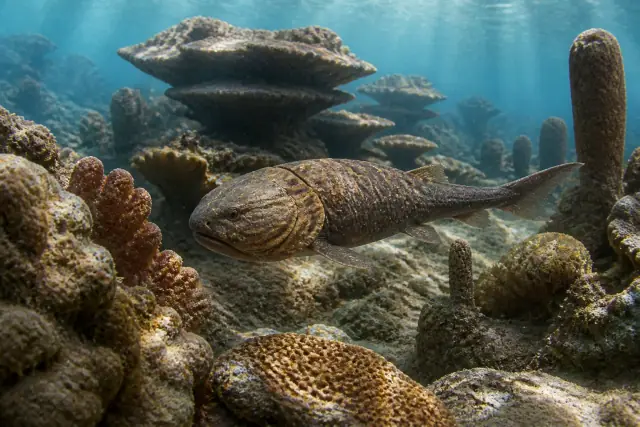
Materpiscis attenboroughi
An embryo with an umbilical connection records some of the earliest live birth.
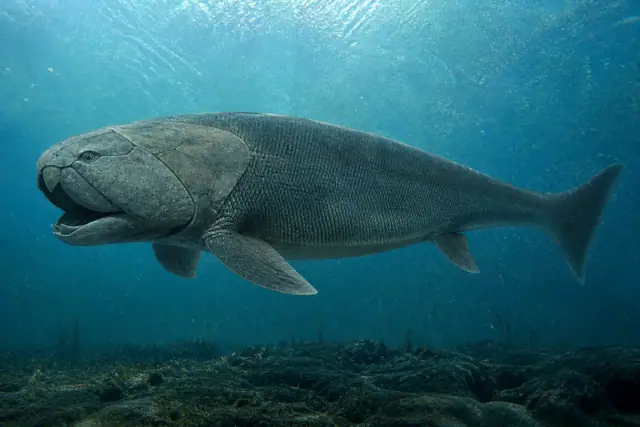
Titanichthys agassizi
This giant placoderm lacked sharp jaw blades and may have filtered plankton.
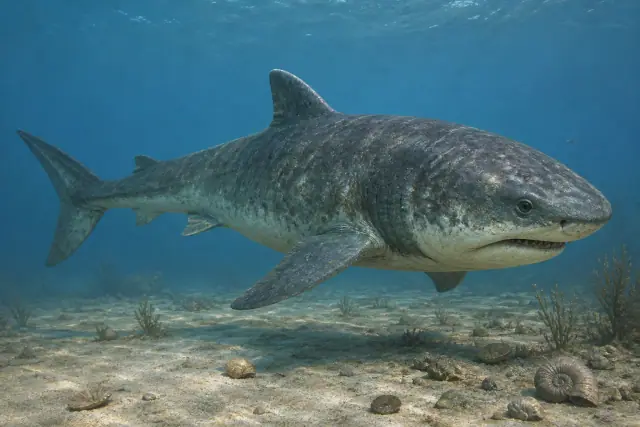
Ptychodus mortoni
Broad crushing teeth paved its mouth for ammonites and shellfish.
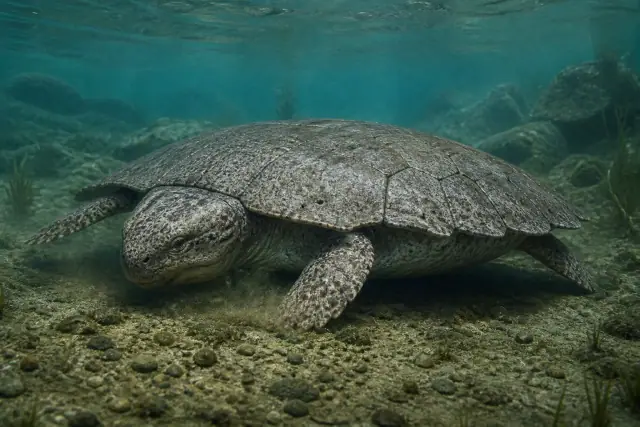
Henodus chelyops
A turtle-like shell protected a placodont with a broad filtering or scraping mouth.
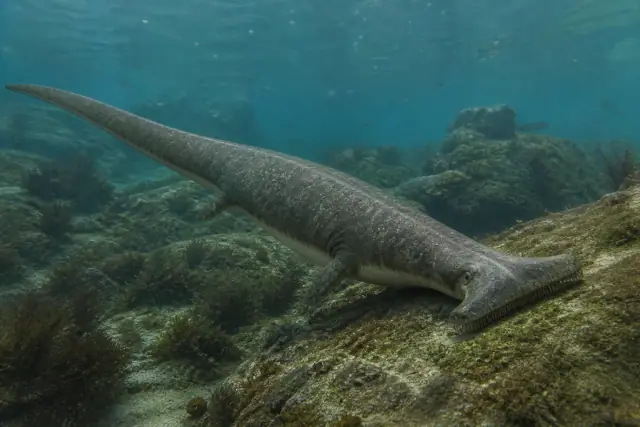
Atopodentatus unicus
A hammer-shaped snout scraped algae before needle teeth filtered the fragments.
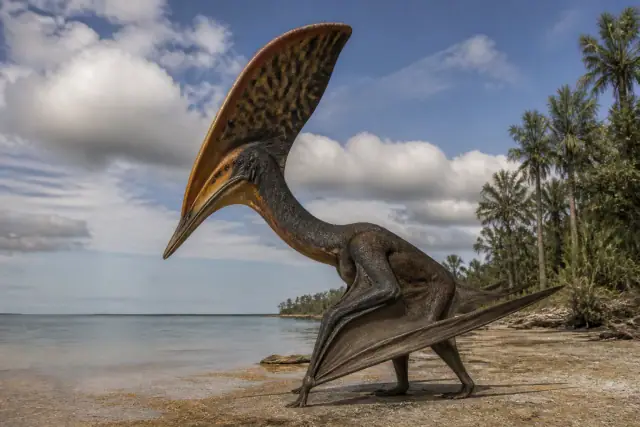
Tupandactylus imperator
Most of its enormous head crest was soft tissue used as a visual signal.
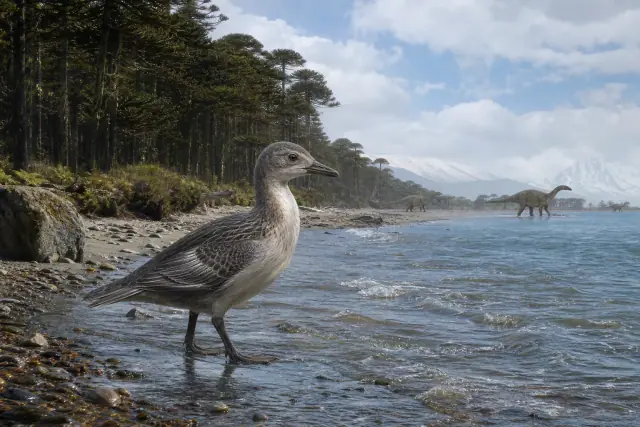
Vegavis iaai
A waterbird close to ducks lived before the non-avian dinosaurs vanished.
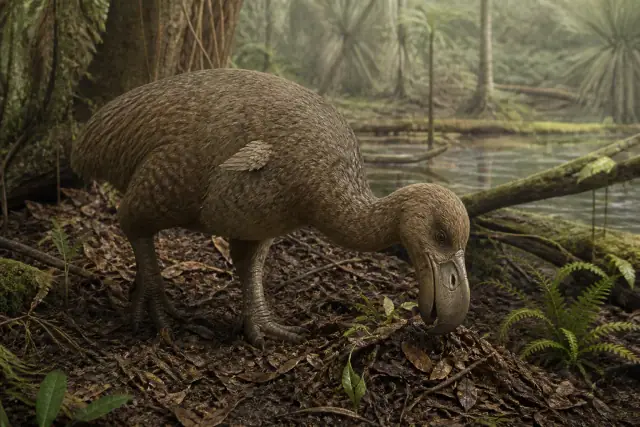
Aptornis otidiformis
Powerful legs and a heavy bill belonged to a flightless ground forager.
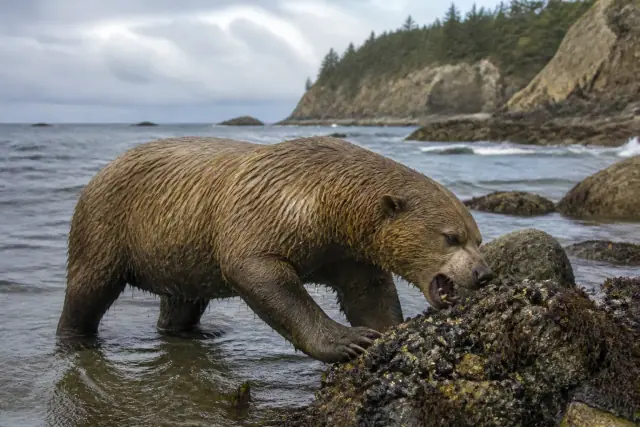
Kolponomos newportensis
A bear-like carnivore used powerful jaws to pry and crush shellfish.
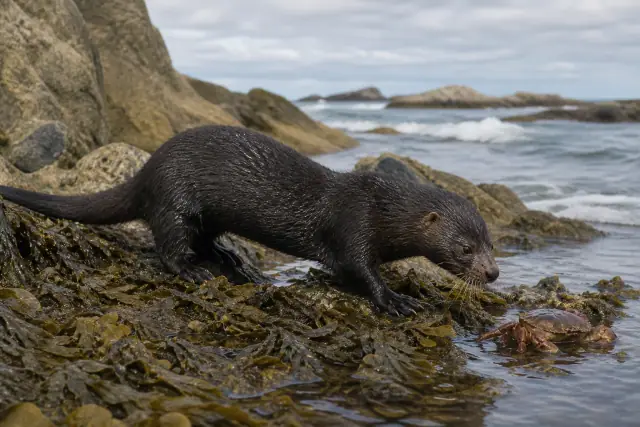
Neogale macrodon
It was hunted out for fur before scientists could describe a living animal.
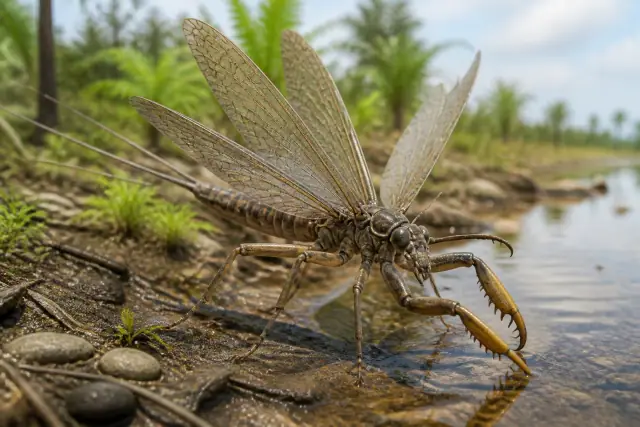
Mickoleitia longimanus
Raptorial forelegs and three tail filaments formed a lost mayfly body plan.
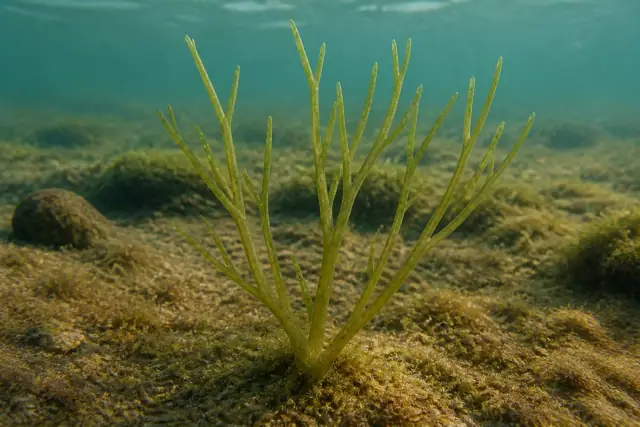
Proterocladus antiquus
Repeatedly branching cell filaments push green-plant history toward one billion years.
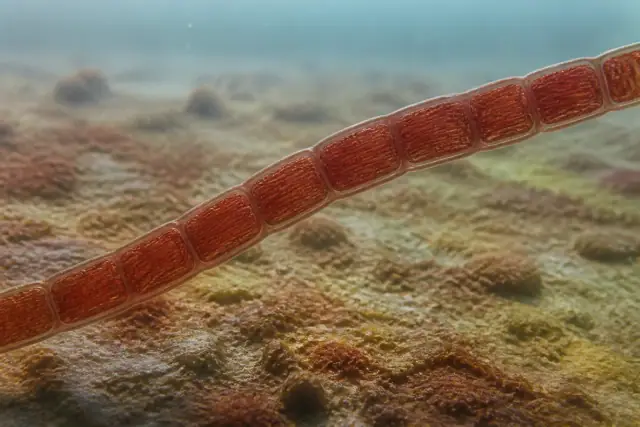
Rafatazmia chitrakootensis
Cell partitions and internal platelets were interpreted as very ancient red-algal evidence.
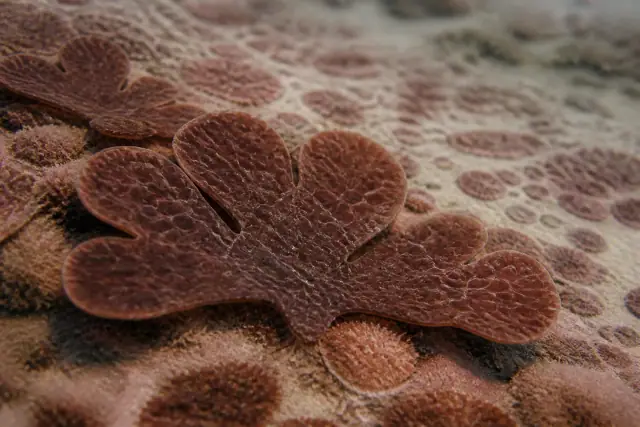
Ramathallus lobatus
A lobed multicellular thallus was proposed as an early red-algal body.
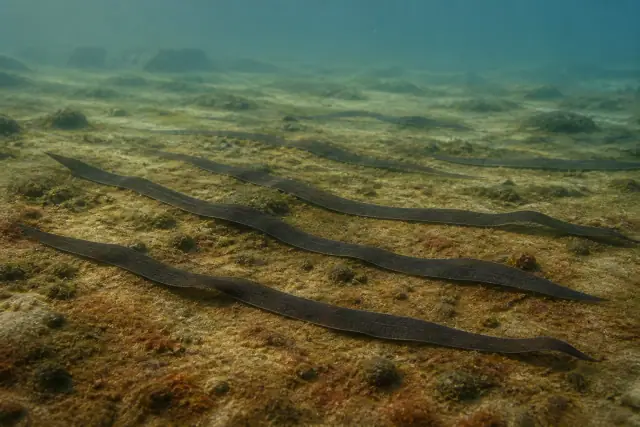
Vendotaenia antiqua
Long carbonaceous ribbons resemble soft algae but lack diagnostic organs.
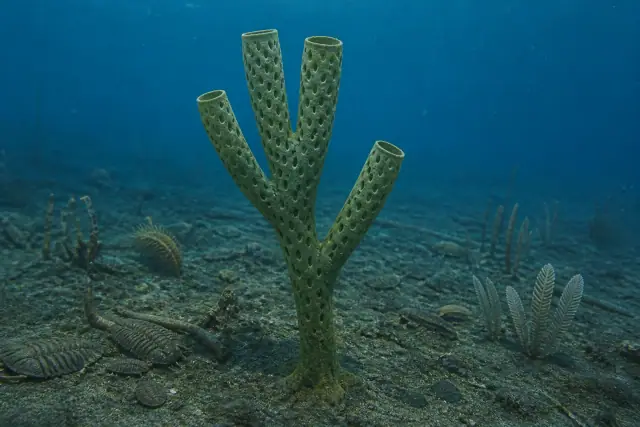
Margaretia dorus
A perforated tube once treated as an animal is now linked to a branching alga.
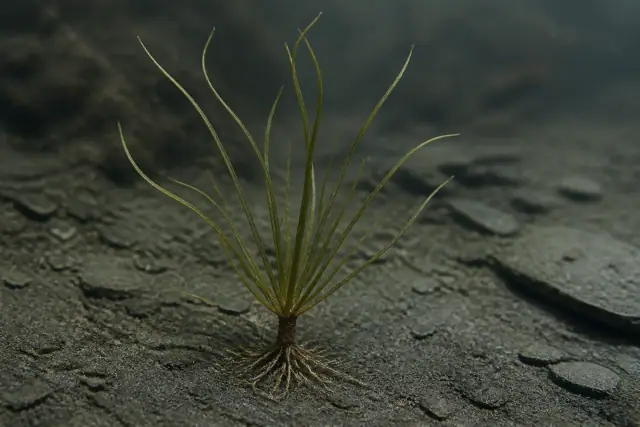
Yuknessia simplex
Simple narrow blades radiated from a common attachment.
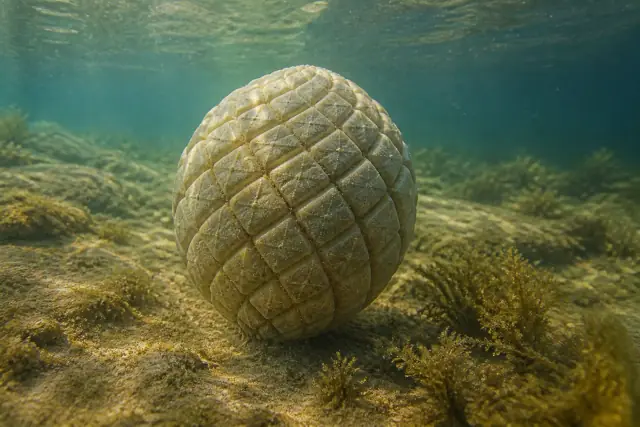
Receptaculites oweni
Spiraled diamond plates formed a calcified pinecone-like body.
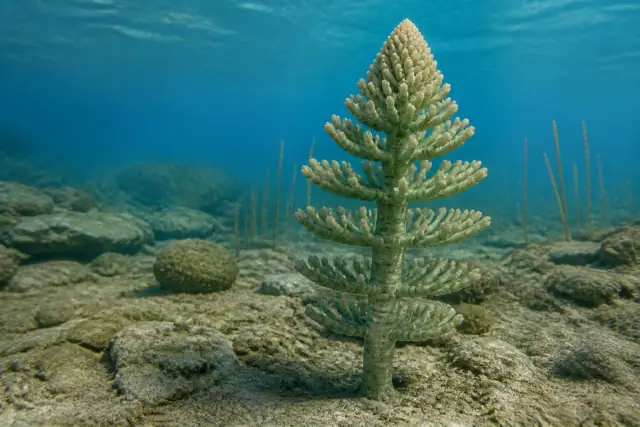
Cyclocrinites dactioloides
Whorled calcified branches surrounded a central axis like an underwater bottlebrush.
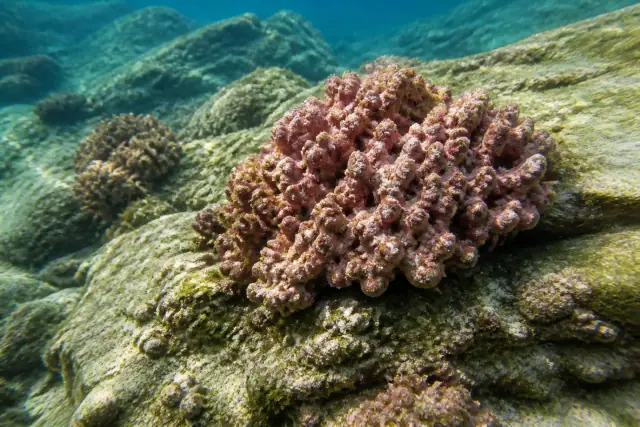
Solenopora jurassica
Pink calcified masses were long assigned to red algae, but their identity is being reassessed.
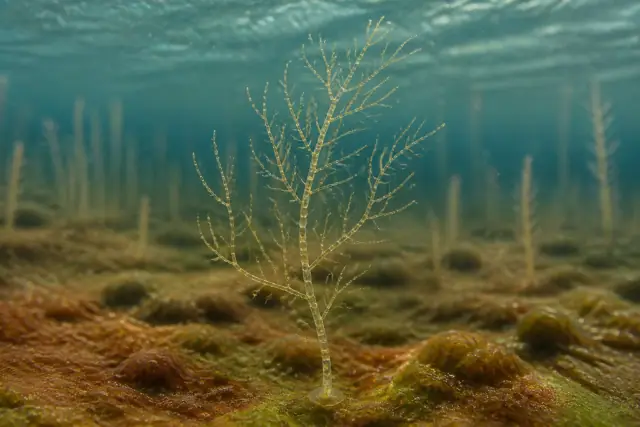
Doushantuophyton cometa
Branching cellular filaments show complex photosynthetic life before abundant animals.
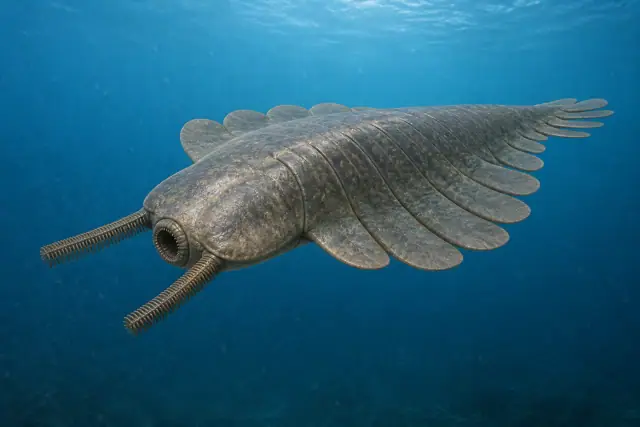
Aegirocassis benmoulai
A two-meter filter-feeding radiodont was an early analogue of giant plankton feeders.
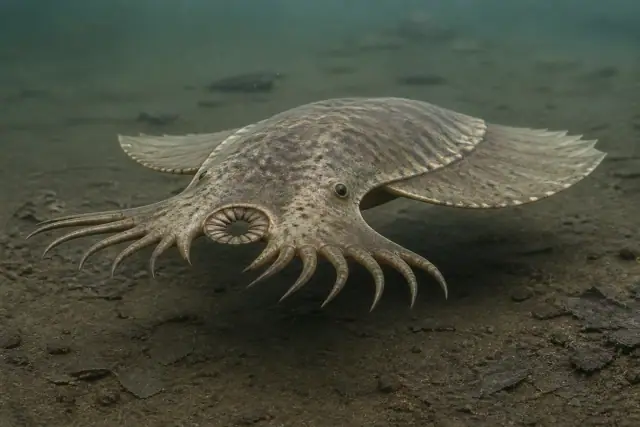
Cambroraster falcatus
A horseshoe-shaped carapace and rake-like appendages made a mobile sediment sifter.
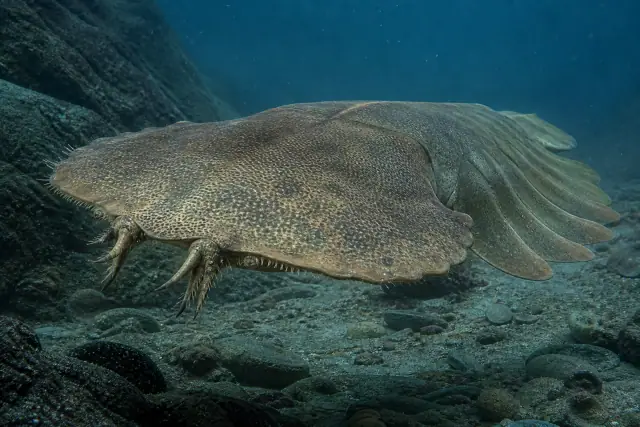
Titanokorys gainesi
An enormous head shield covered most of this bottom-feeding radiodont.
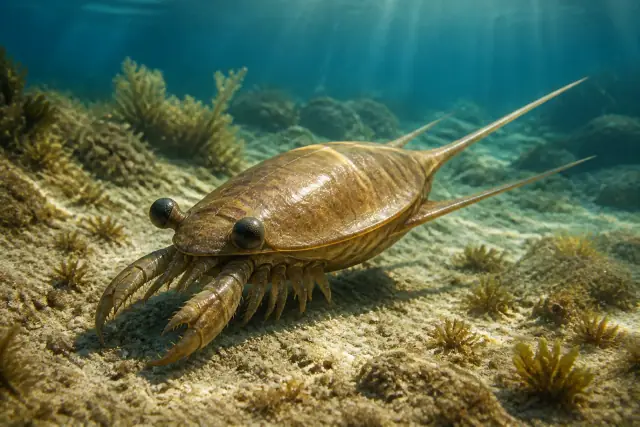
Isoxys curvirostratus
Isoxys curvirostratus was a small arthropod with a spined carapace, stalked eyes and grasping frontal appendages.
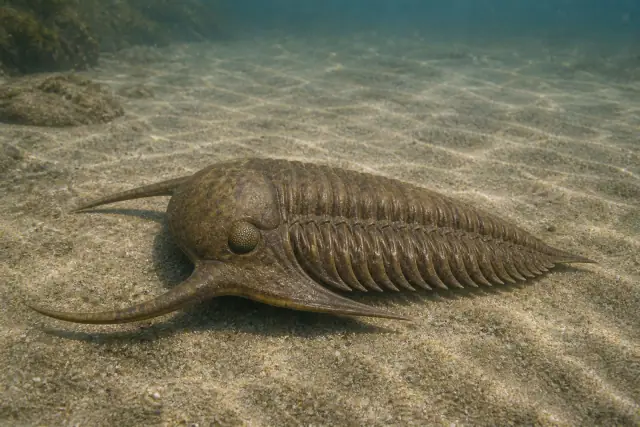
Olenellus thompsoni
A broad head, long genal spines and many trunk segments marked an early trilobite radiation.
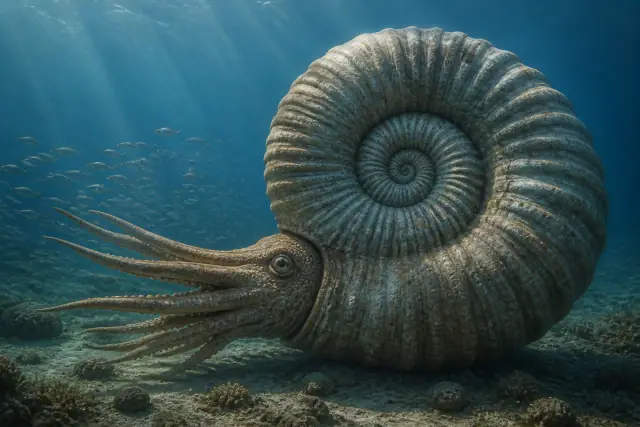
Parapuzosia seppenradensis
A coiled shell nearly two meters wide belonged to the largest known ammonite.
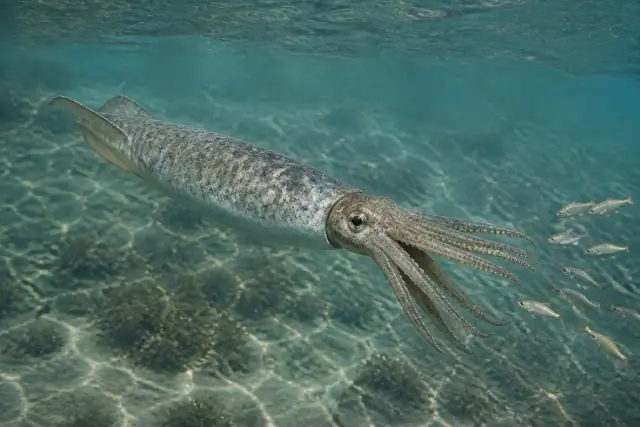
Belemnotheutis antiquus
Rare soft tissues restore the ink sac, fins and ten hooked arms around an internal shell.
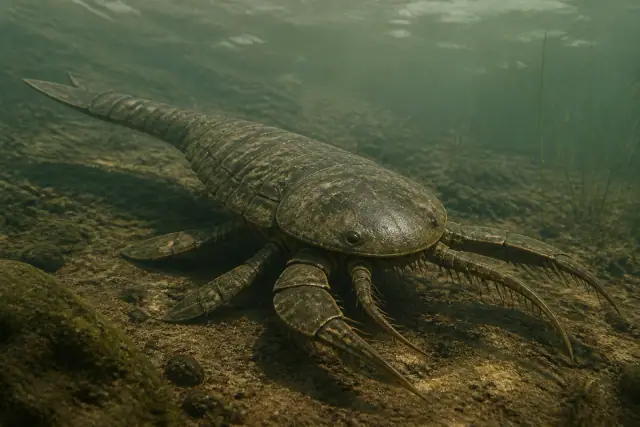
Hibbertopterus scouleri
A giant sea scorpion that raked soft sediment for food; a Scottish trackway suggests an animal about 1.6 m long.
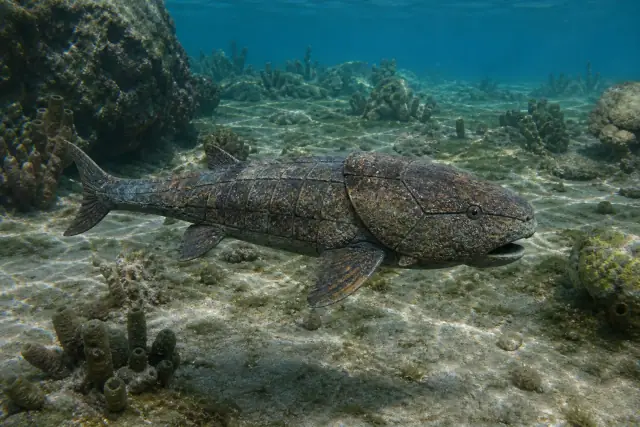
Entelognathus primordialis
Placoderm armor enclosed jaw-margin bones resembling those of later bony fish.
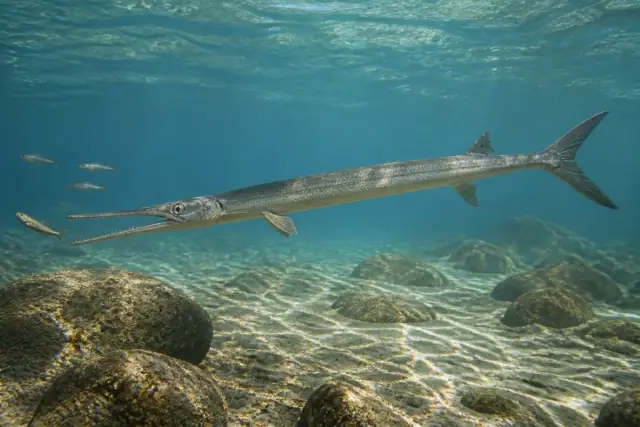
Saurichthys curionii
A needle-like snout and slender body converged on modern barracudas.
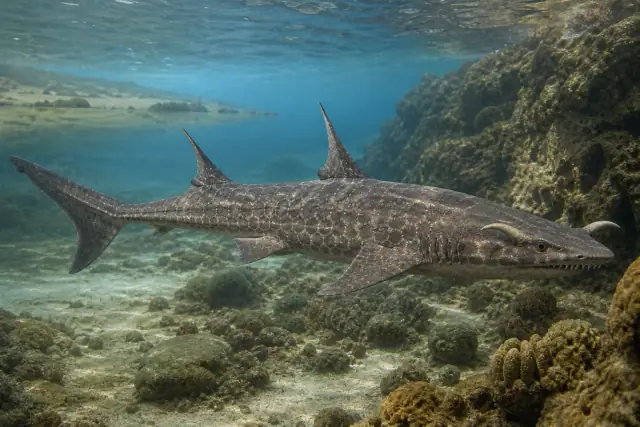
Hybodus reticulatus
Dorsal fin spines and two tooth shapes handled fish and hard-shelled prey.
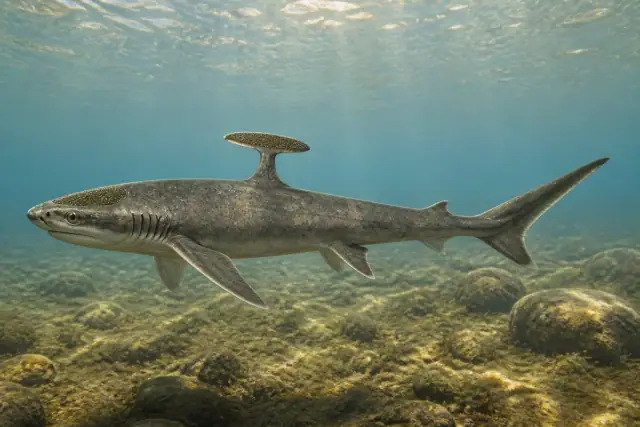
Stethacanthus altonensis
Males carried a denticle-covered anvil-shaped structure on the back.
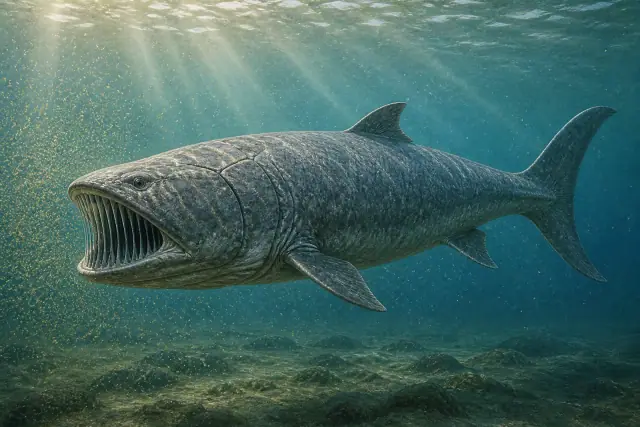
Bonnerichthys gladius
A giant bony fish filtered plankton near the ocean surface.
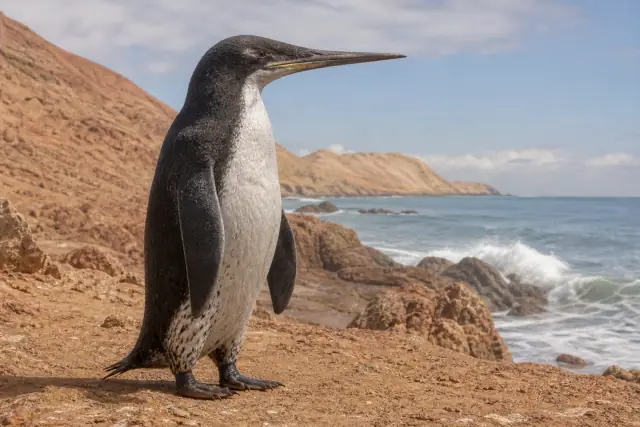
Icadyptes salasi
A one-and-a-half-meter penguin lived near the equator with a spear-like beak.
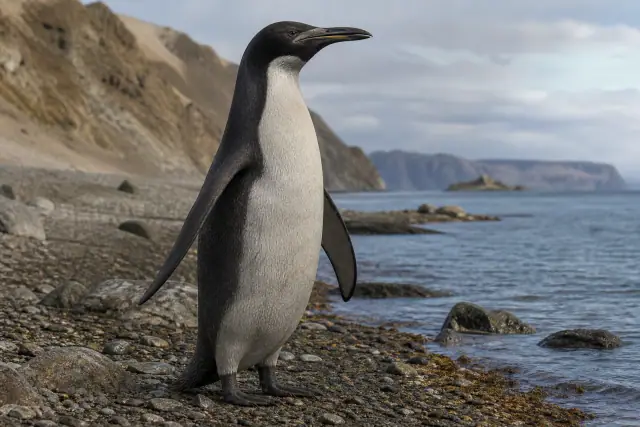
Anthropornis nordenskjoeldi
At almost 1.8 meters, it was a giant diver on a warmer Antarctic coast.
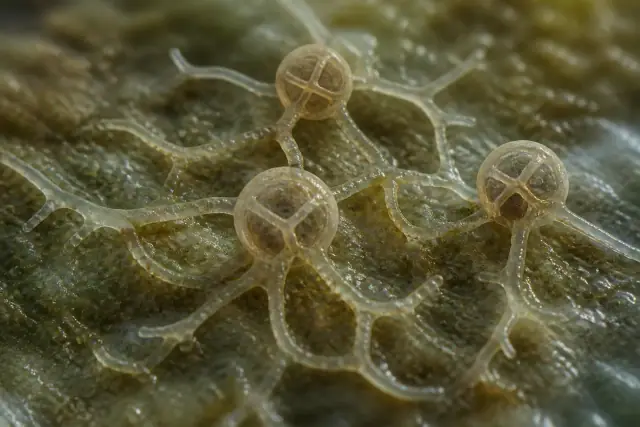
Tappania plana
Complex branching and septa make it a candidate early eukaryote or fungus.
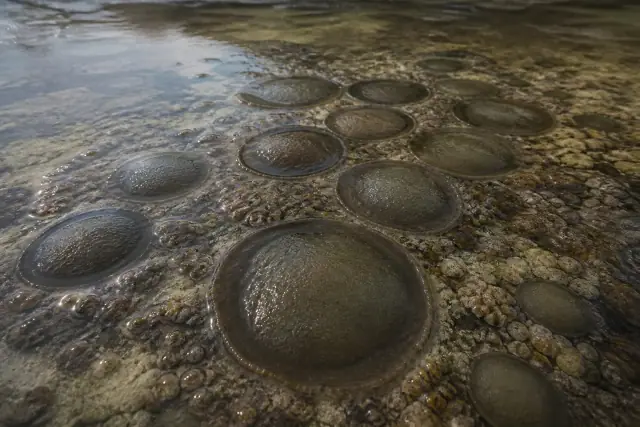
Chuaria circularis
Circular carbon films may represent a giant single-celled eukaryote traditionally called an alga.
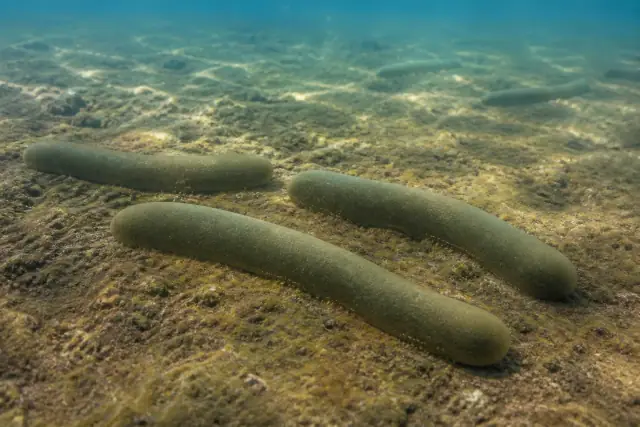
Tawuia dalensis
Sausage-shaped carbon films may be macroalgae or another early eukaryote.
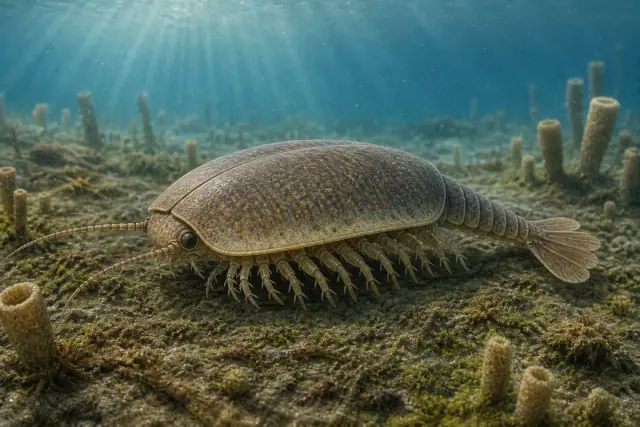
Canadaspis perfecta
Two broad valves enclosed a segmented body while antennae, limbs and a tail fan projected outside.
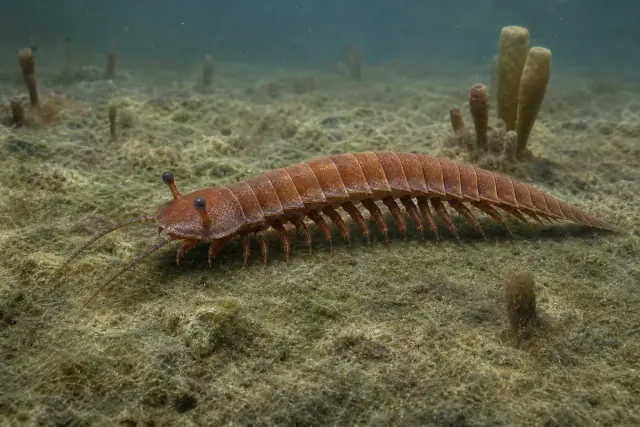
Fuxianhuia protensa
Its nervous, circulatory and limb anatomy makes it central to studies of early arthropod organization.
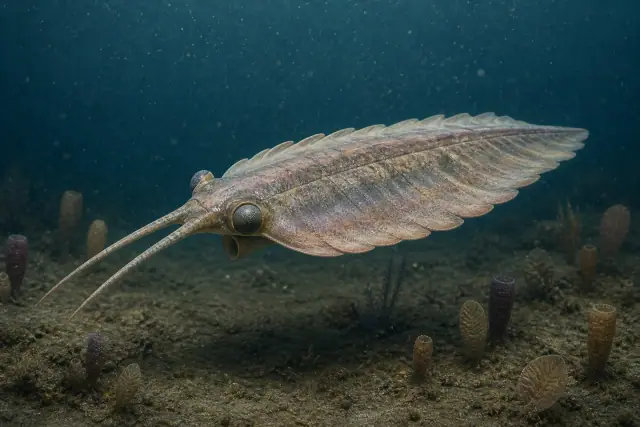
Nectocaris pteryx
Paired fins, a funnel and tentacle-like appendages form one of the Cambrian's most puzzling swimmers.
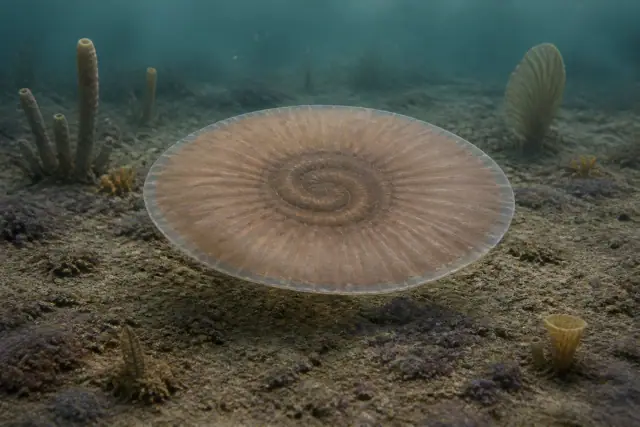
Eldonia ludwigi
A coiled gut lay inside a soft circular disc that may have drifted or lived near the bottom.
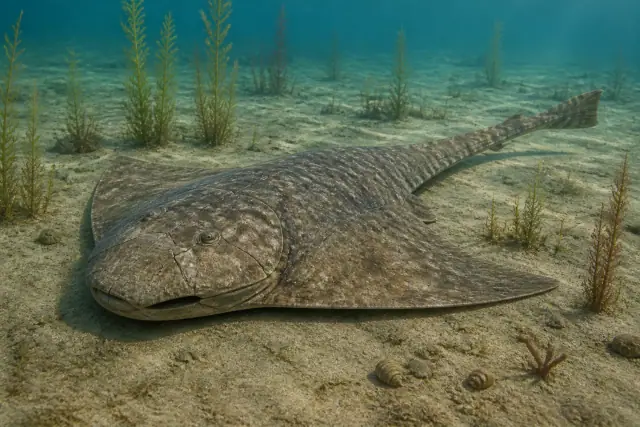
Gemuendina stuertzi
A broad flat placoderm independently converged on the body shape of a ray.
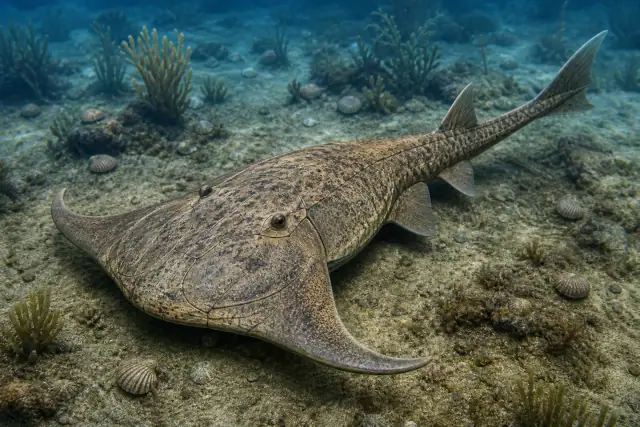
Lunaspis broilii
Crescent-shaped lateral horns widened the head armor of a small bottom-dwelling placoderm.
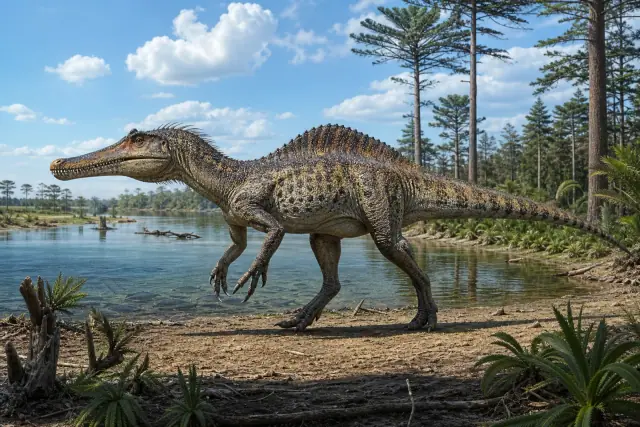
Irritator challengeri
A long snout, conical teeth and low crest belonged to a spinosaurid that frequently ate fish.
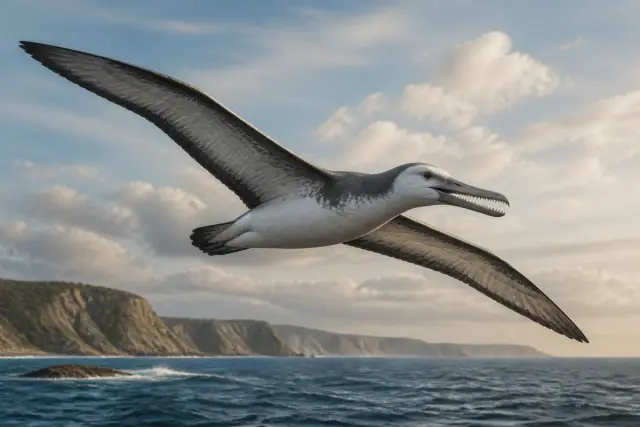
Dasornis emuinus
A near-six-meter wingspan and bony pseudoteeth armed a giant seabird.
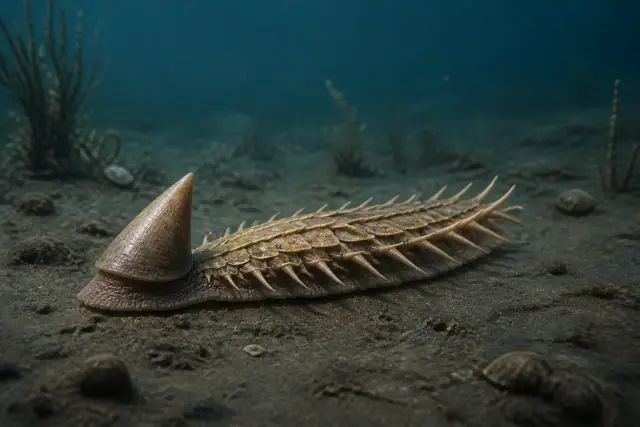
Orthrozanclus reburrus
Scales, long spines and a small front shell combined several Cambrian body plans.
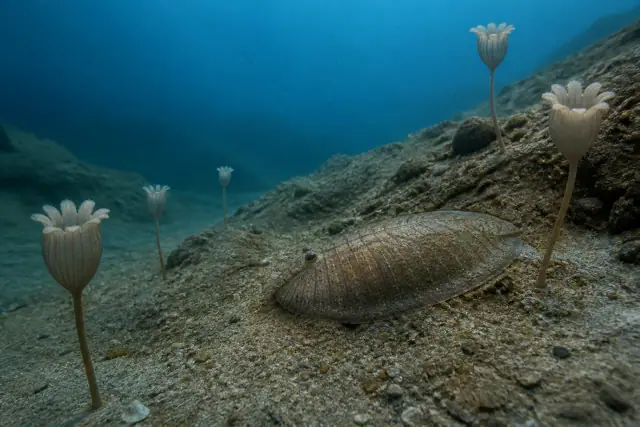
Dinomischus isolatus
A cup-shaped body attached by a long stalk and opened through a petal-ringed top.
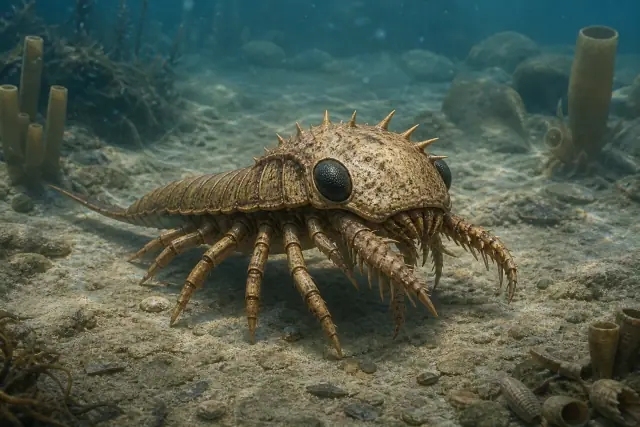
Habelia optata
A spiny head shield and specialized appendages belonged near the chelicerate stem.
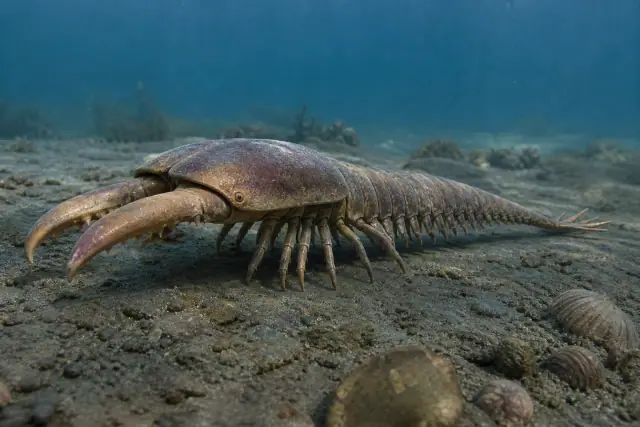
Tokummia katalepsis
Large pincer-like mandibles projected beneath a bivalved shell on an early mandibulate.
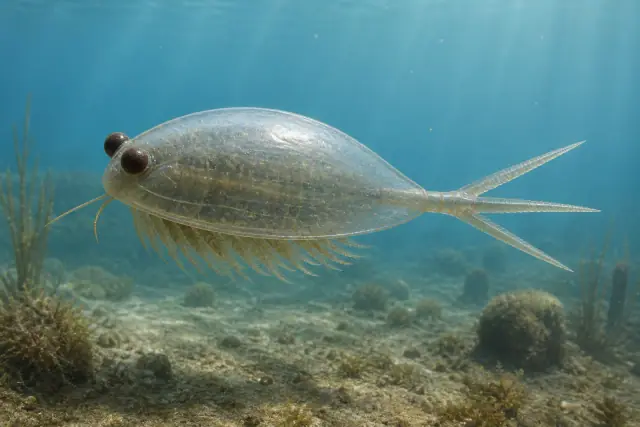
Odaraia alata
A broad bivalved shell enclosed most of the body and a three-pronged tail steered it.
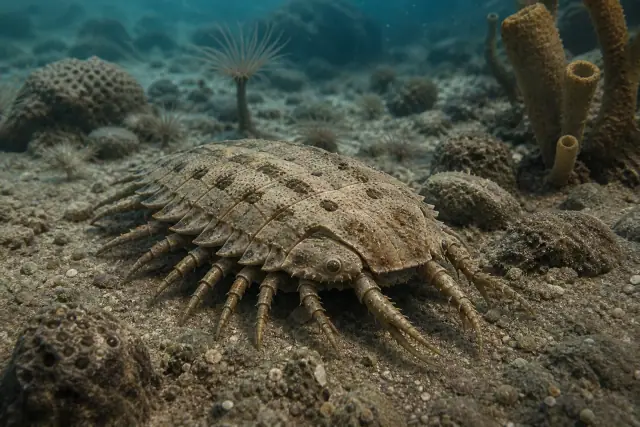
Mollisonia symmetrica
A tiny armored body and pincer-like front appendages suggest an early chelicerate relative.
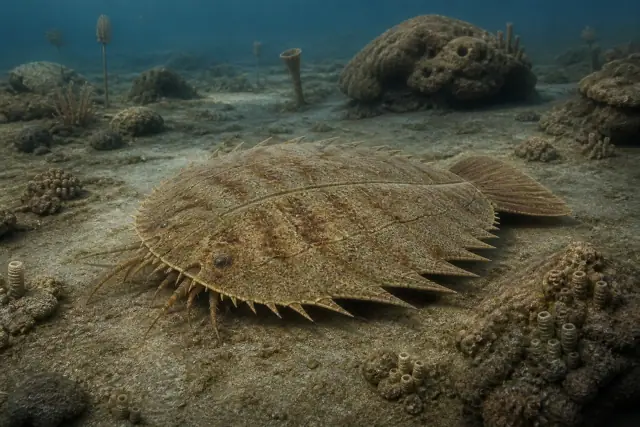
Helmetia expansa
A broad flat shield with marginal spines and a leaf-like tail formed an unusual outline.
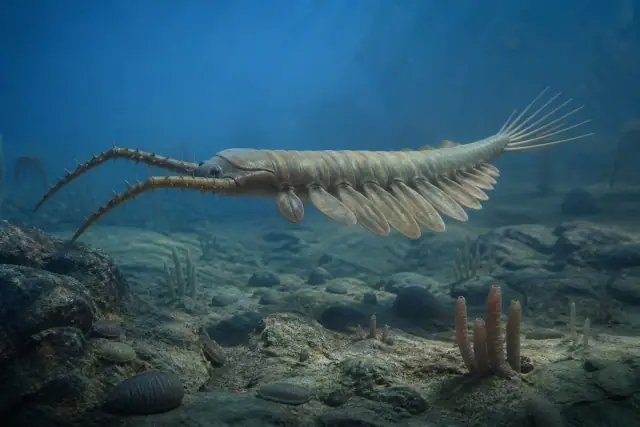
Kerygmachela kierkegaardi
Long frontal appendages, side flaps and tail spines record a stem-panarthropod body.
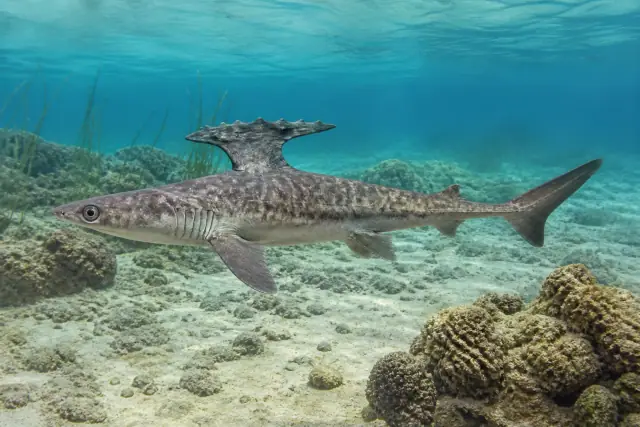
Akmonistion zangerli
Males carried a striking anvil-shaped brush-and-spine complex on the back.
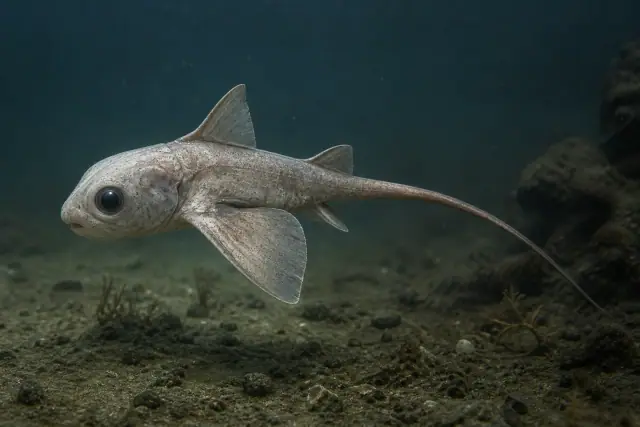
Echinochimaera meltoni
A short snout, large eyes and pectoral structures belonged to an early chimaera relative.
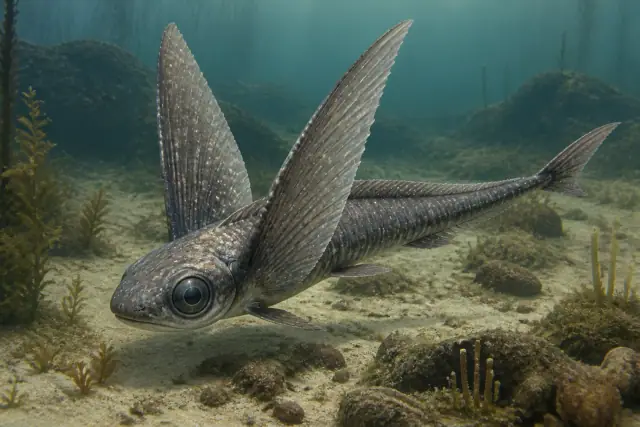
Iniopteryx rushlaui
Iniopteryx rushlaui was a small cartilaginous fish with broad pectoral fins attached high on its body; the fins suggest underwater strokes, not flight.
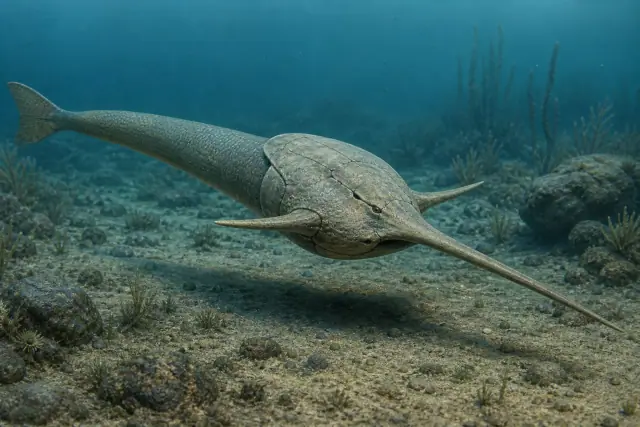
Doryaspis nathorsti
A spear-like rostrum and lateral horns projected from this jawless armored fish.
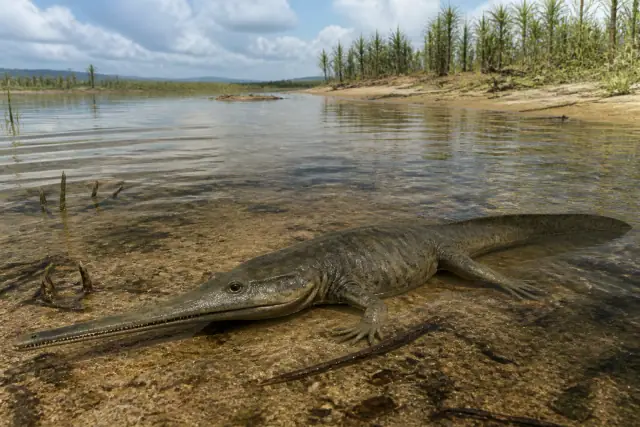
Aphaneramma rostratum
An extremely narrow snout gave this temnospondyl a gharial-like profile on an amphibian skeleton.
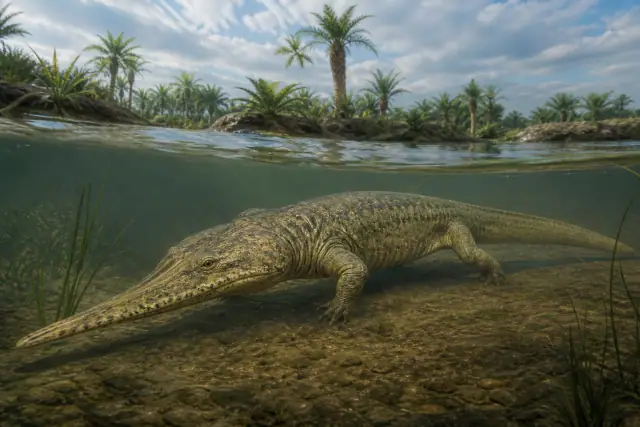
Trematosaurus brauni
A narrow sensory-grooved snout suited an open-water temnospondyl.
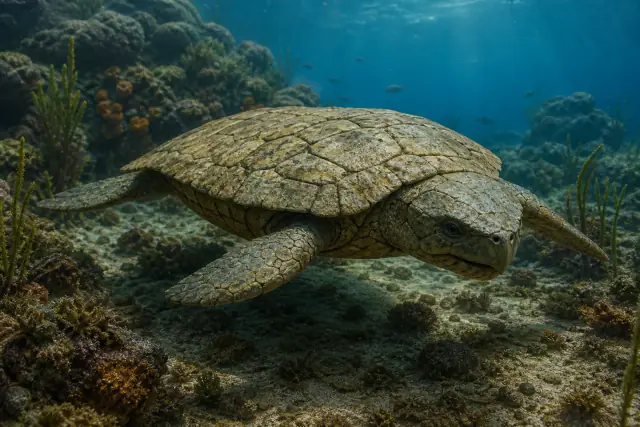
Placochelys placodonta
Placochelys placodonta was an armored placodont marine reptile, not a turtle; broad teeth support a hard-prey feeding interpretation.
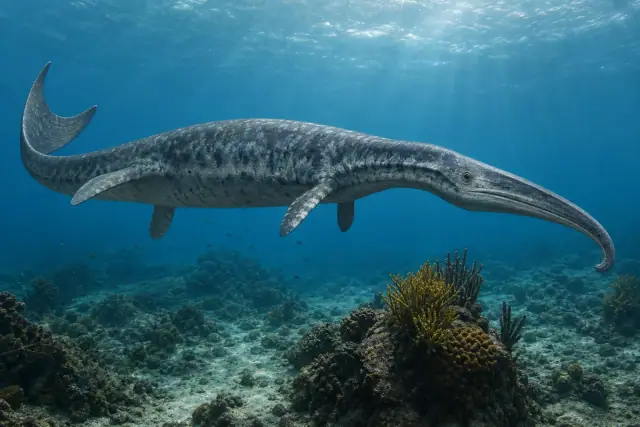
Thalattosaurus alexandrae
A long tail, paddle-like limbs and downturned snout marked a vanished marine-reptile branch.
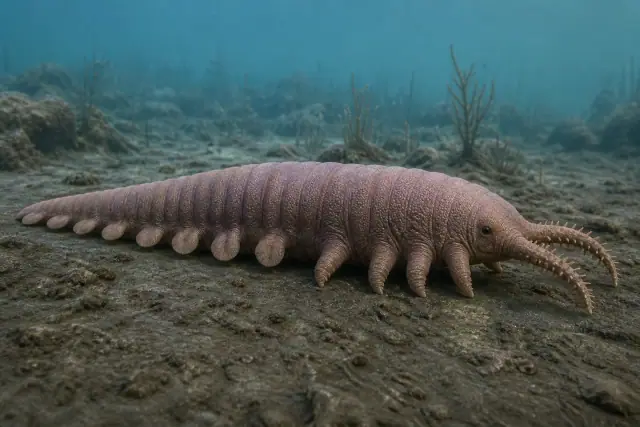
Pambdelurion whittingtoni
Large frontal appendages, rows of swimming flaps and an annulated soft body link lobopodians with true arthropods.
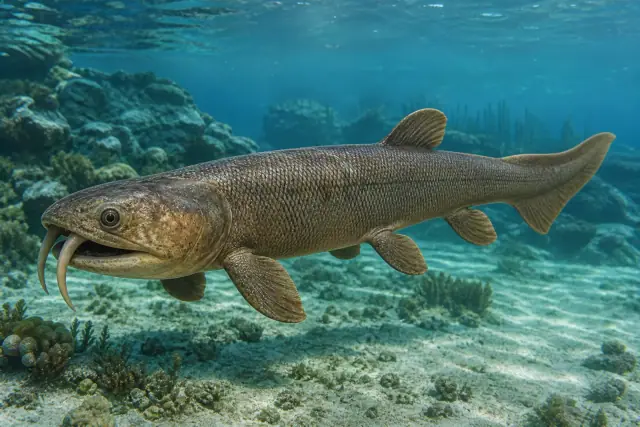
Onychodus jandemarrai
A pair of curved lower-jaw tusks and a kinetic skull helped this lobe-finned fish restrain prey.
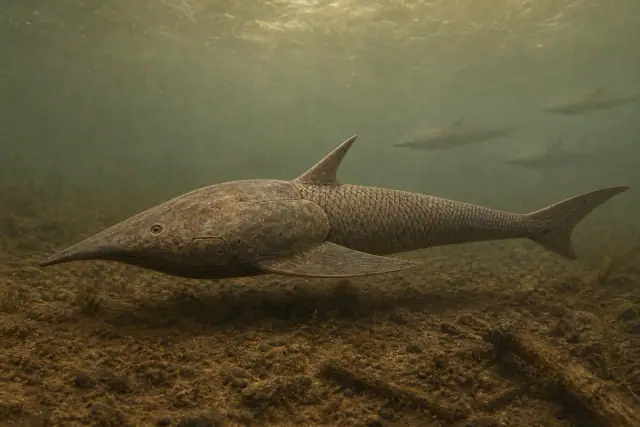
Pteraspis rostrata
A streamlined head shield extended into a rostrum, while a dorsal spine and lateral horns stabilized the jawless fish.
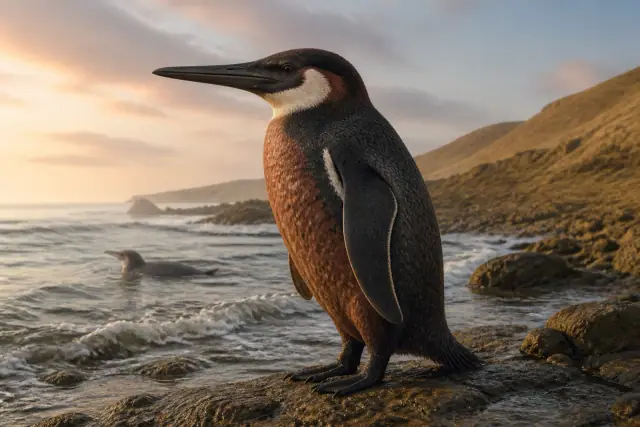
Inkayacu paracasensis
A near-human-height diving bird preserves feathers and melanosomes that opened direct study of ancient penguin color.
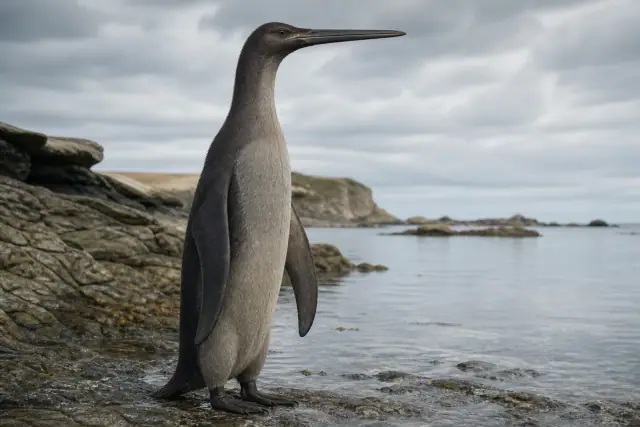
Kairuku grebneffi
A slender trunk, long bill and large flippers produced a taller silhouette than modern penguins.