01Cenozoic
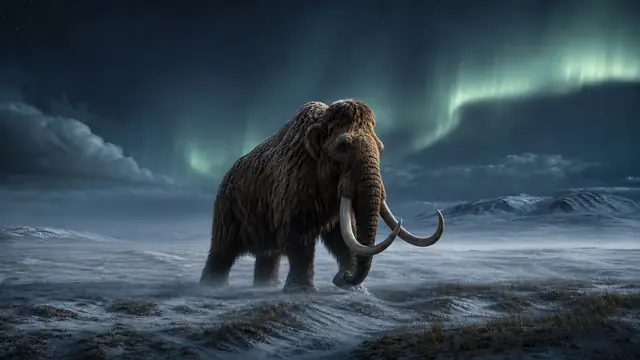
Woolly Mammoth
Mammuthus primigenius
They lived not on endless ice, but in a wind-shaped grassland ecosystem.
 EXTINCT ATLASEXTINCT LIFE ARCHIVEBack to archive
Epoch · Quaternary · 2.58–0.0117 million years ago
Discover Pleistocene megafauna, including mammoths, saber-toothed cats and giant ground sloths, across changing Ice Age habitats.
This Quaternary epoch alternated glacial and warmer intervals. Its animals did not all live on frozen tundra. Extinctions varied by region and lineage; some mammoths survived into the Holocene. The archive includes small animals as well as megafauna.
The Pleistocene is an epoch of the Quaternary, from about 2.58 million to 11,700 years ago on the international geological time scale. It included repeated glacial and warmer intervals; the end of the epoch is a time boundary, not the date when every ice-age species died.
The archive includes mammoths, saber-toothed cats, giant ground sloths and armored glyptodonts. Those familiar large mammals are only part of the story: birds, reptiles, small mammals and surviving species also belonged to Pleistocene ecosystems. Records from different continents and dates must not be treated as one shared scene.
No. Even northern Beringia had extensive ice-free habitat during the last glacial maximum, and species distributions shifted with vegetation and climate. Human pressure and environmental change are studied for late-Quaternary losses, but their relative roles differ by place and species. Some mammoth populations survived into the Holocene on islands, so a single global extinction date is misleading.
Mammuthus primigenius
They lived not on endless ice, but in a wind-shaped grassland ecosystem.
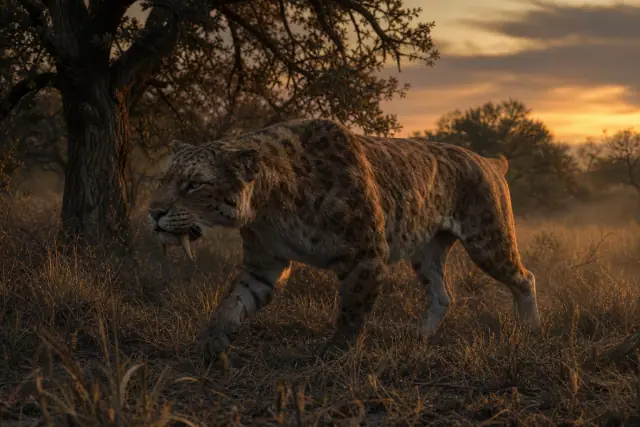
Smilodon fatalis
Its enormous canines were only part of the weapon; the real power lay in exceptionally strong forelimbs.
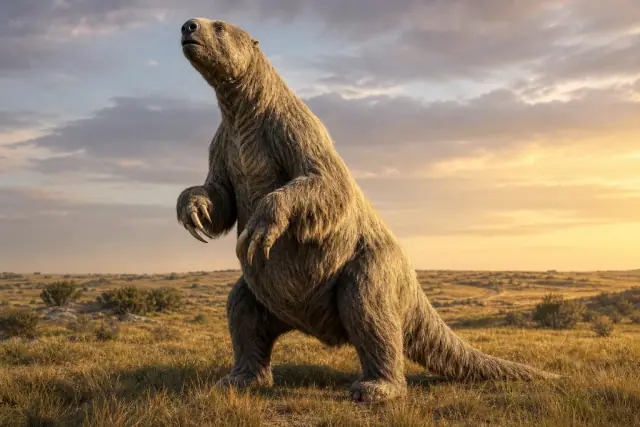
Megatherium americanum
Standing on its hind legs, this elephant-sized sloth could reach high branches with huge claws.
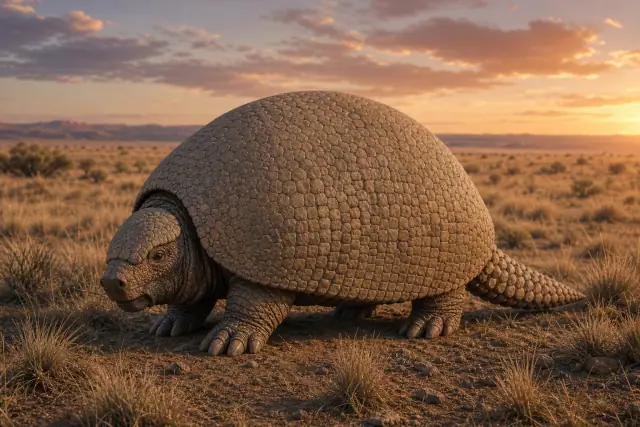
Glyptodon clavipes
A domed shell of fused armor protected this car-sized relative of armadillos.
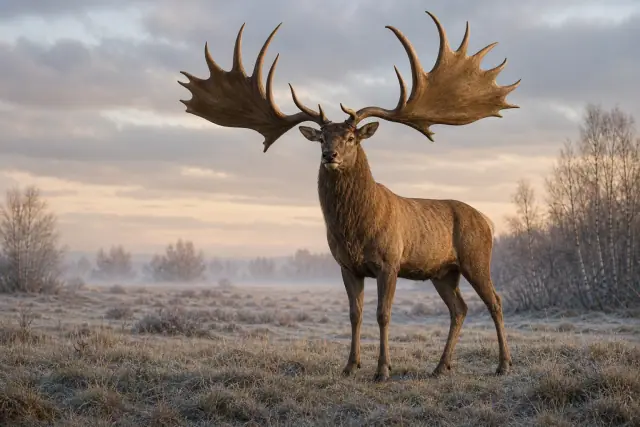
Megaloceros giganteus
The largest deer antlers known were seasonal structures for display and competition.
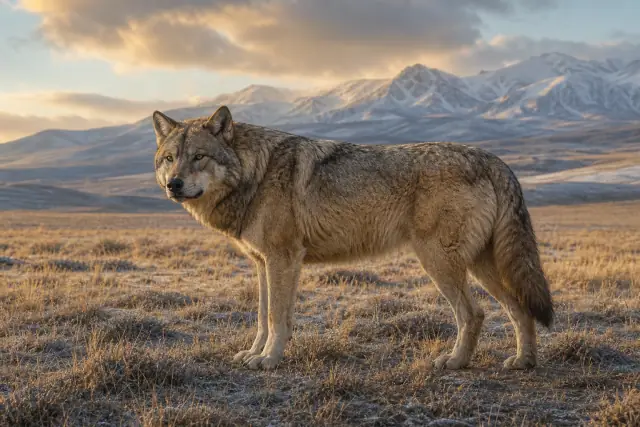
Aenocyon dirus
A heavy-jawed canid hunted the large herbivores of Ice Age America.
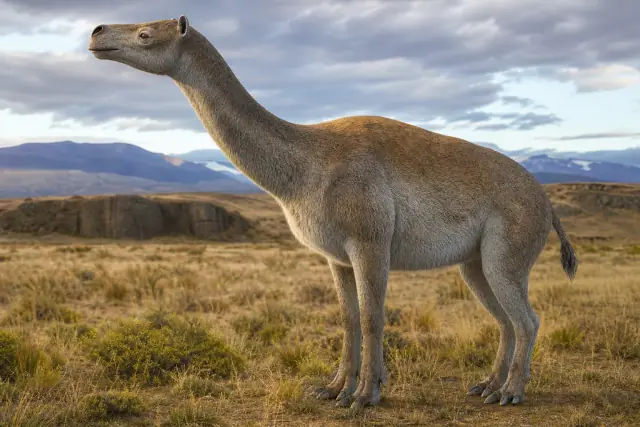
Macrauchenia patachonica
This long-necked hoofed mammal belonged to a uniquely South American lineage.
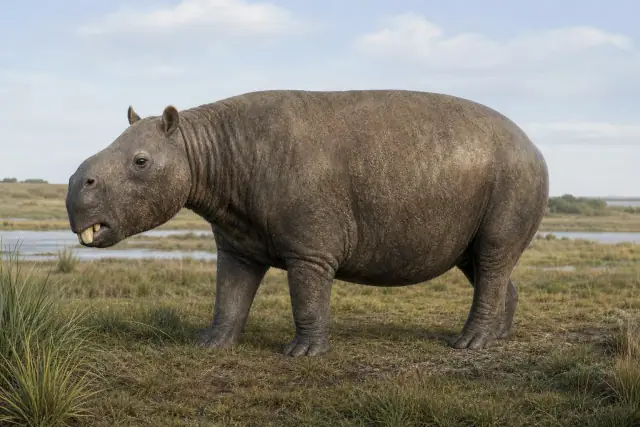
Toxodon platensis
A heavy-bodied native ungulate grazed and browsed beside Ice Age giants.
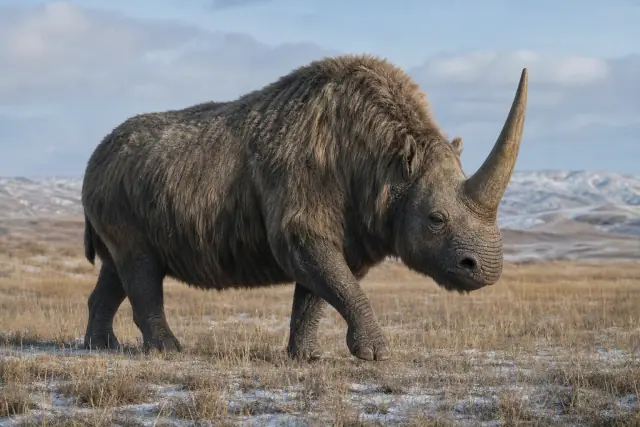
Elasmotherium sibiricum
This enormous grazing rhinoceros probably supported a large horn on its forehead.
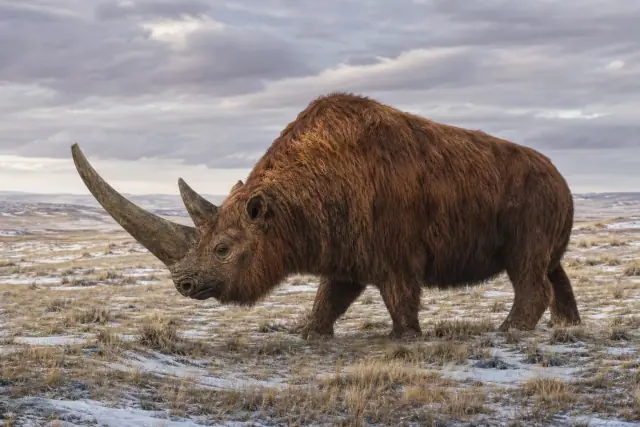
Coelodonta antiquitatis
A thick coat and flattened horn equipped this rhinoceros for cold, dry mammoth steppe.
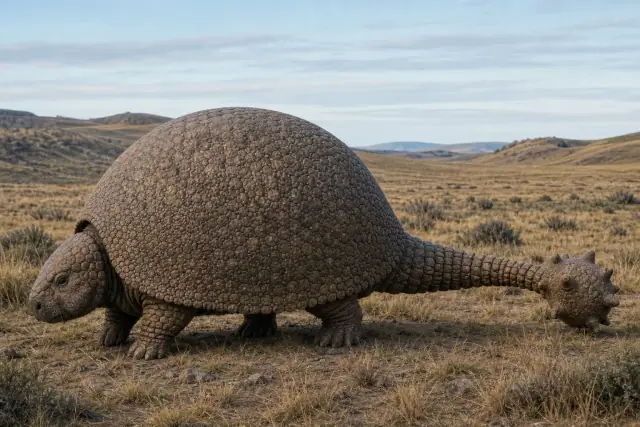
Doedicurus clavicaudatus
A spiked tail club completed the armor of this giant glyptodont.
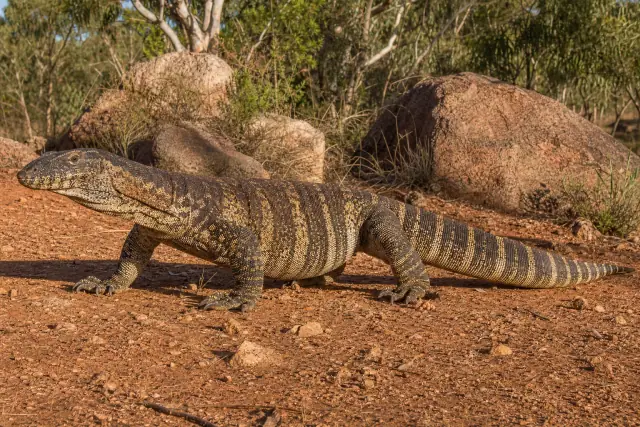
Varanus priscus
The largest known terrestrial lizard was a giant relative of monitor lizards.
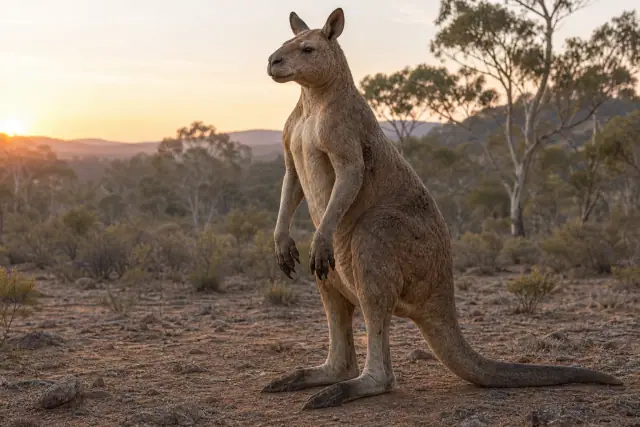
Procoptodon goliah
A broad face, forward-looking eyes and single-toed feet distinguished this giant kangaroo.
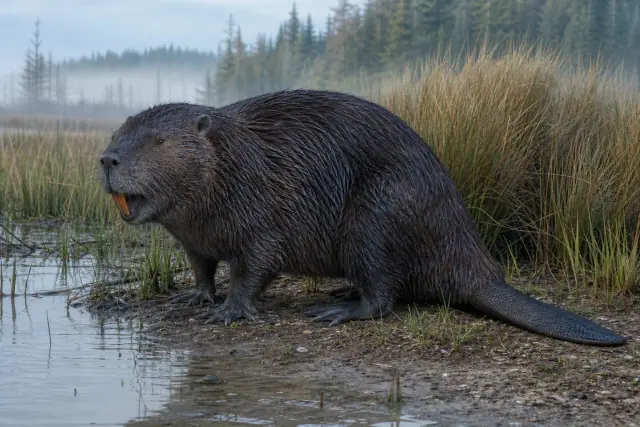
Castoroides ohioensis
This black-bear-sized beaver had ridged teeth and depended on extensive wetlands.
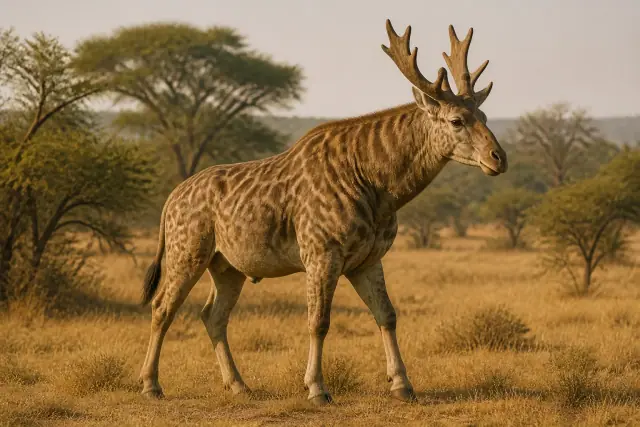
Sivatherium giganteum
A massive body, broad feet and four ossicones made this giraffid resemble both deer and cattle.
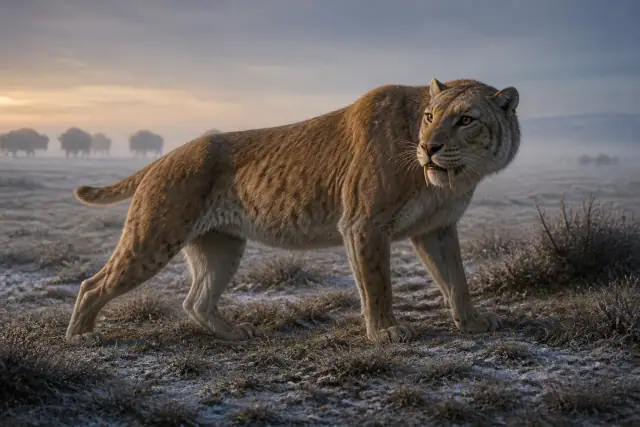
Homotherium serum
Short blade-like canines, long forelimbs and a sloping back suited pursuit of large prey.
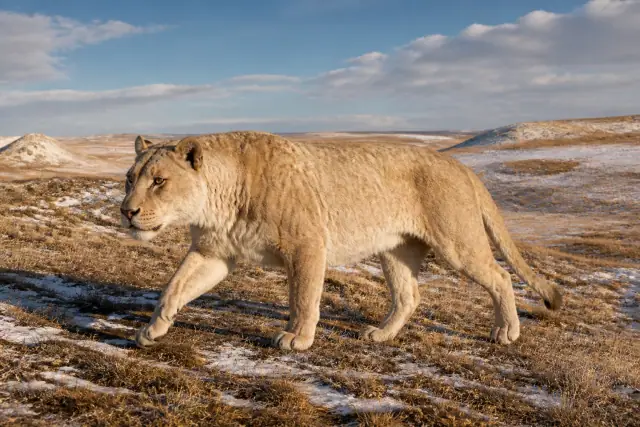
Panthera spelaea
Ice Age art usually shows this immense cat without the heavy mane of many modern male lions.
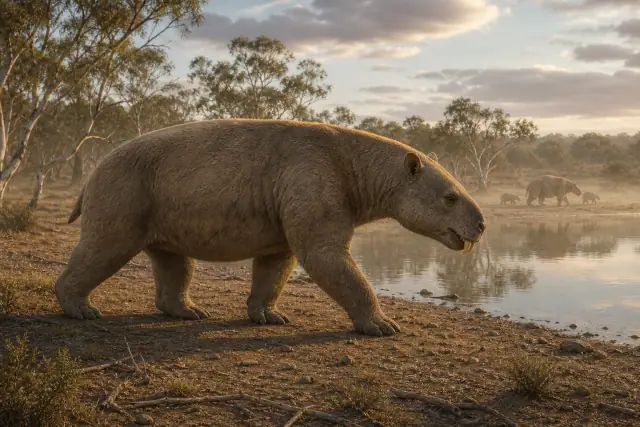
Diprotodon optatum
This rhinoceros-sized marsupial clipped plants with two forward incisors and moved between seasonal water sources.
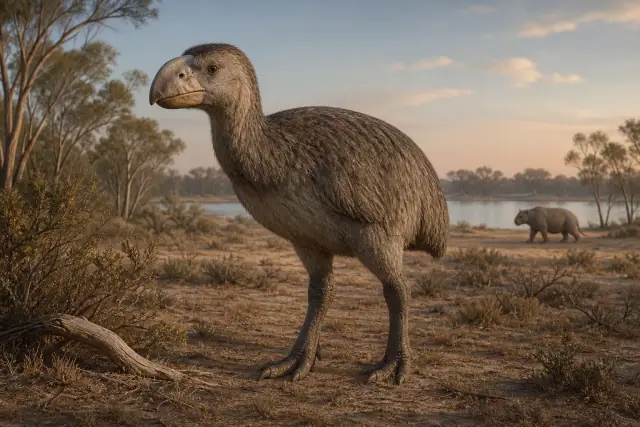
Genyornis newtoni
This two-meter flightless bird had a deep jaw and powerful legs, probably feeding on soft leaves, fruit and shoots.
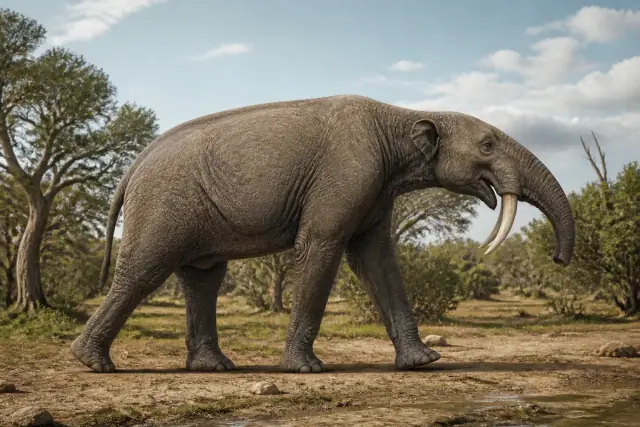
Deinotherium giganteum
Only the lower jaw carried tusks, curving downward beneath a body taller than most modern elephants.
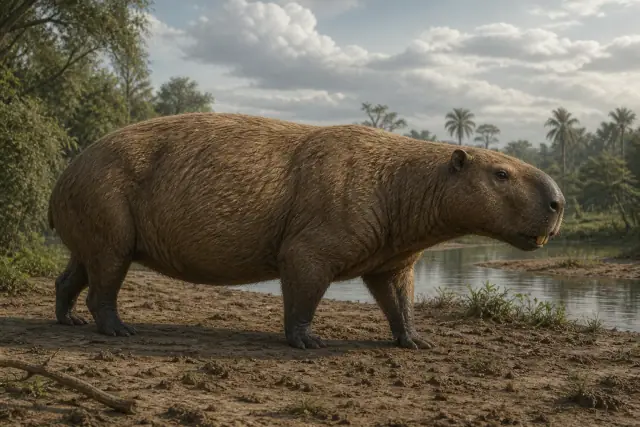
Josephoartigasia monesi
It may have approached a tonne, with giant incisors capable of generating exceptional bite forces.
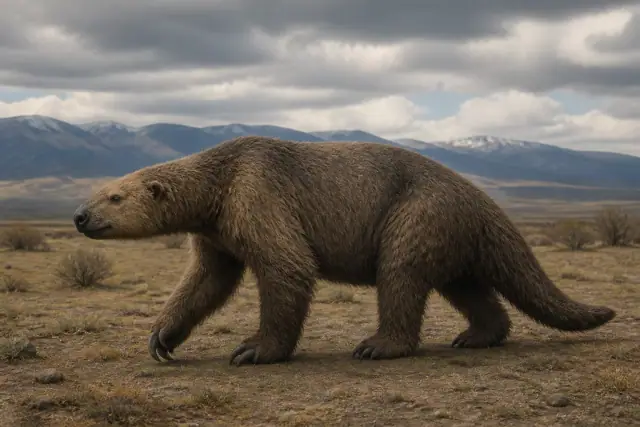
Mylodon darwinii
Thick hide reinforced by tiny bony nodules protected this large ground sloth.
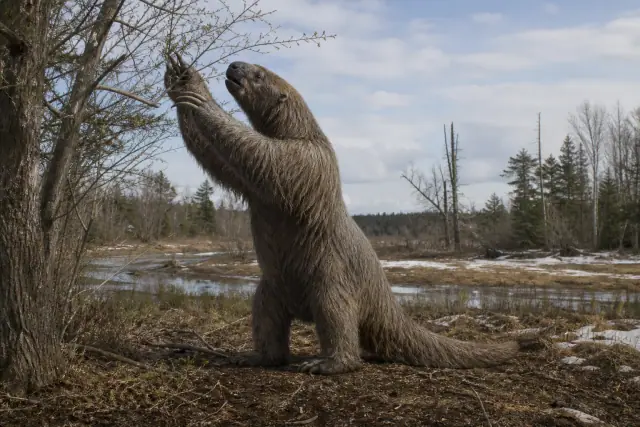
Megalonyx jeffersonii
Huge curved claws belonged to a forest browser whose name is tied to Thomas Jefferson.
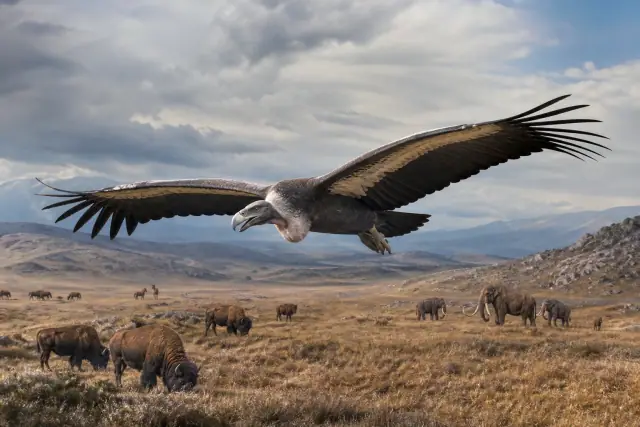
Teratornis merriami
A large soaring bird with an estimated 11–12 ft wingspan; its diet involved more than a simple vulture comparison.
No. Many lineages and some species survived into the Holocene. This archive focuses on extinct life, so its list is not a complete census of all animals living during the epoch.
No non-avian dinosaurs lived in the Pleistocene. They disappeared at the end of the Cretaceous, tens of millions of years before this epoch. Birds are living dinosaurs in the evolutionary sense.
No. Dated fossils from Wrangel Island show dwarf mammoths surviving into the Holocene, thousands of years after the Pleistocene boundary.