145Paleozoic
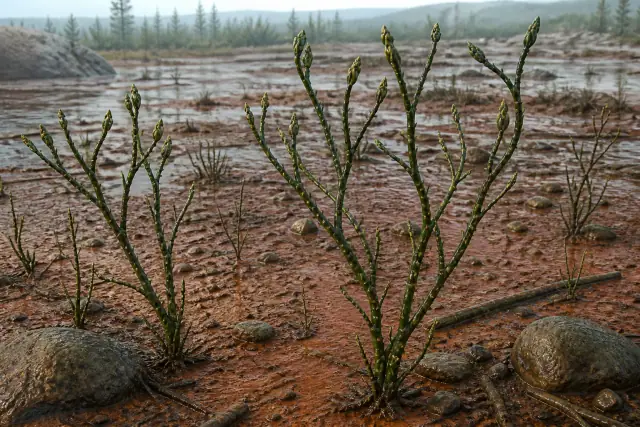
Psilophyton
Psilophyton dawsonii
Naked axes forked repeatedly, their fertile tips curling inward and carrying paired elongated sporangia.
LIFE ARCHIVE
Browse extinct life from traces nearly 1.9 billion years old to historically recorded extinctions.
Psilophyton dawsonii
Naked axes forked repeatedly, their fertile tips curling inward and carrying paired elongated sporangia.
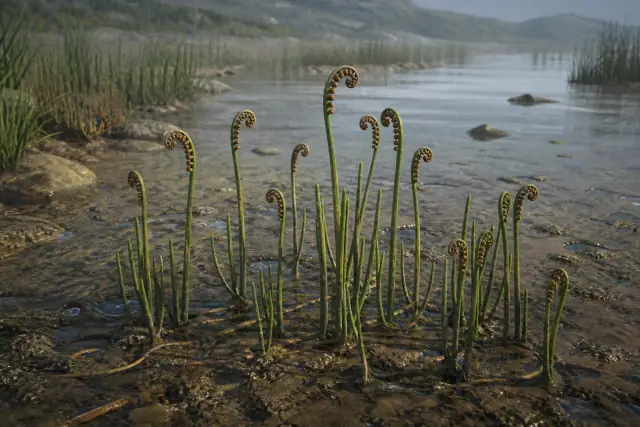
Zosterophyllum myretonianum
Two rows of kidney-shaped sporangia lined curved branch tips like the teeth of an unfinished botanical zipper.
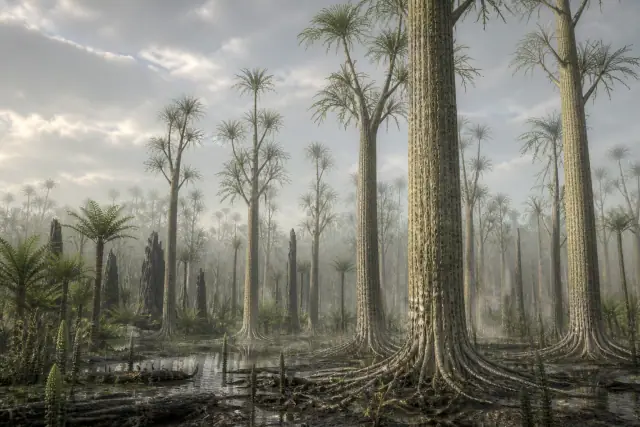
Sigillaria brardii
Vertical rows of leaf scars stamped the tall trunk, beneath a crown of sparse branches and grasslike microphylls.
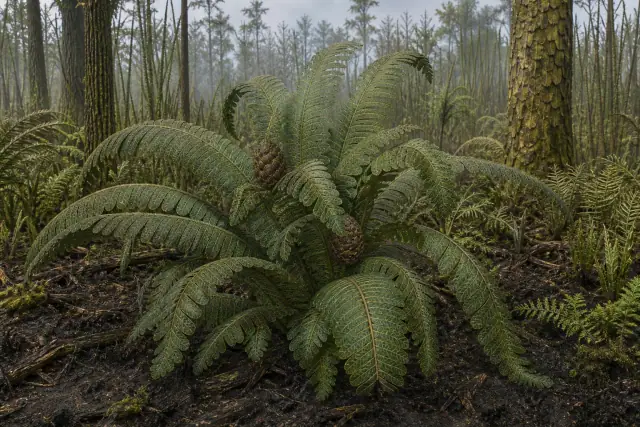
Neuropteris ovata
Rounded pinnules carried fanlike veins and looked fernlike, yet immense seeds grew among the fronds.
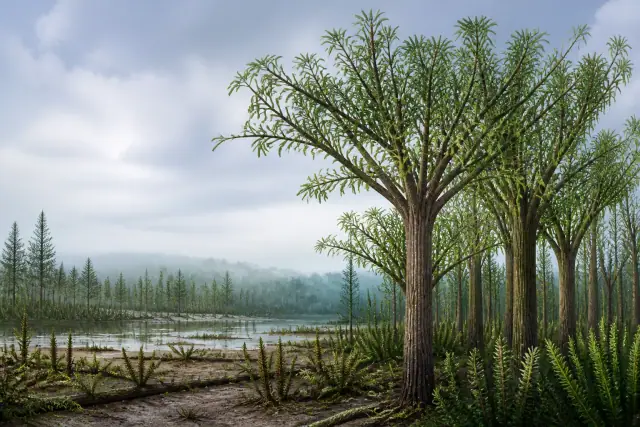
Cordaites principalis
Clusters of long strap-shaped leaves crowned woody trees from an extinct gymnosperm lineage near early conifers.
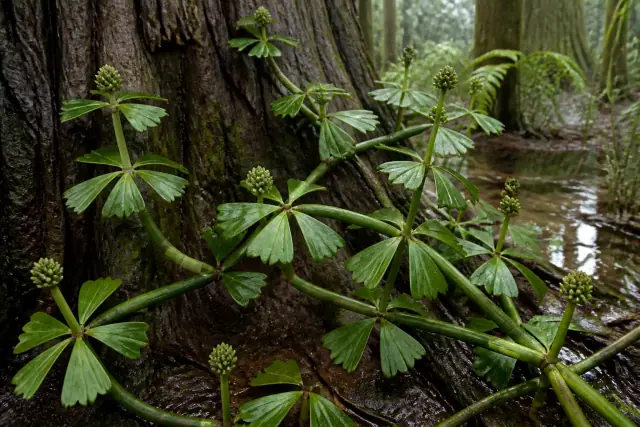
Sphenophyllum emarginatum
Six wedge-shaped leaves encircled each node of a slender stem that trailed across the ground or climbed larger trees.
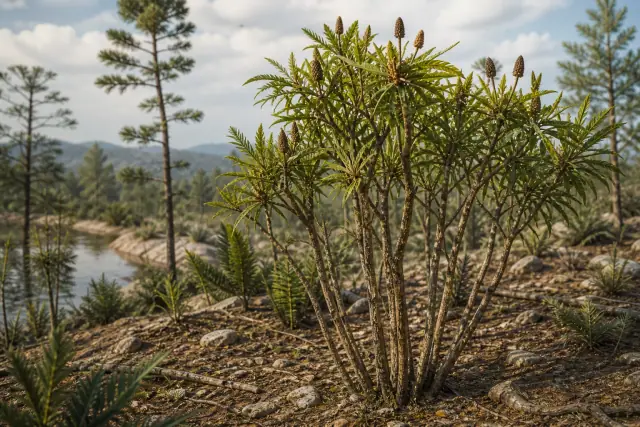
Pentoxylon sahnii
Several separate woody columns occupied one stem beneath clusters of long leaves and unusual male and female organs.
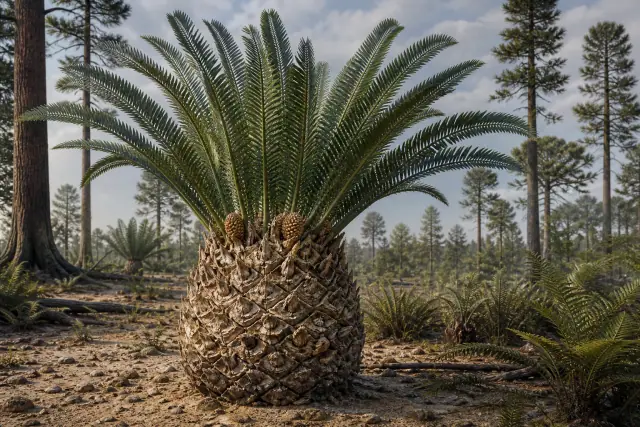
Cycadeoidea gigantea
A stout barrel-shaped trunk held a pinnate crown and many flower-like bisexual reproductive structures among old leaf bases.
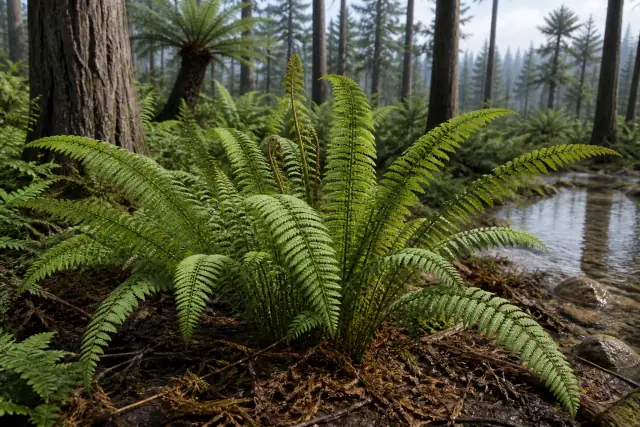
Cladophlebis denticulata
Finely pinnate fronds carpeted Jurassic understories, each toothed leaflet crossed by repeatedly branching veins.
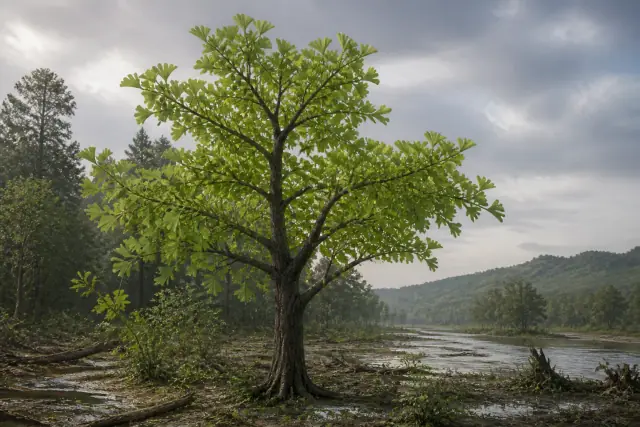
Ginkgo cranei
Fan-shaped leaves and paired ovules continued the ginkgo body plan in a species that did not survive to the present.
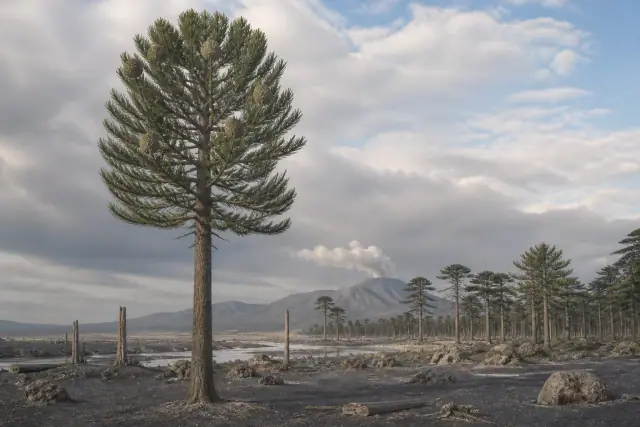
Araucaria mirabilis
Tall conifers bore nearly spherical cones whose internal scales and ovules were silicified by volcanic landscapes.
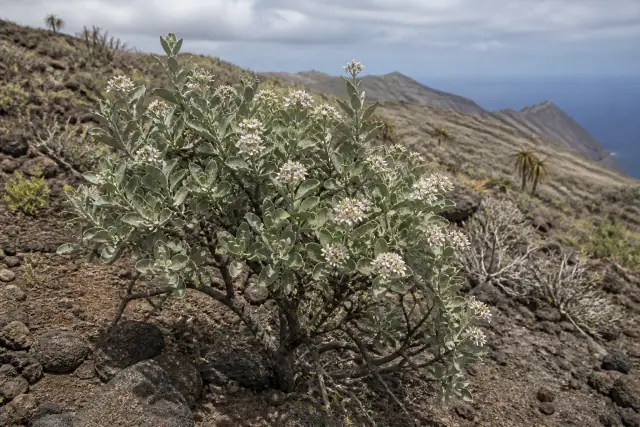
Trochetiopsis melanoxylon
Silvery hairy leaves and small pale flowers once covered dry slopes; the last reliable collection was made in 1771.
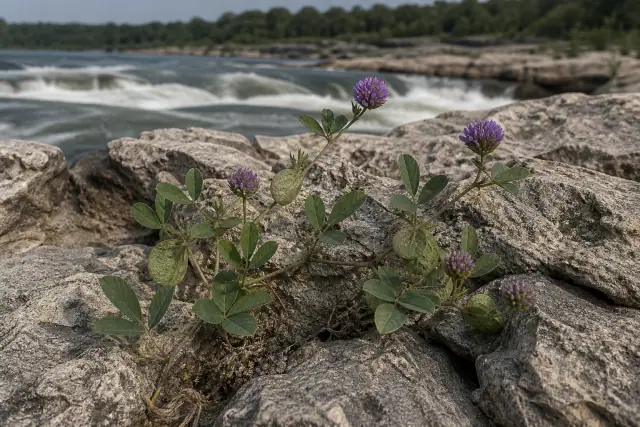
Orbexilum stipulatum
Purple pea flowers grew on one limestone river island, with the final herbarium collection made in 1881.
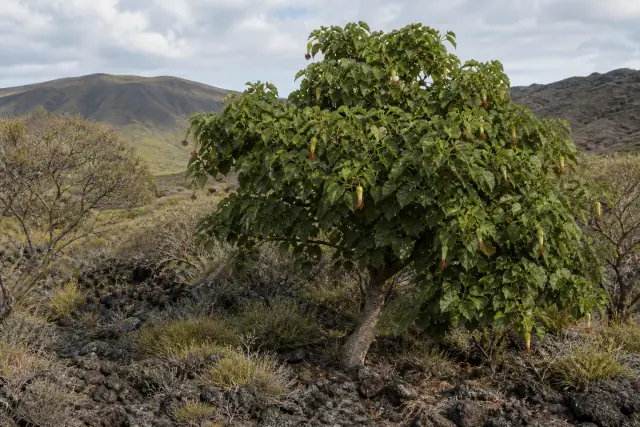
Hibiscadelphus wilderianus
The only scientifically recorded tree bore curved yellow-green tubular flowers probably adapted to Hawaiian honeycreepers.
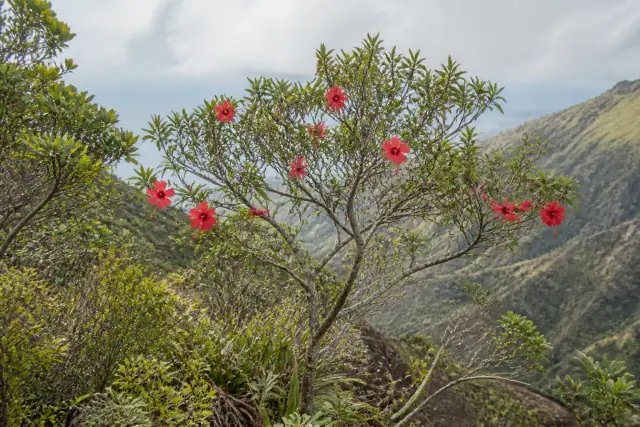
Kokia lanceolata
Narrow leaves and hibiscus-like red flowers were confined to southeastern Oʻahu and vanished within decades of discovery.
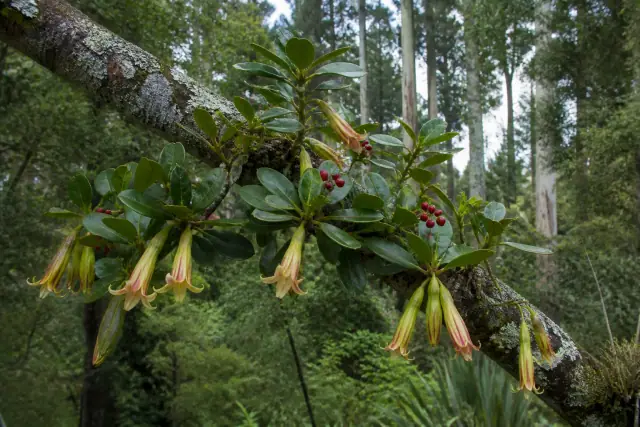
Trilepidea adamsii
Red-striped yellow-green tubular flowers opened among fleshy paired leaves; the last reliable sighting was in 1954.
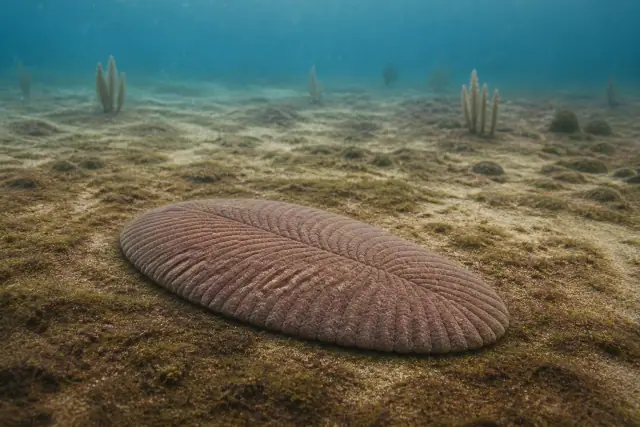
Dickinsonia costata
Its flat oval body moved across microbial mats like a rhythmically quilted cushion, leaving feeding traces behind.
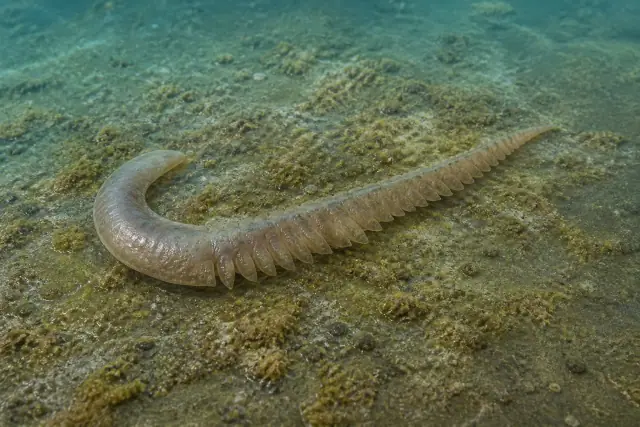
Spriggina floundersi
A horseshoe-shaped front led a body of offset leaflike units, giving it the appearance of a flattened soft worm.
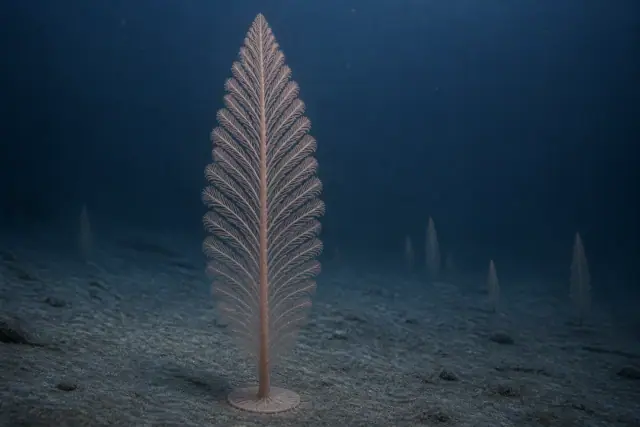
Charnia masoni
A featherlike body of repeating branches was anchored by a disc in deep water, yet it had neither chlorophyll nor a mouth.
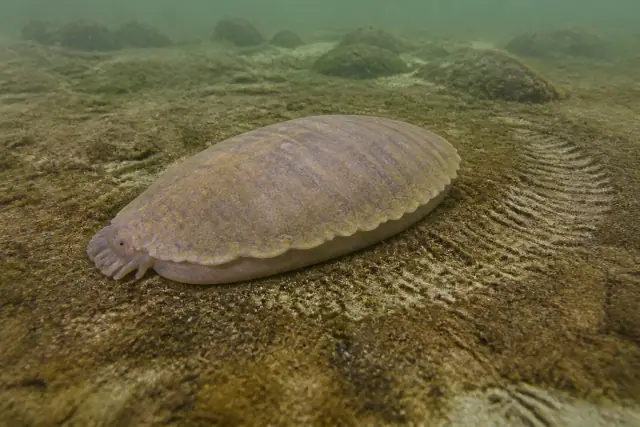
Kimberella quadrata
Its low oval body crawled across microbial mats while a front feeding structure left fan-shaped sets of scratches.
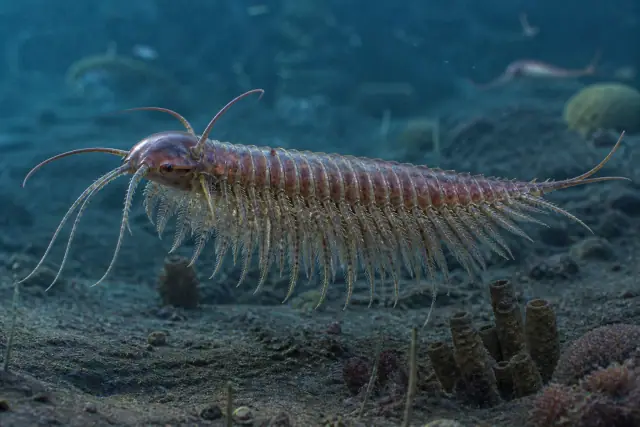
Marrella splendens
Two pairs of curved head spines, long antennae and dozens of fine legs made this two-centimeter arthropod exquisitely elaborate.
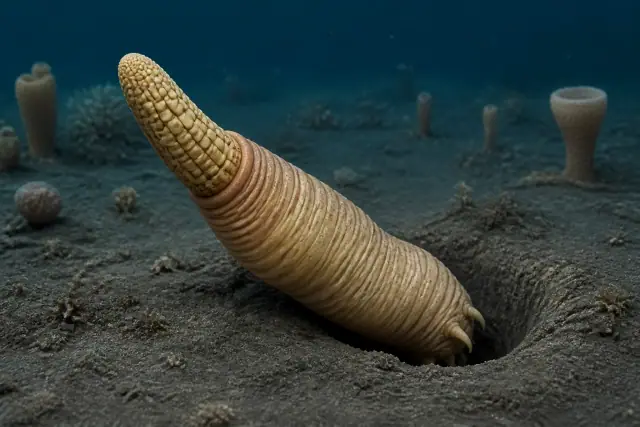
Ottoia prolifica
Its stout body hid in a U-shaped burrow while a spiny, hook-studded throat could turn inside out to seize food.
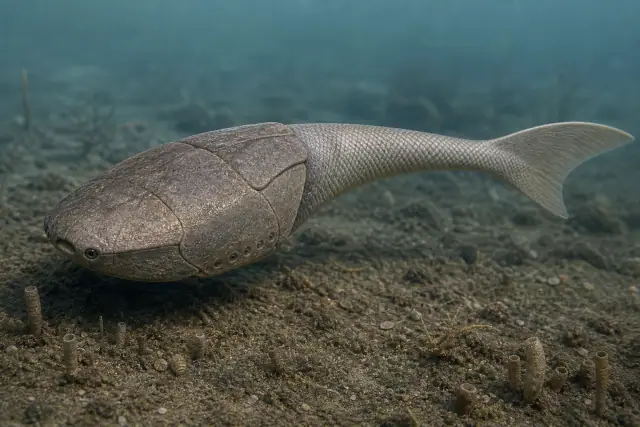
Sacabambaspis janvieri
An armored jawless fish with a broad head shield and an elongated tail; fossil distortion leaves parts of the tail outline uncertain.
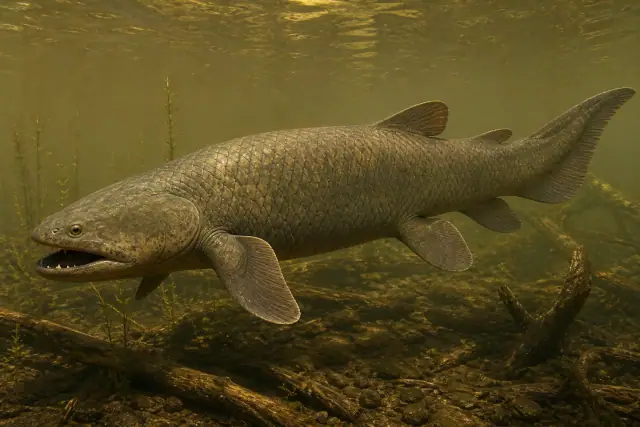
Hyneria lindae
This giant lobe-finned predator used fanglike teeth to ambush prey, while its fin skeleton followed a tetrapod-like pattern.
Explore the atlas by continent, country and state. Follow fossil localities into regional guides, compare animals across time and return to the evidence in each species profile.
FIELD GUIDES
Giants, strange body plans and lives within human memory. Follow a question into the atlas, then explore the animals behind it.