169Paleozoic
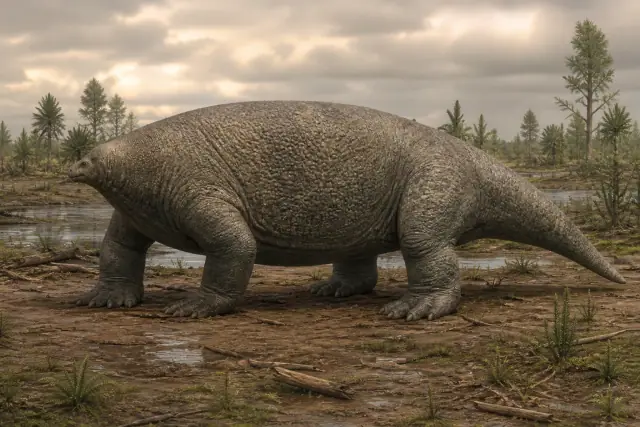
Cotylorhynchus
Cotylorhynchus romeri
A tiny head joined a barrel-shaped giant body whose broad ribs enclosed a vast plant-fermenting digestive system.
LIFE ARCHIVE
Browse extinct life from traces nearly 1.9 billion years old to historically recorded extinctions.
Cotylorhynchus romeri
A tiny head joined a barrel-shaped giant body whose broad ribs enclosed a vast plant-fermenting digestive system.
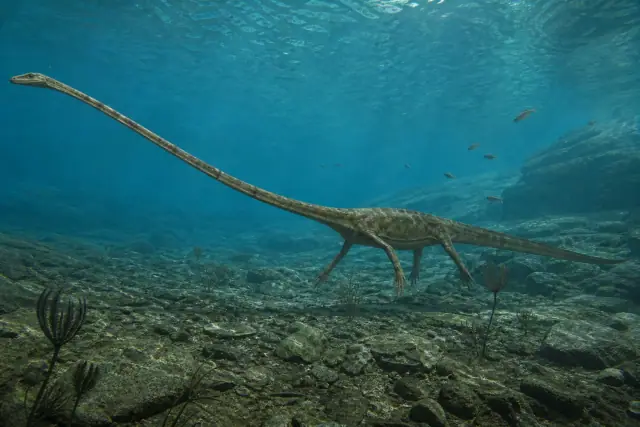
Tanystropheus hydroides
Thirteen extremely elongated vertebrae formed a neck as long as half the body, while the skull snapped at fish and cephalopods.
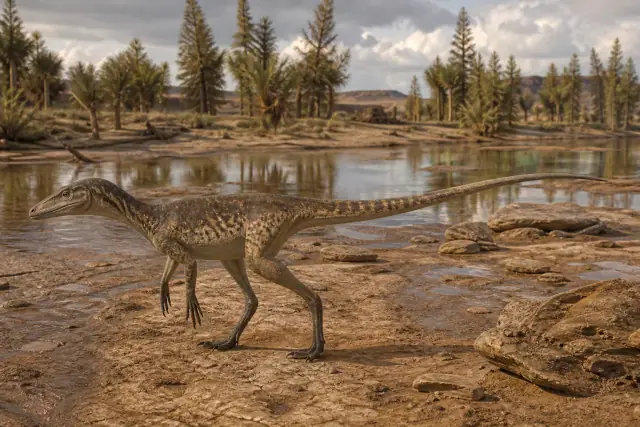
Eoraptor lunensis
A lightly built one-meter animal ran on two legs with both sharp and leaf-shaped teeth in its jaws.
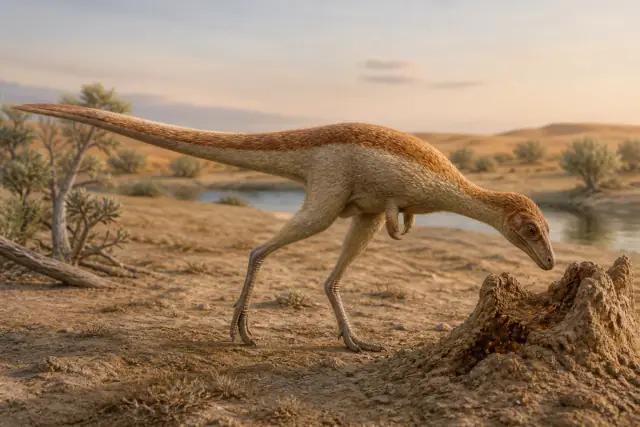
Mononykus olecranus
Each tiny forearm ended in one stout main claw, perhaps used to tear open insect nests like a modern anteater.
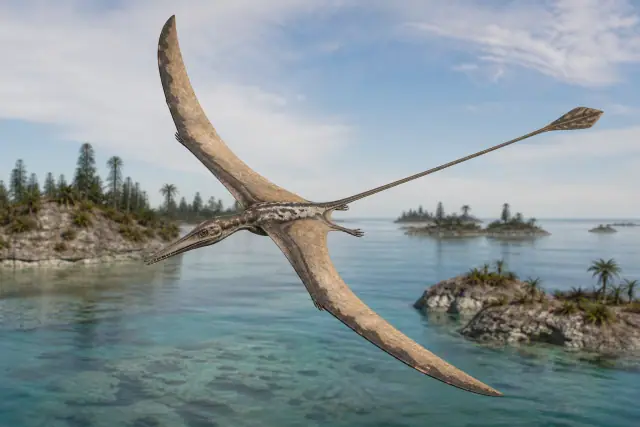
Rhamphorhynchus muensteri
Needle teeth lined long jaws while a diamond-shaped membrane at the stiff tail tip helped control flight above island seas.
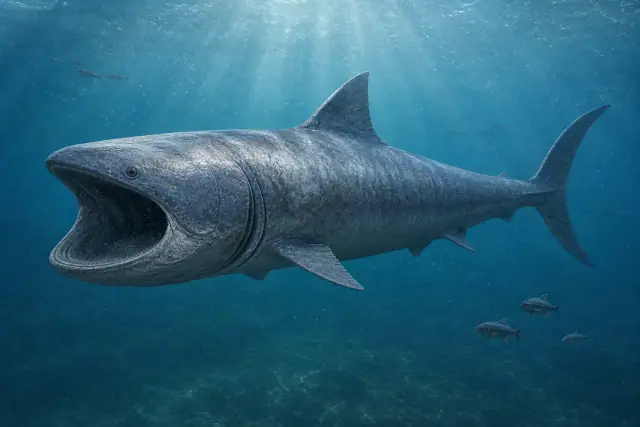
Leedsichthys problematicus
This giant bony fish opened a broad mouth and strained plankton through dense gill rakers, much like a whale shark.
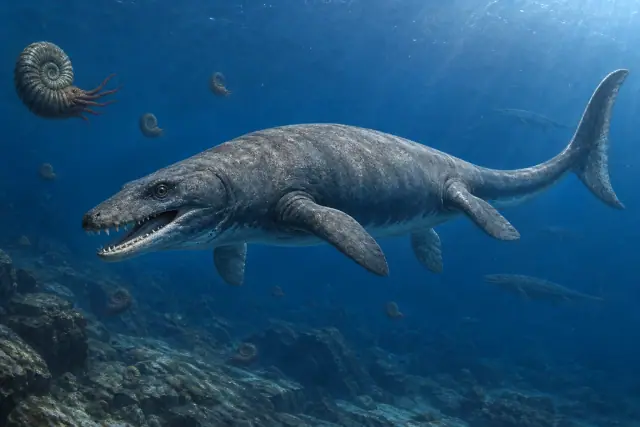
Dakosaurus maximus
A short deep skull carried serrated blades, while this marine crocodile's body had transformed into four flippers and a fishlike tail.
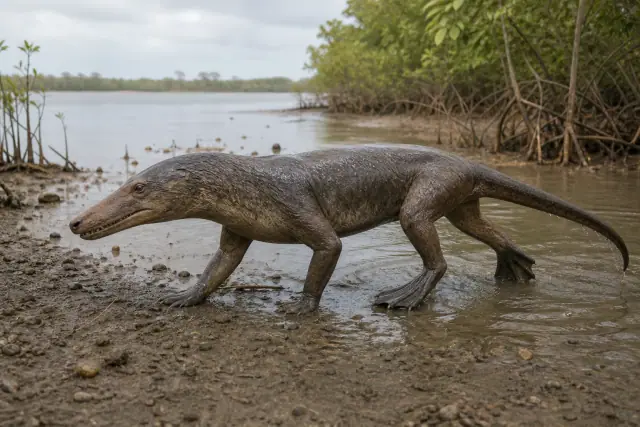
Ambulocetus natans
Strong limbs could still bear weight, yet long feet paddled through water and the ear region was adapting to underwater sound.
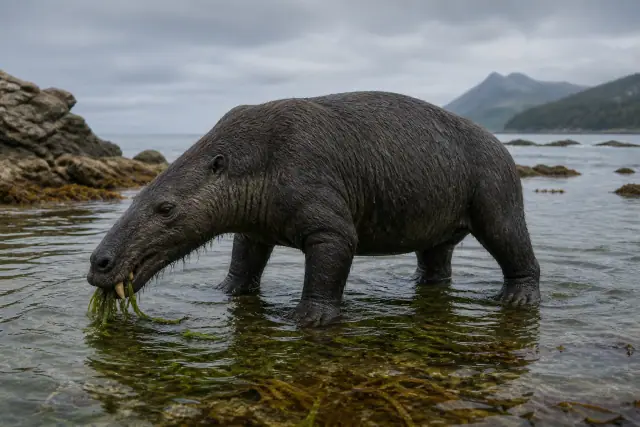
Desmostylus hesperus
Bundles of enamel-wrapped tooth columns and broad limbs helped it crop aquatic plants in tidal flats and shallow water.
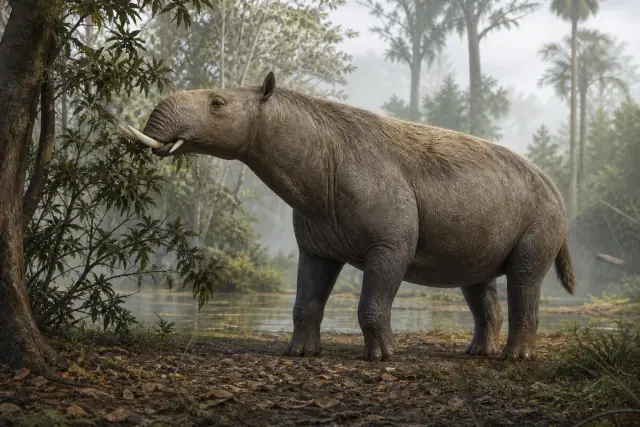
Astrapotherium magnum
Rear-shifted nostrils and four tusks document a distinctive skull; a short trunk is a soft-tissue reconstruction inferred from the bones.
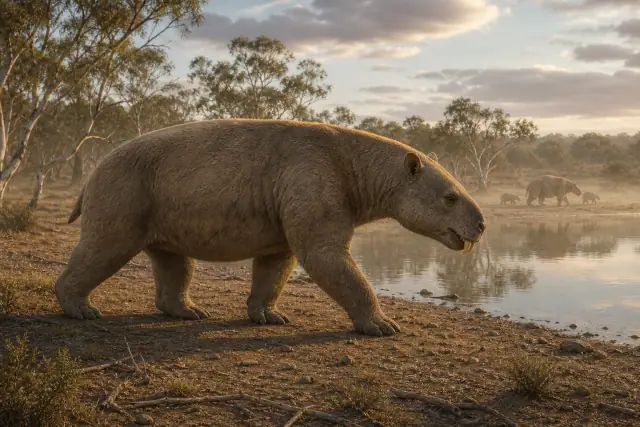
Diprotodon optatum
This rhinoceros-sized marsupial clipped plants with two forward incisors and moved between seasonal water sources.
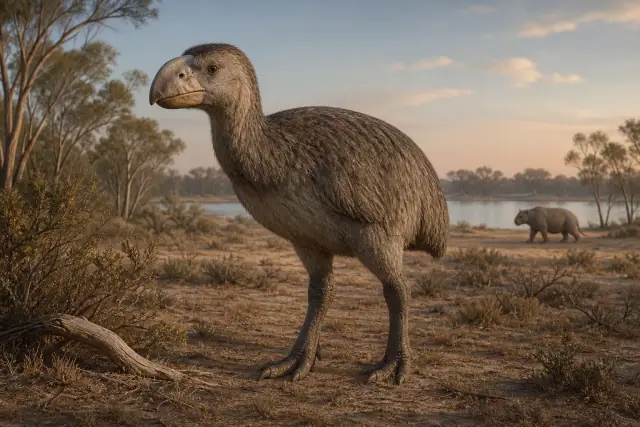
Genyornis newtoni
This two-meter flightless bird had a deep jaw and powerful legs, probably feeding on soft leaves, fruit and shoots.
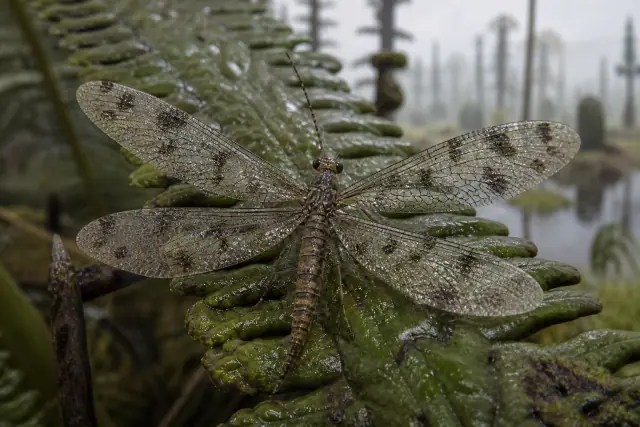
Delitzschala bitterfeldensis
A patterned wing only about two centimeters across pushes the secure record of insect flight into the Early Carboniferous.
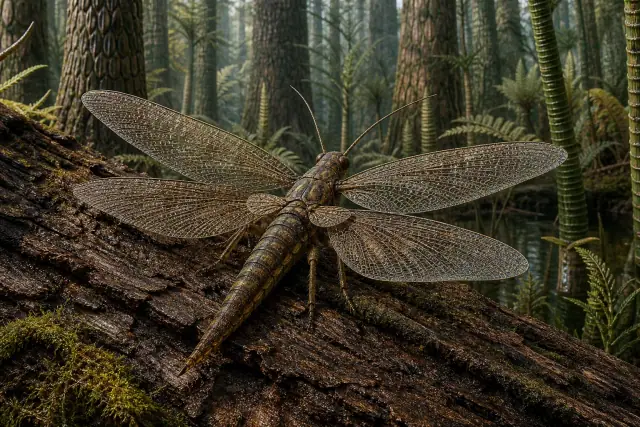
Stenodictya lobata
Beyond four wings packed with netlike veins, the thorax carried a pair of small immobile winglets.
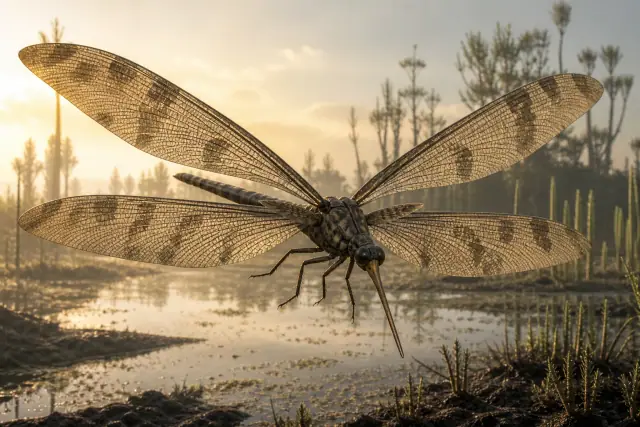
Mazothairos enormis
Scaling from the surviving giant wing suggests a four-winged span near half a meter, among the largest palaeodictyopterans known.
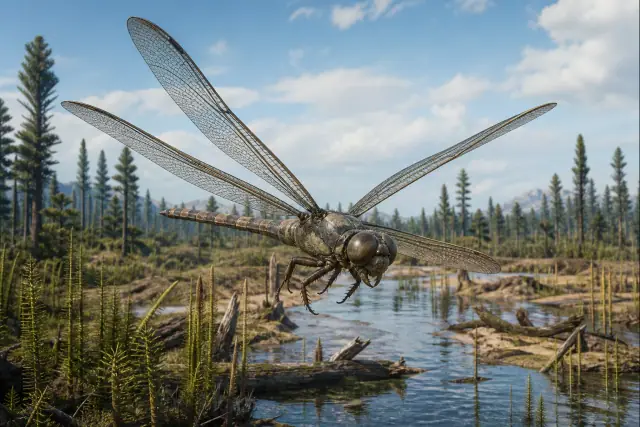
Meganeuropsis permiana
The largest estimates reach a 71-centimeter wingspan, placing it among the biggest flying insects in Earth history.
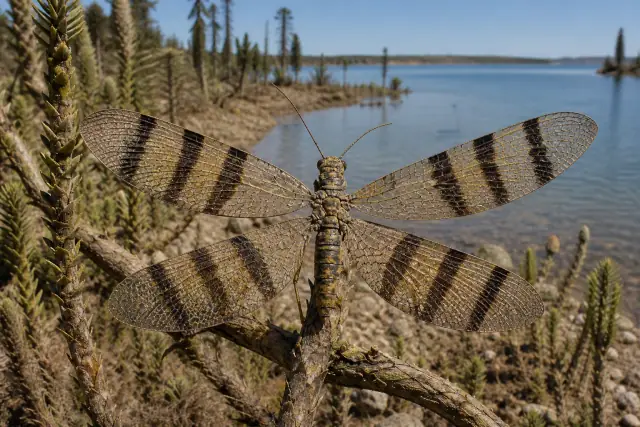
Dunbaria fasciipennis
Banded dark patterns remain on its fossil wings, returning color pattern to a Permian insect rather than a blank outline.
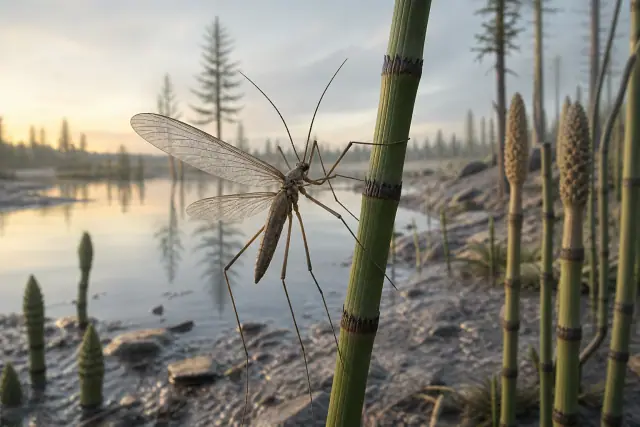
Permotipula patricia
A wing resembling that of a crane fly was once treated as an early dipteran clue, but its true affinity remains disputed.
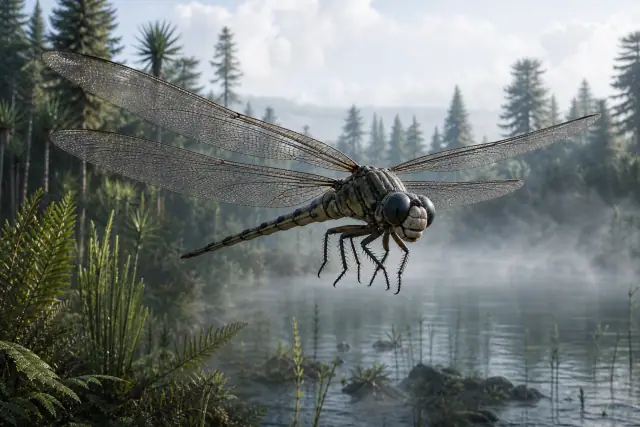
Liassophlebia magnifica
Four broad, densely veined wings carried this stem dragonfly on patrol above Jurassic lakeshores.
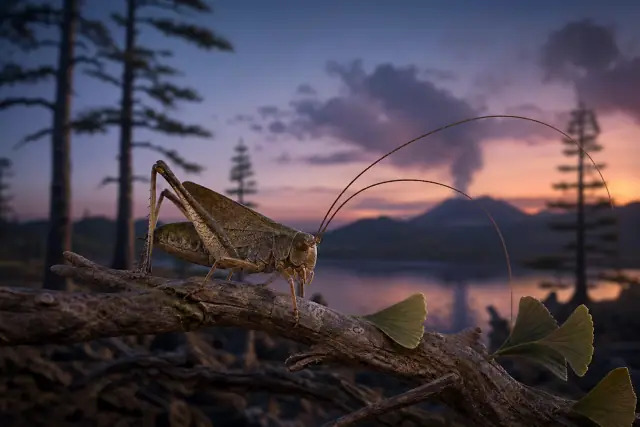
Archaboilus musicus
Preserved forewing sound structures support a reconstructed musical call: 6.4 kHz in 2012 and about 5 kHz in a later model.
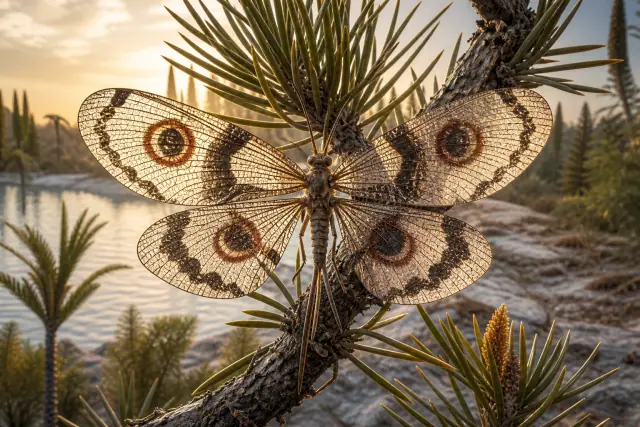
Kalligramma haeckeli
Huge eyespots, broad wings and an elongate mouthpart created a butterfly-like insect before butterflies flourished.
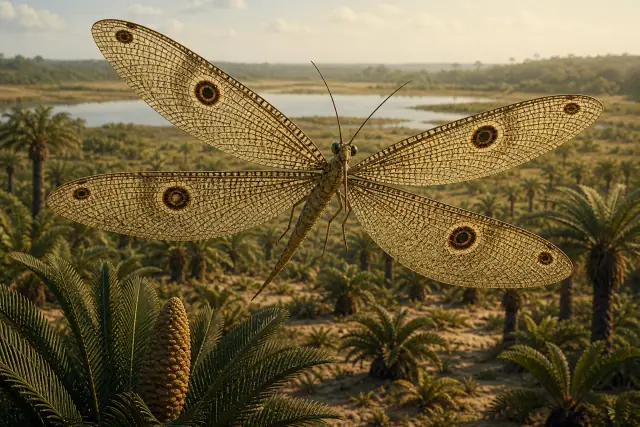
Makarkinia adamsi
Scaling from the surviving wing fragment suggests a wing as long as 16 centimeters, among the largest lacewings known.

Juracimbrophlebia ginkgofolia
Four lobed wings nearly match ginkgoalean leaves from the same bed, rare evidence of deep-time leaf mimicry.
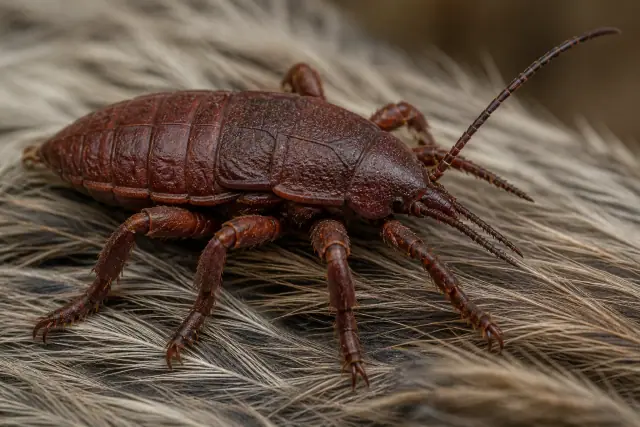
Pseudopulex jurassicus
About 17 millimeters long and unable to jump, it carried serrated piercing mouthparts far larger than those of modern fleas.
Explore the atlas by continent, country and state. Follow fossil localities into regional guides, compare animals across time and return to the evidence in each species profile.
FIELD GUIDES
Giants, strange body plans and lives within human memory. Follow a question into the atlas, then explore the animals behind it.