217Paleozoic
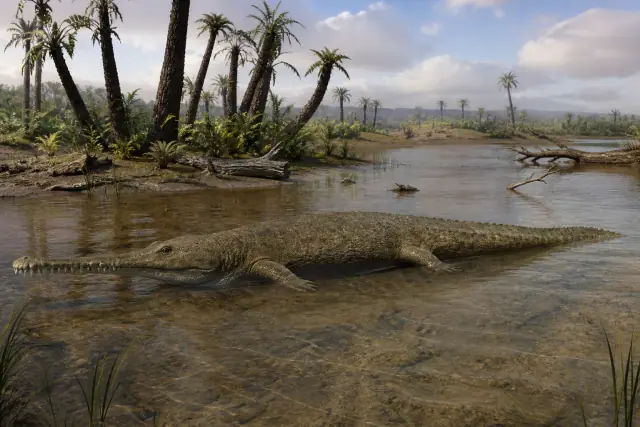
Prionosuchus
Prionosuchus plummeri
A giant Brazilian amphibian with a crocodile-like snout; its famous 9-metre length is a reconstruction from fragmentary fossils.
LIFE ARCHIVE
Browse extinct life from traces nearly 1.9 billion years old to historically recorded extinctions.
Prionosuchus plummeri
A giant Brazilian amphibian with a crocodile-like snout; its famous 9-metre length is a reconstruction from fragmentary fossils.
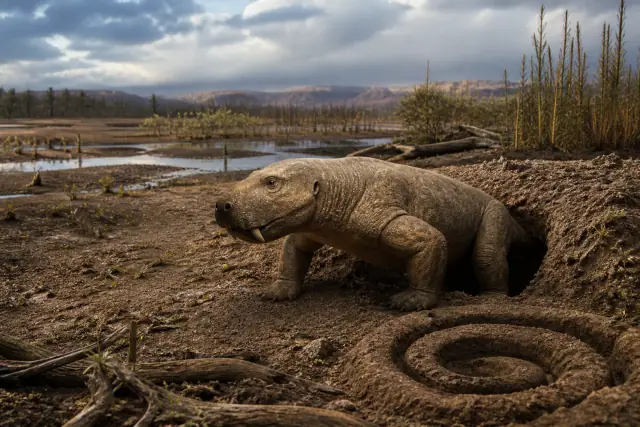
Diictodon feliceps
A beak, short tusks and powerful forelimbs made this one of the most common burrowing herbivores of the Late Permian.
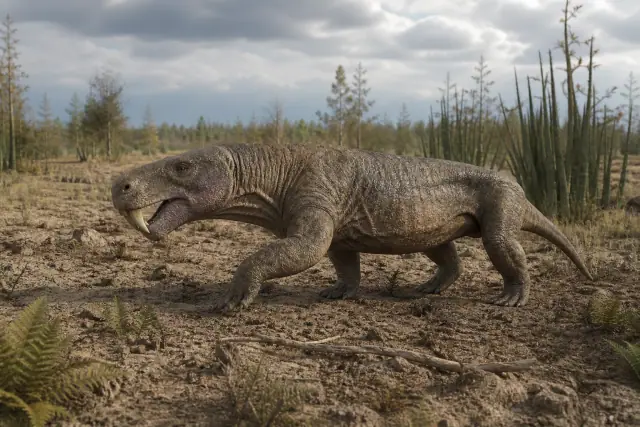
Gorgonops torvus
Long upper canines and a wide gape made it an early experiment in saber-toothed predation.
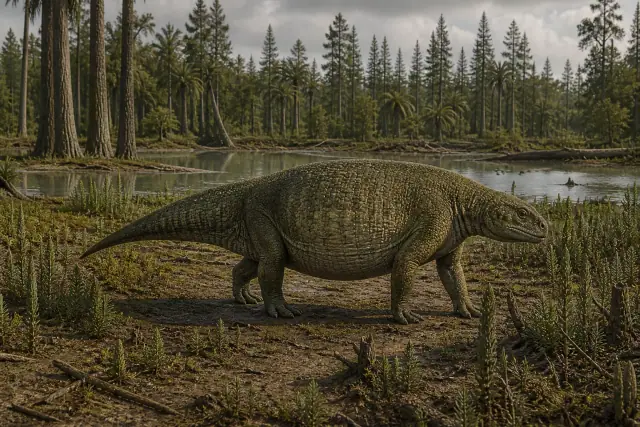
Eunotosaurus africanus
Nine pairs of broad, flattened ribs record an early stage in the evolution of the turtle shell.
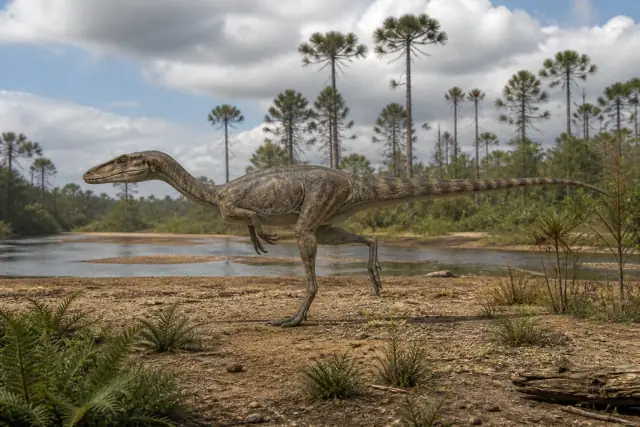
Staurikosaurus pricei
This lightly built two-meter hunter represents an early branch from the first dinosaur diversification.
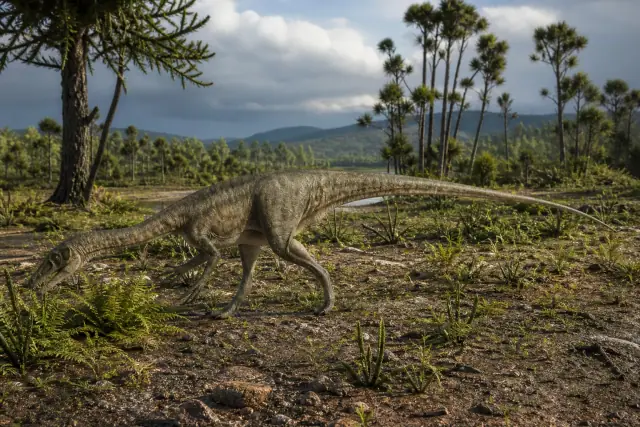
Massospondylus carinatus
A long neck, small head and grasping hands mark a stage between bipedal ancestors and giant quadrupedal sauropods.
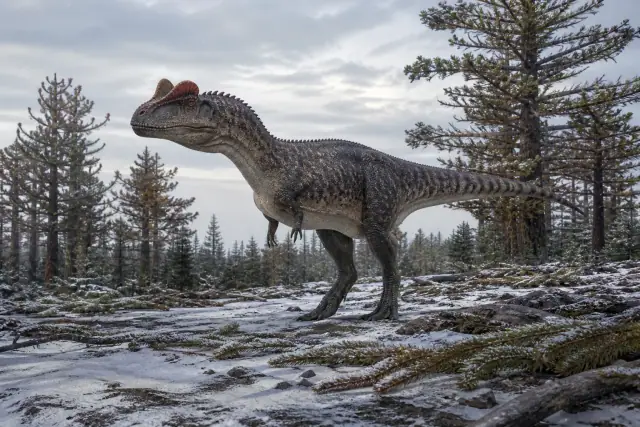
Cryolophosaurus ellioti
A curved transverse crest across its skull gives this large Antarctic theropod an unmistakable profile.
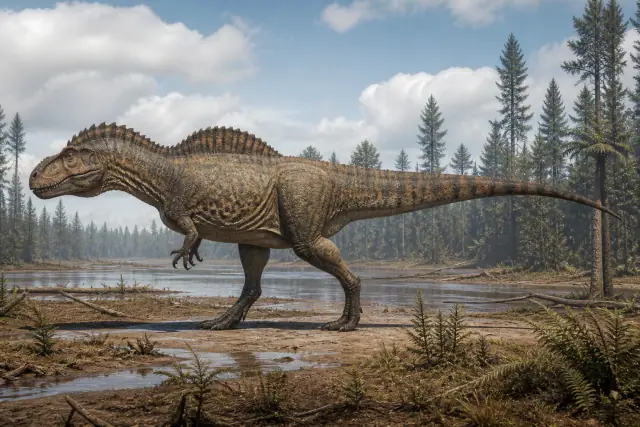
Acrocanthosaurus atokensis
Tall neural spines along the neck and back supported a muscular ridge rather than a paper-thin sail.
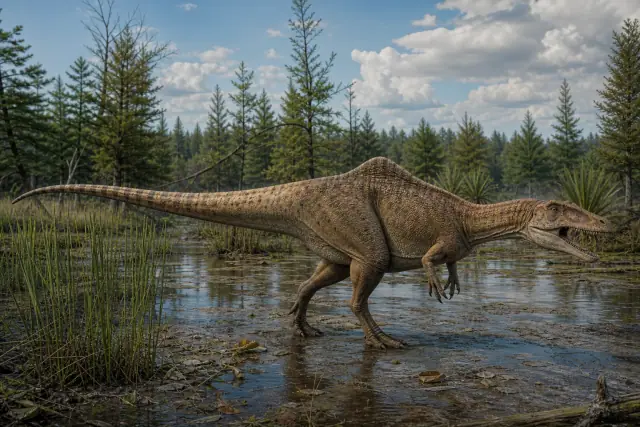
Concavenator corcovatus
Two very tall vertebrae ahead of the hips formed a short steep back crest, while the forearm carried unusual knobs.
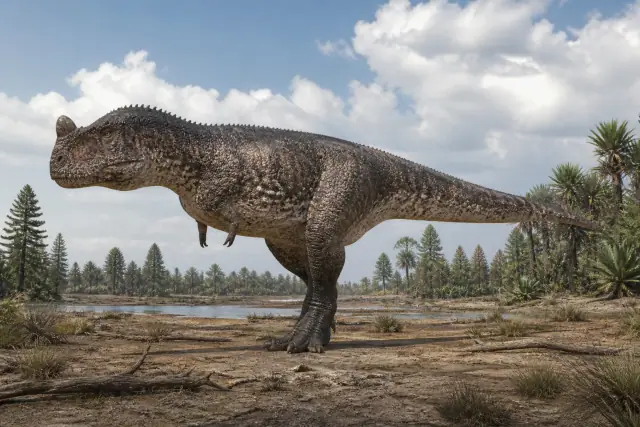
Majungasaurus crenatissimus
A short deep skull carried a rounded horn, while tooth marks on its own species provide rare scavenging evidence.
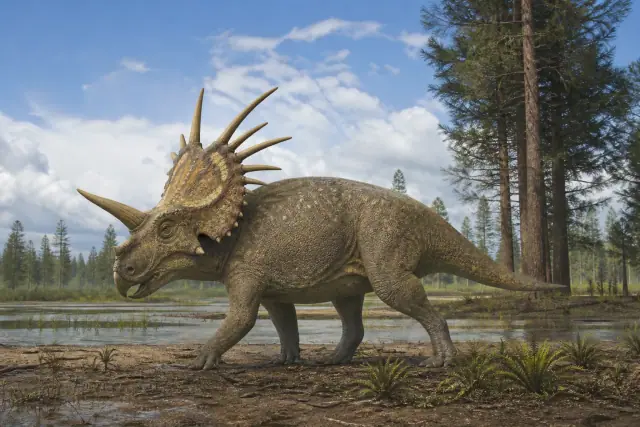
Styracosaurus albertensis
A huge nasal horn and long spikes radiating from the frill made one of the most dramatic ceratopsian heads.
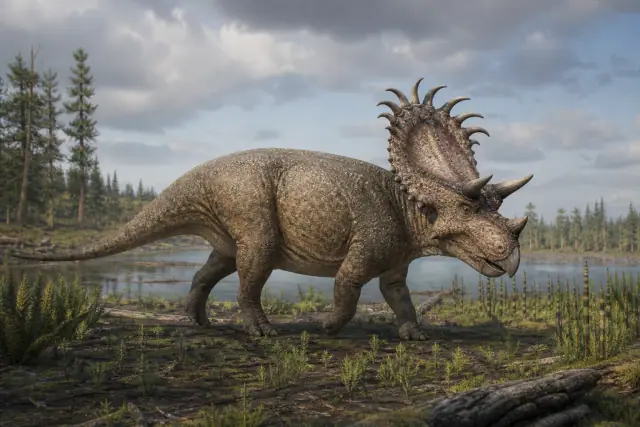
Kosmoceratops richardsoni
Fifteen horn-like ornaments across the nose, brows and broad frill formed a folded crown around the skull.
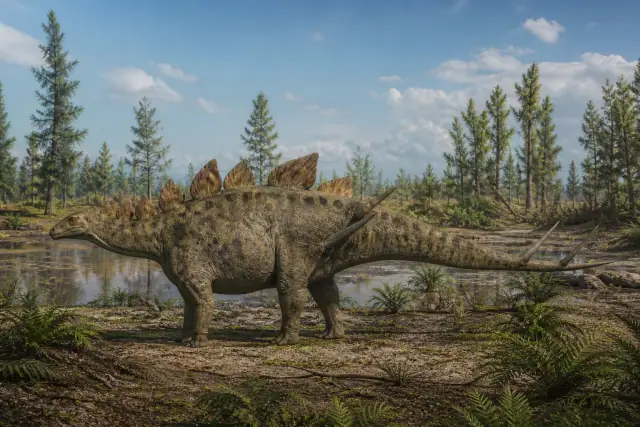
Kentrosaurus aethiopicus
Plates covered the front body while long paired spikes armed the hips and tail, concentrating defense behind it.
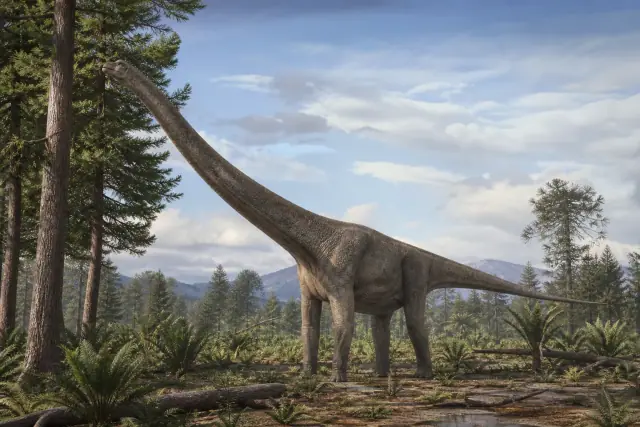
Mamenchisaurus hochuanensis
Nineteen elongated neck vertebrae placed nearly half the body's length in the neck, lightened internally by air spaces.
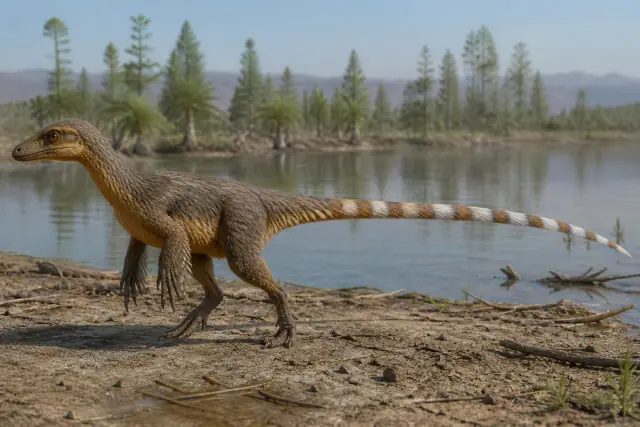
Sinosauropteryx prima
Simple filamentous feathers and tail color bands made it the first dinosaur restored with evidence-based coloration.
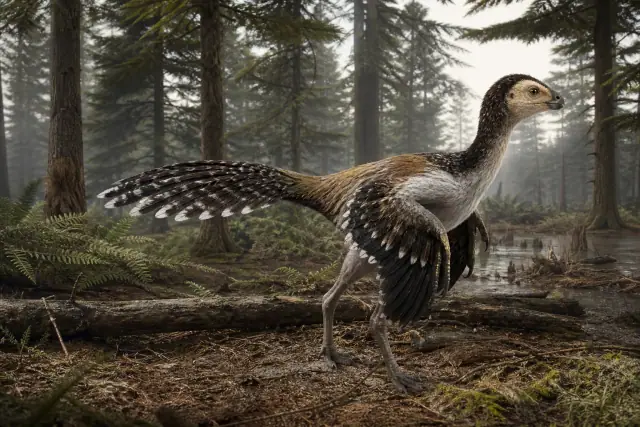
Caudipteryx zoui
Orderly vaned feathers covered its arms and short tail, but symmetric feathers and body proportions prevented powered flight.
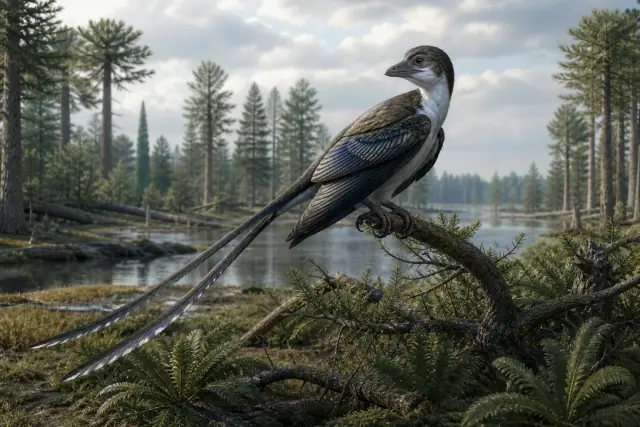
Confuciusornis sanctus
A toothless beak, clawed wings and—in some individuals—two long ribbon-like tail feathers appeared together.
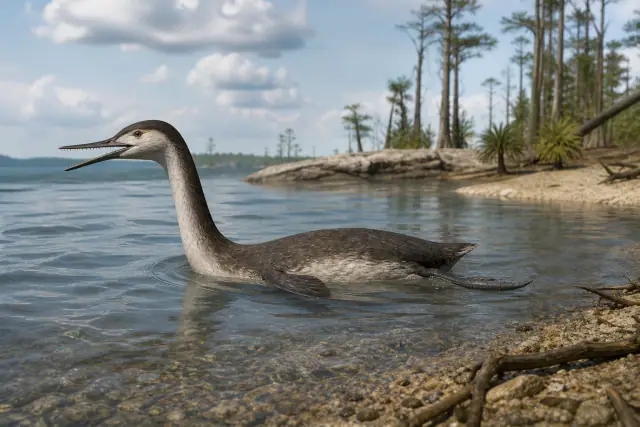
Hesperornis regalis
Its wings shrank to small bones while rear-set legs turned it into a superb Mesozoic pursuit diver.
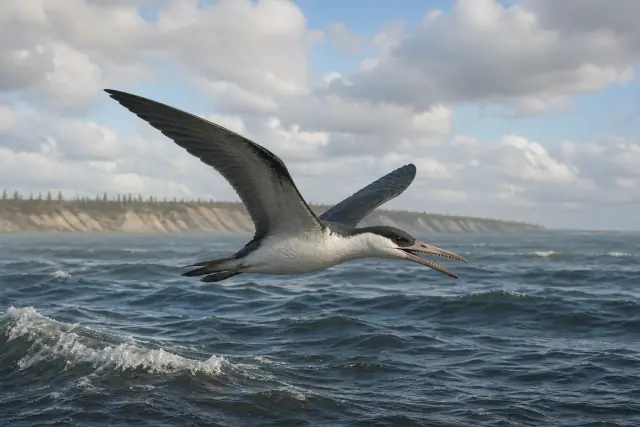
Ichthyornis dispar
Its body and flight resembled a tern, but a row of true teeth remained inside the long jaws.
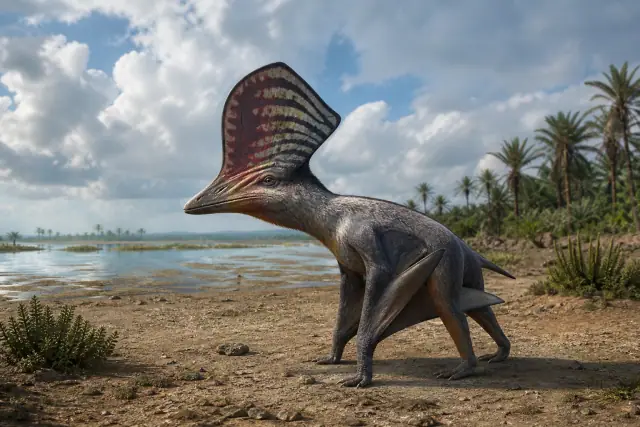
Tapejara wellnhoferi
An enormous crest rose above a short toothless beak, with soft tissue extending the bony sail still farther.
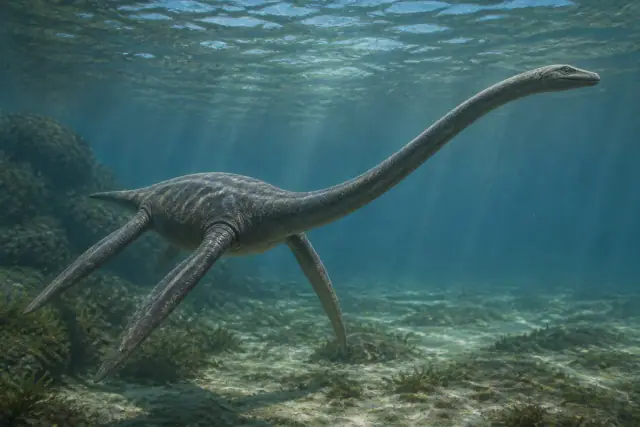
Plesiosaurus dolichodeirus
Four long flippers flew through water while a long flexible neck carried the small head toward prey.
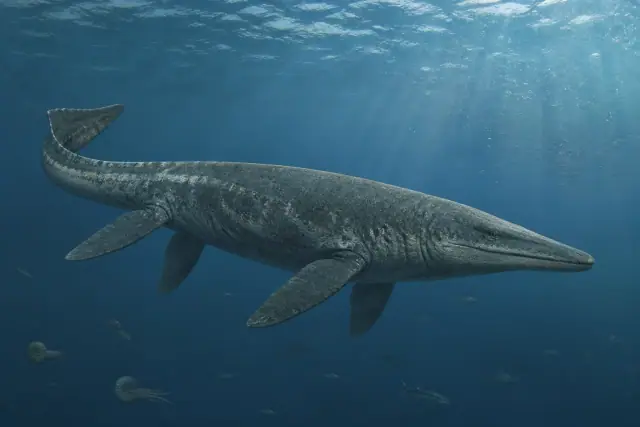
Tylosaurus proriger
A solid snout projected beyond the teeth as this giant mosasaur hunted fish, turtles and other reptiles.
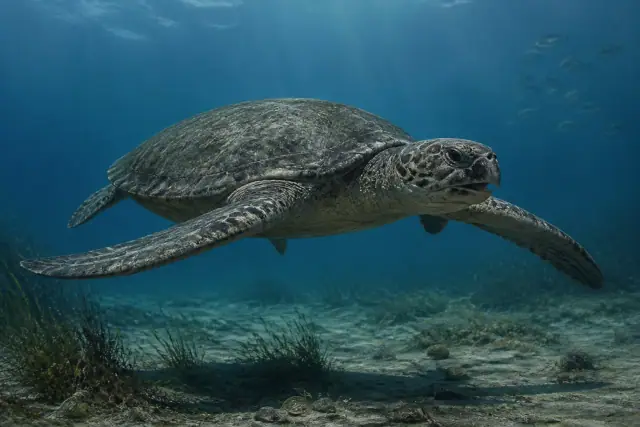
Archelon ischyros
Front flippers spanned several meters, and a leathery covering stretched over a reduced bony shell.
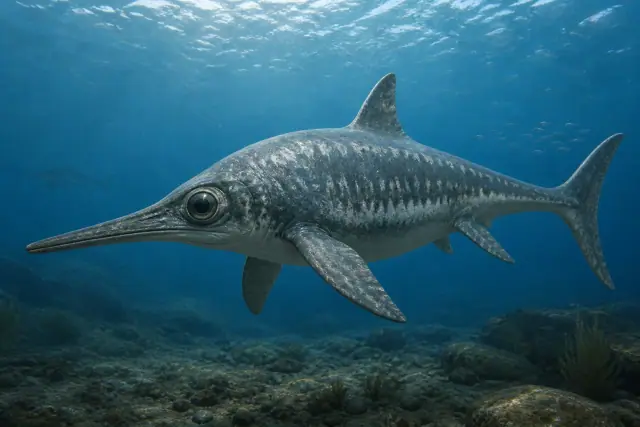
Ophthalmosaurus icenicus
Huge bony eye rings supported vision under pressure and may have helped track soft prey in dim water.
Explore the atlas by continent, country and state. Follow fossil localities into regional guides, compare animals across time and return to the evidence in each species profile.
FIELD GUIDES
Giants, strange body plans and lives within human memory. Follow a question into the atlas, then explore the animals behind it.