
Explore this animal in Size of Extinct Animals ↗
240 / Mesozoic
Ophthalmosaurus
Ophthalmosaurus icenicus
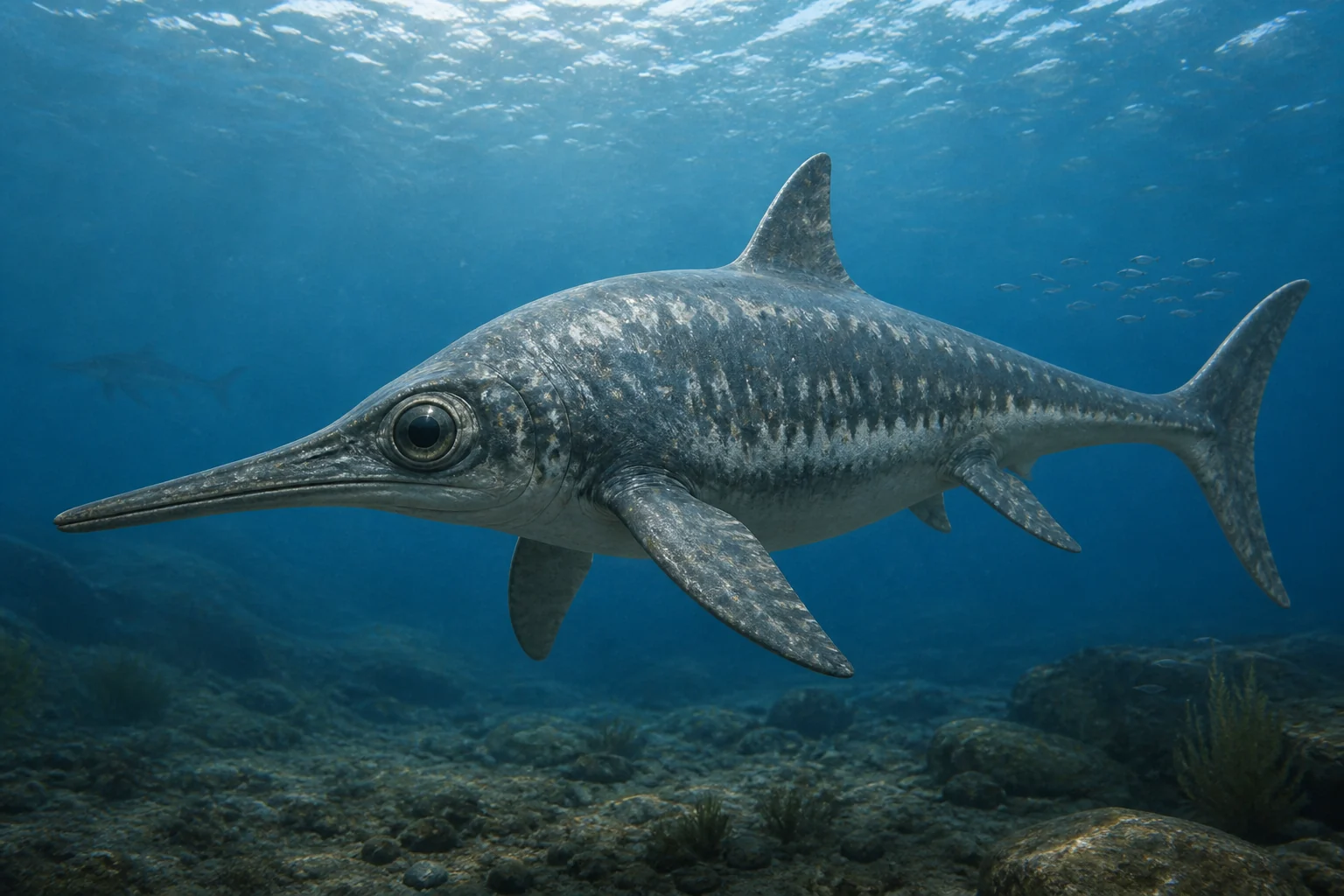
Huge bony eye rings supported vision under pressure and may have helped track soft prey in dim water.
 View original image · 1536 × 1024
- Time range
- About 165–150 million years ago
- Final stage
- Late Jurassic
- Geographic range
- Open ocean · Europe and North America
01 / DEFINITION & ECOLOGY
What was Ophthalmosaurus?
Ophthalmosaurus (Ophthalmosaurus icenicus) was an extinct organism known from About 165–150 million years ago, with a range in Open ocean · Europe and North America.
Life and ecology
Ophthalmosaurus had a fast cruising body and small or reduced teeth suited to squid and small fish. It propelled itself by the tail and gave birth at sea.
02 / DISAPPEARANCE
Why did Ophthalmosaurus disappear?
Marine conditions and ichthyosaur lineages reorganized across the Jurassic–Cretaceous transition.
03 / EVIDENCE
How do scientists know about Ophthalmosaurus?
Many skeletons preserve enormous sclerotic rings, flippers and the tail bend; gut contents and teeth support soft-prey feeding.
04 / SOURCES & FURTHER READING
Check the source record
Use the scientific name to compare taxonomy, occurrence records and the fossil record. Database coverage and classifications may differ.
05 / REVISION HISTORY
How has this record changed?
- Verified authoritative entity sources and added three responsive reconstruction sizes.
- Initial bilingual species record published.
06 / CORRECTIONS & ADDITIONS