361Paleozoic
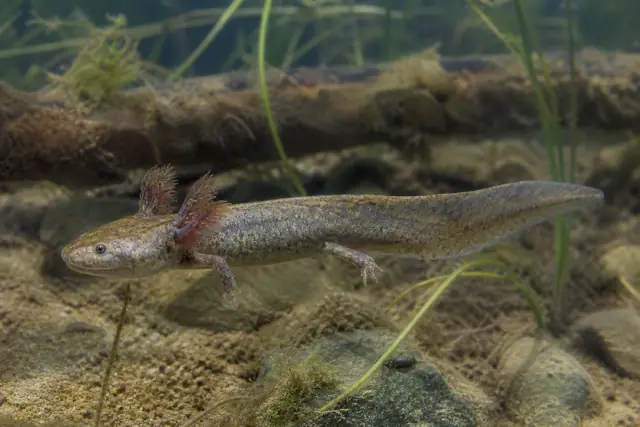
Branchiosaurus
Branchiosaurus salamandroides
Adults retained external gills, extending a juvenile condition through life.
LIFE ARCHIVE
Browse extinct life from traces nearly 1.9 billion years old to historically recorded extinctions.
Branchiosaurus salamandroides
Adults retained external gills, extending a juvenile condition through life.
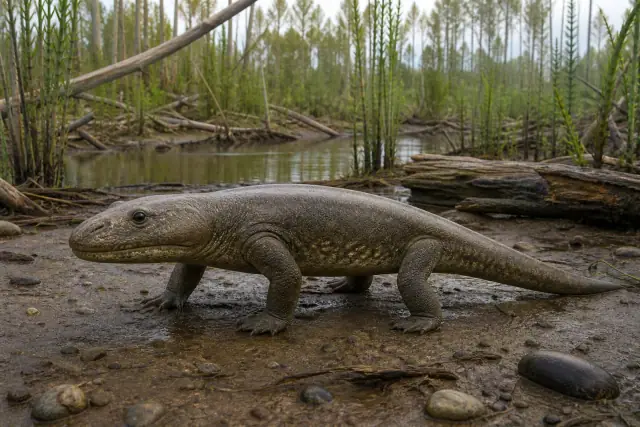
Pederpes finneyae
Forward-facing toes show an early tetrapod using a more effective terrestrial gait.
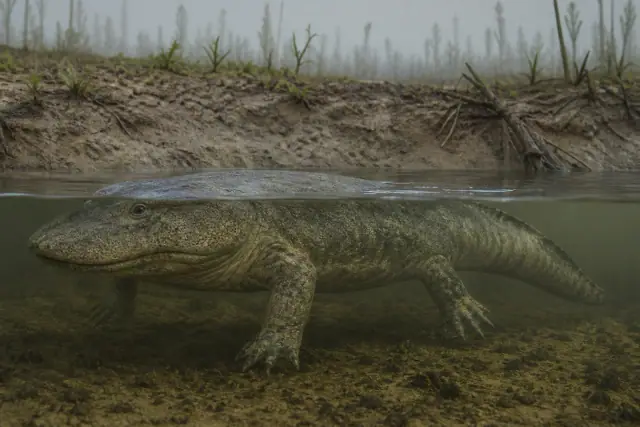
Whatcheeria deltae
A reinforced skull and fang-like teeth belonged to a powerful river predator.
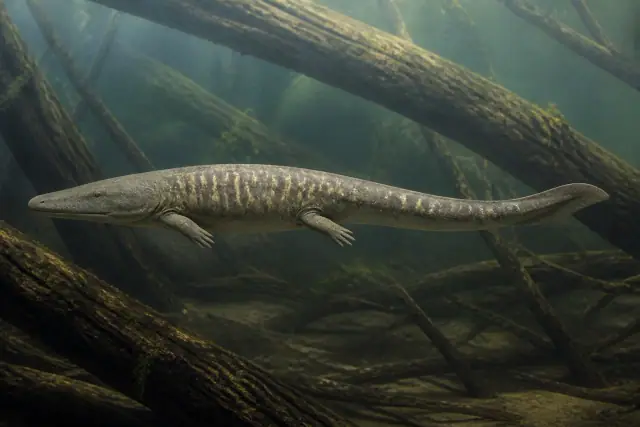
Greererpeton burkemorani
A long trunk and deep tail propelled it through murky water.
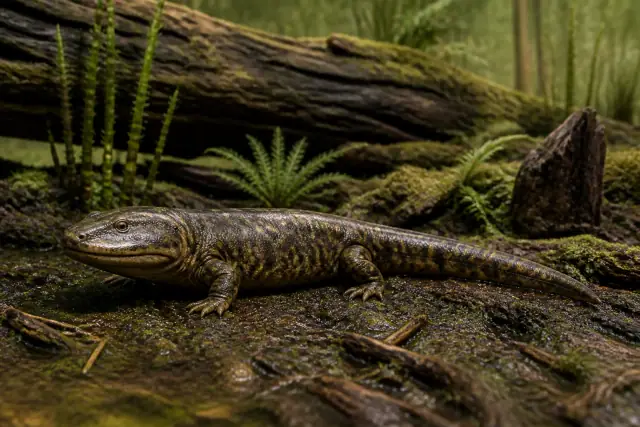
Balanerpeton woodi
The ear region and sturdy limbs suggest more terrestrial activity than in many contemporaries.
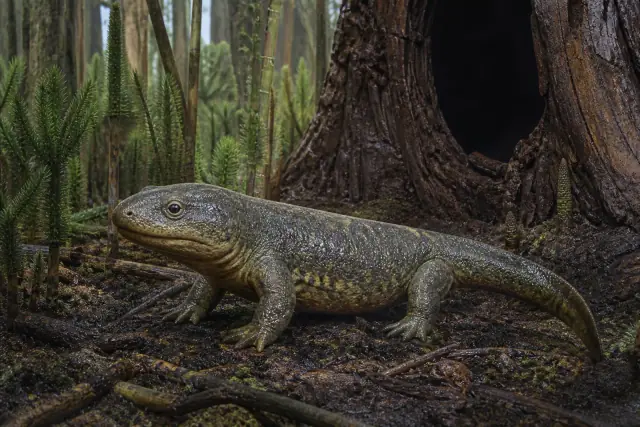
Dendrerpeton acadianum
Many individuals were entombed inside hollow tree stumps.
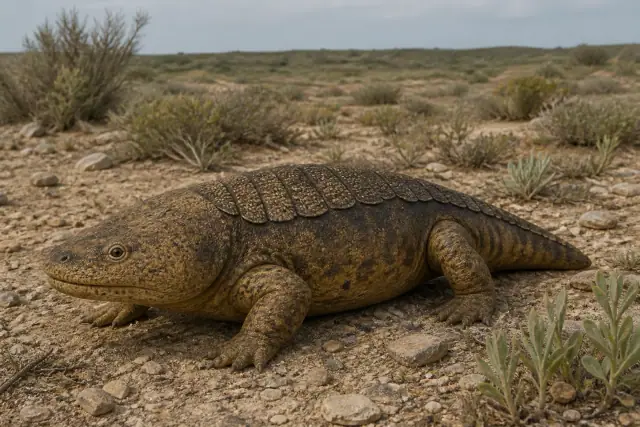
Cacops aspidephorus
A row of bony back plates reinforced this stocky terrestrial amphibian.
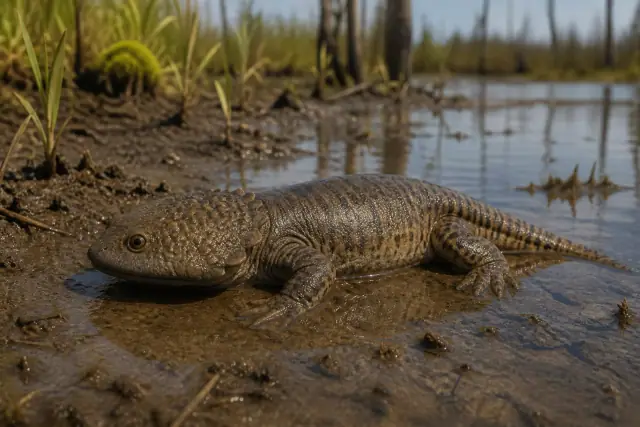
Zatrachys serratus
Its expanded skull margin bears bony projections; their function is unproven.
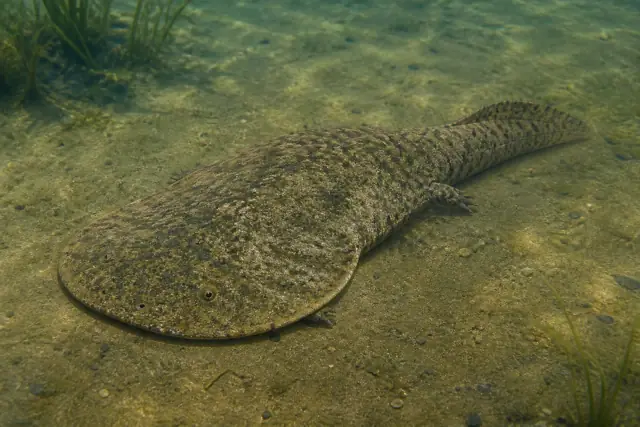
Plagiosuchus pustuliferus
Its semicircular skull was extraordinarily broad and flat.
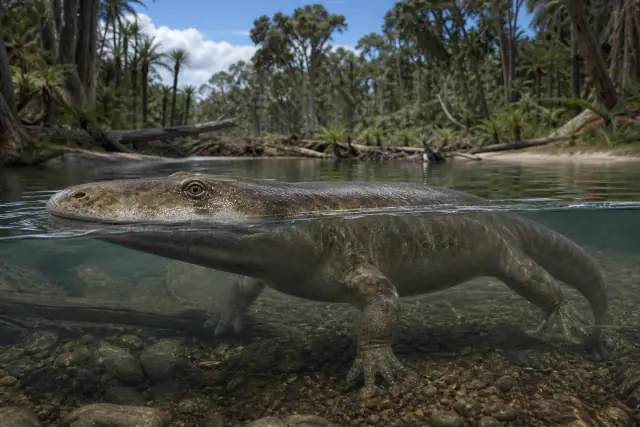
Siderops kehli
A giant temnospondyl still occupied river ambush niches in the dinosaur era.
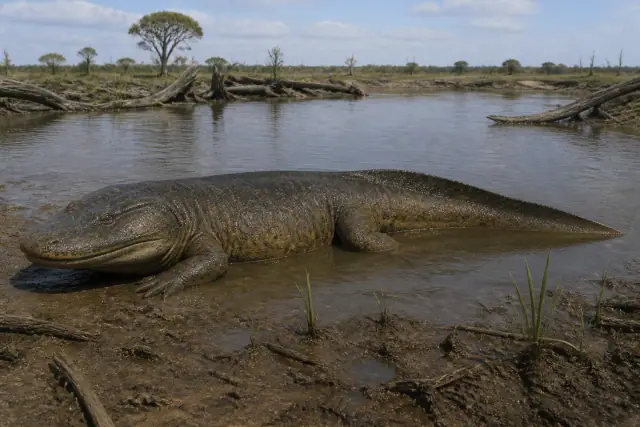
Rhinesuchus whaitsi
This broad-headed aquatic predator was common in southern Late Permian waters.
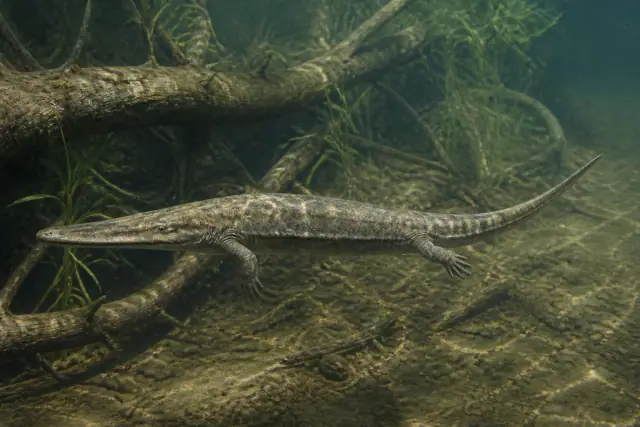
Trematolestes hagdorni
A narrow snout was built to snap at fish in water.
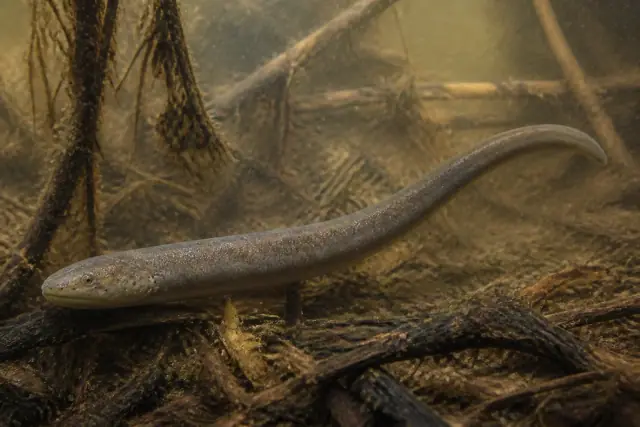
Adelospondylus watsoni
The limbs vanished entirely while the skull and spine retained tetrapod construction.
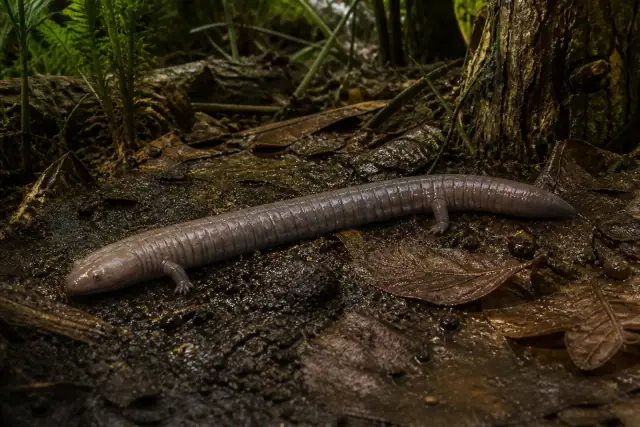
Eocaecilia micropodia
It had a caecilian-like body but still retained four tiny legs.
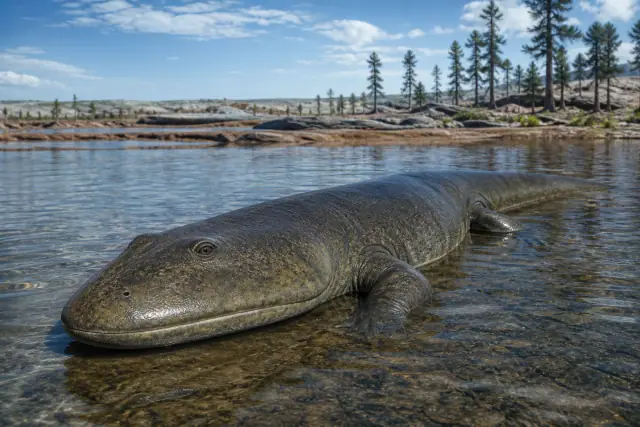
Eryosuchus garjainovi
A skull more than two meters long belonged to one of the largest freshwater amphibian predators.
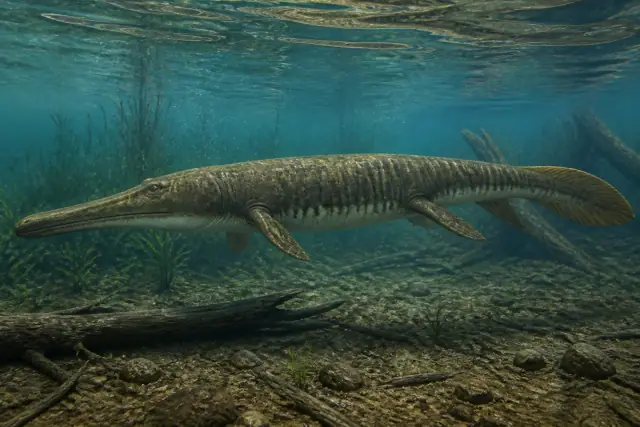
Archegosaurus decheni
A long snout, lateral-line grooves and weak limbs show permanent aquatic dependence.
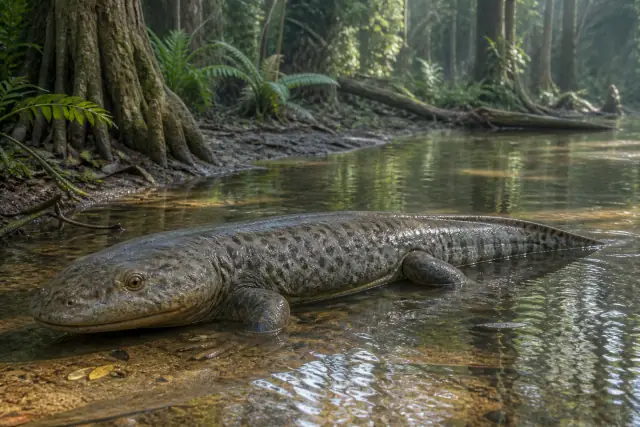
Paracyclotosaurus davidi
A near-complete skeleton reveals the full proportions of a giant Triassic amphibian.
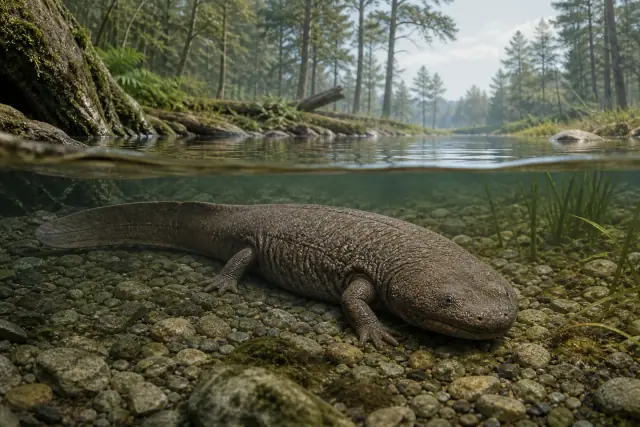
Andrias scheuchzeri
Its skeleton was once mistaken for a human killed in the biblical flood.
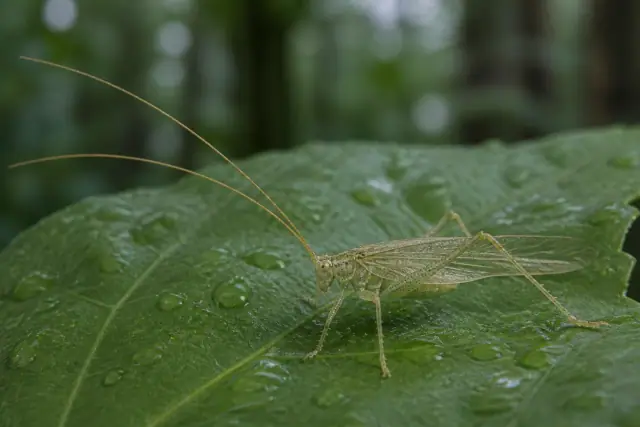
Eomortoniellus handlirschi
Tiny ear canals in the forelegs show that it heard ultrasonic calls.
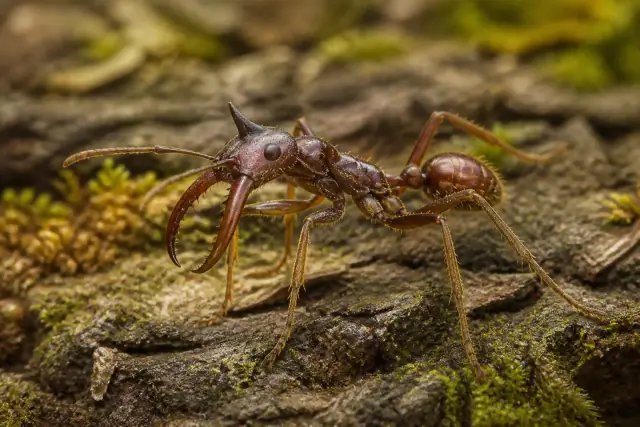
Haidomyrmex cerberus
Its sickle mandibles closed upward against the head instead of sideways.
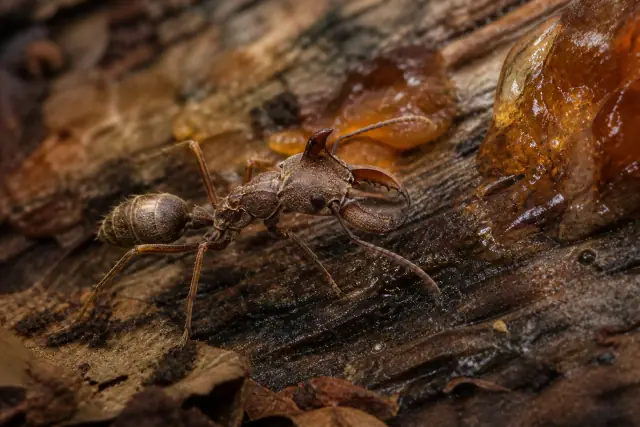
Linguamyrmex vladi
A metal-reinforced head horn and rising jaws formed a specialized clamp.
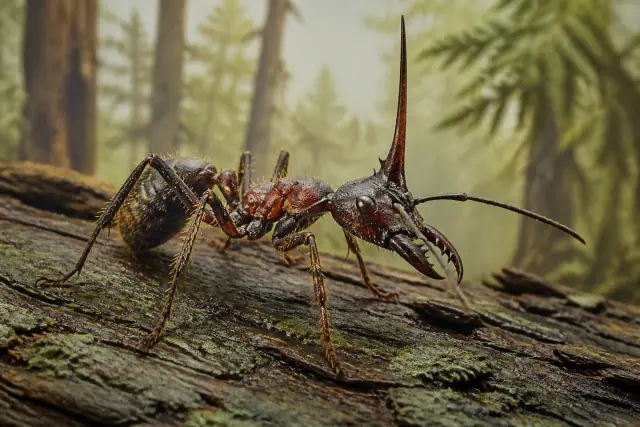
Ceratomyrmex ellenbergeri
A long forehead horn opposed upward-curving mandibles.
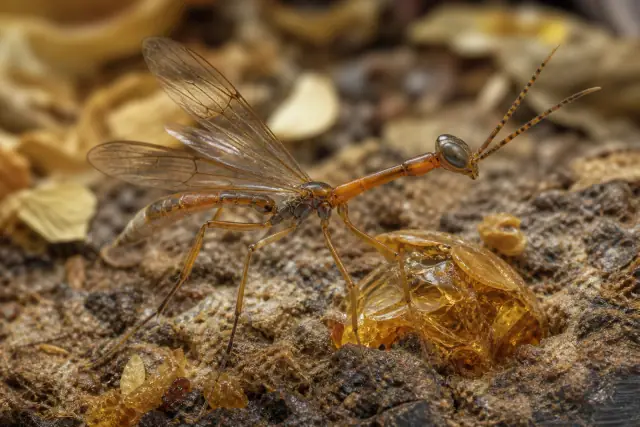
Camelomecia janovitzi
An elongated prothorax gave this aculeate relative a neck-like outline.
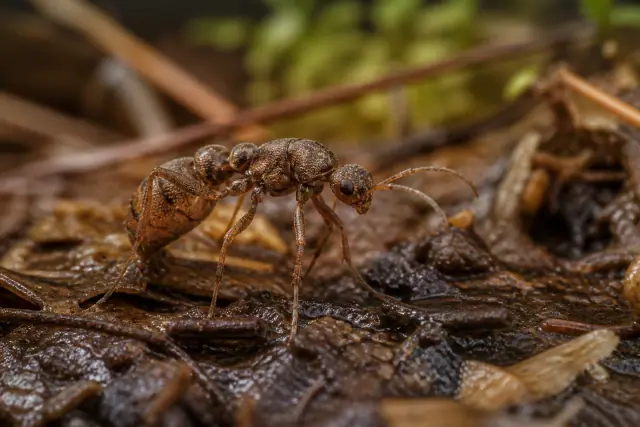
Aptenoperissus burmanicus
Wingless females combined a wasp waist with enlarged jumping hind legs.
Explore the atlas by continent, country and state. Follow fossil localities into regional guides, compare animals across time and return to the evidence in each species profile.
FIELD GUIDES
Giants, strange body plans and lives within human memory. Follow a question into the atlas, then explore the animals behind it.