
Explore this animal in Size of Extinct Animals ↗
374 / Mesozoic
Eocaecilia
Eocaecilia micropodia
It had a caecilian-like body but still retained four tiny legs.
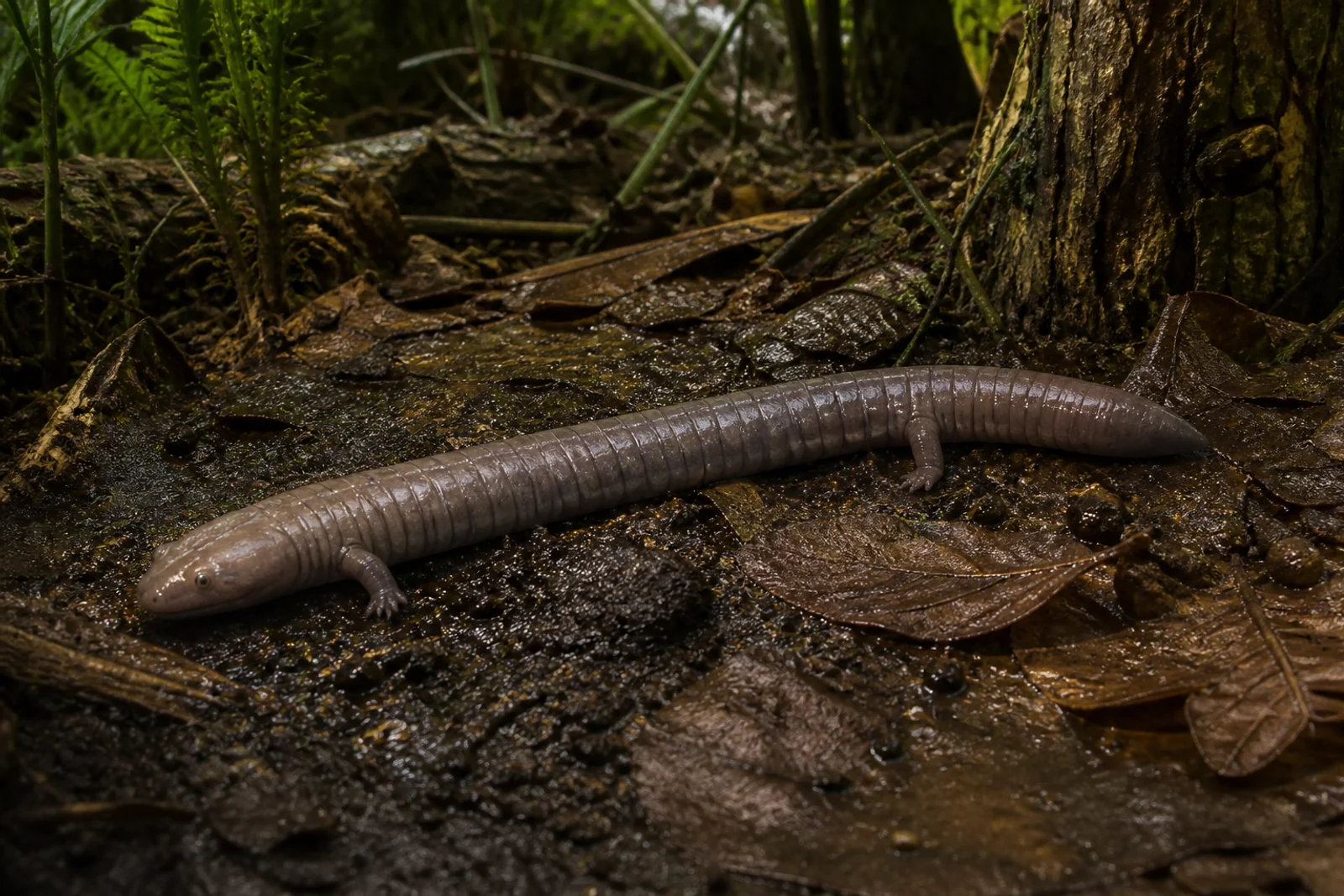 View original image · 1600 × 1067
- Time range
- About 200–190 million years ago
- Final stage
- Early Jurassic
- Geographic range
- Humid soil and riverbanks · Arizona, USA
01 / DEFINITION & ECOLOGY
What was Eocaecilia?
Eocaecilia (Eocaecilia micropodia) was an extinct organism known from About 200–190 million years ago, with a range in Humid soil and riverbanks · Arizona, USA.
Life and ecology
A reinforced skull helped this stem-caecilian burrow for worms and small arthropods.
02 / DISAPPEARANCE
Why did Eocaecilia disappear?
Limbless caecilians appeared later, but a younger fauna does not by itself show that they replaced this transitional form.
03 / EVIDENCE
How do scientists know about Eocaecilia?
Skulls, vertebrae and minute limbs preserve the transition; tentacles and skin rings are comparative.
04 / SOURCES & FURTHER READING
Check the source record
Use the scientific name to compare taxonomy, occurrence records and the fossil record. Database coverage and classifications may differ.
05 / REVISION HISTORY
How has this record changed?
- Rewrote an extinction cause that presented environmental or faunal turnover as established; it is now given as context the record does not prove.
- Verified authoritative entity sources and added three responsive reconstruction sizes.
- Initial bilingual species record published.
06 / CORRECTIONS & ADDITIONS