289Mesozoic
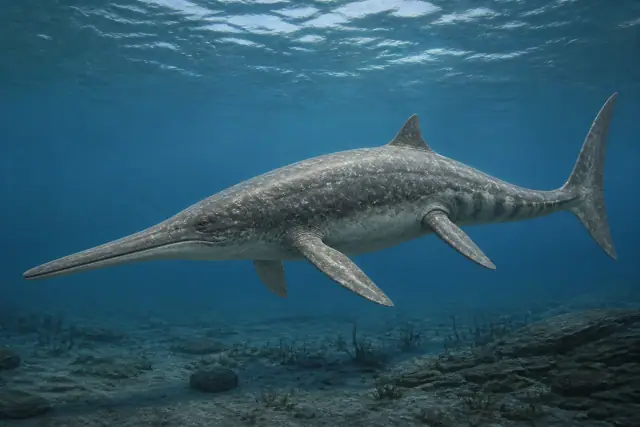
Cymbospondylus
Cymbospondylus youngorum
Only a few million years after the great extinction, ichthyosaurs had already reached whale-like scale.
LIFE ARCHIVE
Browse extinct life from traces nearly 1.9 billion years old to historically recorded extinctions.
Cymbospondylus youngorum
Only a few million years after the great extinction, ichthyosaurs had already reached whale-like scale.
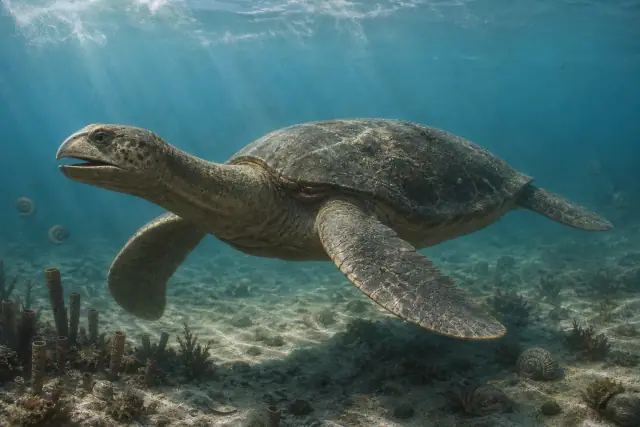
Protostega gigas
A reduced shell and giant front flippers made it one of the largest Cretaceous sea turtles.
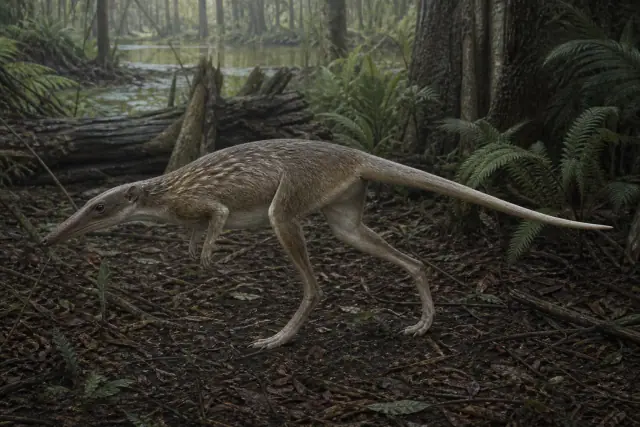
Leptictidium auderiense
Long hind legs and a balancing tail powered a distinctive hopping gait through the forest floor.
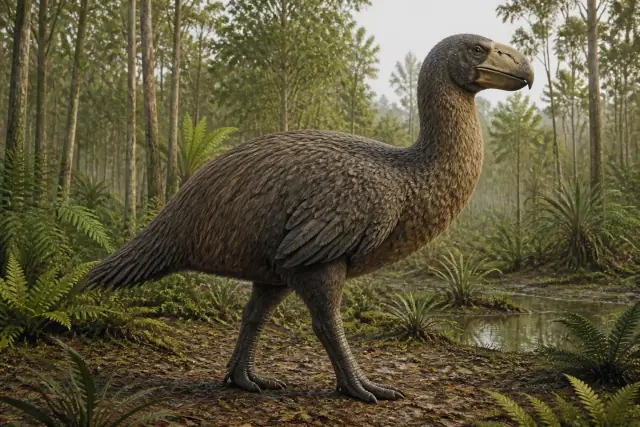
Gastornis parisiensis
This giant flightless bird had a massive beak, but evidence favors a mainly herbivorous diet.
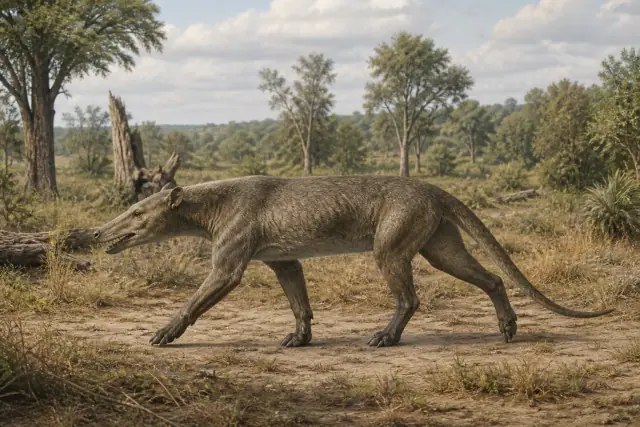
Mesonyx obtusidens
Hoof-like toes and a large predatory skull belonged to a carnivorous mammal with no modern equivalent.
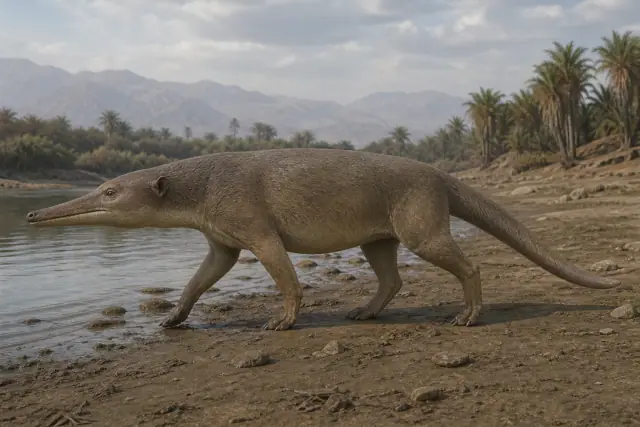
Pakicetus attocki
An early whale with four weight-bearing legs: Pakicetus attocki was wolf-sized and lived near rivers in Pakistan about 50 million years ago.
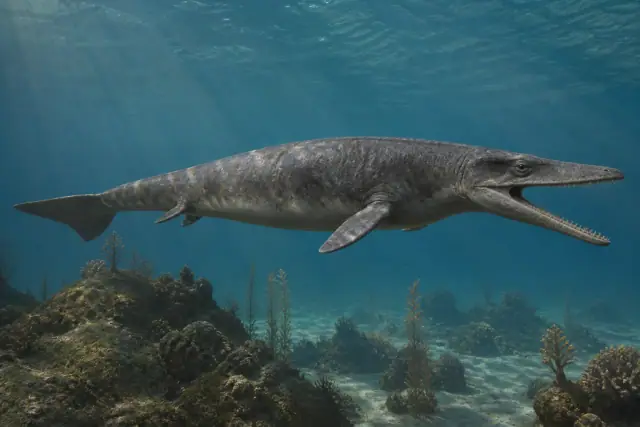
Dorudon atrox
A streamlined whale body still carried tiny external hind limbs with no walking function.
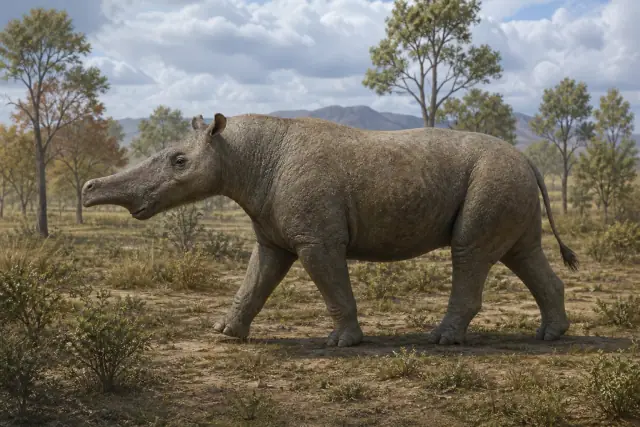
Embolotherium andrewsi
A broad hollow nasal ram rose from the skull of this immense brontothere.
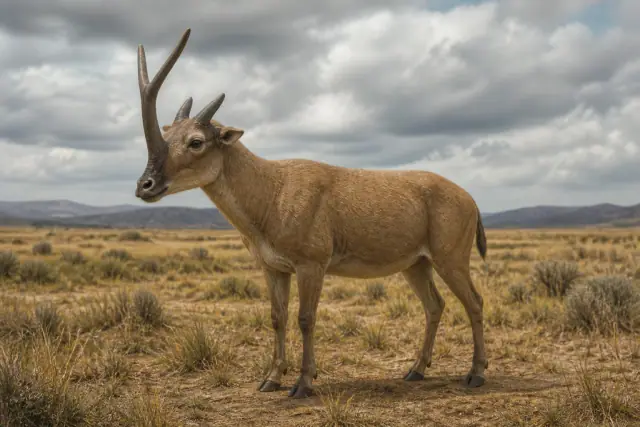
Synthetoceras tricornatus
A forked Y-shaped nasal horn joined two brow horns in the most elaborate protoceratid display.
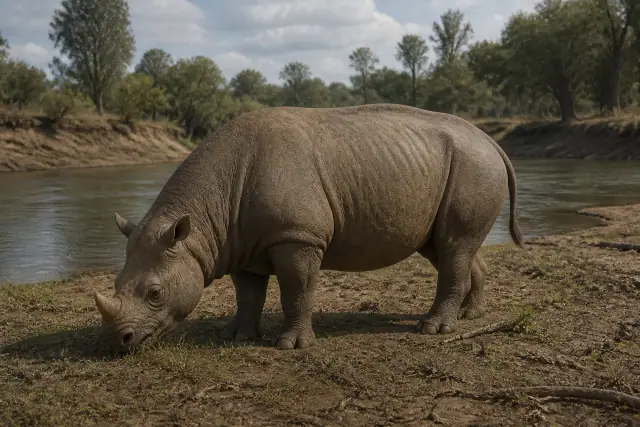
Teleoceras major
Short legs and a barrel body gave this grazing rhinoceros a hippo-like outline.
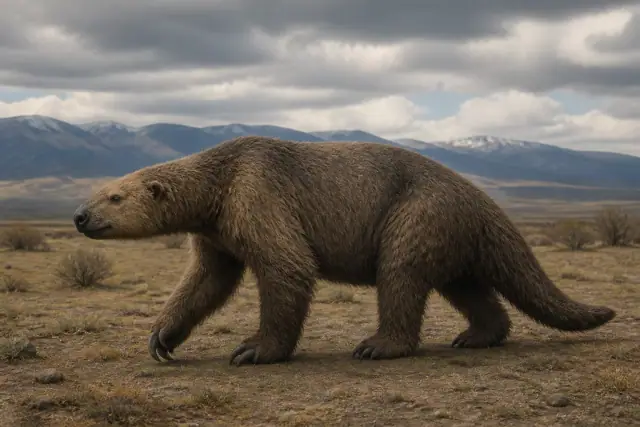
Mylodon darwinii
Thick hide reinforced by tiny bony nodules protected this large ground sloth.
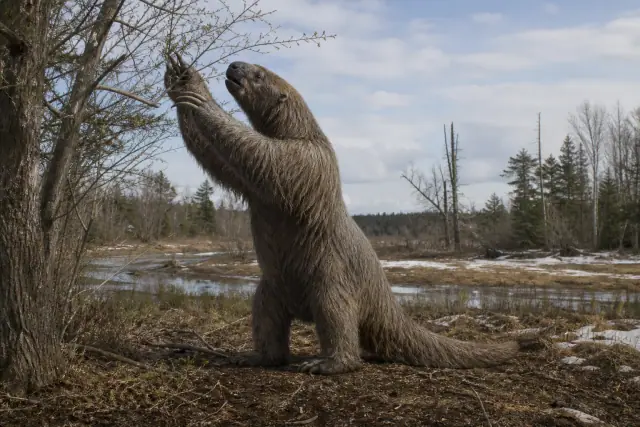
Megalonyx jeffersonii
Huge curved claws belonged to a forest browser whose name is tied to Thomas Jefferson.
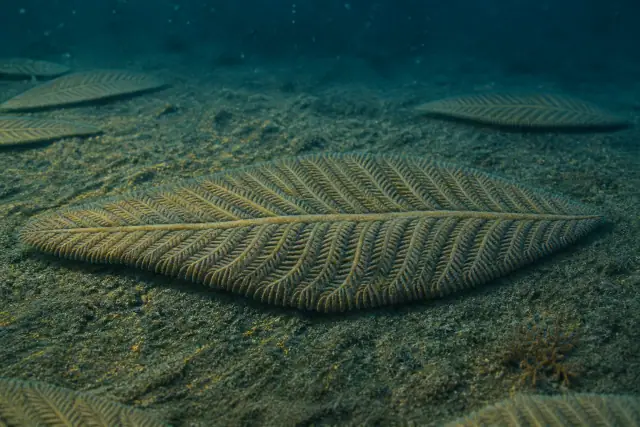
Fractofusus misrai
Its quilted branches lay flat rather than rising from a stem.
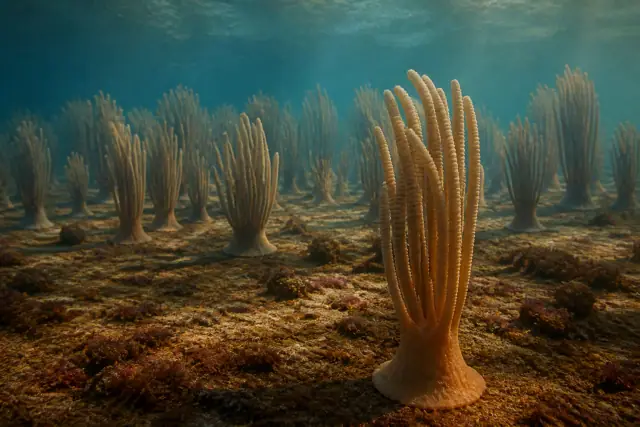
Funisia dorothea
Dense stands of narrow tubes formed one of the earliest large colonial scenes.
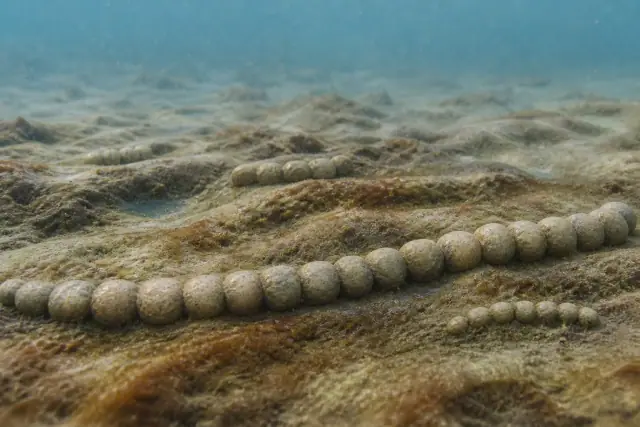
Horodyskia moniliformis
Bead-like discs arranged in strings may record an early macroscopic colony.
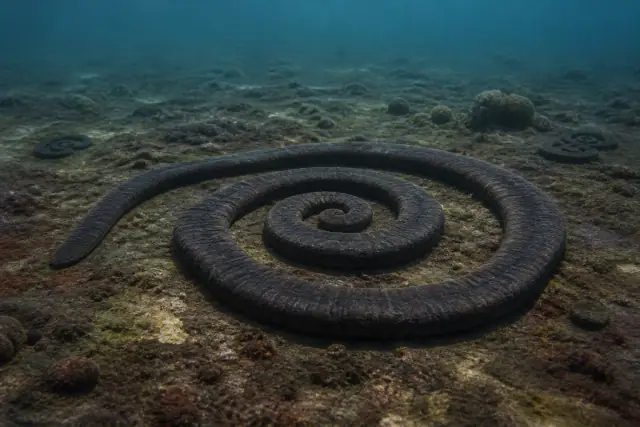
Grypania spiralis
Millimetre-wide ribbons form centimetre-scale coils in Proterozoic rocks.
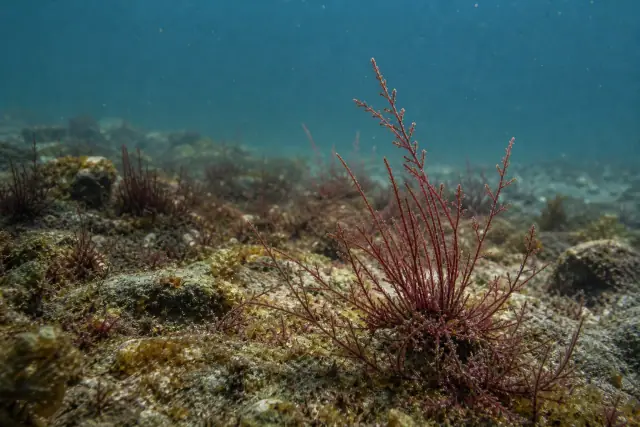
Bangiomorpha pubescens
Cell division and branching resemble living red algae and may record early sexual reproduction.
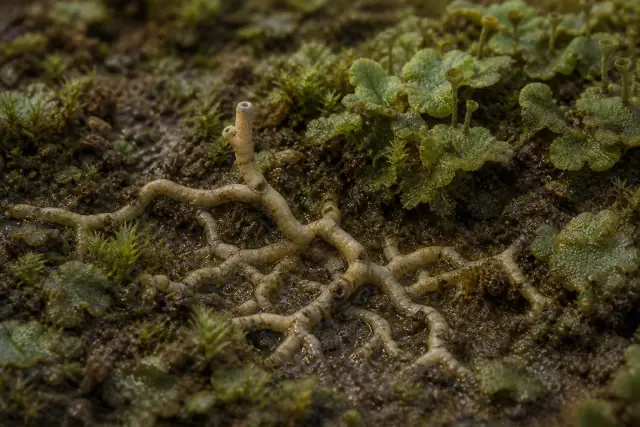
Tortotubus protuberans
Branching microscopic hyphae show fungi helping to build the earliest soils.
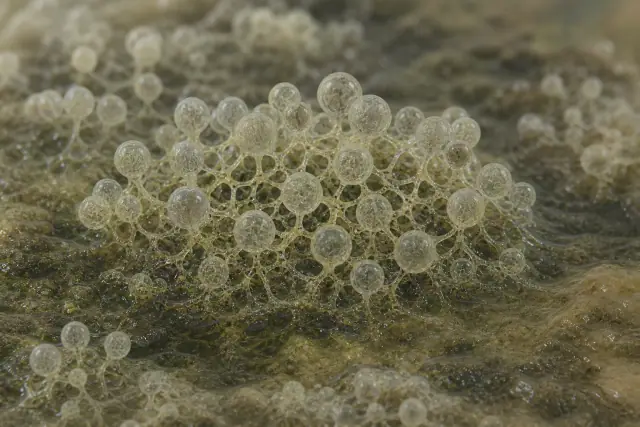
Ourasphaira giraldae
Branching spherical microfossils may push the fungal record toward one billion years.
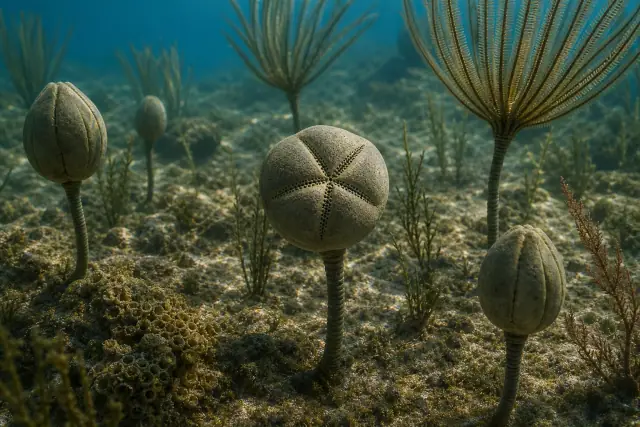
Pentremites godoni
A flower-bud body carried five feeding and respiratory grooves.
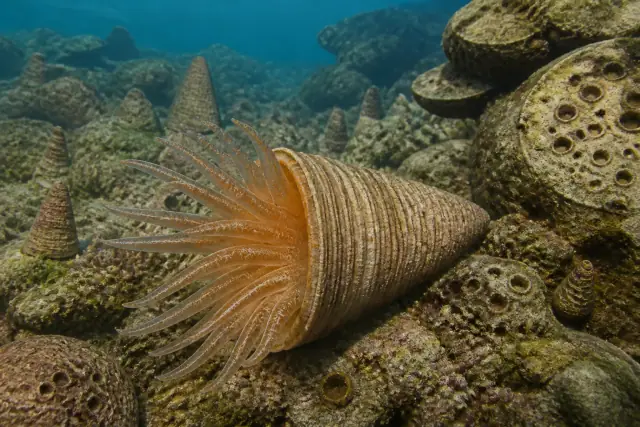
Heliophyllum halli
Radiating septa inside a horn-shaped skeleton resemble a stone sun.
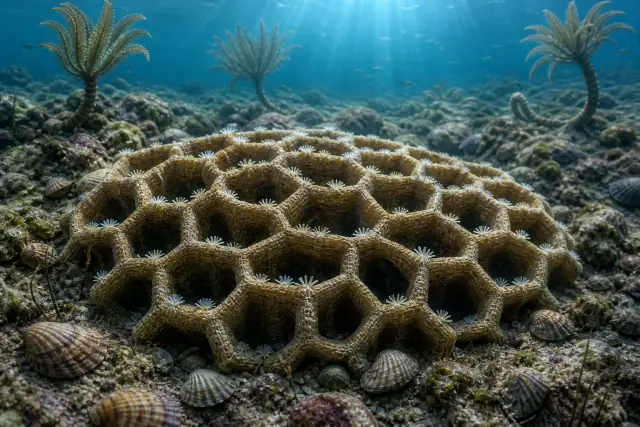
Halysites catenularius
Linked tubes formed honeycomb chains across Paleozoic reefs.
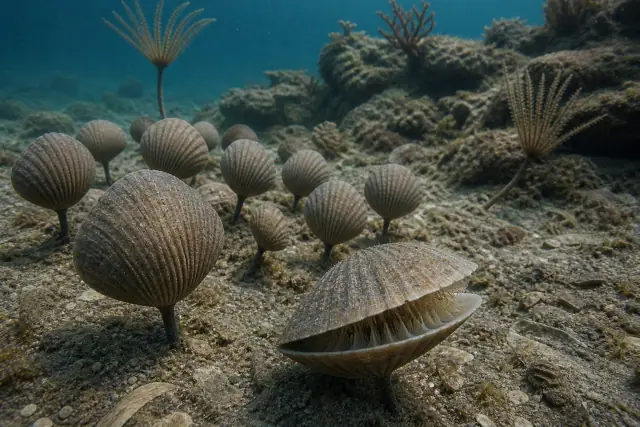
Atrypa reticularis
Fine radial ribs covered rounded shells that once crowded ancient seabeds.
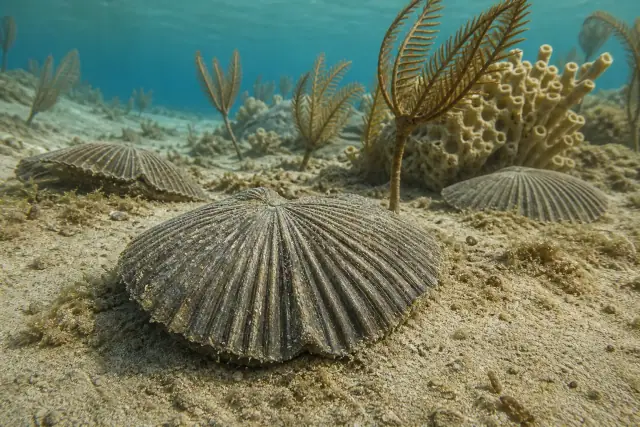
Paraspirifer bownockeri
A broad hinge line formed stone wings that stabilized the shell on soft mud.
Explore the atlas by continent, country and state. Follow fossil localities into regional guides, compare animals across time and return to the evidence in each species profile.
FIELD GUIDES
Giants, strange body plans and lives within human memory. Follow a question into the atlas, then explore the animals behind it.