313Mesozoic
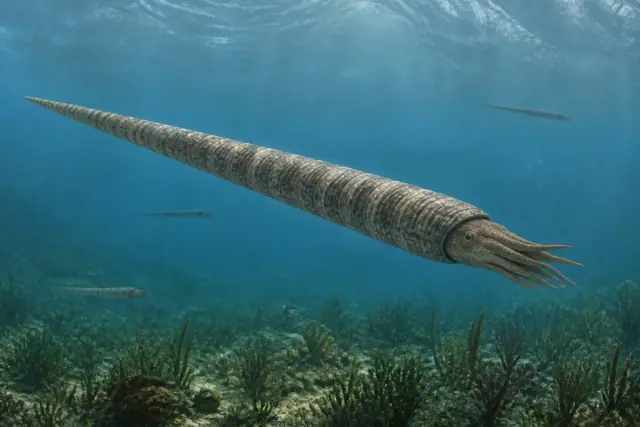
Baculites
Baculites compressus
Its adult shell stretched into a near-straight rod while retaining ammonite sutures.
LIFE ARCHIVE
Browse extinct life from traces nearly 1.9 billion years old to historically recorded extinctions.
Baculites compressus
Its adult shell stretched into a near-straight rod while retaining ammonite sutures.
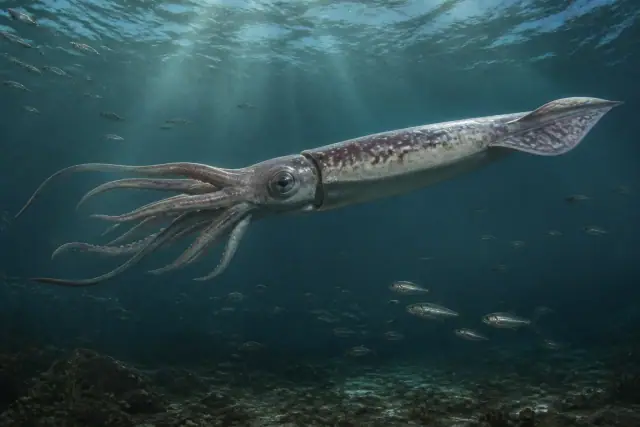
Tusoteuthis longa
A huge internal shell identifies a large coleoidean, though total length remains uncertain.
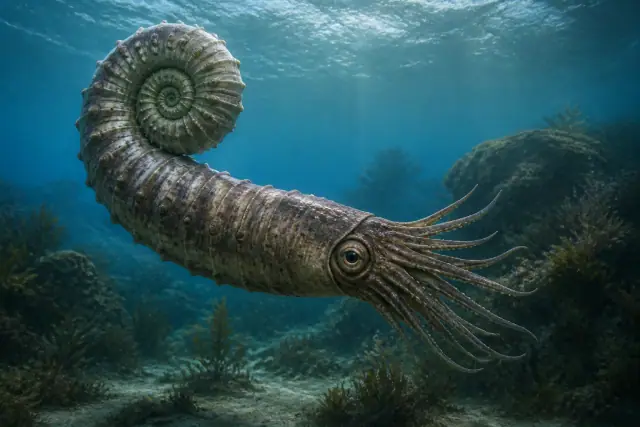
Scaphites nodosus
The juvenile shell coiled tightly before the adult chamber uncoiled and hooked back.
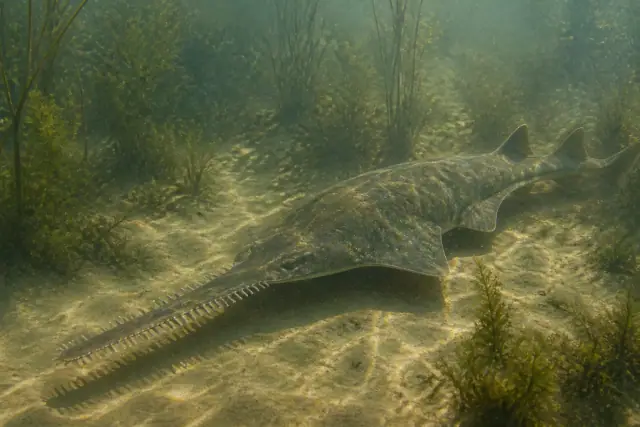
Onchopristis numidus
Barbed teeth armed a long rostrum used to sense and sweep through bottom prey.
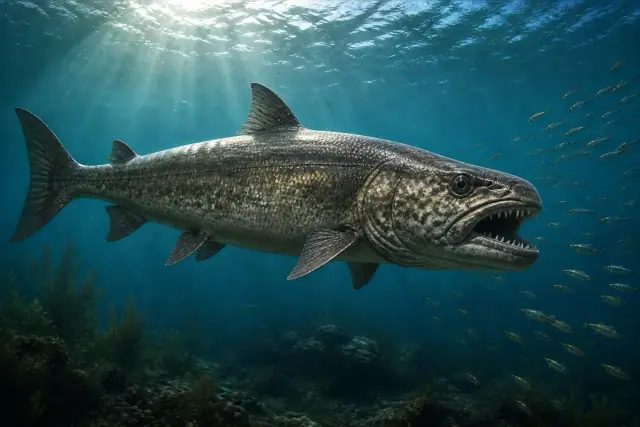
Xiphactinus audax
Its huge upturned mouth could swallow fish nearly half its own length.
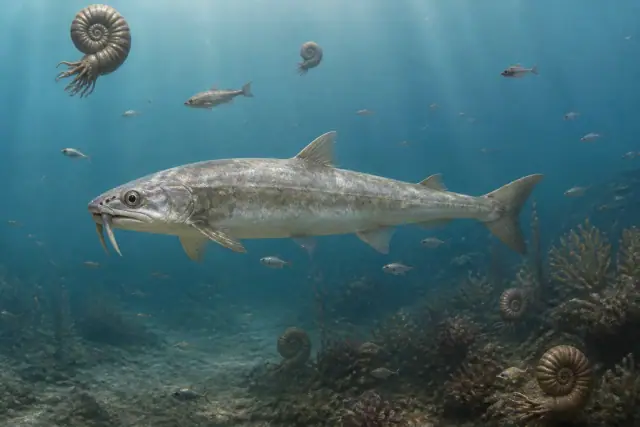
Enchodus petrosus
Oversized palatine fangs made a modest fish into a formidable midwater hunter.
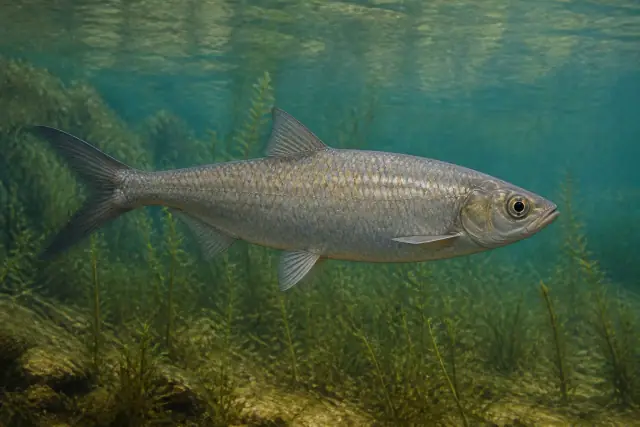
Diplomystus dentatus
Schools of herring-like fish were sealed into fine lake sediments.
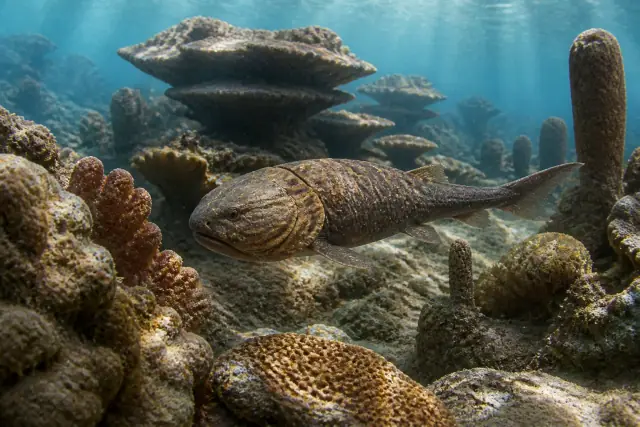
Materpiscis attenboroughi
An embryo with an umbilical connection records some of the earliest live birth.
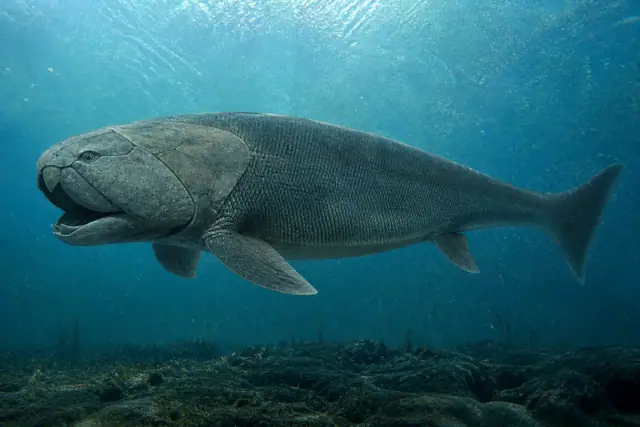
Titanichthys agassizi
This giant placoderm lacked sharp jaw blades and may have filtered plankton.
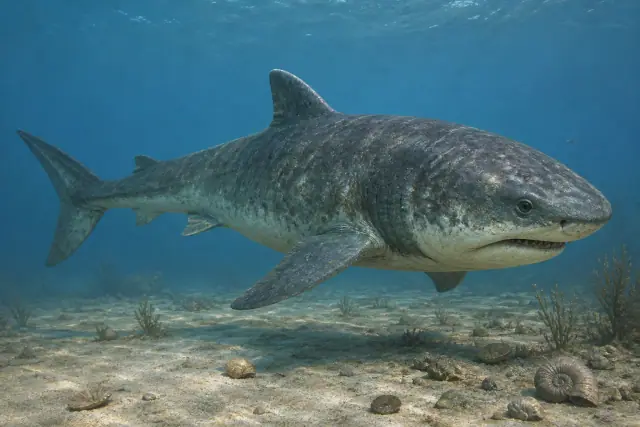
Ptychodus mortoni
Broad crushing teeth paved its mouth for ammonites and shellfish.
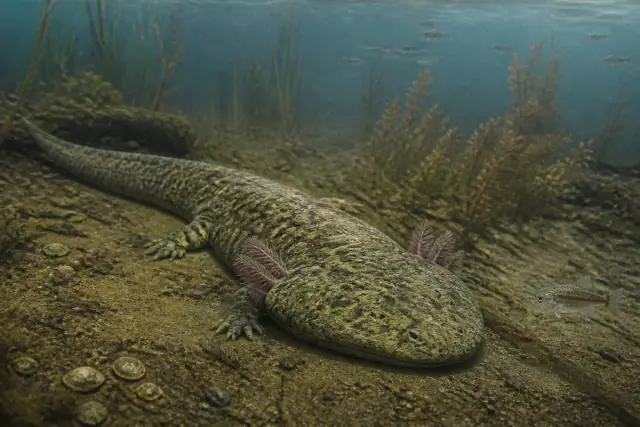
Gerrothorax pulcherrimus
A shovel-flat skull may have opened by lifting the upper jaw.
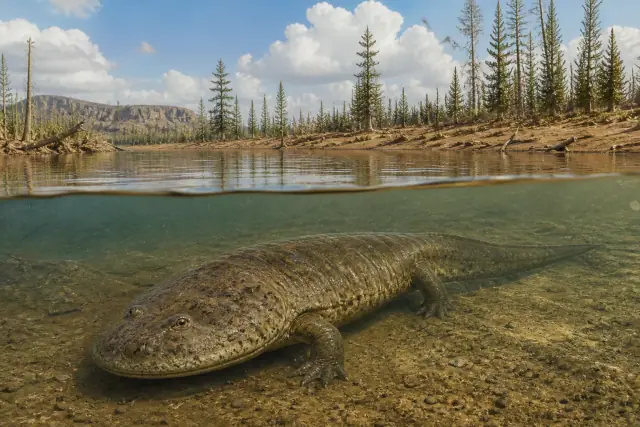
Metoposaurus diagnosticus
A broad flat head occupied nearly the full width of its front body.
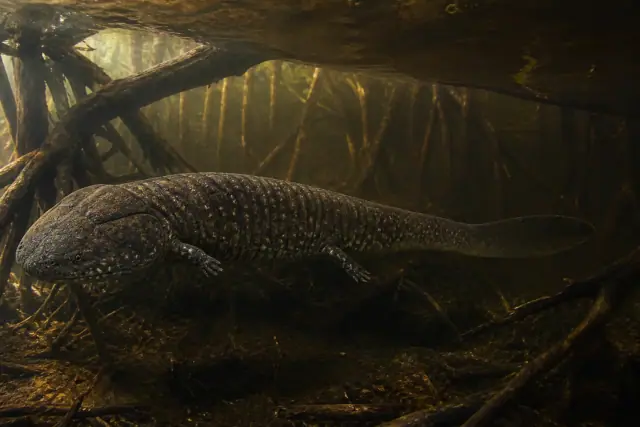
Crassigyrinus scoticus
Tiny limbs and strong jaws show an early tetrapod returning almost completely to water.
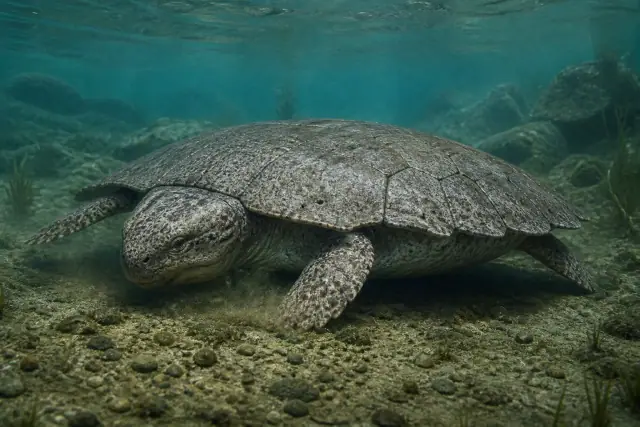
Henodus chelyops
A turtle-like shell protected a placodont with a broad filtering or scraping mouth.
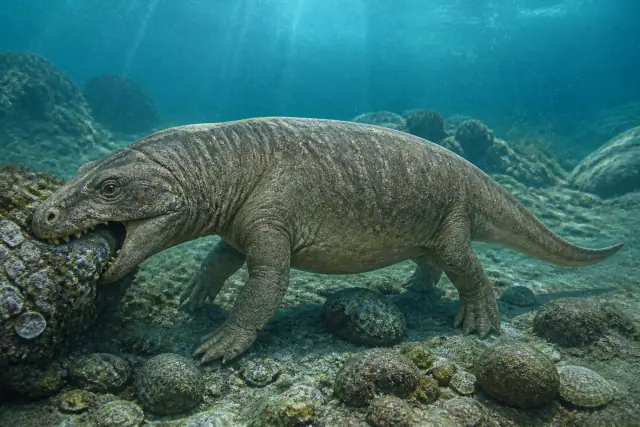
Placodus gigas
Chisel incisors and crushing palatal teeth formed a shell-opening toolkit.
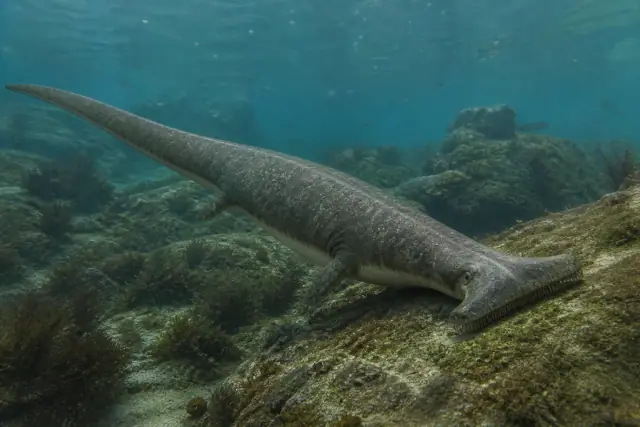
Atopodentatus unicus
A hammer-shaped snout scraped algae before needle teeth filtered the fragments.
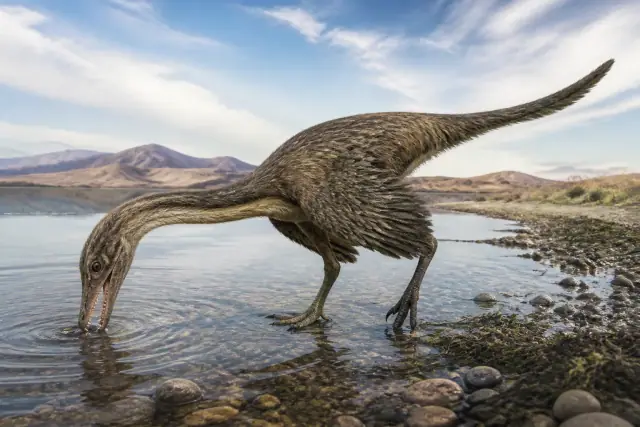
Halszkaraptor escuilliei
A long neck, dense teeth and paddle-like arms suggest a semiaquatic raptor.
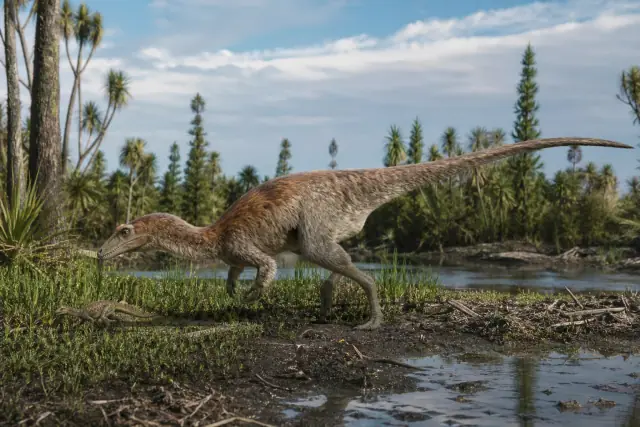
Masiakasaurus knopfleri
Forward-projecting front teeth may have hooked small slippery prey.
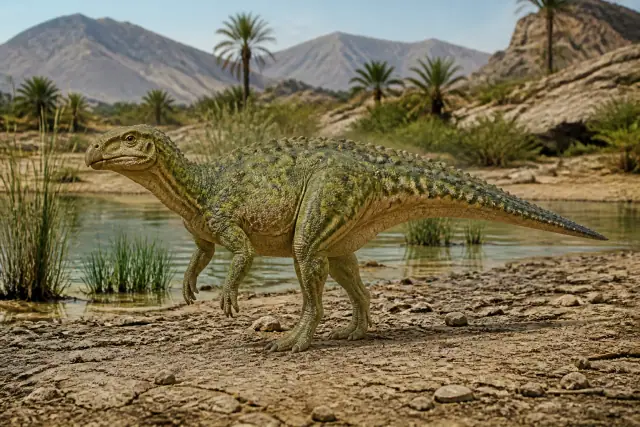
Jakapil kaniukura
A small plant eater combined low armor with an unusually deep jaw.
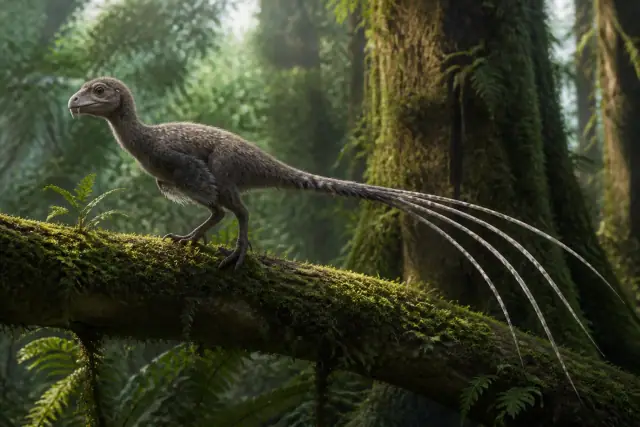
Epidexipteryx hui
Four long tail feathers displayed rather than powering flight.
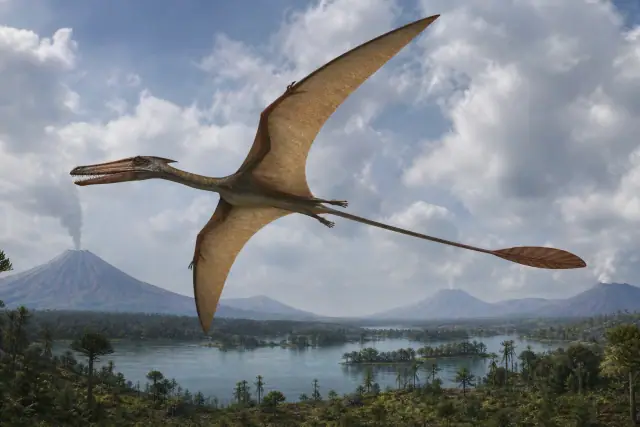
Darwinopterus modularis
A long tail and advanced skull combine features once separated between pterosaur groups.
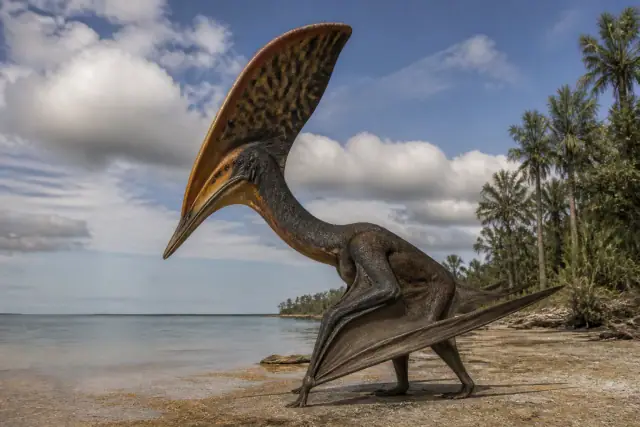
Tupandactylus imperator
Most of its enormous head crest was soft tissue used as a visual signal.
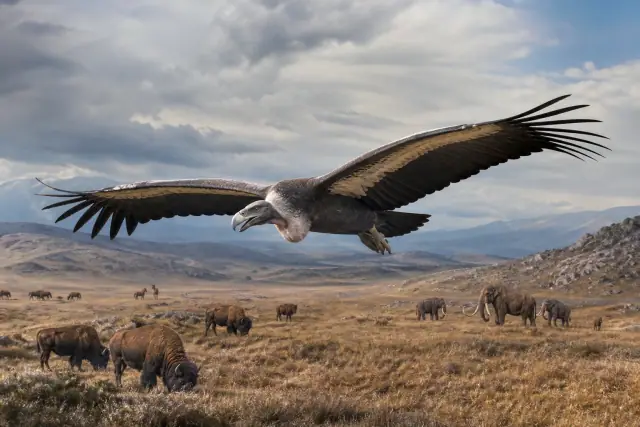
Teratornis merriami
A large soaring bird with an estimated 11–12 ft wingspan; its diet involved more than a simple vulture comparison.
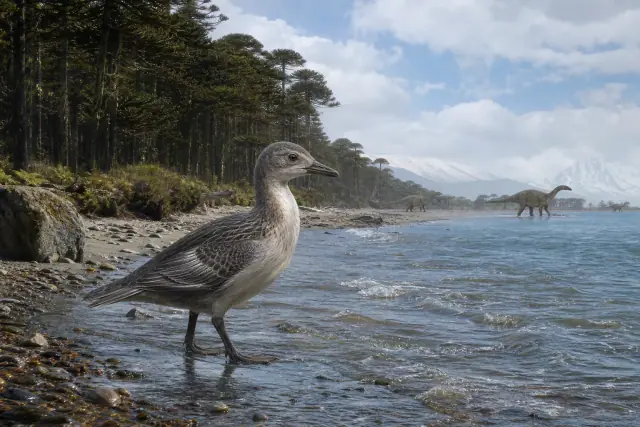
Vegavis iaai
A waterbird close to ducks lived before the non-avian dinosaurs vanished.
Explore the atlas by continent, country and state. Follow fossil localities into regional guides, compare animals across time and return to the evidence in each species profile.
FIELD GUIDES
Giants, strange body plans and lives within human memory. Follow a question into the atlas, then explore the animals behind it.