428Mesozoic
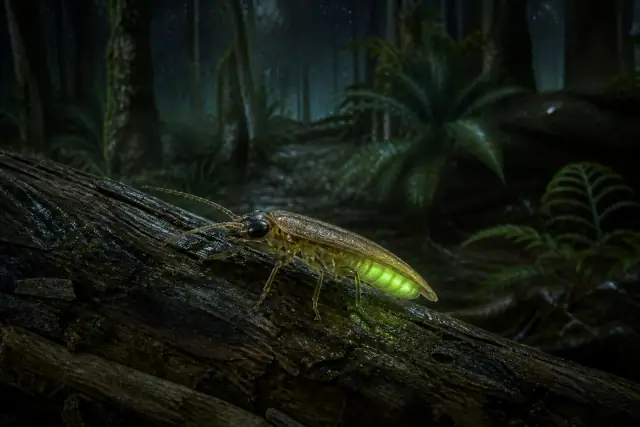
Cretophengodes
Cretophengodes azari
An abdominal light organ pushes beetle bioluminescence into the dinosaur age.
LIFE ARCHIVE
Browse extinct life from traces nearly 1.9 billion years old to historically recorded extinctions.
Cretophengodes azari
An abdominal light organ pushes beetle bioluminescence into the dinosaur age.
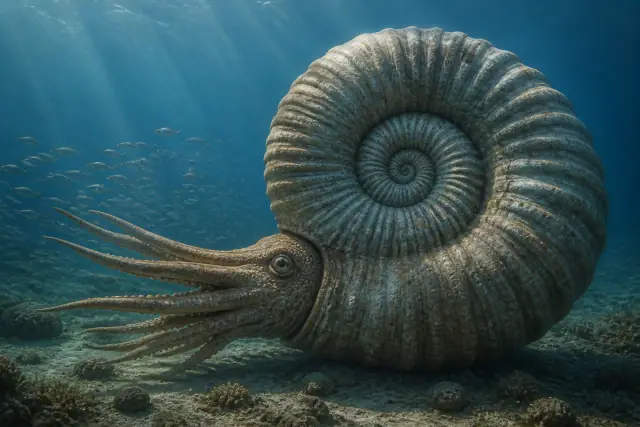
Parapuzosia seppenradensis
A coiled shell nearly two meters wide belonged to the largest known ammonite.
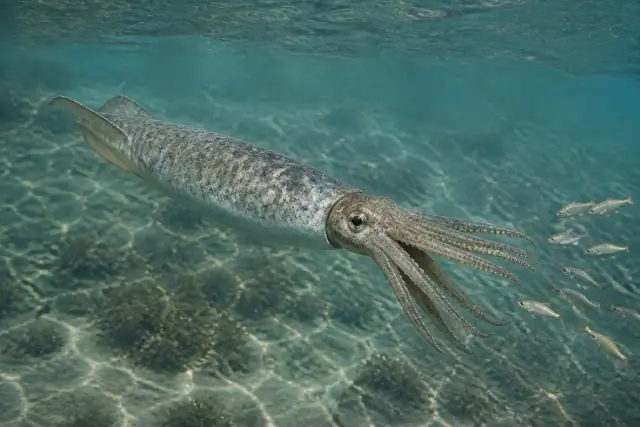
Belemnotheutis antiquus
Rare soft tissues restore the ink sac, fins and ten hooked arms around an internal shell.
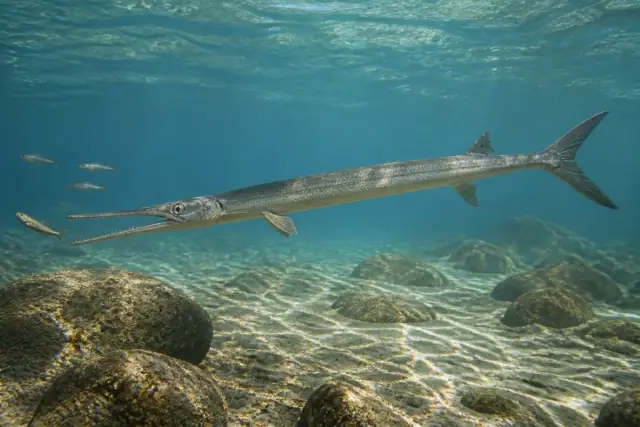
Saurichthys curionii
A needle-like snout and slender body converged on modern barracudas.
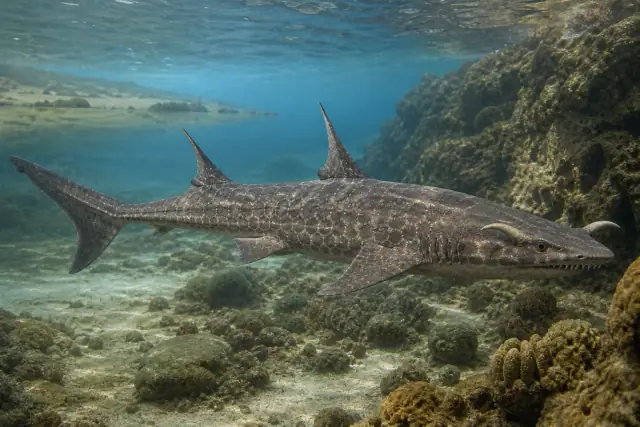
Hybodus reticulatus
Dorsal fin spines and two tooth shapes handled fish and hard-shelled prey.
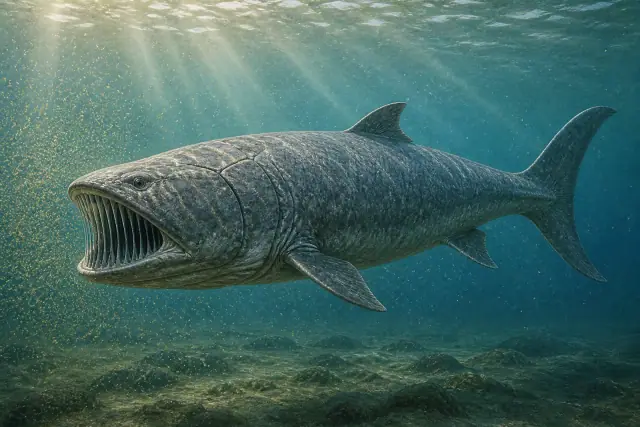
Bonnerichthys gladius
A giant bony fish filtered plankton near the ocean surface.
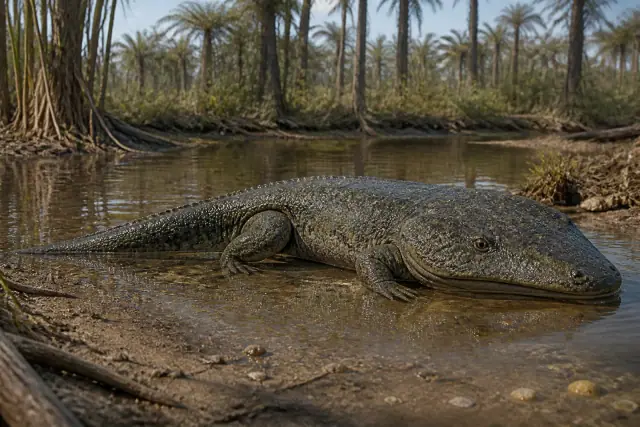
Cyclotosaurus robustus
Closed otic notches and a broad flat skull marked a giant aquatic ambush predator.
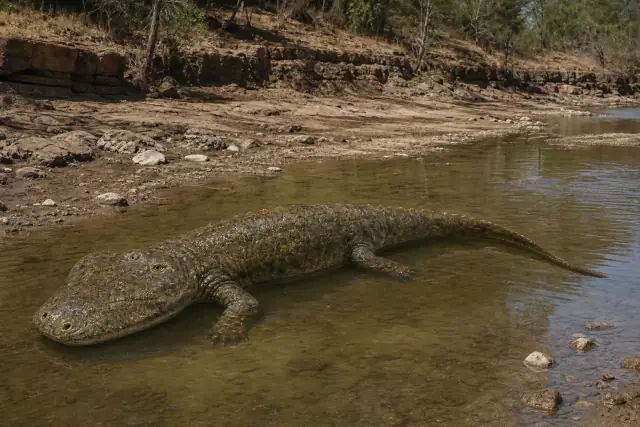
Koskinonodon perfectum
A broad half-meter skull carried grooves that sensed water movement.
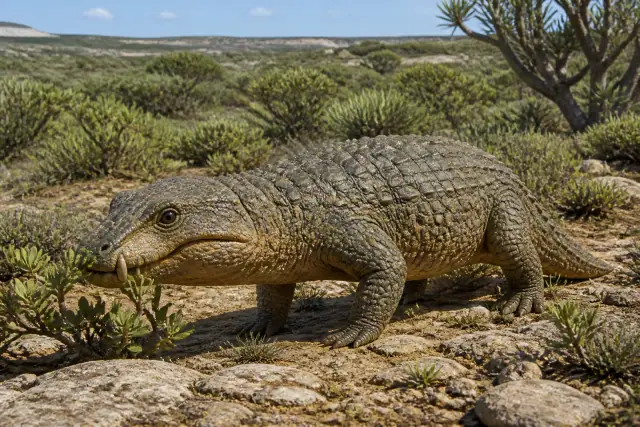
Simosuchus clarki
A short square snout, leaf-shaped teeth and armor belonged to a likely plant-eating crocodyliform.
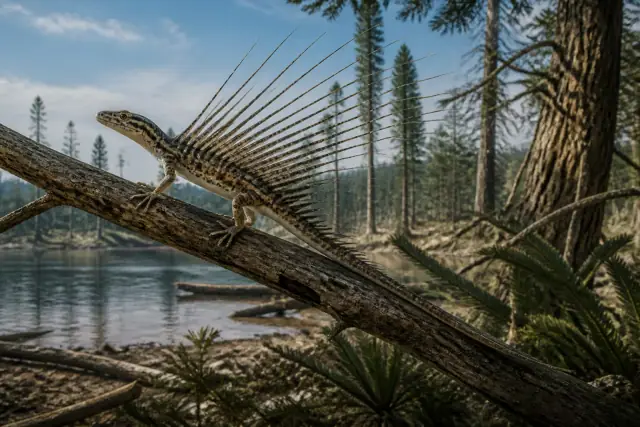
Longisquama insignis
A row of exaggerated dorsal appendages has been called scales, feathers or gliding surfaces.
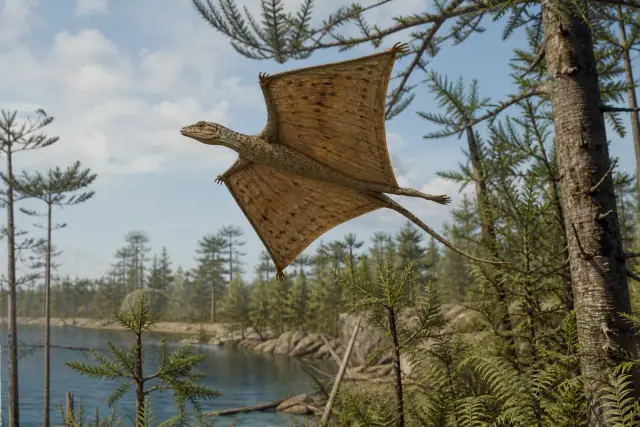
Sharovipteryx mirabilis
Its main flight membrane stretched between extraordinarily long hind legs.
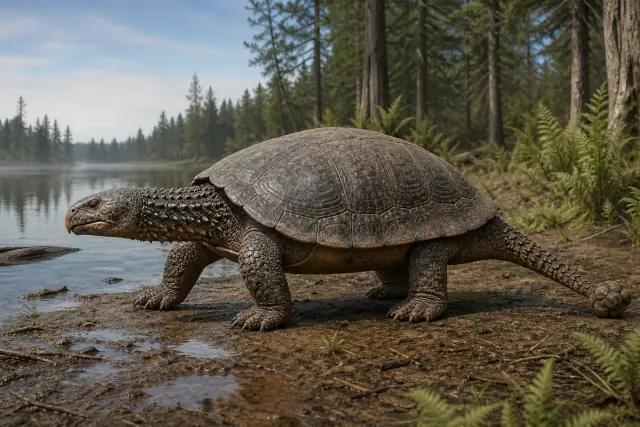
Proganochelys quenstedtii
A complete shell coexisted with neck spikes and an inability to retract the head.
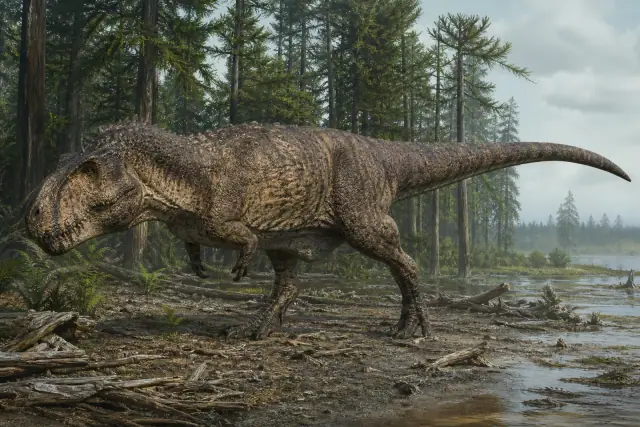
Thanatotheristes degrootorum
A deep snout with facial ridges marked an early northern tyrannosaurid.
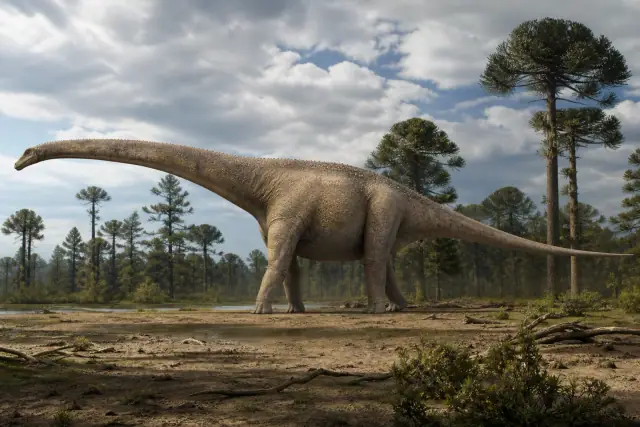
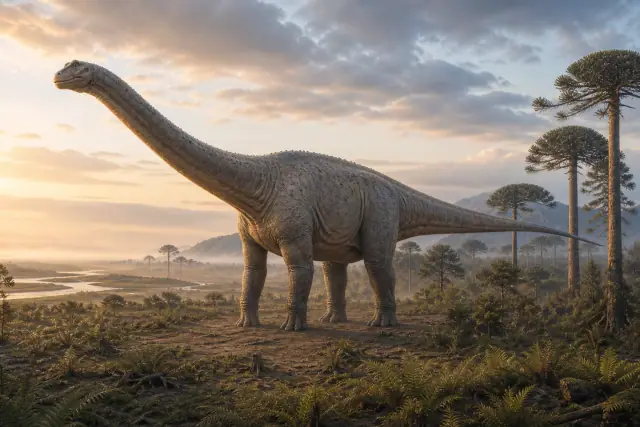
Dreadnoughtus schrani
A relatively complete skeleton makes this giant titanosaur unusually measurable.
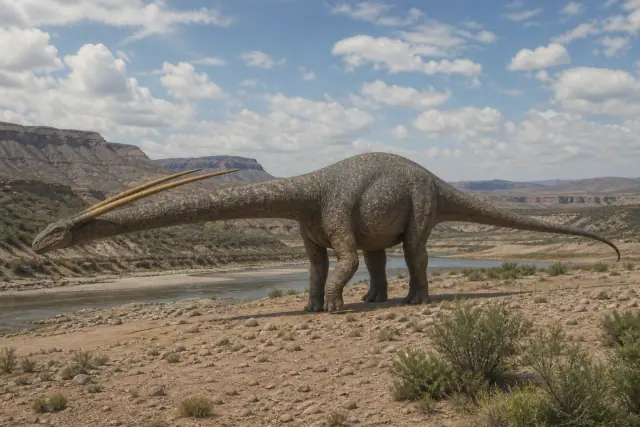
Bajadasaurus pronuspinax
Paired neck-vertebra spines curve forward; a described pair measures 58 cm.
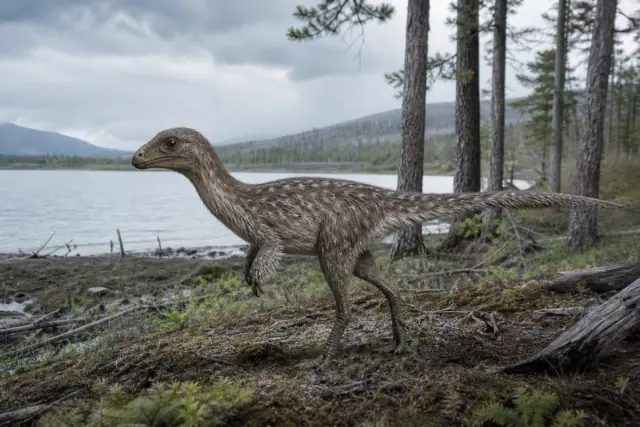
Kulindadromeus zabaikalicus
Scales, simple filaments and branching feather-like structures covered one small herbivore.
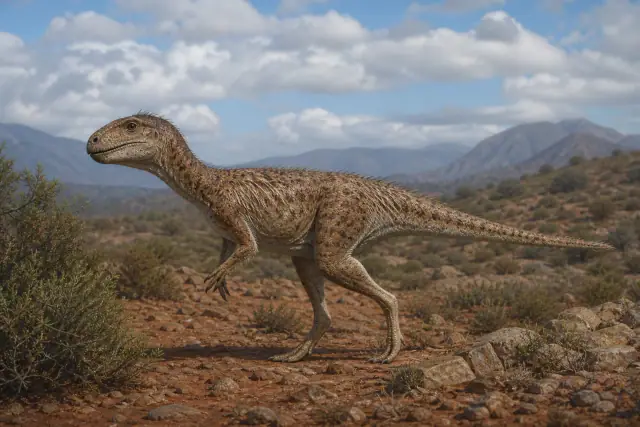
Heterodontosaurus tucki
Incisor, tusk-like and cheek teeth formed an unusual dinosaur dentition.
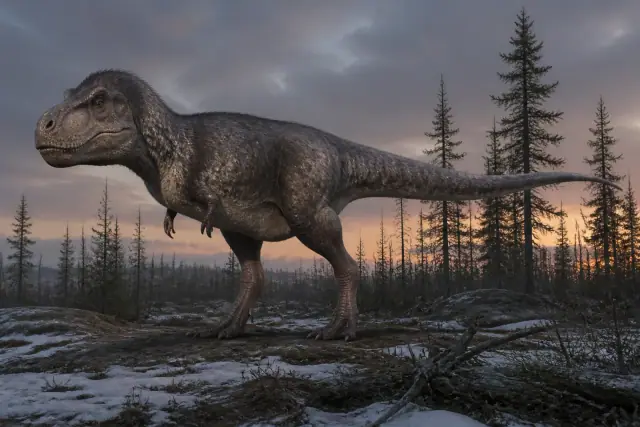
Nanuqsaurus hoglundi
It hunted through polar night, though its supposedly dwarf size remains uncertain.
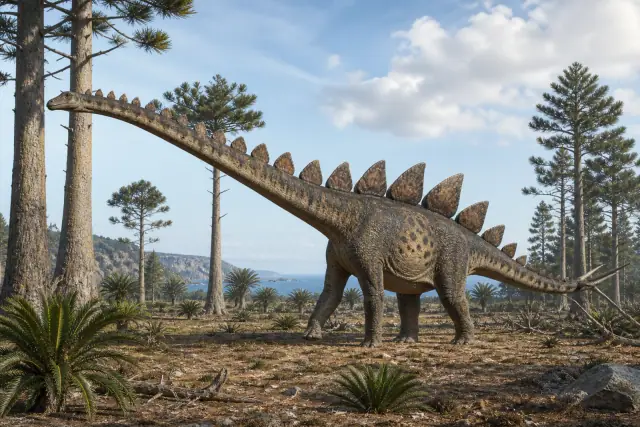
Miragaia longicollum
At least seventeen cervical vertebrae produced an unusually long neck for a stegosaur.
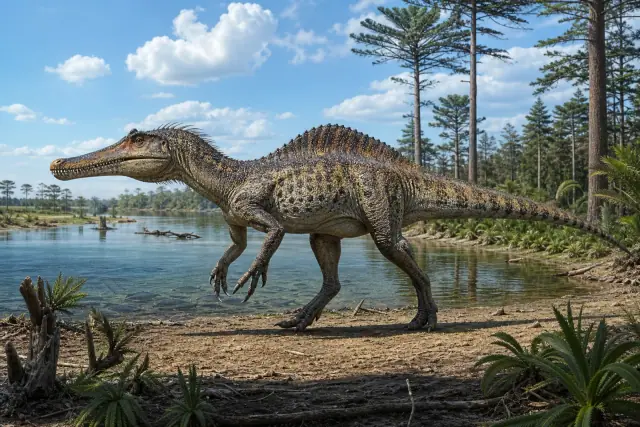
Irritator challengeri
A long snout, conical teeth and low crest belonged to a spinosaurid that frequently ate fish.
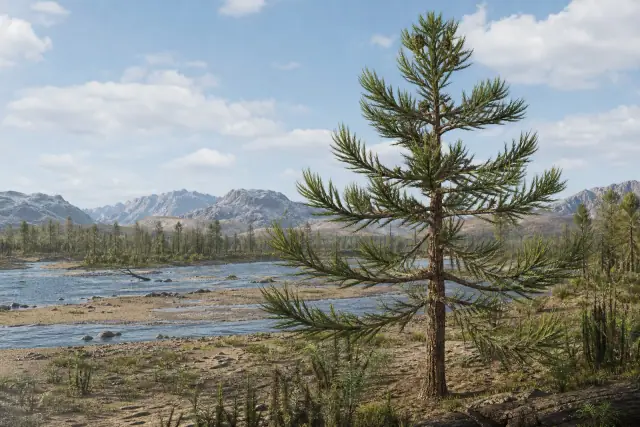
Voltzia heterophylla
Leaves of different lengths on one shoot record an early stage of modern conifer architecture.
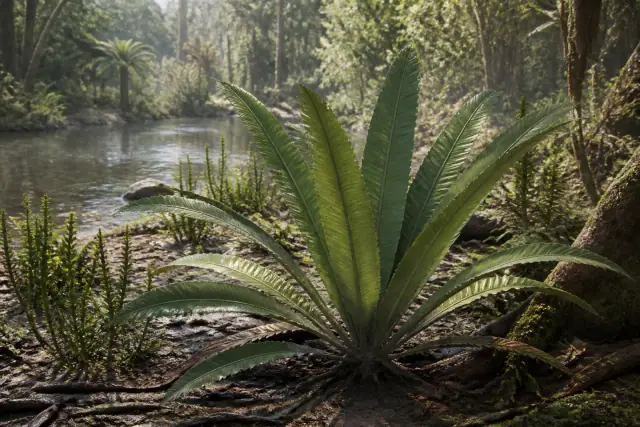
Taeniopteris multinervis
Entire strap-shaped leaves with dense side veins define a form genus rather than one secure lineage.
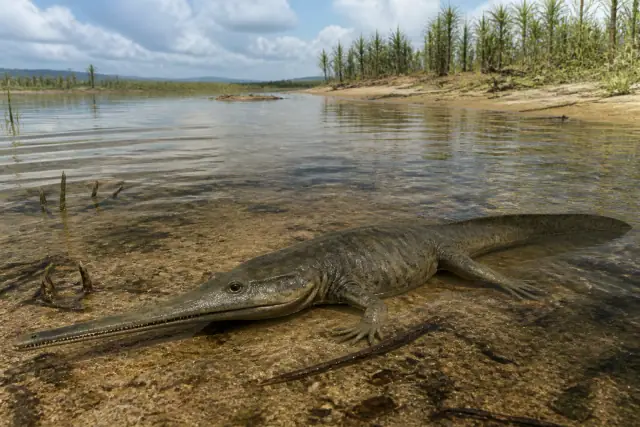
Aphaneramma rostratum
An extremely narrow snout gave this temnospondyl a gharial-like profile on an amphibian skeleton.
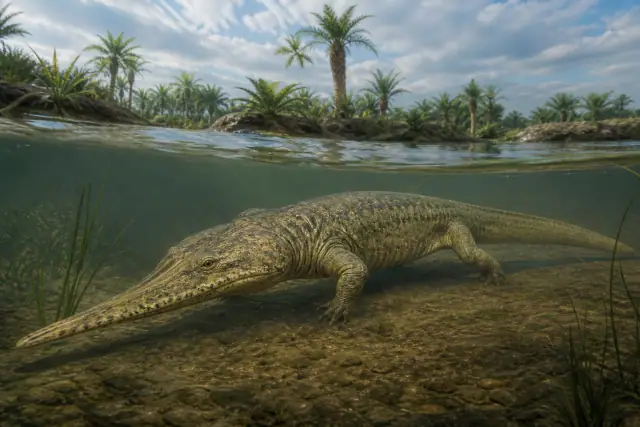
Trematosaurus brauni
A narrow sensory-grooved snout suited an open-water temnospondyl.
Explore the atlas by continent, country and state. Follow fossil localities into regional guides, compare animals across time and return to the evidence in each species profile.
FIELD GUIDES
Giants, strange body plans and lives within human memory. Follow a question into the atlas, then explore the animals behind it.