251Paleozoic
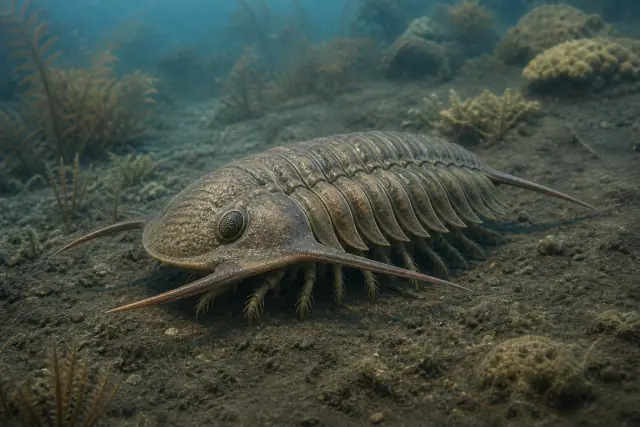
Olenoides
Olenoides serratus
Its antennae, gills and clawed legs reveal far more than a mineralized trilobite shell.
LIFE ARCHIVE
Browse extinct life from traces nearly 1.9 billion years old to historically recorded extinctions.
Olenoides serratus
Its antennae, gills and clawed legs reveal far more than a mineralized trilobite shell.
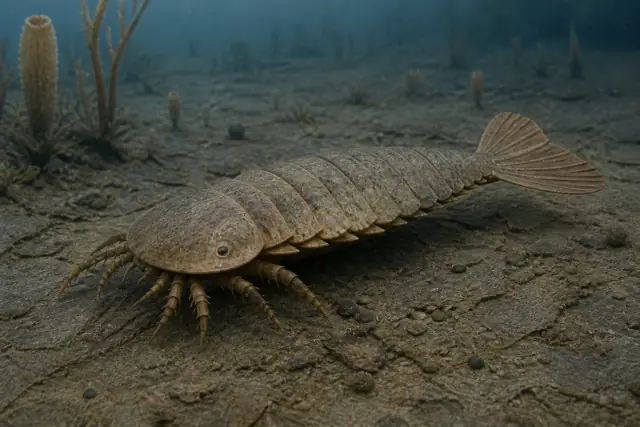
Sidneyia inexpectans
Robust leg bases formed crushing jaws for small trilobites and other shelled prey.
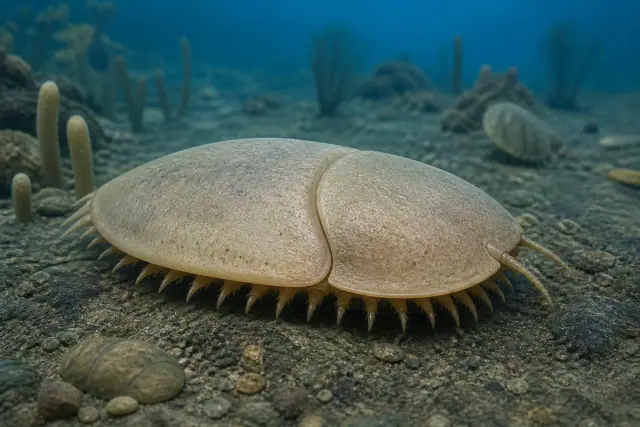
Naraoia compacta
Two large shields covered a soft body equipped with fully segmented trilobite-like limbs.
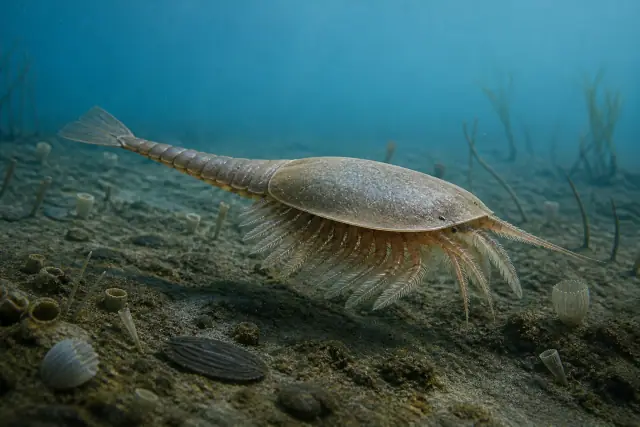
Waptia fieldensis
A bivalved carapace, compound eyes and mandibles reveal an early mandibulate; some fossils preserve embryos under the carapace.
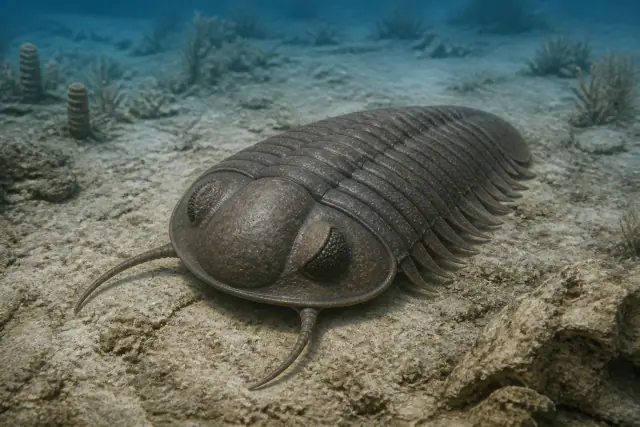
Isotelus rex
At nearly seventy centimeters, it is among the largest complete trilobites ever found.
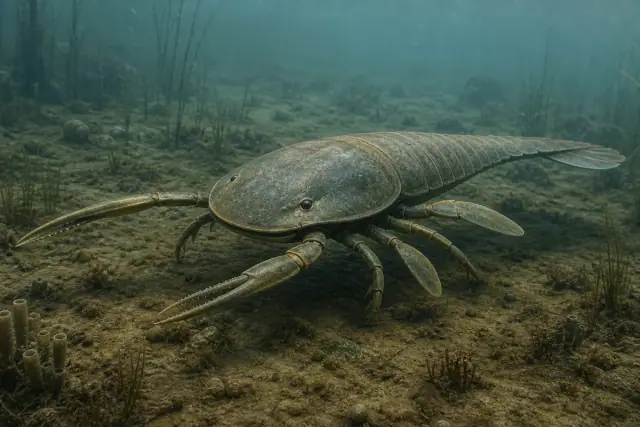
Acutiramus cummingsi
Its long pincers carried slanting blades suited to holding or slicing soft prey.
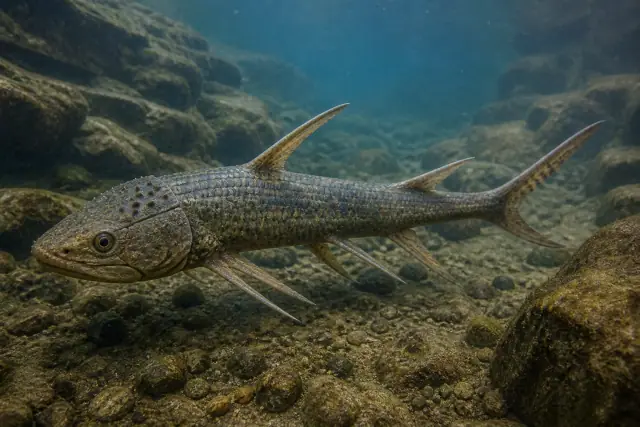
Climatius reticulatus
Rows of paired ventral spines formed a defensive fence beneath this small early jawed fish.
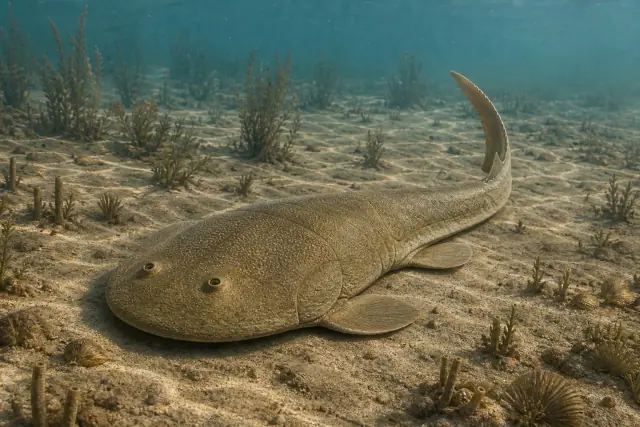
Drepanaspis gemuendenensis
Its body was a flattened shield with upward-facing eyes and a mouth beneath the front edge.
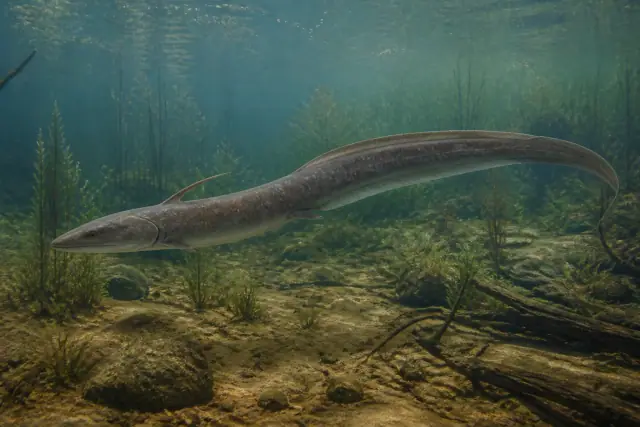
Orthacanthus senckenbergianus
An eel-like body, continuous fin and spine behind the head made it unlike any modern shark.
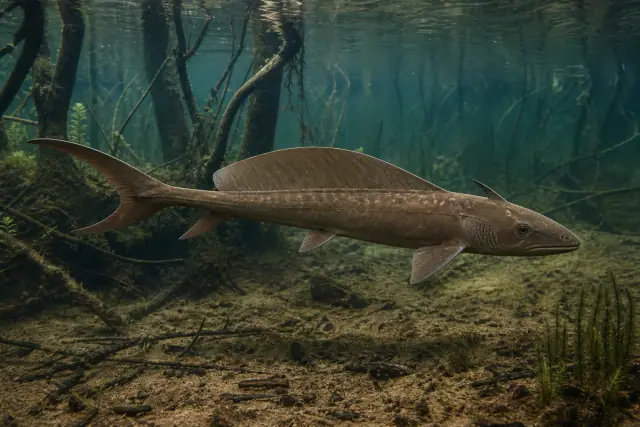
Xenacanthus decheni
A single head spine, forked teeth and continuous dorsal fin defined this freshwater shark.
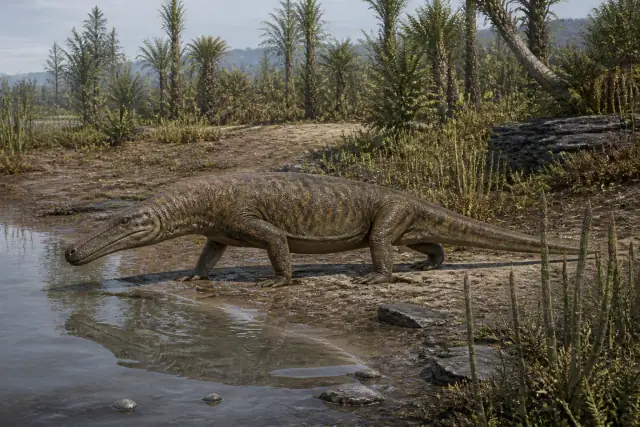
Ophiacodon mirus
Its long skull and deep tail suggest a waterside animal that was still a capable walker.
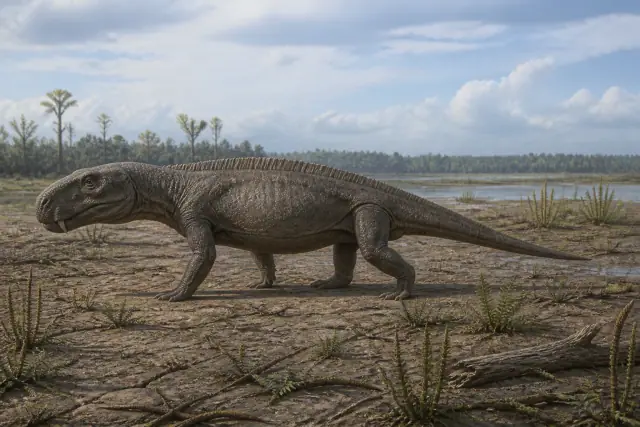
Sphenacodon ferox
Low vertebral ridges accompanied a deep skull and strongly differentiated teeth.
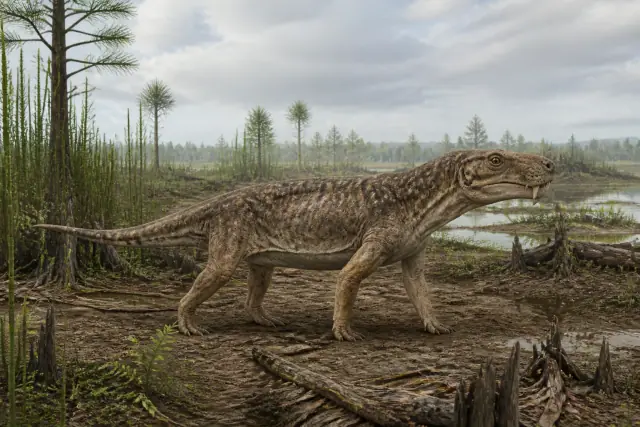
Biarmosuchus tener
A light build, long limbs and small skull bosses combine primitive and therapsid features.
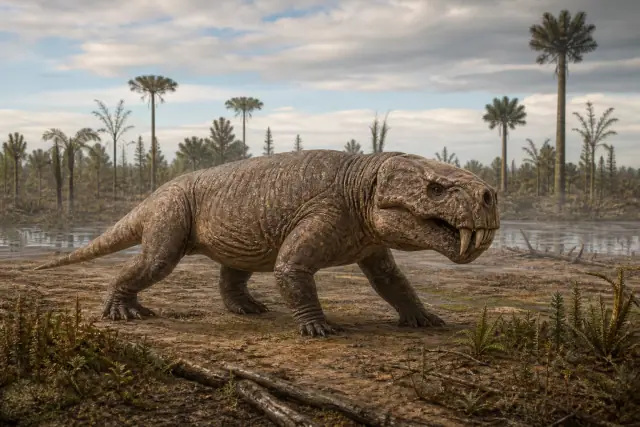
Anteosaurus magnificus
A huge skull combined thickened impact surfaces with long canines in a formidable predator.
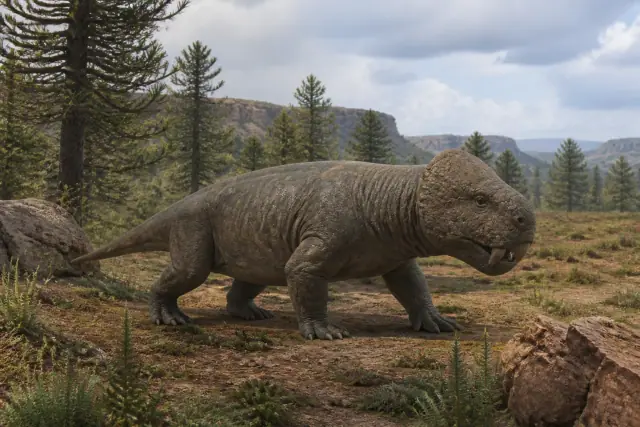
Tapinocephalus atherstonei
A domed, massively thick skull crowned the barrel body of this giant herbivore.
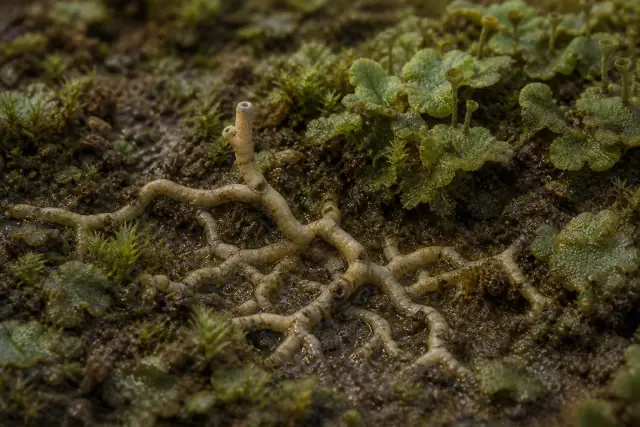
Tortotubus protuberans
Branching microscopic hyphae show fungi helping to build the earliest soils.
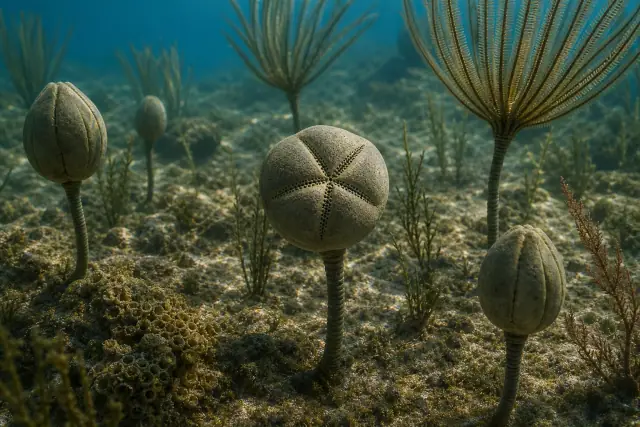
Pentremites godoni
A flower-bud body carried five feeding and respiratory grooves.
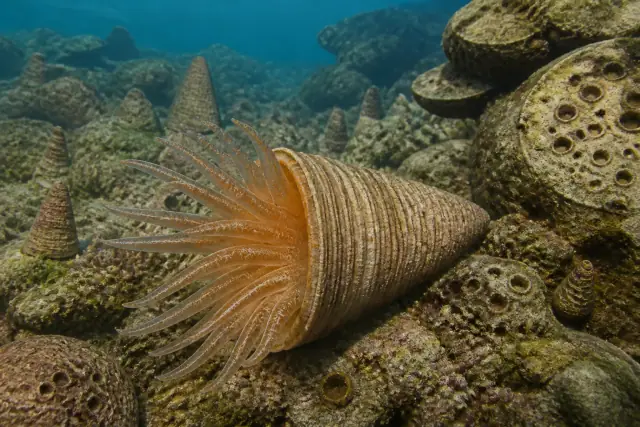
Heliophyllum halli
Radiating septa inside a horn-shaped skeleton resemble a stone sun.
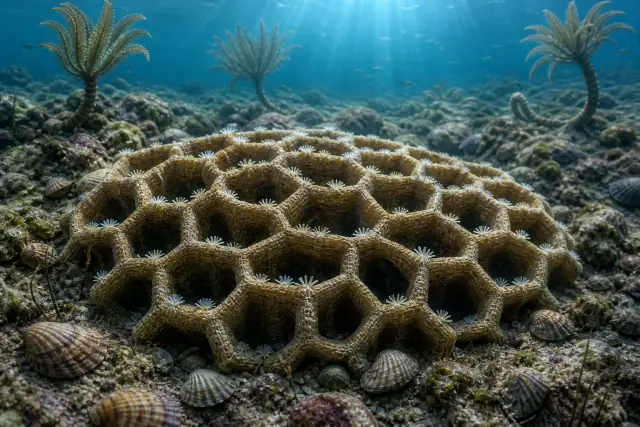
Halysites catenularius
Linked tubes formed honeycomb chains across Paleozoic reefs.
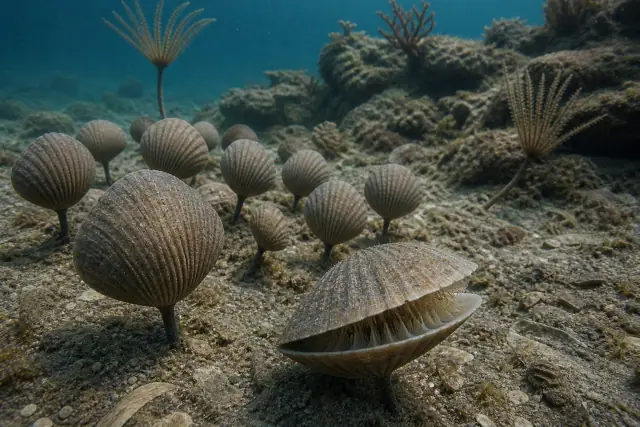
Atrypa reticularis
Fine radial ribs covered rounded shells that once crowded ancient seabeds.
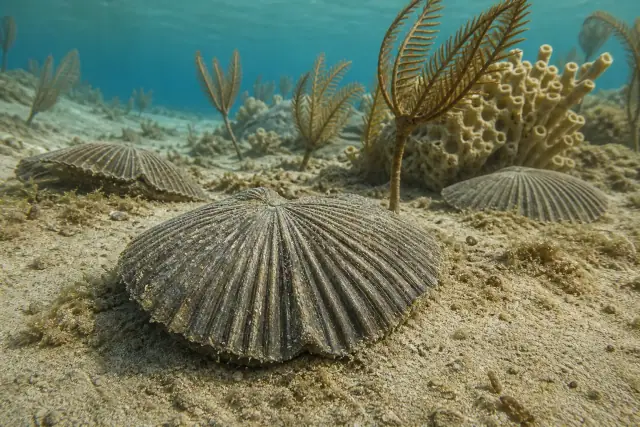
Paraspirifer bownockeri
A broad hinge line formed stone wings that stabilized the shell on soft mud.
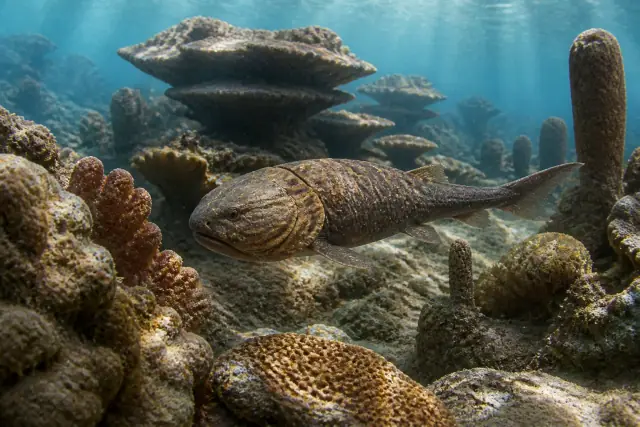
Materpiscis attenboroughi
An embryo with an umbilical connection records some of the earliest live birth.
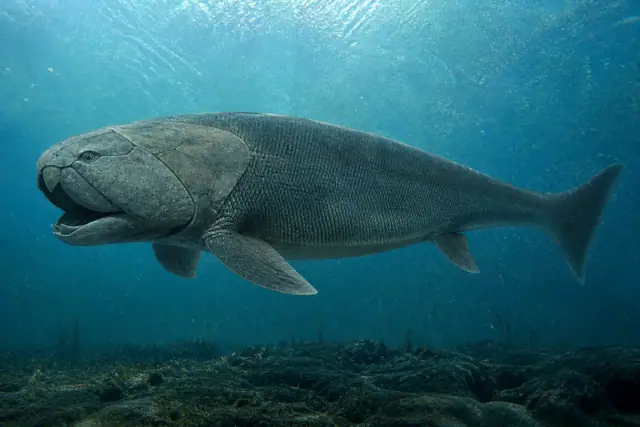
Titanichthys agassizi
This giant placoderm lacked sharp jaw blades and may have filtered plankton.
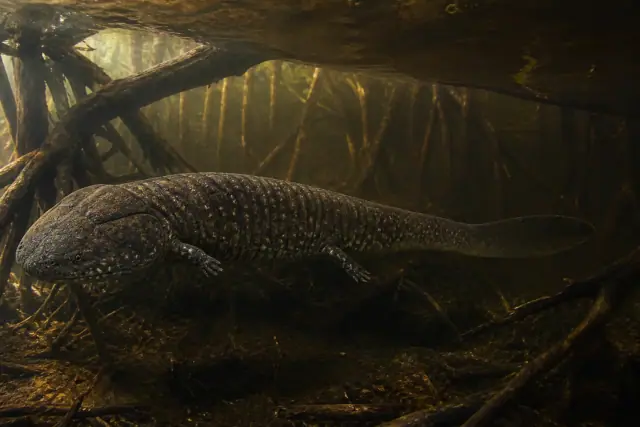
Crassigyrinus scoticus
Tiny limbs and strong jaws show an early tetrapod returning almost completely to water.
Explore the atlas by continent, country and state. Follow fossil localities into regional guides, compare animals across time and return to the evidence in each species profile.
FIELD GUIDES
Giants, strange body plans and lives within human memory. Follow a question into the atlas, then explore the animals behind it.