
Explore this animal in Size of Extinct Animals ↗
259 / Paleozoic
Orthacanthus
Orthacanthus senckenbergianus
An eel-like body, continuous fin and spine behind the head made it unlike any modern shark.
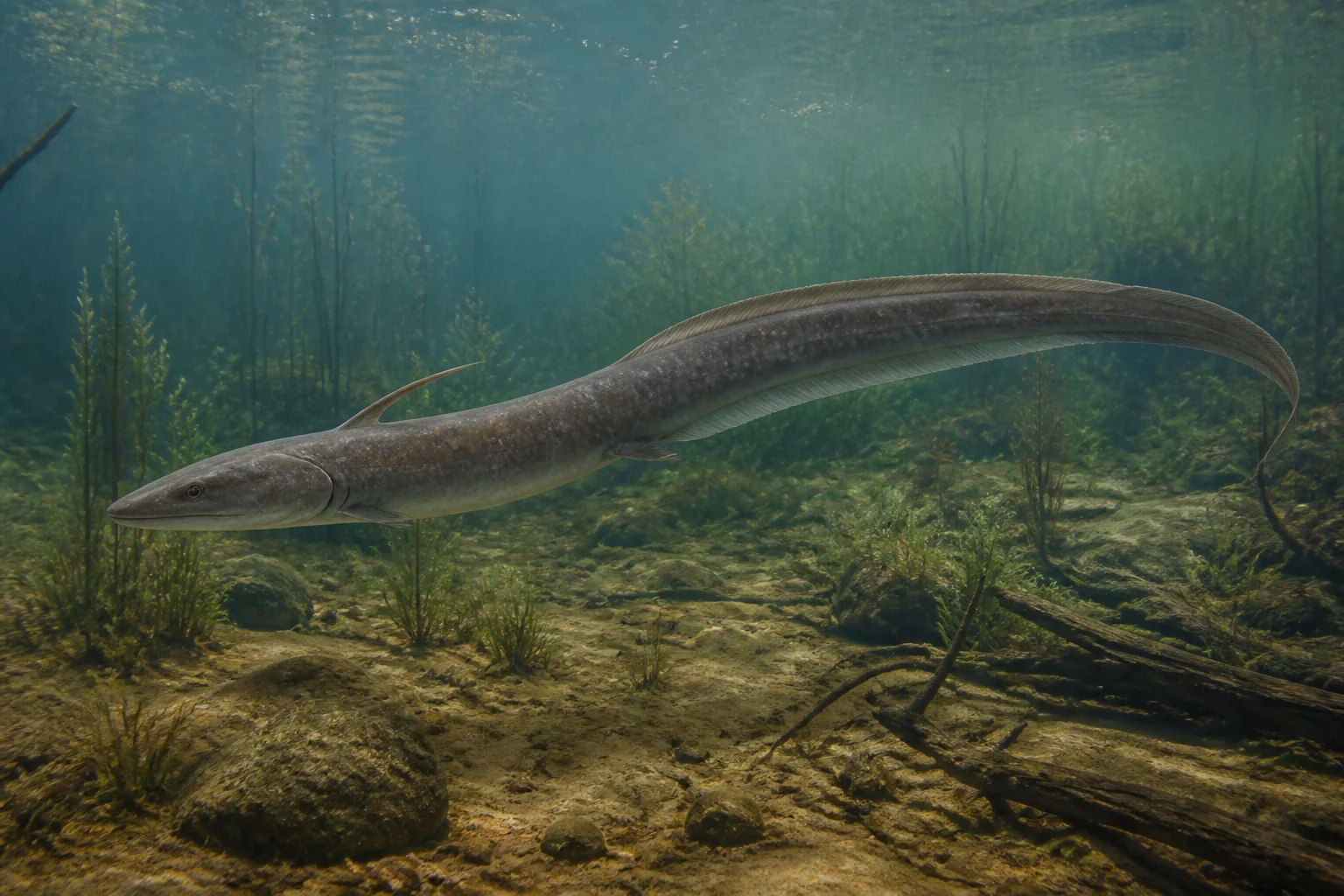 View original image · 1536 × 1024
- Time range
- About 290–260 million years ago
- Final stage
- Middle Permian
- Geographic range
- Freshwater lakes and swamp channels · Europe
01 / DEFINITION & ECOLOGY
What was Orthacanthus?
Orthacanthus (Orthacanthus senckenbergianus) was an extinct organism known from About 290–260 million years ago, with a range in Freshwater lakes and swamp channels · Europe.
Life and ecology
Orthacanthus hunted fish and amphibians in enclosed fresh water. Forked teeth held slippery prey and the long body maneuvered through dense vegetation.
02 / DISAPPEARANCE
Why did Orthacanthus disappear?
Permian aridification fragmented coal swamps and permanent freshwater habitats, which is plausible context; a specific cause for this genus is not established.
03 / EVIDENCE
How do scientists know about Orthacanthus?
Skeletons, head spines, teeth and coprolites record its body and diet.
04 / SOURCES & FURTHER READING
Check the source record
Use the scientific name to compare taxonomy, occurrence records and the fossil record. Database coverage and classifications may differ.
05 / REVISION HISTORY
How has this record changed?
- Rewrote an extinction cause that presented environmental or faunal turnover as established; it is now given as context the record does not prove.
- Verified authoritative entity sources and added three responsive reconstruction sizes.
- Initial bilingual species record published.
06 / CORRECTIONS & ADDITIONS