
Explore this animal in Size of Extinct Animals ↗
255 / Paleozoic
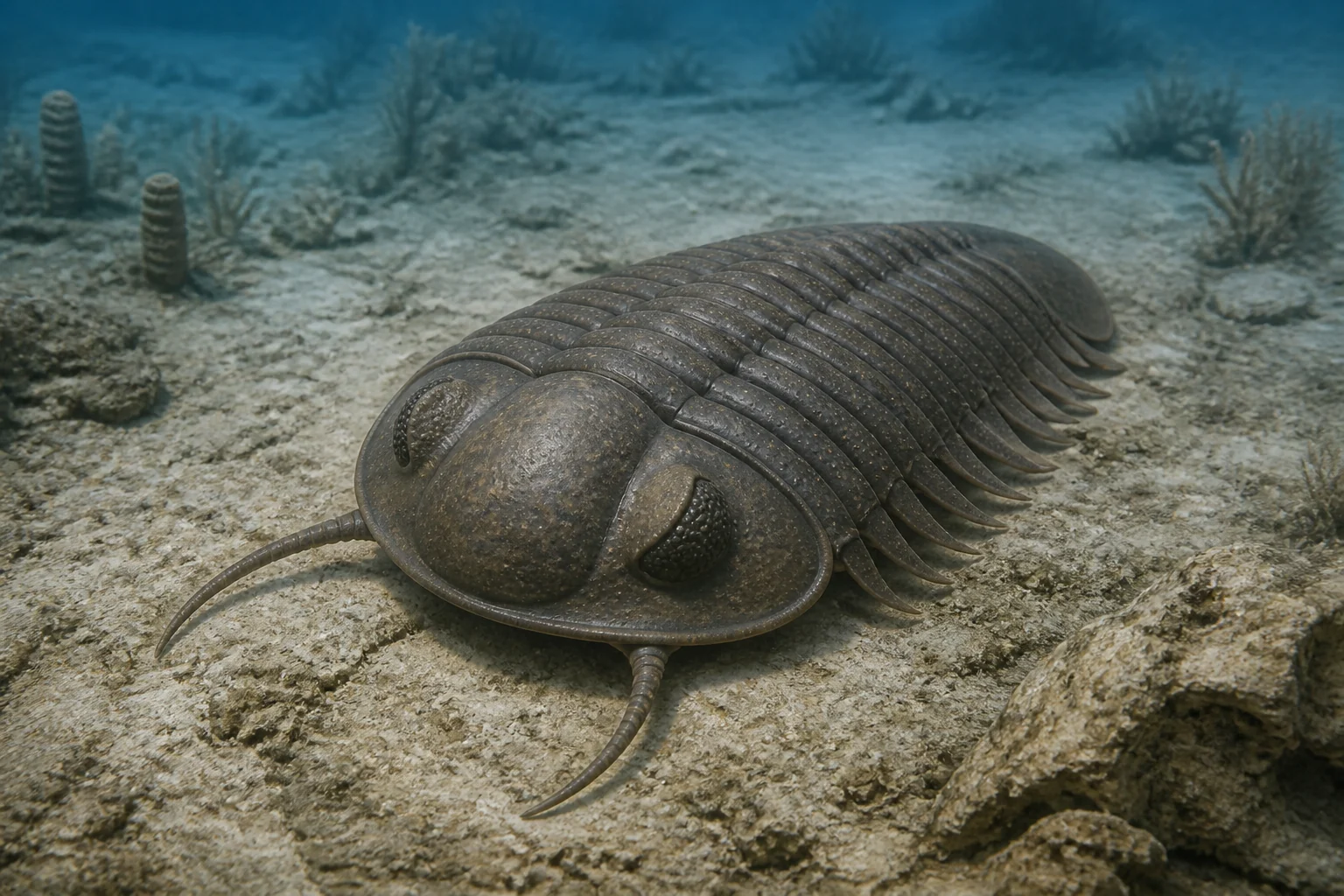
Giant Isotelus
Isotelus rex
At nearly seventy centimeters, it is among the largest complete trilobites ever found.
 View original image · 1536 × 1024
- Time range
- About 450 million years ago
- Final stage
- Late Ordovician
- Geographic range
- Warm carbonate shallows · Manitoba, Canada
01 / DEFINITION & ECOLOGY
What was Giant Isotelus?
Giant Isotelus (Isotelus rex) was an extinct organism known from About 450 million years ago, with a range in Warm carbonate shallows · Manitoba, Canada.
Life and ecology
Isotelus rex had a broad streamlined shell and probably crawled or swam close to the seabed while feeding on detritus and small animals.
02 / DISAPPEARANCE
Why did Giant Isotelus disappear?
Its record, about 450 million years old, predates the end-Ordovician extinction. The specific cause of its disappearance is not established.
03 / EVIDENCE
How do scientists know about Giant Isotelus?
Complete Manitoba exoskeletons provide direct measurements; tracks and relatives help restore its limbs.
04 / SOURCES & FURTHER READING
Check the source record
Use the scientific name to compare taxonomy, occurrence records and the fossil record. Database coverage and classifications may differ.
05 / REVISION HISTORY
How has this record changed?
- Removed an extinction cause that credited a mass extinction occurring after this species' last dated record.
- Verified authoritative entity sources and added three responsive reconstruction sizes.
- Initial bilingual species record published.
06 / CORRECTIONS & ADDITIONS