415Paleozoic
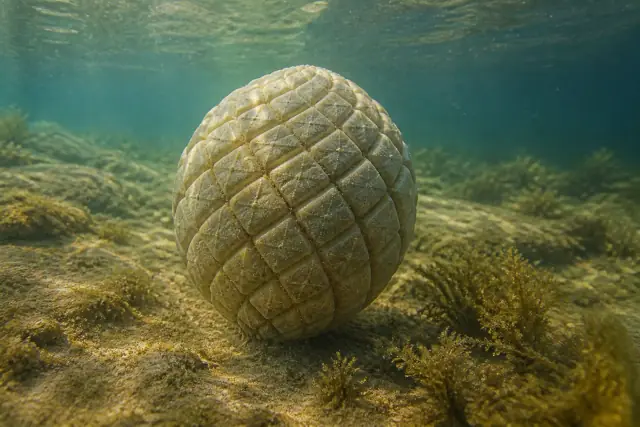
Receptaculites
Receptaculites oweni
Spiraled diamond plates formed a calcified pinecone-like body.
LIFE ARCHIVE
Browse extinct life from traces nearly 1.9 billion years old to historically recorded extinctions.
Receptaculites oweni
Spiraled diamond plates formed a calcified pinecone-like body.
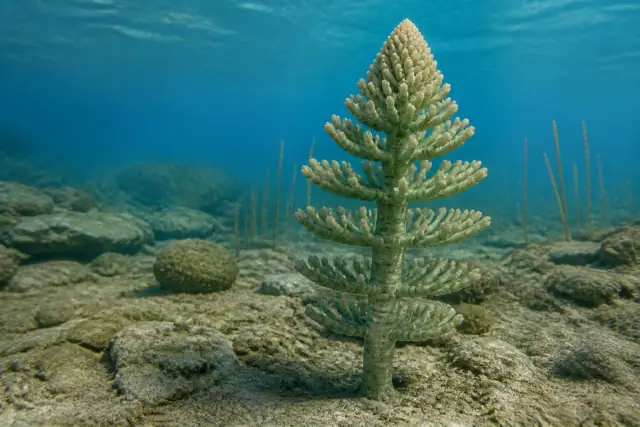
Cyclocrinites dactioloides
Whorled calcified branches surrounded a central axis like an underwater bottlebrush.
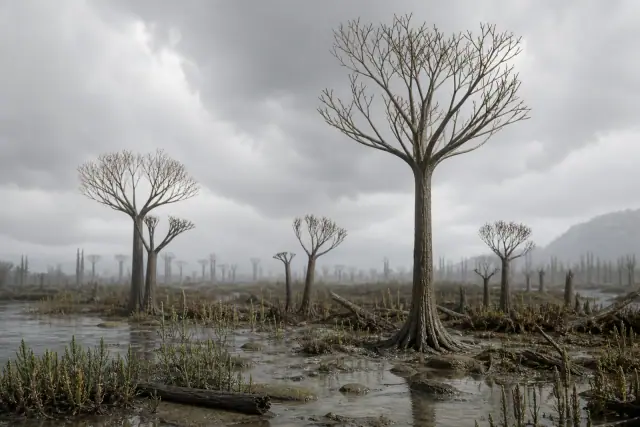
Wattieza casasii
Eight-meter leafless crowns formed one of the earliest known forests.
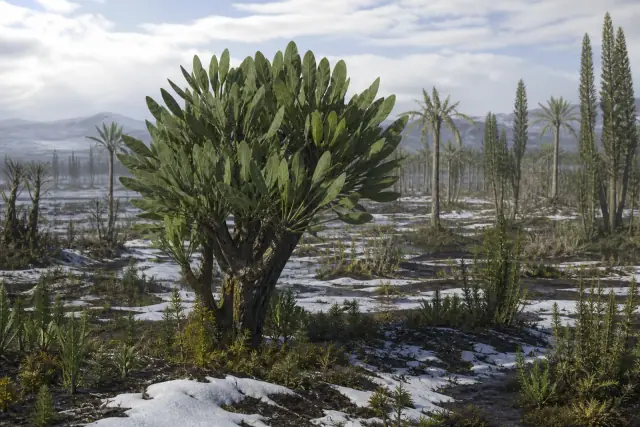
Gangamopteris obovata
Broad tongue-shaped leaves lacked the strong midrib of later glossopterids.
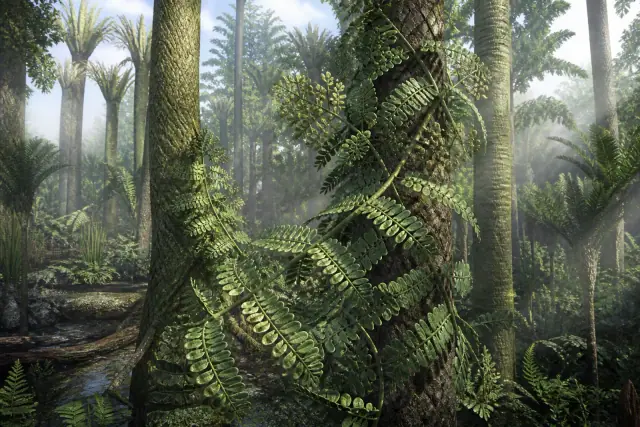
Alethopteris serlii
Firm fern-like pinnules belonged to a seed plant rather than a true fern.
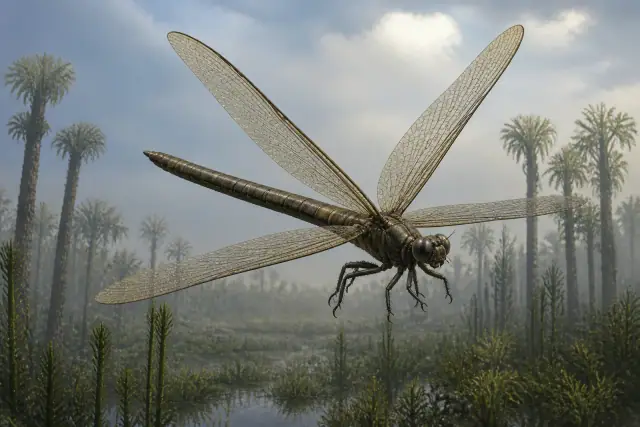
Megatypus schucherti
A wingspan near half a meter made it a major aerial predator.
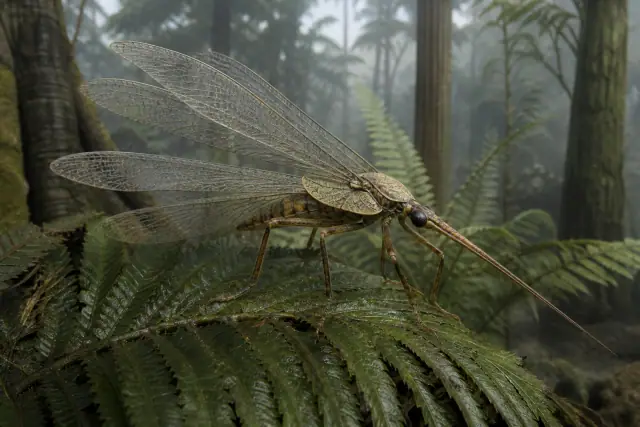
Lithomantis carbonarius
Leaf-like thoracic lobes accompanied four functional wings.
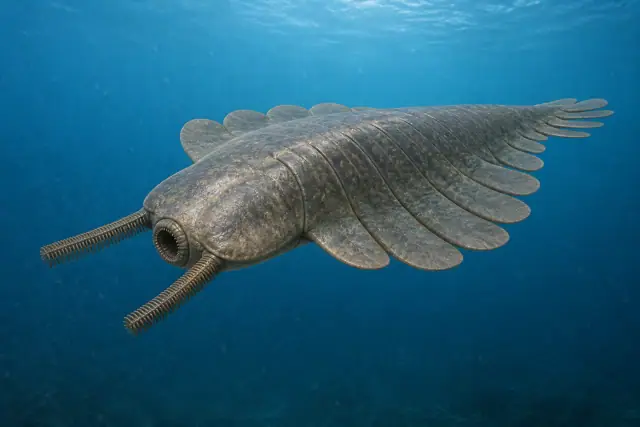
Aegirocassis benmoulai
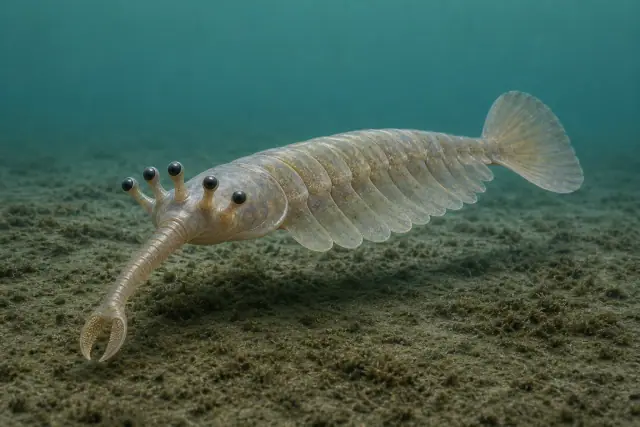
A two-meter filter-feeding radiodont was an early analogue of giant plankton feeders.
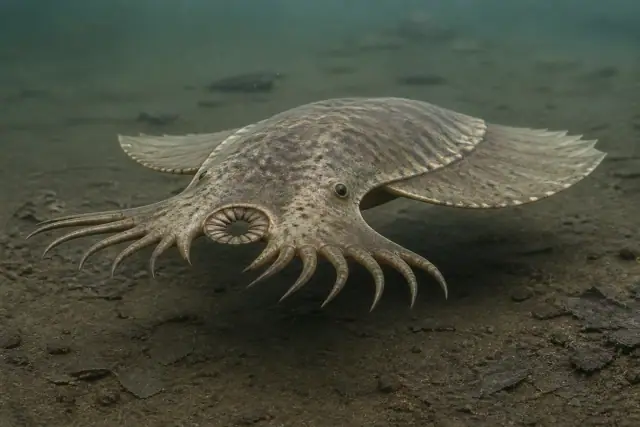
Cambroraster falcatus
A horseshoe-shaped carapace and rake-like appendages made a mobile sediment sifter.
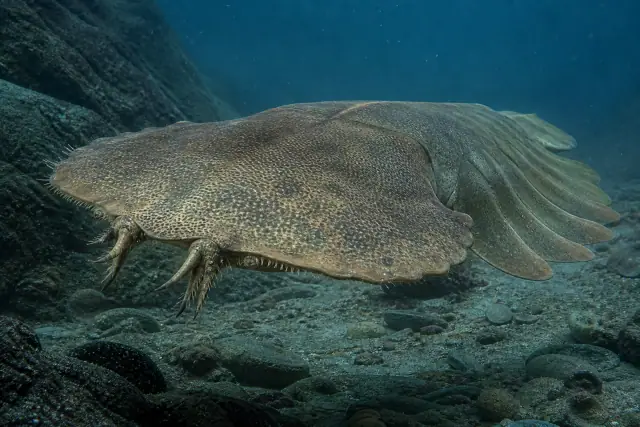
Titanokorys gainesi
An enormous head shield covered most of this bottom-feeding radiodont.
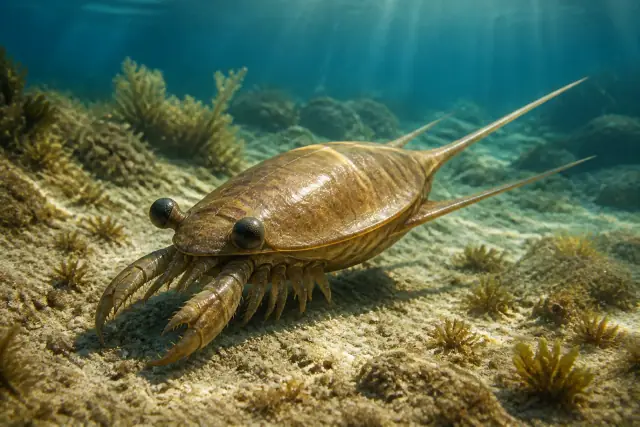
Isoxys curvirostratus
Isoxys curvirostratus was a small arthropod with a spined carapace, stalked eyes and grasping frontal appendages.
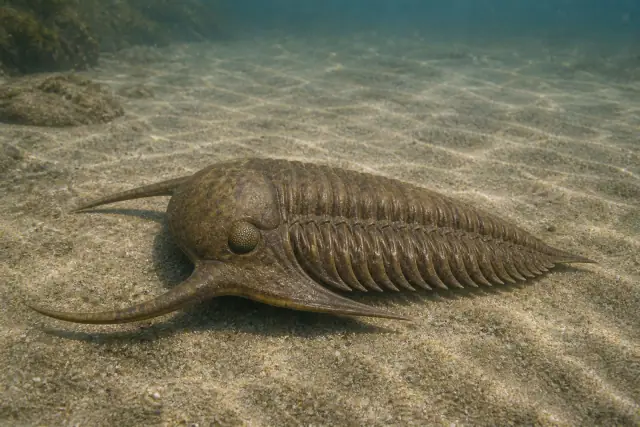
Olenellus thompsoni
A broad head, long genal spines and many trunk segments marked an early trilobite radiation.
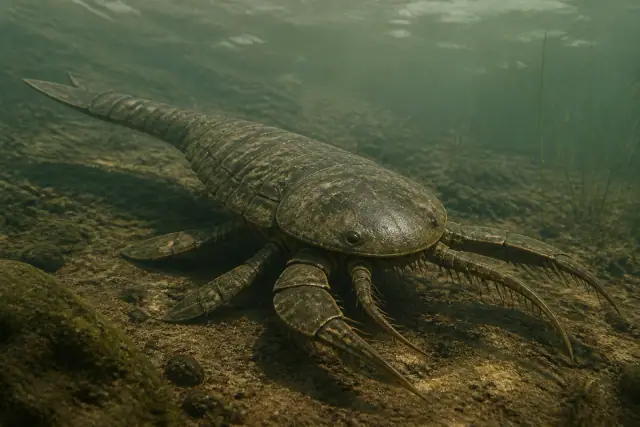
Hibbertopterus scouleri
A giant sea scorpion that raked soft sediment for food; a Scottish trackway suggests an animal about 1.6 m long.
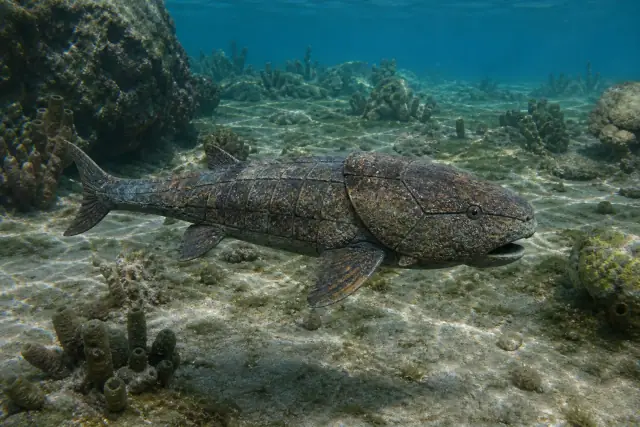
Entelognathus primordialis
Placoderm armor enclosed jaw-margin bones resembling those of later bony fish.
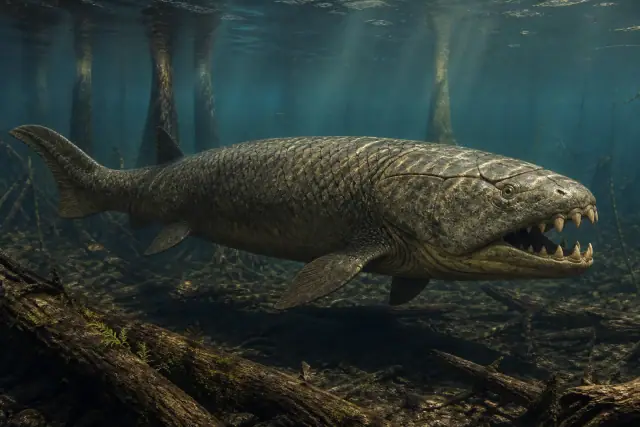
Rhizodus hibberti
Huge conical teeth armed a multi-meter freshwater lobe-finned predator.
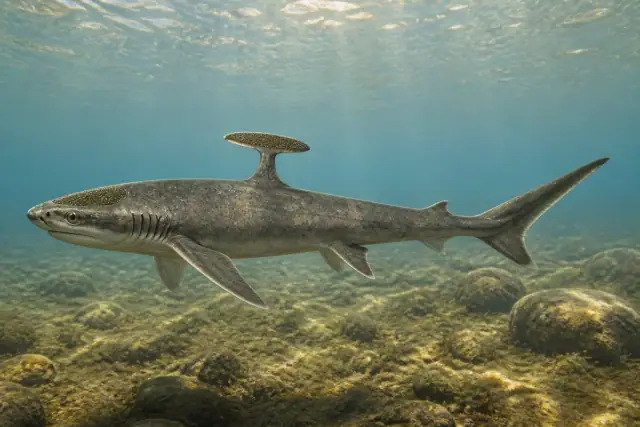
Stethacanthus altonensis
Males carried a denticle-covered anvil-shaped structure on the back.
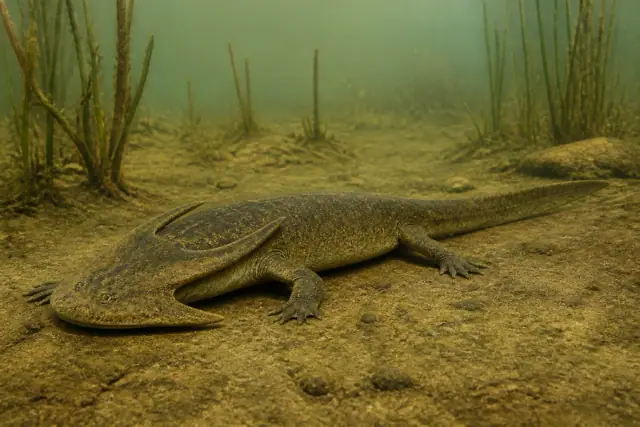
Diploceraspis burkei
Paired backward horns widened the skull of this small diplocaulid.
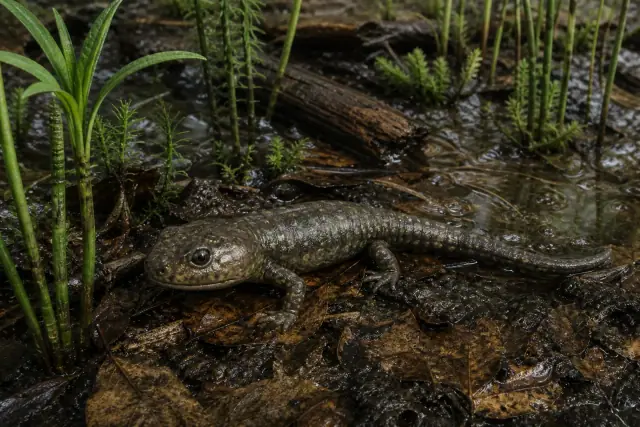
Amphibamus grandiceps
A small light body combined traits near the ancestry of modern amphibians.
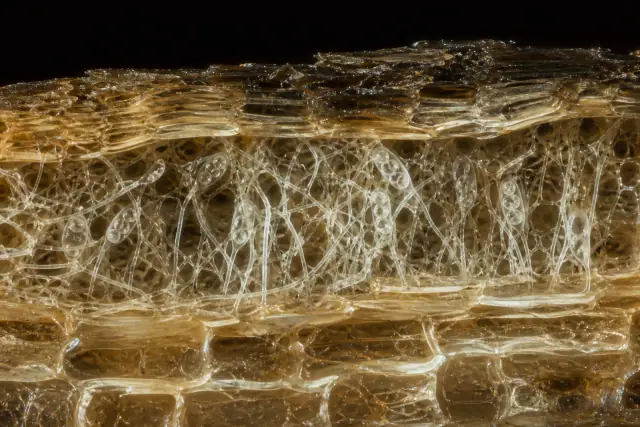
Protoascon missouriensis
Tiny sac-like structures in coal balls resemble an early ascomycete.
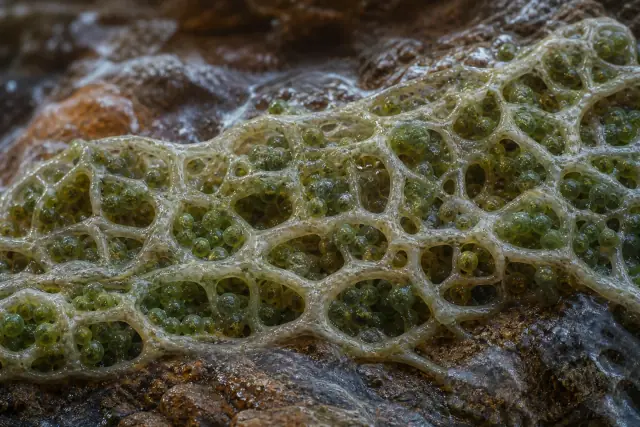
Winfrenatia reticulata
Fungal filaments surrounded cyanobacterium-like cells in an early lichen-style partnership.
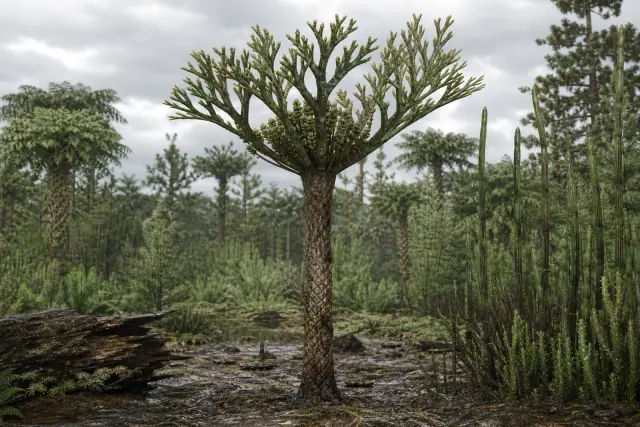
Noeggerathia foliosa
A palm-like crown belonged not to a fern but to an extinct heterosporous seed-plant relative.
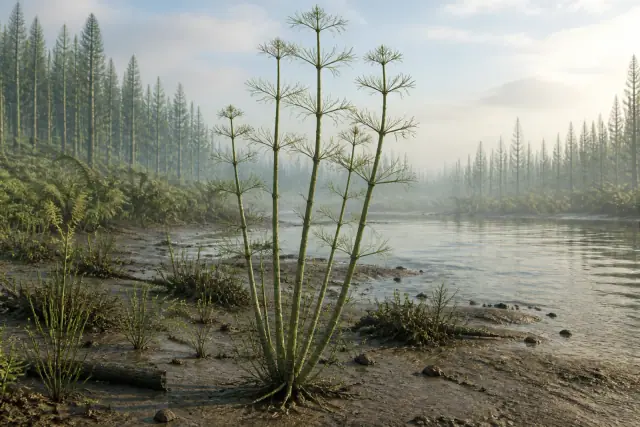
Archaeocalamites radiatus
Hollow jointed stems let an early horsetail relative grow as a tall shrub or small tree.
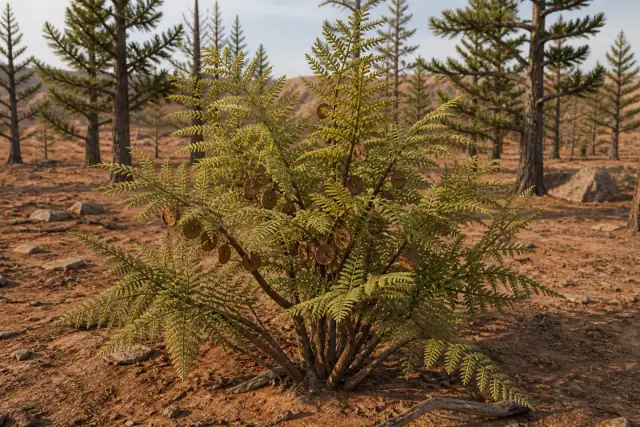
Peltaspermum martinsii
Shield-shaped reproductive discs record an innovation among drought-tolerant seed ferns.
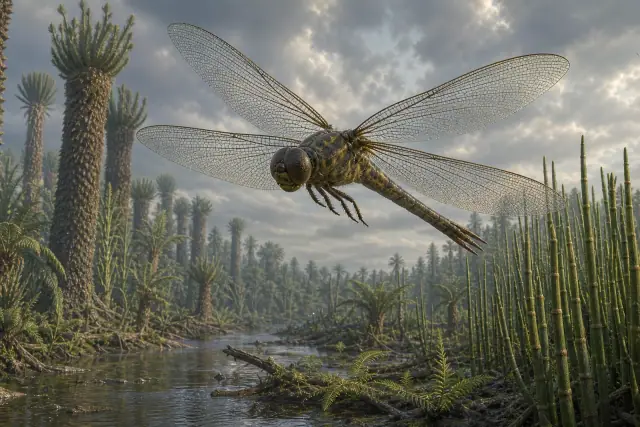
Meganeurula selysii
Smaller than Meganeura but still broad-winged, this griffinfly hunted above coal forests.
Explore the atlas by continent, country and state. Follow fossil localities into regional guides, compare animals across time and return to the evidence in each species profile.
FIELD GUIDES
Giants, strange body plans and lives within human memory. Follow a question into the atlas, then explore the animals behind it.