151Mesozoic
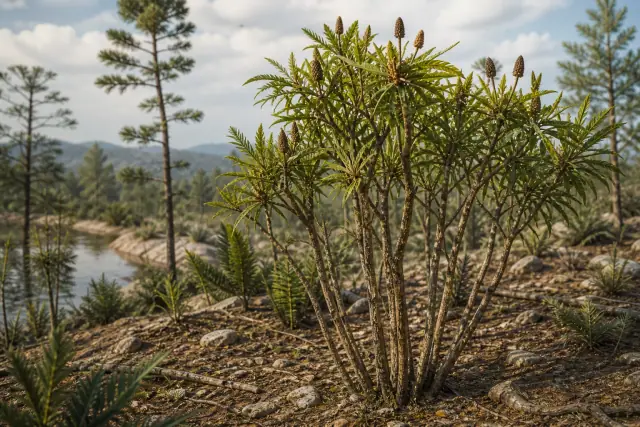
Pentoxylon
Pentoxylon sahnii
Several separate woody columns occupied one stem beneath clusters of long leaves and unusual male and female organs.
LIFE ARCHIVE
Browse extinct life from traces nearly 1.9 billion years old to historically recorded extinctions.
Pentoxylon sahnii
Several separate woody columns occupied one stem beneath clusters of long leaves and unusual male and female organs.
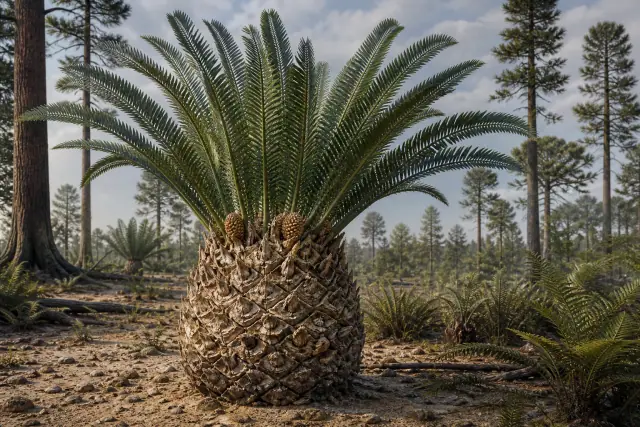
Cycadeoidea gigantea
A stout barrel-shaped trunk held a pinnate crown and many flower-like bisexual reproductive structures among old leaf bases.
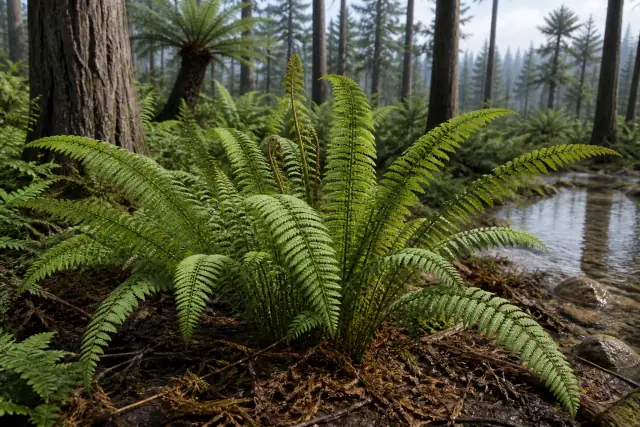
Cladophlebis denticulata
Finely pinnate fronds carpeted Jurassic understories, each toothed leaflet crossed by repeatedly branching veins.
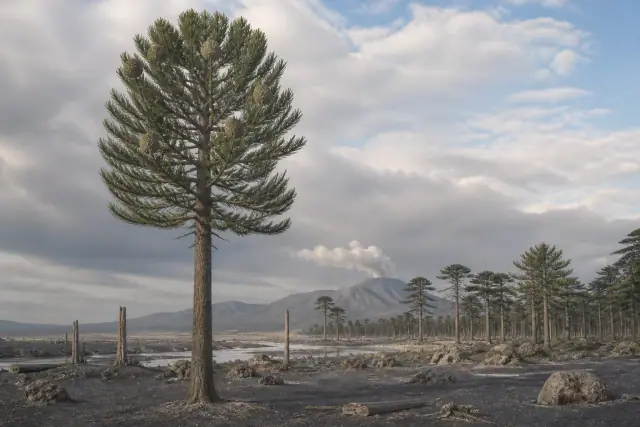
Araucaria mirabilis
Tall conifers bore nearly spherical cones whose internal scales and ovules were silicified by volcanic landscapes.
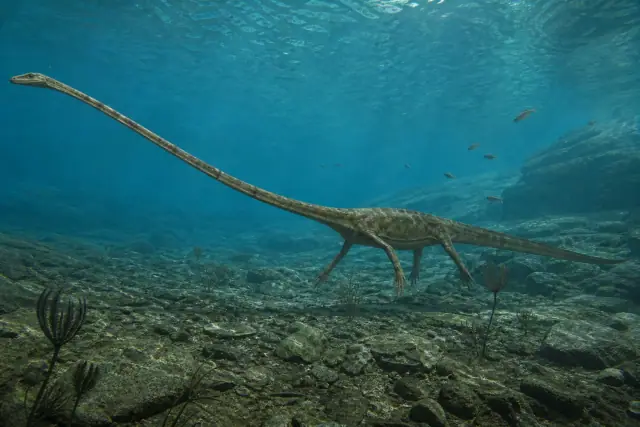
Tanystropheus hydroides
Thirteen extremely elongated vertebrae formed a neck as long as half the body, while the skull snapped at fish and cephalopods.
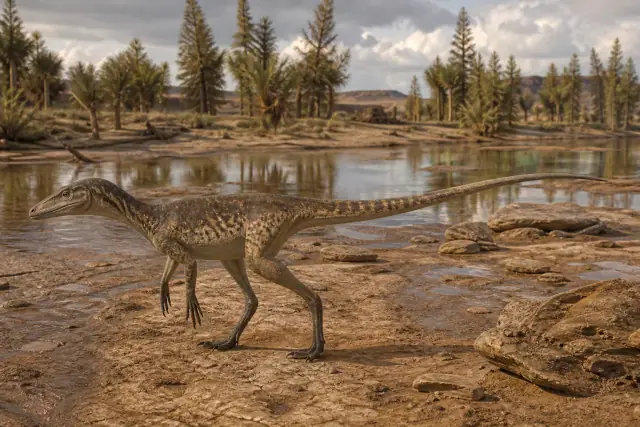
Eoraptor lunensis
A lightly built one-meter animal ran on two legs with both sharp and leaf-shaped teeth in its jaws.
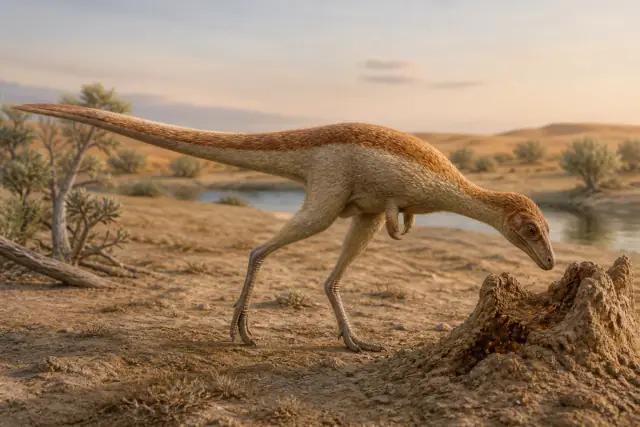
Mononykus olecranus
Each tiny forearm ended in one stout main claw, perhaps used to tear open insect nests like a modern anteater.
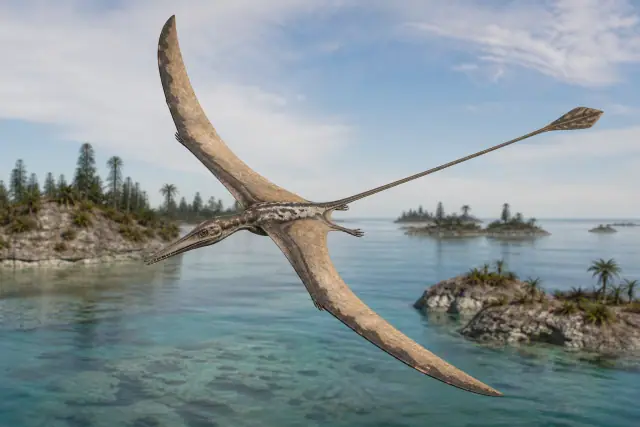
Rhamphorhynchus muensteri
Needle teeth lined long jaws while a diamond-shaped membrane at the stiff tail tip helped control flight above island seas.
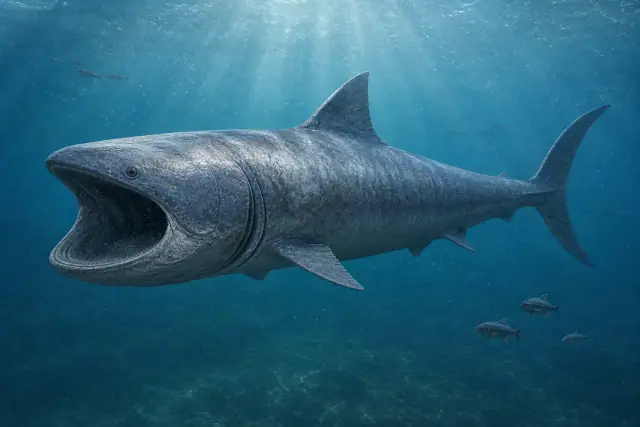
Leedsichthys problematicus
This giant bony fish opened a broad mouth and strained plankton through dense gill rakers, much like a whale shark.
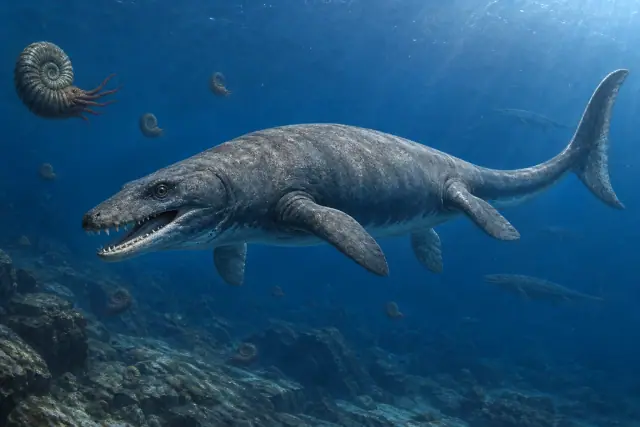
Dakosaurus maximus
A short deep skull carried serrated blades, while this marine crocodile's body had transformed into four flippers and a fishlike tail.
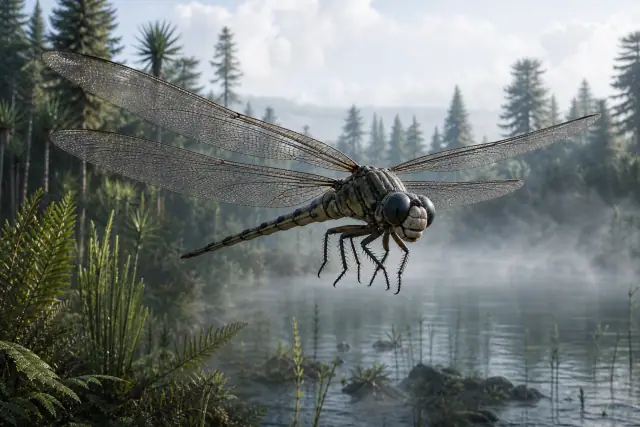
Liassophlebia magnifica
Four broad, densely veined wings carried this stem dragonfly on patrol above Jurassic lakeshores.
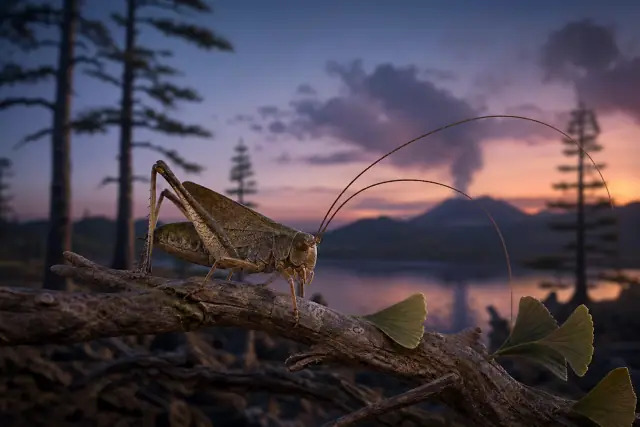
Archaboilus musicus
Preserved forewing sound structures support a reconstructed musical call: 6.4 kHz in 2012 and about 5 kHz in a later model.
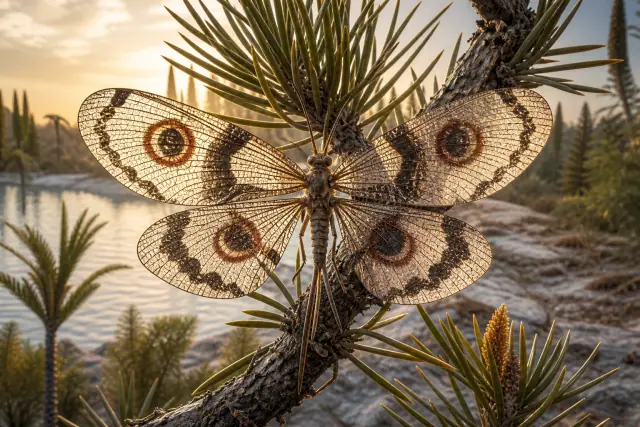
Kalligramma haeckeli
Huge eyespots, broad wings and an elongate mouthpart created a butterfly-like insect before butterflies flourished.
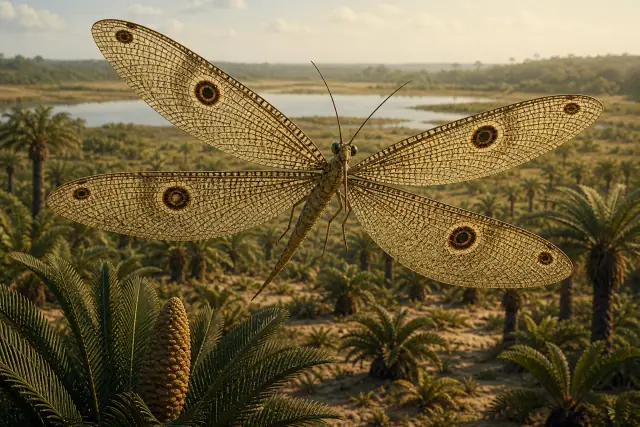
Makarkinia adamsi
Scaling from the surviving wing fragment suggests a wing as long as 16 centimeters, among the largest lacewings known.
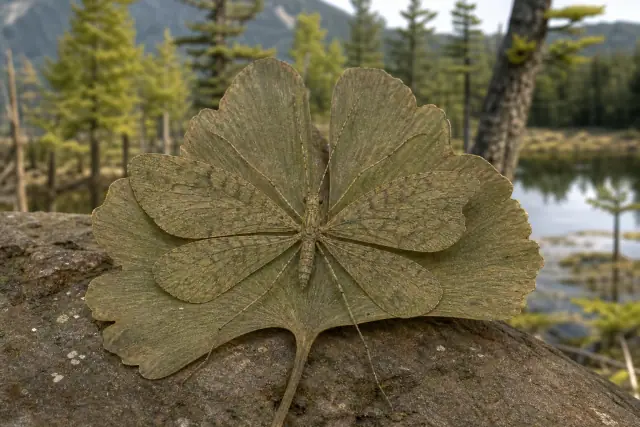
Juracimbrophlebia ginkgofolia
Four lobed wings nearly match ginkgoalean leaves from the same bed, rare evidence of deep-time leaf mimicry.
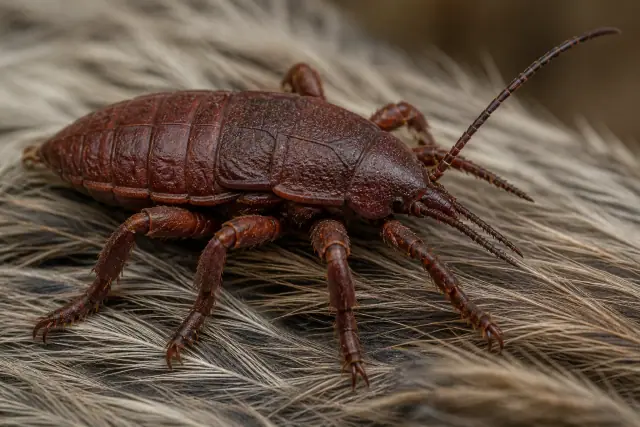
Pseudopulex jurassicus
About 17 millimeters long and unable to jump, it carried serrated piercing mouthparts far larger than those of modern fleas.
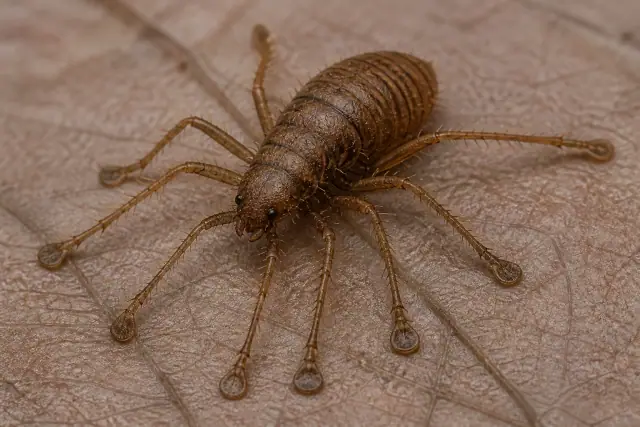
Saurophthirus exquisitus
Broad pads at the tips of long legs could grip a smooth wing membrane, suggesting a possible life on pterosaurs.
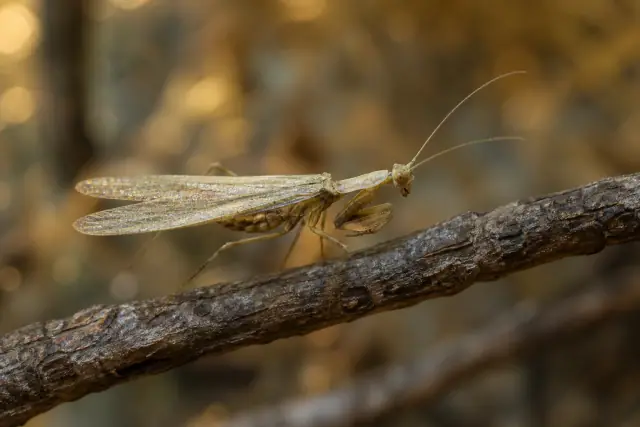
Santanmantis axelrodi
Only about a centimeter long, it already folded spine-lined grasping forelegs beneath its chest.
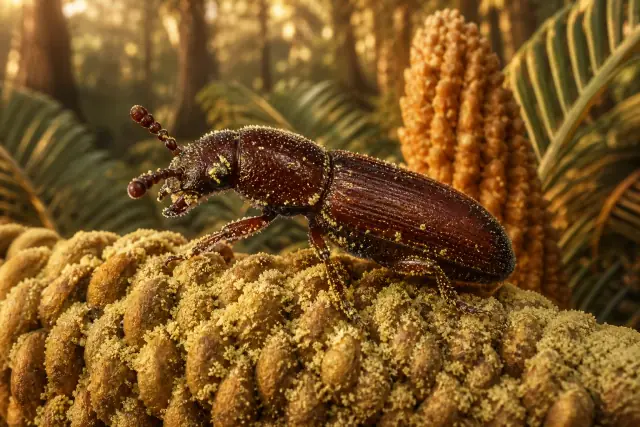
Cretoparacucujus cycadophilus
Cycad pollen lies beside it in amber, and its jaws bear small specialized pits for transporting pollen.
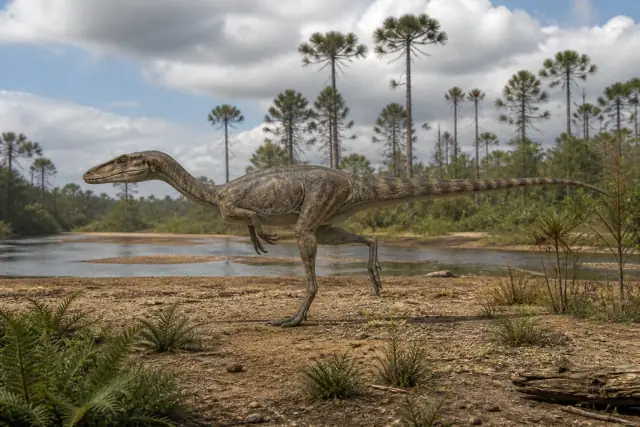
Staurikosaurus pricei
This lightly built two-meter hunter represents an early branch from the first dinosaur diversification.
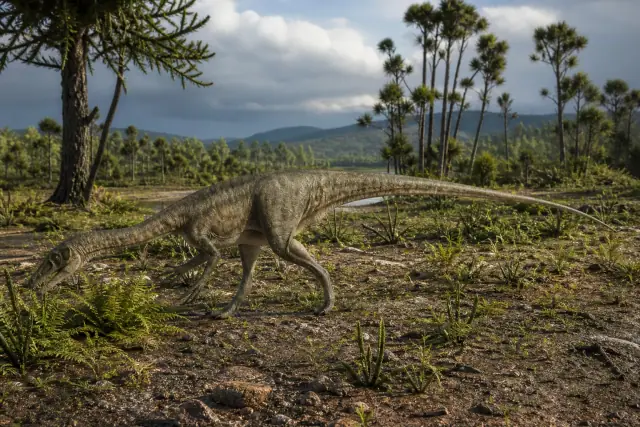
Massospondylus carinatus
A long neck, small head and grasping hands mark a stage between bipedal ancestors and giant quadrupedal sauropods.
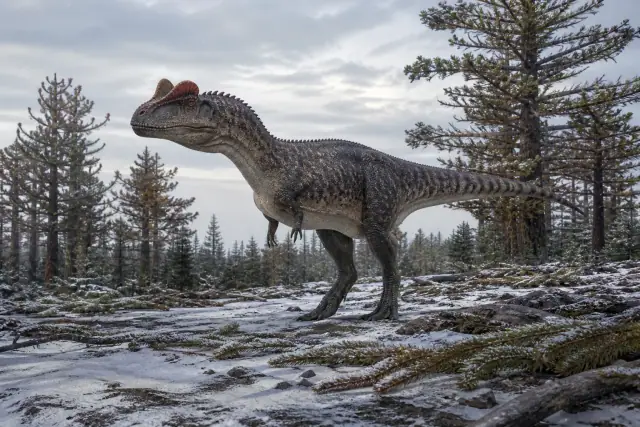
Cryolophosaurus ellioti
A curved transverse crest across its skull gives this large Antarctic theropod an unmistakable profile.
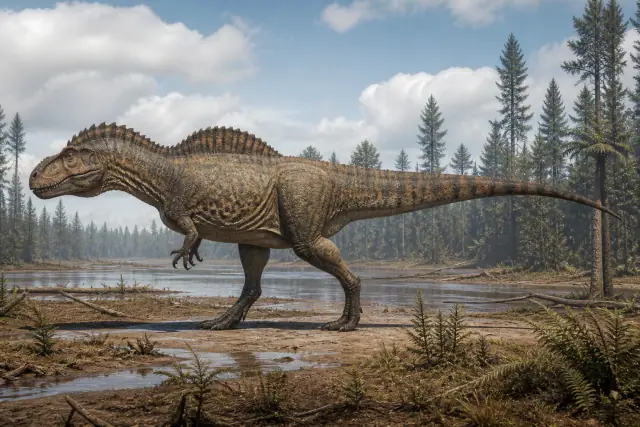
Acrocanthosaurus atokensis
Tall neural spines along the neck and back supported a muscular ridge rather than a paper-thin sail.
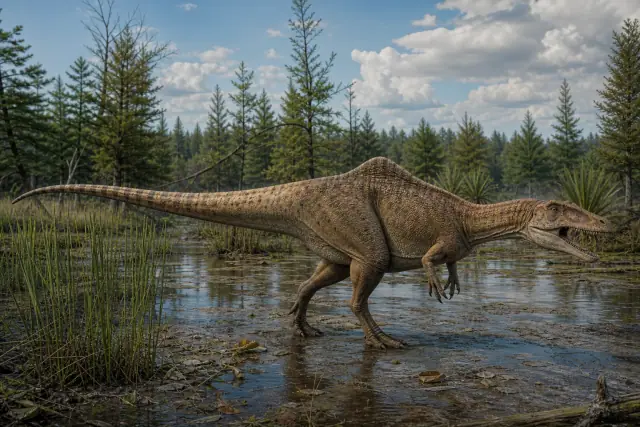
Concavenator corcovatus
Two very tall vertebrae ahead of the hips formed a short steep back crest, while the forearm carried unusual knobs.
Explore the atlas by continent, country and state. Follow fossil localities into regional guides, compare animals across time and return to the evidence in each species profile.
FIELD GUIDES
Giants, strange body plans and lives within human memory. Follow a question into the atlas, then explore the animals behind it.