61Cenozoic
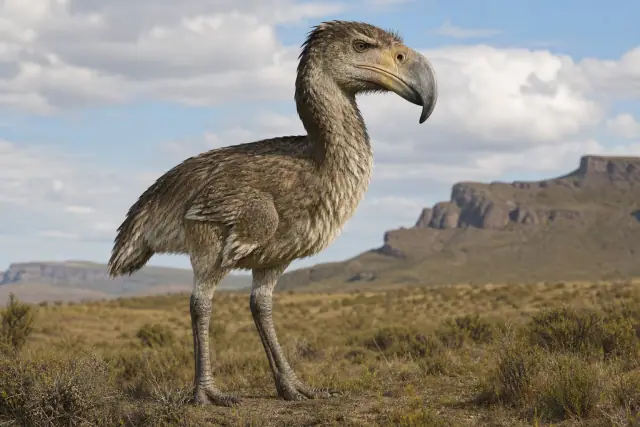
Phorusrhacos (Terror Bird)
Phorusrhacos longissimus
A tall flightless predator used a deep hooked beak to strike prey on the ground.
LIFE ARCHIVE
Browse extinct life from traces nearly 1.9 billion years old to historically recorded extinctions.
Phorusrhacos longissimus
A tall flightless predator used a deep hooked beak to strike prey on the ground.
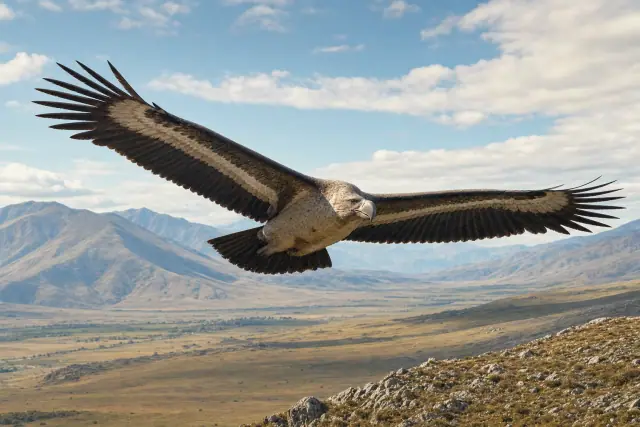
Argentavis magnificens
Argentavis magnificens was a giant bird from Late Miocene Argentina. Its flight is reconstructed from incomplete fossils and aerodynamic models, not observations of a living bird.
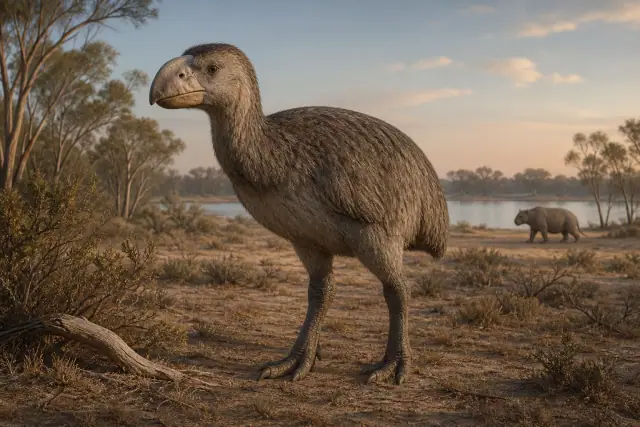
Genyornis newtoni
This two-meter flightless bird had a deep jaw and powerful legs, probably feeding on soft leaves, fruit and shoots.
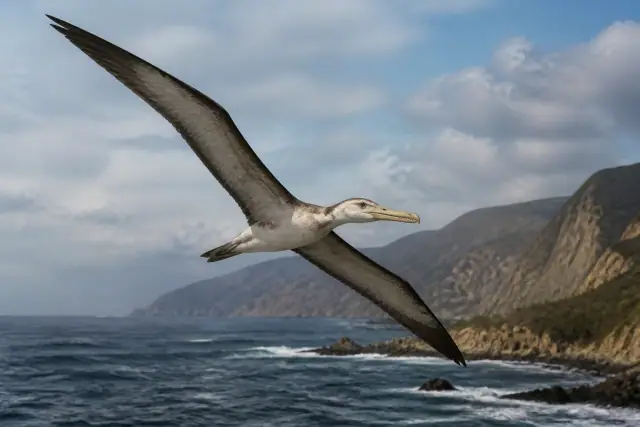
Pelagornis sandersi
Its estimated wingspan exceeded six meters, while bony pseudoteeth lined a beak adapted to slippery marine prey.
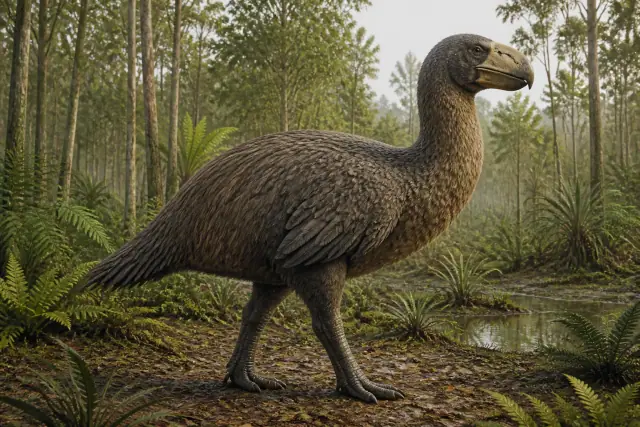
Gastornis parisiensis
This giant flightless bird had a massive beak, but evidence favors a mainly herbivorous diet.
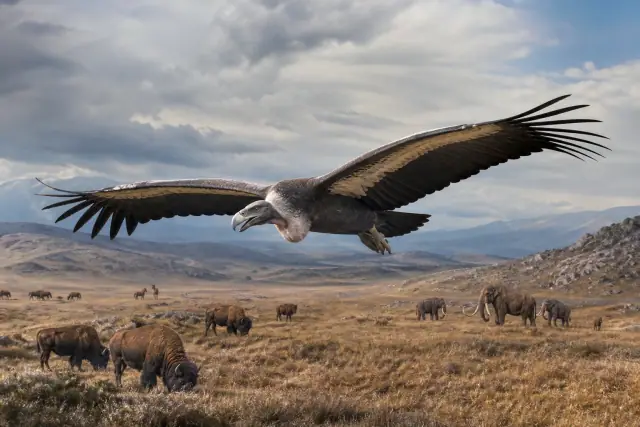
Teratornis merriami
A large soaring bird with an estimated 11–12 ft wingspan; its diet involved more than a simple vulture comparison.
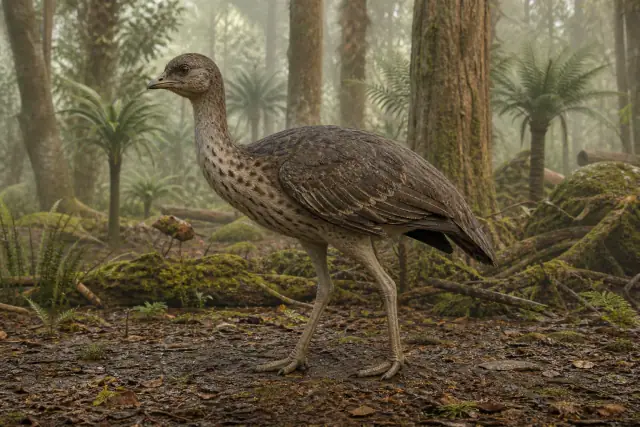
Lithornis vulturinus
A strong flyer belonged near lineages whose living members are mostly flightless.
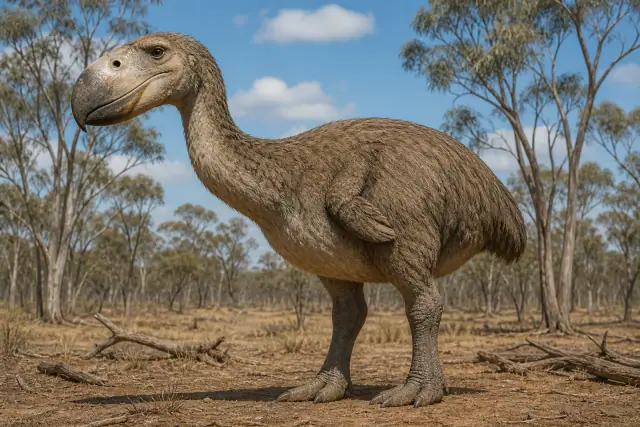
Dromornis stirtoni
Three meters tall with a massive beak, it was among the heaviest birds.
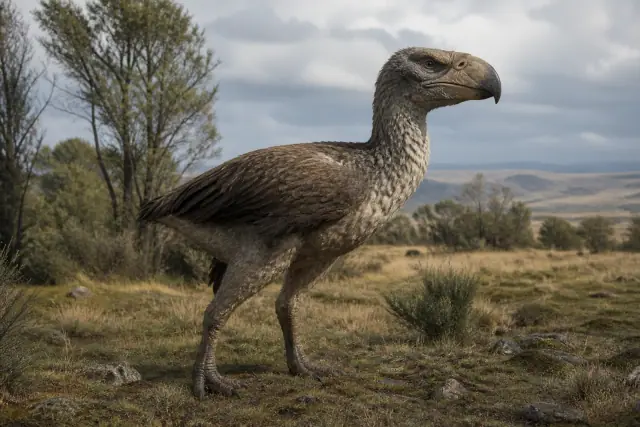
Kelenken guillermoi
A seventy-centimeter skull and hooked beak armed one of the largest terror birds.
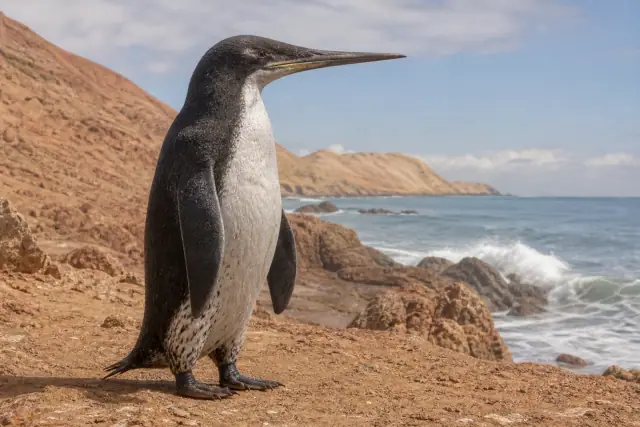
Icadyptes salasi
A one-and-a-half-meter penguin lived near the equator with a spear-like beak.
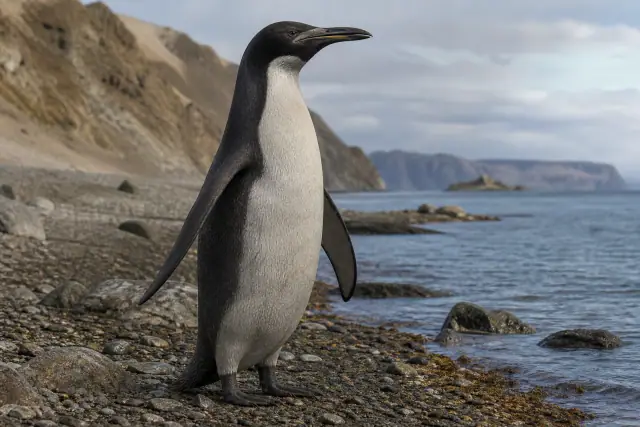
Anthropornis nordenskjoeldi
At almost 1.8 meters, it was a giant diver on a warmer Antarctic coast.
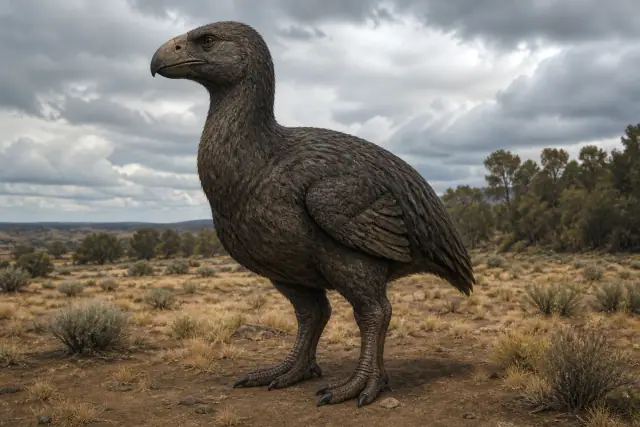
Brontornis burmeisteri
Brontornis burmeisteri was a giant flightless bird with exceptionally robust hind limbs.
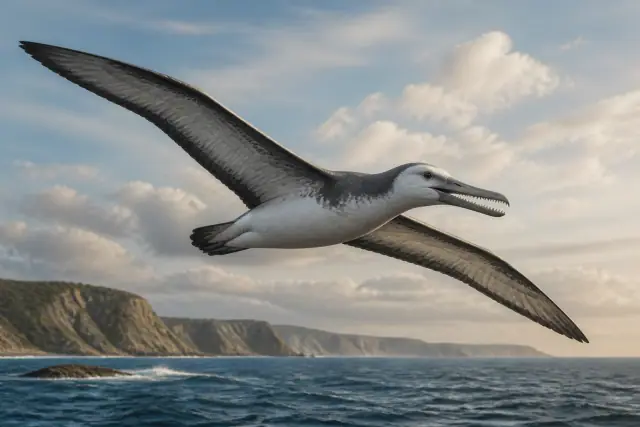
Dasornis emuinus
A near-six-meter wingspan and bony pseudoteeth armed a giant seabird.
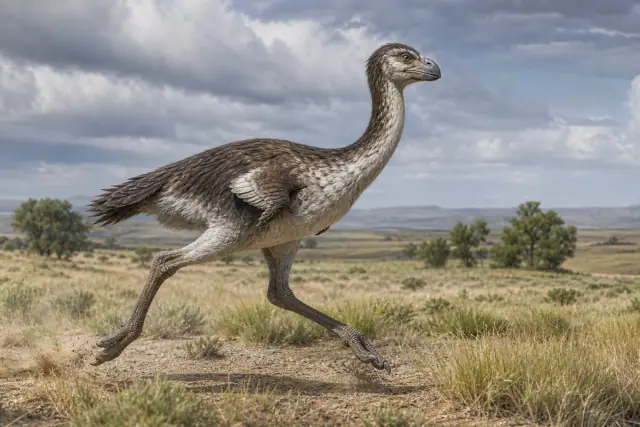
Bathornis grallator
Long legs and a strong beak belonged to a terrestrial bird with little or no flight.
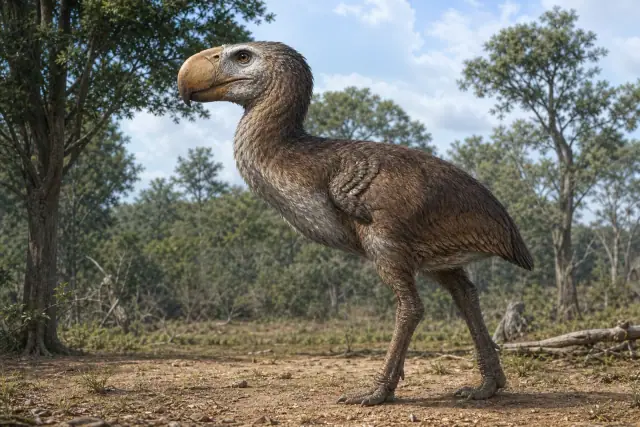
Paraphysornis brasiliensis
A deep beak and massive legs made a heavyweight South American terror bird.
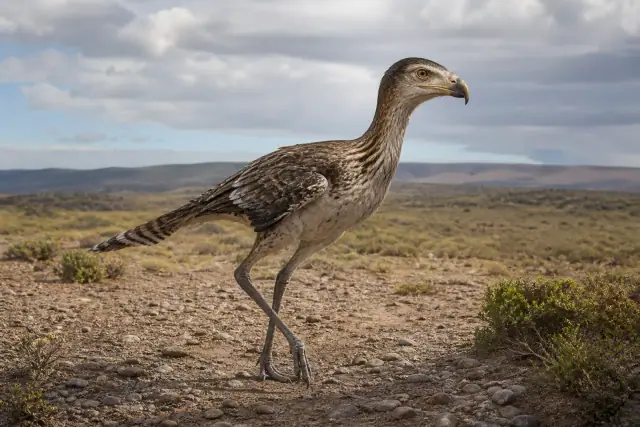
Psilopterus bachmanni
A lighter terror bird had long toes suited to rapid pursuit.
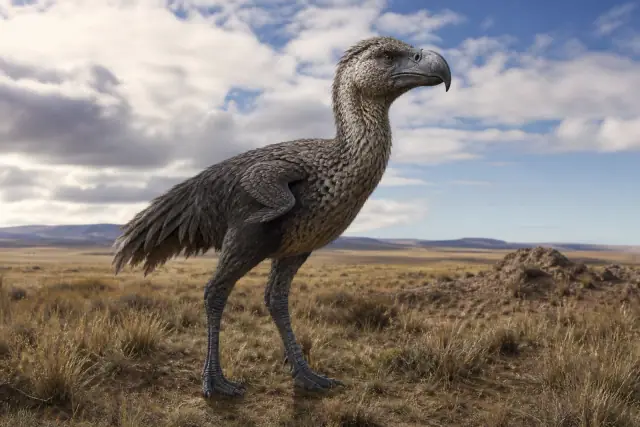
Llallawavis scagliai
Its complete inner ear reveals sensitivity to relatively low-frequency sound.
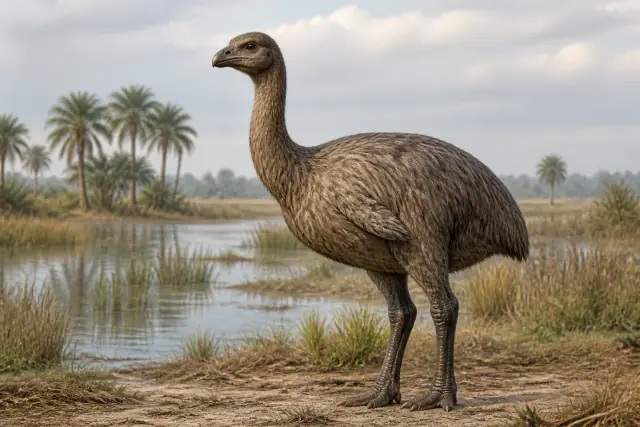
Eremopezus eocaenus
Robust leg bones belonged to a giant flightless African bird whose skull remains unknown.
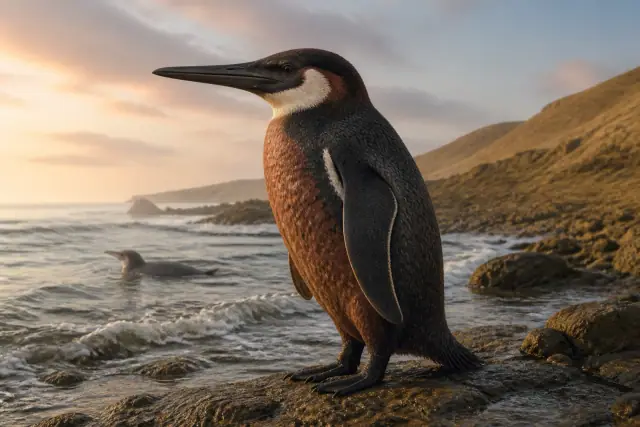
Inkayacu paracasensis
A near-human-height diving bird preserves feathers and melanosomes that opened direct study of ancient penguin color.
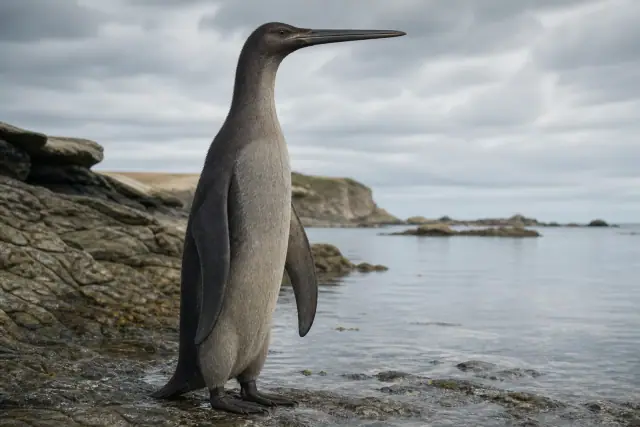
Kairuku grebneffi
A slender trunk, long bill and large flippers produced a taller silhouette than modern penguins.
Explore the atlas by continent, country and state. Follow fossil localities into regional guides, compare animals across time and return to the evidence in each species profile.
FIELD GUIDES
Giants, strange body plans and lives within human memory. Follow a question into the atlas, then explore the animals behind it.