
Explore this animal in Size of Extinct Animals ↗
459 / Cenozoic
Dromornis
Dromornis stirtoni
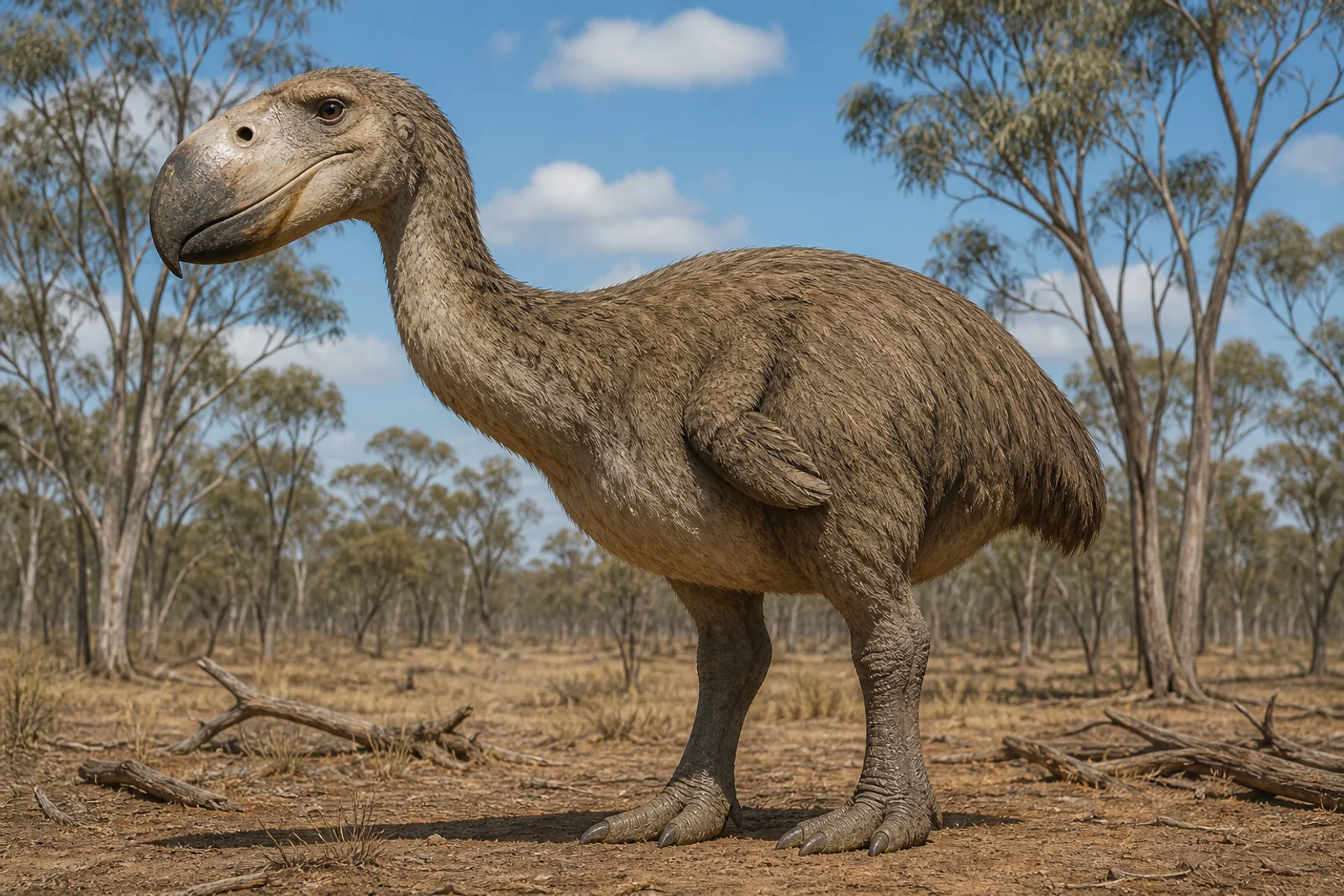
Three meters tall with a massive beak, it was among the heaviest birds.
 View original image · 1600 × 1067
- Time range
- About 8 million years ago
- Final stage
- Late Miocene
- Geographic range
- Dry woodland and plains · Australia
Dromornis stirtoni: a giant bird with slow growth
Dromornis stirtoni was a giant flightless Australian bird. Estimates of up to about 3 metres and 600 kg describe reconstructed size; bone histology provides a separate record of how it grew.
Size versus growth rate
A study of Dromornis and Genyornis bones found different growth strategies. Tissue and growth marks allow questions about maturity to be tested without treating a large adult's mass as a direct measure of growth speed.
Not all giant flightless birds are terror birds
Dromornis belonged to the Australian mihirungs, a different lineage from South America's phorusrhacids. A massive beak alone does not demonstrate the same diet or hunting behaviour.
01 / DEFINITION & ECOLOGY
What was Dromornis?
Dromornis (Dromornis stirtoni) was an extinct organism known from About 8 million years ago, with a range in Dry woodland and plains · Australia.
Life and ecology
This flightless bird cropped tough plants in open woodland, though dietary details remain debated.
02 / DISAPPEARANCE
Why did Dromornis disappear?
Australian drying and vegetation change are possible context for the decline of its lineage, not a demonstrated cause.
03 / EVIDENCE
How do scientists know about Dromornis?
Skulls, leg bones and skeletons constrain size and jaw musculature.
04 / SOURCES & FURTHER READING
Check the source record
Use the scientific name to compare taxonomy, occurrence records and the fossil record. Database coverage and classifications may differ.
05 / REVISION HISTORY
How has this record changed?
- Rewrote an extinction cause that presented environmental or faunal turnover as established; it is now given as context the record does not prove.
- Verified authoritative entity sources and added three responsive reconstruction sizes.
- Initial bilingual species record published.
06 / CORRECTIONS & ADDITIONS