
Explore this animal in Size of Extinct Animals ↗
210 / Paleozoic
Pterygotus
Pterygotus anglicus
Flattened swimming paddles and great toothed claws made it a formidable hunter in Silurian water.
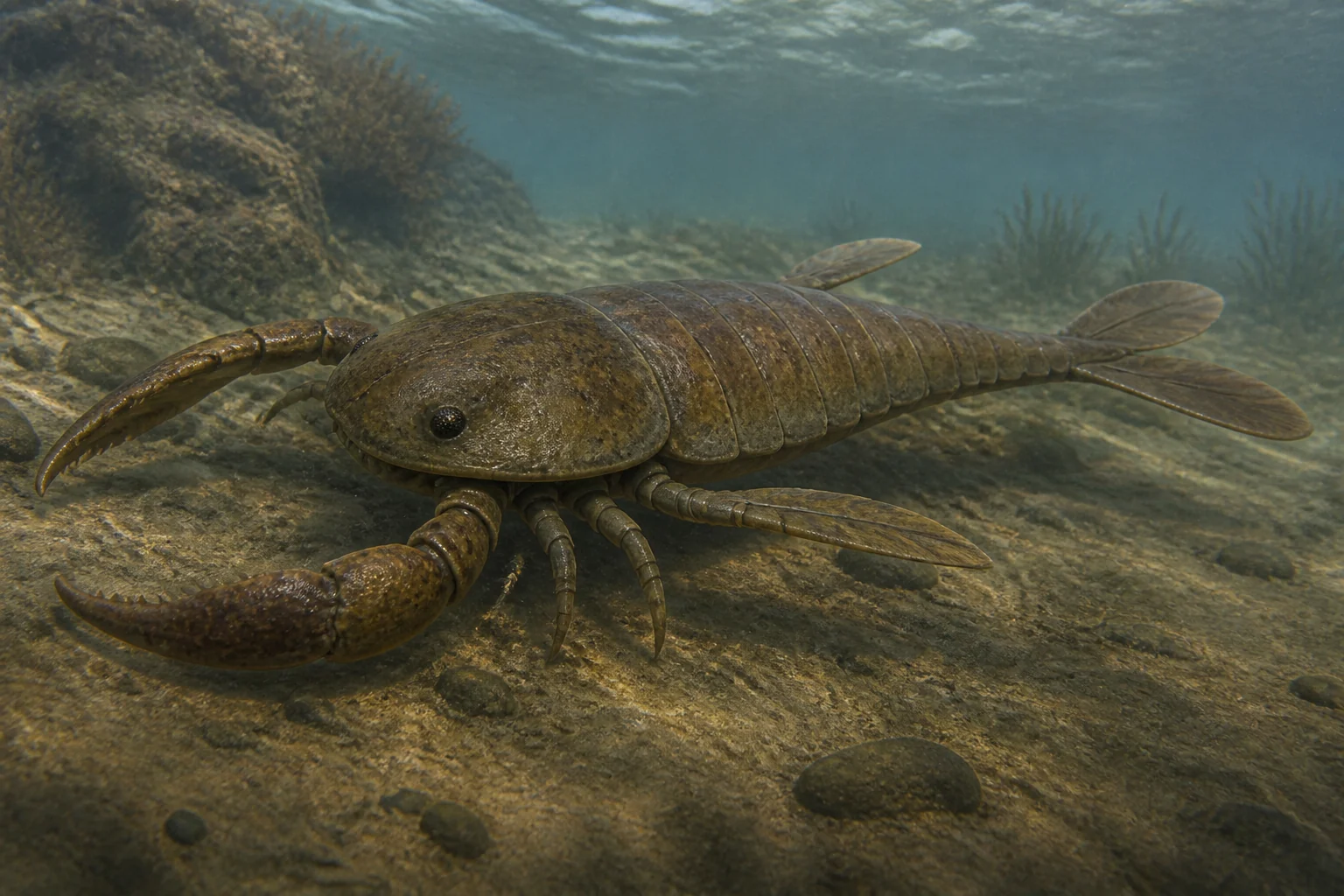 View original image · 1536 × 1024
- Time range
- About 428–423 million years ago
- Final stage
- Late Silurian
- Geographic range
- Estuaries and shallow sea · Present-day Britain
01 / DEFINITION & ECOLOGY
What was Pterygotus?
Pterygotus (Pterygotus anglicus) was an extinct organism known from About 428–423 million years ago, with a range in Estuaries and shallow sea · Present-day Britain.
Life and ecology
Pterygotus was a streamlined eurypterid that swam actively and grasped fish or arthropods with enlarged chelicerae before passing them to the mouth.
02 / DISAPPEARANCE
Why did Pterygotus disappear?
Silurian–Devonian food webs changed; Pterygotus disappeared even though other eurypterids survived much longer.
03 / EVIDENCE
How do scientists know about Pterygotus?
Armor plates, bodies, paddles and toothed claws constrain its form, while maximum size remains estimated from incomplete individuals.
04 / SOURCES & FURTHER READING
Check the source record
Use the scientific name to compare taxonomy, occurrence records and the fossil record. Database coverage and classifications may differ.
05 / REVISION HISTORY
How has this record changed?
- Verified authoritative entity sources and added three responsive reconstruction sizes.
- Initial bilingual species record published.
06 / CORRECTIONS & ADDITIONS