
Explore this animal in Size of Extinct Animals ↗
206 / Paleozoic
Hurdia
Hurdia victoria
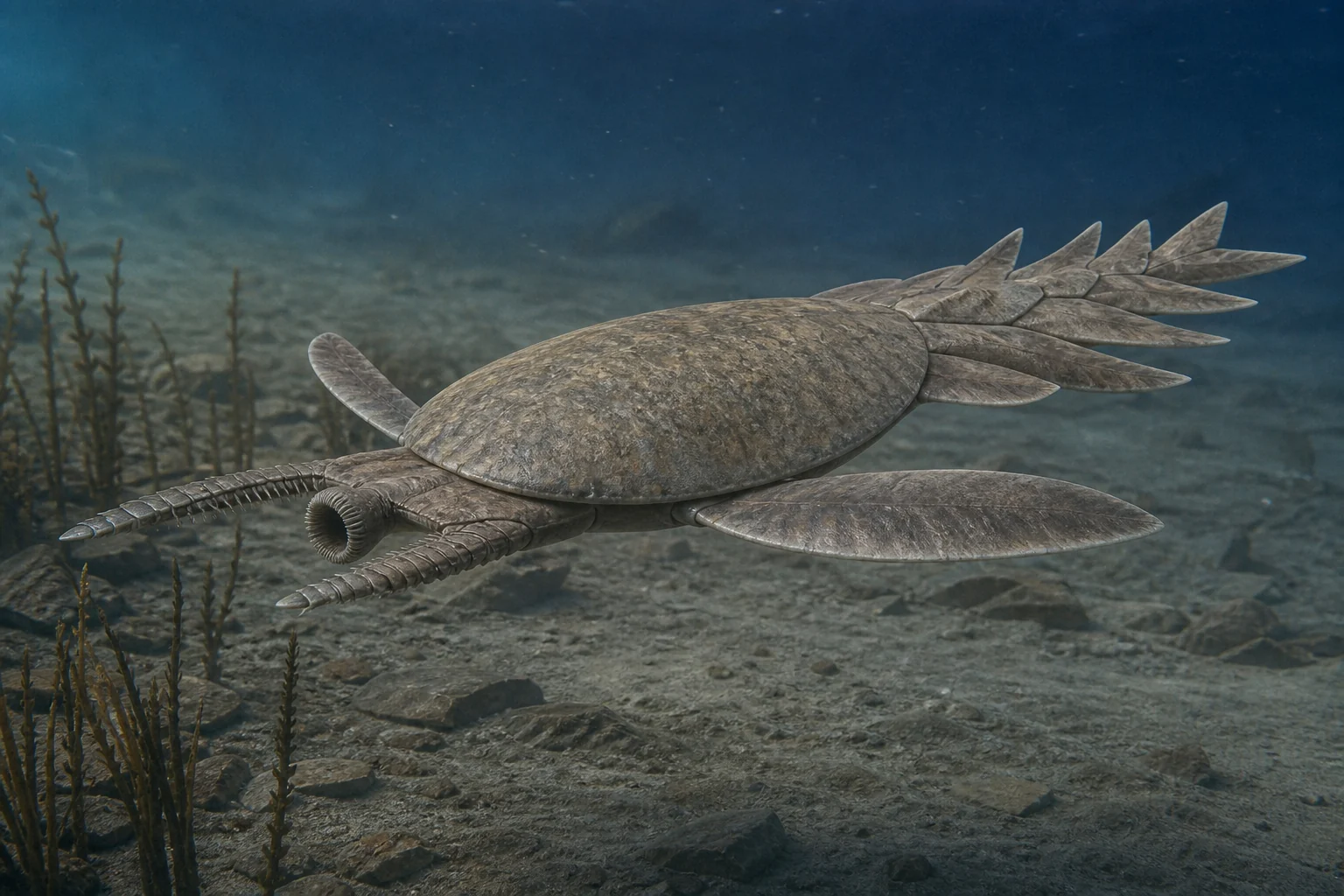
A huge domed carapace covered its head, giving this radiodont the outline of a tiny finned submarine.
 View original image · 1536 × 1024
- Time range
- About 508 million years ago
- Final stage
- Middle Cambrian
- Geographic range
- Open continental shelf · Present-day Canada and western USA
01 / DEFINITION & ECOLOGY
What was Hurdia?
Hurdia (Hurdia victoria) was an extinct organism known from About 508 million years ago, with a range in Open continental shelf · Present-day Canada and western USA.
Life and ecology
Hurdia swam with lateral body flaps and swept small animals or sediment toward a circular mouth using spiny frontal appendages. It was less powerfully predatory than some relatives.
02 / DISAPPEARANCE
Why did Hurdia disappear?
Marine predators and suspension feeders changed after the Cambrian, and the radiodont lineage eventually vanished.
03 / EVIDENCE
How do scientists know about Hurdia?
Carapaces, oral cones, frontal appendages and body flaps once described separately were reassembled into the complete animal.
04 / SOURCES & FURTHER READING
Check the source record
Use the scientific name to compare taxonomy, occurrence records and the fossil record. Database coverage and classifications may differ.
05 / REVISION HISTORY
How has this record changed?
- Verified authoritative entity sources and added three responsive reconstruction sizes.
- Initial bilingual species record published.
06 / CORRECTIONS & ADDITIONS