
Explore this animal in Size of Extinct Animals ↗
215 / Paleozoic
Seymouria
Seymouria baylorensis
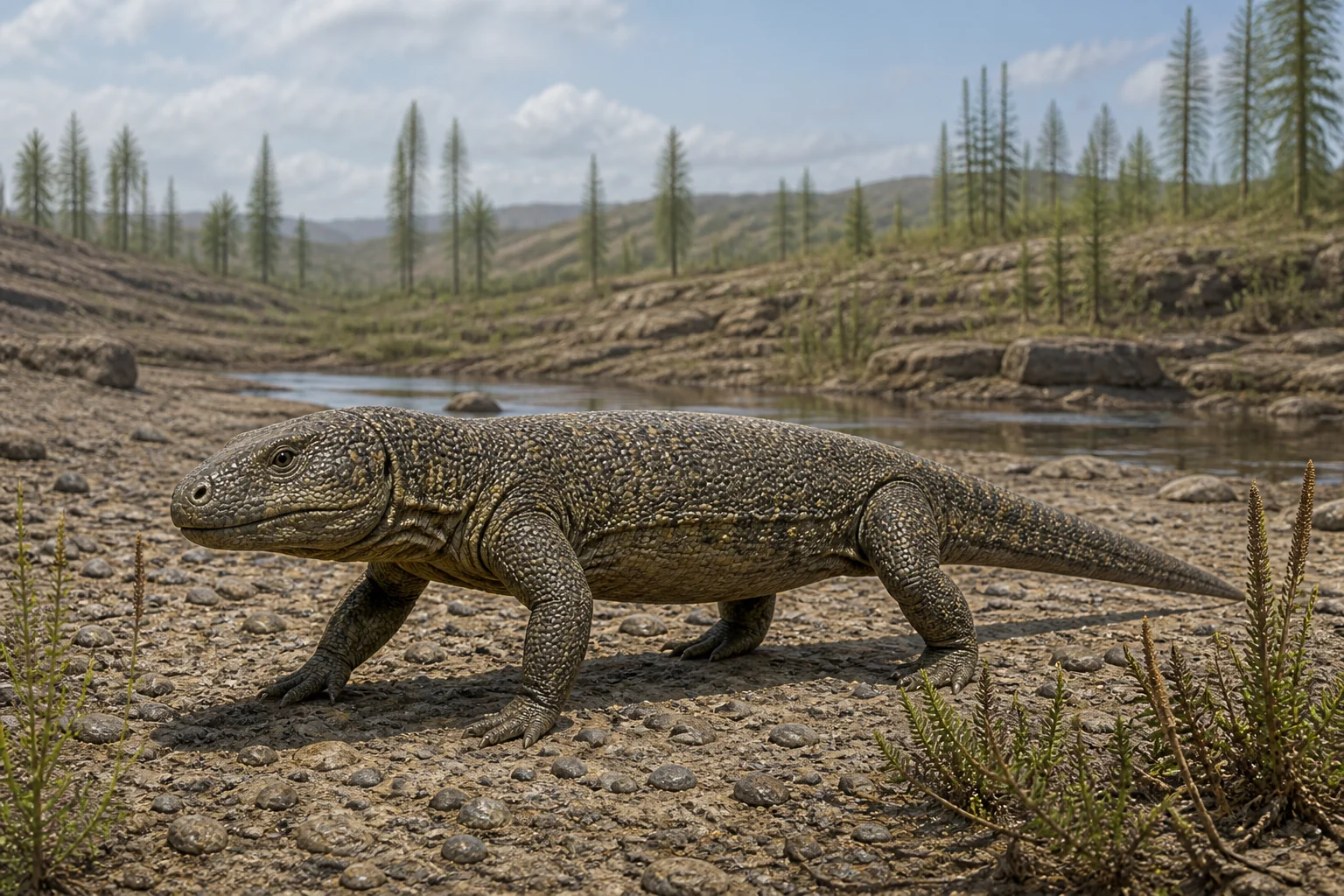
Its adult skeleton looked reptile-like, yet it belonged just outside the fully land-breeding amniotes.
 View original image · 1536 × 1024
- Time range
- About 290–280 million years ago
- Final stage
- Early Permian
- Geographic range
- Seasonal valleys and semi-arid plains · North America and Europe
01 / DEFINITION & ECOLOGY
What was Seymouria?
Seymouria (Seymouria baylorensis) was an extinct organism known from About 290–280 million years ago, with a range in Seasonal valleys and semi-arid plains · North America and Europe.
Life and ecology
Seymouria had a strong spine, robust limbs and a deep otic notch, making adults effective on land. Its lineage probably retained some connection to water during development.
02 / DISAPPEARANCE
Why did Seymouria disappear?
As Permian climates and land faunas changed, amniotes held a reproductive advantage in dry settings.
03 / EVIDENCE
How do scientists know about Seymouria?
North American and German skeletons preserve the skull, spine and limb joints; phylogenetic position comes from bone characters rather than appearance.
04 / SOURCES & FURTHER READING
Check the source record
Use the scientific name to compare taxonomy, occurrence records and the fossil record. Database coverage and classifications may differ.
05 / REVISION HISTORY
How has this record changed?
- Verified authoritative entity sources and added three responsive reconstruction sizes.
- Initial bilingual species record published.
06 / CORRECTIONS & ADDITIONS