452Cenozoic
Purussaurus
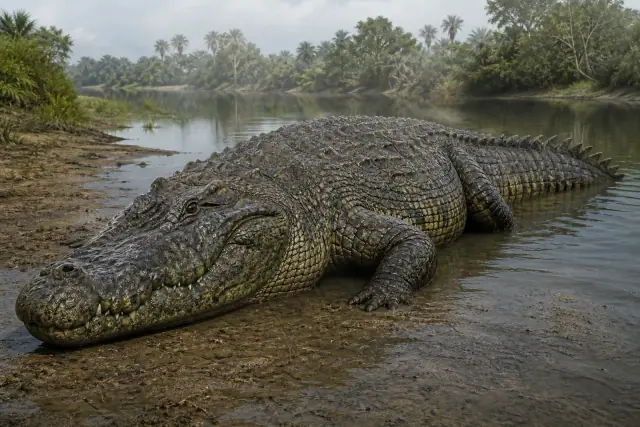
Purussaurus brasiliensis
A skull over a meter long belonged to a dominant Miocene caiman.
LIFE ARCHIVE
Browse extinct life from traces nearly 1.9 billion years old to historically recorded extinctions.
Purussaurus brasiliensis
A skull over a meter long belonged to a dominant Miocene caiman.
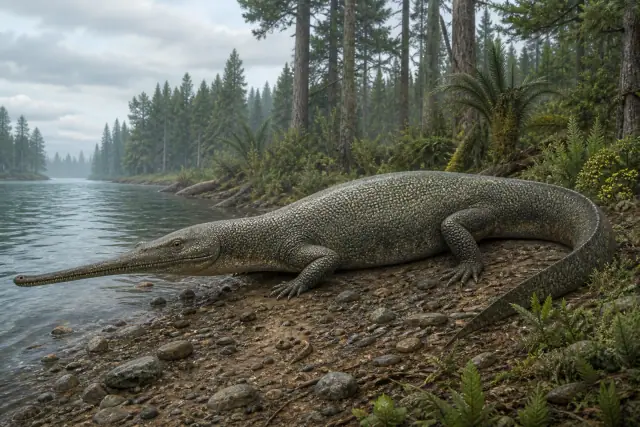
Champsosaurus gigas
Long jaws and a powerful tail let choristoderes retain a crocodile-like niche after the dinosaurs.
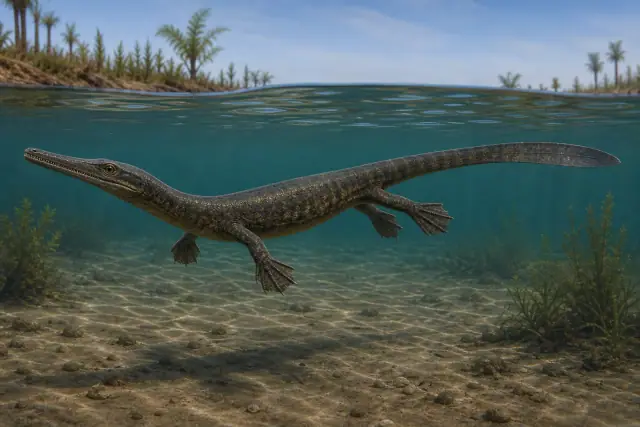
Mesosaurus tenuidens
Needle teeth and a flattened tail mark one of the earliest amniotes to return to water.
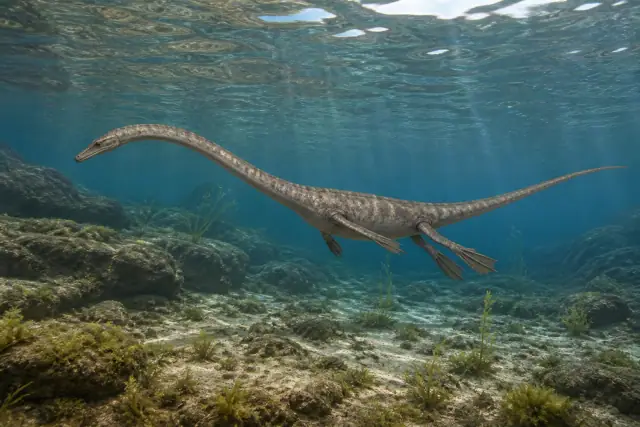
Claudiosaurus germaini
A long neck, tail and webbed feet show an early diapsid frequently entering water.
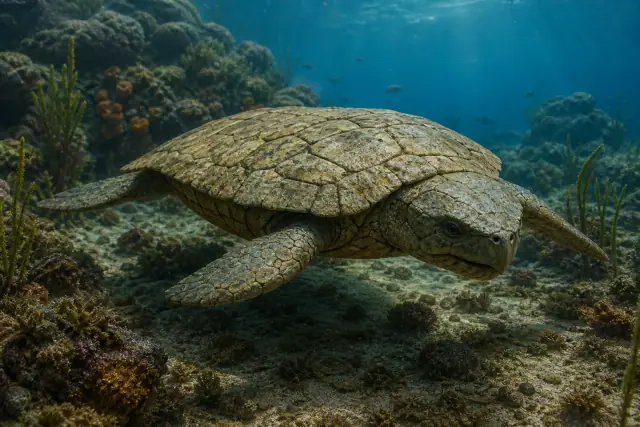
Placochelys placodonta
Placochelys placodonta was an armored placodont marine reptile, not a turtle; broad teeth support a hard-prey feeding interpretation.
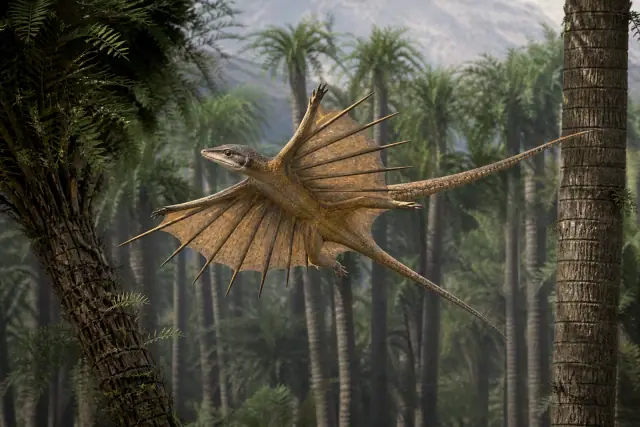
Coelurosauravus jaekeli
Long independent bony rods supported one of the earliest vertebrate gliding membranes.
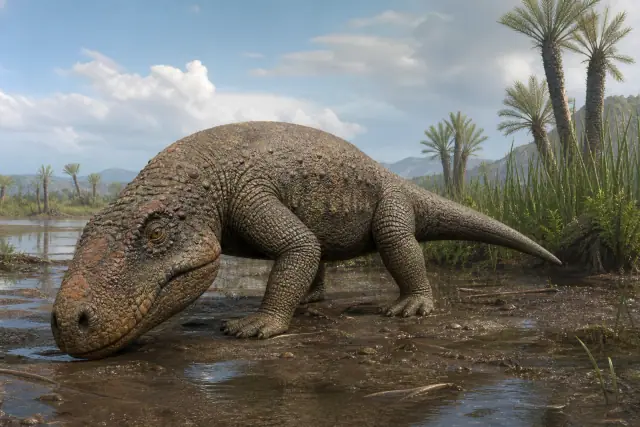
Erythrosuchus africanus
An enormous deep skull sat on a relatively low body in this early archosauriform apex predator.
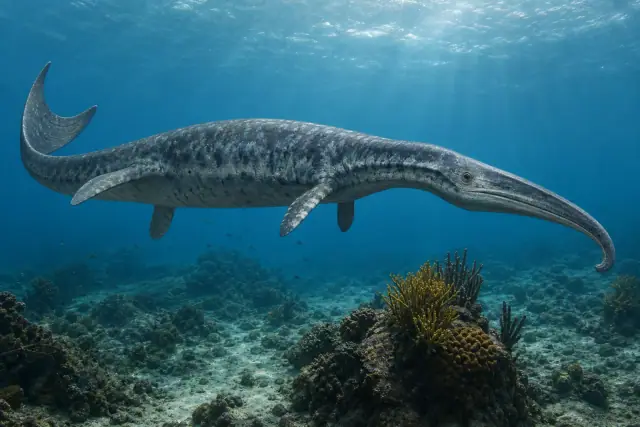
Thalattosaurus alexandrae
A long tail, paddle-like limbs and downturned snout marked a vanished marine-reptile branch.
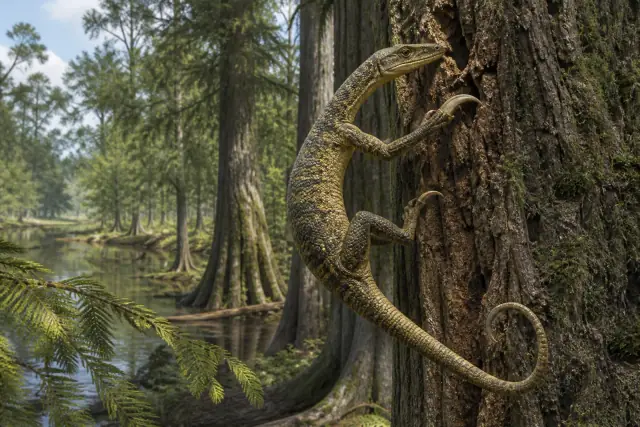
Drepanosaurus unguicaudatus
A sickle-shaped hand claw, grasping feet and hooked tail tip formed a highly arboreal reptile.
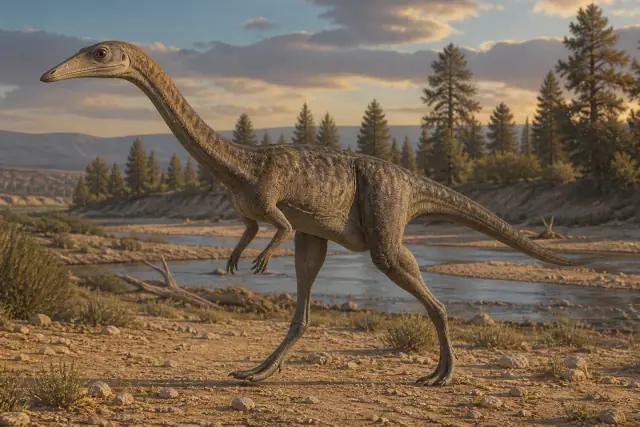
Effigia okeeffeae
A toothless beak, long neck and bipedal legs made this crocodile relative converge on later bird-like dinosaurs.
Explore the atlas by continent, country and state. Follow fossil localities into regional guides, compare animals across time and return to the evidence in each species profile.
FIELD GUIDES
Giants, strange body plans and lives within human memory. Follow a question into the atlas, then explore the animals behind it.