
Explore this animal in Size of Extinct Animals ↗
562 / Mesozoic
Effigia
Effigia okeeffeae
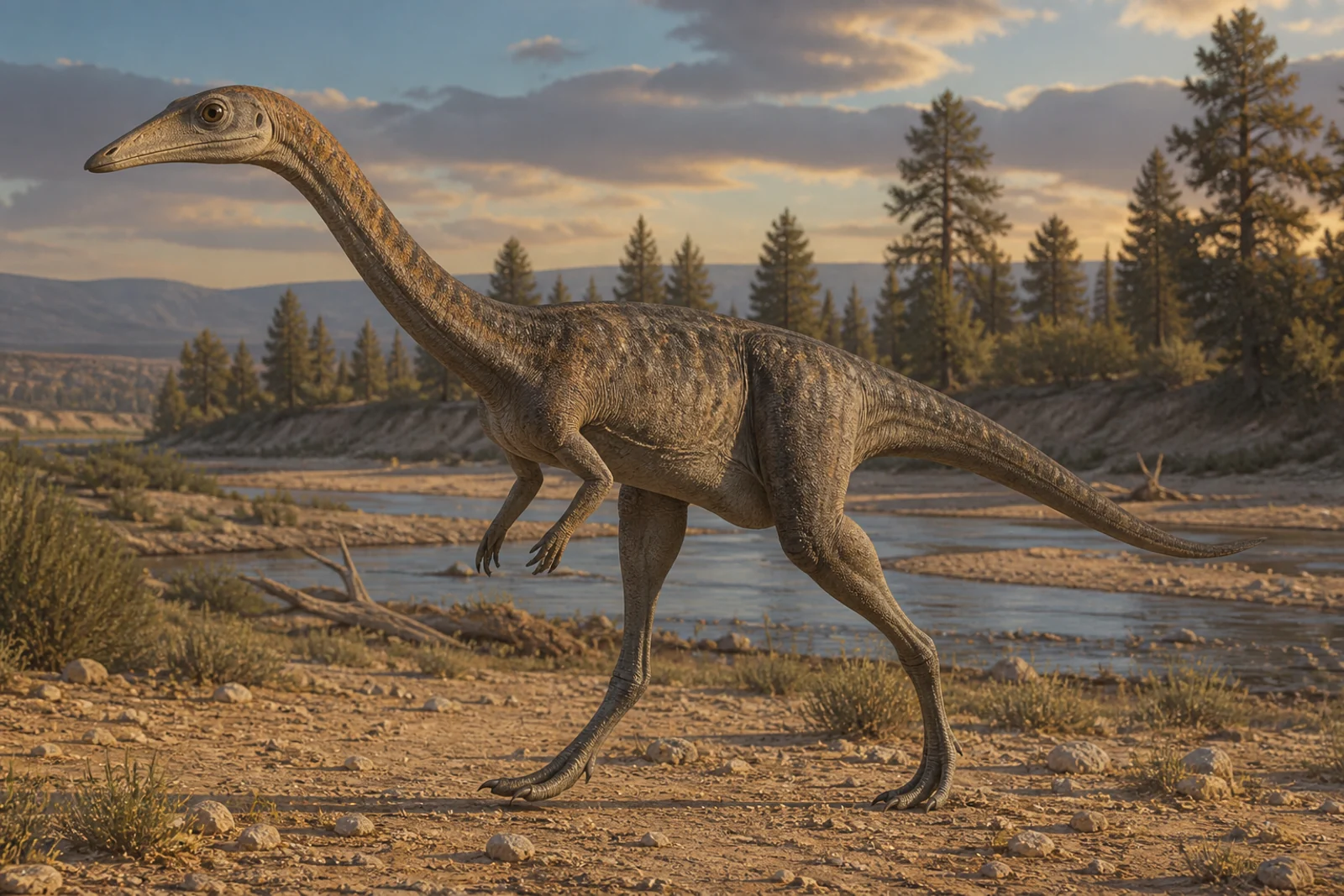
A toothless beak, long neck and bipedal legs made this crocodile relative converge on later bird-like dinosaurs.
 View original image · 1600 × 1067
- Time range
- About 215–208 million years ago
- Final stage
- Late Triassic
- Geographic range
- Seasonal river plain · New Mexico, USA
01 / DEFINITION & ECOLOGY
What was Effigia?
Effigia (Effigia okeeffeae) was an extinct organism known from About 215–208 million years ago, with a range in Seasonal river plain · New Mexico, USA.
Life and ecology
It walked rapidly across dry plains and used its beak mainly on soft plants, perhaps taking other easy foods.
02 / DISAPPEARANCE
Why did Effigia disappear?
Its record, about 215–208 million years old, does not establish survival to the end-Triassic crisis; the specific cause of its disappearance is unknown.
03 / EVIDENCE
How do scientists know about Effigia?
Ghost Ranch skeletons preserve skull, neck, pelvis and limbs; diet follows jaw mechanics and tooth loss.
04 / SOURCES & FURTHER READING
Check the source record
Use the scientific name to compare taxonomy, occurrence records and the fossil record. Database coverage and classifications may differ.
05 / REVISION HISTORY
How has this record changed?
- Removed an extinction cause that credited a mass extinction occurring after this species' last dated record.
- Verified authoritative entity sources and added three responsive reconstruction sizes.
- Initial bilingual species record published.
06 / CORRECTIONS & ADDITIONS