210Paleozoic
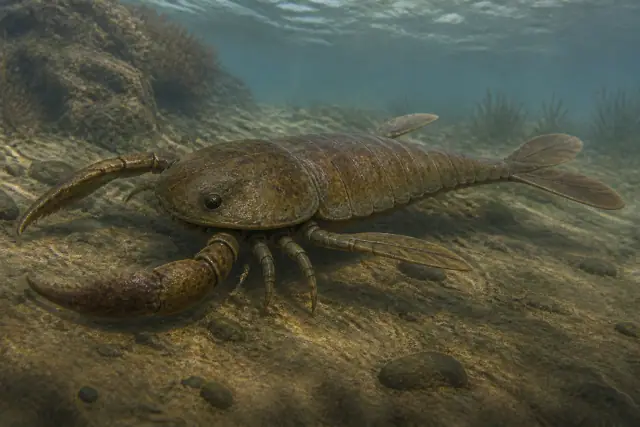
Pterygotus
Pterygotus anglicus
Flattened swimming paddles and great toothed claws made it a formidable hunter in Silurian water.
LIFE ARCHIVE
Browse extinct life from traces nearly 1.9 billion years old to historically recorded extinctions.
Pterygotus anglicus
Flattened swimming paddles and great toothed claws made it a formidable hunter in Silurian water.
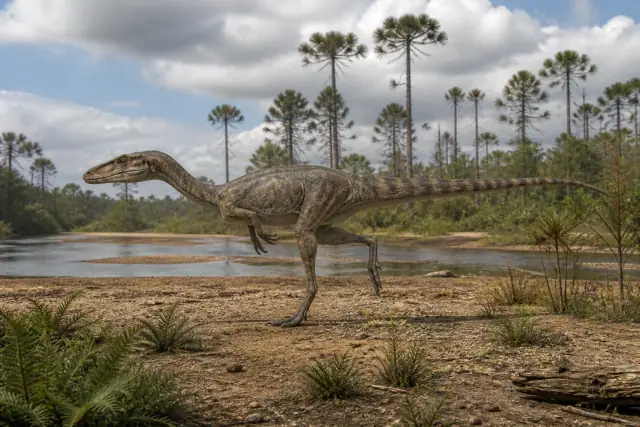
Staurikosaurus pricei
This lightly built two-meter hunter represents an early branch from the first dinosaur diversification.
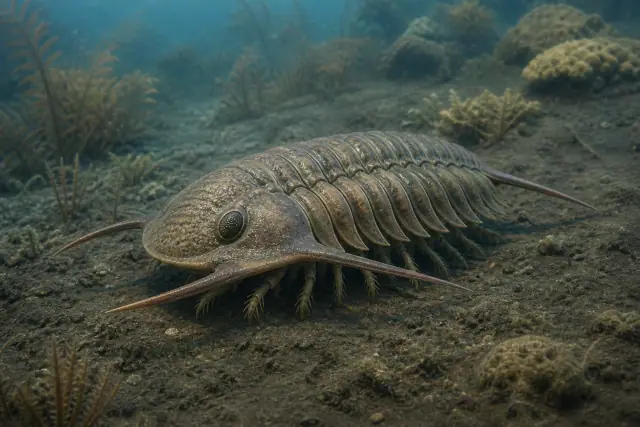
Olenoides serratus
Its antennae, gills and clawed legs reveal far more than a mineralized trilobite shell.
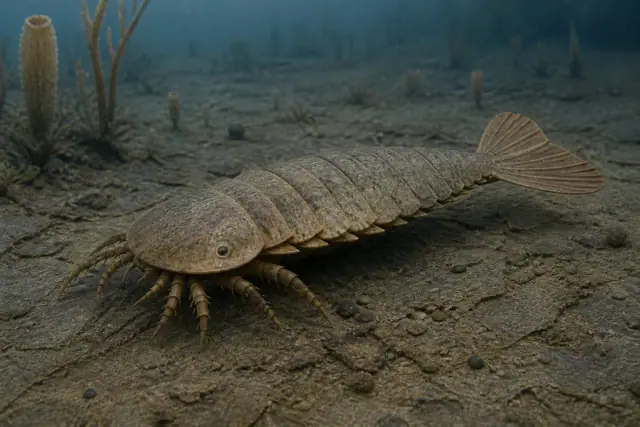
Sidneyia inexpectans
Robust leg bases formed crushing jaws for small trilobites and other shelled prey.
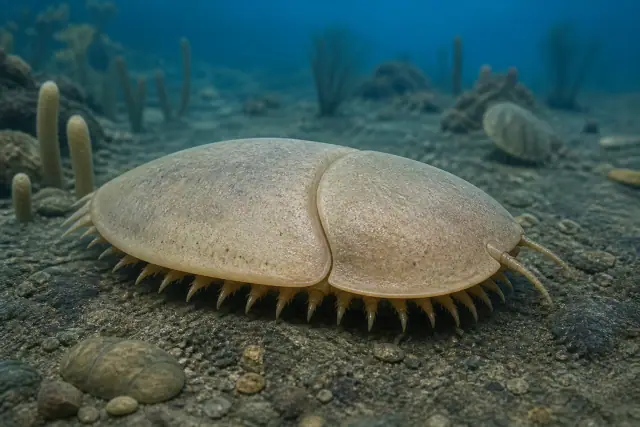
Naraoia compacta
Two large shields covered a soft body equipped with fully segmented trilobite-like limbs.
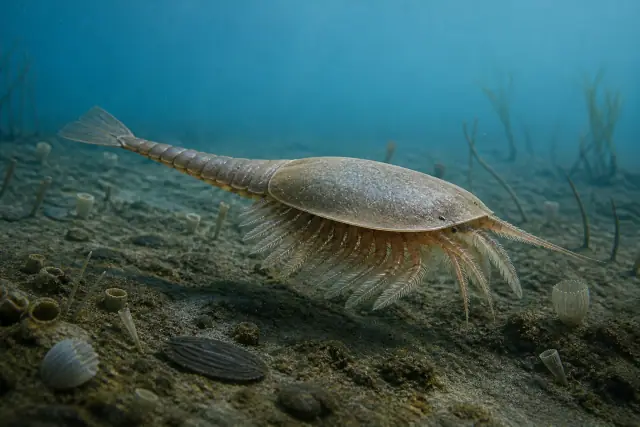
Waptia fieldensis
A bivalved carapace, compound eyes and mandibles reveal an early mandibulate; some fossils preserve embryos under the carapace.
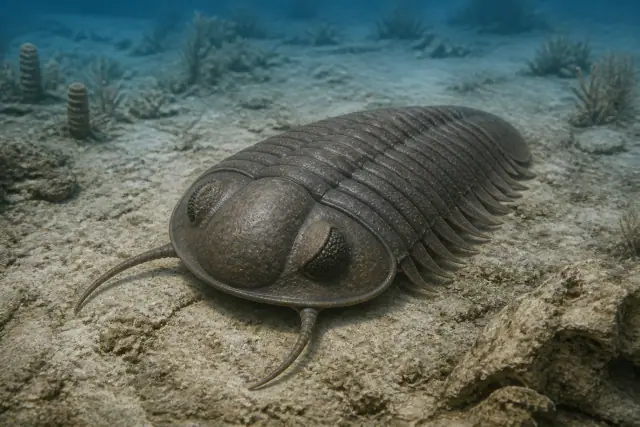
Isotelus rex
At nearly seventy centimeters, it is among the largest complete trilobites ever found.
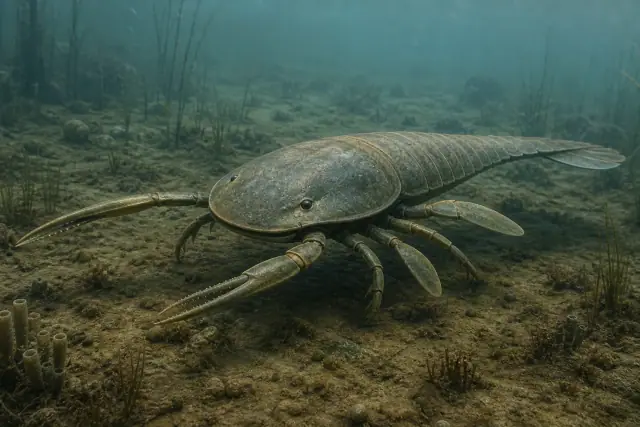
Acutiramus cummingsi
Its long pincers carried slanting blades suited to holding or slicing soft prey.
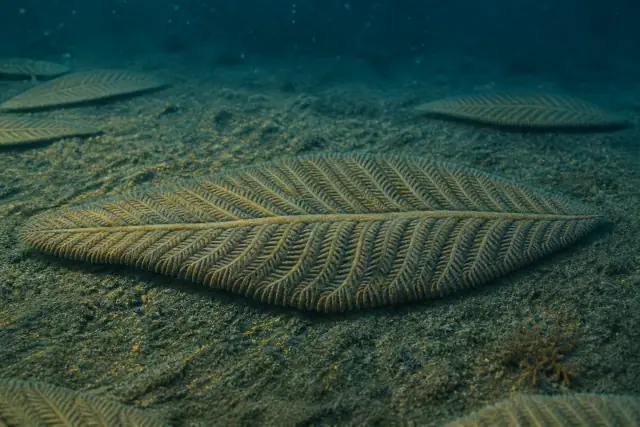
Fractofusus misrai
Its quilted branches lay flat rather than rising from a stem.
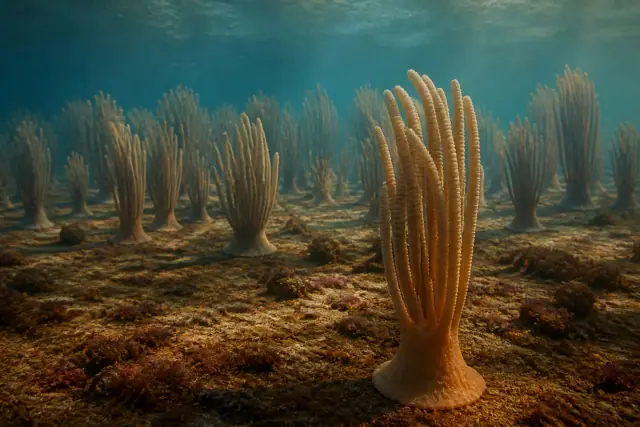
Funisia dorothea
Dense stands of narrow tubes formed one of the earliest large colonial scenes.
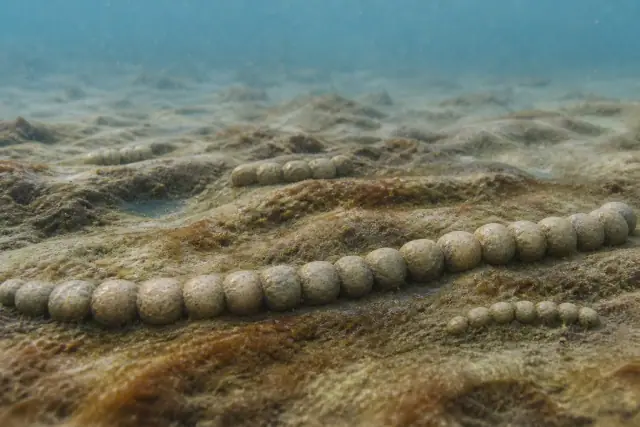
Horodyskia moniliformis
Bead-like discs arranged in strings may record an early macroscopic colony.
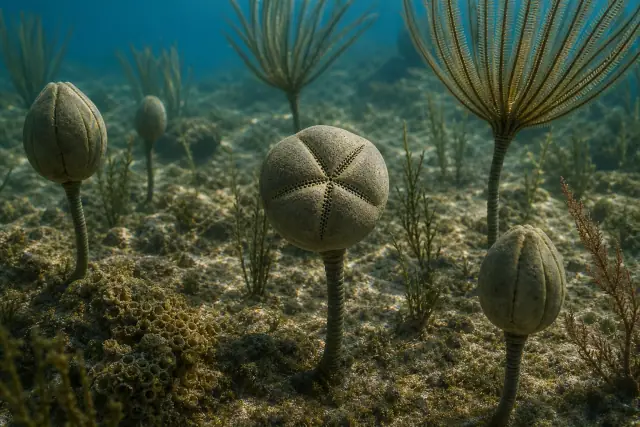
Pentremites godoni
A flower-bud body carried five feeding and respiratory grooves.
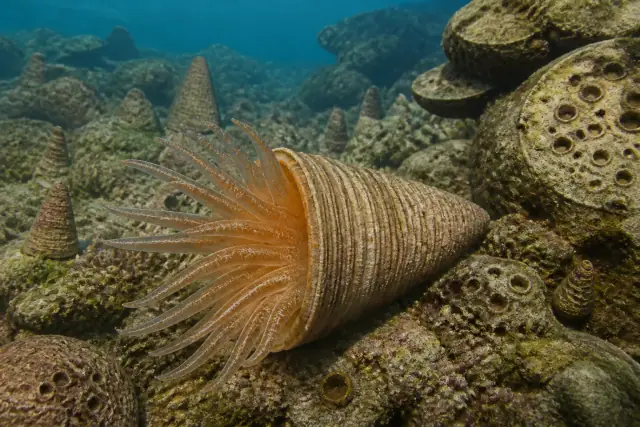
Heliophyllum halli
Radiating septa inside a horn-shaped skeleton resemble a stone sun.
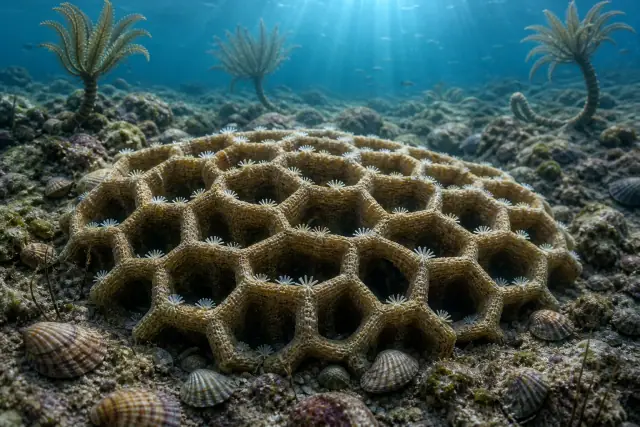
Halysites catenularius
Linked tubes formed honeycomb chains across Paleozoic reefs.
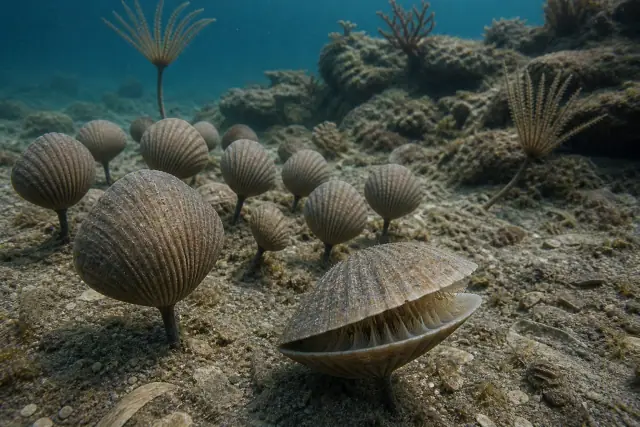
Atrypa reticularis
Fine radial ribs covered rounded shells that once crowded ancient seabeds.
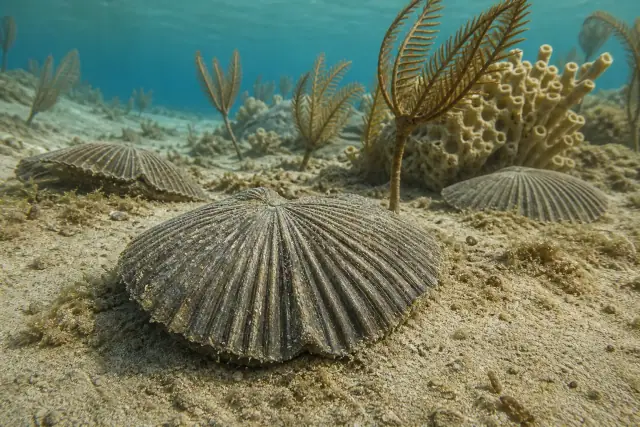
Paraspirifer bownockeri
A broad hinge line formed stone wings that stabilized the shell on soft mud.
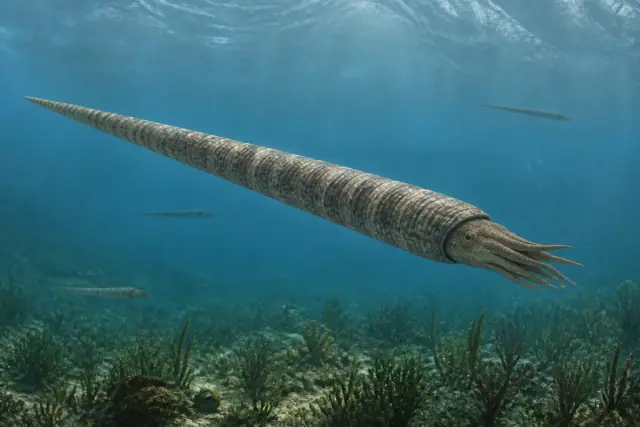
Baculites compressus
Its adult shell stretched into a near-straight rod while retaining ammonite sutures.
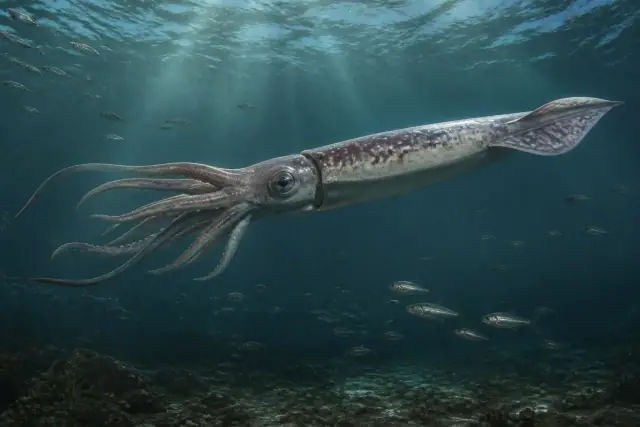
Tusoteuthis longa
A huge internal shell identifies a large coleoidean, though total length remains uncertain.
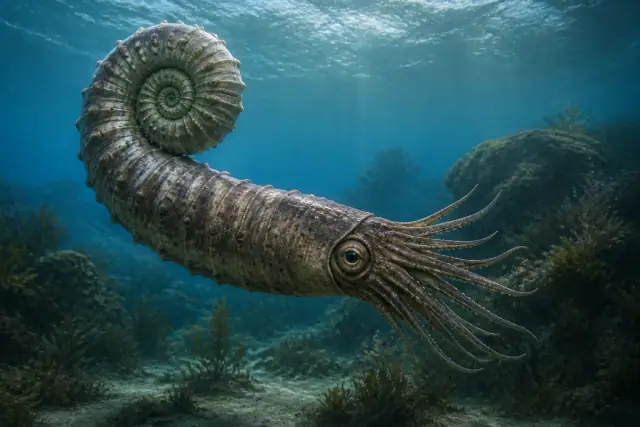
Scaphites nodosus
The juvenile shell coiled tightly before the adult chamber uncoiled and hooked back.
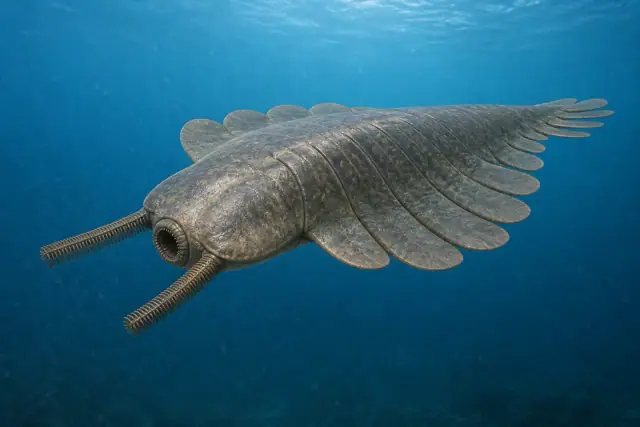
Aegirocassis benmoulai
A two-meter filter-feeding radiodont was an early analogue of giant plankton feeders.
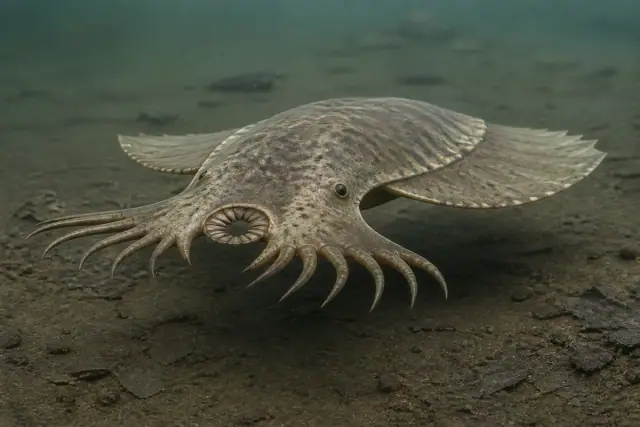
Cambroraster falcatus
A horseshoe-shaped carapace and rake-like appendages made a mobile sediment sifter.
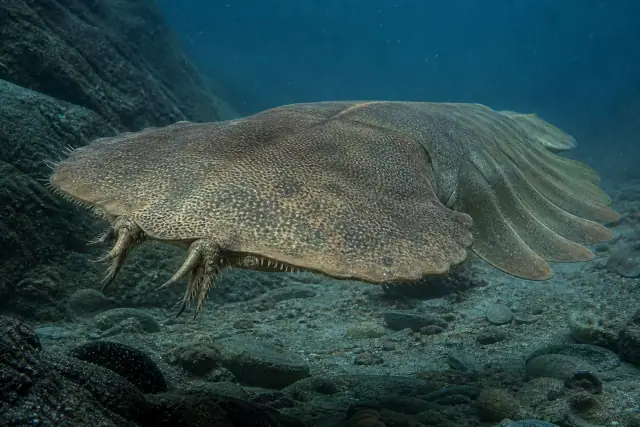
Titanokorys gainesi
An enormous head shield covered most of this bottom-feeding radiodont.
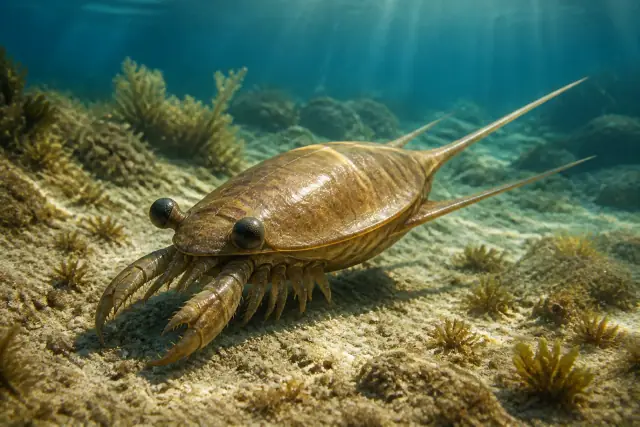
Isoxys curvirostratus
Isoxys curvirostratus was a small arthropod with a spined carapace, stalked eyes and grasping frontal appendages.
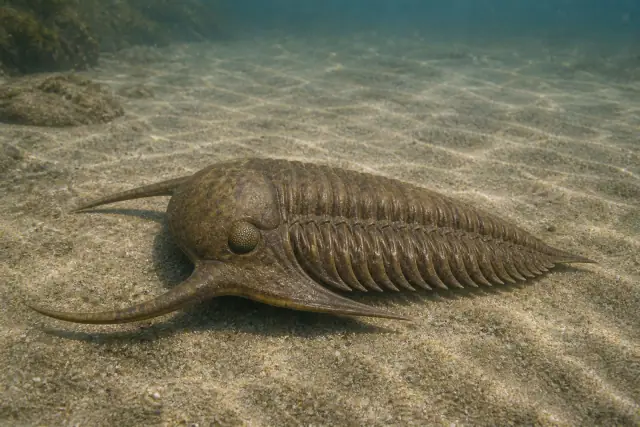
Olenellus thompsoni
A broad head, long genal spines and many trunk segments marked an early trilobite radiation.
Explore the atlas by continent, country and state. Follow fossil localities into regional guides, compare animals across time and return to the evidence in each species profile.
FIELD GUIDES
Giants, strange body plans and lives within human memory. Follow a question into the atlas, then explore the animals behind it.