240Mesozoic
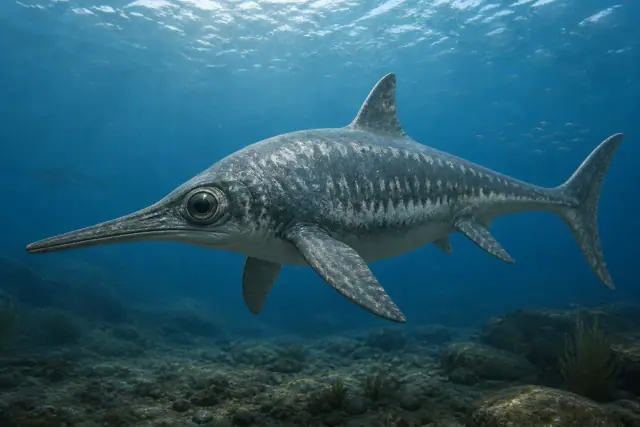
Ophthalmosaurus
Ophthalmosaurus icenicus
Huge bony eye rings supported vision under pressure and may have helped track soft prey in dim water.
LIFE ARCHIVE
Browse extinct life from traces nearly 1.9 billion years old to historically recorded extinctions.
Ophthalmosaurus icenicus
Huge bony eye rings supported vision under pressure and may have helped track soft prey in dim water.
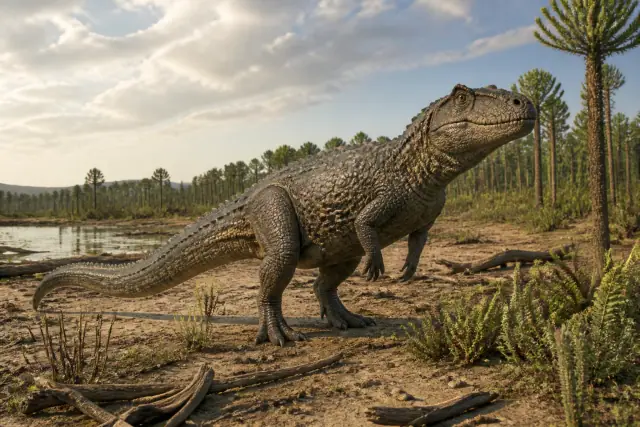
Postosuchus kirkpatricki
A deep skull, serrated teeth and powerful hind limbs placed it atop food webs before dinosaur dominance.
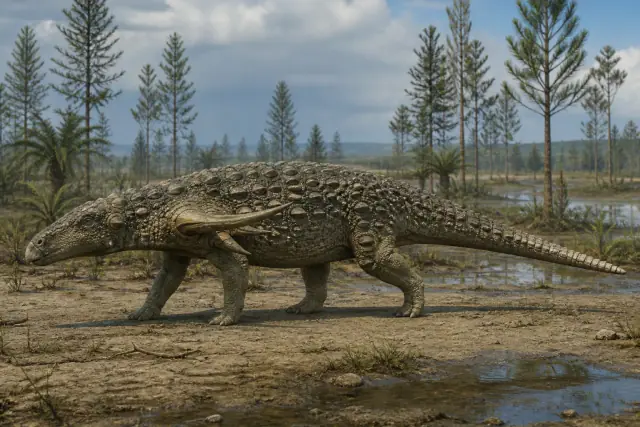
Desmatosuchus spurensis
Two huge backward-curving shoulder spikes reinforced rows of protective armor.
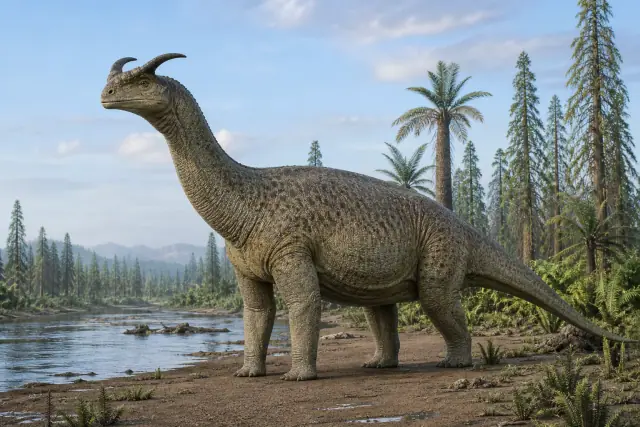
Shringasaurus indicus
Paired forward-curving brow horns occur only in some individuals, suggesting maturity or sexual display.
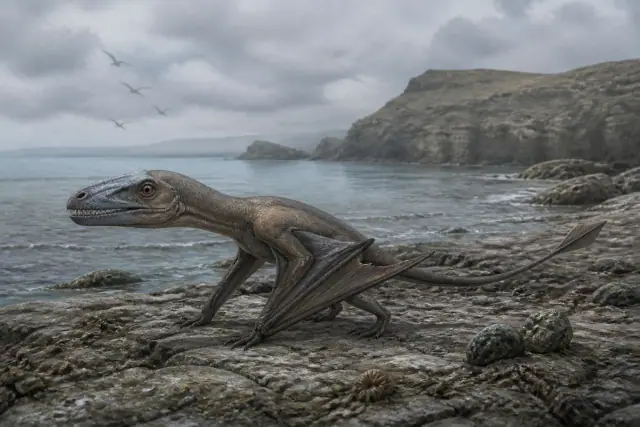
Dimorphodon macronyx
Two distinct tooth shapes gave this early pterosaur its name.
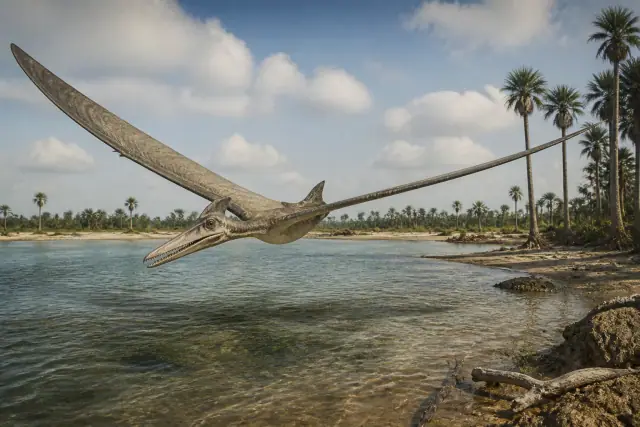
Anhanguera blittersdorffi
A toothed beak with matching crests helped seize slippery fish near the water surface.
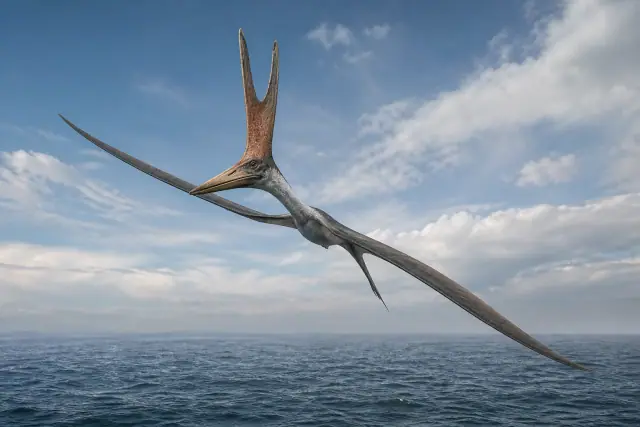
Nyctosaurus gracilis
An enormous branching crest crowned some adults, but there is no fossil evidence for a sail between its prongs.
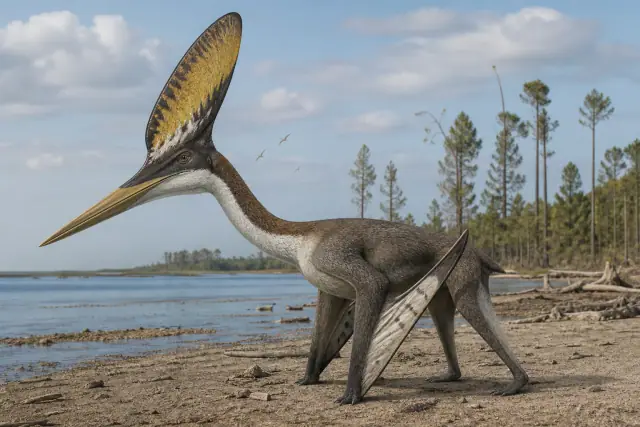
Thalassodromeus sethi
A vast sail-like skull crest dominated the profile of this large toothless pterosaur.
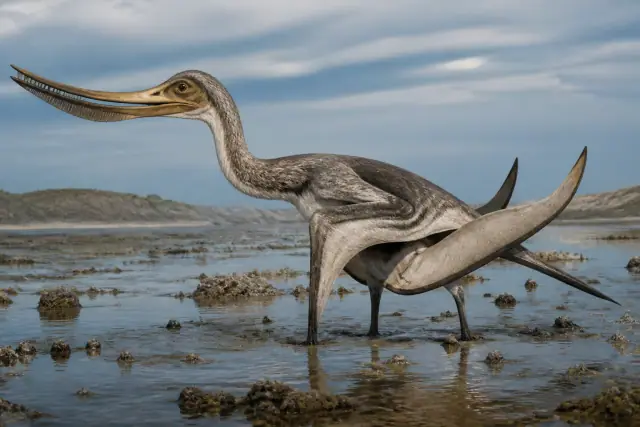
Pterodaustro guinazui
More than a thousand bristle-like lower teeth formed a filter basket.
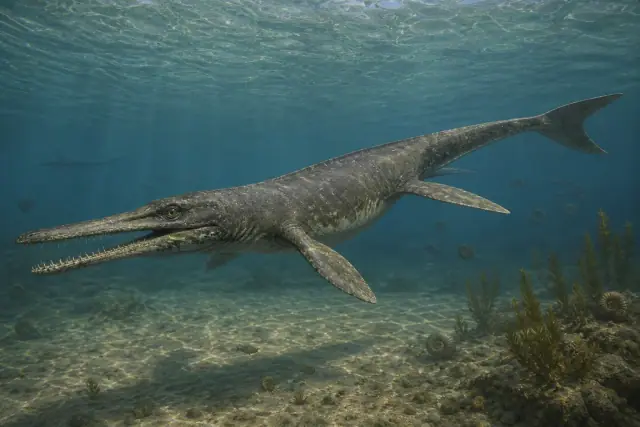
Metriorhynchus superciliosus
Flippers, a downturned tail fin and reduced armor transformed a crocodile relative into a pelagic swimmer.
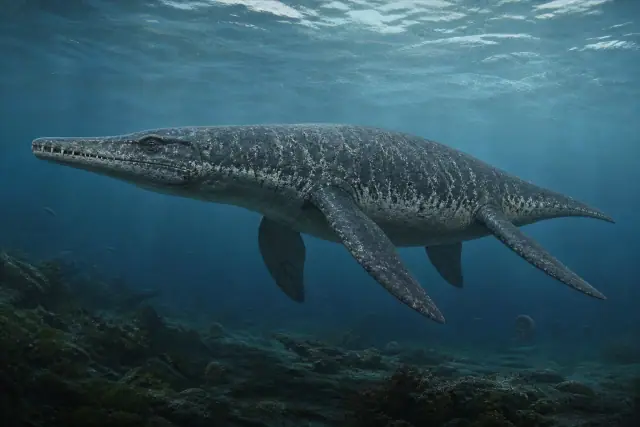
Pliosaurus funkei
A skull nearly two meters long and huge teeth formed an apex-predator bite apparatus.
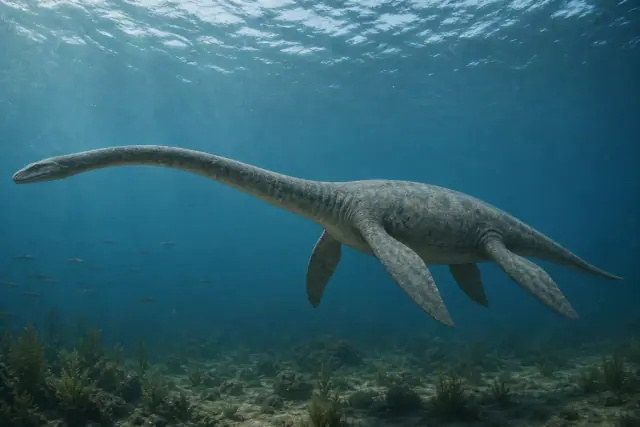
Styxosaurus snowii
More than sixty neck vertebrae formed an exceptionally long neck, while gastroliths filled the abdomen.
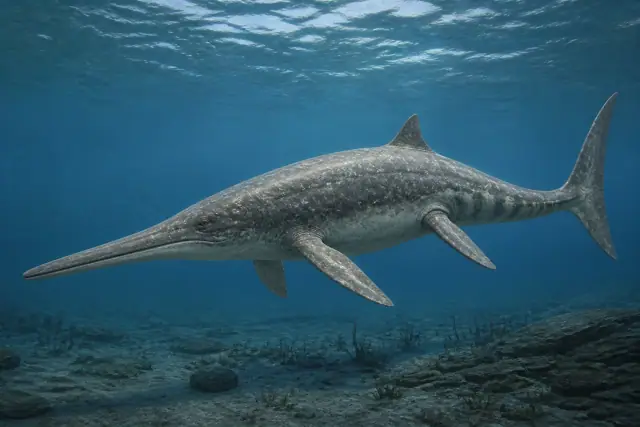
Cymbospondylus youngorum
Only a few million years after the great extinction, ichthyosaurs had already reached whale-like scale.
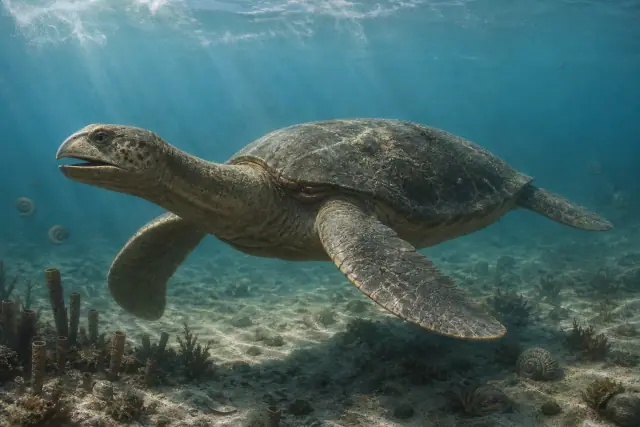
Protostega gigas
A reduced shell and giant front flippers made it one of the largest Cretaceous sea turtles.
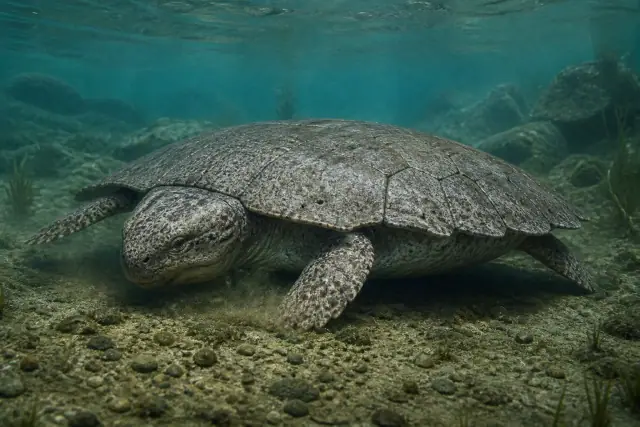
Henodus chelyops
A turtle-like shell protected a placodont with a broad filtering or scraping mouth.
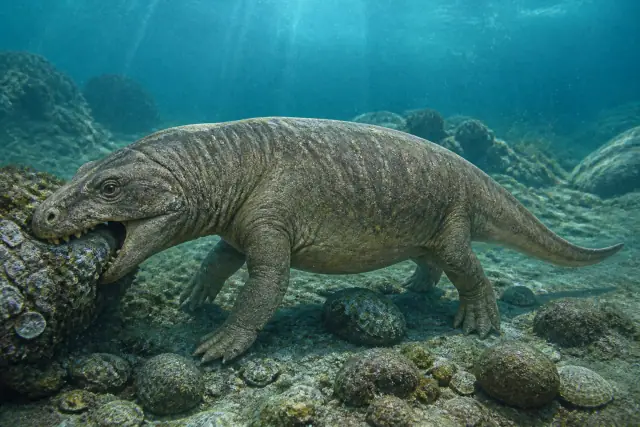
Placodus gigas
Chisel incisors and crushing palatal teeth formed a shell-opening toolkit.
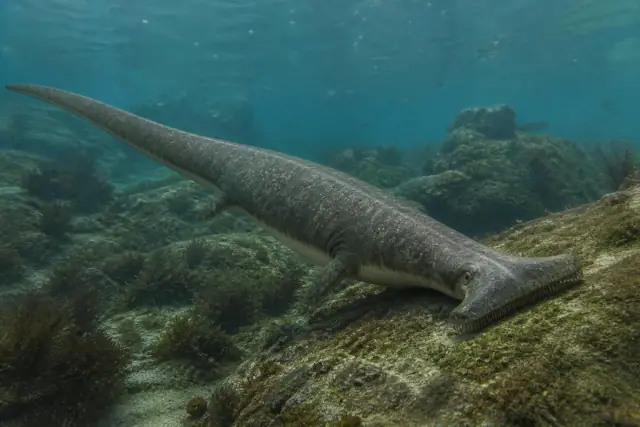
Atopodentatus unicus
A hammer-shaped snout scraped algae before needle teeth filtered the fragments.
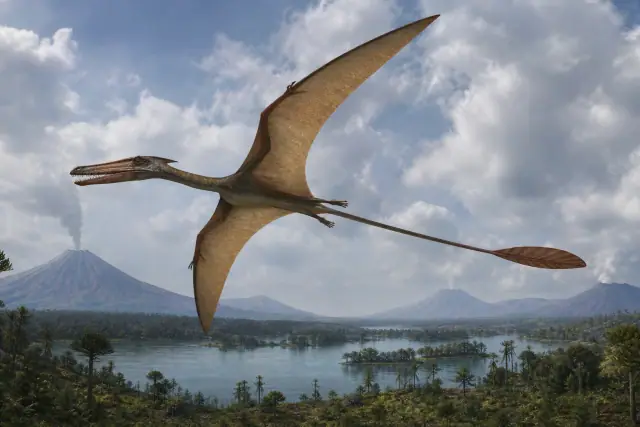
Darwinopterus modularis
A long tail and advanced skull combine features once separated between pterosaur groups.
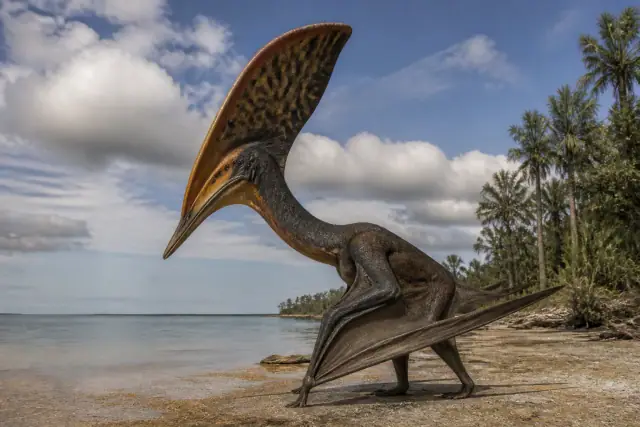
Tupandactylus imperator
Most of its enormous head crest was soft tissue used as a visual signal.
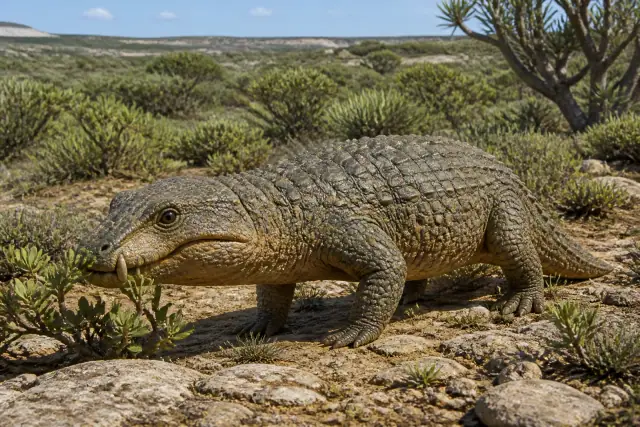
Simosuchus clarki
A short square snout, leaf-shaped teeth and armor belonged to a likely plant-eating crocodyliform.
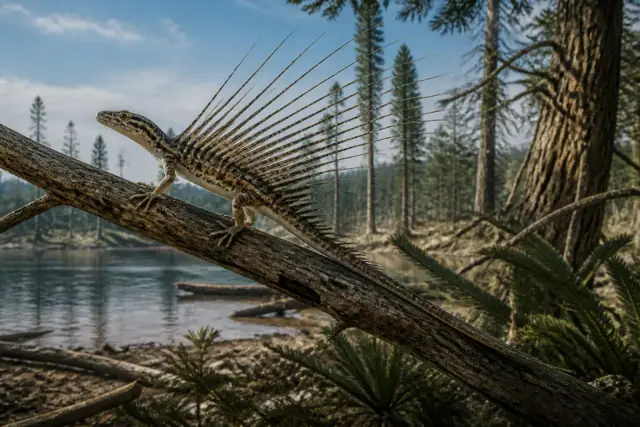
Longisquama insignis
A row of exaggerated dorsal appendages has been called scales, feathers or gliding surfaces.
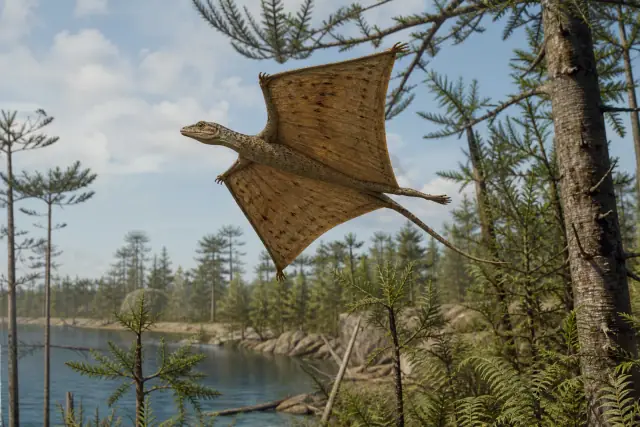
Sharovipteryx mirabilis
Its main flight membrane stretched between extraordinarily long hind legs.
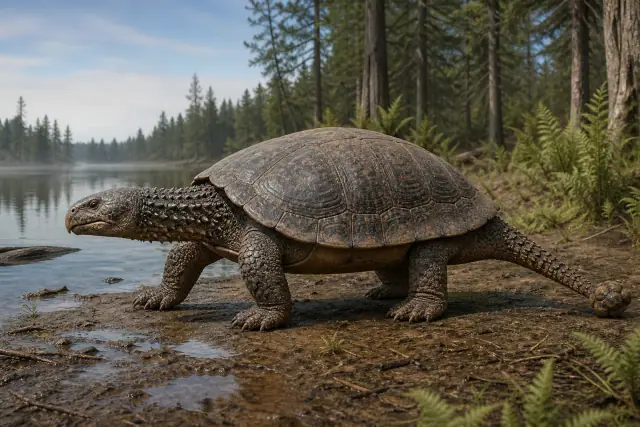
Proganochelys quenstedtii
A complete shell coexisted with neck spikes and an inability to retract the head.
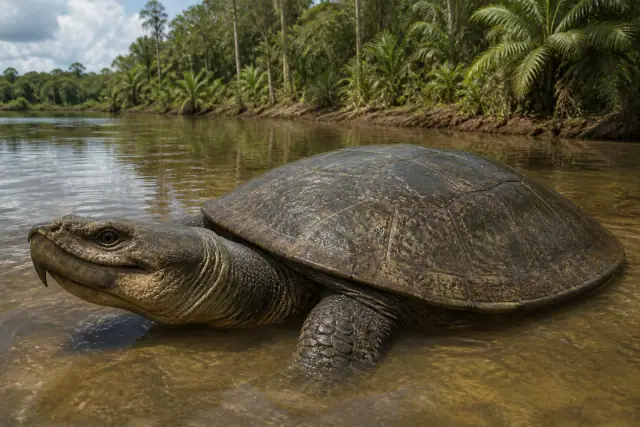
Carbonemys cofrinii
A shell nearly two meters long came from hot wetlands soon after the dinosaur extinction.
Explore the atlas by continent, country and state. Follow fossil localities into regional guides, compare animals across time and return to the evidence in each species profile.
FIELD GUIDES
Giants, strange body plans and lives within human memory. Follow a question into the atlas, then explore the animals behind it.