149Paleozoic
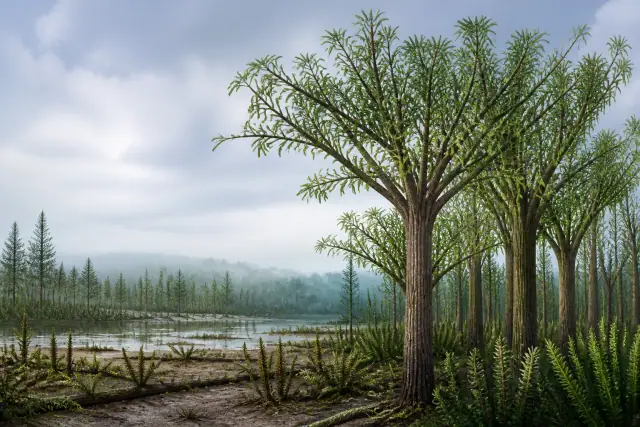
Cordaites
Cordaites principalis
Clusters of long strap-shaped leaves crowned woody trees from an extinct gymnosperm lineage near early conifers.
LIFE ARCHIVE
Browse extinct life from traces nearly 1.9 billion years old to historically recorded extinctions.
Cordaites principalis
Clusters of long strap-shaped leaves crowned woody trees from an extinct gymnosperm lineage near early conifers.
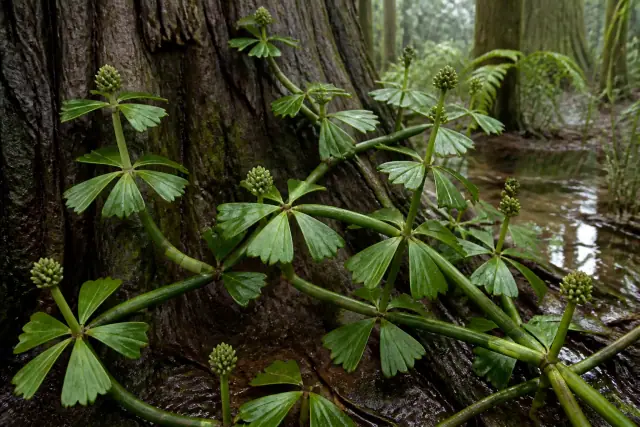
Sphenophyllum emarginatum
Six wedge-shaped leaves encircled each node of a slender stem that trailed across the ground or climbed larger trees.
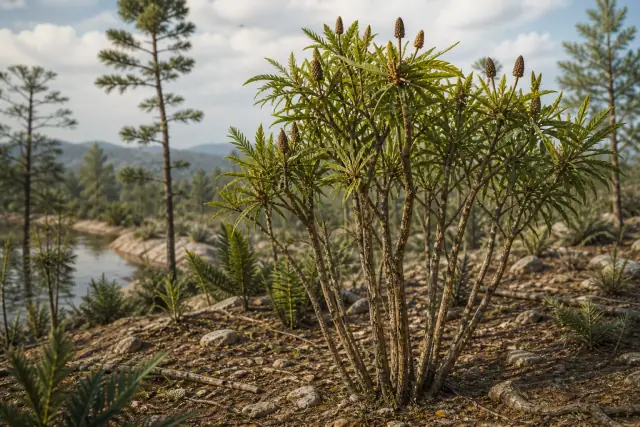
Pentoxylon sahnii
Several separate woody columns occupied one stem beneath clusters of long leaves and unusual male and female organs.
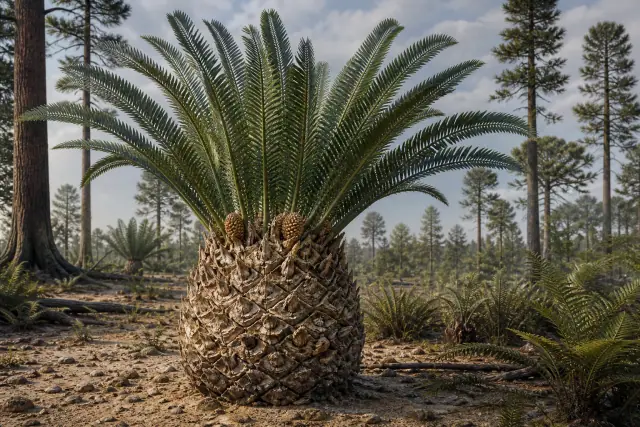
Cycadeoidea gigantea
A stout barrel-shaped trunk held a pinnate crown and many flower-like bisexual reproductive structures among old leaf bases.
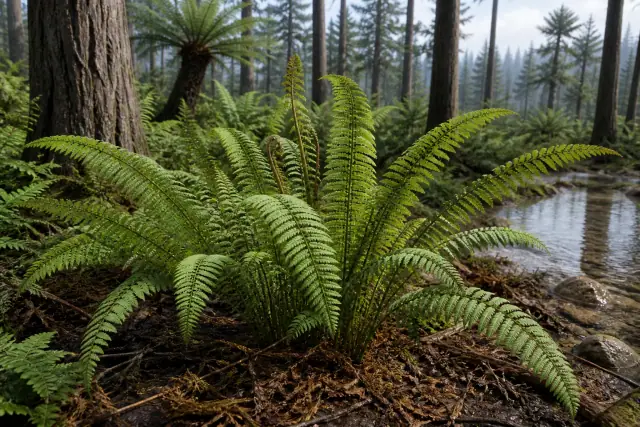
Cladophlebis denticulata
Finely pinnate fronds carpeted Jurassic understories, each toothed leaflet crossed by repeatedly branching veins.
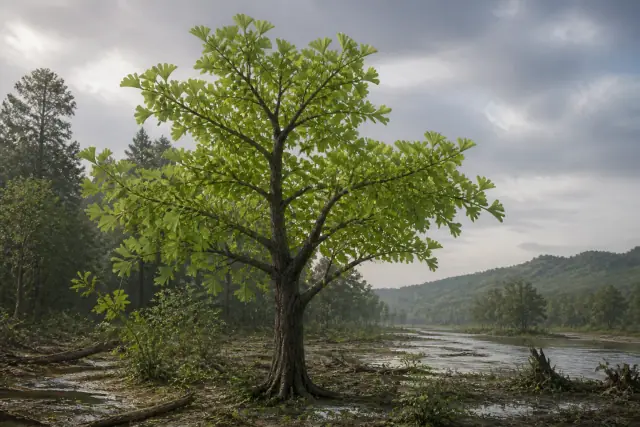
Ginkgo cranei
Fan-shaped leaves and paired ovules continued the ginkgo body plan in a species that did not survive to the present.
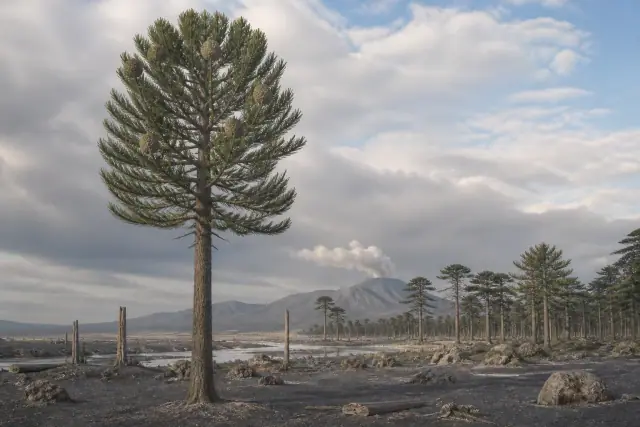
Araucaria mirabilis
Tall conifers bore nearly spherical cones whose internal scales and ovules were silicified by volcanic landscapes.
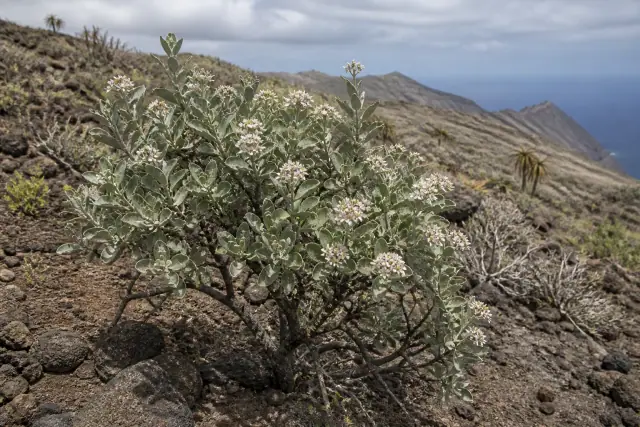
Trochetiopsis melanoxylon
Silvery hairy leaves and small pale flowers once covered dry slopes; the last reliable collection was made in 1771.
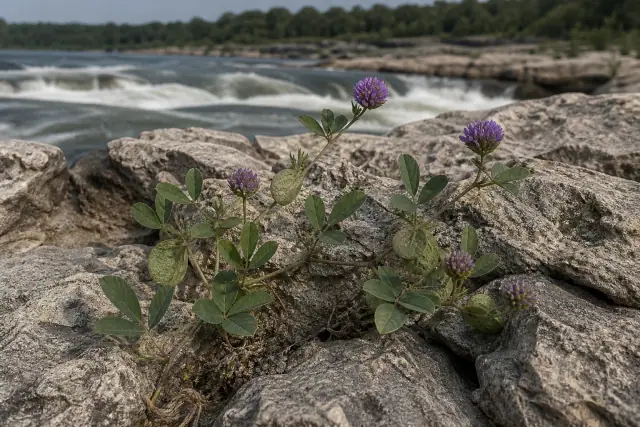
Orbexilum stipulatum
Purple pea flowers grew on one limestone river island, with the final herbarium collection made in 1881.
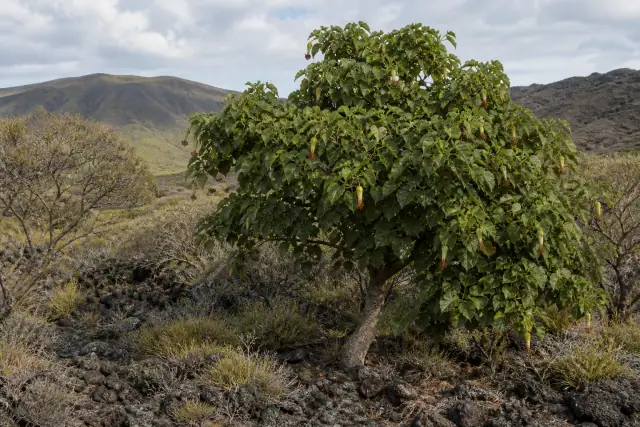
Hibiscadelphus wilderianus
The only scientifically recorded tree bore curved yellow-green tubular flowers probably adapted to Hawaiian honeycreepers.
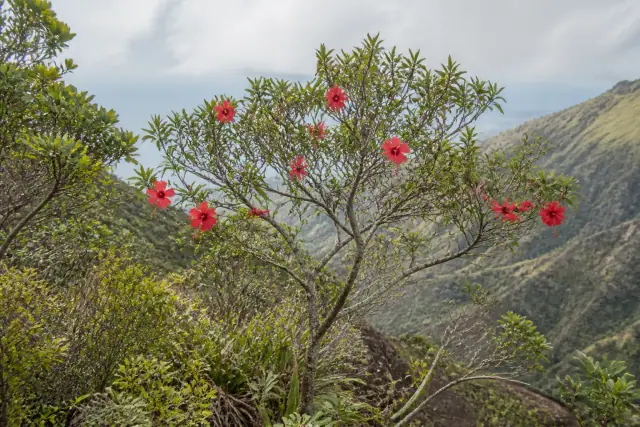
Kokia lanceolata
Narrow leaves and hibiscus-like red flowers were confined to southeastern Oʻahu and vanished within decades of discovery.
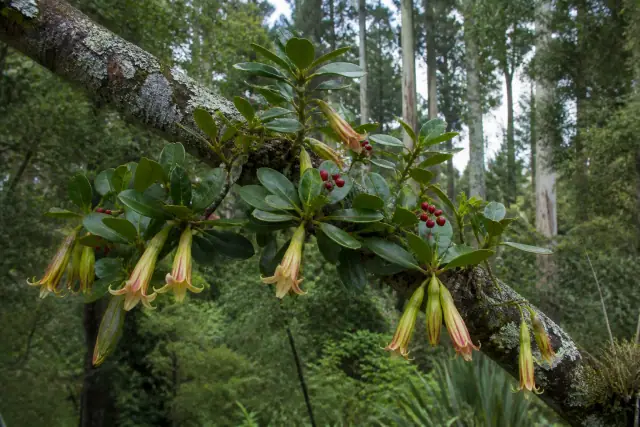
Trilepidea adamsii
Red-striped yellow-green tubular flowers opened among fleshy paired leaves; the last reliable sighting was in 1954.
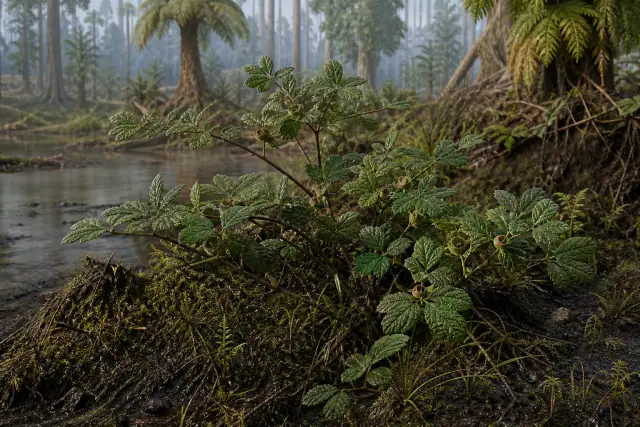
Sagenopteris rhoifolia
Four net-veined leaflets belonged to a seed fern rather than a true fern.
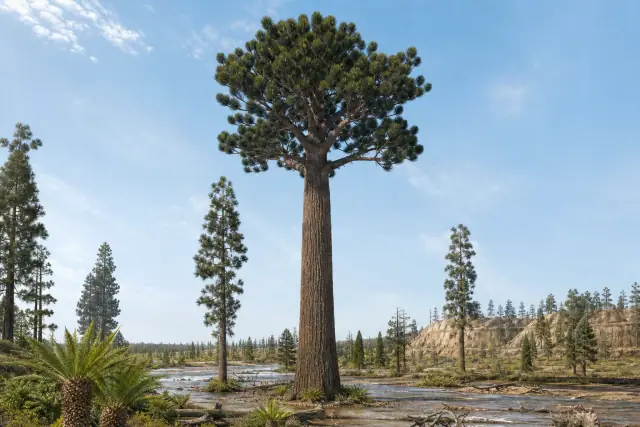
Araucarioxylon arizonicum
Silica replaced fallen trunks to create today's multicolored petrified forest.
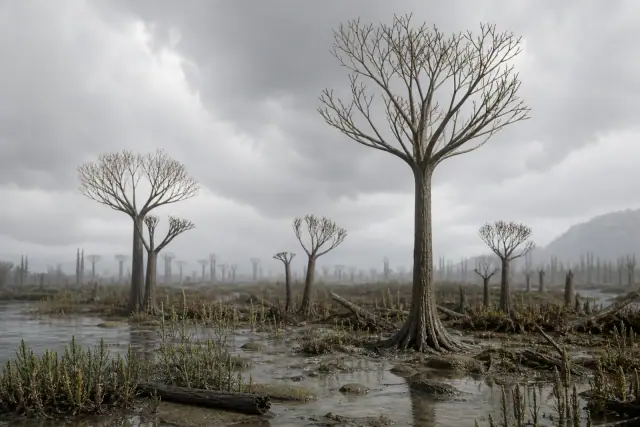
Wattieza casasii
Eight-meter leafless crowns formed one of the earliest known forests.
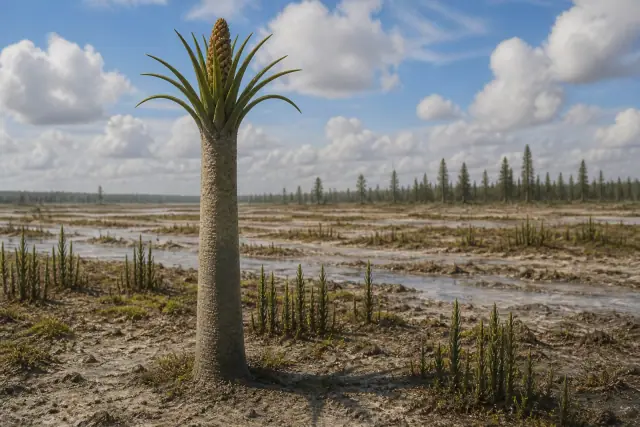
Pleuromeia sternbergii
Columnar lycophytes formed pioneer stands after the end-Permian catastrophe.
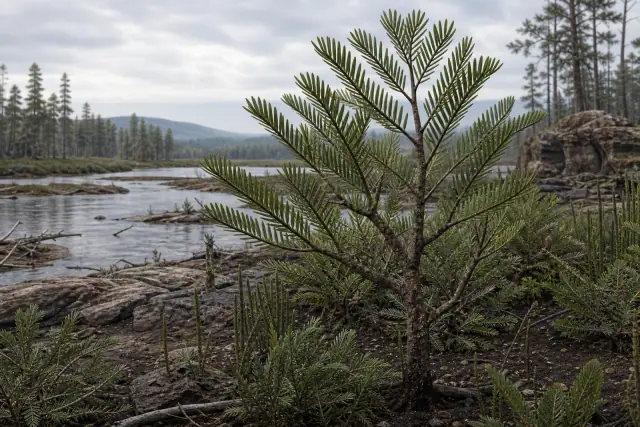
Dicroidium odontopteroides
Paired forked fronds became an emblem of Triassic southern vegetation.
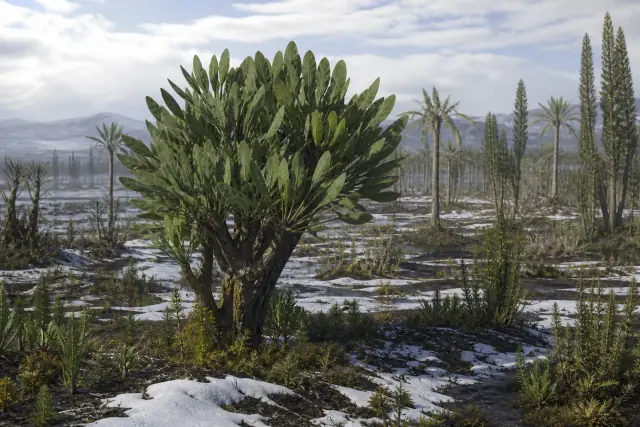
Gangamopteris obovata
Broad tongue-shaped leaves lacked the strong midrib of later glossopterids.
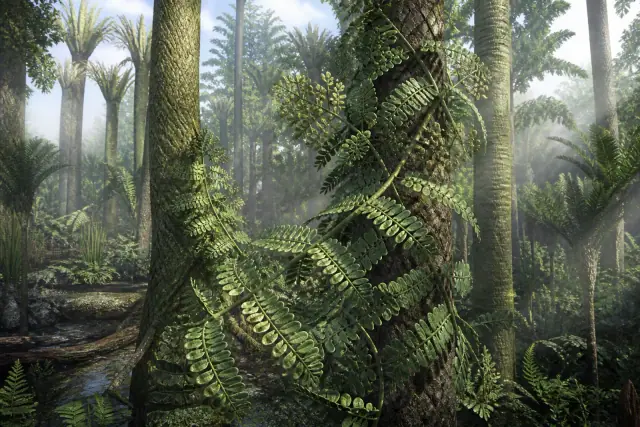
Alethopteris serlii
Firm fern-like pinnules belonged to a seed plant rather than a true fern.
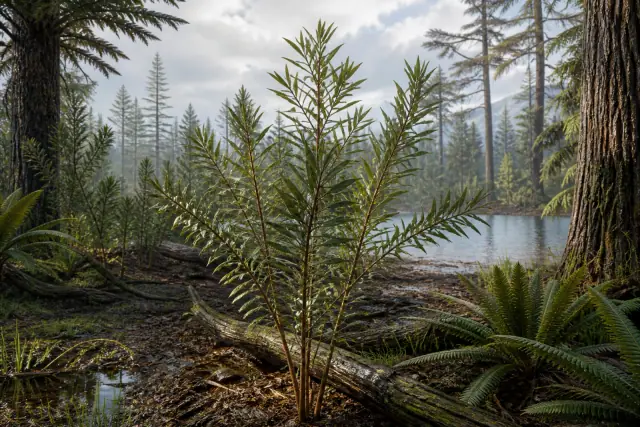
Podozamites lanceolatus
Orderly lance-shaped leaves lined stems of a widespread but enigmatic plant.
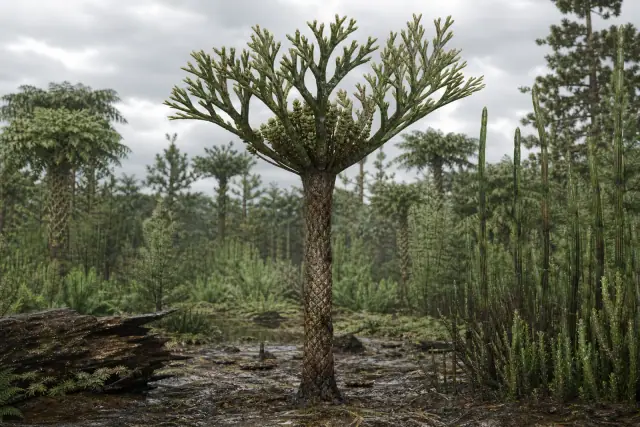
Noeggerathia foliosa
A palm-like crown belonged not to a fern but to an extinct heterosporous seed-plant relative.
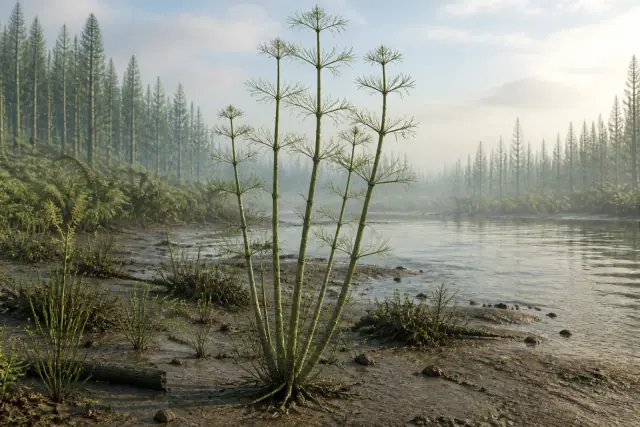
Archaeocalamites radiatus
Hollow jointed stems let an early horsetail relative grow as a tall shrub or small tree.
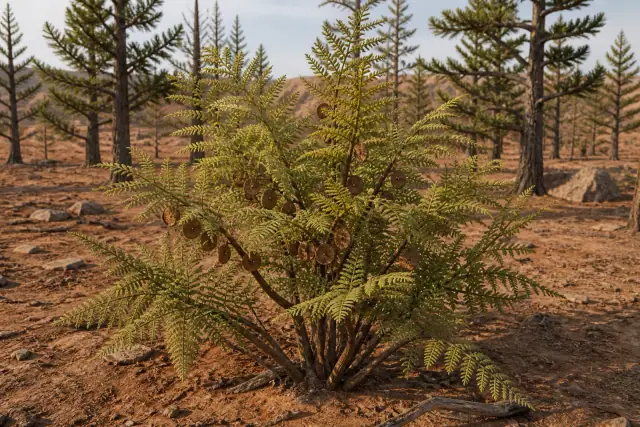
Peltaspermum martinsii
Shield-shaped reproductive discs record an innovation among drought-tolerant seed ferns.
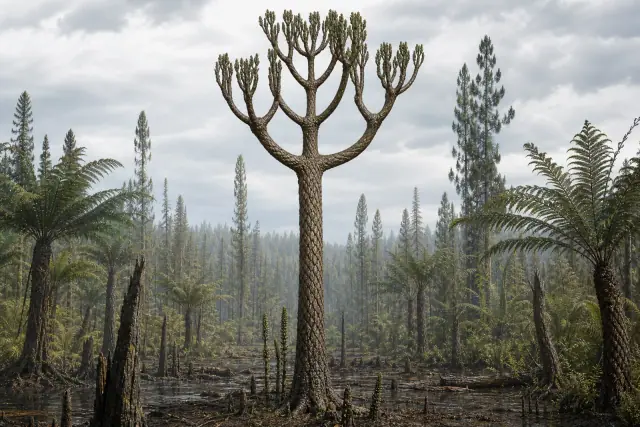
Lepidophloios laricinus
Diamond leaf cushions and a repeatedly forked crown marked a tall tree-sized lycopsid.
Explore the atlas by continent, country and state. Follow fossil localities into regional guides, compare animals across time and return to the evidence in each species profile.
FIELD GUIDES
Giants, strange body plans and lives within human memory. Follow a question into the atlas, then explore the animals behind it.