308Paleozoic
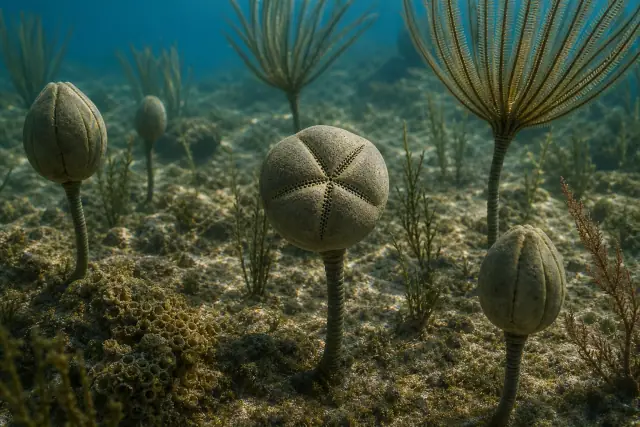
Pentremites
Pentremites godoni
A flower-bud body carried five feeding and respiratory grooves.
LIFE ARCHIVE
Browse extinct life from traces nearly 1.9 billion years old to historically recorded extinctions.
Pentremites godoni
A flower-bud body carried five feeding and respiratory grooves.
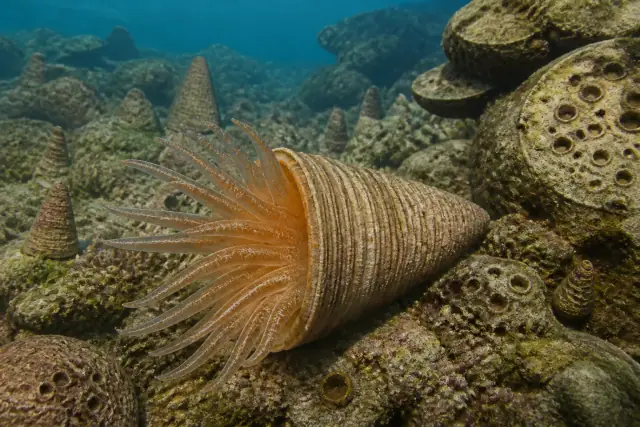
Heliophyllum halli
Radiating septa inside a horn-shaped skeleton resemble a stone sun.
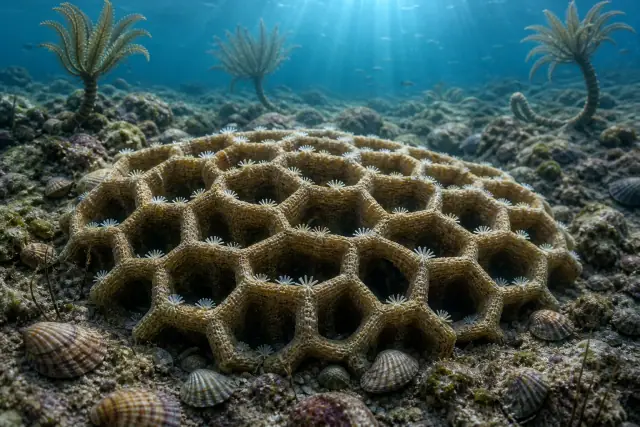
Halysites catenularius
Linked tubes formed honeycomb chains across Paleozoic reefs.
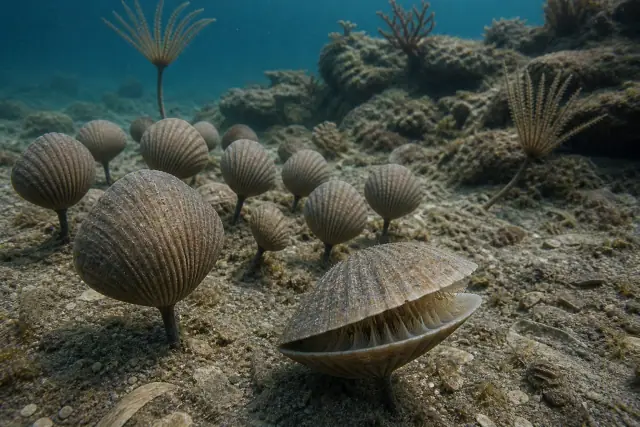
Atrypa reticularis
Fine radial ribs covered rounded shells that once crowded ancient seabeds.
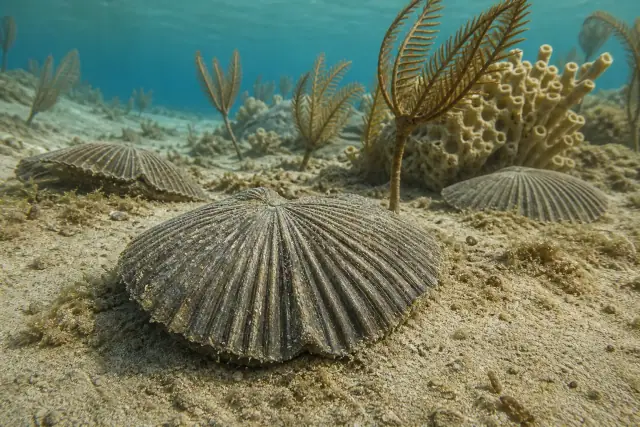
Paraspirifer bownockeri
A broad hinge line formed stone wings that stabilized the shell on soft mud.
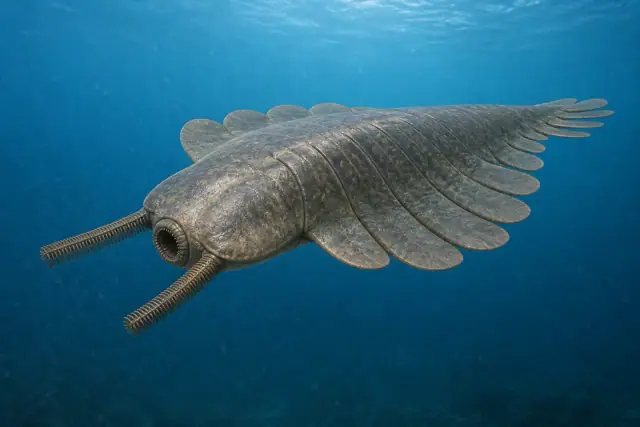
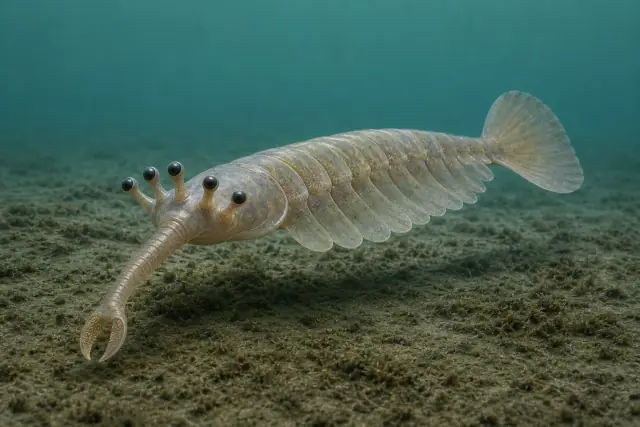
Aegirocassis benmoulai
A two-meter filter-feeding radiodont was an early analogue of giant plankton feeders.
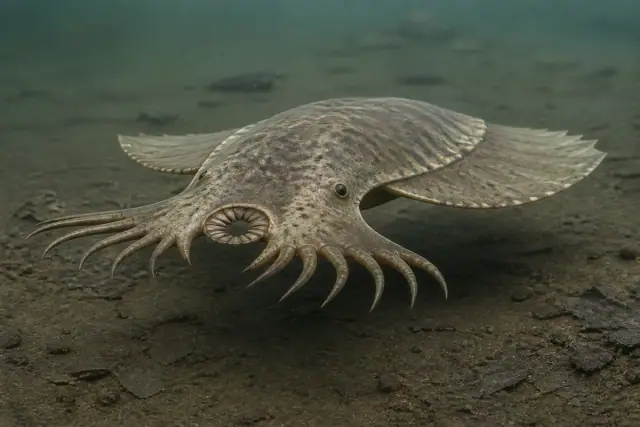
Cambroraster falcatus
A horseshoe-shaped carapace and rake-like appendages made a mobile sediment sifter.
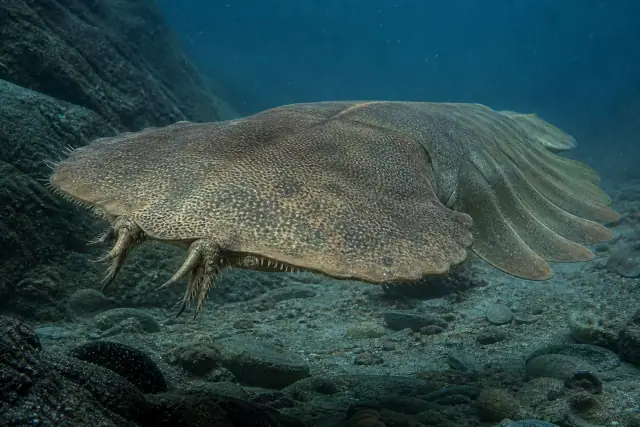
Titanokorys gainesi
An enormous head shield covered most of this bottom-feeding radiodont.
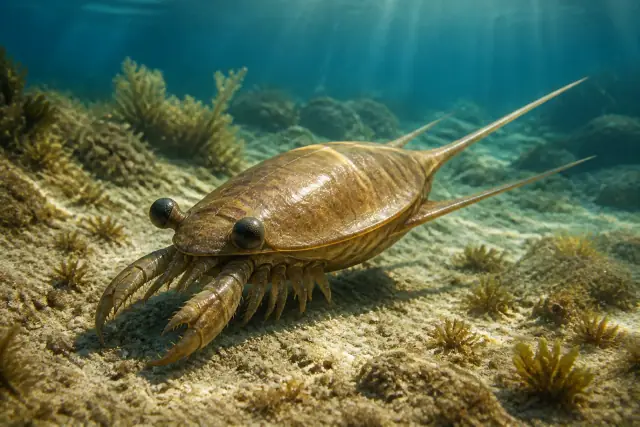
Isoxys curvirostratus
Isoxys curvirostratus was a small arthropod with a spined carapace, stalked eyes and grasping frontal appendages.
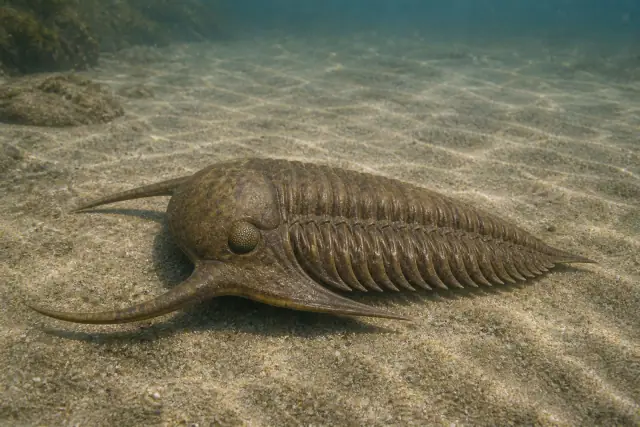
Olenellus thompsoni
A broad head, long genal spines and many trunk segments marked an early trilobite radiation.
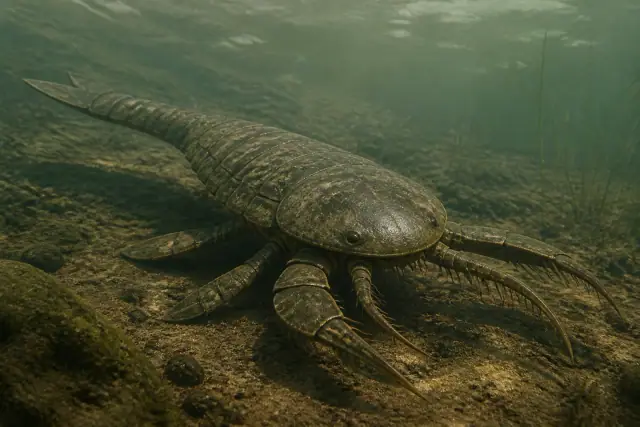
Hibbertopterus scouleri
A giant sea scorpion that raked soft sediment for food; a Scottish trackway suggests an animal about 1.6 m long.
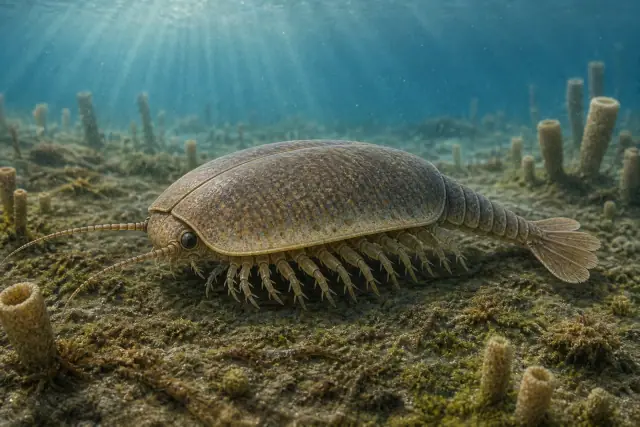
Canadaspis perfecta
Two broad valves enclosed a segmented body while antennae, limbs and a tail fan projected outside.
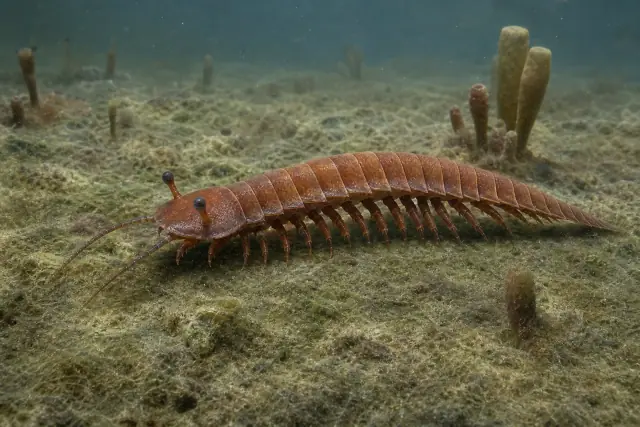
Fuxianhuia protensa
Its nervous, circulatory and limb anatomy makes it central to studies of early arthropod organization.
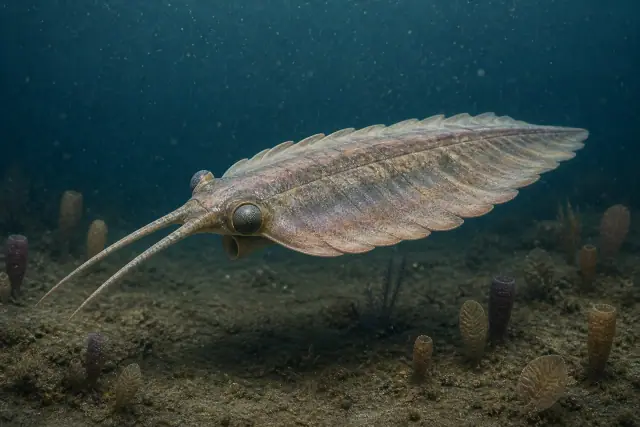
Nectocaris pteryx
Paired fins, a funnel and tentacle-like appendages form one of the Cambrian's most puzzling swimmers.
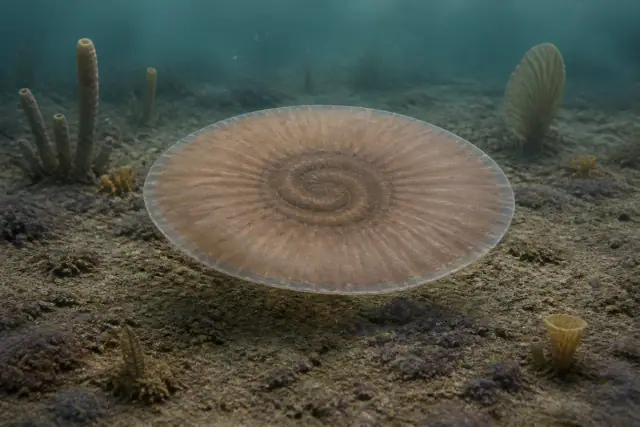
Eldonia ludwigi
A coiled gut lay inside a soft circular disc that may have drifted or lived near the bottom.
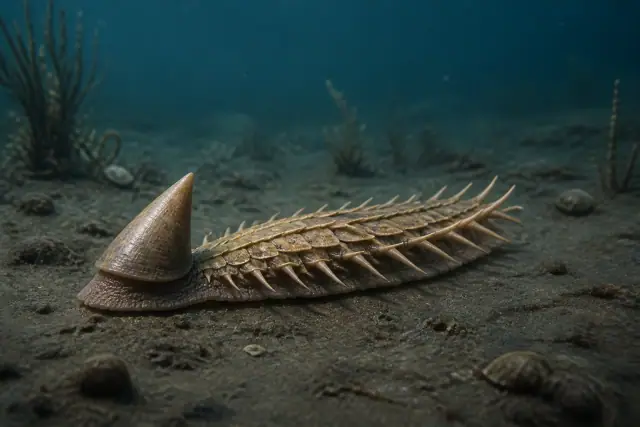
Orthrozanclus reburrus
Scales, long spines and a small front shell combined several Cambrian body plans.
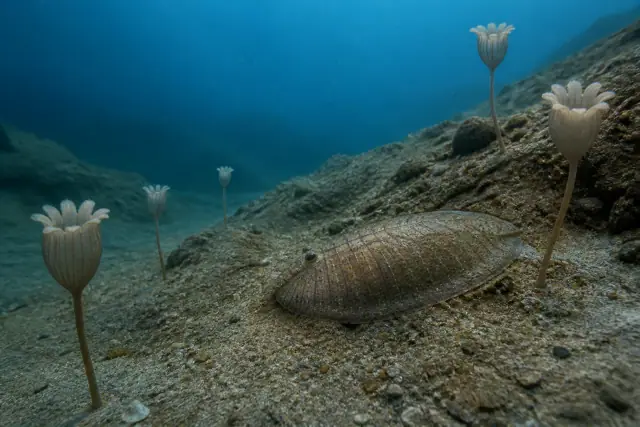
Dinomischus isolatus
A cup-shaped body attached by a long stalk and opened through a petal-ringed top.
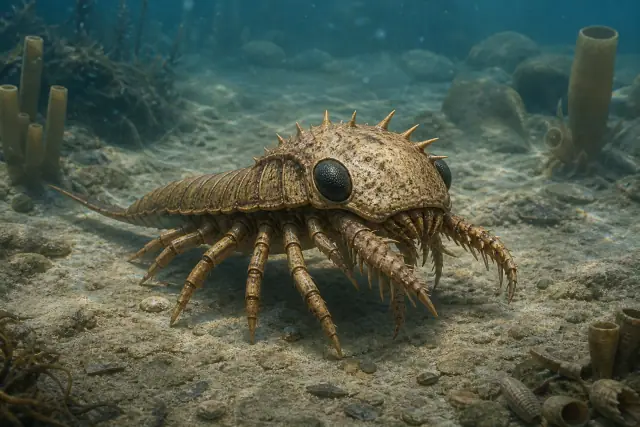
Habelia optata
A spiny head shield and specialized appendages belonged near the chelicerate stem.
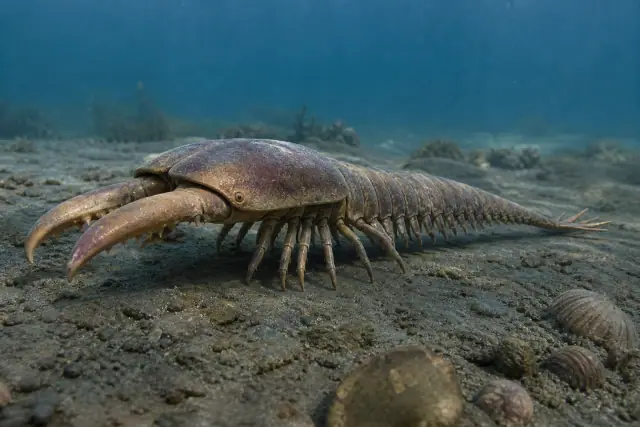
Tokummia katalepsis
Large pincer-like mandibles projected beneath a bivalved shell on an early mandibulate.
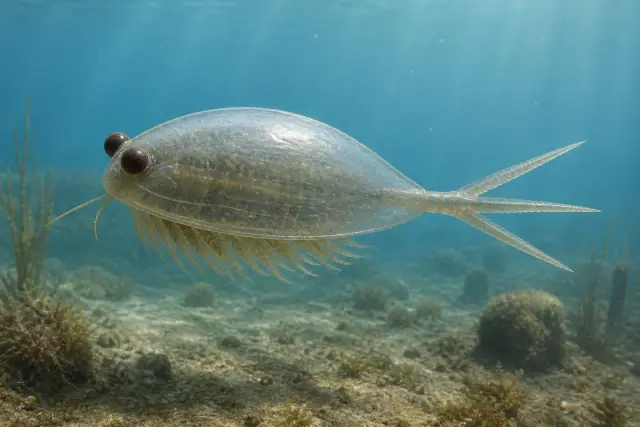
Odaraia alata
A broad bivalved shell enclosed most of the body and a three-pronged tail steered it.
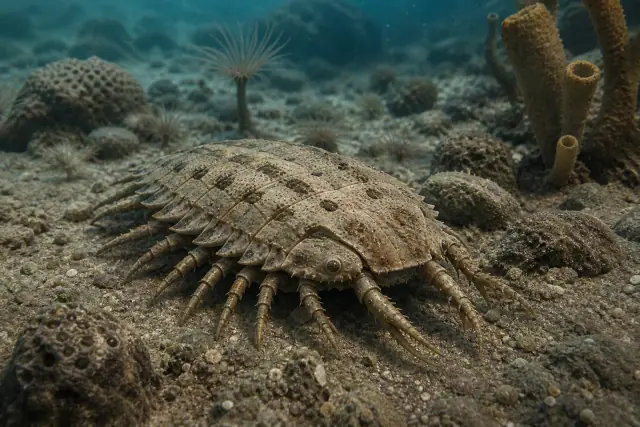
Mollisonia symmetrica
A tiny armored body and pincer-like front appendages suggest an early chelicerate relative.
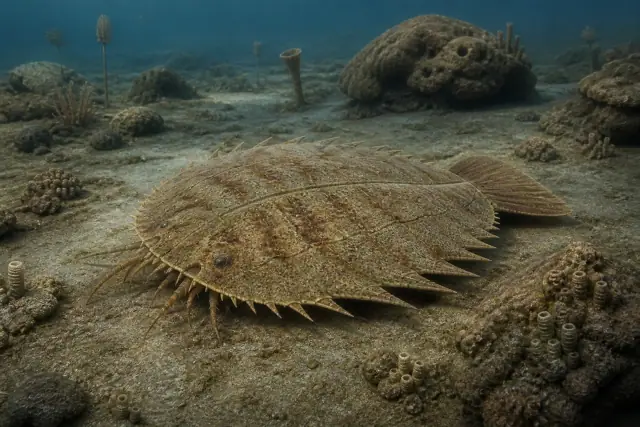
Helmetia expansa
A broad flat shield with marginal spines and a leaf-like tail formed an unusual outline.
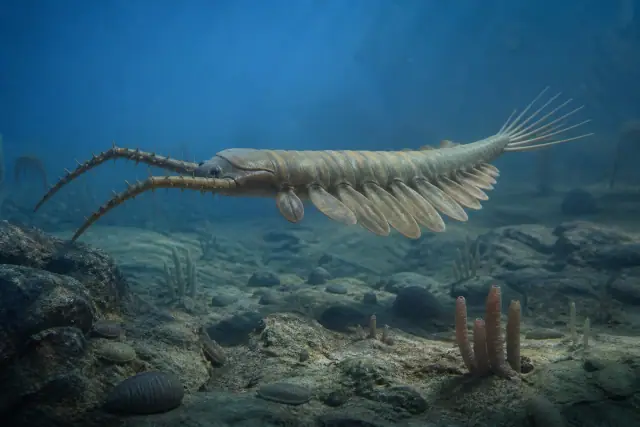
Kerygmachela kierkegaardi
Long frontal appendages, side flaps and tail spines record a stem-panarthropod body.
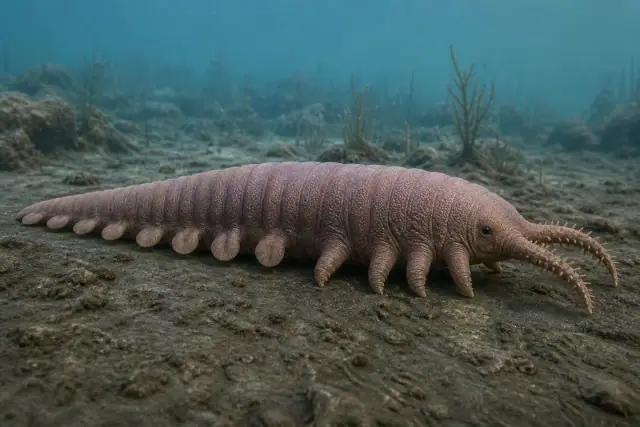
Pambdelurion whittingtoni
Large frontal appendages, rows of swimming flaps and an annulated soft body link lobopodians with true arthropods.
Explore the atlas by continent, country and state. Follow fossil localities into regional guides, compare animals across time and return to the evidence in each species profile.
FIELD GUIDES
Giants, strange body plans and lives within human memory. Follow a question into the atlas, then explore the animals behind it.