
Explore this animal in Size of Extinct Animals ↗
201 / Precambrian
Ernietta
Ernietta plateauensis
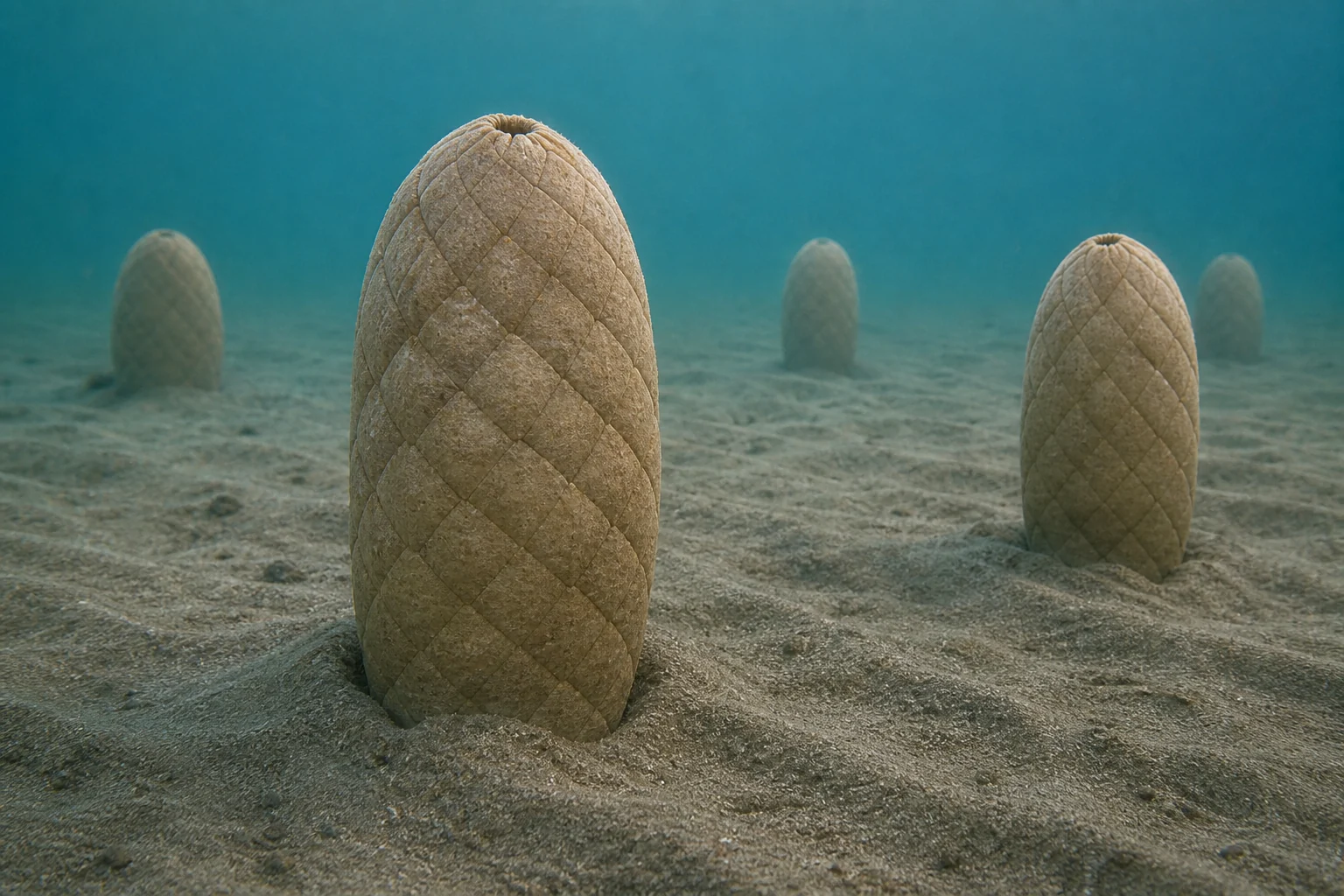
Rows of quilted sacks lived half-buried in sand, forming one of the Ediacaran seafloor's strangest communities.
 View original image · 1536 × 1024
- Time range
- About 550–541 million years ago
- Final stage
- End of the Ediacaran
- Geographic range
- Sandy shallow seafloor · Present-day Namibia
01 / DEFINITION & ECOLOGY
What was Ernietta?
Ernietta (Ernietta plateauensis) was an extinct organism known from About 550–541 million years ago, with a range in Sandy shallow seafloor · Present-day Namibia.
Life and ecology
Ernietta has no clear mouth, gut or locomotory organs. Its lower body probably sat within sediment while folded surfaces interacted with water flowing above the bed.
02 / DISAPPEARANCE
Why did Ernietta disappear?
Burrowing animals, changing oxygen conditions and new food webs transformed latest Ediacaran seafloors, after which this body plan disappeared.
03 / EVIDENCE
How do scientists know about Ernietta?
Crowded three-dimensional sandstone casts preserve its quilted divisions and partly buried posture; its biological affinity remains unresolved.
04 / SOURCES & FURTHER READING
Check the source record
Use the scientific name to compare taxonomy, occurrence records and the fossil record. Database coverage and classifications may differ.
05 / REVISION HISTORY
How has this record changed?
- Verified authoritative entity sources and added three responsive reconstruction sizes.
- Initial bilingual species record published.
06 / CORRECTIONS & ADDITIONS