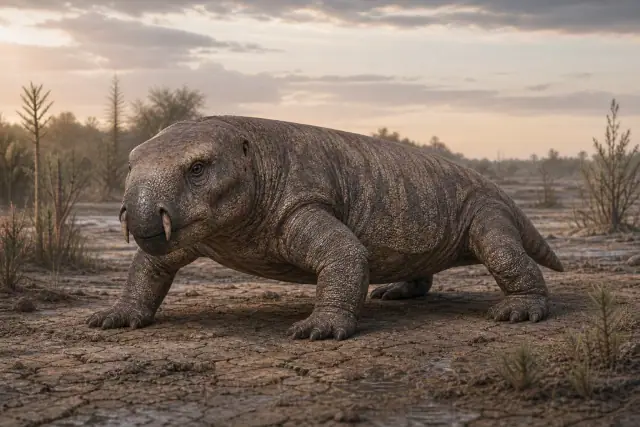
Extraordinary adaptations
Animals That Lived Before Dinosaurs
Travel from Cambrian seas through Devonian waterways to Carboniferous forests and Permian land habitats. These animals tell the story of life before the first dinosaurs.
Explore the animals 20 ↘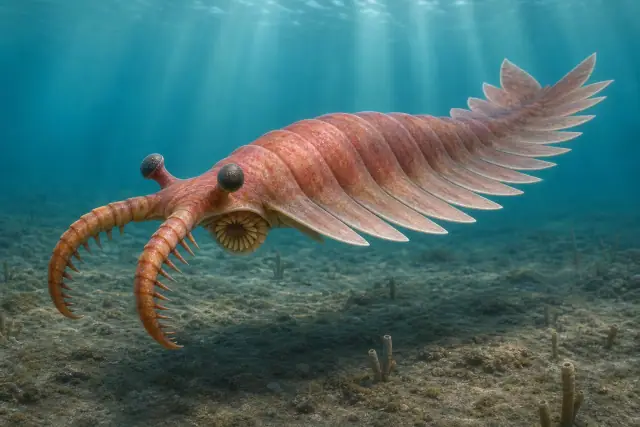
How this list was selected
Selected atlas animals assigned to Paleozoic intervals, before dinosaurs appear in the Triassic fossil record. The sequence broadly follows geological time, not evolutionary ancestry. Dimetrodon and Edaphosaurus were synapsids, not dinosaurs; the earlier animals here did not all live together.
In this guide 20
Explore the animals
20 atlas recordsAbout 521–508 million years ago
Anomalocaris
Anomalocaris canadensis
A meter-long swimmer with grasping frontal appendages was a giant of Cambrian seas.
Laurentian shallows · Present-day Canada
About 508 million years ago
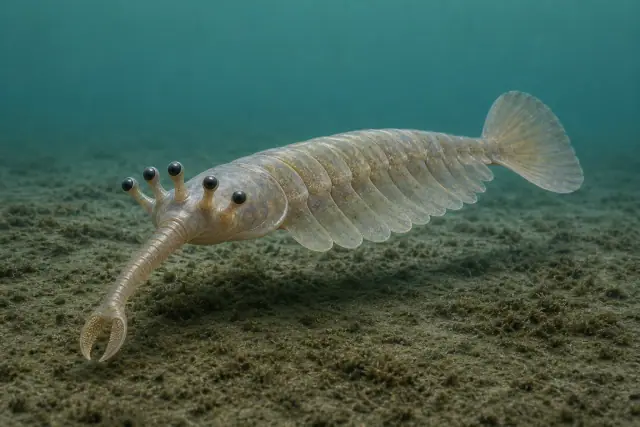
Opabinia
Opabinia regalis
Five eyes and a grasping proboscis made this small swimmer one of the Cambrian’s strangest forms.
Laurentian shallows · Present-day Canada
About 508 million years ago
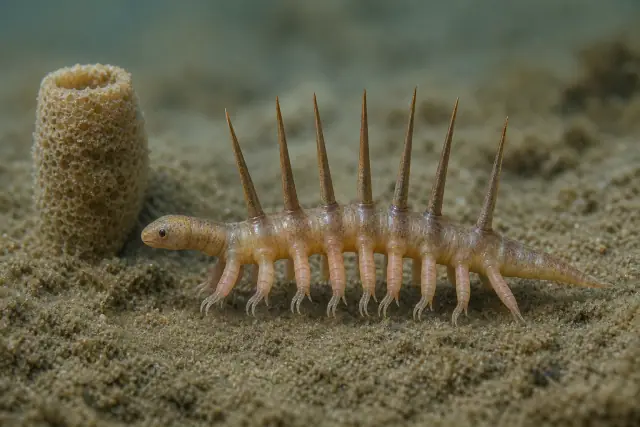
Hallucigenia
Hallucigenia sparsa
Paired spines guarded a soft-bodied walker once reconstructed upside down.
Laurentian and South China shallows
About 508 million years ago
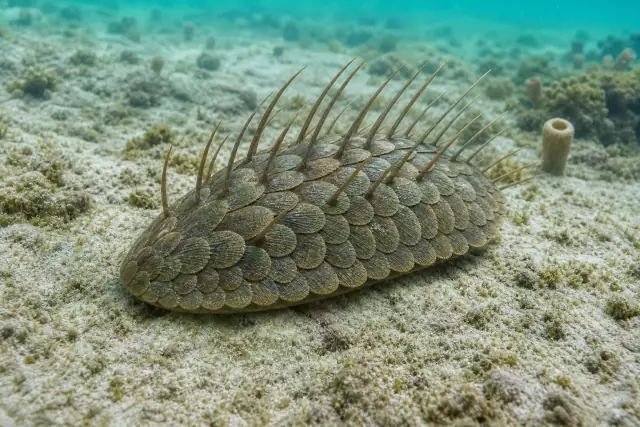
Wiwaxia
Wiwaxia corrugata
Rows of scales and long spines armored this small seafloor grazer.
Laurentian shallows · Present-day Canada
About 508 million years ago
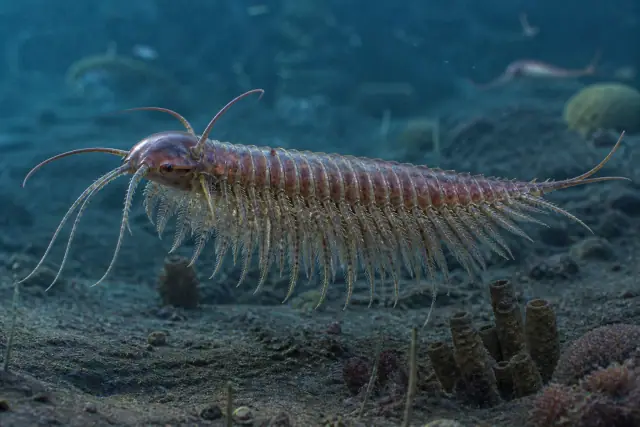
Marrella
Marrella splendens
Two pairs of curved head spines, long antennae and dozens of fine legs made this two-centimeter arthropod exquisitely elaborate.
Offshore slope of Laurentia · Burgess Shale, Canada
About 508 million years ago
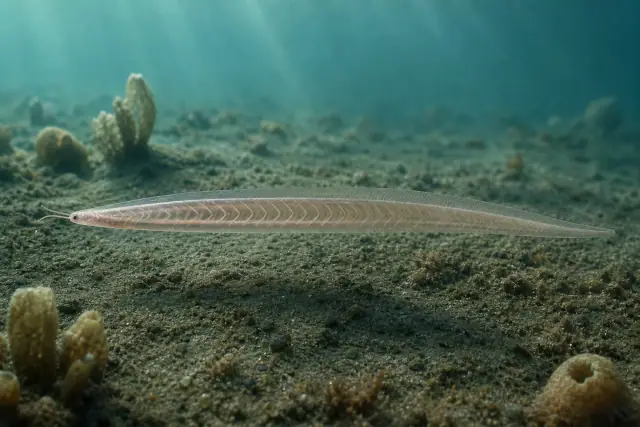
Pikaia
Pikaia gracilens
A slender body preserves repeated muscle blocks and internal traces important for interpreting early chordates.
Laurentian shallows · Present-day Canada
About 508 million years ago
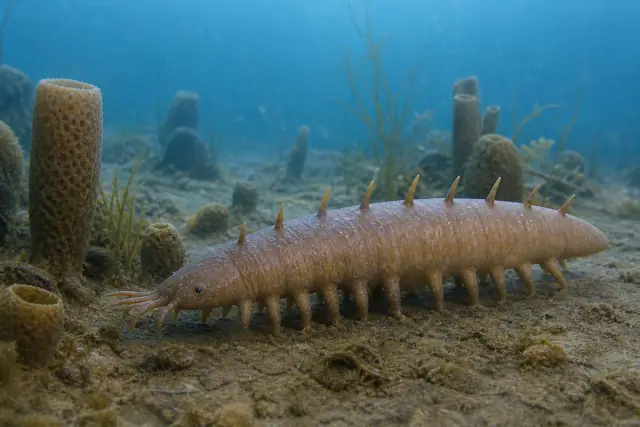
Aysheaia
Aysheaia pedunculata
Ten pairs of stubby legs beneath a soft body place it near the early history of velvet worms and arthropods.
Laurentian outer shelf · Burgess Shale, Canada
About 508 million years ago
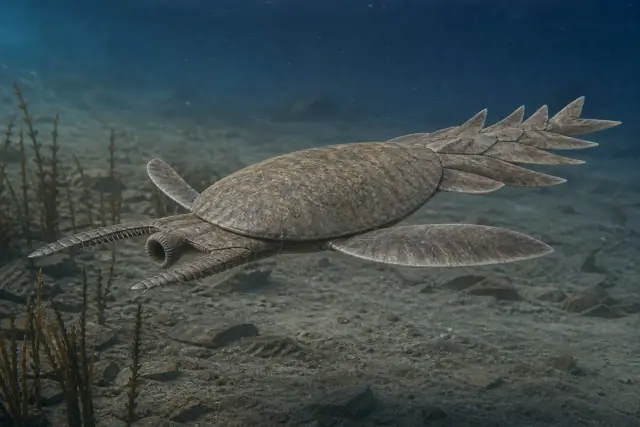
Hurdia
Hurdia victoria
A huge domed carapace covered its head, giving this radiodont the outline of a tiny finned submarine.
Open continental shelf · Present-day Canada and western USA
About 470–450 million years ago
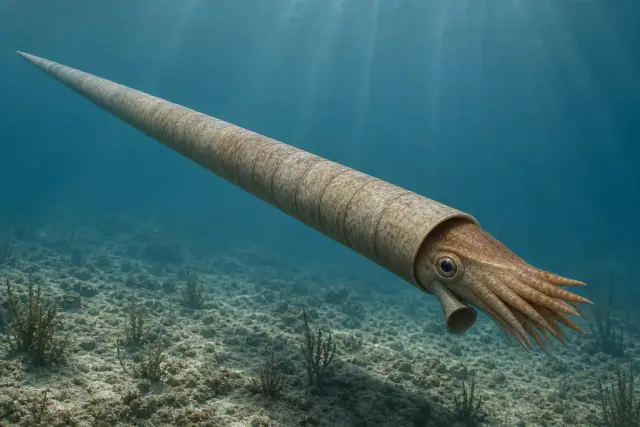
Cameroceras
Cameroceras trentonense
A long straight shell housed one of the largest predators of Ordovician seas.
Laurentian shallows · Present-day North America
About 432–418 million years ago
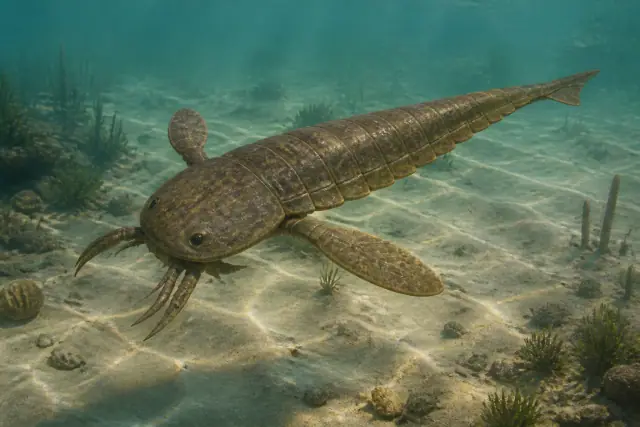
Eurypterus
Eurypterus remipes
Paddle-shaped hind limbs carried this sea scorpion through shallow coastal water.
Laurentian shallows and lagoons · Present-day New York
About 390 million years ago
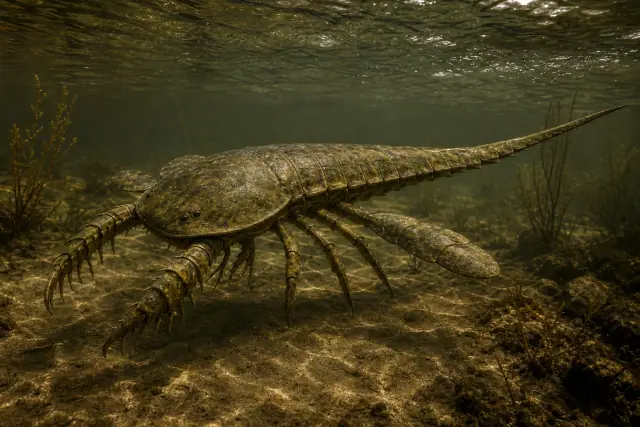
Jaekelopterus
Jaekelopterus rhenaniae
This giant sea scorpion may have exceeded two meters in length.
Euramerican estuaries · Present-day Germany
About 382–358 million years ago
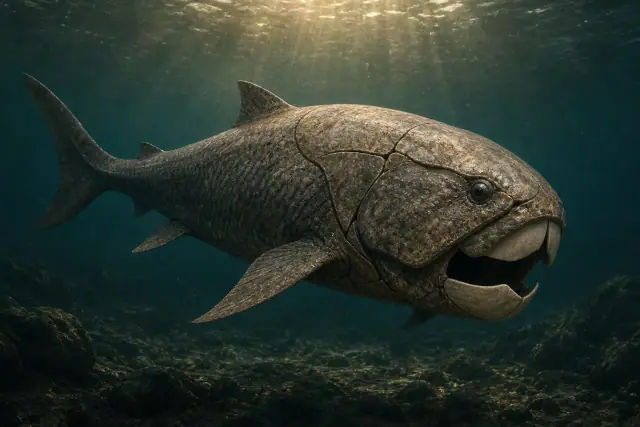
Dunkleosteus
Dunkleosteus terrelli
Sharpened jaw plates replaced teeth in this heavily armored apex fish.
Seas of North America · Europe · North Africa
About 375 million years ago
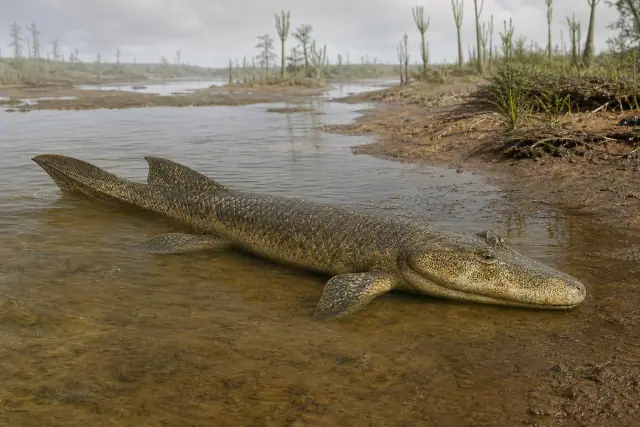
Tiktaalik
Tiktaalik roseae
A flat-headed fish with a mobile neck and wrist-like fin bones approached the anatomy of early tetrapods.
Euramerican rivers · Canadian Arctic
About 365 million years ago
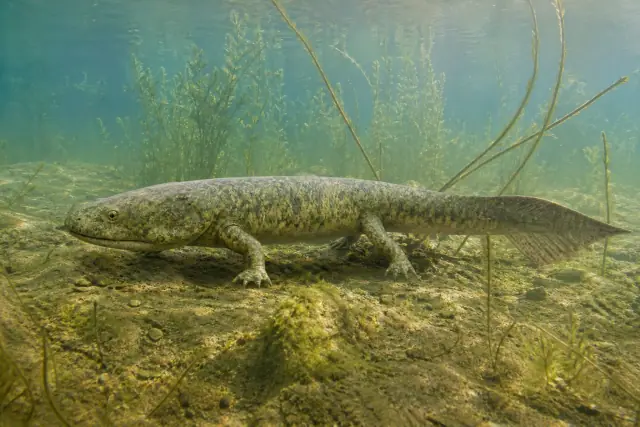
Acanthostega
Acanthostega gunnari
Each forelimb carried eight digits, yet the animal was still mainly aquatic—digits evolved before true land walking.
Channels and seasonal shallows · East Greenland
About 365–360 million years ago
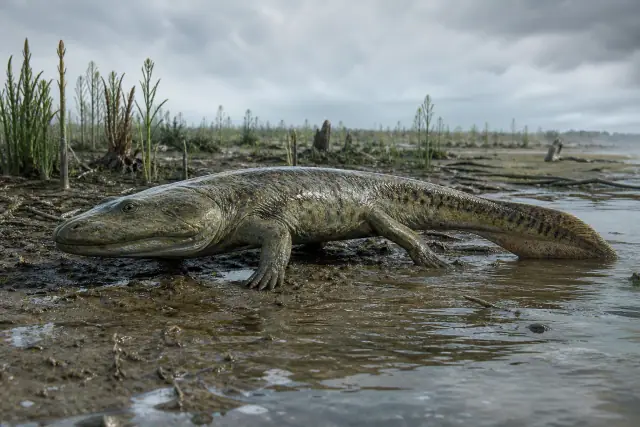
Ichthyostega
Ichthyostega stensioei
Weight-bearing limbs accompanied a fish-like tail in an animal still deeply tied to water.
Greenland rivers and floodplains
About 345–290 million years ago
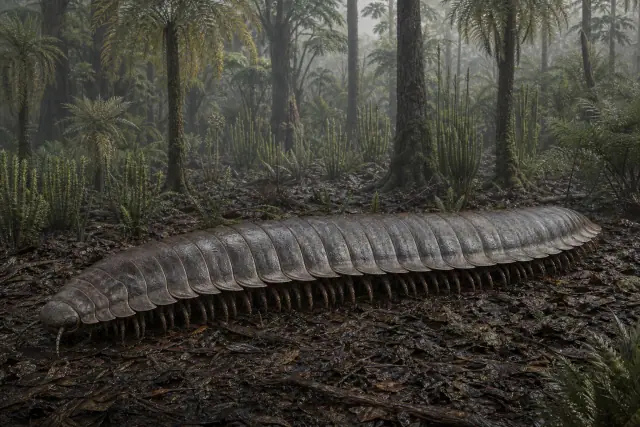
Arthropleura
Arthropleura armata
This many-segmented arthropod grew longer than a person in coal-swamp forests.
Tropical forests of Europe · North America
About 305–299 million years ago
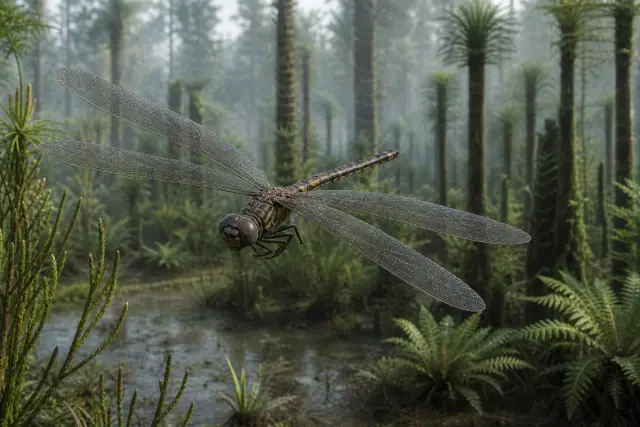
Meganeura
Meganeura monyi
This griffinfly’s wings spanned roughly seventy centimeters above Carboniferous forests.
Euramerican coal swamps · Present-day France
About 283–272 million years ago
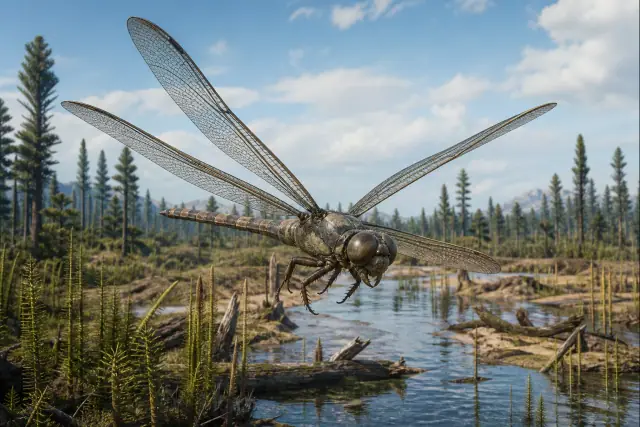
Permian Giant Griffinfly
Meganeuropsis permiana
The largest estimates reach a 71-centimeter wingspan, placing it among the biggest flying insects in Earth history.
Inland Pangaean river valleys and open wetlands · Kansas and Oklahoma, USA
About 295–272 million years ago
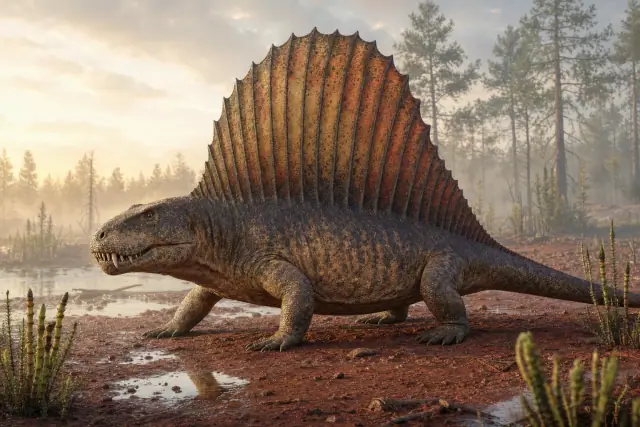
Dimetrodon
Dimetrodon grandis
This sail-backed predator was closer to mammals than to dinosaurs.
North America
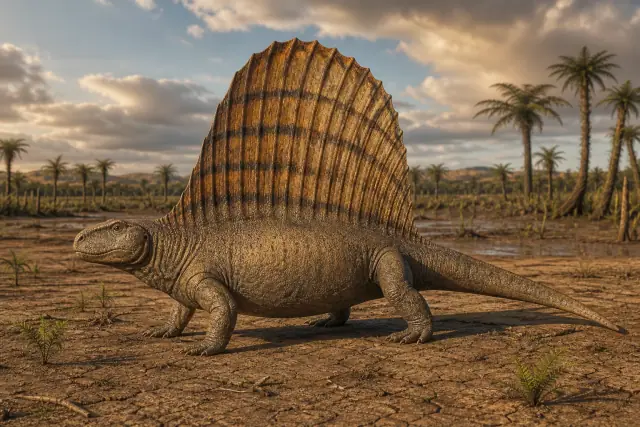
About 303–280 million years ago
Edaphosaurus
Edaphosaurus pogonias
Crossbars projected from the spines of its tall sail above a broad plant-processing body.
North America and Europe