Lives & losses
Permian Extinction Survivors & the Recovery That Followed
What counts as a survivor? Separate a lineage crossing the Permian–Triassic boundary from animals that flourished later, then explore three atlas records from recovering Triassic ecosystems.
Animals of the recovery 3 ↘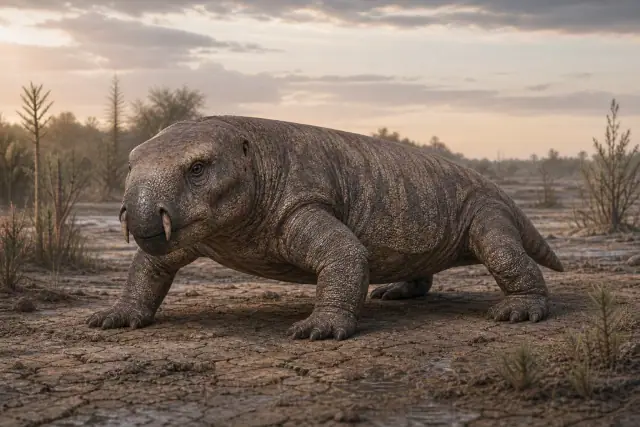
How this list was selected
The cited Karoo studies identify Lystrosaurus curvatus across the boundary. Our atlas record is Lystrosaurus murrayi, a different, Early Triassic species: it must not be presented as a proven boundary survivor. The linked animals below illustrate the recovery after the extinction, not three demonstrated survivors. Rounded age ranges alone cannot establish survival; stratigraphic evidence and taxonomic identity both matter.
In this guide 3
Animals of the recovery
3 atlas recordsAbout 255–248 million years ago
Lystrosaurus
Lystrosaurus murrayi
Lystrosaurus murrayi became common in the Early Triassic. This record illustrates recovery; evidence for L. curvatus crossing the boundary cannot be transferred to this species.
Southern Africa · India · Antarctica
About 252–247 million years ago
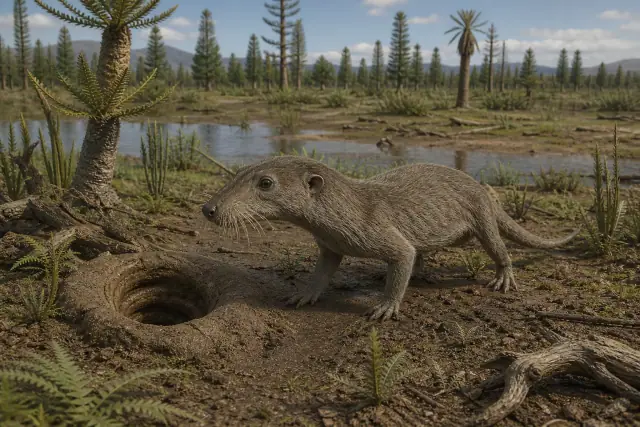
Thrinaxodon
Thrinaxodon liorhinus
A small Early Triassic cynodont with differentiated teeth, known from skeletons curled inside fossil burrows in South Africa.
Seasonal river plains · South Africa and Antarctica
About 247–242 million years ago
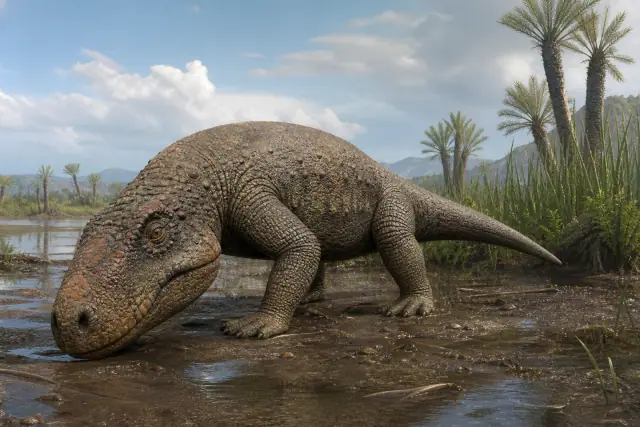
Erythrosuchus
Erythrosuchus africanus
An enormous deep skull sat on a relatively low body in this early archosauriform apex predator.
Semi-arid river plain · South Africa