Lives & losses
15 Extinct Flightless Birds
From island pigeons and giant moas to terror birds and diving specialists, explore the many ways birds adapted to a life without powered flight.
Explore the animals 15 ↘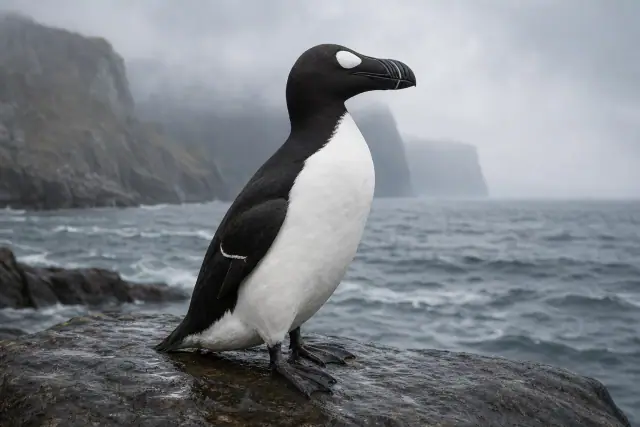
How this list was selected
Selected extinct birds interpreted as flightless in their atlas records, spanning prehistoric and historical losses. Flightlessness evolved independently in different groups; it does not mean all were closely related or helpless. Swimming specialists and land-dwelling giants are included. This is not a body-size ranking.
In this guide 15
Explore the animals
15 atlas records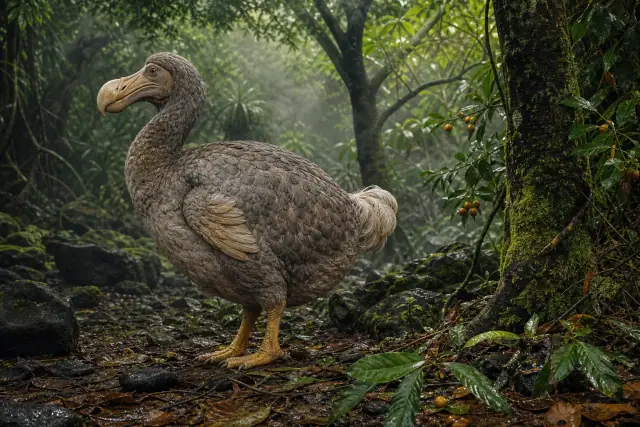
Historical records: 1598–1662; extinct in the 17th century
Dodo
Raphus cucullatus
A flightless Mauritian pigeon, about 70 cm tall and typically estimated at 10–14 kg. Compare its size, surviving evidence and extinction history.
Mauritius
About 5 million years ago–1844
Great Auk
Pinguinus impennis
This flightless North Atlantic seabird used its wings as powerful underwater paddles.
Rocky islands of the North Atlantic
Prehistory–15th century
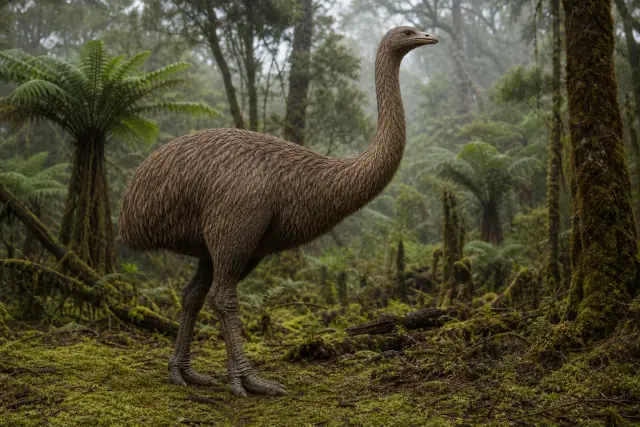
South Island Giant Moa
Dinornis robustus
One of the tallest birds ever known browsed forests without wings of any kind.
South Island, New Zealand
About 2 million–1,000 years ago
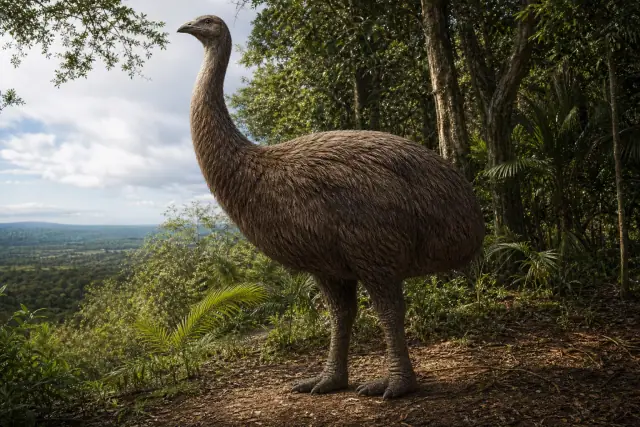
Elephant Bird
Aepyornis maximus
These massive flightless birds laid the largest eggs known from any vertebrate.
Madagascar
About 1,000 years ago–mid-18th century
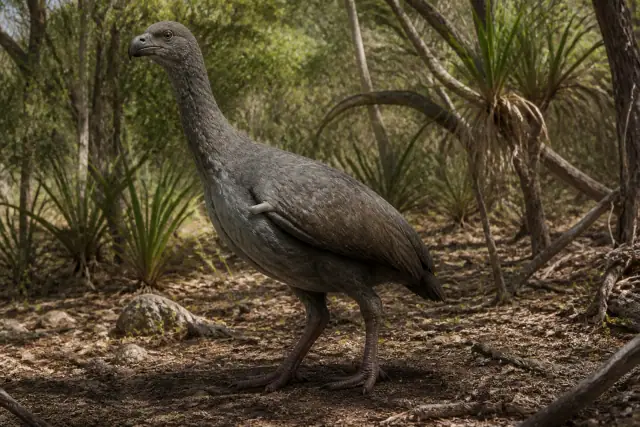
Rodrigues solitaire
Pezophaps solitaria
This giant flightless pigeon fought with bony wing knobs and was the dodo's closest relative.
Dry woodland · Rodrigues Island
About 1.8 million–47,000 years ago
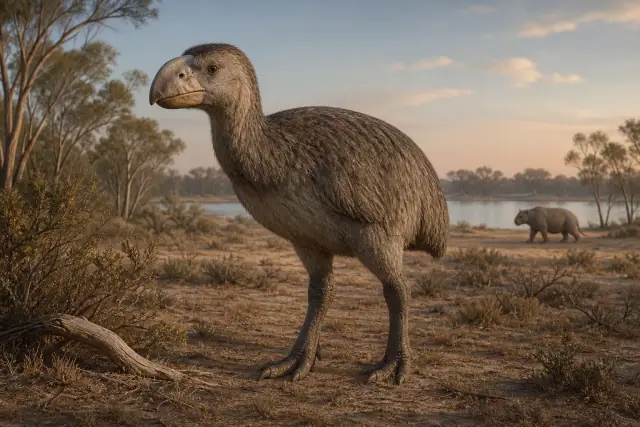
Genyornis
Genyornis newtoni
This two-meter flightless bird had a deep jaw and powerful legs, probably feeding on soft leaves, fruit and shoots.
Inland Australian lakes and open woodland
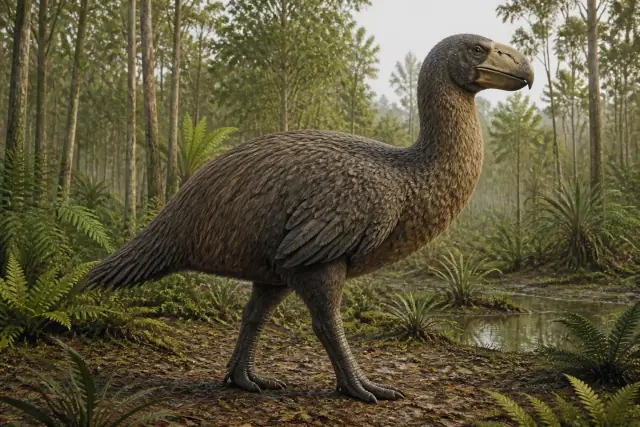
About 56–45 million years ago
Gastornis
Gastornis parisiensis
This giant flightless bird had a massive beak, but evidence favors a mainly herbivorous diet.
Warm forests and wetlands · Europe
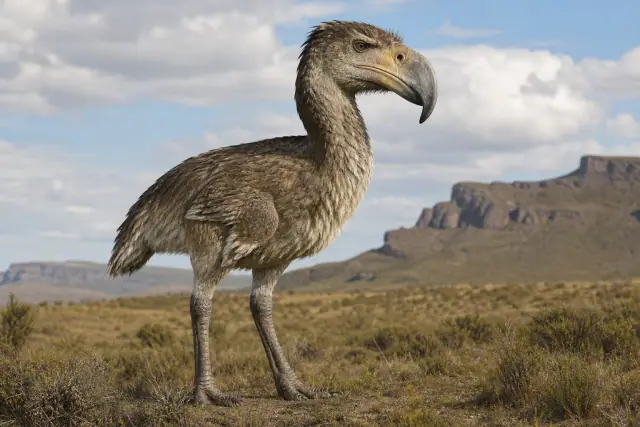
About 20–10 million years ago
Phorusrhacos (Terror Bird)
Phorusrhacos longissimus
A tall flightless predator used a deep hooked beak to strike prey on the ground.
Southern South America
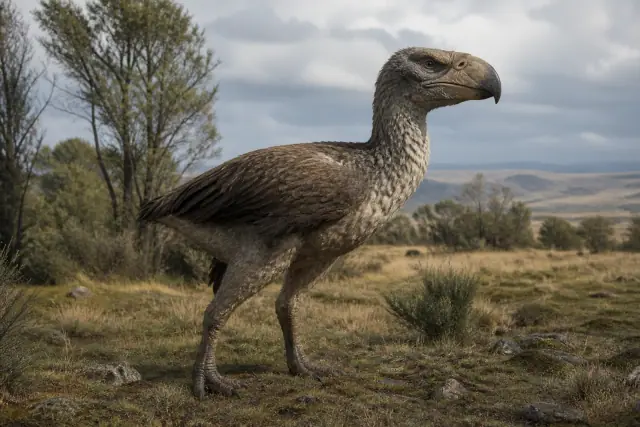
About 15 million years ago
Kelenken
Kelenken guillermoi
A seventy-centimeter skull and hooked beak armed one of the largest terror birds.
Open woodland and grassland · Argentina
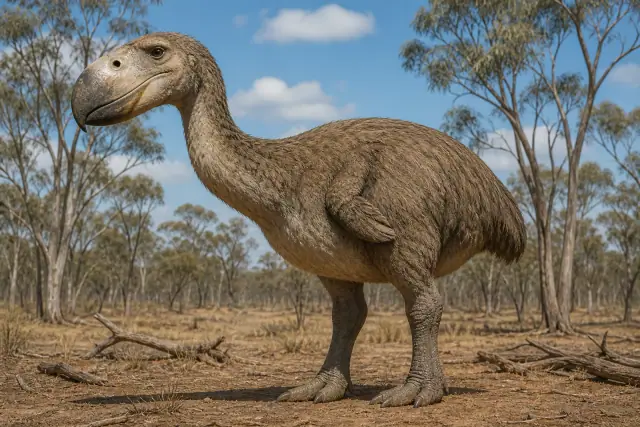
About 8 million years ago
Dromornis
Dromornis stirtoni
Three meters tall with a massive beak, it was among the heaviest birds.
Dry woodland and plains · Australia
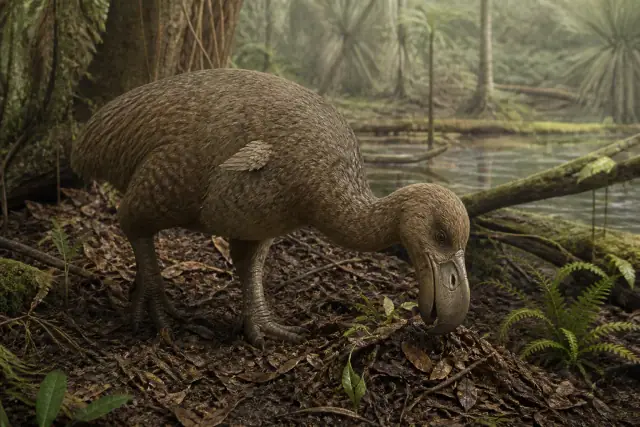
About 20,000 years ago–13th century
Aptornis
Aptornis otidiformis
Powerful legs and a heavy bill belonged to a flightless ground forager.
Forest, wetland and coast · North Island, New Zealand
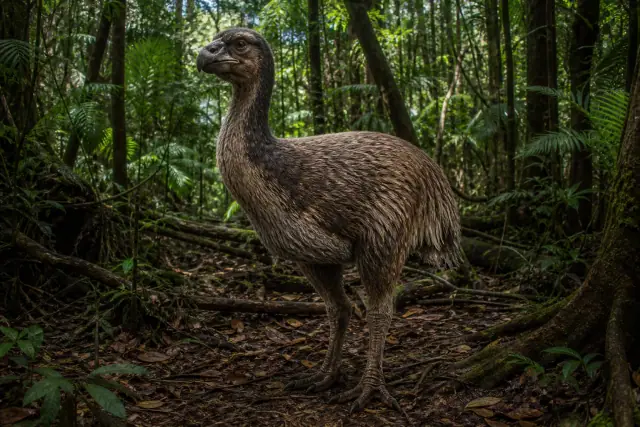
About 30,000–3,000 years ago
Sylviornis
Sylviornis neocaledoniae
This tall flightless island bird was closer to megapodes than its heavy build suggested.
Forest and scrub · New Caledonia
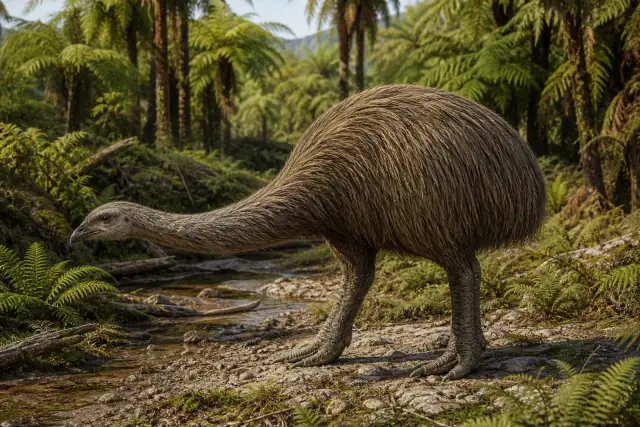
Late Pleistocene–Holocene
Emeus
Emeus crassus
Emeus crassus was a medium-sized, flightless moa with a bulky body and short, robust legs.
Lowland forest, wetlands and scrub · South Island, New Zealand

About 83–78 million years ago
Hesperornis
Hesperornis regalis
Its wings shrank to small bones while rear-set legs turned it into a superb Mesozoic pursuit diver.
Warm inland seas and coasts · North America
About 36 million years ago
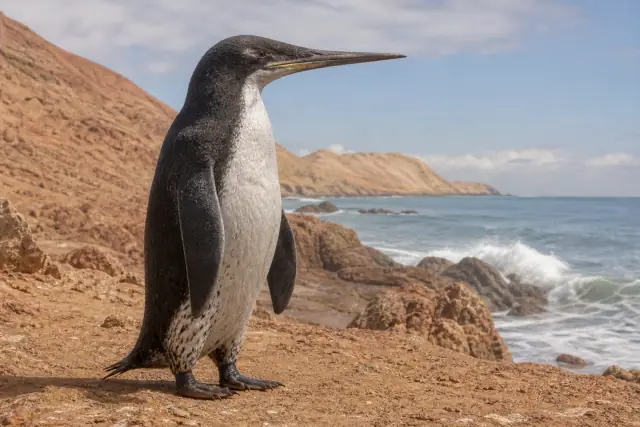
Icadyptes
Icadyptes salasi
A one-and-a-half-meter penguin lived near the equator with a spear-like beak.
Warm Pacific coast · Peru