
Explore this animal in Size of Extinct Animals ↗
249 / Cenozoic
Josephoartigasia
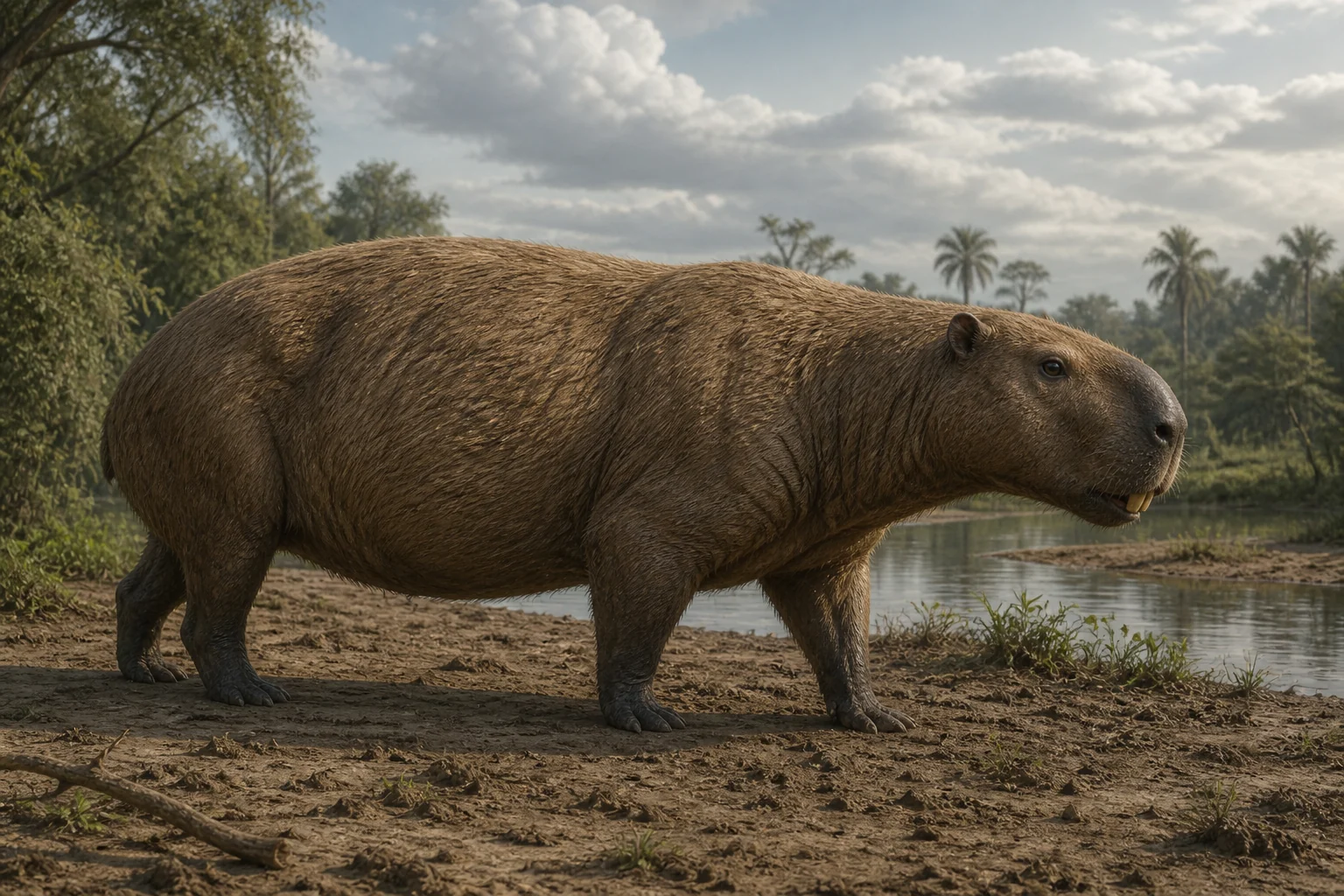
Josephoartigasia monesi
It may have approached a tonne, with giant incisors capable of generating exceptional bite forces.
 View original image · 1536 × 1024
- Time range
- About 4–2 million years ago
- Final stage
- Pliocene
- Geographic range
- Estuarine wetland and open woodland · Uruguay
01 / DEFINITION & ECOLOGY
What was Josephoartigasia?
Josephoartigasia (Josephoartigasia monesi) was an extinct organism known from About 4–2 million years ago, with a range in Estuarine wetland and open woodland · Uruguay.
Life and ecology
Josephoartigasia was a caviomorph relative resembling an immensely enlarged capybara. Herbivorous incisors may also have served defense, digging or competition.
02 / DISAPPEARANCE
Why did Josephoartigasia disappear?
Late Pliocene environmental change and turnover in South American mammal faunas are possible context for the loss of giant rodents; a specific cause is not established.
03 / EVIDENCE
How do scientists know about Josephoartigasia?
One enormous near-complete skull preserves incisors and muscle attachments; body mass estimates vary because the skeleton is unknown.
04 / SOURCES & FURTHER READING
Check the source record
Use the scientific name to compare taxonomy, occurrence records and the fossil record. Database coverage and classifications may differ.
05 / REVISION HISTORY
How has this record changed?
- Rewrote an extinction cause that presented environmental or faunal turnover as established; it is now given as context the record does not prove.
- Verified authoritative entity sources and added three responsive reconstruction sizes.
- Initial bilingual species record published.
06 / CORRECTIONS & ADDITIONS