Lives & losses
Ice Age Animals: 6 Extinct Mammals & Where They Lived
Mammoths, sabre-toothed cats, dire wolves and giant ground sloths belonged to a world far more varied than an endless snowfield. Meet six extinct mammals and compare their anatomy, regions and fossil evidence.
Explore the animals 6 ↘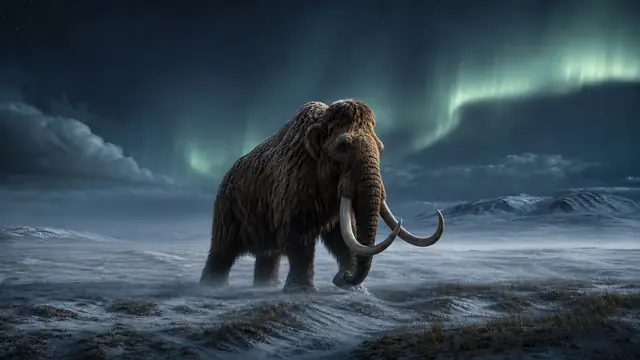
How this list was selected
This is a selection of extinct mammals represented in the atlas that lived during the Pleistocene, not a list of every Ice Age species or one local community. The Pleistocene contained repeated glacial and warmer intervals; habitats included grassland, woodland and warmer southern landscapes. Some lineages or populations persisted beyond its end. Read each animal's dates separately rather than assigning a single extinction event to the whole list. Living survivors are outside this selection, not absent from Ice Age ecosystems.
Were Ice Age animals dinosaurs?
The animals selected here are mammals. Non-avian dinosaurs disappeared about 66 million years ago, long before the Pleistocene. Birds, which are living dinosaurs, were present alongside Ice Age mammals. The phrase Ice Age animal describes a time association, not an evolutionary group or a promise that the animal lived on ice.
Explore the animals
6 atlas recordsAbout 400,000–4,000 years ago
Woolly Mammoth
Mammuthus primigenius
Curved tusks, a woolly coat and ridged grinding teeth make this northern elephant distinctive. It is not the same animal as a mastodon, nor does every mammoth fossil belong to the woolly species. Isolated late-surviving populations also mean its disappearance cannot be assigned to one date everywhere.
Northern Eurasia · North America
NPS · Woolly Mammoth ↗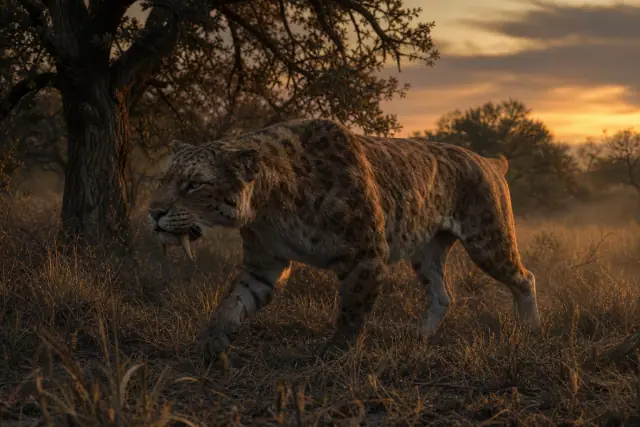
About 2.5 million–10,000 years ago
Saber-toothed Cat
Smilodon fatalis
Long upper canine teeth and a powerful forebody distinguish this sabre-toothed cat. The La Brea record includes many individuals of Smilodon fatalis, the species represented here. It was a cat, but not a tiger; the nickname sabre-toothed tiger hides that difference in relationship.
North America · South America
La Brea Tar Pits · Smilodon anatomy ↗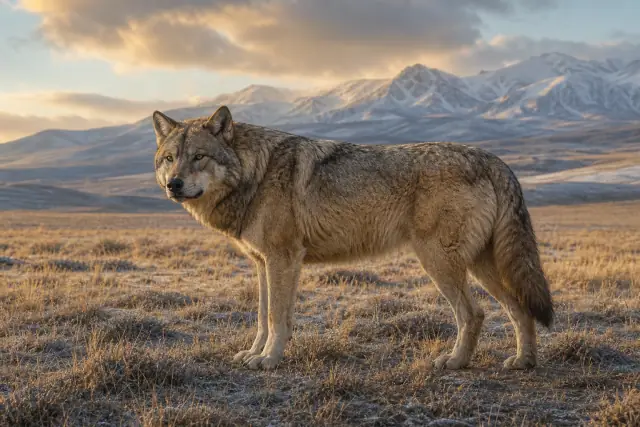
About 125,000–10,000 years ago
Dire Wolf
Aenocyon dirus
Dire wolves are exceptionally well represented among the large mammals recovered at La Brea. The abundance of a carnivore at an asphalt deposit need not reflect its proportion in the living ecosystem: entrapment and attraction to trapped prey can bias the fossil sample.
North America · Northern South America
La Brea Tar Pits · Fossil counts ↗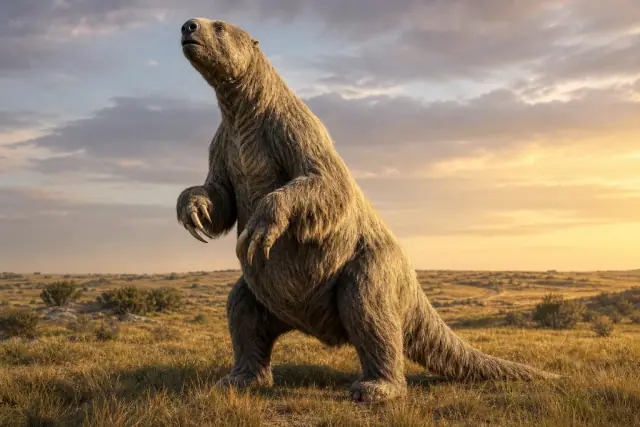
About 400,000–10,000 years ago
Giant Ground Sloth
Megatherium americanum
Megatherium americanum was a giant ground sloth from South America. Its skeleton shows how different extinct sloths could be from today's tree-dwelling forms. It should not be substituted for every ground sloth depicted at North American fossil sites, where other genera are represented.
South American grasslands and woodlands
NHM · Darwin's ground sloths ↗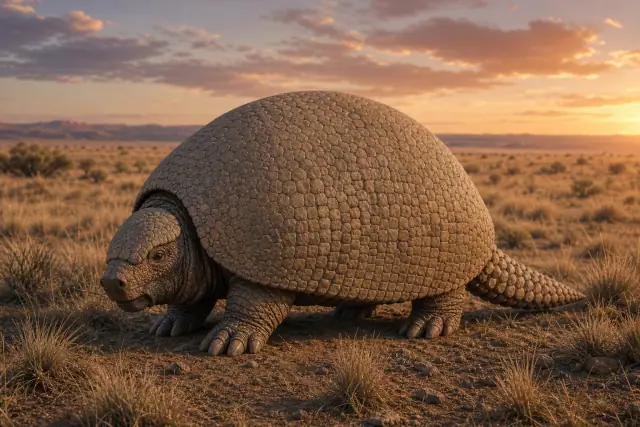
About 2.6 million–11,000 years ago
Glyptodon
Glyptodon clavipes
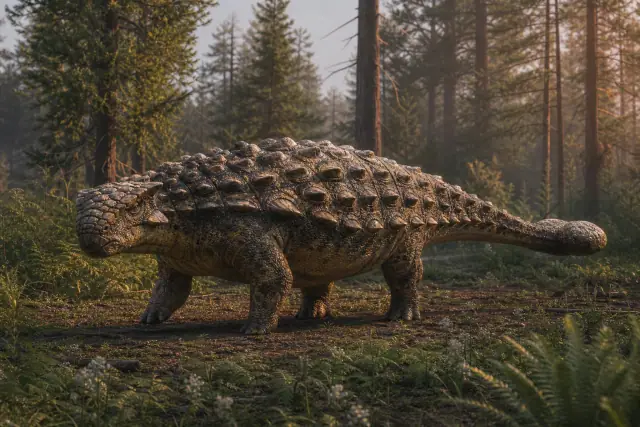
A domed shell of bony armour covered the body of this armadillo relative. Its external resemblance to a tortoise does not make it a reptile. Glyptodon offers a useful comparison with armoured dinosaurs: both had protective bone in the skin, but they belonged to very different branches of life.
South America
Horniman Museum · Glyptodon ↗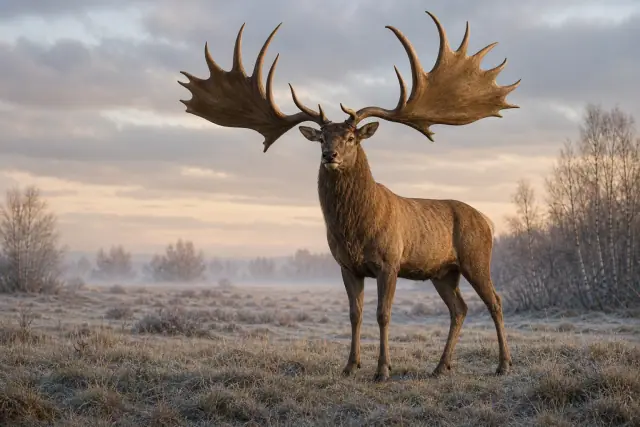
About 400,000–7,700 years ago
Irish Elk
Megaloceros giganteus
The giant deer is famous for its broad antlers and is often called the Irish elk. Its range extended beyond Ireland, and the nickname should not define its geography. Antlers, teeth, bones and cave images offer different evidence about appearance and life; enormous antlers alone do not establish why it disappeared.
Europe · Northern Asia
NHM · The giant deer ↗